Daniff
✨ Key Takeaways
- The Daniff is a giant designer cross of the Great Dane and the Mastiff (English Mastiff), developed in the United States and bred as a calm, devoted, gentle-giant family companion and home guardian; it is not a standardised breed and is recorded by designer and hybrid registries, not the FCI, AKC or UK Kennel Club
- It is unmistakably giant — commonly around 70 to 90 cm tall and roughly 45 to 70 kg or more — so it needs space, giant-sized equipment, a large food budget and the means to meet high giant-dog veterinary costs; it is not a realistic apartment dog for most homes and drools heavily
- Temperament is typically calm, affectionate, devoted and watchful, a true gentle giant, but its guardian instinct and giant size make early socialisation and training, while the dog is still manageable, essential rather than optional
- Health is the core caution and must be faced honestly: the lifespan is genuinely short at roughly 6 to 9 years, and bloat / gastric dilatation-volvulus (GDV) is the number-one life-threatening risk, with prophylactic gastropexy worth discussing; hip and elbow dysplasia, dilated cardiomyopathy, wobbler syndrome, osteosarcoma and hypothyroidism are also recognised giant-breed concerns
- Crossing two giant breeds reduces but does NOT eliminate inherited disease, so buyers should choose a breeder who screens both parents (hip, elbow and cardiac at minimum) and feeds giant-breed puppies a controlled-growth diet to protect developing joints
- Grooming is easy — a short, dense coat needing only a weekly brush — but every aspect of care is governed by giant scale, and the breed suits only homes with the space, budget, physical capacity and realism for a magnificent but short-lived giant
Quick Facts
Common Names & Variants
Modern aliases
Historical names
Modern variants & lines
⚖️ Pros & Cons
Advantages
Trade-offs
Physical Appearance
Recognized colors
Coat
Other
Ears: Drop. Tail: Tapering.
🕰 History
A modern American giant
The Daniff is a recent designer cross that pairs two of the largest dogs in the canine world: the Great Dane and the Mastiff, usually the English Mastiff. It emerged in the United States in the closing years of the twentieth century and the early years of the twenty-first, on the same wave of interest in deliberate breed crosses that produced the Labradane, the Boxador and many others. The aim was straightforward: to blend the towering, elegant, affectionate Great Dane with the massive, calm, devoted Mastiff to produce an enormous, gentle, loyal family companion and home guardian. From the outset the Daniff was conceived as a family dog and a watchful presence rather than any kind of working or sporting dog, and almost everything about it follows from the simple fact that it is a giant.
Two ancient guardian breeds behind it
Although the Daniff itself is new, the breeds behind it are anything but. The Mastiff is one of the most ancient of all dog types, a massive guardian whose ancestors are depicted in the art of antiquity and which has been used for centuries to protect home, livestock and people; the modern English Mastiff is famed as one of the heaviest dogs alive. The Great Dane, despite its name, was developed in Germany as a boar hound and estate guardian and refined into the tall, noble, gentle giant known today as the "Apollo of dogs." Crossing the two brings together two guardian heritages and two giant frames, so a Daniff is, unsurprisingly, a very large dog with a calm, protective, family-centred disposition drawn from both sides.
A cross, not a settled breed
It is important to be clear about what the Daniff is and is not. It is a designer cross, not a standardised pedigree breed: it is not recognised by the Fédération Cynologique Internationale, the American Kennel Club or the UK Kennel Club, and there is no single official standard fixing its appearance. It is recorded instead by designer and hybrid registries. Because two giant breeds with somewhat different proportions sit behind it, a Daniff varies from one dog to the next in exact height, weight, head shape and coat colour, and any honest account speaks in ranges rather than fixed figures. What does not vary is the central truth a prospective owner must absorb: this is a giant dog, with all the cost, space, short life and health considerations that giant size brings.
Temperament & Personality
A gentle giant at heart
The Daniff is, by reputation and by the nature of its two parent breeds, a calm, affectionate and devoted dog — a true gentle giant. The Mastiff brings a famously steady, dignified, good-natured temperament, deeply attached to its family and tolerant by disposition; the Great Dane brings a friendly, sweet, people-loving nature wrapped in an enormous frame. Blended together these tend to produce a placid, loving companion that bonds closely with its household, is gentle with the people it knows, and is content to be a large, warm presence at the centre of family life. Despite their imposing size, well-bred and well-raised Daniffs are typically soft-natured and patient rather than excitable.
A natural, watchful guardian
Both parent breeds are guardian breeds, and the Daniff inherits a watchful, protective streak. It is naturally alert to its home and family and its sheer size and deep bark make it a formidable deterrent, yet the temperament sought in this cross is that of a calm, confident protector rather than an aggressive one — a dog that watches and warns rather than one that is reactive or sharp. Properly socialised, a Daniff is typically reserved but not hostile with strangers and gentle with its own people. That guardian instinct, combined with giant size, is exactly why early socialisation and training while the dog is still manageable are not optional but essential, so that the adult is steady, discerning and easy to manage in every situation.
Devoted, sensitive and individually variable
Daniffs are deeply people-oriented and form strong attachments, and like many giant guardian breeds they are sensitive dogs that respond far better to calm, kind handling than to harshness. They are typically affectionate with their family and, when raised with them, can be gentle and patient with considerate children — though the breed's size means a Daniff can easily knock over a small child by accident, so supervision is always sensible. It is also worth stressing that a cross is not a guarantee of a fixed temperament: an individual may lean more toward the placid Mastiff or the more sociable Great Dane depending on which parent it favours and, above all, on socialisation and upbringing. Meeting the actual parents is the surest guide to the temperament a puppy is likely to inherit.
🏡 Living With a Daniff
A giant dog needs giant accommodations
Living with a Daniff is, for the right household, deeply rewarding — but it asks a great deal in space, time and money, and no one should take one on without understanding that. This is a giant dog, and it needs room: space to stretch out, a home where an enormous dog moving through it is not a hazard, and ideally a secure garden. It is not a realistic apartment dog for most people, and a cramped home is not a fair match for it. Everything about a giant dog is bigger — the bed, the crate, the car space, the food bill and the vet bills — and a Daniff is, frankly, an expensive dog to keep well. Prospective owners should budget honestly for large quantities of good food, giant-sized equipment, and the higher veterinary costs that come with treating a very large body.
Moderate exercise, with real care during growth
Despite its size, the adult Daniff is not a high-energy athlete: it needs daily exercise to stay fit and healthy, but its needs are moderate — a couple of steady walks and the chance to amble and relax usually suit it well, and many Daniffs are content to be calm housemates. Far more important than the amount of exercise is its management during puppyhood. Giant-breed puppies grow at an astonishing rate, and their developing joints and bones are vulnerable; over-exercising a young Daniff, or letting it pound up and down stairs or leap from heights, can damage growing joints. Sensible, low-impact exercise during the long growth phase, and avoidance of forced or repetitive high-impact activity until the dog is mature, is genuinely important for a giant breed.
Drool, space and the realities of giant size
Anyone considering a Daniff should be ready for the practical realities of life with a giant Mastiff-type dog. Chief among them is drool: both parent breeds, the Mastiff especially, are droolers, and a Daniff can leave slobber on floors, furniture, walls and visitors — owners learn to keep a "drool cloth" to hand. The breed's size brings other realities too: a dog this large needs careful management around small children and frail people simply because of the risk of being knocked over, takes up a great deal of room, and is a serious commitment to feed, equip, train and exercise. For a household with the space, the budget and the time, and a fondness for a calm, devoted, slobbery giant, the Daniff is a wonderful companion. For a home without the room or the resources, a smaller dog would be a kinder choice.
🎓 Training & Exercise
Train early, while the dog is still liftable
Training a Daniff is less about clever tricks and more about producing a calm, well-mannered giant that is safe and pleasant to live with — and the single most important principle is to start early. A Daniff puppy is adorable and manageable; a Daniff adult can weigh as much as a grown person, so behaviour that is harmless in a puppy, such as jumping up, pulling on the lead or mouthing, becomes genuinely dangerous in a dog of this size. Good lead manners, a reliable response to basic commands, calm greetings and gentle handling must all be taught while the dog is still small enough to manage, so that the adult is steady and controllable. With a giant breed, early training is not a refinement; it is a safety necessity.
Calm, kind, consistent methods
Both parent breeds are sensitive, devoted and somewhat dignified, and the Daniff responds best to calm, patient, reward-based training rather than to harshness, which can frighten or shut down a sensitive giant and damage the trust the breed is built on. These are intelligent dogs but not always eager performers in the way a working breed is; a Mastiff-type dog can have an independent, "is this really necessary?" streak, so short, positive, consistent sessions and reasonable expectations work far better than drilling. Consistency from everyone in the household matters: a giant dog must learn one clear set of rules. Building cooperation and good manners gently, from puppyhood, produces the steady, biddable adult this cross is capable of being.
Socialisation and handling for a giant guardian
Because the Daniff carries a natural guardian instinct in a giant body, thorough early socialisation is essential. Exposing a Daniff puppy gently and positively to a wide range of people, dogs, places, sounds and everyday situations during its first months helps it grow into a confident, discerning adult that is calm and friendly rather than fearful or over-protective. Equally important is early, positive handling: a Daniff should learn from the start to accept being touched all over, having its feet, ears, mouth and body examined, and being calmly restrained, because a giant dog that will not cooperate at the vet, the groomer or the nail trim is a serious problem. Teaching a young Daniff to be handled, settled and led calmly is one of the most valuable investments an owner can make.
✂️ Grooming & Coat Care
An easy coat on a very large body
One of the few low-maintenance aspects of a Daniff is its coat. Both parent breeds carry a short, dense, close-lying coat, so a Daniff is typically smooth-coated and easy to groom: a weekly brush with a bristle brush or grooming mitt removes loose hair and keeps the coat healthy and shining, with more frequent brushing during seasonal sheds. Daniffs do shed — a short coat on a very large dog still produces a surprising amount of hair — but they need no clipping or elaborate grooming. The catch is simply scale: bathing, drying and handling a dog that may weigh well over fifty kilograms is a substantial physical task, and most owners bath a Daniff only occasionally, when it is genuinely dirty, often outdoors or with help.
Drool, wrinkles, ears and eyes
Several care points follow from the Mastiff side and from giant size. Drool is the big one: a Daniff can be a heavy slobberer, and the loose lips (flews) should be wiped to keep them clean and to manage the slobber around the house. Any facial wrinkles or skin folds, inherited from the Mastiff side, should be kept clean and dry to prevent skin-fold irritation or infection. The ears should be checked regularly and kept clean and dry to head off infection, and the eyes watched, since some giant Mastiff-type dogs can have loose lower lids prone to irritation. Building these checks into a calm weekly routine, taught from puppyhood, keeps them quick and stress-free on a dog far too large to wrestle.
Nails, teeth and the giant-dog scale
Nails should be kept short with regular trimming — important and surprisingly heavy work on a giant dog, and far easier if the puppy is taught early to accept having its big feet handled. The teeth should be brushed regularly and the mouth kept healthy. Above all, every element of care for a Daniff is governed by scale: this is a dog whose nails, teeth, ears, skin folds and drool all need attention, on a body so large that any handling it has not been taught to accept calmly becomes a genuine struggle. The practical lesson is the same one that runs through the whole breed — teach a Daniff to be handled, examined and groomed willingly while it is still a manageable puppy, and a lifetime of giant-dog care becomes straightforward rather than a battle.
🍖 Diet & Nutrition
Feeding a giant: quality, quantity and a careful eye on weight
A Daniff eats a great deal — there is no avoiding it — and feeding a giant dog well is both a major expense and a real responsibility. The sound baseline is a complete, good-quality diet formulated for large or giant breeds, matched to the dog's life stage and activity level and fed in measured amounts rather than left down all day. The quantity on the bag is a starting point, not a rule: the reliable everyday guide is body condition, judged by hand and eye, with ribs easily felt under a light covering and a visible waist. Keeping a Daniff lean rather than heavy matters enormously, because every extra kilogram is an extra load on giant joints already vulnerable to dysplasia and arthritis, and on a heart that may carry giant-breed risk.
Giant-breed puppy feeding is a health issue in itself
For a Daniff, puppy nutrition is not a minor detail but one of the most important health decisions an owner makes. Giant-breed puppies grow with extraordinary speed, and feeding them incorrectly — too much food, an over-rich or wrongly balanced diet, or excess calcium from supplements — can drive too-fast growth and contribute to developmental bone and joint disease. The modern veterinary recommendation is a diet specifically formulated for large- or giant-breed puppies, designed to support steady, controlled growth rather than the fastest possible growth, fed to keep the puppy lean. The specifics — which food, how much, how long to feed a puppy formula, and when to transition to adult food — are genuinely worth discussing with a veterinarian for a dog this large.
Mealtimes, bloat and water
Because deep-chested giant breeds are at high risk of bloat (GDV), feeding management is part of nutrition for a Daniff. Many vets advise feeding two or more smaller meals a day rather than one large one, using a normal floor-level bowl, and avoiding heavy exercise immediately before and after eating, as part of a sensible approach to reducing bloat risk; an owner should discuss feeding strategy, and the option of a preventive gastropexy, with their vet. Fresh water should always be available, though some owners moderate large gulps of water around mealtimes as part of bloat-aware management. The simplest nutritional rule for the breed is to feed a sound complete large- or giant-breed diet in measured amounts, keep the dog lean, manage mealtimes with bloat in mind, and take any specific dietary or growth questions to a veterinarian.
🐶 Buying & Adopting a Daniff
The breeder choice is critical for a giant cross
Because the Daniff crosses two giant breeds that each carry serious health concerns, choosing a source carefully matters enormously. Demand for impressive giant crosses has drawn in a wide range of breeders, from conscientious programmes that health-test their stock to commercial operations that breed for size and novelty with little regard for health or temperament. Since no major kennel club governs the cross, there is no official register to lean on, so the integrity of the individual breeder is the buyer's main safeguard. A responsible breeder health-tests both parents — for a giant cross that should include, at minimum, hip and elbow evaluations and cardiac (heart) screening — is open about the results, raises puppies in a clean home environment with good early socialisation, and is plainly more interested in placing dogs in suitable homes than in making a quick sale of a "huge" puppy.
Honest expectations about size, cost and lifespan
Be realistic about what a Daniff puppy will become and what it will ask of you. This is a giant dog: it will grow enormous, eat a great deal, need giant-sized equipment and a home with space, and cost considerably more than a smaller dog to feed, equip and treat at the vet. It will also, in all honesty, have a short life — typically around six to nine years — and is prone to serious giant-breed conditions including bloat, heart disease, joint dysplasia, wobbler syndrome and bone cancer. A good breeder will be frank about all of this rather than glossing over it. Treat any seller who downplays the cost, the short lifespan, the health risks or the need for training and space, or who breeds for ever-larger size as a selling point, as a warning sign.
Adoption and an honest self-assessment
Adoption is well worth considering: Great Danes, Mastiffs and their crosses turn up in breed-specific and general rescues, often surrendered precisely because their owners underestimated the size, cost or care involved, and a rescue can be a fine way to give a giant dog a home while sidestepping the breeder lottery. Whichever route you take, the honest questions are the same: does the household have the space, the budget for food and giant-dog veterinary care, the physical capacity to handle and train a dog this large, and the emotional readiness for a magnificent companion whose life is likely to be short? For an owner who can genuinely meet those needs, the Daniff is a calm, devoted and wonderful giant. For a home without the room, the resources or the realism, a smaller dog would be a far kinder choice.
📜 Breed Name Etymology — iDogNames original research
Daniff — a portmanteau of two giants
The name Daniff is a portmanteau blending the two parent breeds: Da from (Great) Dane and -niff from Mastiff. It follows the modern designer-dog naming convention in which parent breeds are fused into a single short, memorable word, much as Labradane, Boxador and Cockapoo are formed. The name is sometimes written Daniff or seen in variant spellings, and the cross is also described plainly as a Great Dane and Mastiff mix or Great Dane Mastiff cross. As with most designer-dog names, the word itself tells you, more or less, exactly what the dog is — two giant breeds combined.
Great Dane — a German giant with a misleading name
The Great Dane carries one of the most famously misleading names in the dog world: despite "Dane," the breed was developed in Germany, not Denmark, as a powerful boar hound and estate guardian, and in its homeland it is known as the Deutsche Dogge, the German mastiff. The "Dane" label came to English through French usage and stuck. The breed's nickname, the "Apollo of dogs," after the Greek god, captures the tall, noble, gentle character that the Great Dane lends to the Daniff — towering size paired with a sweet, people-loving nature.
Mastiff — strength from an ancient root
The word Mastiff is an old one, reaching English through Old French and ultimately, by most accounts, from the Latin mansuetus, meaning tame or domesticated — fittingly, a great guardian dog gentled to live among people. The Mastiff is one of the most ancient guardian types, and the English Mastiff in particular is celebrated as one of the most massive of all dogs. From this side the Daniff draws its great bone and substance, its calm and steadfast guardian temperament, and much of its imposing presence as a family protector.
Name forms at a glance
| Name | Role | Origin | Literal meaning | First recorded |
|---|---|---|---|---|
| Daniff | primary | English | Great Dane crossed with Mastiff | — |
| Great Dane | historical | English | the (so-called) Danish dog, in fact German | — |
| Mastiff | historical | Latin | tame, gentled to live among people | — |
| Daniff full name | primary | English breed-name analysis | standard full name used for the Daniff | — |
| American origin descriptor | origin country native | English editorial descriptor | country or regional origin cue for the Daniff | — |
🏛 Naming Traditions — iDogNames original research
Names that suit a gentle giant
The Daniff is, above all, an enormous, calm, devoted dog, and its name ideas tend to flow naturally from that imposing yet gentle character. Many owners reach for big, powerful names that match the breed's giant frame and guardian heritage, suiting a dog whose sheer size makes a strong impression. Others enjoy the playful contrast of a soft, gentle or even ironically tiny name on such a huge dog — a giant called by a small, sweet name is a classic and charming choice. Because the Daniff is so clearly a devoted family companion and guardian rather than a working specialist, there is real freedom to choose a name that simply suits the dog's calm, noble and affectionate nature.
The breed's heritage offers further rich seams to draw on. The Great Dane parent brings a strong German and noble association — the "Apollo of dogs" — so dignified, classical and Germanic names sit well on a Daniff, while the ancient guardian Mastiff side invites strong, historic and mythological names that nod to size and strength. The dog's protective, watchful character invites noble, regal and heroic names too. On the practical side — and this matters more for a giant guardian than for most dogs — a name that is short, clear and easy to call works best in everyday life and training, since a dog of this size and strength needs to respond reliably. The happiest Daniff names tend to be those that capture what the dog actually is: a calm, devoted, noble and gentle giant.
🐾 Themed Names for Your Daniff — iDogNames original research
Big and powerful names
- Titan — grand and powerful for a truly giant dog
- Goliath — the classic name for a gentle giant
- Atlas — strong and mythic for a dog that carries great size
- Tank — solid and substantial for a massive companion
- Hercules — heroic and strong for a powerful guardian
- Bruno — sturdy and friendly for a big, warm-natured dog
- Magnus — meaning great, a fitting name for a giant
- Boulder — rugged and immovable for a heavy, calm dog
Noble and classical names (Great Dane side)
- Apollo — after the Great Dane's nickname, the Apollo of dogs
- Duke — a noble, courtly name for a dignified giant
- Caesar — commanding and regal for a stately dog
- Bismarck — a strong German name for a Great-Dane-influenced dog
- Athena — wise and noble for a watchful female
- King — simple and regal for an imposing companion
- Zeus — king of the gods, for a towering presence
- Diesel — strong and modern for a powerful, steady dog
Guardian and strong names (Mastiff side)
- Brutus — bold and strong for a massive guardian
- Maximus — meaning greatest, perfect for a giant protector
- Sentinel — apt for a watchful, devoted home guardian
- Ranger — steady and watchful for a protective dog
- Hagrid — a gentle giant namesake, big-hearted and warm
- Major — a strong, dignified name for a guardian breed
- Thor — mighty and heroic for a powerful companion
- Caspian — grand and noble for a stately giant
Gentle and ironic names
- Teddy — fond and cuddly for a giant softie
- Bear — warm and apt for a huge, gentle dog
- Tiny — the classic ironic name for an enormous dog
- Biscuit — sweet and gentle for a fawn-coated giant
- Moose — playful and fitting for a dog as big as one
- Gentle — a fond nod to the gentle-giant nature
- Mochi — soft and sweet, a charming contrast to giant size
- Cuddles — affectionate and ironic for a slobbery giant
More American heritage names
- American Trail - best for a Daniff name rooted in United States rather than generic style
- United States Ridge - best for a regional landscape cue tied to the Daniff story
- Local Line - best for a name that respects local breed history
- Old Route - best for migration, trade, field or pastoral routes behind the breed
- Heritage Note - best for a page where origin should be treated as context, not decoration
- Village Path - best for rustic, local or landrace-style background
- Working Home - best for a dog whose name should remember a giant, calm, devoted family companion and home guardian combining the Great Dane and the Mastiff
- Country Mark - best for a concise country-of-origin cue
More work and purpose names
- Night Watch - best for a Daniff with guardian or watchdog context
- Visitor Plan - best for safe introductions and household management
- Secure Yard - best for containment that matches size and instinct
- Calm Power - best for a large dog whose steadiness matters
- Boundary - best for property rules, gates and thresholds
- Handler - best for a dog that needs capable guidance
- Respect - best for instincts that should not be minimized or hyped
- Routine - best for predictable work, rest and socialization
More coat and build names
- Fawn - best for a Daniff whose color or markings deserve a simple call name
- Smooth Coat - best for the smooth coat type on this breed
- White Blaze - best for a clear face or chest marking
- Dark Mask - best for a dog with a strong muzzle or face marking
- Weather Coat - best for outdoor or working-dog coat context
- Strong Frame - best for a dog whose build is part of its function
- Bright Eye - best for an alert expression
- Ground Step - best for a name tied to movement and body type
📋 Breed Standard at a Glance
A designer cross, not a fixed standard
The Daniff has no formal breed standard from a major international kennel club, because it is a designer cross rather than a standardised pedigree breed. It is not recognised by the FCI, the American Kennel Club or the UK Kennel Club, and so there is no authoritative document fixing its ideal proportions, gait, faults or disqualifications. It is recorded instead by designer and hybrid registries. The description that follows is a general picture of the typical Daniff, drawn from its two giant parent breeds and from how the cross is bred, rather than a precise blueprint — and the most accurate thing one can say about a Daniff's appearance is that it varies between individuals, depending on which parent a given dog favours, though in every case it is unmistakably a giant.
Size and build: unmistakably giant
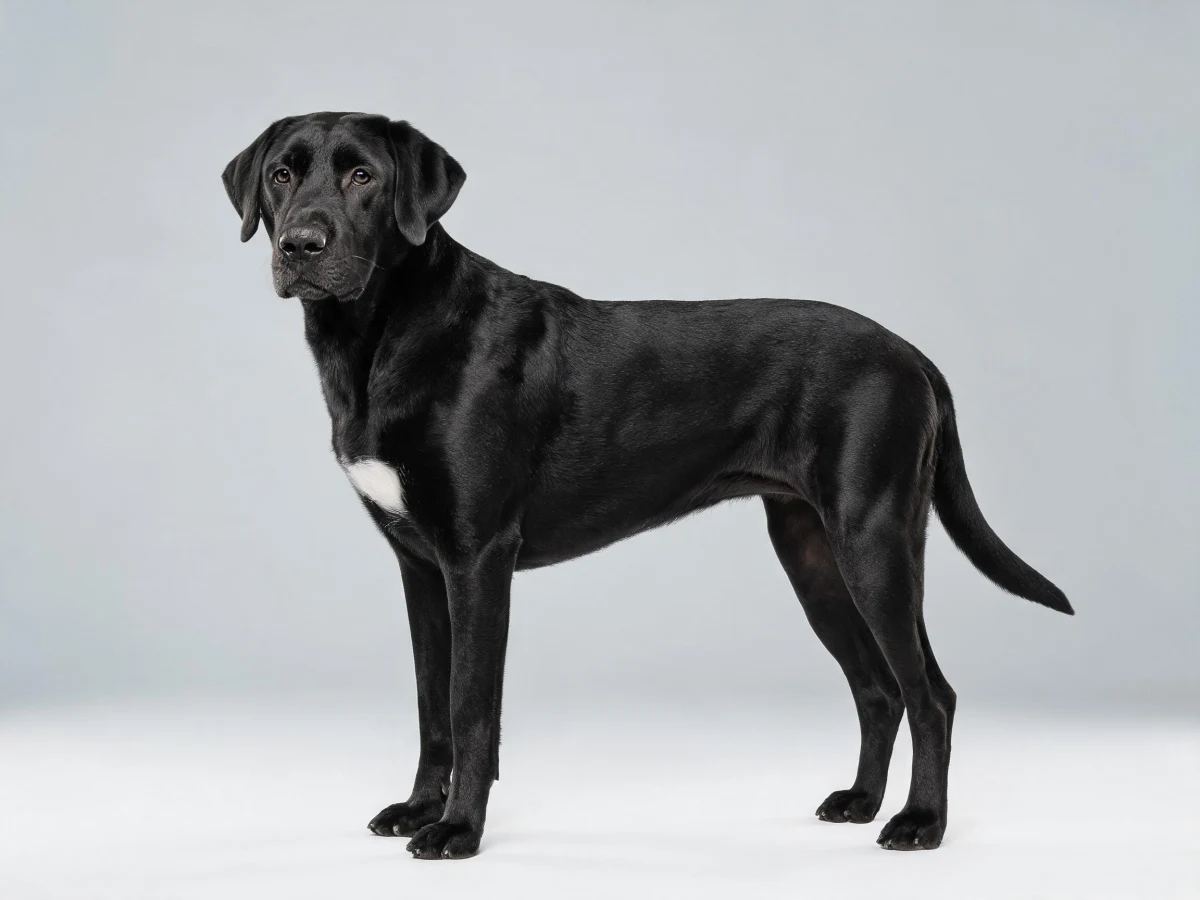
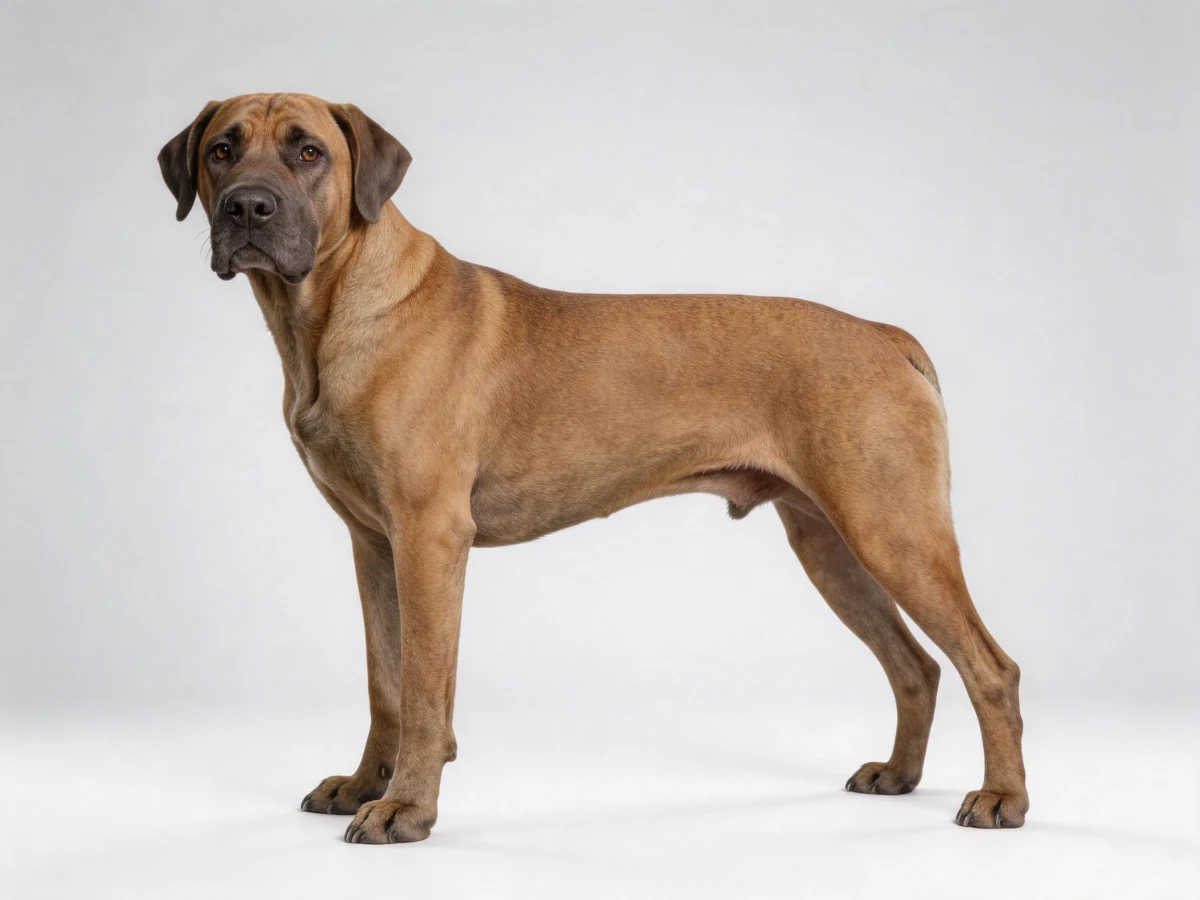
The Daniff is a giant dog, blending the towering, somewhat leaner Great Dane with the massive, heavier-boned Mastiff. Heights commonly run from roughly 70 cm to 90 cm or more at the shoulder, and weight typically from around 45 kg to 70 kg or beyond, with some individuals heavier still, especially those favouring the Mastiff side; males tend to be larger than females. These are general ranges, not fixed limits. The overall impression is of a large, powerful, well-balanced dog — taller and a touch more elegant where the Great Dane dominates, heavier, broader and more substantial where the Mastiff dominates — with a deep chest, strong frame and the calm, dignified bearing of a guardian breed.
Head, coat and colour
The head is large and broad, often with the heavier muzzle, loose lips and some facial wrinkling of the Mastiff, or the longer, more chiselled look of the Great Dane, depending on the cross. The ears are usually drop ears, and the eyes dark and gentle in expression. The coat is short, dense and close-lying on both parent breeds, so a Daniff is typically smooth-coated and easy to groom. Colours are wide-ranging and drawn from both parents, and include fawn, apricot, brindle, black, grey or blue, and the Great Dane's harlequin and mantle patterns, often with a darker mask on the face. Beyond these broad points, individual conformation varies, and it would be misleading to claim the precise specifics that a true kennel-club standard provides.
🏆 Recognition
Other registries
❓ Frequently Asked Questions
Where does the Daniff come from?
The Daniff is a giant designer cross of the Great Dane and the Mastiff (usually the English Mastiff), developed in the United States in recent decades on the wave of interest in deliberate breed crosses. It was bred to combine the towering, gentle, affectionate Great Dane with the massive, calm, devoted Mastiff into an enormous, loyal family companion and home guardian. Although the cross is new, its parents are ancient: the Mastiff is one of the oldest guardian types and one of the heaviest dogs alive, while the Great Dane was developed in Germany as a boar hound and estate guardian and is nicknamed the "Apollo of dogs." The Daniff is a cross rather than a standardised breed: it is recorded by designer and hybrid registries but is not recognised by the FCI, the American Kennel Club or the UK Kennel Club.
How big does a Daniff get?
The Daniff is a giant dog — one of the very largest of all the designer crosses, because both of its parents are giants. Heights commonly run from roughly 70 cm to 90 cm or more at the shoulder, and weight typically from around 45 kg to 70 kg or beyond, with some individuals heavier still, especially those favouring the heavier-boned Mastiff side; males are generally larger than females. Because two giant breeds sit behind it and the cross is not standardised, these are general ranges rather than fixed limits, and an individual can fall anywhere within or even beyond them. Prospective owners should plan around the simple fact that a Daniff will be enormous, needing space, giant-sized equipment, a large food budget and the means to meet high giant-dog veterinary costs.
How long do Daniffs live?
This is a question prospective owners must face honestly before taking on the breed. Giant dogs live short lives, and the Daniff is no exception: its typical lifespan is only around six to nine years, markedly shorter than that of most small and medium dogs. This is the plain, well-documented reality of giant breeds such as the Great Dane and the Mastiff, both among the shorter-lived of all dogs, and crossing the two does not change it. A Daniff is a magnificent companion, but its time with you is likely to be measured in single-digit years. Good breeding, a controlled-growth giant-breed puppy diet, keeping the dog lean, bloat-aware feeding management and attentive veterinary care can all help a Daniff live as well as possible within that span, but they cannot make a giant dog long-lived.
What is the Daniff temperament like?
The Daniff is typically a calm, affectionate and devoted dog — a true gentle giant — drawing on two steady guardian breeds. The Mastiff brings a dignified, good-natured, deeply attached temperament and the Great Dane a friendly, sweet, people-loving one, so a well-raised Daniff is usually placid, loyal and gentle with its own people, content to be a large, warm presence in the home. Both parents are guardian breeds, so the Daniff is naturally watchful and protective, and its size and deep bark are a strong deterrent; the goal is a calm, confident protector rather than a reactive one. That guardian instinct in a giant body is exactly why early socialisation and training, while the dog is still manageable, are essential. Individuals vary with which parent they favour and with upbringing, so meeting the parents is the best guide.
What health problems do Daniffs have?
This is the most important question for the breed, and it must be answered plainly. The Daniff is a giant dog with the serious health burden giant size brings. First, its lifespan is genuinely short — roughly six to nine years. Second, bloat (gastric dilatation-volvulus, or GDV) is the number-one life-threatening risk: this deep-chested giant can have its stomach fill with gas and twist, a true emergency, and many owners discuss a preventive gastropexy and bloat-aware feeding with their vet. Beyond bloat, recognised giant-breed concerns include hip and elbow dysplasia, dilated cardiomyopathy (DCM), wobbler syndrome (cervical spondylomyelopathy), osteosarcoma (bone cancer) and hypothyroidism, and rapid puppy growth must be managed with a proper giant-breed diet to protect developing joints. Crossing two breeds can broaden the gene pool but does not eliminate inherited disease, so buyers should choose a breeder who screens both parents, including hip, elbow and cardiac evaluations. This is general educational information, not a substitute for veterinary advice.
Is the Daniff a good family dog, and what care does it need?
For the right home, the Daniff makes a wonderful, devoted family dog: it is typically gentle, affectionate and patient, and many do well with considerate children and other pets when raised with them, helped by the calm Mastiff and sweet Great Dane temperaments. The big caveats are all about scale. A dog this size can easily knock over a small child by accident, so supervision is always sensible; it needs space and a substantial budget for food and giant-dog veterinary care; and it drools heavily, especially from the Mastiff side. Grooming itself is easy — the short, dense coat needs only a weekly brush — but the dog must be taught from puppyhood to accept handling, nail trims and vet exams while it is still manageable. The Daniff suits a household with the space, the resources, the physical capacity and the realism for a magnificent but short-lived giant; it is not a fit for apartments or for owners unprepared for giant-breed care.
📚 Sources & Further Reading
Every load-bearing factual claim on this page is anchored to one of the sources below. iDogNames does not synthesize from secondary aggregators.
- akc breed page Great Dane Dog Breed Information — American Kennel Club
- akc breed page Mastiff Dog Breed Information — American Kennel Club
- veterinary org Bloat (Gastric Dilatation-Volvulus) in Dogs — Merck Veterinary Manual (2024)
- veterinary org Hip Dysplasia and Other Joint Problems in Dogs — Merck Veterinary Manual (2024)
- veterinary org Heart Disease and Heart Failure in Dogs — Merck Veterinary Manual (2024)
- veterinary org Wobbler Syndrome (Cervical Spondylomyelopathy) in Dogs — Merck Veterinary Manual (2024)
- veterinary org Osteosarcoma (Bone Tumours) in Dogs — Merck Veterinary Manual (2024)
- veterinary org Hypothyroidism in Dogs — Merck Veterinary Manual (2024)
- breed club official Mastiff Club of America — Mastiff Club of America