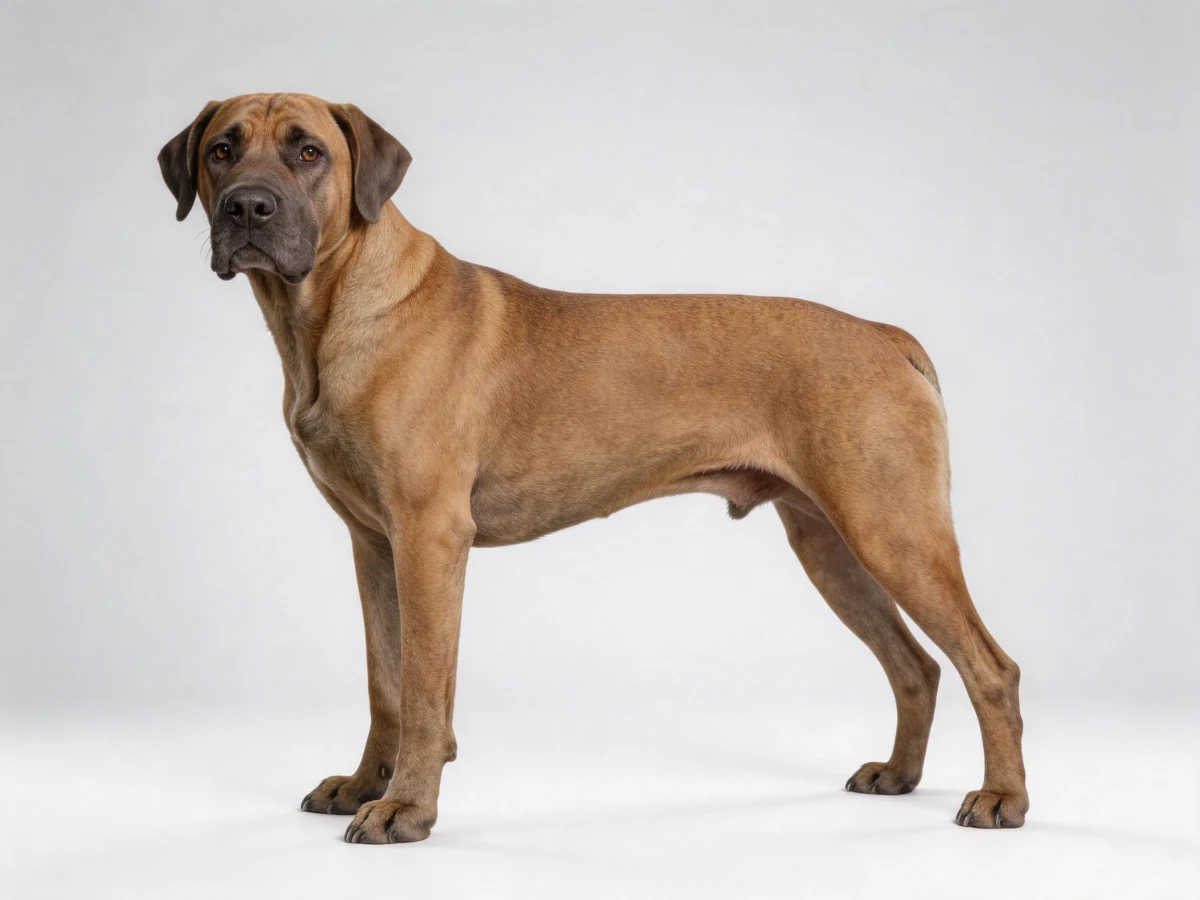
Boxador
✨ Key Takeaways
- The Boxador is a designer cross of the Boxer and the Labrador Retriever, developed in the United States as a large, athletic, exuberant family and active-home companion blending the Boxer's loyal, protective spirit with the Labrador's friendly, biddable nature
- It is a large dog, roughly 53 to 63 cm tall and around 25 to 36 kg, robust and well-muscled with a short, dense, easy-care but shedding coat in colours including black, chocolate, yellow, fawn and brindle, often with white markings
- It is high-energy and needs substantial daily exercise — often one to two hours or more — plus mental stimulation and company; it suits an active home with space and is not a match for a sedentary or frequently empty household
- Temperament is exuberant, affectionate, clever and watchful, generally good with children and other pets when socialised, but it is large, strong and bouncy, so early training and socialisation are essential
- Health is the core caution: the Boxer parent brings a high cancer risk (mast cell tumours, lymphoma), inherited heart disease (arrhythmogenic right ventricular cardiomyopathy / Boxer cardiomyopathy and aortic/subaortic stenosis) and degenerative myelopathy; the Labrador parent brings hip and elbow dysplasia, obesity and exercise-induced collapse; and both deep-chested parents bring a real risk of bloat (GDV). Crossing reduces but does NOT eliminate these, so buyers must demand cardiac screening, hip/elbow scoring and relevant DNA tests of the parents; lifespan runs roughly 10 to 13 years
- It is registered by designer and hybrid registries but is not recognised by the FCI, the American Kennel Club or the UK Kennel Club
Quick Facts
Common Names & Variants
Modern aliases
Historical names
Modern variants & lines
⚖️ Pros & Cons
Advantages
Trade-offs
Physical Appearance
Recognized colors
Coat
Other
Ears: Drop. Tail: Varied.
🕰 History
A modern American working-and-family cross
The Boxador is a designer cross of two of the most popular and capable working-and-companion breeds in the world: the Boxer and the Labrador Retriever. Like most deliberate crosses of its kind, it is a recent dog, developed largely in the United States over the past few decades on the wave of interest in mixing two well-loved breeds to blend their qualities. The aim was straightforward: to combine the Boxer's exuberant, loyal, protective character and athletic build with the Labrador's friendly, biddable, family-loving nature and steady working temperament, producing a large, energetic, affectionate dog that could serve equally as a family companion and an active outdoor partner. From the outset the Boxador was bred as a robust, high-energy household dog rather than for any single specialised job.
Two breeds with deep working roots
Both parent breeds bring substantial histories of their own. The Boxer was developed in Germany in the late nineteenth century from the older Bullenbeisser and the English Bulldog, and was used as a guard, working and military dog before becoming a hugely popular family companion prized for its bravery, devotion and clownish good humour. The Labrador Retriever traces to the working water dogs of Newfoundland, was refined in nineteenth-century Britain into the supreme gundog and retriever, and has since become the world's most popular family dog and a mainstay of assistance, detection and guide work. The Boxador inherits this dual legacy — the Boxer's spirited courage and the Labrador's gentle willingness — which is much of its appeal to active families.
A cross, not a standardised breed
It is important to be clear about what the Boxador is and is not. It is a first-generation-style designer cross, not a standardised pedigree breed: it is not recognised by the Fédération Cynologique Internationale, the American Kennel Club or the UK Kennel Club, and there is no single official standard fixing its appearance. It is registered instead by designer and hybrid registries. Because two distinct breeds sit behind it, the Boxador varies from one dog to the next — in size, coat, markings and the exact balance of temperament — and a litter can contain pups that lean more toward the Boxer or more toward the Labrador. Any honest account therefore speaks in ranges rather than fixed numbers, and the surest guide to a given dog is to meet its actual parents.
Temperament & Personality
Exuberant, loyal and affectionate
The Boxador is, by reputation and by the nature of its two parent breeds, a high-spirited, loving and intensely people-oriented dog. The Boxer brings boundless energy, devotion, a playful clownishness and a natural watchfulness, while the Labrador brings friendliness, an even temper and a deep fondness for family life. Blended together these tend to produce an exuberant, affectionate companion that adores its people, throws itself joyfully into play and exercise, and wants to be fully involved in everything the household does. Many Boxadors keep a puppyish, bouncy enthusiasm well into adulthood, and that big-hearted, fun-loving character is much of the breed's appeal to active homes.
Smart, willing and watchful
Both parent breeds are intelligent and trainable, so the Boxador is usually a clever, willing dog that takes well to kind, consistent training and enjoys having a job to do. The Labrador side adds biddability and a strong desire to please, while the Boxer side can add a streak of independence, stubbornness or boisterous over-enthusiasm that needs patient channelling. The Boxer heritage also tends to make the Boxador naturally alert and protective: many will bark to announce a visitor and are devoted guardians of their family, though they are typically more exuberant greeters than serious guard dogs. Early training and socialisation are what turn that watchful energy into good manners.
Sociable, but powerful and individually variable
The Boxador is generally a sociable, good-natured dog that, when well raised and socialised, gets on warmly with family, children and other pets — helped by the Labrador's famous tolerance and the Boxer's affectionate playfulness. Two cautions matter, though. First, this is a large, strong, exuberant dog that can be unintentionally clumsy, so it can knock over small children or frail adults in its enthusiasm and benefits from early manners training. Second, a two-breed cross is not a guarantee of a fixed temperament: an individual may lean toward the steady, easy-going Labrador or the more boisterous, protective Boxer depending on which parent it favours and, above all, on socialisation and upbringing. Meeting the parents is the surest guide to the temperament a puppy is likely to inherit.
🏡 Living With a Boxador
A high-energy dog for an active home
Living with a Boxador is rewarding for the right household, but it is emphatically a dog for active people. This is a large, powerful, exuberant animal with a great deal of energy to burn, and it thrives on vigorous daily exercise, company and a real role in family life. A Boxador suits a home with space, a securely fenced garden and owners who genuinely enjoy long walks, runs, games and outdoor activity; it is not a match for a sedentary household or for someone hoping for a quiet, low-maintenance pet. Given enough exercise and engagement it is an affectionate, fun and devoted companion. Denied them, the same energy turns readily into boredom, restlessness and destructive or noisy behaviour.
Plenty of exercise, body and mind
A Boxador typically needs a good deal of daily exercise — on the order of one to two hours or more for most dogs — split across brisk walks, off-lead runs in safe places, fetch and active play, and it generally loves swimming thanks to the Labrador in it. Because both parent breeds are intelligent working dogs, mental stimulation matters as much as physical exercise: training games, puzzle feeders, scent work and having a job to do all help keep a clever, busy mind satisfied and out of trouble. Care should be taken in hot weather, as the Boxer heritage can bring a shortened muzzle and reduced heat tolerance in some dogs, and hard exercise is best avoided in the heat of the day; growing puppies should not be over-exercised while their joints develop.
A companion that needs company and space
The Boxador is a thoroughly people-oriented dog that does not do well left alone for long stretches; bred from two intensely companionable breeds, it can become bored, anxious and destructive if isolated, and suits a home where someone is around for much of the day. Its size and strength mean it is better suited to a house with a garden than to a small flat, and a secure boundary matters because an under-exercised, athletic dog can be an escape artist. With considerate children and other pets it is often excellent when raised together, though its sheer exuberance and power mean supervision and manners training are wise around the very young and the frail. For an active, attentive household that can give it exercise, training, company and space, the Boxador is a joyful and devoted family dog; for a quiet or absent home, a different choice would be fairer to a dog this energetic.
🎓 Training & Exercise
Clever and willing, with a boisterous streak
The Boxador is an intelligent, capable dog that generally takes well to training, drawing on the Labrador's strong desire to please and the Boxer's quick, lively mind. Most respond enthusiastically to upbeat, reward-based methods — food, play and praise — and many are highly food-motivated, which is a useful training lever provided treats are counted into the daily ration to guard against the weight gain this cross is prone to. The Boxer side can bring a degree of independence, stubbornness or easily-distracted exuberance, so consistency, patience and short, engaging sessions work far better than repetition or harsh correction, which can make a sensitive dog anxious or a boisterous one more unruly.
Manners for a big, bouncy dog
Because the Boxador is large, strong and naturally exuberant, teaching good manners early is not optional but essential. Two priorities stand out. The first is impulse control and polite greetings: a Boxador that learns young not to jump up, to walk calmly on a lead and to settle on cue is a pleasure, whereas an untrained adult of this size and power can be genuinely difficult to manage and can knock people over in sheer enthusiasm. The second is reliable recall and lead manners, important for a powerful, energetic dog that loves to run. Starting training in puppyhood, while the dog is still small enough to guide easily, pays lasting dividends, and ongoing exercise makes training far easier because a tired dog learns better than a pent-up one.
Early socialisation is essential
As with any large, protective-leaning dog, early and thorough socialisation is the foundation of a confident, well-mannered adult. Exposing a Boxador puppy gently and positively to a wide range of people, dogs, places, sounds, traffic and everyday experiences during its first months helps it grow into a friendly, settled companion rather than a wary, reactive or over-boisterous one. The Boxer heritage can bring natural watchfulness, so good early experiences help ensure that watchfulness stays sensible rather than tipping into nuisance barking or suspicion. Puppy classes, calm introductions and plenty of positive outings all serve a young Boxador well, and gentle early handling around the mouth, ears, feet and body makes a lifetime of grooming, nail care and veterinary checks far easier.
✂️ Grooming & Coat Care
An easy-care coat that still sheds
Grooming a Boxador is one of the easier parts of owning one, because both parent breeds carry short, dense, low-maintenance coats and the cross usually inherits the same. A Boxador typically has a short, smooth, close-lying double coat that needs only weekly brushing for most of the year to remove loose hair and keep the skin and coat healthy. It is worth being honest, though, that this is not a low-shedding or hypoallergenic dog: the Labrador in particular is a notable shedder with seasonal coat blows, so a Boxador sheds steadily and more heavily a couple of times a year, when more frequent brushing helps manage the loose hair around the home. A rubber curry or bristle brush makes short work of it, and the dog rarely needs more than occasional bathing when actually dirty.
Ears, skin, eyes and that short face
Several care points deserve attention beyond the coat. The ears should be checked regularly and kept clean and dry, since drop ears can trap moisture and the water-loving Labrador heritage means many Boxadors swim, after which the ears should be dried to help prevent infection. The skin should be watched closely — and this matters more in this cross than in most, given the Boxer's high cancer risk — so owners should run their hands over the dog regularly and have any new, growing or changing lump checked by a vet without delay. Some Boxadors inherit a shortened Boxer-type muzzle, which can bring the wrinkles and skin folds of that face (to be wiped clean and kept dry) and a reduced tolerance of heat that calls for care in hot weather.
Nails, teeth and weight
Nails should be kept short with regular trimming, as an active dog that does not wear them down naturally will find overlong nails uncomfortable and they can affect the gait. Dental care matters as it does for any dog: regular tooth brushing and veterinary dental checks help prevent the gum disease that troubles dogs in later life. Weight management is as much a care issue as a health one for this cross: the Labrador's strong appetite and tendency to obesity mean a Boxador can gain weight quickly, and excess weight strains the joints — already at risk of dysplasia — and the heart, so portions and treats must be measured and the dog kept lean and fit. Building all this routine handling in early makes a lifetime of care far easier for a large, strong dog.
🍖 Diet & Nutrition
A large, active dog fed to body condition
The Boxador is a large, energetic dog, and its food needs reflect that, but careful feeding matters because the Labrador heritage brings a powerful appetite and a strong tendency to obesity that this cross can inherit. The sound baseline is a complete, good-quality diet formulated for a large, active dog, matched to the dog's life stage (puppy, adult or senior) and to its real activity level, and fed in measured amounts rather than left down all day or topped up on demand. The quantity on the bag is a starting point, not a rule: the reliable everyday guide is body condition, judged by hand and eye. A dog in good order has ribs that are easily felt under a light covering, a visible waist from above and a tuck-up behind the ribs.
Large-breed puppy feeding, done carefully
A Boxador puppy grows into a large dog, and large-breed puppies have specific needs: a good-quality complete food formulated for large-breed growth, fed to support steady rather than rushed development, because growing too fast or carrying too much weight can stress developing joints already at some risk of dysplasia. Puppies are usually fed several smaller meals a day, tapering to two measured meals as they mature, which most adult Boxadors do best on. Because this is a deep-chested cross with a real risk of bloat, the way an adult is fed matters: two or more smaller meals rather than one large one, and avoiding heavy exercise right around mealtimes, are sensible precautions worth discussing with a veterinarian, as are any specific questions about a growing puppy.
Weight, bloat awareness and treats
Keeping a Boxador lean is one of the most valuable health investments an owner can make: excess weight strains joints prone to dysplasia, loads a heart that may carry Boxer risk, and shortens active, comfortable life, and an appetite-driven dog can put weight on quickly if treats are not counted. Fresh water should always be available, though some owners moderate a large quantity of water gulped right around vigorous exercise as part of sensible bloat management. The simplest nutritional rule for the breed is to feed a sound complete diet suited to a large, active dog in measured amounts, count treats within the daily ration, split feeding into smaller meals, and let body condition — not the scoop or the scales alone — be the final guide. Specific dietary questions, and any concern about bloat, joints or an older dog's heart, are best discussed with a veterinarian.
🐶 Buying & Adopting a Boxador
The breeder choice is critical
Because the Boxador crosses two breeds that each carry significant inherited disease — the Boxer with its high cancer risk, heart conditions and degenerative myelopathy, and the Labrador with hip and elbow dysplasia, obesity and exercise-induced collapse — choosing a source carefully matters enormously. Demand for large, friendly designer crosses has drawn in a wide range of breeders, from conscientious programmes that health-test their stock to commercial operations and puppy farms that breed for volume and price with no testing at all. Since no major kennel club governs the cross, there is no official register to lean on, so the integrity of the individual breeder is the buyer's main safeguard. A responsible breeder health-tests both parents — hip and elbow scoring, cardiac screening of the Boxer line, and DNA tests for degenerative myelopathy (Boxer) and exercise-induced collapse and progressive retinal atrophy (Labrador) — is open about the results, raises puppies in a clean home environment, and is plainly more interested in placing dogs well than in making a quick sale.
Honest questions and warning signs
Be wary of the marketing that surrounds designer crosses. The Boxador is sometimes sold as a healthier dog simply by virtue of being a cross, but that is not how genetics works: a cross can still inherit either parent's problems, and the only real reassurance is documented health testing of the parents. Treat as warning signs any breeder who cannot or will not show hip, elbow and cardiac results, who has no DNA testing to discuss, who always has puppies available, who will not let you meet the mother with the litter, or who sells on a cute name and a premium price rather than on the health and temperament of their dogs. The single most useful thing a buyer can do is ask, specifically, to see evidence that both parents have been health-screened — and to walk away from a breeder who cannot provide it.
Adoption and an honest self-assessment
Adoption is well worth considering: Boxers, Labradors and their many crosses turn up in breed-specific and general rescues, often through no fault of their own and frequently because an under-exercised, under-trained large dog became too much for an unprepared home. A rescue can be a fine way to give an adult dog a home while sidestepping the breeder lottery, and rescue staff can help match an individual dog's energy and needs to a household. Whichever route you take, the honest questions are the same: can the household give this large, powerful, exuberant dog the substantial daily exercise, training, company, space and watchfulness for serious health conditions that it needs, for its whole life? For an active, committed owner ready to meet those needs, the Boxador is a joyful, loyal and rewarding family dog. For a quiet, busy or unprepared home, a different choice would be fairer to the dog.
📜 Breed Name Etymology — iDogNames original research
Boxador — a designer portmanteau
The name Boxador is a portmanteau built from both parent breeds: Box from Boxer and ador from Labrador. It follows the modern designer-dog naming convention in which the names of two parent breeds are fused into a single, memorable word, much as Labradoodle, Cockapoo and Goldador are formed. The name tells you, plainly, exactly what the dog is — a Boxer crossed with a Labrador. The cross is also written Laboxer or Boxerlab in some quarters, and is occasionally called a Boxer Lab or Boxer Lab mix, but Boxador is by far the most widely used name for the cross.
Boxer — a fighter's name softened
The Boxer parent lends the first half of the name, and the breed's own name has a much-debated origin. The most popular explanation is that it comes from the dog's habit of using its front paws in a sparring, "boxing" motion at play or when facing an opponent. Others trace it to the older German Bullenbeisser ancestry or to dialect terms; whatever the true root, the name has long evoked the breed's spirited, pugnacious-yet-playful character. That spirited, brave, fun-loving Boxer nature carries strongly into the Boxador, and is much of what gives the cross its exuberant energy.
Labrador — a place-name from the Atlantic
The Labrador parent lends the second half of the name, and that name is geographical. The Labrador Retriever's working ancestors came from Newfoundland, and the breed took the name of the neighbouring Labrador region of the North Atlantic coast of Canada — itself thought to derive from the Portuguese lavrador, meaning a landholder or farmer, after an early Portuguese explorer. The breed was developed into the modern Labrador in Britain. That heritage of a tireless, water-loving, biddable retriever carries directly into the Boxador's love of swimming, its trainability and its friendly, family-oriented warmth.
Name forms at a glance
| Name | Role | Origin | Literal meaning | First recorded |
|---|---|---|---|---|
| Boxador | primary | English | Boxer crossed with Labrador Retriever | — |
| Boxer | historical | German | one who boxes (spars with the paws) | — |
| Labrador | historical | English | the Labrador region; landholder or farmer | — |
| Boxador full name | primary | English breed-name analysis | standard full name used for the Boxador | — |
| American origin descriptor | origin country native | English editorial descriptor | country or regional origin cue for the Boxador | — |
🏛 Naming Traditions — iDogNames original research
Names that suit a big, exuberant companion
The Boxador is, above all, a large, athletic, joyful family dog, and its name ideas tend to flow naturally from that big-hearted, energetic character. Many owners reach for strong, sporty names that match the breed's power and stamina, suiting a dog built for running, swimming and play. Others lean into the warm, friendly, devoted side of a much-loved family companion with affectionate, approachable names. Because the Boxador is so clearly a robust, fun-loving dog, there is real freedom to choose a name that is bold, lively and personal — and a clear, easy-to-call name tends to suit a big dog that loves an energetic recall across a park.
The breed's dual heritage offers further rich seams to draw on. The Boxer parent carries a German origin and a spirited, boxing namesake, so strong German names and bold, sporty names sit well on a Boxador, while the Labrador parent brings a Canadian-Atlantic, water-loving working heritage, which invites outdoorsy, nature and water-themed names. The dog's athletic exuberance invites energetic, playful names too. On the practical side — as for any large, trainable working-type dog — a name that is short, clear and easy to call tends to work best in everyday life and in training, carrying well across distance and over the noise of an excited dog. The happiest Boxador names tend to be those that capture what the dog actually is: a strong, loyal, energetic and affectionate companion.
🐾 Themed Names for Your Boxador — iDogNames original research
Strong and sporty names
- Rocky — bold and athletic for a powerful, boxing-spirited dog
- Tank — sturdy and strong for a robust, muscular companion
- Ace — sharp and sporty for a clever, capable dog
- Diesel — strong and energetic for a high-powered athlete
- Champ — a winner's name for a spirited, lively dog
- Jet — fast and keen for a dog that loves to run
- Bruno — solid and friendly for a big, good-natured dog
- Zara — bright and athletic for a fast, lively female
German names (Boxer side)
- Max — a classic German name, strong and easy to call
- Gretchen — a traditional German name for a sweet, sturdy female
- Bruno — German-rooted and solid for a brave companion
- Heidi — bright and friendly, a fond German choice
- Klaus — bold and characterful for a spirited dog
- Greta — strong and elegant for a confident female
- Fritz — lively and characterful, a classic German name
- Otto — short, strong and friendly for a sturdy dog
Outdoor and water names (Labrador side)
- River — perfect for a swimming-loving, water-keen dog
- Scout — outdoorsy and apt for an active, exploring companion
- Marsh — a nod to the Labrador's wetland retrieving roots
- Bay — coastal and fresh for a water-loving dog
- Ranger — sturdy and outdoorsy for an active partner
- Brook — gentle and watery for a swimming enthusiast
- Cedar — natural and grounded for an outdoor companion
- Storm — bold and weather-keen for an energetic dog
Friendly family-companion names
- Buddy — warm and friendly for a devoted family dog
- Bella — sweet and popular for a loving female
- Cooper — cheerful and approachable for a happy dog
- Daisy — fresh and friendly for a bright female
- Bear — cuddly and apt for a big, lovable dog
- Lucy — gentle and fond for a sweet companion
- Duke — noble and warm for a loyal big dog
- Roxy — lively and affectionate for a spirited female
More American heritage names
- American Trail - best for a Boxador name rooted in United States rather than generic style
- United States Ridge - best for a regional landscape cue tied to the Boxador story
- Local Line - best for a name that respects local breed history
- Old Route - best for migration, trade, field or pastoral routes behind the breed
- Heritage Note - best for a page where origin should be treated as context, not decoration
- Village Path - best for rustic, local or landrace-style background
- Working Home - best for a dog whose name should remember a large, athletic, exuberant family and active-home companion combining the loyal, protective Boxer and the fr
- Country Mark - best for a concise country-of-origin cue
More work and purpose names
- Field Note - best for a Boxador whose name should point to a large, athletic, exuberant family and active-home companion combining the loyal, protective Boxer and the fr
- Soft Mouth - best for a retrieving dog expected to carry gently
- Search Cast - best for quartering fields or cover in a controlled way
- Reed Fetch - best for water-edge retrieving or marsh imagery
- Feather Find - best for bird-dog heritage without overstating modern use
- Steady - best for a gundog learning calm around birds and movement
- Check Cord - best for careful field training in open places
- Partner - best for a cooperative handler-dog working relationship
More coat and build names
- Black - best for a Boxador whose color or markings deserve a simple call name
- Smooth Coat - best for the smooth coat type on this breed
- White Blaze - best for a clear face or chest marking
- Dark Mask - best for a dog with a strong muzzle or face marking
- Weather Coat - best for outdoor or working-dog coat context
- Strong Frame - best for a dog whose build is part of its function
- Bright Eye - best for an alert expression
- Ground Step - best for a name tied to movement and body type
📋 Breed Standard at a Glance
A designer cross, not a fixed standard
The Boxador has no formal breed standard from a major international kennel club, because it is a designer cross rather than a standardised pedigree breed. It is not recognised by the FCI, the American Kennel Club or the UK Kennel Club, and so there is no authoritative document fixing its ideal proportions, gait, faults or disqualifications. It is registered instead by designer and hybrid registries. The description that follows is therefore a general picture of the typical Boxador, drawn from its two parent breeds and from how the cross is bred, rather than a precise blueprint — and the most accurate thing one can say about a Boxador's appearance is that it varies between individuals, since a litter can contain dogs that lean more toward the Boxer or more toward the Labrador.
Size, build and the parent influence
The Boxador is a large, athletic, strongly built dog, blending the muscular, square-set Boxer with the powerful, sturdy Labrador. Height typically runs from roughly 53 cm to 63 cm at the shoulder, and weight from around 25 kg up to about 36 kg, with males generally at the upper end of those ranges and any individual sitting somewhere within them according to which parent it favours. These are general ranges, not fixed limits. The overall build is robust and well-muscled, with a deep chest, a strong neck and a body suggesting power and stamina; the head often blends the Boxer's broader, sometimes shorter muzzle with the Labrador's, so muzzle length and the presence of wrinkles vary from dog to dog.
Coat, colour and expression
The coat is usually short, dense and smooth, close-lying and easy to care for but a genuine shedder, blending the Boxer's sleek coat and the Labrador's weather-resistant double coat. Colours are wide-ranging and include black, brown or chocolate, yellow, fawn, brindle (from the Boxer) and various combinations, often with white markings on the chest, face or feet. The ears are commonly the soft, folded drop ears typical of both parents, and the tail is carried in varied form. The expression tends to be alert, friendly and eager, with dark, kindly eyes set in a broad head — a look that captures the breed's blend of Boxer spirit and Labrador warmth. Beyond these broad points, individual conformation varies, and it would be misleading to claim the precise specifics that a true kennel-club standard provides.
🏆 Recognition
Other registries
❓ Frequently Asked Questions
Where does the Boxador come from?
The Boxador is a designer cross of the Boxer and the Labrador Retriever, developed largely in the United States over recent decades on the wave of interest in mixing two popular breeds. It was bred to combine the Boxer's exuberant, loyal, protective character and athletic build with the Labrador's friendly, biddable, family-loving nature, producing a large, energetic dog that suits an active home as both companion and outdoor partner. Although the cross is new, its parents carry long histories: the Boxer was developed in nineteenth-century Germany as a guard and working dog, and the Labrador descends from the working water dogs of Newfoundland and was refined in Britain into the world's most popular family dog and retriever. The Boxador is a cross rather than a standardised breed: it is registered by designer and hybrid registries but is not recognised by the FCI, the American Kennel Club or the UK Kennel Club.
How big does a Boxador get?
The Boxador is a large dog, blending the muscular, square-set Boxer with the powerful, sturdy Labrador. Height typically runs from roughly 53 cm to 63 cm at the shoulder, and weight from around 25 kg up to about 36 kg, with males generally toward the upper end and any individual sitting somewhere within those ranges according to which parent it favours. Because two breeds sit behind it and the cross is not standardised, these are general ranges rather than fixed limits, and a litter can contain dogs that lean more toward the Boxer or more toward the Labrador. A responsible breeder will explain what to expect from their particular line without promising exact adult measurements.
Do Boxadors shed, and what is the coat like?
The Boxador coat is usually short, dense, smooth and close-lying, blending the Boxer's sleek coat and the Labrador's weather-resistant double coat, in colours including black, chocolate, yellow, fawn and brindle, often with white markings. It is easy to care for, needing only weekly brushing for most of the year, but prospective owners should know that this is not a low-shedding or hypoallergenic dog: the Labrador in particular is a notable shedder with seasonal coat blows, so a Boxador sheds steadily and more heavily a couple of times a year, when more frequent brushing helps manage the loose hair. The dog rarely needs more than occasional bathing when actually dirty.
What is the Boxador temperament like?
The Boxador is an exuberant, affectionate and intensely people-oriented dog, drawing on two beloved companion breeds: the spirited, loyal, watchful Boxer and the friendly, even-tempered, biddable Labrador. It is typically high-energy, playful, devoted and eager to be involved in everything the family does, and many keep a puppyish enthusiasm well into adulthood. It is usually good with children and other pets when raised and socialised well, and is clever and generally trainable. The main cautions are that it is large, strong and bouncy — so it can be clumsy and overwhelming without early manners training — and that it is strongly attachment-prone, needing company and not suiting a home that is empty all day. Individuals vary with which parent they favour and with upbringing, so meeting the parents is the best guide.
What health problems do Boxadors have?
This is the most important question for the breed. Crossbreeding can broaden the gene pool but does not eliminate inherited disease, and a Boxador can inherit from either parent. The Boxer side carries the heaviest burden: a notably high cancer risk (including mast cell tumours and lymphoma), inherited heart disease in two main forms — arrhythmogenic right ventricular cardiomyopathy (Boxer cardiomyopathy / ARVC) and aortic or subaortic stenosis — and degenerative myelopathy, a progressive spinal-cord disease with a DNA test available. The Labrador side brings hip and elbow dysplasia, a strong tendency to obesity, exercise-induced collapse (EIC, DNA-testable) and eye conditions such as progressive retinal atrophy. Both parents are deep-chested, so the Boxador is at real risk of bloat (gastric dilatation-volvulus), a life-threatening emergency. Responsible breeders cardiac-screen and DNA-test the Boxer line and hip/elbow-score and DNA-test the Labrador line, and buyers should demand that evidence. Lifespan runs roughly 10 to 13 years. This is general educational information, not a substitute for veterinary advice.
How much exercise does a Boxador need, and is it good with families?
Exercise is a serious commitment: the Boxador is a large, athletic, high-energy dog that typically needs a good deal of daily activity — often one to two hours or more — across brisk walks, off-lead runs, fetch, active play and, for many, swimming, plus mental stimulation through training games and having a job to do. A bored, under-exercised Boxador can become destructive, restless or noisy, so this is not a dog for a sedentary home. As a family dog it is exuberant, affectionate and often excellent with considerate children and other pets when raised together, helped by the Labrador's tolerance and the Boxer's playfulness, though its size, strength and bounce mean supervision and early manners training are wise around very young children. It wants company and a securely fenced space, so it suits an active, attentive household that can give it the exercise, training and time it needs.
📚 Sources & Further Reading
Every load-bearing factual claim on this page is anchored to one of the sources below. iDogNames does not synthesize from secondary aggregators.
- akc breed page Boxer Dog Breed Information — American Kennel Club
- akc breed page Labrador Retriever Dog Breed Information — American Kennel Club
- veterinary org Heart Disease and Heart Failure in Dogs — Merck Veterinary Manual (2024)
- veterinary org Gastric Dilatation and Volvulus (Bloat) in Dogs — Merck Veterinary Manual (2024)
- veterinary org Hip Dysplasia and Other Joint Diseases in Dogs — Merck Veterinary Manual (2024)
- veterinary org Tumours of the Skin in Dogs — Merck Veterinary Manual (2024)
- veterinary org Degenerative Myelopathy in Dogs — Merck Veterinary Manual (2024)
- breed club official American Boxer Club — American Boxer Club
- breed club official The Labrador Retriever Club — The Labrador Retriever Club