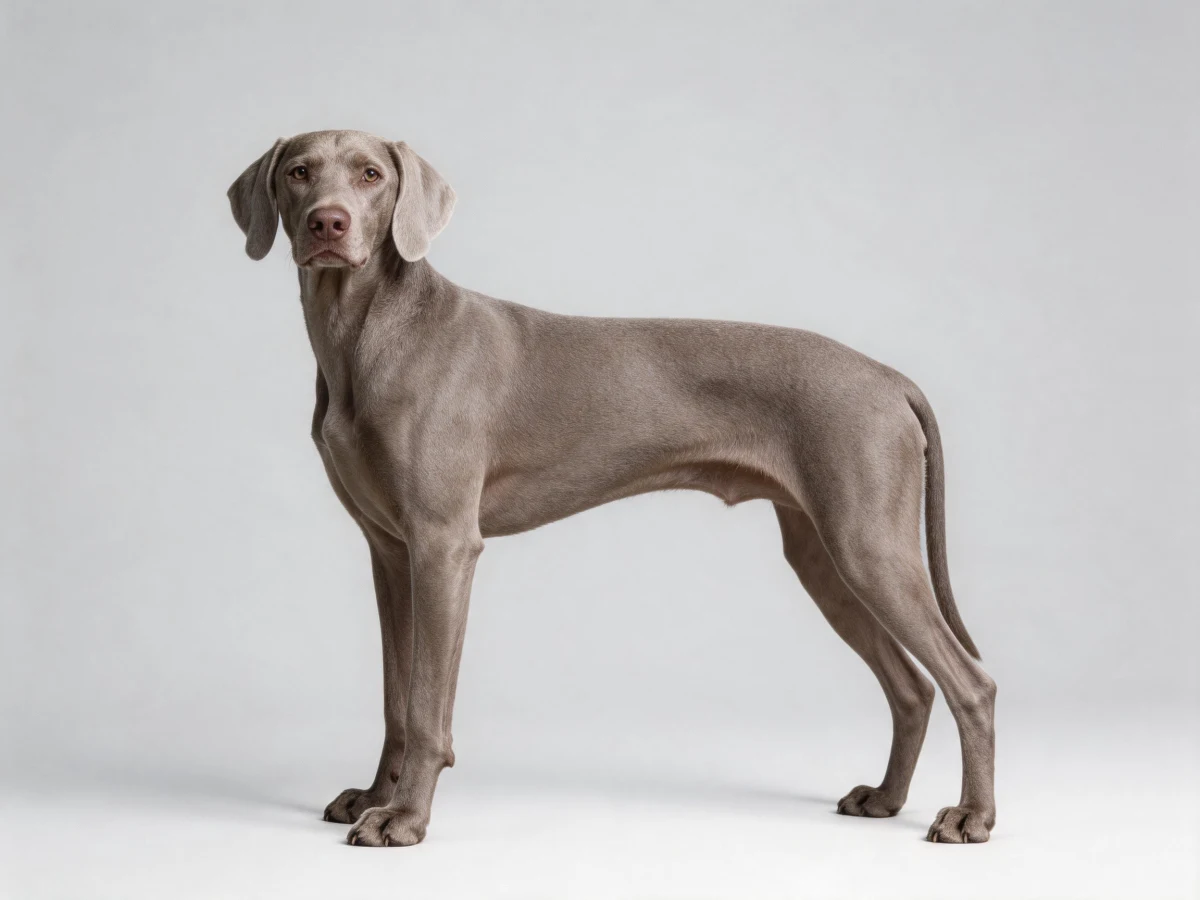
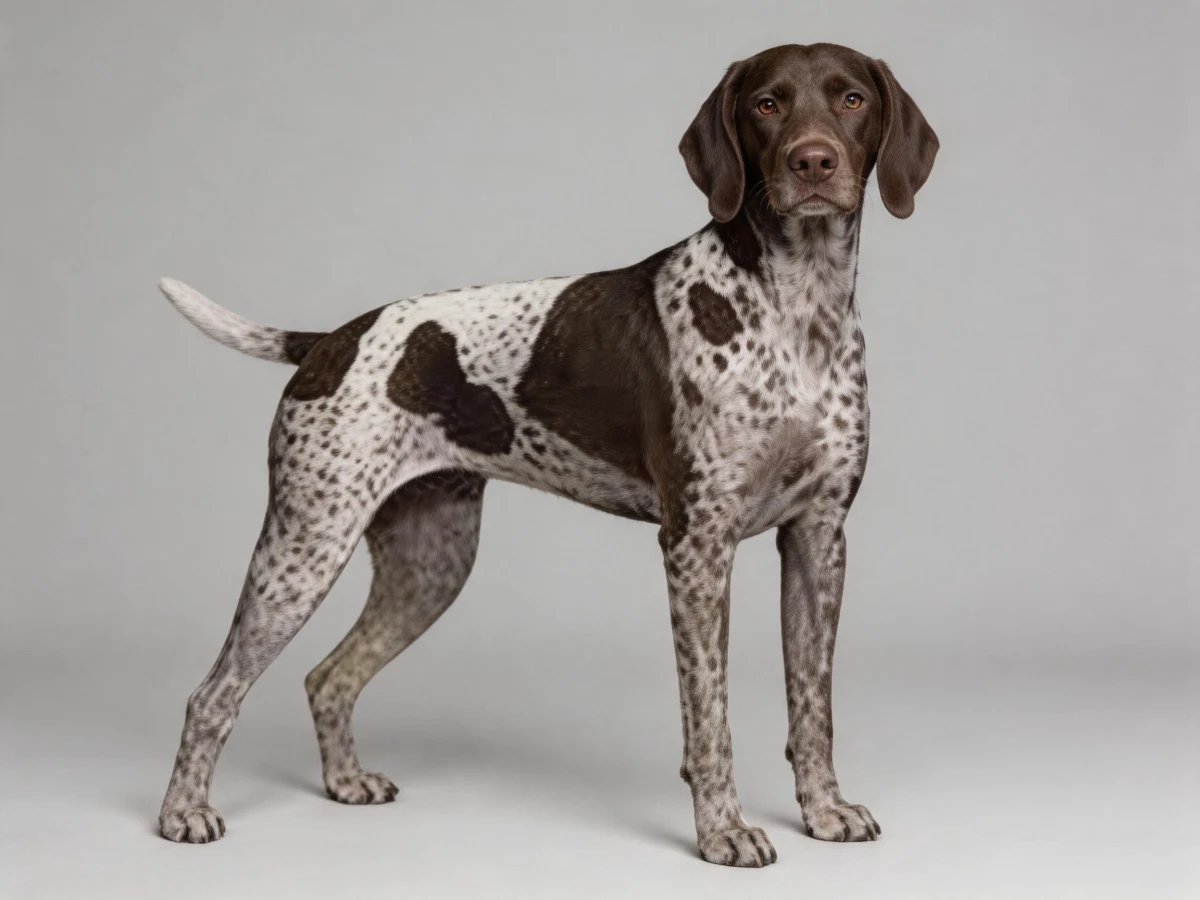
Wirehaired Vizsla
✨ Key Takeaways
- The Wirehaired Vizsla is a separate breed from the smooth Vizsla, not a coat variety — built in 1930s Hungary by Vasas Jozsef and Gresznarik Laszlo by crossing the smooth Vizsla with the German Wirehaired Pointer for a weatherproof gun dog.
- It was created on purpose to keep the Vizsla colour and character on a denser, harsher coat that could withstand hard winters and cold-water retrieving; the dense wire coat and the beard-and-eyebrow furnishings are its defining features.
- The breed nearly died out in the Second World War and was rescued through a 1950s Hungarian state kennel programme; the FCI recognised it under standard no. 239 as the Drotszoru Magyar Vizsla, and the AKC granted full Sporting-Group recognition on 2 July 2014.
- In temperament it is the Vizsla mind in a weatherproof coat: affectionate, clever, sensitive yet stubborn, a velcro dog that needs heavy daily exercise and constant companionship and cannot tolerate harsh training.
- It is generally sound and fairly long-lived (around 12 to 14 years); the recognised health risks are hip dysplasia, inherited eye conditions, and hypothyroidism, with cancer and epilepsy in the wider Vizsla picture — screen hips, eyes, and thyroid.
- It remains a genuinely rare breed: few breeders, waiting lists, and a small parent-club network (the Wirehaired Vizsla Club of America, founded 2008), so patience with a health-testing breeder is the right route to a sound puppy.
Quick Facts
Common Names & Variants
Modern aliases
Historical names
Modern variants & lines
⚖️ Pros & Cons
Advantages
Trade-offs
Physical Appearance
Recognized colors
Coat
Other
Ears: Drop. Tail: Natural (historically docked 1/4).
🕰 History
A second breed, not a second coat
The single most important fact about the Wirehaired Vizsla is the one most easily lost: it is a separate breed from the smooth-coated Hungarian Vizsla, not merely a long-coat variety of it. The two share a colour, a country, a job, and a name, and they are routinely confused — but in every major registry, including the AKC and the FCI, the Wirehaired Vizsla is registered under its own standard with its own studbook. It was deliberately built in the twentieth century to do something the smooth Vizsla could not do as well: keep hunting through a hard Central European winter and retrieve out of cold water. The coat is the whole point of the breed, and the breed exists because someone wanted that coat on a Vizsla.
The 1930s and the men who built it
The Wirehaired Vizsla was developed in Hungary in the 1930s. The work is attributed chiefly to Vasas József, who owned the Csabai vizsla kennel, working with Gresznárik László, who ran the de Selle kennel of German Wirehaired Pointers. Their stated aim was practical rather than cosmetic: to fix the golden-rust colour and biddable character of the Vizsla onto a heavier, denser, weatherproof coat and a more substantial frame, producing a dog that could work cold weather and icy water without the smooth Vizsla losing condition. To get there they crossed two well-pedigreed, proven working Vizsla bitches — recorded as Zsuzsi and Csibi — to a liver-coloured German Wirehaired Pointer sire, Astor von Potat. The best of that first generation were bred back together, and a bitch named Dia de Selle, the first Wirehaired Vizsla exhibited, came out of that consolidation.
Why the German Wirehaired Pointer
The choice of outcross was not random. The German Wirehaired Pointer (Deutsch Drahthaar) was already a finished article: a versatile continental hunt-point-retrieve dog carrying exactly the harsh, weather-resistant, double wire coat the Hungarian breeders wanted, on a pointing-dog frame and temperament close to the Vizsla's. Crossing to it brought the coat and the bone in one step rather than trying to select a wire coat out of the smooth population from scratch. The reported addition of further wire-coated and pointer blood during consolidation is consistent with the way continental gundogs were generally built in that era — by purposeful, recorded outcrossing toward a working type rather than by closed-book purity.
War, near-extinction, and state recovery
Like much of Hungarian cynology, the young breed was nearly wiped out by the Second World War and its aftermath, when the country's dog populations and the records that tracked them were devastated. The Wirehaired Vizsla came close to disappearing before its supporters rallied to save the surviving stock. During the 1950s a state-run kennel system was established for both the smooth and the wire Vizsla, and under that organised programme the wire breed recovered enough that the Fédération Cynologique Internationale recognised it under its own standard. The FCI standard carries the number 239 and the native name Drótszőrű Magyar Vizsla — "wire-haired Hungarian pointer."
Out of Hungary, slowly
The Wirehaired Vizsla spread out of Hungary far more slowly and in far smaller numbers than its smooth sister. It reached the United Kingdom and North America in the later twentieth century and remained genuinely rare in both. The United Kennel Club recognised it in 2006, and full American Kennel Club recognition came on 2 July 2014, placing it in the Sporting Group. The Wirehaired Vizsla Club of America, founded in 2008, became the AKC parent club. Even with that recognition the breed is uncommon — an estimated low thousands of dogs in the United States — and it sits low on the AKC popularity list rather than near its smooth cousin. The story of the Wirehaired Vizsla is therefore short and deliberate: a 1930s working cross, a wartime near-loss, a state-organised rescue, and a slow, late international spread that has kept it both rare and close to its original purpose.
Temperament & Personality
The Vizsla temperament, in a weatherproof coat
In character the Wirehaired Vizsla is, by design, very close to the smooth Vizsla — the cross was meant to change the coat and the bone, not the mind. The AKC standard describes the breed as self-confident, eager to learn, clever, sensitive and yet stubborn, affectionate and loyal with its owner, occasionally aloof with strangers, and carrying a keen protective instinct. That is a fuller, slightly steadier temperament sketch than the pure smooth Vizsla's, and owners tend to report the wire as a touch calmer and more settled in the house while being every bit as devoted. Shyness, nervousness and aggressiveness are explicit faults in the standard.
A velcro dog that needs a job
Like its smooth sister, the Wirehaired Vizsla is a true "velcro" dog: it attaches intensely to its people, wants to be with them, and is not a breed that thrives left alone in a yard or empty house. That devotion is its best quality and its main demand. This is an exuberant, high-energy gundog bred to hunt all day in hard country, and a Wirehaired Vizsla without enough physical exercise and mental work does not become a quiet house ornament — it becomes restless, vocal, and inventive in unwelcome ways. The breed needs a genuine outlet for its drive and a great deal of companionship, and the two needs are linked: the happiest Wirehaired Vizsla is a tired one who has been doing something alongside its person.
Sensitive, clever, and a little stubborn
The standard's pairing of "sensitive" with "stubborn" is the practical key to the breed. Sensitive means a Wirehaired Vizsla reads its handler closely, takes correction hard, and can sulk or shut down under heavy-handed treatment. Stubborn means it is also a thinking dog with its own opinions that will test a vague or inconsistent owner. The combination rewards calm, confident, consistent handling and punishes both harshness and softness. It is a clever breed that learns quickly, and that intelligence cuts both ways — a bored, under-exercised, under-led Wirehaired Vizsla learns how to open doors, counter-surf, and self-employ just as fast.
With family, strangers, and other animals
With its own family the Wirehaired Vizsla is affectionate, playful and gentle, and it is generally good with children when raised with them, though its size and bounce mean play with very small children should be supervised. The standard's "occasionally aloof with strangers" and "keen protective instinct" mean it tends to be reserved rather than openly friendly with newcomers and will often announce visitors — making it an effective watchdog without being a guard dog. With other dogs it is usually sociable, particularly when well socialised; its strong gundog prey drive means small pets and cats are a case-by-case matter best managed by early exposure and sensible supervision. The throughline of the temperament is closeness: this is a hunting partner that wants to be a member of the household, and it gives back exactly the attention and activity it is given.
Trait Scores
All 1–5 ratings sourced from AKC breed traits. NULL = unrated for this breed.
Trainability & cognition
Personality
Activity & adaptability
Social compatibility
Grooming & physical
🏡 Living With a Wirehaired Vizsla
A high-energy hunting dog in the living room
Living with a Wirehaired Vizsla means living with a working gundog that happens to be deeply affectionate. Around the house the breed is calmer and more settled than its reputation as a "red rocket" might suggest — the AKC calls it calm and gentle indoors — but that calm is earned, not given. It is the calm of a dog that has had its needs met. A Wirehaired Vizsla that has run, swum, trained, and stayed close to its people will lie quietly at your feet all evening; one that has been under-exercised and left alone will pace, whine, chew, and bond anxiously. This is not an apartment-default breed, though an athletic owner can make apartment life work with real daily commitment.
Exercise: a lot, every day, for life
The exercise requirement is the central fact of ownership. A Wirehaired Vizsla needs substantial daily activity — on the order of an hour or more of genuine exercise, not a stroll round the block — for its whole adult life. It was built to cover any terrain a walking hunter could reach, in all weathers, and it has the engine to match. Long off-lead runs in safe places, hiking, swimming, fetch, scent games, canicross, and dog sports all suit it; so does actual hunting, which is what it is for. The breed's love of water and its weatherproof coat mean cold and wet do not stop it. Mental work matters as much as physical: a clever gundog needs problems to solve, or it invents its own.
Companionship is not optional
The other non-negotiable is company. The Wirehaired Vizsla is a classic velcro breed that forms an intense attachment and does poorly with long stretches of isolation; separation-related distress is a real risk in a dog left alone all day. It suits a household where someone is around for much of the day, or one prepared to use daycare, dog-sitters, and crate-and-routine training to build the dog's tolerance for time alone gradually. This is a dog that wants to share your life rather than occupy a corner of it.
Climate, kids, and the practical fit
The wire coat, with its dense undercoat, gives the breed better cold and wet tolerance than the smooth Vizsla — this is precisely what it was bred for — so it copes well with a cool, damp, outdoorsy life, while still being a dog that lives indoors with its family rather than in a kennel. In heat it needs the usual sense: activity in the cooler hours and access to shade and water. With children it is a good, playful family dog when raised with them and supervised for size. The honest summary of living with one is that the Wirehaired Vizsla asks a lot — time, exercise, company, and consistency — and gives back an affectionate, biddable, weatherproof companion to the active owner who can meet the bill.
🎓 Training & Exercise
Biddable and quick — if you train kindly
The Wirehaired Vizsla is intelligent, eager to learn, and bred to work cooperatively with a handler near the gun, which makes it a genuinely trainable dog. The AKC standard names it "readily trainable for gun and falcon." It picks things up fast, enjoys the engagement, and is motivated by food, praise, and above all the attention of its person. For an owner who runs short, upbeat, reward-based sessions, the breed is a pleasure to teach and is well suited to obedience, agility, scent work, and of course field work.
The sensitivity rule
The defining training constraint is the standard's own warning: the breed "cannot tolerate harsh handling." This is a sensitive dog. Raised voices, physical corrections, and heavy aversive tools do not toughen a Wirehaired Vizsla — they frighten it, damage the bond, and produce a shut-down or anxious dog that performs worse, not better. Positive, reward-based methods are not a stylistic preference for this breed; they are the only approach that fits the temperament. Consistency and calm confidence from the handler matter just as much, because the standard's "stubborn" streak means a Wirehaired Vizsla will exploit vagueness and inconsistency.
Socialisation and the early foundation
Because the breed is naturally somewhat aloof with strangers and carries a protective instinct, early and thorough socialisation is the highest-value training work an owner does. A puppy gently and positively exposed to many people, dogs, places, surfaces, and sounds grows into the confident, even-tempered adult the standard calls for, rather than a reactive or over-wary one. Puppy class started early builds that base and gives the sensitive young dog good experiences with other dogs and handlers. Getting the dog comfortable with handling — coat, beard, ears, feet — also pays off for a lifetime of grooming and vet care.
Recall, impulse, and the working brain
Two practical priorities follow from the breed's gundog wiring. First, recall: a Wirehaired Vizsla is a nose-and-prey-driven hunting dog that will follow scent and movement if allowed, so a rock-solid recall and reliable "leave it" are safety essentials, built early and proofed against real distractions before the dog is trusted off-lead in open country. Second, channelling the drive: this is a dog that needs a job, and structured training — gundog work, tracking, dog sports, trick training, food-puzzle work — is as much about meeting a mental need as teaching manners. An under-employed Wirehaired Vizsla trains itself into mischief; a well-employed one is one of the more satisfying breeds to live and work with.
✂️ Grooming & Coat Care
A wire coat that is lower-maintenance than it looks
The dense, wiry, weather-resistant coat is what makes the Wirehaired Vizsla a distinct breed, and the good news is that it is a relatively practical coat to live with. It is about an inch long, close-lying, with a harsh wiry outer layer over a softer dense undercoat, and it is meant to be shown almost in its natural state — the standard says nothing more than a tidy-up should be needed, and a clipped coat is faulty. For a pet, that translates to a weekly brush to remove dead hair and keep the jacket in order, with a bit more attention during seasonal coat changes. The breed is a moderate seasonal shedder rather than a heavy year-round one.
Hand-stripping versus the pet trim
To keep a show coat in correct harsh texture, breeders hand-strip it — plucking out dead hair rather than cutting it, which is what preserves the wiry feel and weatherproofing. A pet owner does not have to hand-strip, but should understand the trade-off: clipping softens the coat over time and is penalised in the ring, so a show or working dog is stripped while a pet can be kept tidy with brushing and occasional light tidying. Either way the coat is not high-effort by gundog standards, and bathing is only an occasional need — the harsh coat sheds dirt well, and over-bathing softens it.
The beard, eyebrows, and face
The breed's signature furnishings — the strong harsh beard and the pronounced bushy eyebrows — are part of its charm and need a little routine care. The beard catches food and water and should be wiped and checked so it stays clean and does not mat or sour; the eyebrows and the V-shaped brushes on the neck are simply tidied as part of grooming. None of this is demanding, but it is the part of Wirehaired Vizsla grooming a smooth-Vizsla owner would not be used to.
Ears, nails, teeth, and the working dog's skin
The moderate drop ears hang close to the cheek and should be checked and gently cleaned on a routine schedule, especially in a dog that swims often, since moisture in a folded ear invites infection. Nails grow and should be trimmed every few weeks before they click on the floor; the standard even calls for short, self-coloured nails. Teeth should be brushed regularly from puppyhood. A working or hunting Wirehaired Vizsla also needs a post-outing check for grass seeds, ticks, and minor cuts in the coat, beard, ears, feet, and skin — the standard expressly tolerates honourable working scars, which tells you what kind of life this coat was built for. Overall the breed is a sensible, low-fuss grooming proposition for an active owner: a weekly brush, a clean beard, routine ear-nail-teeth care, and the occasional strip or tidy.
🍖 Diet & Nutrition
Fuel for a working athlete
The Wirehaired Vizsla is a lean, muscular, high-energy gundog, and its feeding should reflect that it is an athlete rather than a couch dog. A complete, good-quality diet appropriate to the dog's age, size, and activity level suits the breed; a hard-working or actively hunting dog burns considerably more than a companion dog and may need a higher-energy ration, while a less active pet needs less than the bag's generous guideline suggests. Feed measured meals against the dog's ideal lean condition rather than free-feeding, and adjust by what you see and feel — ribs easily felt, a clear waist — across the seasons and the dog's working year.
Lean is the target — and the thyroid caveat
Keeping the Wirehaired Vizsla lean is the single most valuable everyday health decision an owner makes, protecting the joints (relevant given the breed's hip-dysplasia risk) and overall longevity. There is a breed-specific wrinkle here: because hypothyroidism is not uncommon in the breed and causes weight gain and lethargy, a Wirehaired Vizsla that becomes unexpectedly heavy, sluggish, or develops coat and skin problems despite sensible feeding deserves a thyroid check rather than just a calorie cut. Weight management and thyroid health are linked in this breed in a way worth keeping in mind.
Puppy growth in a deep-chested breed
Wirehaired Vizsla puppies should be raised on a complete diet formulated for growth, fed in several small meals a day while young and settling to twice-daily feeding as an adult. Steady, moderate growth is better than pushing a puppy to grow fast and heavy, which stresses developing joints in a breed already watching its hips. As a deep-chested, athletic breed it is also sensible to follow the standard gastric-torsion precautions — avoid one large gulped meal, and avoid hard exercise immediately before and after eating — splitting the daily ration into two meals rather than one.
Working dogs, treats, and water
For a dog that hunts or competes, feeding has to track the workload: more on heavy working days, with rest and digestion managed around exertion, and the same lean target maintained over the year rather than letting an off-season dog gain. Treats are best drawn from the daily ration and used as training currency, which suits a food-motivated, highly trainable breed. Fresh water should always be available — especially for a swimming, hard-running dog — and any diet question tied to a diagnosed health issue, particularly thyroid or weight problems, belongs with a veterinarian rather than a feeding chart.
🐶 Buying & Adopting a Wirehaired Vizsla
Start with the parent club, and expect to wait
The Wirehaired Vizsla is a rare breed, and that shapes the whole buying process. There are relatively few breeders and relatively few litters, so the right starting point is the Wirehaired Vizsla Club of America — the AKC parent club, founded in 2008 — and the equivalent national clubs elsewhere, such as the Hungarian Wire Haired Vizsla Association in the UK. Going through the parent club connects a buyer with breeders who follow a code of ethics and health-test their stock, and it sets a realistic expectation: a well-bred Wirehaired Vizsla puppy usually means a waiting list, not an immediate purchase, and that wait is a feature of the breed rather than a problem with it.
The health screening to ask for
A responsible Wirehaired Vizsla breeder health-tests both parents and will show you the results. The screening to ask for centres on a hip evaluation (OFA or equivalent), an eye examination by a board-certified veterinary ophthalmologist, and an autoimmune thyroid (thyroiditis) panel, with many careful breeders adding elbow and cardiac evaluations. These tests exist because the breed's recognised risks are hip dysplasia, inherited eye conditions, and hypothyroidism, alongside the wider Vizsla concerns of cancer and epilepsy. Asking to see current paperwork is ordinary consumer due diligence. A breeder who produces these results and talks openly about the breed's health is the one to trust; "our dogs are healthy, we don't test" is the answer to walk away from.
Meeting the breeder and the dogs
Because the breed is uncommon, a good breeder will also be assessing you — this is a high-energy, high-attachment working gundog, and the better breeders place puppies into homes that can meet the exercise and companionship demands. Expect to discuss your activity level, your hours, and whether the dog will hunt or compete. You should be able to meet at least the dam and see the conditions the puppies are raised in, and a good breeder offers lifetime support and takes a dog back if the placement fails. The rarity that makes the breed hard to find also means the breeder network is small and reputation-driven, which works in a careful buyer's favour.
Rescue, price, and red flags
Breed-specific Wirehaired Vizsla rescue exists but is small, simply because the breed is uncommon; the parent club is the best route to any dog needing rehoming, and an adopter open to an adult of known temperament can occasionally find one that way. On price, a well-bred, health-tested Wirehaired Vizsla puppy in the United States typically runs in the region of USD 1,500–3,500, reflecting both the screening behind it and the breed's scarcity. The red flags are the familiar ones, sharpened by rarity: a Wirehaired Vizsla offered cheaply with immediate availability, no parent-club connection, no health testing, and parents you cannot meet is a warning, not a bargain — and given how few are bred each year, patience with a reputable breeder is almost always the right call.
📜 Breed Name Etymology — iDogNames original research
Vizsla — a job word, not a breed name
The heart of the name is the Hungarian word vizsla, and the key fact about it is that it is not, originally, the name of a breed. In Hungarian vizsla is essentially a common noun for a pointing, searching gundog — the way braque works in French — so "Vizsla" describes what the dog does rather than naming a specific lineage. The word is old: it is documented in Hungarian sources in the fourteenth century (a commonly cited first appearance is around the mid-1300s, the figure 1357 is often given), and its deeper origin is genuinely uncertain, with proposed roots ranging from a Turkic verb meaning "to seek" to a Hungarian place name on the Danube. What is solid is the working sense: a vizsla is a searching, pointing dog.
Drótszőrű Magyar Vizsla — the full native name
The breed's formal Hungarian name, and the FCI standard name, is Drótszőrű Magyar Vizsla. It decomposes cleanly: drótszőrű means "wire-haired" (literally "wire-coated," from drót, wire, and szőr, hair or coat); magyar means "Hungarian" or "Magyar"; and vizsla is the pointing-dog word above. The whole name is therefore "the wire-haired Hungarian pointer." It is the exact parallel of the smooth breed's native name, Rövidszőrű Magyar Vizsla ("short-haired Hungarian pointer"), with the single coat word swapped — which is precisely the linguistic fingerprint of two separate breeds built on one stock and distinguished by their coats.
What "Wirehaired" carries in English
The English name is a direct translation of the coat element: "Wirehaired Vizsla," with "Hungarian Wirehaired Vizsla" used as the fuller form, especially in the UK. The "wirehaired" is doing real work — it is the whole reason the breed exists and the whole reason it is separated from the smooth Vizsla — so unlike a casual descriptor it is effectively part of the breed's identity rather than an optional adjective. The shorthand "WHV" is common in club and owner usage.
The colour that hides in the name
One historical strand worth noting is colour. The smooth Vizsla was sometimes called sárga vizsla, "the yellow pointer," and the entire purpose of building the wirehaired breed was to keep that distinctive golden-rust colour while changing the coat texture. So although the modern name foregrounds the wire coat, the colour the standard calls "golden rust" is the silent constant that the name vizsla has carried for both breeds all along — the pointing dog of that particular Hungarian gold.
Name forms at a glance
| Name | Role | Origin | Literal meaning | First recorded |
|---|---|---|---|---|
| Wirehaired Vizsla | primary | English (descriptive) + Hungarian | the wire-haired Hungarian pointing dog | — |
| Drotszoru Magyar Vizsla | origin country native | Hungarian | the wire-haired Hungarian pointer | — |
| vizsla | historical | Hungarian (common noun for a pointing dog) | pointing, searching dog | 1357 |
| Rovidszoru Magyar Vizsla | historical | Hungarian | the short-haired Hungarian pointer | — |
| Hungarian Wirehaired Vizsla | alias | English (descriptive) | the wire-haired pointing dog from Hungary | — |
🏛 Naming Traditions — iDogNames original research
A Hungarian gundog with three honest naming routes
The Wirehaired Vizsla's naming culture rests on the same foundations as its smooth sister's, because the two share a country, a colour, and a working heritage — but the wire breed adds its own weatherproof, hard-country, recently-built character on top. Three coherent routes give a Wirehaired Vizsla a name with real heritage rather than a generic gundog label: the Hungarian-language route that honours the breed's nation and its founders, the golden-rust colour route that honours the constant the name vizsla has always carried, and the field-and-quarry route that honours what the harsh coat was built to do.
The Hungarian-language layer
The strongest heritage route is simply Hungarian. This is a Magyar breed, named with Magyar words, saved by Hungarian fanciers and a Hungarian state kennel, and Hungarian given names sit on it perfectly: Bence, Csaba, Zoltán, Béla, and Gábor for dogs; Zsuzsi, Réka, Ilona, Csilla, and Piri for bitches. There is a documented pull toward the breed's own history here — Zsuzsi and Csibi were the actual foundation bitches, and Vasas echoes the founder Vasas József — so a Hungarian name is not decoration but a direct line back to where the breed came from.
The golden-rust colour layer
The second route follows the colour the standard fixes as golden rust — the very thing the breed was built to keep. Colour names that read warm and metallic suit it: Rozsda (Hungarian for "rust"), Réz ("copper"), Arany ("gold"), Amber, Copper, Rusty, Sable, Henna. Because both Vizslas were once known as the "yellow pointer," a colour name is one of the most heritage-true choices available — it names the constant that the wire coat was draped over.
The field-and-quarry layer
The third route honours the job. The Wirehaired Vizsla was bred specifically to keep hunting through hard winters and to retrieve from cold water, so terse field and quarry names suit the working dog: Hunter, Scout, Ranger, Gunner, Drake, Teal, Marsh, Reed, Birdie. These call well across open country and sit honestly on a versatile hunt-point-retrieve breed shown with its working scars intact. The name the breed's heritage argues against is the soft toy-dog name or the tough ironic one: a clever, sensitive, weatherproof Magyar gundog is best served by a Hungarian name, a golden-rust colour name, or a clean field name — each of which says something true about the dog.
🐾 Themed Names for Your Wirehaired Vizsla — iDogNames original research
Hungarian heritage names
Authentic Hungarian (Magyar) given names that honour the breed's nation and its founders. The most heritage-true route for a Drótszőrű Magyar Vizsla.
- Bence — popular Hungarian boy's name; easy to call in the field
- Csaba — Hungarian name echoing the Csabai foundation kennel
- Zoltán — classic Magyar name; strong and easy to shorten to Zoli
- Béla — traditional Hungarian name; short and clear
- Gábor — common Hungarian name; dignified working call
- Zsuzsi — after one of the breed's actual foundation bitches (female)
- Réka — Hungarian girl's name; soft but clear (female)
- Ilona — classic Magyar female name; the Hungarian Helen (female)
- Csilla — Hungarian female name meaning a glimmer of light (female)
- Vasas — a nod to founder Vasas József; characterful and historic
Golden-rust colour names
Names for the breed's defining golden-rust coat — the colour the wirehaired breed was built to keep. Several use the Hungarian colour words.
- Rozsda — Hungarian for rust; exact colour, exact heritage
- Réz — Hungarian for copper; short and metallic
- Arany — Hungarian for gold; the breed's golden tone
- Copper — plain English for the warm rust coat
- Amber — golden-rust; soft and female-leaning (female)
- Rusty — friendly, unfussy name for the rust coat
- Henna — reddish-rust dye; warm and characterful (female)
- Sable — rich warm-brown register; dignified
- Cinnamon — warm red-brown; accurate for a darker coat (female)
- Ginger — classic red-coat name; easy to call
Field and quarry names
Terse working names for a versatile hunt-point-retrieve gundog bred for hard winters and cold water. Best for a working or hunting Wirehaired Vizsla.
- Hunter — plain and true to the breed's whole purpose
- Scout — for the searching, pointing dog; carries well outdoors
- Ranger — far-reaching field worker; strong recall name
- Gunner — gundog-field classic; sharp and clear
- Drake — a male duck; for the cold-water retriever
- Teal — small game duck; a gundog-field staple
- Marsh — the wet ground the breed was built to work; one hard syllable
- Reed — wetland cover; short, clean field name
- Birdie — for the bird dog; friendly and easy (female-leaning)
- Pike — terse and sharp; reads as a working name
More Hungarian heritage names
- Hungarian Trail - best for a Wirehaired Vizsla name rooted in Hungary rather than generic style
- Hungary (Csabai vizsla and de Selle wirehaired-pointer kennels) Ridge - best for a regional landscape cue tied to the Wirehaired Vizsla story
- Local Line - best for a name that respects local breed history
- Old Route - best for migration, trade, field or pastoral routes behind the breed
- Heritage Note - best for a page where origin should be treated as context, not decoration
- Village Path - best for rustic, local or landrace-style background
- Working Home - best for a dog whose name should remember versatile hunt-point-retrieve gun dog bred to withstand harsh winters and cold-water retrieving in field, fore
- Country Mark - best for a concise country-of-origin cue
More work and purpose names
- Field Note - best for a Wirehaired Vizsla whose name should point to versatile hunt-point-retrieve gun dog bred to withstand harsh winters and cold-water retrieving in field, fore
- Soft Mouth - best for a retrieving dog expected to carry gently
- Search Cast - best for quartering fields or cover in a controlled way
- Reed Fetch - best for water-edge retrieving or marsh imagery
- Feather Find - best for bird-dog heritage without overstating modern use
- Steady - best for a gundog learning calm around birds and movement
- Check Cord - best for careful field training in open places
- Partner - best for a cooperative handler-dog working relationship
More coat and build names
- Golden Rust - best for a Wirehaired Vizsla whose color or markings deserve a simple call name
- Wire Coat - best for the wire coat type on this breed
- White Blaze - best for a clear face or chest marking
- Dark Mask - best for a dog with a strong muzzle or face marking
- Weather Coat - best for outdoor or working-dog coat context
- Strong Frame - best for a dog whose build is part of its function
- Bright Eye - best for an alert expression
- Ground Step - best for a name tied to movement and body type
📋 Breed Standard at a Glance
General appearance
The AKC standard describes the Wirehaired Vizsla as a distinguished, versatile hunting dog of medium size, bred for substance and a dense wire coat, robust and lean, balanced in size and proportion. Originating in Hungary, it was developed by hunters and falconers who wanted a sturdy dog able to withstand harsh winters in field, forest, and water. Movement is powerful yet graceful with far-reaching drive that lets the breed hunt in all elements. Its most distinguishing features are the weather-resistant dense wire coat and the facial furnishings — the beard and eyebrows. Natural appearance is essential to type: the dog is shown with limited stripping and is not penalised for honourable working scars.
Size, proportion, and substance
The ideal male over twelve months is 23 to 25 inches at the highest point of the shoulder blades (about 58–64 cm); the ideal female is 21½ to 23 inches (about 54–60 cm). The breed is meant to be medium-sized, and dogs more than an inch over or under those limits are disqualified. The body is slightly longer than tall, in a ten-to-nine ratio of length to height, well muscled and strong with sufficient bone and substance. Symmetry and balance matter more than mere measurable size.
Coat, colour, head, and temperament
The coat is the breed's defining feature: close-lying, about an inch long, a dense wiry outer coat over a dense undercoat for weather and injury protection, with shorter softer hair on the lower legs and underside, pronounced eyebrows, and a strong harsh beard about an inch long. The colour is golden rust in varying shades; a self-coloured dog whose eyes, eye-rims, lips, nose, and toenails blend with the coat. Eyes are slightly oval and as dark as possible (yellow eyes a serious fault); the nose blends with the coat and any black on the nose is a disqualification. Ears are set at medium height, hanging in a rounded V. The standard's temperament clause calls for a self-confident, eager, clever, sensitive yet stubborn dog, affectionate and loyal, occasionally aloof with strangers and protective; shyness, nervousness, or aggressiveness are faults. The standard was approved in 2012 and made effective in 2013.
Movement, faults, and the working ideal
Gait is treated as functional evidence rather than ring decoration: the standard asks for a light-footed, smooth, dynamic yet graceful trot with far-reaching drive, the topline staying level and the back firm, because that economical movement is what lets the breed hunt all day over any terrain. The disqualifications are revealing of what the breed is meant to be — dogs or bitches outside the height limits, a partly or completely black nose, an over- or undershot bite, more than two missing teeth, rear dewclaws, and white extending above the toes or anywhere but a small mark on the forechest and throat. Taken together with the clause that honourable working scars are not to be penalised and that the dog is shown almost in its natural state, the standard reads as a deliberate guard against turning a rugged versatile gundog into an over-groomed show dog. The breed standard was approved by the AKC on 18 August 2012 and became effective on 1 January 2013.
🏆 Recognition
Recognized by the American Kennel Club in 2014 as a Sporting breed. FCI standard No. 239 (Section 1 — Continental Pointing Dogs (with working trial)), recognized in 1966.
Other registries
Breed clubs
❓ Frequently Asked Questions
Are Wirehaired Vizslas good family dogs?
Yes, for an active family. A well-socialised Wirehaired Vizsla is affectionate, loyal, playful, and gentle with children it is raised with, and it loves being a full member of the household rather than a kennel dog. The caveats are practical: it is a high-energy gundog that needs an hour or more of real daily exercise, and it forms an intense velcro attachment that makes long hours alone a poor fit. In a busy, outdoorsy home that can meet its exercise and companionship needs, it is a devoted family dog; in a home that is empty all day or wants a low-energy pet, it is not.
Do Wirehaired Vizslas shed a lot?
No — they are moderate seasonal shedders rather than heavy year-round ones. The dense wire coat sheds some dead hair, more noticeably during seasonal coat changes, and a weekly brush keeps it under control. The breed is not hypoallergenic. Show and working dogs are hand-stripped to keep the harsh texture; a pet can simply be brushed and lightly tidied.
How much exercise does a Wirehaired Vizsla need?
A lot. Plan on an hour or more of genuine daily exercise — off-lead running in safe places, hiking, swimming, fetch, scent work, dog sports, or actual hunting — for the dog's whole adult life, plus mental work to occupy a clever gundog brain. The breed was built to cover any terrain a walking hunter could reach in all weathers, and an under-exercised one becomes restless, vocal, and destructive. This is not an apartment-default dog, though a committed athletic owner can make it work.
How long do Wirehaired Vizslas live?
Typically about 12 to 14 years; a UK breed-club survey reported an average life expectancy near 13 years. It is a generally sound, athletic breed, and the best things an owner can do for longevity are to buy from health-tested parents (hips, eyes, thyroid) and keep the dog lean and well-exercised throughout its life.
Are Wirehaired Vizslas easy to train?
Yes, with the right approach. The breed is intelligent and eager to learn, bred to work cooperatively near the gun, and it picks things up quickly with short, upbeat, reward-based sessions. The crucial rule is that it is a sensitive dog and, in the words of its own standard, cannot tolerate harsh handling — heavy corrections shut it down. It also carries a stubborn streak that rewards calm, consistent leadership, and early socialisation is essential because it is naturally a little aloof with strangers.
Are Wirehaired Vizslas hypoallergenic?
No. The Wirehaired Vizsla sheds and is not considered a hypoallergenic breed. The harsh double coat is lower-maintenance than many, but it is not a low-allergen dog, and no breed is truly allergy-free. Allergy sufferers should spend time around the breed before committing.
What is a Wirehaired Vizsla's temperament like?
By its standard it is self-confident, eager to learn, clever, sensitive yet stubborn, affectionate and loyal with its owner, occasionally aloof with strangers, and carrying a keen protective instinct. In practice that means a devoted velcro companion that wants to be with its people, is biddable but needs kind handling, and tends to announce visitors. Shyness, nervousness, and aggressiveness are explicit faults; a sound Wirehaired Vizsla is confident and even-tempered.
How much does a Wirehaired Vizsla puppy cost?
A well-bred, health-tested Wirehaired Vizsla puppy in the United States typically runs roughly USD 1,500–3,500, reflecting both the screening behind it and the breed's scarcity. Because the breed is rare, good breeders usually keep a waiting list. Be wary of puppies offered cheaply with immediate availability, no health testing, and no parent-club connection.
📚 Sources & Further Reading
Every load-bearing factual claim on this page is anchored to one of the sources below. iDogNames does not synthesize from secondary aggregators.
- akc breed page Wirehaired Vizsla — AKC Breed Profile
- akc standard pdf Official Standard for the Wirehaired Vizsla (AKC, approved 2012)
- fci standard pdf FCI Standard No. 239 — Drotszoru Magyar Vizsla (Hungarian Wire-haired Pointer)
- breed club official Wirehaired Vizsla Club of America — AKC parent club
- breed club official History of the Hungarian Wirehaired Vizsla
- wikipedia Wirehaired Vizsla — Wikipedia
- wikipedia Vizsla — Wikipedia (etymology and shared history)
- veterinary org Wirehaired Vizsla — Dog Breed Health and Care (PetMD)
- wikidata Wirehaired Vizsla (Wikidata Q1191455)