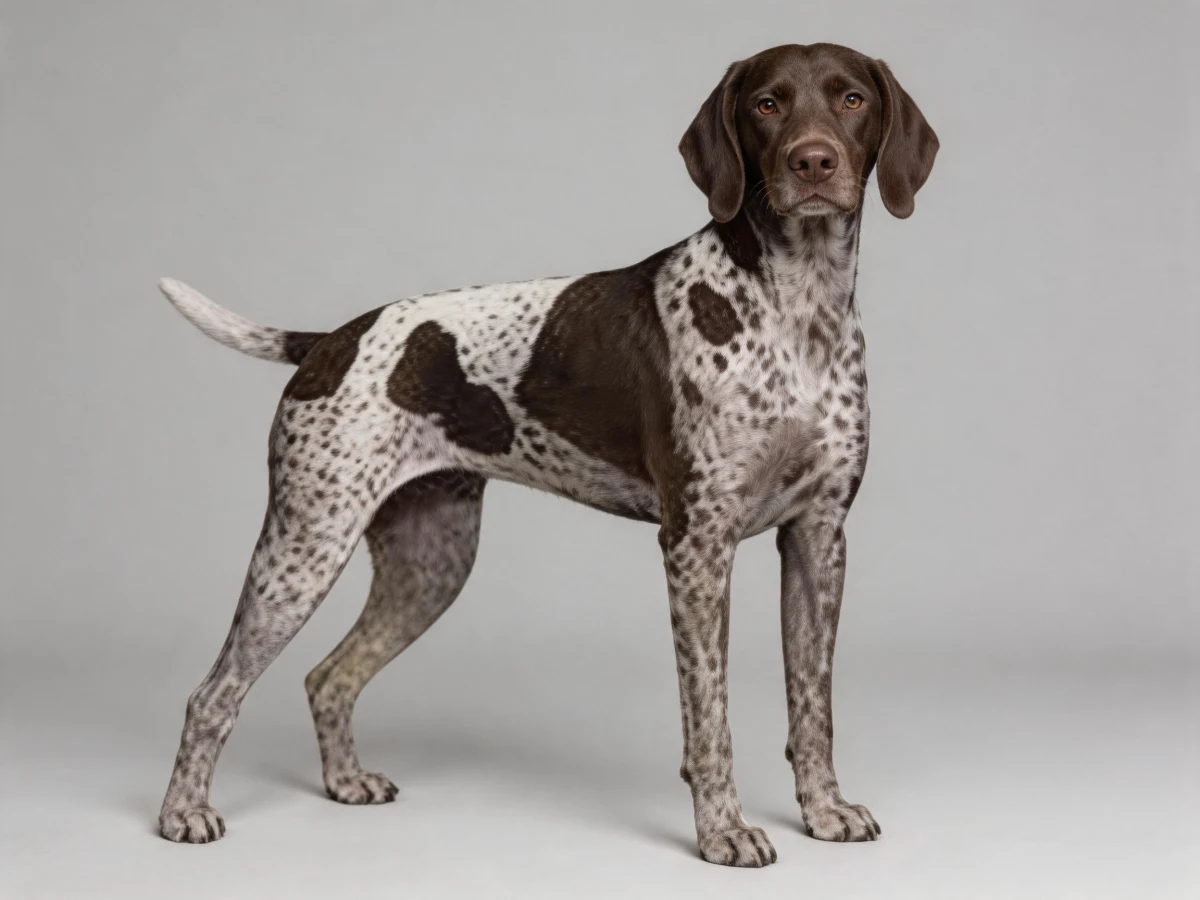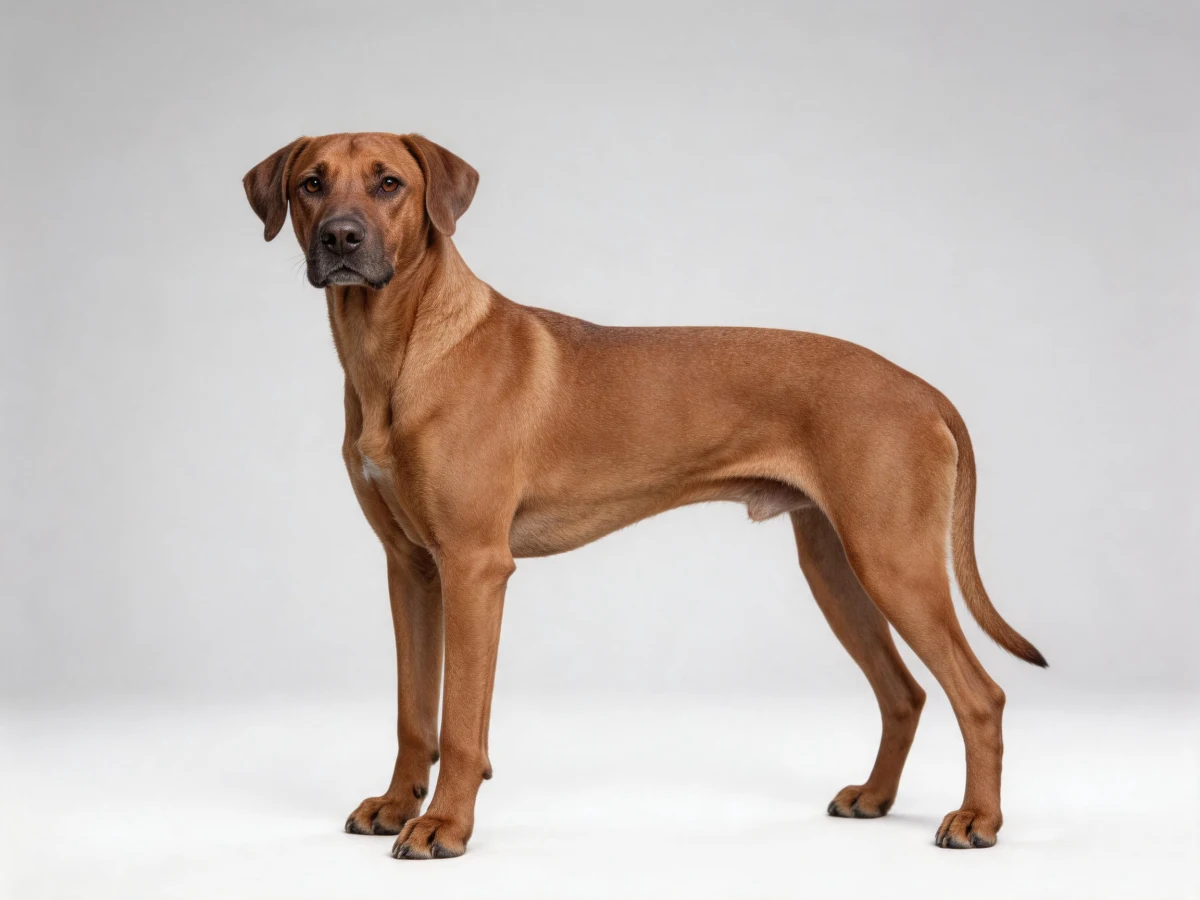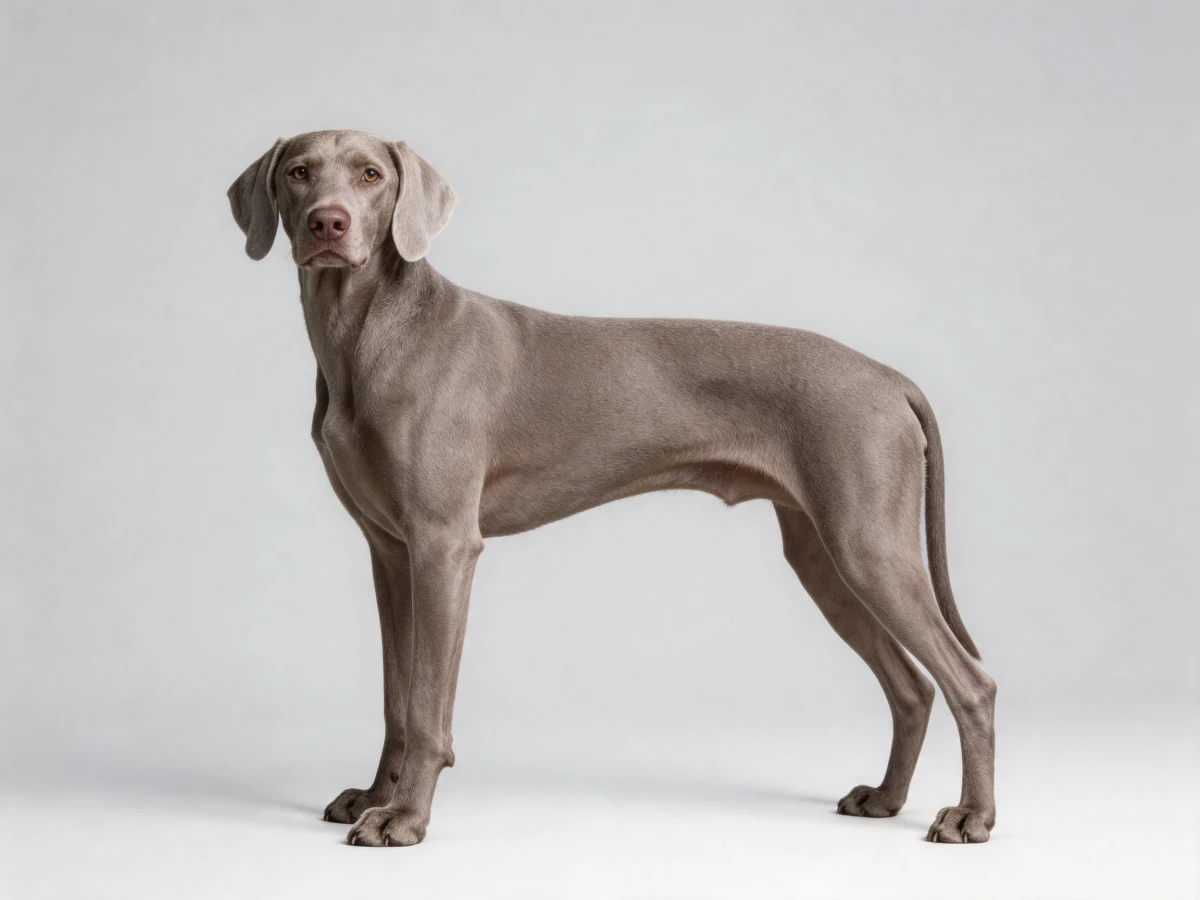
Weimaraner
✨ Key Takeaways
- The Weimaraner began as the noble big-game hound of the Weimar court and the Thuringian gamekeepers, then was deliberately re-purposed during the 19th century into an all-round pointing and retrieving gun dog — it is one of the few breeds whose job changed mid-history by design.
- The German breed club did not nearly lose the dog — it locked it down. From the 1897 Erfurt founding the club gatekept membership and exports tightly, which is why the breed reached the United States late and through a controlled channel rather than a refugee scramble.
- Howard Knight became the first American club member in 1928 but was sent only sterilised dogs; his real foundation stock arrived in 1938 (Adda and Dorle v. Schwarzen Kamp, Aura v. Gaiberg, and the dog Mars aus der Wulfsreide). The Weimaraner Club of America followed in 1942 and AKC recognition in 1943.
- Hypertrophic osteodystrophy is the breed-defining young-dog disorder: Safra et al. (2013, JAVMA) found all 53 study Weimaraners had been vaccinated 1–30 days before HOD onset and 52.8% had HOD-affected littermates — a documented familial, vaccination-associated pattern.
- Bloat (gastric dilatation-volvulus) is the major adult risk in this deep-chested breed; the Weimaraner Club of America CHIC panel (hips, eyes, thyroid, advanced cardiac, plus HUU/HYM/SD DNA tests) is the buyer's checklist.
- Grey is the breed's identity, not a marketing premium: FCI Standard 99 recognises only mouse-, roe- and silver-grey, and the AKC standard explicitly disqualifies a distinctly blue or black coat.
Quick Facts
Common Names & Variants
Modern aliases
Historical names
Modern variants & lines
⚖️ Pros & Cons
Advantages
Trade-offs
Physical Appearance
Recognized colors
Coat
Other
Ears: Drop, lobular. Tail: Natural (historically docked).
🕰 History
A court dog before it was a gun dog
The Weimaraner did not start out chasing pheasant. It started out chasing boar, bear, and deer for men who hunted on horseback. The breed takes its name from Weimar, the small ducal capital in what is now Thuringia, and breed tradition ties its early patronage to the sporting nobility there — Grand Duke Karl August of Saxe-Weimar-Eisenach is the figure most often named. That attribution should be read with care. The Weimaraner Club of America's own history and Wikipedia both place the dog at the Weimar court "in the early nineteenth century," but the FCI is more cautious, noting only that before pure breeding began, the dog was "mainly in the hands of professional hunters and gamekeepers in central Germany, mostly in the regions round Weimar and in Thuringia." The court connection is plausible and old; a continuous documented pedigree from a grand duke's kennel is not. The honest version is a regional big-game hound bred by the people with the forests and the leisure to keep one.
What the early dog did is clearer than who owned it. This was a Leithund-type tracking hound used on large, dangerous game — the kind of work that rewards a calm nose-down tracker that will hold a wounded boar until the hunter arrives. The grey coat was already a marker; the FCI's historical note records that the breed was bred for that silver-grey colour from the start.
The conversion: from bear hound to bird dog
Then the job changed, on purpose. Through the latter half of the 19th century — as Germany's great forests shrank, big game thinned, and wing-shooting over pointing dogs became the gentleman's sport — German breeders deliberately re-tooled the Weimaraner from a heavy-game tracker into a versatile pointing and retrieving gun dog. The Weimaraner Club of America puts it plainly: the dog "was converted from a bear and deer hunter to a 'fur and feathers' dog." This is the breed's defining historical fact and the thing that separates it from almost every other gun dog: most pointers were always pointers, but the Weimaraner was re-engineered into one. Exactly which Continental Braque-type gun dogs were crossed in during that conversion is not fully documented — like most 19th-century German breeding it ran through gamekeepers' notebooks rather than a stud book — and careful histories say so.
1891: a breed on paper, and a club that locked the gate
Formal recognition came at the end of the century. Per Wikipedia's account, the Weimaraner was recognised as a distinct breed in 1891, a breed standard followed in 1896, and in 1897 a club was founded at Erfurt under the cumbersome name Verein zur Reinzucht des silbergrauen Weimaraner-Vorstehhund — the "association for the pure breeding of the silver-grey Weimaraner pointer." What that club did next defines the breed's history more than any single dog. It treated the Weimaraner as a closed asset: membership was gated, breeding was controlled, and selling dogs out of Germany — especially abroad — was discouraged or refused outright. This is the cleanest contrast with the Vizsla, whose story is collapse and rescue; the Weimaraner's story is the opposite, a population kept deliberately scarce by its own guardians.
Howard Knight, two sterile dogs, and a long wait
That gate is why the breed reached America so late and through such a narrow door. Howard Knight, a sportsman from Providence, Rhode Island, became the first American admitted to the German club in 1928. The club's protectiveness was literal: the first dogs sent to Knight had been deliberately sterilised so he could not breed from them. He waited a decade. In 1938 the Germans finally released real foundation stock — the litter sisters Adda and Dorle v. Schwarzen Kamp, the year-old bitch Aura v. Gaiberg, and the puppy dog Mars aus der Wulfsreide. The American Weimaraner descends from that small, controlled importation, not from a wave of dogs.
A club, the AKC, and the post-war boom
With breeding stock finally in hand, Knight and others formed the Weimaraner Club of America in 1942, and the American Kennel Club recognised the breed in 1943, the dog appearing at Westminster soon after. In Britain the route was just as deliberate: the breed was brought over in 1952 by Major Robert Petty, who had seen Weimaraners worked in Germany, and the Weimaraner Club of Great Britain followed in 1953. What's striking about the breed's modern history is the whiplash. A dog kept rare on purpose for half a century became, in post-war America, a fashionable celebrity gun dog — President Eisenhower owned one, and William Wegman's photographs made the grey ghost a household image. The breed the German club worked so hard to keep scarce became, briefly, almost too popular for its own good.
Temperament & Personality
What the standard asks for
The breed standards are blunt about what a Weimaraner is for, and the temperament follows from the job. The FCI describes a versatile hunting dog that must be usable "in field, wood and water, before and after the shot," and the AKC standard's temperament line is short and exact: "friendly, fearless, alert and obedient." Read those together and the personality falls out of them. This is a confident, forward, biddable working dog bred to range, find, point, and bring back — not a placid companion that happens to hunt. The fearlessness is real and so is the need to be doing something with it.
The bond, and the cost of it
The single most important thing a prospective owner needs to understand is how hard this breed attaches. A Weimaraner does not treat its household as scenery; it treats its person as the job. That produces a dog that works in close partnership, watches its handler constantly, and wants to be in the same room — and it produces, in the wrong home, a dog that cannot cope with being left. Separation distress is not a quirk in this breed, it is the predictable failure mode of the same trait that makes it a superb hunting partner. A Weimaraner that lives in a yard, or alone for a full working day, is being asked to do the one thing its temperament cannot do.
Drive without an outlet goes bad
The breed's energy is not optional decoration. A correctly bred Weim has the engine to hunt all day across difficult ground, and that engine runs whether or not it has somewhere to go. Given real aerobic exercise and a job — field work, dock diving, tracking, agility, scent work — it is a focused, satisfied dog. Denied them, the same drive turns into pacing, destruction, escape attempts, and a frantic, hard-to-live-with animal that has earned the breed its reputation as a handful. The high prey drive is a related caveat: a dog selected for centuries to chase boar and birds is not a natural housemate for cats or rabbits without serious management.
Day to day, told straight
In the right home — active, present, willing to work the dog — an adult Weimaraner is affectionate to the point of leaning on you, alert without being nervy, intensely loyal, and a genuine partner rather than a pet. The caveats are not soft. It needs hours, not minutes, of real activity. It does badly alone. It will out-think a bored owner. It is not a first dog for someone who wants an easy companion, and the breed clubs do not pretend otherwise. None of that makes the grey ghost a difficult dog; it makes it a working dog that gives an enormous amount to an owner who actually uses it, and very little to one who does not.
🏡 Living With a Weimaraner
The "velcro dog" that cannot be left alone
The single most important thing to understand before bringing home a Weimaraner is that this is a profoundly people-bonded breed — owners have nicknamed it the "velcro dog" for good reason. The Grey Ghost was developed at the Weimar court to live and hunt close to its handler all day, and it has never lost that need to be in constant contact with its family. A Weimaraner left alone in a yard or crated through a nine-hour workday is a breed at serious risk of separation anxiety, and a Weim in distress does not sulk quietly: it digs, chews through doors and crates, scales fences, escapes, and barks and howls for hours. This is not a dog that suits a household out of the house all day. It belongs with people who can keep it company, use daycare or a walker, and bring it along as a genuine companion rather than a yard ornament.
A serious exercise floor — this is not a casual pet
The Weimaraner was bred as an all-purpose hunting dog with the stamina to work fields and forests from dawn to dusk, and that engine is still under the hood. An adult needs a real one to two hours of hard physical exercise every single day — running, fetch, swimming, biking alongside, structured field or scent work — plus mental work to occupy that quick, problem-solving mind. A brisk walk around the block does not touch it. An under-exercised Weimaraner is the source of nearly every horror story attached to the breed: the counter-surfing thief, the destructive chewer, the relentless barker, the escape artist clearing a six-foot fence. This is emphatically not a sedentary, apartment, or first-time-owner dog unless that owner is genuinely athletic and home a great deal.
Kids, other pets, climate, and shedding
A well-raised Weimaraner is affectionate and devoted with its own family and can be very good with older children, though its size, exuberance, and bouncy enthusiasm can bowl over toddlers, and supervision is sensible. The strong prey drive bred into the dog means cats, rabbits, and other small pets are often not safe companions, and early socialisation with other dogs matters because Weims can be pushy and same-sex assertive. The short coat is a genuine convenience indoors, but the breed is thin-skinned and feels the cold — it is a house dog that needs a coat in winter and should never be kennelled outside. Shedding is real despite the sleek look: a short-coated Weim leaves a steady scatter of fine silver hairs year-round.
🎓 Training & Exercise
Smart, willful, and not for the passive owner
The Weimaraner is highly intelligent and learns quickly, but intelligence here comes bundled with a fearless, independent, willful streak bred into a dog meant to make its own decisions while hunting big game far from its handler. A Weim will test boundaries, push for the upper hand, and exploit any inconsistency, so it needs an owner who is calm, firm, and utterly consistent from day one. This is not a soft, automatically biddable gun dog; it is a powerful working dog that respects clear leadership and walks all over a hesitant one. Heavy-handed or harsh methods backfire badly — they produce a fearful, defensive, or shut-down dog — so the goal is confident, fair, positive-reinforcement training that is firm on rules without being punitive.
The one real catch: an anxious mind needs a job
The catch with the Weimaraner is not the body, which any committed owner can tire out, but the mind. This is a sensitive, anxious-prone breed that bonds hard and worries when under-stimulated, and a bored Weim invents its own destructive projects. Training therefore has to be ongoing rather than a puppy-class graduation — daily mental work, a real job, and structured routine keep the breed steady. Channel the hunting drive into legitimate outlets: scent games, retrieve drills, field training, agility, or tracking. A Weimaraner with a job to do is a calm, brilliant partner; a Weimaraner with nothing to think about is the dog that unloads the kitchen counter and dismantles the sofa.
Recall, impulse control, and the counter-surfing problem
Because the prey drive is so strong, a reliable recall trained patiently on a long line — and reinforced for life with high-value rewards — is the single most important safety skill, since a Weim that catches a scent or sees a fleeing animal will otherwise run. Impulse-control work ("leave it", "off", a solid stay, and settle-on-a-mat) directly targets the breed's two worst household habits: counter-surfing and stealing. Weimaraners are tall, athletic, and notorious thieves who will clear a worktop the instant your back is turned, so management (clear the counters, crate-train kindly, use baby gates) plus trained alternatives beats trying to scold a clever dog out of a behaviour it finds richly rewarding.
✂️ Grooming & Coat Care
A short coat that is genuinely low-maintenance
Grooming is one area where the Weimaraner is refreshingly easy. The classic short, sleek, hard coat lies close to the body and needs little more than a weekly once-over with a rubber curry brush or grooming mitt to lift loose hair and keep the distinctive silver-grey sheen. There is no undercoat to rake and no feathering to mat in the standard short-haired dog. Baths are needed only occasionally — every couple of months or when the dog is genuinely dirty — because over-bathing strips the natural oils that give the coat its lustre. A wipe-down with a damp cloth handles most everyday grime.
Shedding, thin skin, and the cold-sensitivity caveat
Do not mistake "short" for "non-shedding": Weimaraners shed steadily, and the fine, stiff silver hairs work their way into fabric and carpet and are surprisingly stubborn to remove. Weekly brushing keeps it manageable. The breed's skin is notably thin and the coat offers little insulation, so a Weim feels the cold acutely — it needs a warm coat for winter walks and a soft, draught-free bed indoors, and it is not built to live outdoors. The thin skin also means scrapes and nicks happen easily during rough field work, so a post-walk check for cuts, grass seeds, and ticks is worthwhile. A long-haired variety exists and is recognised by the FCI (though not in AKC conformation); it carries longer feathering on the ears, legs, and tail that needs more regular brushing to prevent tangles.
Ears, nails, teeth, and post-swim care
The Weimaraner's long, pendant ears trap warmth and moisture and are prone to infection, so a weekly check and a gentle wipe of the visible ear with a vet-recommended cleaner — and careful drying after every swim — is a core habit rather than an optional one. Nails grow fast on this active breed and need trimming every two to three weeks; if they click on the floor they are already too long. Brushing the teeth several times a week from puppyhood is the highest-value long-term health routine for any dog. Because Weims love water and work hard outdoors, finish each session by drying the ears and checking the feet and thin skin for damage.
🍖 Diet & Nutrition
The headline is bloat: feed for a deep chest
The defining nutritional fact for a Weimaraner is its deep, narrow chest, which makes the breed one of those most at risk of bloat and gastric dilatation-volvulus (GDV) — a sudden twisting of the stomach that is a genuine, leading cause of death in the breed and a true veterinary emergency. The feeding routine is built around lowering that risk: split the daily ration into two or three smaller meals rather than one large one, avoid vigorous exercise in the hour before and after eating, slow down a fast eater with a slow-feeder bowl, and keep mealtimes calm. Owners should learn the warning signs — a swelling abdomen, unproductive retching, drooling, restlessness, and obvious distress — and treat them as an immediate emergency rather than something to watch overnight. No diet eliminates the risk, but the routine genuinely matters for this breed.
Puppy growth for a large, fast-growing dog
Weimaraner puppies grow tall and fast, and a large-breed puppy food fed to keep the pup lean and growing steadily — not as quickly as possible — supports healthy joint development. Excess calories and calcium during the growth window are linked to skeletal problems, so the aim is controlled, even growth rather than a chunky puppy. Most Weims move to twice or thrice-daily adult feeding once growth slows, with portions set against ideal adult weight (broadly 55–88 lb depending on sex and frame) and the dog's high activity level, then adjusted by body condition. Any diet change should be made gradually over a week to protect a sometimes-sensitive stomach.
Fuelling an athlete and watching the waistline
An active working Weimaraner burns serious calories and needs a quality, well-balanced diet to fuel that engine, with portions matched honestly to how hard the dog is actually working — a heavily exercised field dog needs more food than a companion getting its baseline daily run. Keep the dog lean by feeling for the ribs and waist rather than trusting the eye, since carrying extra weight strains hips already predisposed to dysplasia. Some Weimaraners have sensitive stomachs, so a consistent, digestible food beats frequent switching, and treats should be counted inside the daily ration — a clever, food-motivated breed will happily talk an owner into overfeeding.
🐶 Buying & Adopting a Weimaraner
Start at the parent club, not a classified ad
The Weimaraner Club of America (WCA) is the AKC parent club and the right place to begin a search. It maintains a Code of Ethics for member breeders, a breeder-referral resource, and a national rescue network. A breeder worth buying from will be a WCA member in good standing, will register litters with the AKC, will health-test both parents, will offer a written contract and health guarantee, will raise the litter in the home rather than a kennel, and will question you closely about your exercise routine and whether someone is home — because a responsible Weimaraner breeder knows this is the wrong breed for an absent owner and will say so plainly.
The health screening to ask for
The CHIC health-screening profile for the Weimaraner covers four areas, and a responsible breeder can show results on both parents for all of them: a hip evaluation (OFA or PennHIP) for hip dysplasia; an eye examination by a boarded veterinary ophthalmologist (OFA/ACVO); an OFA autoimmune thyroiditis (thyroid) panel, since hypothyroidism runs in the breed; and an advanced cardiac evaluation, ideally an echocardiogram by a board-certified veterinary cardiologist. Many breeders add the breed's available DNA tests — hyperuricosuria (HUU), hypomyelination (HYM), and spinal dysraphism (SD). It is also fair to ask about the breed's known immune-mediated issues. A breeder who produces the OFA paperwork and discusses the breed's bloat, hip, and thyroid record candidly is the one to trust; "all our dogs are healthy, no testing needed" is the answer to walk away from.
Rescue and the closed-studbook history
Weimaraner rescue is active and well-organised through the WCA and a network of regional breed-rescue groups, and it takes in a steady stream of adolescents and adults surrendered by owners who underestimated the breed's exercise needs and separation anxiety. For an adopter who wants a known adult temperament rather than the gamble of a puppy, breed rescue is an excellent and ethical route. The breed's heritage is unusual: the Weimaraner was developed behind a closed studbook, with the Weimaraner Club of Germany tightly controlling breeding and exports — which is how the American sportsman Howard Knight finally imported breeding stock in the 1920s–30s and founded the line in the United States.
Price, waiting lists, and the red flags
A well-bred Weimaraner puppy in the United States runs roughly USD 1,200–3,000 as of 2024, depending on region, lineage, and parent titles, and the better breeders keep waiting lists of several months. The patterns to walk away from are familiar: puppies priced well below that range with immediate availability, no health-testing documentation, and no parent-club connection. Be wary, too, of sellers charging a premium for "blue" Weimaraners or for the long-haired coat as though they were rare luxury types — these are simply coat variations (and "blue" is a disqualification in the AKC standard), not a superior or separate breed. A fair price from a health-testing WCA breeder, even after a wait, is far cheaper than the lifetime cost of a poorly bred, poorly socialised dog of a demanding breed.
📜 Breed Name Etymology — iDogNames original research
"Weimaraner" means "the dog of Weimar"
The breed name is a toponym with a German agentive ending — Weimar, the Thuringian ducal town, plus -aner, the suffix German uses to turn a place into "a person or thing from" it (the same construction in Hamburger or Amerikaner). A Weimaraner is, literally, "a Weimar one": the dog associated with the court and the gamekeepers of Weimar. There is no founder's name and no kennel buried in the word; like the Rottweiler, the breed carries a postcode rather than a person. Weimar itself is one of the most culturally loaded small towns in Europe — the seat of Goethe and Schiller, and later the namesake of the Weimar Republic — but the dog's connection is to its hunting nobility, not its poets.
The full working name: Weimaraner Vorstehhund
The complete native name on the German and FCI paperwork is Weimaraner Vorstehhund. Vorstehhund is the German term for a pointing dog — literally a "standing-before dog," from vorstehen, to stand in front of: the dog freezes and indicates game ahead of the gun. The earliest formal club name went further still — Verein zur Reinzucht des silbergrauen Weimaraner-Vorstehhund, the association for the pure breeding of the silbergrauen, "silver-grey," Weimaraner pointer. That the club wrote the colour into its own name tells you how central the grey is to the breed's identity.
The "grey ghost" — a nickname that stuck
The breed's universal English nickname is the Grey Ghost (American spelling Gray Ghost), and unlike many breed nicknames it earns its keep. The phrase describes three things at once: the solid silver-grey coat, the pale amber or blue-grey eyes, and the breed's smooth, low, almost floating movement through cover. It is the name the AKC's own breed page leads with, and it functions as the dog's informal identity worldwide. When people invoke the romance of the breed rather than its registry, "grey ghost" is the phrase they reach for.
Aliases, and the colour that is not a variety
In conversation the breed is clipped to Weim, used interchangeably with the full name in club and veterinary contexts. The legitimate distinctions are about coat length, not colour: the short-haired Weimaraner is the standard, and the long-haired Weimaraner is a recognised FCI coat variety of the same breed, not a separate dog. Watch the marketing language. A "blue Weimaraner" is sometimes sold as a rare premium; the AKC breed standard is unambiguous that "a distinctly blue or black coat is a disqualification." It is not a recognised variety, it is a fault dressed up as a feature. The only names a buyer should treat as real are Weimaraner, Weim, Grey/Gray Ghost, and the long- versus short-haired coat distinction.
Name forms at a glance
| Name | Role | Origin | Literal meaning | First recorded |
|---|---|---|---|---|
| Weimaraner | primary | German (toponym + agentive -aner) | (dog) of Weimar | 1891 |
| Weimaraner Vorstehhund | origin country native | German | Weimar pointing dog | 1896 |
| silbergrauer Weimaraner-Vorstehhund | historical | German (club name) | silver-grey Weimaraner pointer | 1897 |
| Grey Ghost / Gray Ghost | alias | English (descriptive nickname) | the silver-grey ghosting dog | — |
| Weim | alias | English (clipping) | short form of Weimaraner | — |
🏛 Naming Traditions — iDogNames original research
A German registry culture, with a court accent
The Weimaraner's naming heritage is German to the core, and it draws on three documented layers: the German Zwinger (kennel-affix) registry system that the breed's controlling club built, the Weimar-court and Thuringian-hunt provenance the breed is named for, and the descriptive "grey ghost" colour-and-field register. Each is real, each is traceable in pedigrees and breed literature, and each points a different, defensible direction for naming a Weim today. The thing that does not fit this breed is a Hungarian or generic name borrowed from its lookalike — the Weimaraner's heritage is specifically German court hunting, not the Magyar plain.
The German Zwinger / kennel-affix layer
The dominant documented layer is the German registry convention the breed's own foundation imports were named in. A pedigree Weimaraner's full name is [Given name] vom/von/aus [Zwinger] — the kennel affix carries the breeder's permanent identity, the given name is the dog's. The breed's American foundation stock wore exactly this construction: Adda and Dorle vom Schwarzen Kamp, Aura vom Gaiberg, Mars aus der Wulfsreide. German given names in this system run to single, strong, cleanly-called names that pair with an affix without sounding comic — Arko, Falk, Hexe, Cilla, Bodo, Asta — and German kennels often theme an entire litter to one letter, an "F" litter all Falk, Fee, Fanto, Freya, so the registry can place a dog by litter at a glance. A Weim wearing a German given name and a vom-affix is wearing the exact tradition its founders came over in.
The Weimar-court and Thuringian-hunt layer
The second layer reaches for the place and the patronage the breed is literally named after. The town and duchy supply grounded, provenance-true names: Weimar itself, Thüringen (the region), Karl or August for the grand duke the breed tradition credits, Belvedere or Ettersburg for the ducal hunting estates around Weimar, Herzog ("duke") for the patronage itself, Jäger ("hunter") or Förster ("gamekeeper") for the men the FCI actually credits with the early breeding. These suit a dog whose history is the history of who hunted the Thuringian forests — a named, grounded German heritage rather than a generic "noble" gesture.
The grey-ghost colour and field layer
The third layer is descriptive and occupational, and it works best in German rather than translated into generic gun-dog English. Because the breed's identity is the silver coat and the silent, low movement, German colour and quality words sit squarely in the heritage: Silber ("silver"), Grau ("grey"), Nebel ("fog/mist," for the ghosting), Geist ("ghost"), Schatten ("shadow"), Aschen ("ashen"). The field register adds Blitz ("lightning," for the speed), Pfeil ("arrow," for the reach), Wald ("forest," the breed's workplace), and Falk ("falcon"). Each is a real German word doing exactly the job the registry layer does — naming the dog in the language of the gamekeepers who made it.
What this means for naming a Weimaraner today
The heritage offers three coherent, lineage-backed routes that do not blur. A German given name in the Zwinger tradition (Falk, Arko, Hexe) matches the registry culture and the breed's actual foundation paperwork. A Weimar-court or Thuringian-hunt name (Belvedere, Herzog, August) ties the dog to the place it is named for. A German grey-ghost colour or field word (Silber, Nebel, Blitz) honours the breed's most recognisable trait. None is more correct than another, but each is documented. The names with no Weimaraner resonance are the ironic ones and the borrowed-from-the-Vizsla ones — a Hungarian name on a German court hound misses the heritage by an entire country.
🐾 Themed Names for Your Weimaraner — iDogNames original research
German Zwinger / registry-tradition names — male
Strong single German given names that pair naturally with a vom-/von-affix — the construction the breed's American foundation dogs actually wore. Best for a pedigree or working line.
- Falk — "falcon"; archetypal German working-dog given name
- Arko — strong two-syllable German pedigree name
- Bodo — old German, compact and easy to call
- Mars — for Mars aus der Wulfsreide, a 1938 US foundation dog
- Caro — recurring German gun-dog given name
- Hasso — classic German working-line male name
- Asko — short, hard, distinctly German
- Treu — "loyal/true"; a quality-name in the German tradition
- Greif — "griffin/to grasp"; weighty and period-correct
- Quanto — long-used German pedigree given name
German registry-tradition names — female
German dam-line given names, including the breed's own foundation bitches.
- Adda — for Adda v. Schwarzen Kamp, a 1938 US foundation bitch
- Dorle — her litter sister; a heritage-loaded foundation name
- Aura — for Aura v. Gaiberg, the third 1938 foundation import
- Hexe — "witch"; a traditional, slightly wry German bitch name
- Cilla — compact German female call name
- Asta — classic German pedigree dam name
- Fee — "fairy"; common feminine litter-letter name
- Britta — clean German given name, works without an affix
- Senta — strong, traditional German female name
- Greta — short, sturdy, easy as a recall
Weimar court and Thuringian-hunt names
Provenance-true names from the town, duchy and ducal hunting estates the breed is named for.
- Weimar — the breed's namesake town, used straight
- August — for Grand Duke Karl August, the patronage breed tradition credits
- Karl — the grand duke's name; short and grounded
- Herzog — "duke"; the patronage itself as a name
- Belvedere — a ducal hunting estate near Weimar
- Ettersburg — a Weimar court estate; strong for a male
- Jäger — "hunter"; the men the FCI actually credits
- Förster — "gamekeeper"; the breed's real early breeders
- Thüringen — the home region; "Thüri" as a call name
- Goethe — Weimar's most famous resident; a literate nod
Grey-ghost colour and movement names
German words for the silver coat, the pale eyes, and the silent, ghosting gait that name the breed.
- Silber — "silver"; the literal heritage colour
- Nebel — "fog/mist"; the ghosting movement in one word
- Geist — "ghost/spirit"; the nickname rendered in German
- Schatten — "shadow"; how the breed moves through cover
- Aschen — "ashen"; for the mouse-grey end of the coat
- Grau — "grey"; plain, accurate, easy to call
- Mond — "moon"; for the pale, almost luminous coat
- Perle — "pearl"; the silver sheen, suits a female
- Zinn — "pewter/tin"; an uncommon, exact grey
- Rauch — "smoke"; the coat read as drifting grey
Field and hunting names
German words for the breed's speed, reach and forest workplace — the working register.
- Blitz — "lightning"; for the breed's ground speed
- Pfeil — "arrow"; the reach and drive in one word
- Wald — "forest"; the breed's documented workplace
- Sturm — "storm"; carries well as a recall command
- Wind — for a dog that runs scent into the breeze
- Eber — "boar"; the breed's original big-game quarry
- Hirsch — "stag/deer"; the heavy game it once tracked
- Spur — "track/trail"; the tracking work itself
- Beute — "quarry/retrieve"; the after-the-shot job
- Donner — "thunder"; deep, short, easy to shout
📋 Breed Standard at a Glance
General appearance
The AKC standard describes the Weimaraner as a medium-to-large grey dog of distinctive appearance — aristocratic, with features that present a picture of grace, speed, stamina, alertness, and balance. This is the "Grey Ghost", an all-purpose hunting dog built to run and work, so the standard rewards a streamlined, athletic frame that looks capable of great endurance afield. Above all the impression should be of a fearless, friendly, alert working dog rather than an exaggerated show animal.
Size, coat, and colour
Males stand roughly 23–27.5 inches at the withers and weigh about 66–88 lb; females stand roughly 22.5–25.5 inches and weigh about 55–77 lb. The classic coat is short, smooth, and sleek, lying close to the body; a long-haired variety carrying longer feathering is recognised by the FCI but not accepted in AKC conformation. Colour is the breed's signature: shades of mouse-grey to silver-grey, usually blending to a lighter shade on the head and ears, with the eyes amber or in shades of blue-grey. The AKC standard treats a distinctly blue or black coat as a disqualification, so "blue" Weimaraners fall outside the conformation standard.
Head, movement, and temperament
The head is moderately long and aristocratic with a moderate stop, long high-set ears, and that characteristic light amber or grey-blue eye. Movement should be effortless and ground-covering, with smooth coordination indicating endurance — the dog should look as though it could work all day. Temperament is part of the standard: the Weimaraner should be friendly, fearless, alert, and obedient, and shyness or viciousness are faults. The nose is grey, and the close, sleek silver-grey jacket combined with the pale eyes is what gives the breed its ghostly, unmistakable look.
🏆 Recognition
Recognized by the American Kennel Club in 1943 as a Sporting breed. FCI standard No. 99 (Section 1.1 — Continental Pointing Dogs, Braque type), recognized in 1954.
Other registries
Breed clubs
❓ Frequently Asked Questions
Are Weimaraners good family dogs?
They can be devoted family dogs for the right home, but they are demanding. A Weimaraner bonds intensely with its people and does best in an active household where someone is home much of the day, since the breed is prone to severe separation anxiety. They suit families with older, dog-savvy children rather than toddlers, given the breed size and bouncy energy. They are not a good fit for owners who are out all day or want a low-key pet.
Do Weimaraners shed a lot?
More than the sleek short coat suggests. Weimaraners shed steadily year-round, and the fine, stiff silver hairs cling stubbornly to fabric and carpet. The upside is that grooming is easy: a weekly going-over with a rubber curry brush or mitt keeps it under control, with no undercoat to rake and no heavy seasonal blow.
How much exercise does a Weimaraner need?
A great deal. As an all-purpose hunting breed with huge stamina, an adult needs one to two hours of hard physical exercise every day — running, fetch, swimming, biking, or field work — plus daily mental work. A short walk is nowhere near enough. An under-exercised Weimaraner becomes destructive, anxious, vocal, and an escape artist, which is the root of most problems blamed on the breed.
How long do Weimaraners live?
Typically 11–13 years. As a deep-chested large breed, the Weimaraner is at notable risk of bloat (gastric dilatation-volvulus), a leading cause of death, which is why a careful feeding routine — smaller, split meals and no hard exercise right around eating — matters for this breed.
Are Weimaraners easy to train?
They are very intelligent and learn fast, but they are also willful and independent, so they are not an easy first dog. They need calm, firm, consistent, positive-reinforcement training from day one; harsh methods backfire and produce a fearful or defensive dog. A Weimaraner with a real job and ongoing mental work is a brilliant partner, while a bored one tests every boundary.
Are Weimaraners hypoallergenic?
No. Despite the short coat, Weimaraners shed steadily and are not considered hypoallergenic. Anyone with a dog allergy should spend extended time around the breed before committing to one.
How much does a Weimaraner puppy cost?
A well-bred, health-tested puppy from a parent-club breeder typically runs USD 1,200–3,000 as of 2024, often with a waiting list of several months. Be wary of puppies priced well below that with no health-testing paperwork, and of premiums charged for "rare blue" or long-haired Weimaraners — these are coat variations, not a superior or separate type, and blue is a disqualification in the AKC standard.
📚 Sources & Further Reading
Every load-bearing factual claim on this page is anchored to one of the sources below. iDogNames does not synthesize from secondary aggregators.
- akc breed page Weimaraner — AKC Breed Profile — American Kennel Club (2024)
- akc standard pdf Official Standard for the Weimaraner (approved 14 December 1971) — American Kennel Club (1971)
- fci standard pdf FCI Standard No. 99 — Weimaraner — Fédération Cynologique Internationale (2015)
- kc uk standard pdf Weimaraner — Breed Standard — The Kennel Club (UK)
- breed club official Weimaraner Club of America — breed history & parent club — Weimaraner Club of America
- breed club official Weimaraner Club of America — CHIC / health-testing requirements — Weimaraner Club of America
- academic paper Clinical manifestations, response to treatment, and clinical outcome for Weimaraners with hypertrophic osteodystrophy: 53 cases (2009-2011) — Safra N et al., J Am Vet Med Assoc 242(9):1260-1266 (2013)
- wikipedia Weimaraner — Wikipedia — Wikipedia
- book The Complete Weimaraner — William W. Denlinger (Denlinger's) (1954)