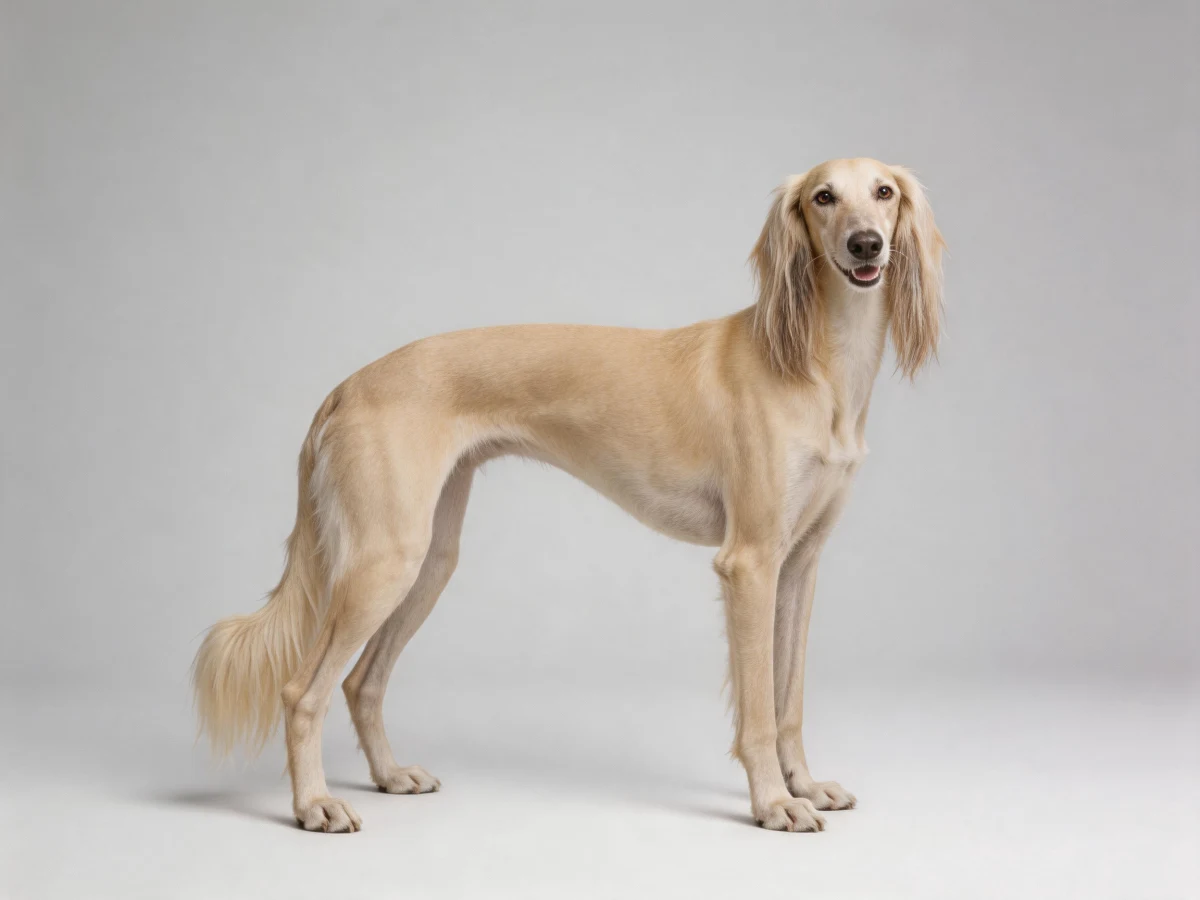
Whippet
✨ Key Takeaways
- The Whippet is the working man's sighthound of 19th-century Northern England — the "poor man's racehorse" of the Lancashire and Yorkshire mill towns and the Durham coalfields, where miners and weavers raced it for purses that could run to a week's wages.
- Its working name was the "snap-dog," for the speed with which it snapped up rabbits in coursing matches; the AKC notes the formal name may descend from the dialect word "wappet" for a small yapping dog, or from "whip it" meaning to move fast — the etymology is not settled.
- It was bred down from the Greyhound; terrier input (often the Bedlington) and Italian Greyhound refinement are commonly cited but genuinely disputed and not documented — a responsible account names the uncertainty rather than picking a version.
- The Kennel Club recognised the Whippet in 1891 and the AKC in 1888 (the first AKC Whippet, Jack Dempsey, was bred by P. H. Hoffman of Philadelphia); The Whippet Club, founded in 1899, was the world's first whippet breed club, and the American Whippet Club followed in 1930.
- The breed is genuinely healthy — McMillan et al. (2024, Scientific Reports) put UK life expectancy around 13.3 years, above the all-breed average — but it carries specific, well-studied issues: an MSTN "bully whippet" double-muscling mutation (Mosher et al., 2007), an inherited tendency to mitral valve disease (chromosome-15 loci, 2015), anaesthetic sensitivity from very low body fat, and von Willebrand disease.
- Heterozygotes for the Mosher MSTN mutation are not only more muscular than wild-type dogs but significantly faster in competitive racing — the first mutation quantitatively linked to canine athletic performance; double-copy dogs are the over-muscled "bully whippet."
Quick Facts
Common Names & Variants
Modern aliases
Historical names
Modern variants & lines
⚖️ Pros & Cons
Advantages
Trade-offs
Physical Appearance
Recognized colors
Coat
Other
Ears: Rose. Tail: Long, tapered, carried low.
🕰 History
A racehorse for people who could not afford a horse
The Whippet is one of the few pedigree breeds whose origin is a class rather than a country estate. It came out of the terraced streets of 19th-century Northern England — the cotton towns of Lancashire, the woollen towns of Yorkshire, and above all the pit villages of the Durham and Northumberland coalfields. Its nickname there was not affectionate decoration; it was an economic description. The colliers and mill hands called it the "poor man's racehorse," because a fast dog was the only racing animal a man on a miner's wage could keep, feed, and bet on. The AKC's breed history and the breed's own clubs both put the dog squarely in that world: working-class, Northern, and built for sport on a tight budget.
The Whippet's other working name was blunter still. Before it raced on a straight track it caught rabbits in enclosed coursing matches, and it did so fast enough to earn the name snap-dog — the dog that snapped the rabbit up. Snap-dog was the function; "poor man's racehorse" was the economics; "Whippet" was what the breed ended up registered as. All three names are real and all three are in the primary literature.
Bred down from the Greyhound — and the part nobody can prove
On the broad lineage there is no real argument: the Whippet is a Greyhound scaled down to a size a working family could house and run. On the details there is genuine, unresolved disagreement, and the honest thing is to flag it rather than narrate one version as fact. The most repeated account adds terrier blood — frequently the Bedlington, itself a Northern working dog — to put speed and "fire" into the small Greyhound, and some writers add Italian Greyhound for refinement of outline. The AKC's history presents the terrier and Italian Greyhound contributions as plausible suggestions, not established record, and serious breed historians treat the exact cross as undocumented. The dog was being made by men who kept no studbooks; the recipe was not written down because nobody making it expected anyone to ask.
Rag racing: the sport that made the breed
What standardised the Whippet was not a kennel club but a Saturday afternoon. In the mill and pit towns, "rag racing" — also called straight racing — ran dogs down a straight track toward their owners, who stood at the far end frantically waving a rag or towel. The dog was hand-slipped, sometimes literally thrown forward from the line for a yard of advantage, and ran flat-out for the cloth and the person holding it. Purses mattered: the AKC's history records winnings that could reach "a week's wages," which in a coalfield economy made a winning dog a serious household asset. Selection under that pressure was ferocious and entirely functional — only fast, sound, keen dogs were bred, generation after generation, which is a large part of why the modern breed is so structurally healthy.
Into the studbook: 1888, 1891, and a club in 1899
Formal recognition arrived as the breed moved from the track toward the show bench. The American Kennel Club registered the Whippet in 1888 — the first, a dog named Jack Dempsey, was bred by P. H. Hoffman of Philadelphia — and the Kennel Club in Britain followed in 1891. The Whippet Club, organised in England in 1899, is generally regarded as the oldest whippet breed club in the world; the American Whippet Club came together in 1930 and began running its own specialties the next year. The FCI maintains the breed as Standard N° 162, Group 10 (Sighthounds), with Great Britain as the patron country.
From cloth to lure, and the shape of the modern dog
The sport never left the breed; it changed equipment. Modern straight-track racing and lure coursing — under bodies such as the Whippet Racing Association and the Continental Whippet Alliance — replaced the waved rag with a mechanical lure on a 200-yard course, but the dog being asked to chase it is the same dog the colliers bred. What's striking about the Whippet is how little its job description has actually changed: a Greyhound-built sprinter, kept small enough to live in a small house, asked to run very fast after a moving thing and then lie quietly on the furniture until the next time. The pedigree paperwork is Victorian; the design brief is older and has barely moved.
Temperament & Personality
Two dogs in one coat
The Whippet's temperament has a split that surprises people who only know the running dog. On a track or behind a lure it is one of the most intensely driven animals in the dog world — a flat-out, single-minded sprinter. Inside a house it is close to the opposite: quiet, soft, low-energy, and content to sleep most of the day pressed against someone. This is not a contradiction so much as a design feature. The breed was developed by people living in cramped terraced housing who needed a dog that exploded for sixty seconds on a Saturday and was undemanding the rest of the week. Both the AKC profile and the FCI standard describe a gentle, affectionate, even-tempered companion — the racing intensity is a switch, not a baseline.
The prey drive is the breed, not a bug
The single trait an owner must respect is the chase. The Whippet was selected for one hundred and fifty years to spot fast movement and run it down, and that wiring does not switch off because the dog lives indoors now. A bolting cat, a squirrel, a small dog at speed — any of these can trigger an instant, committed, very fast pursuit, and recall against a live stimulus is unreliable in even a well-trained Whippet. This is why experienced owners exercise off-lead only in secured space. It is not disobedience or poor training; it is the function the breed was built around doing exactly what it was built to do.
Soft, social, and not a guard
Outside the chase the breed is notably gentle. It bonds hard to its people, is generally good with children and other dogs, and is rarely sharp or reactive — guarding and aggression were never in its working brief, only speed. The flip side of that softness is sensitivity: Whippets respond poorly to harsh handling and well to calm, reward-based training, and they are emotionally attuned enough that household tension lands on them. They are also true company dogs that do not thrive isolated for long days; a Whippet alone too much is an unhappy Whippet.
Day to day, honestly
An adult Whippet in a suitable home is clean, quiet, affectionate, and easy — a sprint once or twice a day and it is a model house dog. The honest caveats are specific rather than general: it must not be trusted off-lead near fast-moving prey or roads; it chills easily and tears its thin skin on rough ground; and it wants company rather than a kennel. None of this makes it difficult. It makes it a sighthound — a breed whose challenges are about respecting what it was built to do, not managing a temperament problem.
🏡 Living With a Whippet
A sprinter who is a couch dog the rest of the day
The Whippet lives by a paradox that surprises first-time owners: it is the fastest dog of its weight, able to hit roughly 35 mph, and yet it is one of the calmest, quietest house dogs you can own. Bred in the mill towns of northern England as the working man's "poor man's racehorse" for rabbit coursing and rag racing, this is a sprinter rather than a marathoner. Give an adult Whippet a couple of short bursts of all-out, off-lead galloping in a safe enclosed space and its energy is genuinely spent — after which it wants nothing more than to curl into a tight crescent on the softest surface in the house and sleep for hours. That on/off switch is exactly why the Whippet adapts so readily to apartment and small-home living; it needs intensity, not endless mileage.
The prey drive that dictates how it is exercised
The flip side of that racing heritage is an intense sighthound chase instinct, and it shapes every decision about where a Whippet runs free. A Whippet that catches sight of a squirrel, cat, or rabbit will be at full speed within a stride, often deaf to a recall, and will follow that movement across a road without registering traffic. The breed is also a skilled and motivated escape artist. The practical rule is firm: free running only inside a securely fenced area, and a long-line for any open or unfenced space. This is not a dog to trust off-lead near roads or livestock, however gentle and obedient it seems at home. Owners who respect that single limitation find the Whippet astonishingly easy; those who ignore it lose dogs to traffic.
Gentle with people, but thin-skinned and cold-sensitive
Indoors the Whippet is affectionate, sensitive, and notably low in aggression — quiet, undemanding, and excellent with considerate children and with calm housemates. It bonds closely and dislikes being left for long days. Two physical realities govern daily comfort: the breed carries very little body fat under a single short coat, so it genuinely feels the cold and needs a fitted coat for winter walks, and those same bony points mean it needs soft, padded bedding to avoid pressure sores on elbows and hips. A warm lap, a sunbeam, or a blanket nest is not a luxury for a Whippet — it is how the breed is built to rest.
🎓 Training & Exercise
Sensitive, willing, and easily bruised by harshness
Whippets are intelligent and genuinely want to cooperate, but they are soft, sensitive dogs that fold under pressure. Raise your voice or use heavy-handed corrections and a Whippet does not become more obedient — it shuts down, grows anxious, and learns more slowly. Reward-based training built on food, praise, and gentle repetition is not just the kinder route for this breed, it is the only one that works well. Short, upbeat sessions suit a dog that bores quickly, and a Whippet that trusts its handler will offer surprising focus. The breed's reputation for being "untrainable" almost always traces back to two things people misread as stubbornness: its sensitivity, and its hardwired drive to chase.
The recall problem is the whole training story
For most breeds recall is one command among many; for a Whippet it is the command, and the honest truth is that no recall fully overrides a sighthound mid-chase. You can build a strong, reliable recall in low-distraction settings with high-value rewards and a long line, and you absolutely should — but you train it understanding that a bolting rabbit may win regardless. That reality is why management (secure fencing, a long-line, leashed walks near roads) does the heavy lifting that obedience alone cannot. Teach a solid "leave it," reward checking-in, and practise recall constantly, while never staking the dog's life on it in an open field.
Channelling the chase instead of fighting it
The smartest Whippet owners give the chase drive a legitimate outlet rather than trying to suppress it. Lure coursing, flirt-pole play, and the breed's own sports — straight racing and oval racing run by clubs — let a Whippet do precisely what it was built for, in a controlled setting, and a dog that sprints regularly is calmer and more biddable at home. Early, gentle socialisation matters too: a well-socialised Whippet is confident and friendly, while an under-exposed one can become shy or noise-sensitive. Keep training positive, keep the prey drive busy, and a Whippet becomes the easy, mannerly companion the breed is known for.
✂️ Grooming & Coat Care
The lowest-maintenance coat in the dog world
If grooming effort is high on your list, the Whippet is hard to beat. The single, smooth, short coat lies tight to the body, carries no undercoat, and asks almost nothing of an owner. A quick rub-down once a week with a rubber curry mitt or a soft bristle brush lifts the loose hair and keeps the coat glossy; that is essentially the whole routine. Shedding is modest and year-round rather than seasonal — there is no heavy twice-yearly "blow" like the double-coated breeds — though fine short hairs do work themselves into soft furnishings. Baths are infrequent, needed only when the dog is genuinely dirty, because the coat sheds dirt readily and has little doggy odour.
Skin care for a thin-coated, bony dog
The trade-off for that easy coat is exposed, delicate skin. With minimal hair and little body fat, a Whippet's skin tears and grazes more easily than a thicker-coated dog's, so check for nicks and abrasions after runs through brush or rough ground. The same thinness is why winter coats and padded bedding matter — and why pressure points over the elbows and hips deserve a glance for early sores if the dog sleeps on hard floors. There are no wrinkles, no skin folds, and no dense coat to hide problems, which makes routine skin checks quick and worthwhile.
Ears, nails, teeth, and the rose ear
The Whippet's small "rose" ears fold back and sit semi-erect, so they are far better ventilated than a drop-eared breed's and less prone to trapped-moisture infections; a simple weekly look and a wipe of the visible ear is plenty. Nails grow fast on an active dog and need trimming every couple of weeks — nails that click on the floor are already too long and alter how the dog stands and runs. As with any breed, brushing the teeth several times a week from puppyhood is the highest-value long-term habit, and small or toy breeds aside, sighthounds do accumulate tartar, so dental care is not optional.
🍖 Diet & Nutrition
A lean dog is meant to look lean
The single most useful thing to understand about feeding a Whippet is that the breed is supposed to look thin. A fit Whippet shows the last two or three ribs, a deep tuck-up, and a visible waist — a silhouette that alarms owners used to rounder breeds, but that is correct racing condition, not malnutrition. Carrying extra weight on a sighthound's fine-boned frame is genuinely harmful, loading the joints and blunting the athleticism the breed is built for. Feed measured meals against that lean ideal, body-condition-score by eye and feel rather than by the scale, and resist the urge to "fill the dog out." Many Whippets are also picky, fussy eaters, which owners sometimes overfeed treats to compensate — a habit worth avoiding.
Puppy growth and the active-dog metabolism
Whippet puppies should grow steadily on a quality complete food rather than being pushed to grow fast or heavy; even, controlled growth protects developing joints on a lightly built frame. Most move to twice-daily adult feeding as growth slows, with portions set by the dog's ideal lean weight and real activity level. A working or racing Whippet burns calories hard and may need more food than its couch-bound appearance suggests, while a mostly sedentary pet needs less — adjust by body condition over time. Make any diet change gradually across a week to avoid digestive upset.
Anaesthesia sensitivity is a fact for your vet
One genuinely breed-specific point belongs in the diet-and-care conversation because it affects routine procedures: sighthounds, the Whippet among them, metabolise certain anaesthetic drugs differently owing to their very low body fat and lean physiology, and many vets adjust protocols accordingly. This is not a feeding instruction but a fact to raise with your veterinarian before any sedation or surgery, including a routine dental. As a deep-chested but light breed the Whippet is not a high bloat-risk dog the way the giant breeds are, yet sensible feeding routine — measured meals, calm before and after eating — remains good practice.
🐶 Buying & Adopting a Whippet
Start at the parent club, not a classified ad
The American Whippet Club (AWC) is the AKC parent club and the right starting point. It maintains a breeder-referral resource and a code of ethics for member breeders, and it coordinates breed rescue. A breeder worth buying from will be an AWC member in good standing, will register litters with the AKC, will health-test both parents, will offer a written contract and health guarantee, and will talk openly about the breed's known issues rather than claiming their lines are simply problem-free. Expect a responsible breeder to ask you as many questions as you ask them — about your fencing, your plans for exercise, and your understanding of the chase drive.
The health screening to ask a breeder for
The CHIC health-screening profile for the Whippet covers three areas, and a responsible breeder can show results on both parents: an eye examination by a boarded veterinary ophthalmologist (OFA/ACVO), a cardiac evaluation (OFA, with advanced cardiac screening by a cardiologist preferred, because mitral valve disease is the breed's notable cardiac concern), and a BAER hearing test. Many breeders also run the MSTN "bully whippet" DNA test — a myostatin mutation that, in the double-copy form, produces a heavily over-muscled dog, while a single copy is associated with faster racing dogs — and von Willebrand disease screening where the lines indicate it. Asking to see this paperwork is reasonable consumer due diligence; "our dogs are healthy, no need to test" is the answer to walk away from. This is fact-framing for choosing a breeder, not veterinary advice.
Rescue is a real option
Whippet rescue is well organised through AWC-affiliated and regional sighthound groups, and retired racing and coursing Whippets, plus owner-surrenders, come up regularly. Because the breed's adult temperament is settled and its needs are modest indoors, adopting an adult Whippet with a known personality is an excellent route for someone who would rather skip the puppy stage. Greyhound and sighthound rescues sometimes take Whippets too, so the network is broader than the breed-specific clubs alone.
Price, waiting lists, and red flags
A well-bred Whippet puppy in the United States runs roughly USD 1,500–3,500 (2024), depending on region, lineage, and whether the parents carry show, racing, or coursing titles, and good breeders often keep waiting lists of several months. The patterns to avoid are the familiar ones: puppies priced well below that range with immediate availability, no health-testing documentation, and no parent-club connection. Be wary, too, of sellers marketing "rare" colours or "miniature" Whippets at a premium — size and colour vary within the standard and are not a separate or superior type. A fair price from a health-testing, parent-club breeder, even after a wait, is far cheaper over the dog's life than a poorly bred one.
📜 Breed Name Etymology — iDogNames original research
"Whippet": a fast word for a fast dog, with two possible parents
The breed name "Whippet" is short, hard, and onomatopoeically apt — and its origin is genuinely uncertain, which is more interesting than a tidy false answer. Two derivations have real support and the breed's own primary sources decline to settle between them. The first ties the name to the phrase whip it, an English idiom meaning to move quickly or smartly — a dog that "whips it" down a track. The second derives it from wappet (also given as "whappet"), a dialect word for a small, yapping cur, with the breed name a worn-down form of that. The AKC's breed history records both lines and does not adjudicate, and an honest reference reports the same: the name's parentage is debated, not known.
Snap-dog: the working name that says what the dog did
Before "Whippet" was a registry word the dog had an occupational name that was completely unambiguous: the snap-dog. In enclosed rabbit-coursing matches the dog's value was measured in how many rabbits it could snap up in a set time, and the name is simply that function made into a noun. It is the most honest name the breed ever carried — it describes the job, not the gait or the bark — and it survives in the historical literature as the term for the breed in its pre-registry, pure-working phase. Where "Whippet" is contested, "snap-dog" is transparent.
"Poor man's racehorse": an economic name, not a breed name
The third historic name is not a name for the dog so much as a description of what it was for. The Lancashire and Yorkshire colliers' phrase "poor man's racehorse" is an economic statement: in a community where a real racehorse was unthinkable, a fast dog filled the same social and gambling role on a wage that could afford it. The phrase is documented in the breed and racing literature and is worth keeping precisely because it carries the breed's class history in five words — it locates the Whippet in the pit village and the betting line, not the country estate.
Aliases, and what they signal
"Whippet" is invariant in English; there is no standard short form. The terms that carry meaning are the historic ones — snap-dog marks the working/coursing phase, "poor man's racehorse" marks the class economics — and one modern genetic term that owners should not misread. A "bully whippet" is not a breed, a variety, or a size: it is the visible phenotype of a dog homozygous for the MSTN deletion described by Mosher et al. (2007), and using it as if it named a recognised type is a category error. There is no "miniature" or "teacup" Whippet in any standard; the breed has one size range and the smaller relative is a separate breed, the Italian Greyhound.
Name forms at a glance
| Name | Role | Origin | Literal meaning | First recorded |
|---|---|---|---|---|
| Whippet | primary | English (disputed) | one that moves fast / small yapping dog | 1888 |
| snap-dog | historical | English (occupational) | the dog that snaps up rabbits | — |
| wappet | origin country native | English dialect (Northern) | a small, yapping dog | — |
| Poor man's racehorse | historical | English (Northern colliers' phrase) | the racing animal a working man could afford | — |
| Bully whippet | alias | English (modern genetic term) | MSTN double-muscled Whippet phenotype | 2007 |
🏛 Naming Traditions — iDogNames original research
A Northern-English working culture, not a registry one
The Whippet's naming heritage does not come from a kennel-club affix system or a salon. It comes from the pit villages and mill streets of Northern England, and it has the texture of that world: short, hard, plain-spoken names that could be shouted down a 200-yard track over a crowd, given by men who named a racing dog the way they would name a racing pigeon or a fighting cock — for the job, the place, or the gamble, not for whimsy. The breed's three coherent naming wells are the racing-and-coursing world, the Northern-English working dialect and place-stock, and the Greyhound speed lineage the dog descends from. A Whippet name drawn from any of these reads as heritage-true; a soft, ornamental name reads against everything the breed's history is.
The racing & coursing layer
The closest-to-home register is the track. These are names built to carry across noise and to mean speed or victory without decoration — Flash, Bolt, Dash, Streak, Rocket, Comet, Quick, Nipper, Sprint, Rag (for the rag the dog ran at). The logic is the same as the colliers' own: a racing dog's name is a tool, optimised for being shouted at the moment of the slip, not for being clever on paper. Rag and Snap in particular are not generic speed words — they point directly at the breed's documented rag-racing and snap-dog past, which makes them the lineage-literate picks in this layer.
The Northern-English working layer
The deeper layer is the place and the people. Names drawn from the breed's actual geography and working-class idiom set the dog where it was made: Pit, Collier, Davy (for the miner's Davy lamp), Slag, Cinder, Tyne or Wear (the Durham-coalfield rivers), Pennine (the range between Lancashire and Yorkshire), Ridley, Tup, Lass and Lad (Northern dialect for a girl and a boy). This is the register that distinguishes a Whippet name from a generic fast-dog name — it names the coalfield and the cotton town specifically, not speed in the abstract. A Whippet called Tyne or Davy is wearing its working-class Northern origin on its collar.
The Greyhound-lineage layer
A third layer leans on the breed's documented descent from the Greyhound — the classical, coursing-aristocracy register the Whippet inherited and then democratised. Names like Atalanta (the swift huntress of myth), Mercury, Artemis, Argos (Odysseus's hound), Diana, Swift, or Zephyr (the west wind) place the dog in the long sighthound line it comes from. This register works because the descent is real and uncontested — the Whippet genuinely is a Greyhound bred down — so a classical speed name lands as grounded rather than grandiose on this particular dog in a way it would not on a terrier.
Choosing a Whippet name with the grain
The breed offers three coherent, heritage-backed routes. A racing-and-coursing name (Rag, Snap, Bolt) honours the rag-racing track the breed was made on. A Northern-English working name (Tyne, Davy, Collier) names the coalfield and mill town that produced it. A Greyhound-lineage name (Atalanta, Mercury, Argos) honours the sighthound line it descends from. None outranks the others, and each has a documented thread. The one off-key choice is the purely ornamental name with no speed, place, or lineage in it — a dog this functional, from a history this specific, deserves a name that knows where it came from.
🐾 Themed Names for Your Whippet — iDogNames original research
Racing & coursing names — the track layer
Short, hard names built to be shouted at the slip — speed and victory words, plus the ones that point straight at the breed's rag-racing and snap-dog past.
- Rag — for the rag the dog raced at; directly heritage-true
- Snap — the snap-dog working name, in one syllable
- Bolt — pure speed; carries across a noisy track
- Flash — the classic racing-dog name; instantly readable
- Streak — for the breed's flat-out double-suspension gallop
- Rocket — fast and easy to call; common on the breed
- Comet — speed with a tail; suits a racing line
- Nipper — Northern, affectionate, fits a quick small dog
- Dash — terse, fast, hard to mishear at distance
- Pip — light, quick Northern call name; carries well
Northern-English working names
The coalfield and the cotton town in a name — the breed's actual geography and working-class idiom. The lineage-literate register.
- Tyne — the Northumberland-Durham coalfield river
- Wear — the Durham river; a pit-country place name
- Davy — the miner's Davy safety lamp; pure coalfield
- Collier — the word for a coal miner; the breed's owner class
- Cinder — pit and forge waste; hard, Northern, apt for a grey
- Pennine — the range between Lancashire and Yorkshire
- Lass — Northern dialect for a girl; warm and period-true
- Lad — the male counterpart; plain working register
- Ridley — a Northern surname; sounds right on a working dog
- Pit — the coal pit itself; one blunt, honest syllable
Greyhound-lineage & classical names
The sighthound line the Whippet was bred down from — classical speed and hunting names that land as grounded because the descent is real.
- Atalanta — the swift huntress of Greek myth; the perfect sighthound name
- Mercury — the fleet-footed messenger god
- Argos — Odysseus's faithful hound; literary and apt
- Artemis — goddess of the hunt; strong female choice
- Diana — the Roman huntress; elegant and earned
- Zephyr — the west wind; speed without a pun
- Swift — the plain English version; works on any line
- Apollo — light, motion, the chase; classical weight
- Selene — the moon; for a pale or blue female
- Orion — the hunter constellation; tall, fast, mythic
Coat & colour names
The Whippet comes in every colour and pattern — no shade is preferred or barred. These work the palette without the obvious "Spot."
- Brindle — names the breed's signature tiger-striped pattern
- Smoke — for the common blue / blue-fawn dogs
- Fawn — the classic pale tan; plain and accurate
- Sable — for the dark-overlaid reds and fawns
- Slate — a cool name for a blue Whippet
- Pied — the white-and-colour parti pattern, named
- Ember — for a red or red-fawn; warm and short
- Dove — soft grey; suits a blue female
- Penny — copper-red; an easy, warm call name
- Soot — matte black; ties neatly to the coalfield layer
Speed & motion names
The breed's whole reason for existing is velocity. These name the running dog directly, without leaning on the tough-name cliché.
- Quicksilver — fast and fluid; the gallop in one word
- Gale — wind speed; short and easy to call
- Arrow — straight-line speed; fits the straight-track sport
- Blitz — sudden velocity; carries across a field
- Jet — fast and dark; doubles as a black-coat name
- Quiver — the held tension before the slip; unusual and apt
- Sprint — the breed's actual event, named plainly
- Whirl — motion and a soft nod to "Whippet" itself
- Breeze — fast but gentle; matches the indoor temperament
- Tempo — pace and rhythm; suits a racing line
📋 Breed Standard at a Glance
General appearance
The breed standards of the AKC and the UK Kennel Club describe the Whippet as a medium-sized sighthound of elegant, balanced lines — a true racing build in miniature, conveying great speed, power, and grace without coarseness or weediness. The whole dog is an exercise in curves: an arched loin, a deep chest reaching toward the elbow, and a marked tuck-up, all expressing the breed's purpose as the fastest dog of its weight. The standard asks for fitness and symmetry, an animal that looks capable of doing the job for which it was bred.
Size, coat, and colour
Males stand roughly 18.5–20 inches at the withers and weigh about 20–35 lb; females stand roughly 17.5–18.5 inches and weigh about 15–31 lb, in line with this breed record. The coat is the great simplifier: short, smooth, close, and firm in texture, a single coat with no undercoat, requiring almost no grooming. Colour is immaterial under the standard — the Whippet appears in essentially any colour or mix of colours and markings, and no shade is preferred over another. The skin is fine and the body fat low, giving the breed its characteristic lean, "see the last ribs" condition.
Head, movement, and temperament
The head is long and lean with a flat skull, dark oval eyes carrying an alert, keen expression, and small "rose" ears that fold back and rise to semi-erect when the dog is at attention. Movement is the heart of the standard: a low, free, ground-covering gait with great reach in front and powerful drive behind, the legs moving in a straight line and the back flexing in the double-suspension gallop that gives the breed its speed. Temperament is described as gentle, affectionate, and even-tempered — quiet and undemanding indoors, keen and alert in the field — with timidity and aggression both regarded as faults.
🏆 Famous Whippets
Notable real dogs of the breed profiled on iDogNames.
🏆 Recognition
Recognized by the American Kennel Club in 1888 as a Hound breed. FCI standard No. 162 (Section 3 — Short-haired Sighthounds), recognized in 1955.
Other registries
Breed clubs
❓ Frequently Asked Questions
Are Whippets good family dogs?
Yes. The Whippet is gentle, affectionate, sensitive, and notably low in aggression, and it does well with considerate children and calm housemates. It is quiet and undemanding indoors, which suits family life and even apartments. The main caveat is the strong chase instinct around small animals, and a tendency to dislike being left alone for long days.
Do Whippets shed a lot?
No — among the lighter-shedding breeds. The single, smooth, short coat has no undercoat and no heavy seasonal blow, so shedding is modest and year-round. A quick weekly rub with a rubber curry mitt lifts the loose hair and keeps the coat glossy. Fine short hairs still find their way into soft furnishings, but grooming effort is minimal.
How much exercise does a Whippet need?
Less than its racing speed suggests. A Whippet is a sprinter, not a marathoner: a couple of short bursts of all-out galloping in a safe enclosed area, plus daily walks, genuinely satisfies an adult, after which it is a famously calm couch dog. Because of the prey drive, free running should only happen inside secure fencing or on a long-line.
How long do Whippets live?
Typically 12–15 years. The breed is generally long-lived and hardy, with relatively few inherited problems compared with many pedigree breeds. Keeping the dog lean, warm in winter, and well exercised supports a long, healthy life.
Are Whippets easy to train?
Reasonably, with the right approach. Whippets are intelligent and willing but soft and sensitive, so reward-based training works and harsh corrections backfire. The one genuine challenge is recall: no training fully overrides a sighthound mid-chase, which is why secure fencing and a long-line do the safety work that obedience alone cannot.
Are Whippets hypoallergenic?
No. Although the short single coat sheds less than many breeds and the dog has little odour, the Whippet is not considered hypoallergenic and still produces dander. Anyone with a dog allergy should spend extended time around the breed before committing.
How much does a Whippet puppy cost?
A well-bred, health-tested puppy from a parent-club breeder typically runs USD 1,500–3,500 (2024), often with a waiting list of several months. Be wary of puppies priced well below that with no health-testing paperwork, and of premiums charged for "rare" colours or "miniature" Whippets, which are not a separate or superior type.
📚 Sources & Further Reading
Every load-bearing factual claim on this page is anchored to one of the sources below. iDogNames does not synthesize from secondary aggregators.
- akc breed page Whippet History: Where the Breed Originated (AKC breed profile & history) — American Kennel Club (2023)
- fci standard pdf FCI Standard No. 162 — Whippet — Fédération Cynologique Internationale (2007)
- breed club official The Whippet Club (UK, founded 1899) — breed history — The Whippet Club
- breed club official American Whippet Club — breed history & health — American Whippet Club
- academic paper A mutation in the myostatin gene increases muscle mass and enhances racing performance in heterozygote dogs — Mosher DS et al., PLoS Genetics 3(5):e79 (2007)
- academic paper Severity of mitral valve degeneration is associated with chromosome 15 loci in Whippet dogs — Stern JA / Olsen LH et al., PLOS ONE (2015)
- academic paper Longevity of companion dog breeds: those at risk from early death — McMillan KM et al., Scientific Reports 14:531 (2024)
- wikipedia Whippet — Wikipedia — Wikipedia
- book The Whippet — Bo Bengtson (Kennel Club Books) (2010)