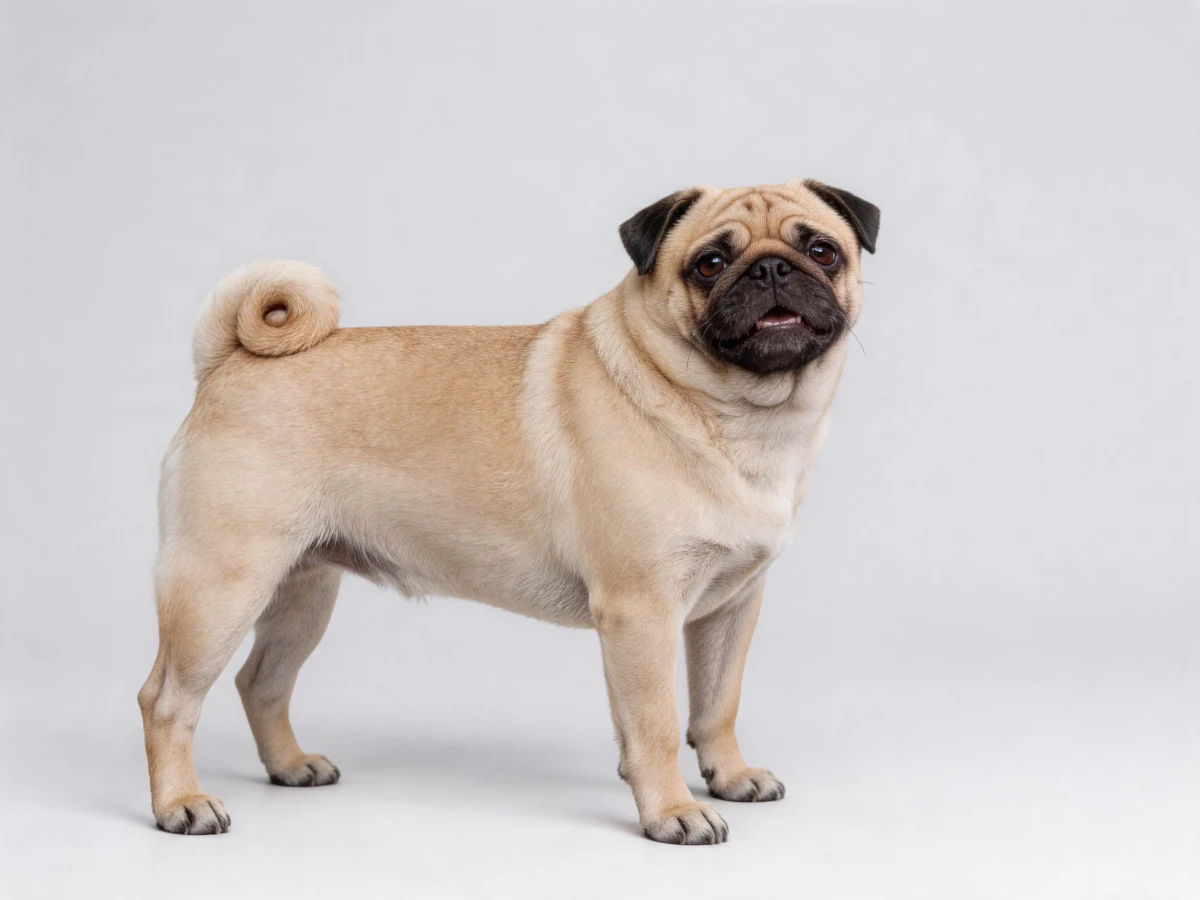
Shih Tzu
✨ Key Takeaways
- The Shih Tzu is a Tibetan-origin dog perfected inside the Chinese imperial court, not a generic ancient lapdog — small Tibetan dogs given as tribute were bred in the Beijing palace, famously under the Empress Dowager Cixi's supervision until her death in 1908.
- The breed nearly disappeared: palace breeding broke down after Cixi died and the 1911-1912 fall of the Qing scattered the dogs, and the entire modern gene pool traces to a very small founding stock taken West (the American Shih Tzu Club cites 14 dogs, with the 13-vs-14 difference being one documented Pekingese outcross in 1952).
- Lady Brownrigg's Taishan kennel in England, from imports beginning 1928, anchored the Western breed; the UK Kennel Club granted Championship status in 1940 and the AKC recognised the breed in 1969 (Toy Group).
- "Shih Tzu" is Mandarin 獅子狗 shīzi gǒu, "lion dog" — the dog was bred to evoke the Buddhist lion of Chinese and Tibetan art, which is the whole point of the chrysanthemum face and flowing coat.
- The defining health considerations are conformational and inherited: brachycephalic obstructive airway risk, intervertebral disc disease, eye prominence and proptosis risk, and renal dysplasia — the American Shih Tzu Club has actively funded the renal-dysplasia work.
- Temperament was selected for the palace: outgoing, affectionate, low-aggression, with essentially no guarding instinct — a companion bred to be carried, not a working dog.
Quick Facts
Common Names & Variants
Modern aliases
Historical names
Modern variants & lines
⚖️ Pros & Cons
Advantages
Trade-offs
Physical Appearance
Recognized colors
Coat
Other
Ears: Drop, feathered. Tail: Natural, plumed, carried over the back.
🕰 History
A Tibetan dog that became a Chinese court secret
The Shih Tzu's story does not begin in a kennel or a show ring; it begins as diplomacy. Small dogs of the Tibetan plateau — the "lion dog" type also behind the Lhasa Apso — were carried to the Chinese capital as tribute, the gifts Tibetan lamas and emissaries sent the imperial court to keep the relationship with their powerful neighbour smooth. Once inside the palace, these dogs stopped being Tibetan and became something the Chinese court bred for itself. The AKC's breed history and the American Shih Tzu Club both describe the same arc: a Tibetan import, absorbed into Chinese palace breeding and reshaped into the flat-faced, flowing-coated dog the West later met.
The honest caveat belongs here, not buried. The deep history is genuinely murky: there is no continuous palace stud book, dates for the earliest tribute dogs vary by centuries between sources, and the relationship between the Shih Tzu, the Lhasa Apso and the Pekingese inside the Chinese court is reconstructed from art, palace accounts and later breeder testimony rather than from a pedigree register. What is solid is the institution that did the breeding: the imperial court at Beijing.
The Forbidden City and the Empress Dowager Cixi
The breed's sharpest historical anchor is a person. The Empress Dowager Cixi, the dominant figure of the late Qing court until her death in 1908, kept extensive palace kennels of small dogs — Pekingese, pugs and the lion-dog Shih Tzu type — and the breeding was carried out inside the court, by palace eunuchs, under her interest and supervision. The selection pressures recorded for this period are specific: small size, unusual markings, the chrysanthemum face. These dogs were court property, not articles of trade; ordinary people did not breed or, by some accounts, even own them. That is the era the modern Shih Tzu's type was fixed in, and it is why the breed reads as a court artefact rather than a village dog.
Near-loss: 1908 and the fall of the Qing
The palace breeding programme depended on the palace. When Cixi died in 1908, the central control over the court kennels weakened, and breeding became haphazard. The 1911 revolution and the establishment of the Republic of China in 1912 ended the imperial system entirely; the eunuchs left the Forbidden City, and the palace dogs were dispersed, sold or lost. The breed did not formally go extinct, but the institution that had maintained it for generations was gone, and the population that survived the transition was very small. The Shih Tzu the world has today is descended from what could be gathered out of that collapse.
The tiny founding stock that went West
This is the part where the numbers matter and where iDogNames will not paper over a disagreement. The American Shih Tzu Club, citing Victor Joris's breed history, states that the entire modern gene pool derives from a combination of fourteen dogs and bitches, and that one of those fourteen was a Pekingese — Philadelphus Suti-T'sun of Elfann — introduced as a deliberate outcross in 1952. Wikipedia and several other sources give the figure as thirteen Shih Tzu, counting the lone Pekingese separately rather than within the fourteen. Both are describing the same documented bottleneck; the difference is purely whether the single Pekingese outcross is counted inside the number. The takeaway is the same either way: a globally popular breed sits on a founding base of roughly a dozen-plus dogs imported between 1928 and the early 1950s.
England, then America
The Western breed was anchored in Britain. Lady Brownrigg's Taishan kennel, built from imports beginning in 1928, became the foundation English line, with further imports through the following decades; a separate Scandinavian line ran in parallel. The Kennel Club in Britain granted the Shih Tzu Championship status in 1940, formally establishing the breed in the UK nearly three decades before the United States caught up. American servicemen brought dogs home after the Second World War, and the American Kennel Club admitted the Shih Tzu to its stud book and approved it for conformation showing in 1969, placing it in the Toy Group. The FCI lists the breed under Standard N° 208, Group 9 (Companion and Toy Dogs), Section 5 (Tibetan breeds) — the section placement is itself a quiet acknowledgement of where the dog originally came from before the Chinese court made it its own.
Temperament & Personality
A temperament engineered for a lap, not a job
Most breeds were selected for work and kept for company. The Shih Tzu is the reverse: it was selected, over palace generations, purely for company, and the temperament shows it. The FCI standard describes the breed as "intelligent, active and alert; friendly and independent," and the AKC profile leans on the same core — outgoing, affectionate, and conspicuously trusting of people. There is essentially no guarding drive, no prey-driven intensity, and no working edge to manage. What centuries of court breeding produced is a dog whose default setting is sociable.
The independent streak
"Independent" in the standard is not a euphemism for stubborn so much as a description of a dog with its own opinions. The Shih Tzu is bright and trainable but not biddable in the gundog sense — it cooperates because the relationship is good and the reward is worth it, not out of a drive to work for a handler. Housetraining is the classic friction point and tends to need patience and consistency rather than correction. This is a dog that does best with a light, reward-based hand; heavy training pressure gets you a small dog that simply opts out.
What the palace heritage means day to day
The breed's social openness is its great asset and its one security limitation: a correct Shih Tzu greets strangers as potential friends, which makes it a poor watchdog and a wonderful family companion. It is sturdier than its size suggests — the standard specifically wants a solid dog, not a fragile one — and it generally tolerates children and other pets well when socialised, again a legacy of being bred into a busy palace household rather than for solitary work. The flip side of being bred to be carried is that the breed is genuinely people-dependent and does not thrive ignored in a yard.
The honest caveats
Two real limits sit under the charm. The first is physical: the flat face means heat and exertion have to be managed, and excitement-driven over-activity in hot weather is a breathing risk, not just a behaviour to redirect. The second is grooming-linked welfare — a matted, neglected long coat is uncomfortable and is the breed's most common avoidable problem. The temperament asks little; the coat and the conformation ask the diligence. A Shih Tzu in a cool, attentive home, kept in a sensible clip, is one of the easiest companion temperaments in the toy group.
🏡 Living With a Shih Tzu
A lapdog bred for one job: your company
Unlike most breeds, the Shih Tzu was never asked to herd, hunt, or guard. It was developed inside the Chinese imperial court purely as a companion — a "lion dog" carried through the palaces of the Forbidden City and famously kept in the Dowager Empress Cixi's kennels — and that single-minded breeding for companionship is the defining fact of life with one. A Shih Tzu wants to be on your lap, at your feet, or following you room to room, and it is happiest in a home where someone is around for much of the day. The flip side is that the breed bonds hard and tolerates long isolation poorly; a Shih Tzu left alone for nine-hour workdays is a candidate for separation distress and nuisance barking, so the breed fits retirees, work-from-home households, and families better than an empty house.
A low exercise floor, but not a no-exercise dog
This is a sturdy little dog with a genuinely modest exercise need: a couple of short daily walks plus indoor play is usually enough to keep an adult Shih Tzu content and trim. That low floor is exactly why the breed adapts so well to apartments and to owners who cannot manage a high-energy dog. The serious caveat is heat. As a flat-faced (brachycephalic) breed, the Shih Tzu cannot cool itself efficiently by panting, so warm, humid weather is a real risk — walk in the cool of the morning or evening, never push the dog in midday heat, and watch for laboured or noisy breathing as a signal to stop. The same flat face means strenuous exercise is neither needed nor advisable in the heat.
Family fit, other pets, and the shedding reality
The Shih Tzu's outgoing, affectionate temperament makes it a strong fit for children and seniors alike, though as a small, fine-boned toy dog it should be handled gently and supervised with very young children who might drop or squeeze it. It generally gets on well with other dogs and cats, especially when raised alongside them. On shedding, the breed is genuinely low-shedding — the long, dense double coat sheds far less into the home than a typical double coat — but that is not the same as low-maintenance. The trade for minimal shedding is a very high grooming commitment, covered in detail below; this is a dog that keeps the floors clean and the grooming calendar full.
🎓 Training & Exercise
Eager to please, but with a stubborn streak
The Shih Tzu is intelligent and people-focused, and it learns readily when training feels like a game played with someone it adores. It is not, however, a biddable working dog bred to take direction all day, and it carries a well-earned reputation for a stubborn streak: a Shih Tzu that decides a session is boring, or that suspects no reward is coming, will simply opt out. Short, upbeat, reward-based sessions — a few minutes of food and praise rather than long drills — get far more out of the breed than repetition ever will. Harsh corrections backfire badly on a small, sensitive dog that was bred to be a companion, producing avoidance rather than obedience.
Housetraining is the real catch
The one honest difficulty owners should expect is housetraining. Like many toy breeds, the Shih Tzu has a small bladder and can be slow to fully house-train, and the breed is famous for testing an owner's patience here. The answer is consistency rather than intensity: a fixed schedule of frequent trips outside, generous reward the instant the dog goes in the right place, close supervision indoors during the learning months, and crate or pen confinement when unsupervised. Many owners succeed with indoor pad or litter training as a backup, which suits the breed's apartment lifestyle and its heat-sensitive aversion to going out in bad weather.
Socialisation and the commands that matter
Because the Shih Tzu is small and was bred to be carried and coddled, it is easy to under-socialise and accidentally raise a yappy, demanding little dog. Early, positive exposure to new people, other dogs, and everyday handling — being touched around the face, eyes, ears, and feet for the lifetime of grooming ahead — pays dividends. The highest-value commands for this breed are practical companionship skills: a reliable "come," a "settle" for calm lap time, and acceptance of grooming handling. Teaching the dog to tolerate face and eye cleaning calmly, from puppyhood, is genuinely a training priority for a breed whose daily care centres on its face.
✂️ Grooming & Coat Care
The grooming headline: a floor-length double coat
Grooming is the single biggest commitment of Shih Tzu ownership. The breed carries a long, dense double coat that, left in full show length, sweeps the floor — and it mats with remarkable speed, especially behind the ears, in the armpits, on the belly, and around the rear. A full show coat realistically demands thorough daily brushing and combing right down to the skin, plus regular bathing, to stay tangle-free. For this reason most pet owners make the sensible choice to keep their dog in a short "puppy cut," trimmed every six to eight weeks by a groomer, which slashes the daily workload to a quick brush while keeping the dog comfortable. Either way, brushing the dog before it is bathed and drying the coat fully are core habits, because a mat that gets wet tightens against the skin.
The face is a daily job
What sets the Shih Tzu apart from an ordinary long-coated breed is the face. Hair grows straight up out of the topknot area and into the eyes, so owners either tie the hair up in a topknot or keep it trimmed short, both to protect the prominent eyes and to let the dog see. The flat face also creates a facial fold beneath the eyes and a short muzzle that traps moisture, food, and tear staining; gently wiping the eye area and facial folds clean and dry, daily, is essential to prevent skin irritation and infection in the creases. Because the eyes are large and set in a shallow socket, keeping hair and debris away from them is not cosmetic — it is protection against the scratches, dryness, and irritation the breed is prone to.
Ears, nails, teeth, and the toy-dog mouth
The Shih Tzu's drop ears and the hair that grows inside the canal trap warmth and moisture, so weekly ear checks, gentle cleaning, and plucking or trimming of canal hair (a groomer can advise) help head off infections. Nails grow quickly on a dog that does little roadwork to wear them down, so trim every two to three weeks. Dental care is a genuine priority, not an afterthought: the breed's short, toy-sized muzzle crowds the teeth together, which traps plaque and drives early dental disease, so daily or near-daily tooth brushing from puppyhood is one of the highest-value health habits an owner can build for this breed.
🍖 Diet & Nutrition
A small dog where every extra treat shows
The headline diet issue for a Shih Tzu is portion sensitivity. On a dog that weighs only nine to sixteen pounds, even a few stray treats or table scraps represent a large share of the daily calorie budget, and weight creeps on fast. Excess weight is a real burden on a small frame — it strains the knees and back the breed is already predisposed to, and it adds load to the breathing of a flat-faced dog that cannot cool itself well. Feed measured meals against the dog's ideal weight rather than free-feeding, keep treats inside a daily calorie allowance (use part of the measured ration for training rewards), and body-condition-score by feeling for the ribs under the abundant coat, since the coat hides the waistline the eye would normally catch.
Puppy feeding and the small-mouth practicalities
Shih Tzu puppies do well on a food formulated for small or toy breeds, fed in several small meals a day, because tiny puppies can be prone to low blood sugar if meals are spaced too far apart. The small, crowded, undershot toy jaw is a practical feeding consideration too: small-bite kibble is easier for the breed to pick up and chew, and many owners find their dog manages a smaller kibble far better than large pieces. Most Shih Tzus move to twice-daily adult feeding as they mature, with portion size set by ideal adult weight and activity, and any diet change made gradually over about a week to avoid stomach upset.
Brachycephalic eating and clean-face habits
Two breed-specific cautions round out feeding. First, as a brachycephalic dog the Shih Tzu can gulp air while eating and may do better with a shallow, wide bowl and unhurried mealtimes; raised or slow-feeder bowls suit some dogs. Second, the long facial and muzzle hair catches food and water at every meal, so wiping the face and folds after eating ties directly back into the grooming routine — a damp, food-caked face fold is the most common cause of the skin irritation owners later blame on diet. Fresh water should always be available, especially in warm weather when a flat-faced dog needs it most.
🐶 Buying & Adopting a Shih Tzu
Start at the parent club, not a classified ad
The American Shih Tzu Club (ASTC) is the AKC parent club and the right place to begin a search. It maintains a breeder-referral resource, a code of ethics for member breeders, and rescue contacts. A breeder worth buying from will be an ASTC member in good standing, will register litters with the AKC, will health-test both parents, will offer a written contract and health guarantee, and will talk openly about the breed's known issues — its eyes, knees, kidneys, and flat-faced breathing — rather than insisting their lines are simply "healthy." Expect a good breeder to ask you as many questions as you ask them.
The health screening to ask for
The CHIC health-screening profile for the Shih Tzu covers three core areas, and a responsible breeder can show results on both parents for all of them: an eye examination by a boarded veterinary ophthalmologist (OFA/ACVO, ideally current within the year), a patella (knee) evaluation, and an OFA hip evaluation. Beyond the required set, it is reasonable to ask about renal (kidney) function screening, because renal dysplasia is a recognised concern in the breed; a BAER hearing test where indicated; and a frank conversation about the parents' breathing, since brachycephalic airway signs matter in a flat-faced breed. Naming these issues is consumer fact, not medical advice — the point is simply that a breeder who produces eye, patella, and hip paperwork and discusses kidneys and breathing openly is the one to trust, while "all our dogs are healthy, no need for tests" is the answer to walk away from.
Rescue and the adult-dog option
Shih Tzu rescue is active and well-organised, coordinated through the ASTC's rescue contacts and a network of breed-rescue groups, and small companion breeds turn up in shelters and rescues regularly when owners underestimate the grooming commitment or face life changes. For an adopter willing to take an adult dog with a known temperament rather than wait for a puppy, breed rescue is an excellent and ethical route — and because the Shih Tzu is a companion breed first, an adult's affectionate character is usually already on full display.
Price, waiting lists, and the red flags
A well-bred Shih Tzu puppy in the United States runs roughly USD 1,000–3,500 in 2024, depending on region, lineage, and parent titles, and better breeders keep waiting lists of several months. The patterns to walk away from are familiar: puppies priced well below that range with immediate availability, no health-testing documentation, and no parent-club connection. Be especially wary of marketing that charges a premium for "rare," "teacup," or "imperial" Shih Tzus — these are not recognised varieties of the breed, and a deliberately undersized "teacup" toy dog can carry added health fragility rather than added value. A fair price from a health-testing, parent-club breeder, even after a wait, is far cheaper than the lifetime cost of a poorly bred dog.
📜 Breed Name Etymology — iDogNames original research
"Shih Tzu" means "lion," and the lion is the whole design brief
The breed name is Chinese and it is literal. Shih Tzu is the Wade-Giles romanisation of Mandarin 獅子 (pinyin shīzi), "lion"; the full traditional term is 獅子狗, shīzi gǒu, "lion dog." The name is not decorative — it is a statement of purpose. The dog was bred to evoke the Buddhist guardian lion of Chinese and Tibetan art, the stylised "lion" that has no resemblance to a real lion and every resemblance to a small, flat-faced, flowing-maned dog. The chrysanthemum face, the topknot, the heavy mane-like coat: these are the breed being made to look like a religious art motif. Understanding the etymology is understanding why the breed looks the way it does.
Wade-Giles, pinyin, and why the spelling is "Shih Tzu"
The English spelling preserves an older romanisation system. Shih Tzu is Wade-Giles, the romanisation standard the breed entered the West under in the early 20th century; in modern pinyin the same syllables are written shīzi. English speakers generally say it "SHEED-zoo" or "SHEET-su," neither of which is the Mandarin pronunciation, but the Wade-Giles spelling is now fixed in every kennel club registry and will not change. It is the same situation as Peking/Beijing: an older transliteration locked in by institutional use.
The other names: chrysanthemum, and Xi Shi
The breed picked up an English descriptive name early. British fanciers of the 1930s called it the "Chrysanthemum Dog," for the way the facial hair grows outward from the nose like the petals of the flower — an apt, affectionate nickname that still appears in breed literature. In contemporary Mandarin the dog is often called 西施犬, Xī Shī quǎn, after Xi Shi, one of the celebrated beauties of ancient China — a name that frames the breed as ornamental and admired rather than as the temple lion. Early British records also show confusion with the Lhasa Apso, with both Tibetan-derived breeds briefly lumped under "Lhassa lion dog" before they were separated.
Aliases, and the labels to distrust
Shih Tzu is, unusually, both the formal and the common name — there is no widespread clipping the way "Rottie" stands in for Rottweiler, though "Tzu" appears informally. Lion Dog and Chrysanthemum Dog are legitimate descriptive aliases with real history behind them. The terms to distrust are commercial: "Imperial Shih Tzu" and "Teacup Shih Tzu" are marketing labels for undersized dogs, not recognised varieties — the FCI Standard 208 describes one Shih Tzu, and "imperial" here is a sales word borrowing the breed's genuine palace history to dress up an off-standard size.
Name forms at a glance
| Name | Role | Origin | Literal meaning | First recorded |
|---|---|---|---|---|
| Shih Tzu | primary | Mandarin Chinese (Wade-Giles romanisation) | lion (dog) | — |
| 獅子狗 (Shīzi gǒu) | origin country native | Mandarin Chinese | lion dog | — |
| Chrysanthemum Dog | historical | English (descriptive nickname) | the dog whose face hair grows out like chrysanthemum petals | 1930 |
| Lion Dog | alias | English (calque of shīzi gǒu) | lion dog | — |
| Lhassa Lion Dog | historical | English (early UK usage) | the Tibetan-derived lion dog | — |
🏛 Naming Traditions — iDogNames original research
A naming culture with a Forbidden City spine
The Shih Tzu's naming tradition is one of the few in the toy group with a real, specific cultural source rather than a generic "cute small dog" register — and the source is the Chinese imperial court that made the breed. Three coherent layers run through it: the imperial-Chinese layer the breed's own history points at, the Tibetan-Buddhist layer of its tribute origin, and the descriptive lion/chrysanthemum layer the breed name itself supplies. A Shih Tzu name chosen with the heritage in mind almost always lands in one of these, and they are far more distinctive than the soft pet names most of the breed gets by default.
The imperial-Chinese layer
This is the richest and most breed-specific layer, because the Shih Tzu is, historically, a Forbidden City dog. The deepest anchor is the figure who actually bred them: Cixi (the Empress Dowager whose palace kennels fixed the type). Around her sit the institutions and vocabulary of the court — Dynasty, Qing, Ming (the dynasties), Emperor, Empress, Mandarin, Pearl (the imperial pearl motif), Jade and Jasper (the stones of Chinese court luxury), and Ming as a clean call name. Chinese given names and words that suit a small treasured dog work directly: Mei (美, "beautiful"), Ling (玲, "tinkling of jade"), Bao (寶, "treasure"), Xiao (小, "little"), Lì (麗, "lovely"), Jin (金, "gold"). Naming a Shih Tzu from this layer is naming it after the exact court that created it — the strongest heritage move available.
The Tibetan-Buddhist layer
The second layer reaches back past Beijing to where the dog actually came from — the Tibetan plateau and the Buddhist lion-dog symbolism that the whole breed is shaped around. Lhasa (the Tibetan capital, and a nod to the related Lhasa Apso), Tashi ("auspicious / good fortune" in Tibetan, also echoing Lady Brownrigg's Taishan kennel), Lama, Norbu ("jewel" in Tibetan), Dorje ("thunderbolt / diamond"), Karma, Sangye, and Pema ("lotus") all carry the tribute-origin heritage honestly. The lion symbolism itself is fair game and on-theme rather than ironic on this breed: Leo, Singha (the Buddhist lion), Simba ("lion" in Swahili — used loosely but apt for a "lion dog"), and Mane all reference what the dog was literally bred to resemble.
The lion and chrysanthemum descriptive layer
The third layer comes straight out of the breed name and the breed's look. The "lion dog" meaning supports the lion names above; the "Chrysanthemum Dog" nickname supports flower and ornament names that suit the breed without slipping into generic toy-dog cuteness — Mum / Chrys (for chrysanthemum), Lotus, Peony, Blossom, Marigold. Colour names work the gold-and-white and brindle palette the breed most often comes in: Honey, Ginger, Sable, Ivory. This layer is where heritage and ordinary pet-naming meet — the difference iDogNames draws is that "Lotus" or "Mum" on a Shih Tzu is a deliberate nod to the breed name, not a random pretty word.
What this means for naming a Shih Tzu today
The breed offers three routes with genuine history behind each. An imperial-Chinese name (Cixi, Ming, Bao, Jade) ties the dog to the Forbidden City that created it. A Tibetan-Buddhist name (Lhasa, Tashi, Norbu, Pema) honours the tribute origin and the lion symbolism. A lion-or-chrysanthemum descriptive name (Leo, Lotus, Mum) plays the breed name straight. The names that fight the breed are the tough-guy ones — a "lion dog" called "Killer" or "Brute" is a joke at the expense of three centuries of palace breeding, and the heritage offers far better material than irony.
🐾 Themed Names for Your Shih Tzu — iDogNames original research
Imperial Chinese court names
From the Forbidden City and the Qing court that bred the Shih Tzu — the most heritage-accurate names the breed can carry.
- Cixi — the Empress Dowager who supervised the palace kennels
- Ming — the dynasty; also a clean, easy call name
- Qing — the dynasty under which the breed's type was fixed
- Mandarin — the court official; also the language and a colour
- Bao — 寶, "treasure"; what a palace dog literally was
- Jade — the stone of Chinese imperial luxury
- Pearl — the imperial pearl motif; soft and period-correct
- Mei — 美, "beautiful"; a true Chinese given-name choice
- Ling — 玲, "the tinkling of jade pendants"
- Jin — 金, "gold"; matches the common gold-and-white coat
Tibetan and Buddhist heritage names
Reaching back past Beijing to the Tibetan tribute origin and the Buddhist lion-dog symbolism the breed is shaped around.
- Lhasa — the Tibetan capital; nods to the related Lhasa Apso
- Tashi — "auspicious / good fortune"; echoes the Taishan kennel
- Norbu — "jewel" in Tibetan; apt for a treasured dog
- Dorje — "thunderbolt / diamond"; strong without being harsh
- Pema — "lotus" in Tibetan; gentle and on-theme
- Karma — Buddhist, widely known, easy to call
- Lama — the religious teachers who sent the tribute dogs
- Sangye — Tibetan, "awakened"; uncommon and authentic
- Singha — the Buddhist guardian lion the breed evokes
- Nima — Tibetan, "sun"; warm and short
Lion-dog names
The breed name means "lion dog" — these play that meaning straight, which on this breed is heritage, not irony.
- Leo — the lion; short and universally readable
- Simba — "lion" in Swahili; loose but apt for a lion dog
- Mane — the breed's lion-like coat in one word
- Nala — soft, leonine; suits a female
- Aslan — "lion" in Turkish; dignified and literary
- Kovu — leonine, modern, easy to call
- Sher — "lion" in Persian/Hindi; one crisp syllable
- Ari — "lion" in Hebrew; short and friendly
- Rajah — royal, leonine register; fits a court dog
- Cub — small lion; honest for a tiny "lion dog"
Chrysanthemum and flower names
From the breed's English nickname, the "Chrysanthemum Dog," for the way the face hair grows out like petals.
- Mum — short for chrysanthemum; the breed's own nickname
- Lotus — Buddhist and floral; doubly on-theme
- Peony — the Chinese "king of flowers"; court-appropriate
- Blossom — soft and floral; suits the breed's look
- Marigold — warm gold tone, matches the common coat
- Daisy — petal-faced like the chrysanthemum nickname
- Jasmine — Chinese tea flower; gentle and fitting
- Poppy — bright, small, flower-named
- Lily — delicate and ornamental, like the breed
- Iris — a flower and a soft, easy call name
Coat and colour names
The breed comes in all colours; gold-and-white, brindle and black are the most common. These work that palette precisely.
- Honey — for the common gold-and-white coat
- Ginger — warm red-gold; very true to the breed
- Sable — for the dark-shaded coats; show-line gravity
- Ivory — for the white in parti-colours
- Brindle — the breed\'s own striped pattern, used straight
- Cocoa — for liver and liver-and-white dogs
- Saffron — golden, with a Buddhist-robe resonance
- Amber — warm gold; pairs with the imperial layer
- Mochi — soft, pale, affectionate; common on white dogs
- Inky — for the solid-black variety; short and apt
📋 Breed Standard at a Glance
General appearance
The AKC standard describes the Shih Tzu as a sturdy, lively, alert toy dog with a long, flowing double coat, carried with a distinctly proud bearing and a head held high and tail curved over the back. Bred solely as a palace companion, the breed should give an unmistakable impression of a solid, compact little dog beneath the abundant coat — never fragile or spindly. The outgoing, affectionate, and trusting temperament is regarded as the breed's essence and the whole reason it was created.
Size, coat, and colour
The standard places ideal height at roughly 9 to 10.5 inches at the withers and weight at about 9 to 16 pounds, with neither overly large nor under-sized dogs preferred — figures that sit squarely within the breed's recorded range of 20 to 28 cm and 4 to 7.5 kg. The coat is the breed's crowning feature: long, dense, and flowing, with a good undercoat, ideally lying flat rather than curly. The hair on top of the head is traditionally tied up. All colours are permissible under the standard, including the common gold-and-white, black-and-white, and brindle patterns.
Head, movement, and temperament
The head is round, broad, and wide between large, dark, round eyes set well apart; the muzzle is short, square, and flat — the brachycephalic face that gives the breed its character — with a slightly undershot bite. The ears are large and pendant, heavily coated and carried drooping. Movement should be smooth, flowing, and effortless, with good front reach and equally strong rear drive and a level topline held on the move. Temperament is written into the standard as well: the Shih Tzu is meant to be outgoing, happy, affectionate, and trusting toward everyone.
🏆 Recognition
Recognized by the American Kennel Club in 1969 as a Toy breed. FCI standard No. 208 (Section 5 — Tibetan breeds), recognized in 1957.
Other registries
Breed clubs
❓ Frequently Asked Questions
Are Shih Tzus good family dogs?
Yes. The Shih Tzu was bred purely as a companion and is outgoing and affectionate, which makes it a strong fit for families, seniors, and apartment living. Because it is a small, fine-boned toy dog, it should be handled gently and supervised around very young children, and it does best in a home where it is not left alone for long stretches.
Do Shih Tzus shed a lot?
No — the Shih Tzu is a low-shedding breed and drops very little hair into the home. The trade-off is a very high grooming commitment: the long double coat mats quickly and needs either daily brushing in full length or a short "puppy cut" trimmed every six to eight weeks.
How much exercise does a Shih Tzu need?
Modest amounts — a couple of short daily walks plus indoor play usually keep an adult Shih Tzu content. Because it is a flat-faced (brachycephalic) breed, avoid strenuous activity and walk in the cool of the day, as the breed overheats easily and cannot cool itself efficiently in hot, humid weather.
How long do Shih Tzus live?
Typically 11 to 15 years. As a small companion breed it is relatively long-lived, and good weight management, dental care, eye care, and routine veterinary screening all support a long, comfortable life.
Are Shih Tzus easy to train?
They are intelligent and people-focused but carry a stubborn streak, so short, upbeat, reward-based sessions work far better than repetition or correction. The real challenge is housetraining: like many toy breeds, the Shih Tzu has a small bladder and benefits from a consistent schedule and patience, with indoor pad training a common backup.
Are Shih Tzus hypoallergenic?
The Shih Tzu is often described as a lower-allergen breed because it sheds very little, but no dog is truly hypoallergenic — allergens come from dander and saliva as well as hair. Anyone with a dog allergy should spend extended time around the breed before committing to one.
How much does a Shih Tzu puppy cost?
A well-bred, health-tested puppy from a parent-club breeder typically runs USD 1,000 to 3,500 in 2024, often with a waiting list of several months. Be wary of puppies priced well below that with no health-testing paperwork, and of premiums charged for "teacup" or "imperial" Shih Tzus, which are not recognised varieties of the breed.
📚 Sources & Further Reading
Every load-bearing factual claim on this page is anchored to one of the sources below. iDogNames does not synthesize from secondary aggregators.
- akc breed page Shih Tzu — AKC Breed Profile — American Kennel Club (2024)
- akc breed page Shih Tzu History: From Royal Dogs to Beloved Companions — American Kennel Club (2023)
- fci standard pdf FCI Standard No. 208 — Shih Tzu — Fédération Cynologique Internationale (1957)
- breed club official The Kennel Club (UK) — Shih Tzu breed information — The Kennel Club (UK)
- breed club official American Shih Tzu Club — Early Breed History (Victor Joris) — American Shih Tzu Club
- academic paper Demography and disorders of the Shih Tzu / brachycephalic breeds under primary veterinary care (VetCompass) — O'Neill DG et al., RVC VetCompass Programme (2020)
- health registry Orthopedic Foundation for Animals (OFA) / CHIC — Shih Tzu health testing requirements — Orthopedic Foundation for Animals (OFA)
- wikipedia Shih Tzu — Wikipedia — Wikipedia
- book The Shih Tzu (breed monograph) — Audrey Dadds (The Crowood Press) (1996)