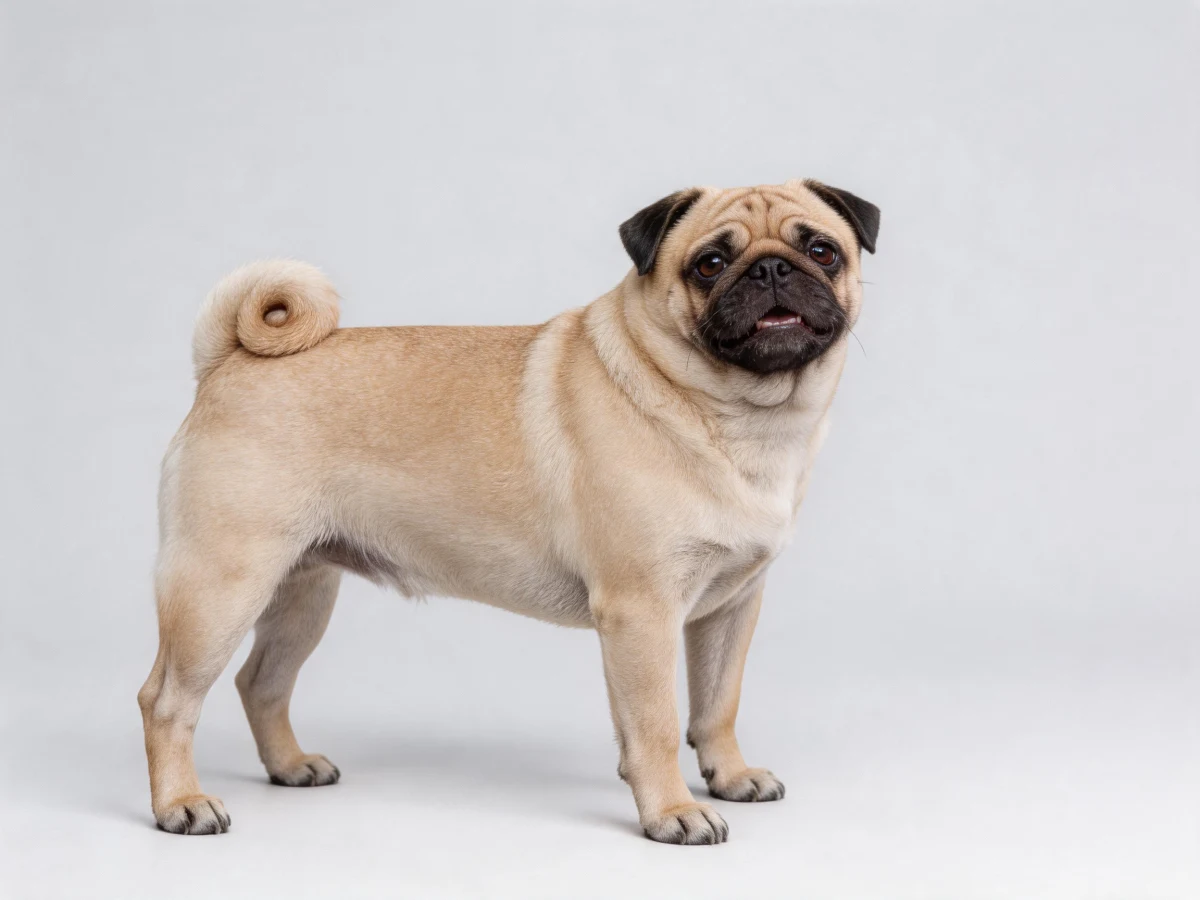
Pekingese
✨ Key Takeaways
- The Pekingese was bred inside the Chinese imperial court to embody the Buddhist guardian lion (the stone "Fo" lions), kept by the palace and not by commoners — its Chinese name 狮子狗 (shīzi gǒu) literally means "lion dog," and the flat face, mane and rolling gait were all selected to make a living miniature lion.
- The breed entered the West as plunder: during the 1860 sack of the Old Summer Palace (Yuanmingyuan) in the Second Opium War, five palace dogs were taken to Britain, and one was presented to Queen Victoria, who named her Looty after the looting — generally reckoned the first Pekingese in Britain.
- The Empress Dowager Cixi (regent until her death in 1908) was the breed's great patron and gave a black Pekingese named Manchu to Alice Roosevelt in 1905; the dynasty's fall dispersed the palace dogs to the West, and the AKC recognised the breed in 1906.
- The Peke's health story is the cost of its lion face: as an extreme brachycephalic breed it suffers BOAS and is dangerously heat-intolerant, while its shallow orbits give it 11.18x the odds of corneal ulceration (O'Neill et al., 2017) and a real risk of eyeball proptosis after minor trauma.
- Its long, low chondrodystrophic body brings a high rate of intervertebral disc disease, patellar luxation is common, and large-headed puppies make it one of the UK breeds most often born by caesarean (Evans & Adams, 2010) — whelping should never be treated casually.
- The deepest naming heritage is genuinely Chinese: lion and Buddhist names (Shi, Leo, Foo), imperial-court names (Cixi, Jade, Qing), auspicious words (Fu, Bao, Mei) and the breed's documented history (Looty, Manchu, Wasabi) all name the dog after the sacred palace lion it was bred to be.
Quick Facts
Common Names & Variants
Modern aliases
Historical names
Modern variants & lines
⚖️ Pros & Cons
Advantages
Trade-offs
Physical Appearance
Recognized colors
Coat
Other
Ears: Drop. Tail: Plumed over back.
🕰 History
Looty, and the dog that came out of a burning palace
On 6 October 1860, during the Second Opium War, Anglo-French troops sacked the Old Summer Palace — the Yuanmingyuan, the "Garden of Perfect Brightness" — outside Peking, and over the following days burned it to the ground. In one of the looted apartments, by the account that has come down to us, soldiers found the body of an elderly aunt of the fled Xianfeng Emperor, who had taken her own life rather than be captured, and beside her five small long-coated palace dogs. The five were carried off. One was taken home by Captain John Hart Dunne of the 99th Regiment, who presented her to Queen Victoria in 1861; the Queen, with grim Victorian humour, named her Looty, after the way she had been acquired. Looty lived at Windsor until 1872, was painted for the Royal Collection by Friedrich Wilhelm Keyl and photographed by William Bambridge, and is generally reckoned the first Pekingese to reach Britain. The breed entered the Western record not as a purchase or a gift between equals but as plunder — a fact the modern breed cannot, and on this page does not, tidy away.
The lion dog of the Buddhist court
Behind Looty lies a far older story that is genuinely hard to date, because palace dogs were not registered animals and the Chinese textual record is allusive rather than documentary. What is clear is the symbolism. The Pekingese was bred to resemble the lion — an animal that does not occur in China — because the lion was the guardian and emblem of the Buddha in the Buddhism that reached China along the Silk Road. The stone "Fo lions" or "Foo dogs" that flank temple and palace gates are the same idea in another medium: a lion stylised toward a dog, set to guard a sacred threshold. The flat face, the rounded skull, the flowing mane around the neck and shoulders, the rolling lion-like gait — these were selected deliberately, over an unknown but long span of time, to make a living miniature of that sacred beast. The dogs lived inside the imperial household, attended by eunuchs, and the better tradition holds that to steal one was a capital offence. Whether literally true or not, the claim captures the real situation: these were dogs of the palace, not of the country.
Sleeves, sun dogs, and the miniaturisation myth
The court did not breed one Pekingese but a graded range of them, and the smallest acquired a famous name: the sleeve dog, supposedly tiny enough to ride in the wide sleeve of a court robe. The romance around this is thick — Victorian writers later claimed the dogs were dwarfed by being held in cages, fed on rice wine and shaped by hand — and most of it is myth. The plain truth is duller: a sleeve Pekingese was simply a very small specimen of an already small dog, prized for its size, and "sleeve" was a size descriptor rather than a separate breed. The court also distinguished colour types, including a small reddish-gold "sun dog." These distinctions were aesthetic and hierarchical, the visible vocabulary of a closed world.
Cixi, 1908, and the dispersal
The breed's most powerful patron was the Empress Dowager Cixi, who dominated the Qing court as regent from 1861 until her death in 1908 and was devoted to her palace dogs. A set of breeding precepts is traditionally attributed to her — counsel to keep the dog lion-like, short in the leg, and dignified in bearing — and whatever its exact authorship, it reflects the court's settled ideal. Under Cixi the Pekingese became a recognised diplomatic gift: in 1905 she presented a black Pekingese named Manchu to Alice Roosevelt, daughter of the American president. With Cixi's death and the unravelling of the dynasty (the Qing fell in 1911), the tight palace control over the dogs broke down and more specimens reached the West, joining the descendants of the 1860 dogs to form the modern breeding population.
From plunder to pedigree
In Britain the imported dogs were taken up by fanciers with energy. They were exhibited from the 1890s, classified by the Kennel Club in 1898 (initially alongside the Japanese Chin), and a breed club was organised at the turn of the century. The American Kennel Club recognised the Pekingese in 1906. The breed became fashionable on both sides of the Atlantic in the early twentieth century and has remained a fixture of the show ring ever since — a Pekingese named Wasabi won Best in Show at the Westminster Kennel Club in 2021, the breed's fourth such victory, following Malachy in 2012. Today the Peke is no longer a common pet, sitting low on the AKC's popularity register, and it carries a real conformational health burden that the closing decades of show breeding sharpened. The honest arc runs from a sacred palace miniature to a Victorian trophy to a modern show dog whose flat face is now, rightly, a subject of veterinary concern.
Temperament & Personality
A small dog that does not think of itself as small
The most useful thing to grasp about the Pekingese is that it was bred to be a companion to royalty, not a servant to anyone, and the character reflects it. This is a dignified, self-possessed, faintly imperious dog — affectionate and loyal to its own people, but with none of the eager, biddable people-pleasing of a retriever or a toy spaniel. The breed standards reach for words like "courageous," "dignified," and "opinionated," and they are accurate. A Peke decides whether it will do a thing. Owners who want a dog that lives to obey will be frustrated; owners who enjoy a small companion with a strong sense of its own worth tend to be devoted to them.
Bonded, but on its own terms
The Pekingese bonds closely, often to one or two people, and it is content to spend the day at their side or on their lap. It is not a clingy or frantic dog; the attachment is more like that of a dignified housemate than a shadow. The breed is famously good as a calm indoor companion and suits quieter households, including older owners, very well. It can be reserved or aloof with strangers and is an alert, ready barker — the palace guardian instinct survives intact in a dog that weighs a few kilograms — which makes it a surprisingly effective little watchdog and a poor fit for thin-walled apartments unless the barking is managed early.
Children, other dogs, and a low tolerance for nonsense
The Peke is not an ideal dog for young children, and good breeders say so plainly. It does not enjoy being grabbed, carried roughly, or treated as a toy, and it will object — sometimes with its teeth — to handling it finds undignified. Its prominent eyes are physically vulnerable to a poke or a knock, which raises the stakes of rough play. With considerate older children and adults it is steady and affectionate. With other dogs it is usually confident to the point of bravado, untroubled by being the smallest animal in the room, which is charming until it picks an argument with something ten times its size.
Stubborn, clever, and hard to bully
Training a Pekingese is an exercise in negotiation rather than command. The dog is intelligent and perfectly capable of learning, but it sees no reason to repeat a trick simply to please you, and it responds poorly to force — heavy-handed methods produce a dug-in, sulking dog, not a compliant one. Short, rewarding, food-motivated sessions work; house-training in particular can be slow and demands patience and consistency. The realistic owner treats the Peke's independence as part of the charm rather than a fault to be drilled out.
The heat rule that overrides everything
One temperament note is really a welfare rule. Because of its flat face, the Pekingese cannot cool itself efficiently by panting, and it is dangerously intolerant of heat and humidity. A Peke is an indoor, climate-controlled dog; in warm weather it needs shade, cool floors, and air conditioning, and exercise must be confined to the cool of the day. Heatstroke kills brachycephalic dogs every summer, and the Pekingese is squarely among the breeds at risk. A devoted owner organises the dog's life around that single fact.
🏡 Living With a Pekingese
A dignified companion, not a wriggly lapdog
The Pekingese was bred for one job — to be the cherished companion of the Chinese imperial court — and a thousand years of that role shows in how the breed lives with you today. A Peke bonds deeply, usually to one or two chosen people, and is loyal and affectionate to them. What it is not is the eager-to-please, lick-everyone toy that many first-time toy owners expect. This is a self-possessed, opinionated little dog with genuine self-importance: a "big dog in a small body" that decides for itself when it wants attention and offers its affection on its own terms. It will sit beside you for hours, but it would rather be invited onto the sofa than scooped up unasked. Owners who appreciate a calm, confident, slightly aloof companion with real character are the right home; anyone wanting a bouncy, biddable shadow will find the Peke puzzling.
Low exercise, but a real watchdog streak
Exercise needs are low to moderate, which is one of the breed's genuine conveniences. A couple of short daily walks plus some indoor pottering satisfy a healthy adult Pekingese; this is not a dog that demands a run or a long hike. That said, the heavy coat and flat face mean even modest exertion has to be timed sensibly — short, cool-weather walks rather than midday outings. Despite the small size and low energy, the Peke carries a courageous, alert watchdog temperament inherited from its palace-guardian past: it will announce visitors with a surprisingly deep, self-assured bark and stand its ground rather than retreat. That makes it an excellent apartment alarm but means early socialisation matters so the natural aloofness toward strangers does not tip into reactivity.
Children, other pets, and apartment life
The Peke's dignity shapes how it fits a household. It tolerates handling but does not crave rough play, and it will not happily absorb being grabbed, squeezed, or chased — which makes it a poor match for homes with toddlers or boisterous young children, and a much better one for adults, calm older children, or quiet seniors. With other dogs and cats a well-socialised Pekingese is generally fine, though its self-importance means it rarely backs down and is better introduced carefully. The breed is tailor-made for apartments: small, quiet most of the day, and content without a yard. The two ownership realities to accept are the profuse shedding double coat and the absolute need to keep the dog cool, both of which shape daily life far more than any exercise requirement.
🎓 Training & Exercise
Independent, not unintelligent
The Pekingese is bright but independent, and training it means abandoning the assumption that a dog should obey simply because you asked. A Peke weighs whether a request is worth its while. Bred to be served rather than to serve, it has no built-in urge to work for a handler the way a retriever or shepherd does, so progress is slower and repetition is met with a certain regal indifference. None of this is stupidity — it is temperament. The owner who succeeds treats training as negotiation rather than command: short, upbeat sessions, high-value food rewards, and genuine patience. Harsh corrections or nagging repetition simply shut a Peke down or convince it the whole exercise is beneath its dignity. Keep sessions brief and end while the dog is still interested.
House-training takes real patience
Be honest with yourself before you bring a Peke home: house-training this breed is slow, and many take months rather than weeks to become reliable. The combination of a small bladder, an independent streak, and a dislike of going out in cold or wet weather works against you. The methods that work are the unglamorous ones — a strict schedule, frequent trips outside, generous reward the instant the dog performs in the right place, and crate or pen management so mistakes indoors are not rehearsed. Many owners use indoor pads as a realistic backup, especially in bad weather. Consistency from every member of the household, not cleverness, is what eventually gets there.
Socialisation and the commands that matter
Because the Peke is naturally aloof with strangers and slow to defer, early, positive socialisation is the highest-value training an owner can invest in — calm exposure to new people, dogs, sounds, and handling while the puppy is young keeps confident aloofness from hardening into suspicion. Prioritise the practical commands: a reliable recall, a gentle "off" so the dog learns to be lifted and groomed without protest, and steady acceptance of having its face, eyes, and coat handled, since this breed needs daily face and coat attention for life. A Peke will never be a competitive obedience star, and trying to force it into that mould only frustrates both of you; aim instead for a polite, well-socialised companion that accepts the care its body requires.
✂️ Grooming & Coat Care
The profuse double coat — and where it mats
Grooming is the single largest time commitment of Pekingese ownership. The breed carries a long, coarse outer coat over a thick, soft undercoat, forming the dramatic lion-like mane around the neck and shoulders, with heavy feathering on the legs, the "trousers" of the hindquarters, the tail, the toes, and behind the ears. That coat mats readily, and the mats form in predictable hotspots: behind and beneath the ears, in the armpits, on the trousers and the backs of the thighs, and in the feathering. Plan on a thorough line-brushing several times a week — ideally most days — working all the way down to the skin with a pin brush and a metal comb, because surface brushing leaves tight mats forming unseen at the roots. A neglected coat does not just look bad; mats pull on the skin and trap moisture and dirt against it.
Trims, bathing, and seasonal shedding
Many owners keep a pet Peke in a shorter "puppy clip" to make the coat manageable, and almost all benefit from a regular sanitary trim — keeping the hair around the rear, genitals, and feet tidy for hygiene and traction. A bath every three to four weeks, followed by thorough drying right down to the skin, keeps the coat and the skin underneath healthy; a damp undercoat is how hot spots and odour start. The double coat sheds year-round and heavier seasonally, so this breed sheds noticeably for its size — daily brushing during a seasonal blow is the difference between a managed coat and dead undercoat throughout the home. Never shave a Peke to the skin to stop shedding; the double coat regulates temperature in both directions and protects the skin.
The flat face, the eyes, and the wrinkle
The Peke's grooming routine is not just about coat — the brachycephalic face needs daily care that owners of longer-nosed breeds never think about. The deep nose-wrinkle and any facial folds must be wiped clean and dried daily, because trapped moisture and debris quickly cause irritation and infection. The breed's large, prominent eyes sit exposed and are prone to drying, scratches, and tear staining, so gently wiping the eye area and watching for redness or squinting is a daily habit. Keep the hair around the eyes trimmed so it cannot rub the cornea. As with every dog, check and gently clean the ears weekly, trim nails every two to three weeks so they do not click on the floor, and brush the teeth several times a week — toy breeds are especially prone to dental disease from crowded little jaws.
🍖 Diet & Nutrition
Keeping a toy lean protects a vulnerable body
For the Pekingese, weight control is not cosmetic — it is structural. A few extra ounces on a 7-to-14-pound frame is proportionally a large gain, and that load falls directly on a long back prone to disc problems, on knees prone to patellar luxation, and on an already-compromised brachycephalic airway that struggles harder with every excess pound. An overweight Peke overheats faster and breathes worse. Feed measured meals against the dog's ideal weight rather than leaving food down, account for every treat inside the daily calorie budget, and learn to body-condition-score by feeling for the ribs under that thick coat — the mane and feathering hide a thickening waistline easily, so the eye lies and the hands tell the truth. Because the breed is small, even a tablespoon of overfeeding adds up quickly.
Small jaws, small meals, and the flat-faced caution
The Peke's tiny, crowded mouth and pushed-in face shape how it should eat. A kibble sized and shaped for small or flat-faced breeds is easier for a Peke to pick up and chew than large dense pieces. Toy puppies have little reserve and can be prone to low blood sugar, so puppies are usually fed small meals three to four times a day, settling to twice-daily feeding as adults. Feed in a calm setting and watch a brachycephalic dog as it eats and drinks — flat-faced breeds can gulp air and be prone to bringing food back up if they bolt it, so a slower pace and an appropriately sized bowl help. Make any diet change gradually over about a week to avoid digestive upset in a small, sensitive stomach.
Routine and dental reality
A consistent feeding routine suits this self-important little dog, and measured portions are easier to defend than free choice with a breed that will happily talk you into extra. Fresh water must always be available, and on warm days a Peke needs ready access to cool water and shade because it dehydrates and overheats far faster than a long-nosed dog. Dental care belongs in the nutrition conversation for toy breeds: crowded teeth in a small jaw mean dental disease is common, so daily or near-daily tooth brushing and vet dental checks matter more here than in many larger breeds. Portion size should always be adjusted to body condition over time rather than fixed to the number on the bag.
🐶 Buying & Adopting a Pekingese
Start with the Pekingese Club of America
The Pekingese Club of America (PCA) is the AKC parent club and the right starting point for finding a responsible breeder. A breeder worth buying from will be a club member in good standing, will register litters with the AKC, will health-test the parents, will offer a written contract, and — crucially for this breed — will breed for moderation: an open enough nose, eyes set so they are protected rather than excessively bulging, and a sound back. Be wary of anyone marketing extreme exaggeration as desirable. Because litters are small (averaging around three puppies) and the breed is not common, expect to wait, and treat a breeder who always has puppies available and ships on demand as a warning sign rather than a convenience.
The health screening to ask for
The Pekingese has a known, breed-specific health profile, and a buyer is entitled to ask a breeder exactly which screens the parents have passed. The CHIC program for the breed centers on three: a patellar luxation evaluation (OFA), an eye examination by a boarded veterinary ophthalmologist (OFA/ACVO), and a cardiac evaluation. Responsible breeders commonly add an OFA hip evaluation and, given the flat face, a brachycephalic airway (BOAS) functional assessment or grading. The conditions these screens address are the breed's documented ones — brachycephalic airway problems and heat intolerance, eye injuries and ulcers and dry eye from those exposed prominent eyes, patellar luxation, intervertebral disc disease from the long back, and heart conditions. Asking to see the paperwork is a consumer's job, not a medical one; "our dogs are just healthy, no testing needed" is the answer to walk away from.
Rescue and the right home
Rescue is a genuine route to a Pekingese. The PCA supports breed rescue, and regional Pekingese and toy-breed rescues regularly take in adults surrendered when owners underestimated the grooming load or the breed's independent temperament. An adult dog with a known personality and coat already settled can be an excellent match for someone who wants the breed without the puppy-stage house-training marathon. Whatever the source, the Peke suits a calm, adult-centred, climate-controlled home that can commit to daily coat and face care and will keep the dog cool — and not a hot-climate household expecting an outdoorsy, low-maintenance toy.
Price and the red flags
A well-bred Pekingese puppy from a health-testing, parent-club breeder typically runs roughly USD 1,000–3,000 in the United States (2024), with the figure varying by region, lineage, and the parents' titles. The patterns to avoid are the familiar ones: puppies priced well below that range with immediate availability, no health-testing documentation, and no club connection, often from high-volume sellers. Be especially cautious of sellers promoting "teacup" or extreme miniature Pekingese at a premium — there is no such recognized variety, the marketing label is associated with fragile, unhealthy dogs, and a fair price from a breeder who shows you the OFA and eye paperwork is far cheaper than the lifetime cost of a poorly bred flat-faced dog.
📜 Breed Name Etymology — iDogNames original research
A dog named for a city
The name is, at root, simply a place-name: Pekingese means "of Peking," the older Western romanisation of Beijing, the imperial capital whose Forbidden City and Old Summer Palace housed the dogs. The suffix -ese is the ordinary English ending for "belonging to a place" (as in Chinese, Maltese, Japanese), so the word announces the dog's origin and nothing else. It entered English in the late nineteenth century, once the imported palace dogs began to be exhibited, and the older British fancy sometimes wrote it Pekinese with a single "g," a spelling still seen. Both spellings are correct; the doubled-g Pekingese is now standard.
Peking, Beijing, and a vanished romanisation
"Peking" and "Beijing" are the same city. Peking is the older postal-romanisation form that English fixed in the nineteenth century; Beijing is the modern Hanyu Pinyin transcription of the Mandarin 北京, "northern capital" (běi, north, plus jīng, capital). The dog kept the old spelling because it was named before the spelling changed, which is why the city is now Beijing but the breed is still Pekingese — a small fossil of a superseded romanisation, like the Peking duck on a restaurant menu.
The Chinese names — lion dog above all
In China the breed's defining name has nothing to do with the city. It is 狮子狗, shīzi gǒu — literally "lion dog" — the name that records the whole point of the animal: a dog bred to embody the Buddhist guardian lion. The same lion symbolism gives the breed its Western nicknames "Lion Dog" and "Chinese Lion Dog," and it links the Peke conceptually to the stone Fo lions ("Foo dogs") at temple gates and to the other Asian lion-dog breeds, the Shih Tzu and the Lhasa Apso. A second descriptive Chinese name, 京巴 / 京巴狗 (jīngbā gǒu), ties the dog back to the capital. The lion name is the true one; "Pekingese" is the address.
Sleeve dog, sun dog, and the descriptive layer
The court's internal vocabulary produced names that survive as breed lore. The sleeve dog (or sleeve Pekingese) named the smallest specimens, those small enough — by tradition — to be carried in a wide court sleeve; it was a size descriptor, never a separate breed, though the romance around it has been considerable. The sun dog named a small reddish-gold type. The early English fancy briefly called the breed the Pekingese Spaniel, on a loose analogy with other small flat-faced toys, before the simpler "Pekingese" won out. Each of these is a real historical name with a documented sense, and together they map the breed's passage from a graded palace possession to a single registered show dog.
Pronunciation
The standard English pronunciation is /ˌpiːkɪˈniːz/ — "pee-kin-EEZ," with the stress on the final syllable, the first vowel long as in "peek." The clipped pet form Peke is pronounced "peek." American and British speakers agree on the shape; the only common variation is whether the middle syllable is voiced fully ("pee-king-eez") or lightly ("pee-kin-eez"), reflecting the two spellings.
Name forms at a glance
| Name | Role | Origin | Literal meaning | First recorded |
|---|---|---|---|---|
| Pekingese | primary | English (from a Chinese place-name) | of Peking | 1890 |
| Lion Dog (狮子狗 / shīzi gǒu) | origin country native | Chinese (Mandarin) | lion dog | — |
| Sleeve Dog | historical | English (descriptive) | the dog small enough to carry in a sleeve | 1900 |
| Pekingese Spaniel | historical | English (descriptive) | the Peking spaniel | 1900 |
| Peke | alias | English (clipping) | the Peke | 1910 |
🏛 Naming Traditions — iDogNames original research
A naming heritage that is genuinely Chinese
Few breeds carry a naming tradition as specific as the Pekingese, because few were so tightly bound to one court and one culture. The most fitting names draw on the breed's actual history — the Forbidden City, the lion symbolism, the Qing dynasty, and the dogs and people in its documented story — rather than on generic small-dog name lists. There are five coherent layers an owner can work from: Chinese given names and words; the imperial and palace vocabulary; the lion and Buddhist symbolism that made the dog; the breed's own documented history, which is unusually rich in usable names; and the colour and "sleeve" descriptors of the coat. Lean on the first four — they are real heritage — and the result is a name that means something.
The Chinese-word layer
Chinese words and given names are the truest fit. For the lion theme itself there is Shi or Shishi (from 狮, lion) and Leo as its Western echo. Auspicious Chinese words make warm, meaningful names: Mei (美, "beautiful"), Bao (宝, "treasure"), Fu (福, "fortune / blessing"), Jin (金, "gold"), Yu (玉, "jade"), Long (龙, "dragon"), Hua (花, "flower"), Xing (星, "star"), and Lan (兰, "orchid"). Personal-style names like Ming, Mei Ling, Lian, Suki, and Tao sit naturally on a Chinese palace dog. Each plants the breed in its own language rather than borrowing from anyone else's.
The imperial and palace layer
The second layer reaches for the world the dog actually lived in. Emperor and Empress are almost too apt to resist; Cixi honours the Empress Dowager who treasured the breed; Qing names the dynasty that kept it; Jade, Pearl, Silk, and Ming evoke the materials and eras of court luxury; Mandarin names the imperial official class; Forbidden and Peking name the places. Dynasty, Royal, and Noble say plainly what the dog was bred to be. For a breed whose entire identity is "the dog of the palace," these are not pretensions but accurate description.
The lion and Buddhist layer
The third layer follows the symbolism that created the breed. Leo, Simba ("lion" in Swahili, but universally read as lion), Aslan (Turkish for lion, via Narnia), Lion itself, and the Chinese Shi all name the beast the Peke was bred to imitate. Fo and Foo recall the guardian temple lions; Buddha and Lotus and Zen evoke the religion behind the symbol; Guardian names the lion's temple job. A small dog with a lion's mane wearing the name of a lion is doing exactly what the Qing court intended.
The documented-history layer
The fourth layer is unusual and specific: the breed's real history hands the owner ready-made names. Looty, after the first Pekingese to reach Britain — taken from the burning Summer Palace in 1860 and named for the looting — is the breed's single most loaded heritage name, and worth knowing the weight of before using. Manchu honours the black Pekingese that Cixi gave to Alice Roosevelt in 1905. Wasabi and Malachy name the Pekingese that won Best in Show at Westminster in 2021 and 2012. Victoria nods to the queen who received Looty. Each of these names a documented dog or person in the breed's own story.
The coat and "sleeve" layer — use lightly
The fifth layer is descriptive and best used with a light touch. The coat colours give Sable, Ginger, Honey, and Cream; the small reddish type gives Sunny, after the court's "sun dog." Sleeve itself, after the sleeve-dog tradition, makes a knowing name for a very small Peke. These are charming but thin compared with the Chinese, imperial and lion layers, which carry real meaning. The deepest names for a Pekingese are the ones that remember it was a sacred lion of the Chinese court — Shi, Cixi, Fu, Looty — rather than the ones that merely describe its colour.
🐾 Themed Names for Your Pekingese — iDogNames original research
Chinese words and names — male
Chinese given names and auspicious words — the truest heritage layer for an imperial Chinese dog.
- Shi — from 狮, "lion"; the breed's defining symbol in one syllable
- Ming — "bright"; also the dynasty before the Qing
- Bao — 宝, "treasure"; what the court considered the dogs to be
- Long — 龙, "dragon"; the imperial emblem
- Fu — 福, "fortune" or "blessing"; a classic lucky word
- Jin — 金, "gold"; rich and easy to call
- Tao — "the way"; calm and philosophical
- Chen — a common, dignified Chinese given name
- Wei — "greatness" or "power"; bold for a small dog
- Kai — "victory" or "triumph"; crisp and modern
Chinese words and names — female
Auspicious words and given names suited to a palace lapdog.
- Mei — 美, "beautiful"; soft and instantly callable
- Yu — 玉, "jade"; the most prized stone of the court
- Lan — 兰, "orchid"; an emblem of refinement
- Hua — 花, "flower"; pretty and apt for a flower-faced dog
- Mei Ling — "beautiful and delicate"; a graceful full name
- Suki — bright and warm; easy on a small dog
- Lian — "lotus"; the Buddhist flower
- Xing — 星, "star"
- Lulu — playful and easy to call across a room
- Pearl — 珍珠; a treasure of the court, in English
The imperial court
Names from the palace world the breed actually lived in.
- Cixi — the Empress Dowager who treasured the breed (regent to 1908)
- Emperor — the dog's ultimate owner; grand for a tiny dog
- Empress — the female counterpart, equally apt
- Qing — the dynasty that kept the palace dogs
- Mandarin — the imperial official class; also a colour
- Dynasty — the long imperial line in one word
- Jade — the stone of imperial luxury
- Silk — the cloth of the court; suits the flowing coat
- Peking — the old name of the capital and the breed
- Noble — what the breed was bred to be
The lion and Buddhist symbolism
Names following the lion the Pekingese was bred to embody.
- Leo — "lion"; the Western echo of the breed's purpose
- Simba — "lion" in Swahili; universally understood
- Aslan — Turkish for lion, by way of Narnia
- Foo — after the stone Fo lions that guard temple gates
- Buddha — the faith behind the lion symbol
- Lotus — the Buddhist flower
- Zen — calm and meditative; short and modern
- Guardian — the lion's temple role
- Mane — the lion ruff the breed actually wears
- Lion — the plainest, truest theme name of all
The breed's own documented history
Names drawn from real Pekingese and people in the breed's story.
- Looty — the first Peke to reach Britain, taken from the Summer Palace in 1860
- Manchu — the black Peke Cixi gave to Alice Roosevelt in 1905
- Wasabi — the Pekingese who won Westminster Best in Show in 2021
- Malachy — the Pekingese who won Westminster Best in Show in 2012
- Victoria — the queen who received Looty
- Windsor — the castle where Looty lived out her life
- Sun Yat — for the "sun dog," the small reddish court type
- Dunne — the captain who carried Looty home
- Garden — for the Yuanmingyuan, the "Garden of Perfect Brightness"
- Pal — a quiet companion name for a quiet companion dog
Coat and size descriptors
Names from the breed's colours and its famous "sleeve" tradition — charming, used lightly.
- Sable — a classic Pekingese coat colour
- Ginger — for the common red-gold coat
- Honey — warm and golden
- Cream — a recognised pale coat colour
- Sunny — after the court's reddish-gold "sun dog"
- Sleeve — a knowing nod to the sleeve-dog tradition
- Mochi — soft, round and small; fits the silhouette
- Teddy — for the bear-like, mane-framed face
- Velvet — for the dense, luxurious coat
- Button — small, dark and round, like the eyes
📋 Breed Standard at a Glance
General appearance
The AKC standard describes the Pekingese as a small, well-balanced, compact toy dog whose overall image is one of dignity, courage, and self-importance rather than daintiness or delicacy. The body is pear-shaped and low to the ground, heavier in front than behind, and the breed should give the impression of a small lion — a directness and independence of character matched by a leonine outline. It is an Eastern dog of distinctive type, and the standard explicitly values a stout-hearted, bold little dog over a timid one.
Size, coat, and colour
The Pekingese stands roughly 6 to 9 inches at the shoulder (about 15–23 cm) and, under the AKC standard, must not exceed 14 pounds; weight typically falls between about 7 and 14 lb (3.2–6.4 kg), with no separation by sex. The coat is the breed's crowning feature: a long, coarse-textured, straight stand-off outer coat over a thick, soft undercoat, forming a profuse mane around the neck and shoulders, with long feathering on the ears, legs, tail, toes, and the "trousers." All coat colours and markings are permissible and equally valued. Lifespan is generally 12–14 years.
Head, movement, and temperament
The head is massive, broad, and flat between the large, prominent, lustrous dark eyes, with a very short, broad, flat-faced muzzle, a black nose, and a wrinkle that ideally frames the face without obscuring eyes or nose. The gait is the unmistakable Pekingese roll — a slow, dignified, slightly rolling movement in front created by the breed's heavier forequarters and bowed forelegs, never a hurried or hackneyed step. Temperament is written into the standard as a defining trait: a fearless, loyal, opinionated, and stout-hearted dog of great dignity and self-esteem, condescending rather than fawning toward strangers.
🏆 Recognition
Recognized by the American Kennel Club in 1906 as a Toy breed. FCI standard No. 207 (Section 8 — Japan Chin and Pekingese), recognized in 1955.
Other registries
Breed clubs
❓ Frequently Asked Questions
Are Pekingese good family dogs?
They suit the right family. A Pekingese is loyal and devoted to its chosen people, but it is a dignified, independent toy that tolerates rather than enjoys rough handling, so it is a poor match for homes with toddlers or boisterous young children. It fits best with adults, calm older children, or quiet seniors who appreciate a confident, slightly aloof companion.
Do Pekingese shed a lot?
Yes, noticeably for their size. The long, coarse double coat sheds year-round and more heavily during seasonal blows, and the profuse mane and feathering need thorough line-brushing several times a week — ideally most days — to prevent mats. The coat is the breed largest ongoing time commitment.
How much exercise does a Pekingese need?
Low to moderate. A couple of short daily walks plus some indoor activity satisfy a healthy adult. Because of the flat face and heavy coat, exercise must be kept short and timed for cool parts of the day — Pekingese overheat quickly and should never be exerted in heat or humidity.
How long do Pekingese live?
Typically 12 to 14 years. As with any toy breed, attentive dental care, keeping the dog lean, protecting the prominent eyes, and managing the flat-faced airway and heat intolerance all support a long, comfortable life.
Are Pekingese easy to train?
Not especially. The breed is intelligent but independent and was bred to be served rather than to obey, so training is slower and works best as patient negotiation with short, upbeat, reward-based sessions. House-training in particular takes real patience and a strict routine, often months rather than weeks.
Are Pekingese hypoallergenic?
No. The Pekingese has a profuse double coat that sheds and is not considered hypoallergenic. Anyone with a dog allergy should spend extended time around the breed before committing to one.
How much does a Pekingese puppy cost?
A well-bred, health-tested puppy from a parent-club breeder typically runs roughly USD 1,000 to 3,000 in the United States (2024), and because litters are small you should expect a wait. Be wary of puppies priced well below that with no health paperwork, and of premiums charged for "teacup" Pekingese, which are not a recognized variety.
📚 Sources & Further Reading
Every load-bearing factual claim on this page is anchored to one of the sources below. iDogNames does not synthesize from secondary aggregators.
- akc breed page Pekingese — AKC Breed Profile — American Kennel Club (2024)
- fci standard pdf FCI Standard No. 207 — Pekingese — Fédération Cynologique Internationale (2009)
- kc uk standard pdf Pekingese — Breed Standard — The Kennel Club (UK)
- breed club official Pekingese Club of America — parent club, breed history and health — Pekingese Club of America
- academic paper Corneal ulcerative disease in dogs under primary veterinary care in England: epidemiology and clinical management — O'Neill DG, Lee MM, Brodbelt DC, Church DB, Sanchez RF; Canine Genet Epidemiol 4:5 (PMID 28630713) (2017)
- academic paper Ophthalmic disorders in a referral population of seven breeds of brachycephalic dogs: 970 cases (2008-2017) — Palmer SV, Espinheira Gomes F, McArt JAA; J Am Vet Med Assoc 259(11):1318–1324 (PMID 34727059) (2021)
- academic paper Proportion of litters of purebred dogs born by caesarean section — Evans KM, Adams VJ; J Small Anim Pract 51(2):113–118 (PMID 20136998) (2010)
- news article Looty (dog) — the looted Pekingese given to Queen Victoria in 1861 — Wikipedia
- wikipedia Pekingese — Wikipedia — Wikipedia