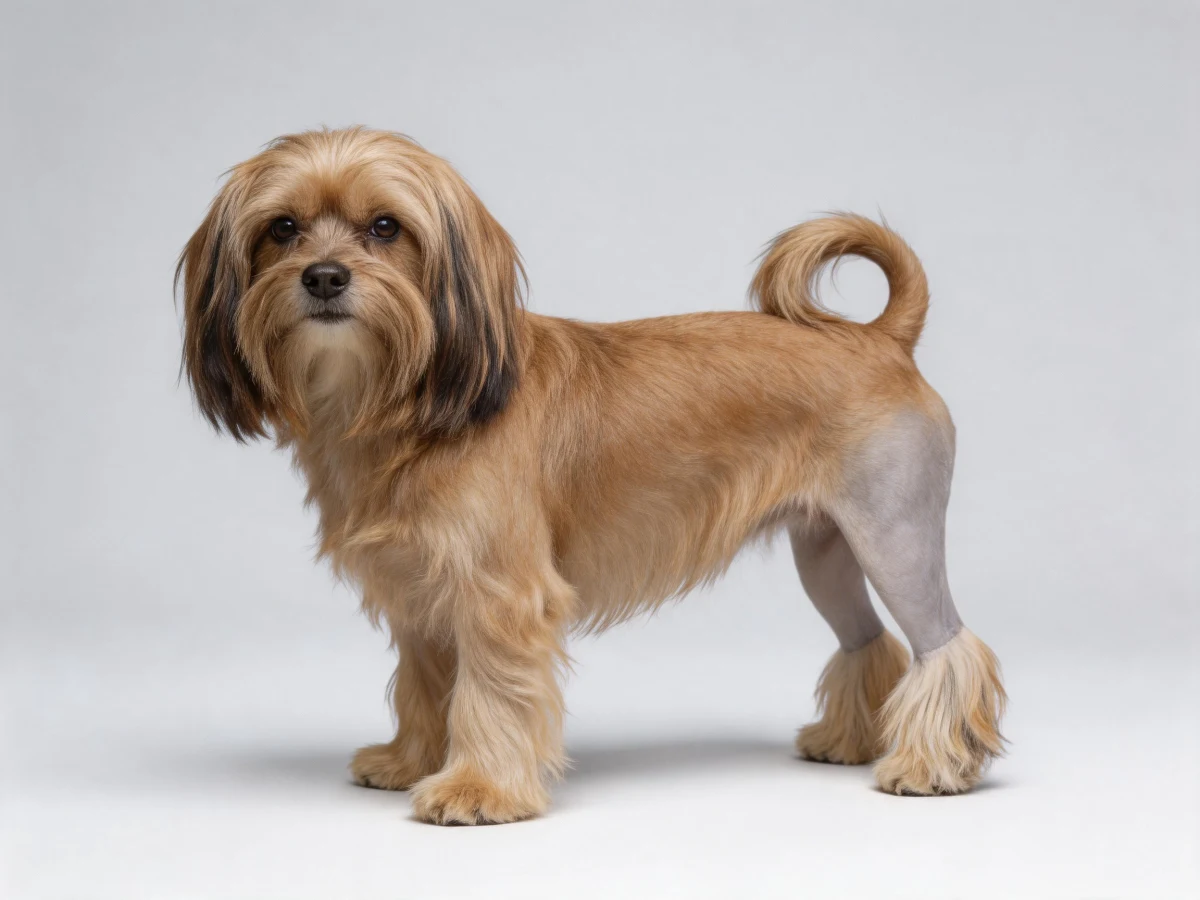
Havanese
✨ Key Takeaways
- The Havanese is the only dog breed native to Cuba and the country's national dog; it descends directly from the now-extinct Blanquito de la Habana, the "little white dog of Havana," with later 19th-century Poodle input that brought colour into a once white-only line.
- It was the household dog of the Cuban Creole planter and Havana merchant class through the 1800s, not a peasant or working dog — the Cuban authority Zoila Portuondo Guerra traces the breed and its Blanquito ancestor to that specific social milieu.
- The breed was nearly lost in Cuba after the 1959 Revolution; the modern global population was rebuilt in the United States from a tiny founding stock — eleven dogs of three bloodlines gathered by 1974 by Dorothy and Bert Goodale, traced to the émigré Pérez and Fantasio families and the Costa Rica line of Señor Barba.
- The Havanese Club of America was formed in 1979; the AKC admitted the breed to the Toy Group with full recognition in 1996, and the FCI standard is N° 250 with Cuba as the patron country.
- The breed-defining genetic problem is a forelimb chondrodysplasia tied to an FGF4 retrogene on canine chromosome 18: Bellamy & Lingaas (2020) found mutant-homozygote Havanese averaged 26.4 cm at the shoulder versus 31.3 cm for wild-type, and the early-blinding-cataract dogs in the breed have largely been chondrodysplastic dogs.
- Responsible breeders clear the Havanese Club of America CHIC panel — eyes (annual ACVO), patellae, hips, and a BAER hearing test — and increasingly screen for the FGF4 chondrodysplasia and portosystemic liver shunt.
Quick Facts
Common Names & Variants
Modern aliases
Historical names
Modern variants & lines
⚖️ Pros & Cons
Advantages
Trade-offs
Physical Appearance
Recognized colors
Coat
Other
Ears: Drop. Tail: Natural, carried over back.
🕰 History
One island, one breed, one ancestor that no longer exists
Cuba has produced exactly one dog of its own, and the Havanese is it — the country's national dog and its only native breed, a fact the American Kennel Club states without qualification. What makes the breed's lineage unusual is that its direct parent stock is gone. The Havanese did not descend from a living breed you can still go and look at; it descended from the Blanquito de la Habana, the "little white dog of Havana," a small all-white companion that was already extinct as a distinct type before the modern Havanese was internationally registered. The breed we have is, in a real sense, the Blanquito's survivor — the part of that lost dog that made it out.
How the Blanquito's own ancestors reached the island is the part of the story that is reconstructed rather than documented. The standard account, and the one the FCI's history endorses, has small Mediterranean Bichón-type dogs of the Tenerife branch carried to Cuba aboard Spanish and Italian merchant shipping from roughly the 16th century onward — some versions specifically credit Italian sea captains. Continuous paperwork from that period does not exist, and the honest position is that the maritime route is inferred from the wider Barbichon family's distribution and the trade pattern, not from a ship's manifest. What is firmer is what happened once the dogs were on the island.
Bred small, white, and Cuban
Isolated on Cuba and kept by the colonial Spanish and the emerging Creole class, the imported small dogs were shaped by local taste and climate into something distinct: smaller than its Mediterranean cousins, with a soft, profuse, heat-shading coat and — critically — bred pure white. That dog was the Blanquito de la Habana. The Cuban breed authority Zoila Portuondo Guerra, whose research underpins most serious modern accounts, places both the Blanquito and its Havanese descendant squarely in one social setting: the dog of the Cuban colonial aristocracy and the prosperous Havana merchant household, kept through to the early 20th century. This was a parlour and courtyard dog of the planter-and-trade class, not a yard dog or a worker.
The colour came later, and from outside. In the 19th century continental Poodles — Caniches — arrived in Cuba through European trade, and crossing them onto the Blanquito stock produced a slightly larger dog that kept the silky Bichón coat but broke the white monopoly, opening the spectrum of fawns, golds, blacks, and parti patterns the breed wears today. The FCI standard's permission of "all colours" is the genetic signature of exactly that Poodle episode written into the rulebook.
1959, and a breed that nearly went down with a class
The Havanese had a structural vulnerability no working breed has: it existed almost entirely inside one social stratum, in one country, with no second population anywhere. The Cuban Revolution of 1959 removed that stratum. Families of the dispossessed Cuban upper and merchant class left for the United States, Costa Rica, and Puerto Rico, and a handful brought their dogs. Most did not — emigration under those conditions does not prioritise a lapdog — and inside Cuba the breed as a maintained type effectively collapsed. For a window of years the global Havanese was reduced to the scattered dogs that had physically crossed a border in the early 1960s.
Eleven dogs, one Colorado kitchen, a deliberate rebuild
The reconstruction is one of the better-documented salvage operations in the dog world because it ran through a single, recorded breeding programme. By 1974 Dorothy Goodale and her husband Bert, in the United States, had assembled eleven Havanese representing three distinct bloodlines, tracing back through the émigré Pérez and Fantasio families — credited as the first Havanese breeders in the US — and the Costa Rican line of a Cuban gentleman recorded as Señor Barba. Eleven founders is a genuinely narrow base, and a responsible account says so rather than smoothing it: the modern breed's genetics carry that bottleneck, which is part of why screening is taken seriously. The Goodales' programme stabilised the type, and in 1979 Dorothy Goodale and a small group of breeders formed the Havanese Club of America, which the AKC later recognised as the breed's parent club.
From rescue project to the Toy Group
Recognition followed the rebuild rather than preceding it. The AKC admitted the Havanese to its Miscellaneous Class and then granted full recognition in 1996, placing the breed in the Toy Group; by the 2010s it had climbed into the AKC's top tier of registrations, an unlikely arc for a dog that had been down to eleven individuals a generation earlier. The FCI maintains the breed under Standard N° 250 with Cuba as the patron country, and The Kennel Club in Britain accepted an interim standard in 1997, the Havanese Club of GB having organised from 1994. What's striking about the Havanese is the asymmetry of its history: a dog that spent two centuries inside the comfortable households of one island, lost the island, and was rebuilt abroad by people who refused to let Cuba's only breed disappear with the world that had kept it.
Temperament & Personality
A dog engineered for the inside of a house
The Havanese temperament is the direct product of where it lived. For roughly two centuries this was a dog kept in the rooms and courtyards of Cuban households, valued for company and nothing else — not guarding, not vermin control, not retrieving. Selection under those conditions produces a specific kind of animal: outgoing, attentive to human attention, soft in handling, and built to spend the day in a family's orbit rather than apart from it. The AKC profile calls the breed affectionate and trainable; the FCI standard describes a lively, friendly companion. Both descriptions are pointing at the same thing — a household dog with no working brief and a long history of being good at being present.
Bright, biddable, and a touch performative
The Havanese is a quick study. It reads human cues well, works enthusiastically for food and praise, and competes credibly in obedience, agility, and trick disciplines at its size — the breed has a recognised history as a small show-and-trick dog. The flip side of an attentive, people-tuned brain is that it expects an audience and a routine. This is not a self-contained breed that will entertain itself in a yard; it is a dog that wants to be in the room, on the furniture, in the day. Left chronically alone, that engagement turns into barking and separation-related behaviour, which is the breed working as designed under the wrong conditions, not a character flaw.
With children, strangers, and other dogs
Socialised young, the Havanese is generally good with children and tolerant of other dogs and households — its whole heritage is multi-person domestic life, so it tends not to be a one-person or sharp-edged breed. It is sensitive: harsh correction backfires badly on a dog selected for softness, and reward-based handling is not a preference here but a near-requirement. Small-dog syndrome — a Havanese never taught manners because its size made bad habits easy to ignore — is the common failure, and it is an owner outcome rather than a breed trait.
Day to day, honestly
An adult Havanese in a suitable home is cheerful, velcro-close, playful well into old age, and undemanding in exercise — daily walks and play meet it. The honest caveats are domestic. The untrimmed coat is a standing commitment; the breed genuinely wants company more than solitude; and housetraining a toy dog asks for consistency that owners often under-supply. None of these is dramatic. This is a low-aggression, high-attachment companion whose challenges are about lifestyle fit and grooming discipline, not temperament.
🏡 Living With a Havanese
The velcro lapdog that follows you room to room
The Havanese was bred for one job — to be a companion — and centuries of selection for that single purpose show in every hour you spend with one. This is the original "velcro dog": it wants to be in your lap, at your feet, or trotting behind you from kitchen to bathroom, and it reads your moods closely enough that it has become a natural therapy and emotional-support breed. That intense attachment is the breed's greatest charm and its one genuine husbandry caveat. A Havanese that gets plenty of company is a cheerful, easy, near-trouble-free housemate; a Havanese routinely left home alone for full working days is the breed most likely to develop separation anxiety, with the barking, house-soiling, and destructive chewing that comes with it. This is a dog for someone who is home a lot, works from home, or can pair the dog with daycare or a companion — not for an empty house nine hours a day.
A small exercise budget and an easy apartment fit
For all its energy of personality, the Havanese is a low-to-moderate exercise breed in practical terms. A couple of short walks plus indoor play, fetch down a hallway, and a little training generally satisfies an adult — you are meeting a toy dog's needs, not a sporting dog's. That modest footprint is exactly why the breed thrives in apartments and small homes and is a sound choice for first-time owners, seniors, and families short on yard space. The flip side of the easy energy budget is that the Havanese is bright and bonded enough to need mental engagement; without it, a bored, under-stimulated Havanese invents games that involve barking and your shoes. Short, frequent, varied activity beats one long outing.
Children, other pets, climate, and the shedding surprise
Havanese are sociable to the core — gentle and playful with children, friendly with other dogs and cats, and rarely scrappy or shy when properly socialised. As with any small dog, play with young children should be supervised so the little dog is not dropped or overwhelmed, but temperament is almost never the limiting factor. The breed adapts to most climates but feels heat more than its small size suggests, since the long double coat is insulating; in hot, humid weather, favour cool hours and shade, and remember a "puppy cut" helps. The pleasant surprise is shedding: the Havanese is a low-shedding breed because loose hair is caught in the long coat rather than dropped on the floor, which is why it is often described as friendlier for allergy-prone households — though no dog is truly hypoallergenic.
🎓 Training & Exercise
One of the easiest toy breeds to train — and why
The Havanese is genuinely one of the more trainable small dogs, and the reason is the same trait that makes it a clingy companion: it is intensely people-focused and wants your attention and approval. A dog that lives to please is a dog that learns quickly, which is why Havanese punch well above their weight in obedience, agility, trick training, and as therapy and circus-style performing dogs historically. Reward-based training — food, praise, play, and access to you — is not just the gentle option but the effective one. The breed is soft and sensitive; harsh corrections, a raised voice, or heavy-handed methods shut a Havanese down and make it anxious rather than obedient, working directly against the cheerful, confident temperament you bought the dog for.
Housetraining is the one real catch
If there is a predictable training frustration with the Havanese, it is housetraining — a challenge shared by many toy breeds, partly because a small bladder and a small accident are both easy to overlook until a habit forms. The answer is not a different method but more rigour with the standard one: a consistent schedule, frequent trips outside, generous reward the instant the dog goes in the right place, and tight supervision or a crate to prevent the unsupervised mistakes that teach the wrong lesson. Many owners find crate training and a fixed potty routine the difference between a reliably clean adult and a lingering problem. Patience through the first several months pays off; rushing or punishing setbacks reliably backfires.
Manage the barking and bond, not the brains
Because the Havanese is alert and vocal, early training should include teaching a "quiet" cue and rewarding calm, so the breed's natural watchfulness does not curdle into a nuisance-barking habit — a real risk in apartments. The deeper training task is the bond itself: a dog this attached needs deliberate, low-key practice at being alone in small, positive doses from puppyhood, building up alone-time gradually so independence is trained before separation anxiety sets in. Beyond that, early socialisation to people, noises, and other animals turns an already-friendly puppy into a confident adult, and a reliable recall and a settled "place" command make the velcro dog a pleasure rather than a tripping hazard.
✂️ Grooming & Coat Care
The long silky double coat is the headline
Grooming is where the Havanese asks the most of its owner. The breed carries a long, soft, silky double coat that is meant to be left untrimmed in the show ring, and that coat mats readily — the soft texture and the trapped loose hair tangle close to the skin if the coat is neglected even for a few days. A full-length Havanese needs brushing and combing daily, or close to it, working a comb all the way down to the skin rather than skimming the top, with particular attention to the friction points where mats form first: behind the ears, in the armpits, on the belly, and where a harness or collar rubs. This is not a wash-and-go breed; the long coat is a daily commitment.
The puppy cut most pet owners choose
For exactly this reason, a large share of pet Havanese owners keep the dog in a short "puppy cut" — a clipped, even trim of an inch or two all over that preserves the breed's teddy-bear look while cutting grooming from a daily chore to a manageable few-times-a-week brush plus a trip to the groomer every six to eight weeks. There is no welfare downside to clipping a companion Havanese; the full coat is a show convention, not a health requirement. Whichever length you choose, bathe every few weeks with a gentle dog shampoo and conditioner, brush the coat out fully before bathing (water tightens existing mats), and dry thoroughly, since a damp double coat is slow to dry and prone to skin issues.
Tear staining, ears, nails, and teeth
Light-coated and white Havanese show tear staining readily, so gentle daily cleaning of the hair around the eyes with a damp cloth keeps the face tidy and the skin healthy. The drop ears carry hair in the canal and trap moisture, so check and clean them on a regular schedule and dry them carefully after every bath. As with all small breeds, dental care is disproportionately important — toy dogs are prone to crowded teeth and periodontal disease — so brush the teeth several times a week from puppyhood. Trim nails every two to three weeks, and keep the hair between the foot pads tidy for traction on smooth floors. None of these tasks is hard; the discipline is doing them often.
🍖 Diet & Nutrition
Small dog, small margin for error on weight
The headline diet issue for a Havanese is portion precision rather than any dramatic breed disease. At roughly 7 to 13 pounds, this is a small dog where a few extra biscuits represent a large share of the daily calorie budget, and even modest excess weight puts unnecessary load on the very joints the breed is watched for — the kneecaps (luxating patella) and the hips. Feed a measured amount of a quality small-breed formula against the dog's ideal weight rather than free-feeding, count treats inside the daily total (use part of the meal ration for training rewards), and body-condition-score by feeling for the ribs and a waist. Keeping a Havanese trim is the simplest, highest-value thing an owner does for its long-term comfort and its already-good longevity.
Puppies, meal frequency, and low blood sugar
Havanese puppies are tiny, and very small toy puppies can be vulnerable to hypoglycaemia (a drop in blood sugar) if meals are missed or play is too hard for too long, so young puppies are fed small meals several times a day rather than one or two large ones. As the puppy grows, most Havanese settle into two measured meals a day as adults, with portion size set by ideal adult weight and activity and adjusted over time by body condition. Small-breed kibble is sized and calorie-dense for little mouths and stomachs; make any food change gradually over about a week to avoid digestive upset.
Dental-friendly feeding and the long-lived payoff
Because dental disease is the quiet epidemic of toy breeds, feeding choices that support oral health matter more than in a big dog — appropriately sized kibble, vet-approved dental chews within the calorie budget, and most of all regular tooth brushing rather than relying on diet alone. There is no breed-specific need for exotic supplements; a complete, balanced food appropriate to life stage covers a healthy Havanese. The reward for getting the simple things right is real: this is a robust, long-lived breed at 14 to 16 years, and a lean, well-fed, dentally cared-for Havanese is set up to use every one of those years well.
🐶 Buying & Adopting a Havanese
Start at the Havanese Club of America
The Havanese Club of America (HCA) is the AKC parent club and the right first stop. It maintains a breeder-referral resource and a code of ethics for member breeders, and it supports breed rescue. A breeder worth buying from will be an HCA member in good standing, will register litters with the AKC, will health-test both parents, will raise the puppies underfoot in the home (a companion breed needs early socialisation), will offer a written contract and health guarantee, and will be openly willing to discuss the breed's known issues rather than claiming their lines have none. Given how small the breed's founding population was after its post-1959 revival by Cuban émigrés in the United States, a careful breeder who manages genetic diversity matters.
The health screening to ask a breeder for
The CHIC health-screening profile for the Havanese covers four areas, and a responsible breeder can show current results on both parents: an eye examination by a boarded veterinary ophthalmologist through OFA/ACVO (done annually, screening for cataracts and progressive retinal atrophy), an OFA patellar luxation evaluation (the slipping kneecap is the breed's signature orthopaedic watch-point), an OFA hip evaluation, and a BAER hearing test for congenital deafness, which is especially relevant in white dogs. Beyond the required four, conscientious breeders often add an OFA cardiac evaluation and a DNA screen for the FGF4/CDPA chondrodysplasia variant linked to short-legged foreleg deformity, and some radiograph for Legg-Calvé-Perthes disease of the hip. Asking to see this paperwork is a consumer fact-check, not a slight; a breeder who answers "all our dogs are healthy, no testing needed" is the one to walk away from.
Rescue is a real option
Havanese rescue runs through the HCA's rescue network and regional small-breed and all-breed rescues. Because the breed bonds so hard, dogs do sometimes end up needing rehoming after an owner's life change, and an adopter willing to take an adult with a known, usually delightful temperament — rather than wait months for a puppy — gets an excellent companion and a clear picture of the dog's personality from day one. For seniors and first-time owners especially, an already house-trained adult Havanese can be the easier path.
Price, waiting lists, and the red flags
A well-bred Havanese puppy in the United States runs roughly USD 1,500–3,500 (2024), depending on region, lineage, and parent titles, and the better breeders keep waiting lists of several months. The familiar warning signs apply: puppies priced well below that range with immediate availability, no health-testing documentation, and no parent-club connection often trace to high-volume commercial breeding. Be wary too of premiums charged for "rare" colours — the standard permits all colours and combinations, so no coat shade is a separate or superior type, and the ancestral pure white of the Blanquito line is no longer required or worth a markup. A fair price from a health-testing HCA breeder, even after a wait, beats the lifetime cost of a poorly bred dog.
📜 Breed Name Etymology — iDogNames original research
The dog named after a city, in two languages at once
"Havanese" is a toponym wearing an English coat. It is the English rendering of the breed's Spanish name, Bichón Habanero — the bichon of Havana, La Habana being the Spanish name of the Cuban capital. So the breed carries the same naming logic as the Maltese (of Malta) or the Bolognese (of Bologna): a Barbichon-family dog labelled by the place that made it its own. The French studbook form, Bichon Havanais, says the identical thing in a third language. English speakers pronounce it /ˌhævəˈniːz/, which quietly erases the Spanish Habana the name is built on; the Spanish Habanero is roughly [aβaˈneɾo], the same word that names the chilli and, separately, the cigar — all three meaning, simply, "from Havana."
Blanquito de la Habana — the ancestor's name, and the breed's deepest layer
The oldest and most informative name in this breed's file is not the breed's own — it belongs to its extinct parent stock. Blanquito de la Habana means "little white one of Havana": blanco (white) in the affectionate diminutive blanquito, plus the city. The name is a fossil of two facts at once. It records that the ancestral Cuban dog was bred specifically and entirely white — the colour the 19th-century Poodle crosses later broke — and it records that the dog was Havana's, a city-identified household animal. No modern Havanese is required to be white, but the breed's name in its grandmother's generation insisted on it, and that is the kind of buried detail a real reference keeps.
Habanero, and the words Havana lends out
The Spanish root habanero is a productive word that the breed shares rather than owns. It is the same adjective that names the habanero pepper and is the historical demonym behind the Havana cigar's identity — anything or anyone "of Havana." Hearing the breed name as the dog version of that word, rather than as an arbitrary label, is the etymologically literate way to hold it: the Havanese is, precisely, the Havanese dog, in the way a habanero is the Havanese pepper. The trade name Havana Silk Dog survives as an Anglo descriptor of the coat and, separately, as the label of a distinct modern fanciers' project; the older Anglo curiosity Spanish Silk Poodle records the 19th-century Poodle cross in a single misremembered phrase.
Aliases, and what they signal
"Havanese" alone is invariant in English — there is no common short form, and "Hav" appears only in breeder shorthand. The meaningful distinctions are provenance, not nickname: Bichón Habanero / Bichon Havanais are the FCI-register Spanish and French forms of the same dog, while Havana Silk Dog is the one label that does not reliably mean an AKC/FCI Havanese — it is also the name of a separate breeding programme, so it is the alias to ask about rather than assume. "Teacup Havanese" is a marketing phrase for an undersized dog, not a registry term; the standard recognises one size.
Name forms at a glance
| Name | Role | Origin | Literal meaning | First recorded |
|---|---|---|---|---|
| Havanese | primary | English (from Spanish toponym) | (dog) of Havana | 1996 |
| Bichón Habanero | origin country native | Spanish (Cuban) | the Havana bichon | — |
| Blanquito de la Habana | historical | Spanish (Cuban) | little white dog of Havana | — |
| Havana Silk Dog | alias | English (descriptive / project name) | silky-coated dog of Havana | — |
| Spanish Silk Poodle | historical | English (older trade name) | Spanish silky poodle-type dog | — |
🏛 Naming Traditions — iDogNames original research
A Cuban naming culture, not a European-registry one
Most pedigree breeds inherit their naming conventions from a dominant national kennel club — a German Zwinger affix, a French salon register. The Havanese is the rare case where the registry culture is young and thin (the breed has been internationally registered only since the 1960s–1990s) while the cultural well behind it is deep and specific: Cuba. That makes the breed's naming heritage unusually clean to read. It pulls from three places — the Spanish-Cuban household, the city of Havana itself, and the breed's own salvage history — and a Havanese name drawn from any of the three sits with the grain, while a generic small-white-dog name does not.
The Cuban household layer
The closest-to-home register is Spanish, and specifically the warm, diminutive, household Spanish of the homes the breed actually lived in. This is the layer of Paloma ("dove"), Lola, Rosa, Chico, Niña, Mango, Canela ("cinnamon"), Azúcar ("sugar"). The Blanquito's own name lives here too — Blanca or Blanquito for a white or cream dog is not a cute coincidence but a direct line to the breed's extinct ancestor. The tonal target is affectionate and domestic rather than grand: these were parlour dogs of comfortable Creole households, and the names that fit are the names those households actually used for small companions, not heroic or martial ones.
The Havana / Cuban-place layer
The deeper, more lineage-literate layer points at the city and island in the breed's own name. Habana / Havana itself is on the nose but defensible; Malecón (Havana's seafront promenade), Vedado or Habana Vieja (its districts), Cuba, Caney, Yara, or the national tree Ceiba each carry a documented Cuban thread. Sugar, coffee, tobacco, and rum — the economy of the planter class that kept the breed — give Café, Tabaco, Ron, Mojito, Habano ("Havana cigar"). This is the register that distinguishes a Havanese name from a generic toy-dog name: it names the specific island that produced the only breed it ever produced.
The salvage-history layer
A third, quieter layer honours the fact that this breed exists at all only because of a deliberate rescue. Names that nod to the Blanquito ancestor (Blanca, Nieve — "snow"), to the émigré crossing (Habana, Mariel, Tampa — the Florida landfall), or to the rebuild itself read as quietly heritage-aware to anyone who knows the story. This is the Havanese equivalent of naming a recovered breed for its own near-miss — historically grounded, not sentimental, because the eleven-dog bottleneck is documented fact. The trap to avoid is the opposite of a tough-name trap: not irony, but blandness. A Havanese named with no Cuban or Spanish reference at all simply leaves the breed's single most distinctive asset — that it is Cuba's only dog — unspoken.
Choosing a Havanese name with the grain
The breed offers three coherent, heritage-backed routes. A warm Cuban-household Spanish name (Paloma, Chico, Canela) matches the homes the dog actually lived in. A Havana / Cuban-place name (Malecón, Habano, Ceiba) points at the city and island in the breed's own surname. A salvage-history name (Blanca, Nieve, Mariel) honours the near-loss and rebuild that the documented record actually describes. None outranks the others, and each has a real thread behind it. The one weak choice is the generic — a Cuban breed deserves a name that knows it is Cuban.
🐾 Themed Names for Your Havanese — iDogNames original research
Cuban household names — the home layer
Warm, diminutive, domestic Spanish — the register the breed's Creole-household owners actually used for small companions. The closest-to-home choice.
- Paloma — Spanish for "dove"; soft, female, period-correct
- Chico — "little one / kid"; the classic Cuban small-dog call name
- Lola — warm Spanish female name; carries across a room
- Canela — "cinnamon"; perfect for a gold or fawn coat
- Azúcar — "sugar"; sweet, Cuban, ties to the planter economy
- Mango — Cuban-fruit name; bright and easy to call
- Niña — "little girl"; affectionate household register
- Rumba — the Cuban dance; lively, suits a busy dog
- Pepe — the everyday Spanish male nickname; unpretentious
- Bonita — "pretty one"; the kind of name these homes really used
Havana & Cuban-place names
Names that point at the city and island in the breed's own surname — the lineage-literate choice for owners who want the back-story.
- Habana — the breed's own surname, in Spanish; on the nose but earned
- Malecón — Havana's seafront promenade; specific and strong
- Ceiba — Cuba's emblematic national tree; rooted, literally
- Habano — "Havana cigar"; the breed's adjective, worn knowingly
- Mojito — the Havana cocktail; cheerful, instantly Cuban
- Vedado — a historic Havana district; uncommon and place-true
- Café — Cuban coffee; warm, short, suits a brown dog
- Yara — a Cuban place and a name from the island's history
- Tabaco — the tobacco trade of the breed's owning class
- Caribe — the Caribbean itself; the breed's whole geography in one word
Blanquito & ancestral-colour names
Names that reach back to the extinct white Blanquito de la Habana the breed descends from — the deepest heritage thread there is.
- Blanca — "white" (female); a direct line to the Blanquito ancestor
- Blanquito — the ancestor's own name; for a white or cream male
- Nieve — "snow"; the ancestral white, softened
- Perla — "pearl"; white with warmth, fits the silky coat
- Coco — coconut: white inside, doubles as an easy call name
- Marfil — "ivory"; for a cream or off-white dog
- Luna — "moon"; pale, soft, very common on the breed
- Algodón — "cotton"; the coat texture in one Spanish word
- Estrella — "star"; bright and white, suits a female
- Plata — "silver"; for the silver coats the Poodle cross introduced
Silk-coat & colour names
The 19th-century Poodle cross opened the breed to every colour. These work the full palette and the famous silky coat without the obvious "Fluffy."
- Seda — Spanish for "silk"; the coat's defining quality, named
- Miel — "honey"; for a gold or amber dog
- Carbón — "coal"; for a black Havanese, understated
- Trigo — "wheat"; warm fawn, an unusual choice
- Cobre — "copper"; for a rich red-gold coat
- Pluma — "feather"; the light, plumed tail and coat
- Ámbar — "amber"; gold with depth, suits a female
- Mancha — "patch"; a wry, accurate name for a parti dog
- Crema — "cream"; the soft pale coats, named plainly
- Brisa — "breeze"; for the light, drifting coat in motion
Cuban music & culture names
A nod to the cultural world the breed comes from — Cuban music, dance and the island's idiom — for a bright, sociable companion.
- Salsa — Cuban-rooted music and dance; energetic, easy to call
- Mambo — the Cuban dance; bouncy without the tough-name trap
- Bongo — the Cuban hand drum; short, percussive, fun
- Danzón — Cuba's national dance; elegant heritage nod
- Conga — the Cuban drum and line dance; cheerful and apt
- Clave — the rhythmic key of Cuban music; distinctive
- Tito — a warm Cuban given-name register; unfussy
- Celia — for Celia Cruz, the voice of Cuban song; bright female name
- Maraca — the Cuban shaker; light, playful, suits the breed
- Son — the foundational Cuban genre; one short, true syllable
📋 Breed Standard at a Glance
General appearance
The AKC and FCI standards describe the Havanese as a small, sturdy, short-legged companion dog with a long, untrimmed, soft double coat and a springy, distinctive gait. It is Cuba's only native breed, descended from the now-extinct Blanquito de la Habana of the wider bichon family. The standard prizes a happy, alert, and affectionate dog of no exaggeration — slightly longer than tall, sound, and built to trot tirelessly beside its owner rather than to work in the field. Personality is treated as a defining feature, not an afterthought.
Size, coat, and colour
The Havanese stands roughly 23–27 cm at the withers — about 9 to 10.6 inches, within the AKC's stated 8.5–11.5 inch range — and weighs about 3–6 kg, roughly 6.6 to 13.2 pounds. The coat is the breed's signature: long, soft, and silky, forming a double coat that is left untrimmed for the show ring and may be wavy to curly. The standard is unusually permissive on colour, accepting all colours and combinations, including white, cream, fawn, gold, silver, black, blue, chocolate, and parti and Irish-pied patterns; the ancestral pure white of the Blanquito is permitted but no longer required.
Head, movement, and temperament
The head is moderate with a flat-to-slightly-rounded skull, dark almond eyes set in a soft expression, and drop ears carried with a fold. The hallmark of the breed is its movement — a flashy, springy gait produced by the short upper arm and limber posture, lively and unique to the Havanese. Temperament is written firmly into the standard: the breed should be friendly, outgoing, intelligent, and naturally affectionate, with shyness and aggression both treated as out of character. It is a companion above all, and the standard reads as a description of a happy small dog rather than a working animal.
🏆 Recognition
Recognized by the American Kennel Club in 1996 as a Toy breed. FCI standard No. 250 (Section 1.1 — Bichons), recognized in 1963.
Other registries
Breed clubs
❓ Frequently Asked Questions
Are Havanese good family dogs?
Yes. The Havanese is a gentle, playful, intensely people-oriented companion that does well with children and with other dogs and cats, and its small size and easy energy level make it a strong choice for apartments, first-time owners, and seniors. The one real caveat is that the breed bonds hard and dislikes being left alone for long stretches, so it suits a household where someone is home much of the day.
Do Havanese shed a lot?
No, the Havanese is a low-shedding breed. Loose hair is caught in the long double coat rather than dropped on the floor, which is why the breed is often described as friendlier for allergy-prone households. The trade-off is grooming: that caught hair means the coat mats easily and needs daily or near-daily brushing, or a shorter "puppy cut" to keep maintenance manageable. No dog is truly hypoallergenic.
How much exercise does a Havanese need?
Modest. A couple of short walks a day plus indoor play and a little training generally satisfies an adult Havanese — this is a toy companion breed, not a sporting dog. Because it is bright and bonded, it does need mental engagement as well as physical activity; short, varied, frequent sessions suit it better than one long outing.
How long do Havanese live?
Typically 14 to 16 years. The Havanese is a robust, long-lived small breed, which is one of its real selling points. Keeping the dog lean, brushing its teeth, and screening through a responsible breeder all help it use those years well.
Are Havanese easy to train?
Yes — they are among the more trainable toy breeds because they are so eager to please their people, and they excel at obedience, agility, and trick training. Reward-based methods work best; the breed is soft and shuts down under harsh handling. The one common frustration is housetraining, which needs a consistent schedule and patience like many small breeds.
Are Havanese hypoallergenic?
No dog is truly hypoallergenic, but the Havanese is often considered allergy-friendlier than average because it sheds very little — loose hair stays trapped in the long coat rather than spreading through the home. Anyone with a dog allergy should still spend extended time around the breed before committing.
How much does a Havanese puppy cost?
A well-bred, health-tested puppy from a parent-club breeder typically runs USD 1,500–3,500 (2024), often with a waiting list of several months. Be wary of puppies priced well below that with no health-testing paperwork, and of premiums charged for "rare" colours — the standard permits all colours, so none is a separate or superior type.
📚 Sources & Further Reading
Every load-bearing factual claim on this page is anchored to one of the sources below. iDogNames does not synthesize from secondary aggregators.
- akc breed page Havanese — AKC Breed Profile — American Kennel Club (2024)
- breed club official Havanese Club of America — breed history & parent club — Havanese Club of America
- fci standard pdf FCI Standard No. 250 — Havanese (Bichón Habanero) — Fédération Cynologique Internationale (1963)
- breed club official Havanese Club of America — health issues & CHIC testing — Havanese Club of America
- academic paper Short and sweet: foreleg abnormalities in Havanese and the role of the FGF4 retrogene — Bellamy KKL & Lingaas F, Canine Medicine and Genetics (2020)
- academic paper Longevity of companion dog breeds: those at risk from early death — McMillan KM et al., Scientific Reports 14:531 (2024)
- health registry Havanese — CHIC required health testing (Eyes, Patella, Hips, Hearing) — Orthopedic Foundation for Animals (OFA / CHIC)
- wikipedia Havanese dog — Wikipedia — Wikipedia
- book The Havanese — Zoila Portuondo Guerra (Kennel Club Books) (2009)