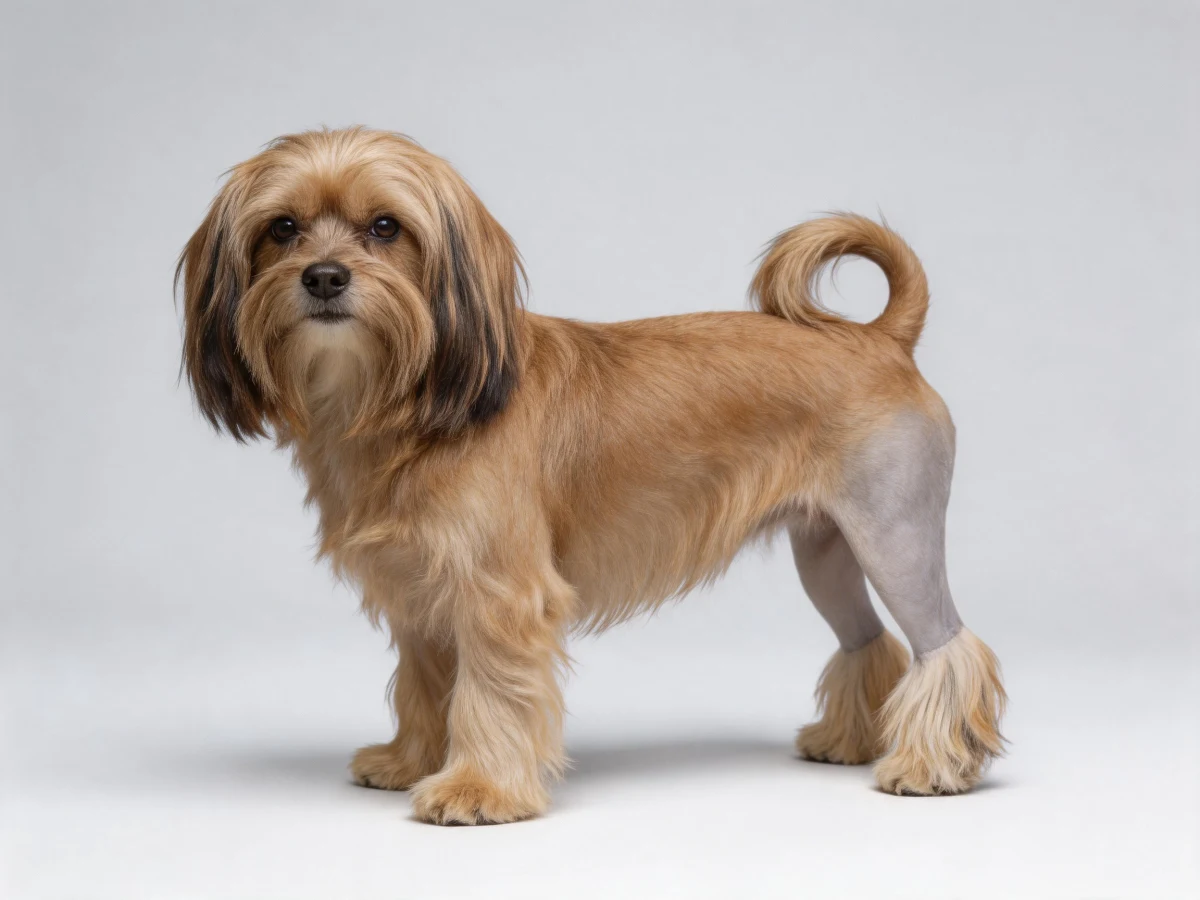
Bichon Frise
✨ Key Takeaways
- The Bichon Frise is the surviving French-Belgian descendant of the Mediterranean "Barbichon" family — specifically the Bichon Tenerife branch, named for the Canary Island where sailors and traders are credited with developing the small white type before carrying it back to continental Europe.
- It was a court dog of the Valois and Spanish Renaissance: King Henry III of France (reigned 1574–1589) is recorded carrying favourites in a tray-basket on neck ribbons, and Francisco Goya painted a small white bichon-type dog into "The White Duchess" of 1795.
- The French Revolution of 1789 stripped the breed of aristocratic patronage; by 1900 it survived as a street, circus and organ-grinder's dog, and was rebuilt only after the two World Wars by French and Belgian fanciers gathering dogs off the streets.
- The official French standard was adopted on 5 March 1933 by the Société Centrale Canine; the name "Bichon à poil frisé" — bichon of the curly hair — was fixed at that point, with the FCI definitively accepting the breed in October 1959 and the AKC granting full recognition in April 1973 (Non-Sporting Group).
- The popular "barbiche" (little beard) derivation is folk etymology: lexicographers date "bichon" to 1588, before "barbichon" (1694); the word descends from Old French biche, a female small dog.
- The breed's real health watch-list is calcium-oxalate bladder stones, patellar luxation, allergic/atopic skin disease and juvenile cataracts — the BFCA CHIC panel screens eyes, patellae and hips, and has funded the genetics work on the three chromosomal loci linked to oxalate-stone risk.
Quick Facts
Common Names & Variants
Modern aliases
Historical names
Modern variants & lines
⚖️ Pros & Cons
Advantages
Trade-offs
Physical Appearance
Recognized colors
Coat
Other
Ears: Drop. Tail: Natural, carried over back.
🕰 History
A pedigree that is a trade route, not a kennel
The Bichon Frise does not have a founder or a kennel at its root — it has a shipping lane. The dog belongs to the old Barbichon group, the cluster of small white companion breeds that European cynologists treat as a single extended family: the Maltese, the Bolognese, the Havanese, the Coton de Tulear, and the Tenerife dog that became the modern Bichon. The American Kennel Club and the Bichon Frise Club of America both trace the type to small Mediterranean dogs moved around the basin in antiquity, with Malta a recognised trading hub for them by roughly a thousand years before Christ. Continuous pedigrees from that period do not exist, and any honest account says so plainly; what survives is the type, the trade, and the place the breed kept its surname from — Tenerife.
By the era of Renaissance navigation the small white dogs were established on Tenerife, the largest of the Canary Islands, and the branch there became distinct enough that it travelled under the island's name. The BFCA's history credits sailors and traders with carrying the Bichon Tenerife back to the European continent, where it found the audience that would keep it alive for the next four hundred years: the courts.
A lapdog of the Valois and the Spanish court
The Bichon's first long employer was the European aristocracy. The AKC's breed history puts the dog in French royal favour through the Renaissance, and the most concrete anchor is Henry III of France, of the House of Valois, who reigned 1574–1589: contemporary accounts describe him so attached to his small white dogs that he carried favourites in a tray-like basket suspended from his neck by ribbons. That is not a fond legend invented later — it is the detail the AKC and the breed club both keep because it is documented and specific. Earlier, Francis I (reigned 1515–1547) is credited with bringing the Italian fashion for small dogs into the French court, and the verb bichonner — to pamper and prettify — entered French from exactly this grooming culture.
The Spanish branch of the story has a signature too. Francisco Goya painted a small curly white dog, wearing a red ribbon on a hind leg, into The White Duchess — his 1795 portrait of María del Pilar Teresa Cayetana de Silva, the 13th Duchess of Alba — and into earlier commissions of the 1780s. Art historians debate whether Goya's dog is strictly a Bichon or a related Barbichon type, and that uncertainty is worth stating rather than smoothing over; what is not in doubt is that a Bichon-pattern lapdog was present at the top of Spanish society at the close of the 18th century.
1789, and the fall to the street
Aristocratic patronage was the breed's livelihood, and the French Revolution of 1789 ended it. With its owners dispossessed or gone, the little white dog lost its place at court and found work where it could. By the turn of the 20th century the AKC's history describes the Bichon plainly as a dog of the street: a performer for organ-grinders, a circus and fairground animal, a companion led around on a string. The breed's trainability and its showy white coat — the very traits the courts had prized — were now what kept it fed in a market square. It is an unusually steep social fall for any breed, and the documentation for these decades is correspondingly thin; the dog was not being registered, it was busking.
The deliberate reconstruction, 1920s–1933
What pulled the Bichon back was a salvage project. After the First World War, fanciers in France and Belgium set out to reconstruct the breed from the scattered street and circus stock that remained — gathering dogs, comparing type, and writing it down. The work produced an official standard adopted by the Société Centrale Canine on 5 March 1933, and the breed was registered under the name Bichon à poil frisé, "the Bichon of the curly hair." The authorship of that 1933 text is itself a small documented dispute: the BFCA credits Madame Bouctovagniez, then president of the Toy Club of France, working with Belgian fanciers, with the name selected by Madame Denise Nizet de Leemans of the FCI standards committee; other breed literature attributes the standard to Madame Abadie of the Steren Vor kennel. The records do not perfectly agree, and the responsible thing is to name the disagreement rather than pick a winner. The FCI definitively accepted the breed in October 1959.
Across the Atlantic, and into the show ring
The breed reached the United States in the mid-1950s — the AKC history credits Helène and François Picault, who brought Bichons from France to the Milwaukee area, with the line that founded the American population, and the Bichon Frise Club of America was established in 1964. The AKC admitted the breed to its Miscellaneous Class in 1971 and granted full recognition in April 1973, placing it in the Non-Sporting Group rather than the Toy Group — a classification choice that still surprises owners who assume any 6-kilogram white dog is a toy by definition. The breed was introduced to the United Kingdom in 1973 and recognised by the Kennel Club around 1980. What is striking about the modern Bichon is the symmetry of its arc: a court dog that fell to the gutter and was rebuilt, deliberately, by people who refused to let a documented breed disappear.
Temperament & Personality
The standard asks for "gay"
The FCI standard for the breed uses a word most breed standards avoid: it describes the Bichon's temperament as gay — lively, cheerful, outgoing. The AKC profile reaches for the same idea from a different direction, calling the Bichon one of the dog world's great "personality dogs." This is not accidental marketing. Four hundred years of selection — first as a court companion whose entire job was to be charming on a lap, then as a performing dog whose income depended on engaging a crowd — bred for an extrovert. A correct Bichon is confident with strangers, busy, and demonstrative, the near-opposite of an aloof guarding breed.
A performer's brain in a companion's body
The circus century left a real behavioural fingerprint, not just a colourful anecdote. The Bichon learns tricks and routines quickly, works enthusiastically for food and praise, and reads human attention well — which is exactly what made it a viable street performer and what makes it good at agility and rally trials at its size today. The flip side of a dog wired to perform for an audience is that it genuinely needs the audience. The Bichon is not a self-sufficient breed content to be left in a yard; it is bonded, social, and at its best when it is involved in the household's day.
Where the temperament goes wrong
The breed's failure modes follow directly from its strengths. A people-oriented dog left alone for long working days is a candidate for separation-related barking and house-soiling, and small breeds are often under-trained on the assumption that size makes manners optional — a Bichon that has never been taught otherwise will bark at the door and resist housetraining well past puppyhood. None of this is temperament rot; it is a sociable performing breed being asked to live like an independent one. With early socialisation, consistent housetraining, and company, the Bichon is one of the more uncomplicated small companions to live with.
Day to day, honestly
An adult Bichon in a suitable home is cheerful, affectionate, playful into old age, and good with children and other dogs when socialised young. It is sensitive to harsh handling and responds far better to reward-based training than to correction. The honest caveats are domestic rather than dramatic: the coat is a standing commitment, the breed wants company more than solitude, and its small jaw and white face mean dental care and tear-stain management are part of ownership from the start. This is a low-aggression, high-engagement dog whose challenges are about lifestyle fit, not character.
🏡 Living With a Bichon Frise
A bonded companion that does not do well left alone
The Bichon Frise was bred for one job — to be a cheerful, affectionate lap companion — and it takes that job seriously. This is a sociable, people-oriented little dog that attaches closely to its household and wants to be part of whatever is happening, whether that is on the sofa, in the kitchen, or following you from room to room. The same trait that makes the Bichon such a delightful companion is also its main caveat: a Bichon routinely left alone for long working days is prone to separation distress, with the barking, house-soiling, and chewing that come with it. The breed suits people who are home a good deal, who can stagger absences, or who can arrange a midday visit or daycare, far better than an empty house from nine to five.
Modest exercise, high playfulness, and a famous burst of zoomies
For a small dog the Bichon's exercise needs are genuinely moderate-to-low: a couple of short daily walks plus some indoor play and a little training generally satisfy a healthy adult. What the breed brings instead of stamina is bounce — the Bichon is playful and quick, and most owners come to know the "buzz," "blitz," or zoomies, the sudden tearing laps around the room that burn off a good-mood energy spike and then stop as fast as they started. That low exercise floor is exactly why the breed transplants so easily into a small flat, provided it gets its company, its short walks, and a few minutes of mental work to keep a clever, slightly mischievous dog out of trouble.
Family fit, other pets, and the apartment verdict
Bichons are gentle, even-tempered, and sociable, which makes them a good match for families with considerate children, for other dogs, and for cats they are raised alongside; supervision around toddlers is the usual sensible caution for any small, fine-boned dog that can be hurt by rough handling. The breed is a textbook choice for first-time owners and for apartment dwellers — small, adaptable, and eager to please — with two honest provisos. The Bichon can be a ready barker that needs early management for shared walls, and its low-shedding double coat is decidedly not low-maintenance, a trade-off covered in full under grooming. Climate-wise the breed is comfortable indoors year-round but feels both heat and cold quickly at its size, so it is an inside dog, not a yard dog.
🎓 Training & Exercise
A clever, sensitive dog that learns fast — and the house-training catch
The Bichon is bright and quick to learn, with a circus and performing-dog heritage that shows in how readily it picks up tricks and routines for an attentive audience. The breed is also soft and sensitive: it works for praise, play, and food, and it shuts down or grows anxious under harsh corrections or a sharp tone, which slow a willing little dog rather than sharpen it. Short, upbeat, reward-based sessions get the most out of a Bichon. The one genuine catch is house-training. Like many small companion breeds the Bichon can be slow and inconsistent to fully house-train, and the answer is not pressure but structure: a strict schedule, generous reward the instant the dog goes in the right place, close supervision or a crate between trips outside, and patience through the months it can take to become reliable.
Managing the bark and the velcro tendency early
Two breed-typical habits are best shaped while a Bichon is young. The first is barking — a Bichon will happily announce the doorbell, the post, and the neighbour, and a clever dog quickly learns that barking summons its people, so teaching a calm "enough" and rewarding quiet from puppyhood pays off for years. The second is the flip side of that close bond: because the Bichon is a velcro dog, deliberate, low-key practice at being briefly alone — building from seconds to minutes with something good to chew, never making departures or returns a drama — is real preventive training, not an optional extra, and it heads off the separation problems that dog a poorly prepared Bichon.
Socialisation, handling, and the highest-value commands
Early, positive socialisation to people, other dogs, sounds, and ordinary household bustle keeps the Bichon's natural friendliness intact and steers it clear of the small-dog wariness that an under-socialised one can develop. One piece of training is specific to this breed and easy to overlook: because a Bichon will be brushed, combed, bathed, and professionally groomed every few weeks for its whole life, teaching a puppy to accept handling — paws, ears, face, and standing still on a table — turns lifelong grooming from a wrestling match into a routine. Add a reliable recall and a settled "place" for when the doorbell sets off the barking, and you have covered the commands a Bichon actually needs.
✂️ Grooming & Coat Care
The headline: a curled double coat that mats to the skin
Grooming is the defining commitment of Bichon ownership, and prospective owners should understand it before anything else. The Bichon carries a double coat — a soft, dense undercoat under a coarser, curled outer coat — with a springy, plush "velvet" texture that, left to its own devices, tangles and felts with startling speed. The curl traps loose hair instead of dropping it, so a missed week does not mean a shaggy dog; it means mats forming down at skin level, where they tighten, pull, and become painful. Brushing and combing right to the skin several times a week, line-brushing in sections rather than skimming the surface, is the non-negotiable home routine. This is the reality behind the fluffy "powder-puff" picture, and it is a lot of work.
Professional grooming on a four-to-six-week clock and the white-coat upkeep
On top of home brushing, the Bichon needs professional grooming roughly every four to six weeks to bathe, fully de-mat, and scissor the coat into the rounded, powder-puff trim the breed is known for. Skipping appointments is how an owner ends up with a tightly matted dog that has to be clipped short — comfortable for the dog, but a reset of months of coat growth. The other constant chore is the white coat itself: Bichons are prone to tear-staining, the reddish-brown marks below the eyes, and to staining around the muzzle and feet, so daily gentle wiping and keeping the face hair clean and trimmed is ongoing cosmetic maintenance rather than a one-off fix. Note that the heavy coat work is matting management, not shedding management — see below.
Low shedding, plus ears, nails, and teeth
The flip side of all that coat work is that the Bichon sheds very little into the home, which is why it is one of the breeds most often described as allergy-friendlier — a point worth framing honestly, since no dog is truly hypoallergenic and reactions vary by person. Because the coat does not shed out, those hairs need removing by brush instead, including the hair that grows inside the ear canal, which many Bichons need plucked and cleaned to prevent the moisture-trapping that leads to ear infections. Trim nails every couple of weeks, keep the hair between the paw pads tidied for traction, and brush the teeth several times a week — small breeds like the Bichon are particularly prone to dental disease from crowded little jaws, making tooth care a genuine health priority rather than a nicety.
🍖 Diet & Nutrition
Keeping a small dog lean — and watching the bladder-stone risk
Portion control is the quiet headline of feeding a Bichon. At roughly eleven to eighteen pounds, the breed needs only a modest amount of food, and a few extra treats or table scraps that would vanish on a big dog can tip a Bichon overweight fast — extra weight that strains the small joints, including knees already predisposed to luxating patella. Feed a measured quantity of a good small-breed diet split across the day, account for training treats inside that daily total, and body-condition-score by feeling for the ribs rather than going by the bowl. One breed-specific nutritional flag is worth raising with your vet: Bichons carry an above-average tendency to form calcium-oxalate bladder stones, and water intake, weight, and diet all factor into that risk, so it is a sensible topic for a feeding conversation rather than something to self-manage.
Puppy feeding and the small-mouth practicalities
Bichon puppies do well on a complete diet formulated for small-breed growth, fed in three or four small meals a day while they are tiny, then settling to two measured meals as they mature. Small-breed puppies have little fuel reserve and can run low on blood sugar if meals are skipped or too far apart, so a regular feeding rhythm matters more than it would for a larger pup. The Bichon's small, often crowded mouth also makes kibble size and texture worth attention — a small-breed kibble is easier to chew and, with the breed's dental vulnerability in mind, dental-friendly food and chews earn their place. Make any change of food gradually over about a week to avoid digestive upset.
Treats, allergies, and a steady routine
Because the daily ration is so small, treats are where good intentions undo a Bichon's waistline; keep them tiny, count them in, and lean on praise and play as rewards. Diet ties into the breed's well-known sensitivity, too: Bichons are notably allergy-prone, and where itchy skin or recurrent ear and paw irritation appears, food can be one contributing thread among several, so any elimination-diet trial belongs in a vet's hands rather than guesswork at the pet-store shelf. Fresh water always available, meals on a predictable schedule, and an honest eye on body condition cover the everyday essentials for the breed.
🐶 Buying & Adopting a Bichon Frise
Start with the parent club, not a classified ad
The Bichon Frise Club of America (BFCA) is the AKC parent club and the sensible starting point for a puppy search, alongside its breeder-referral listings and rescue network; in the UK the breed sits with The Bichon Frise Club of Great Britain, and France — the breed's patron country with Belgium — is overseen by the Société Centrale Canine. A breeder worth your time will health-test both parents, register the litter, raise the pups in the home, provide a written contract and health guarantee, and talk openly about the breed's known issues rather than claiming their lines have none. They will also expect to ask you as many questions as you ask them.
The health screening to ask a breeder for
This is consumer fact-checking, not medical advice: a responsible Bichon breeder can show screening results on both parents, and the breed's CHIC profile centres on three. Ask for an annual eye examination by a boarded veterinary ophthalmologist (OFA/ACVO) — the Bichon is prone to cataracts and other eye disease; an OFA patellar luxation evaluation, since luxating patella (slipping kneecaps) is common in the breed; and an OFA hip evaluation. The BFCA additionally encourages a Legg-Calvé-Perthes radiograph and a cardiac evaluation. It is also fair to ask a breeder about the breed's allergy and atopic-skin tendency and about any history of calcium-oxalate bladder stones in their lines, both recurring themes in the breed. A breeder who produces the eye and patella paperwork and discusses skin and stones candidly is the one to trust; "our dogs are healthy, no need for testing" is the answer to walk away from.
Rescue and the realities of adoption
Bichon rescue is active, coordinated through BFCA-affiliated and regional breed-rescue groups, and is an excellent route for an adopter open to an adult dog with a known temperament rather than a wait for a puppy. Bichons do turn up in rescue — sometimes surrendered by owners who underestimated exactly the things this page stresses, the grooming bills and the dog's dislike of being left alone — and an adult Bichon's personality and any quirks are usually already an open book, which is its own advantage.
Price, waiting lists, and the red flags
A well-bred Bichon Frise puppy in the United States runs roughly USD 1,200–3,500 as of 2024, varying with region, lineage, and the parents' titles, and the better breeders keep waiting lists of months rather than handing over a pup on demand. The familiar warning signs apply: puppies priced well below that with instant availability, no health-testing documentation, no parent-club connection, and sellers who will not let you see how and where the litter is raised. Be wary, too, of "teacup" or "miniature" Bichons marketed at a premium — these are not recognised varieties of the breed, just undersized dogs, and the label often comes with health problems rather than a bargain. A fair price from a health-testing, parent-club breeder, even after a wait, costs far less over a dog's life than a cheap, poorly bred one.
📜 Breed Name Etymology — iDogNames original research
"Bichon à poil frisé": the literal name
The breed's full registered name is French and entirely descriptive: Bichon à poil frisé — "the bichon of the curly hair." Poil is coat or hair, frisé is curled; the name fixes the one trait the 1933 reconstructors most wanted to lock in, the loose-spiral powder-puff coat that distinguishes this branch of the family from the straight-coated Maltese. English clipped the phrase to "Bichon Frise" and, in doing so, quietly dropped the accent and most of the pronunciation: the French is roughly [biʃɔ̃ a pwal fʁize], with a nasal first syllable English speakers flatten to "BEE-shon FREEZ."
What "bichon" actually comes from — and what it does not
The popular story is that bichon is a shortening of barbichon, a "little beard," from barbiche. It is a tidy story and it is almost certainly wrong. Lexicographers attest bichon from 1588 and barbichon only from 1694 — the supposed parent word is more than a century younger than the word it is said to have produced. The defensible etymology, recorded in Wiktionary and standard French historical dictionaries, runs the other way: bichon is from Old French biche, a female small dog (cognate, distantly, with English bitch), with the diminutive ending added. The barbiche derivation is a classic folk etymology — appealing, repeated everywhere, and contradicted by the dates. Saying so is the kind of small honesty that separates a real reference from a copied one.
The Tenerife surname
Before "Bichon Frise" there was Bichon Tenerife — the Tenerife bichon, named for the Canary Island where the BFCA's history says sailors and traders developed and then re-exported the small white type. The toponym is the breed's deepest documented name layer and the one that ties it to the wider Barbichon family: the Maltese carried "Malta," the Bolognese carried "Bologna," and this branch carried "Tenerife" until the 1933 standard replaced the place with the coat. The island name survives in older studbooks and in serious breed history; it is the etymological fingerprint that the modern, purely descriptive name erased.
The verb the breed left behind in French
One word travels in the other direction. The French verb bichonner — to pamper, to titivate, to fuss over someone's appearance — grew out of the grooming culture around these court lapdogs and is ordinary modern French today, used with no awareness of dogs at all. It is rare for a breed to deposit a living common verb into a national language; the Bichon did, and it tells you exactly what the dog's job was. Aliases otherwise stay simple: "Bichon" alone is the universal short form, and there are no meaningful sub-type labels — a "teacup Bichon" is a marketing phrase for an undersized dog, not a registry term, and the standard does not recognise it.
Name forms at a glance
| Name | Role | Origin | Literal meaning | First recorded |
|---|---|---|---|---|
| Bichon Frise | primary | French (descriptive) | the curly-haired bichon (lap dog) | 1933 |
| bichon | origin country native | Old/Middle French | small (lap) dog | 1588 |
| Bichon Tenerife | historical | French + Spanish toponym | the Tenerife bichon | — |
| Bichon | alias | French (clipping) | short form of Bichon Frise | — |
| bichonner | historical | French (derived verb) | to pamper, prettify, fuss over | — |
🏛 Naming Traditions — iDogNames original research
A French registry culture, a Mediterranean back-story
The Bichon's naming heritage pulls from two clearly separable wells, and an owner who knows the breed can usually tell which one a name is drawn from. The first is French: the breed was reconstructed in France and Belgium and standardised by the Société Centrale Canine in 1933, and French given names and French registry conventions sit closest to that culture. The second is Mediterranean and Renaissance-courtly: Tenerife, the Spanish and Italian courts, Goya's Spain, the verb bichonner. Unlike a German working breed, the Bichon carries no Zwinger-style affix system and no occupational call-name layer — its naming tradition is the tradition of a salon dog, not a yard dog, and the names that fit it are drawn accordingly.
The French salon layer
The closest-to-home layer is plainly French. A Bichon wearing a French given name — Belle, Margot, Colette, Gaston, Fifi, Lulu, Margaux, Coco — is wearing the country that rebuilt it and adopted its 1933 standard. This is also where the soft, two-syllable, slightly indulgent register lives: the breed's whole French heritage is a grooming verb, bichonner, and a name like Bijou ("jewel"), Praline, or Chéri reads as period-correct rather than twee on this specific dog in a way it would not on a Rottweiler. The pattern is recognisable: French, feminine-leaning, affectionate, drawn from the salon rather than the field.
The Mediterranean / Tenerife heritage layer
The deeper layer reaches past France to the breed's surname. Names that nod to Tenerife and the Canary Islands, to the Mediterranean trade that moved the type, or to the Spanish court that Goya painted, are the lineage-literate choice for owners who want the back-story rather than the salon. Tenerife itself is on the nose but defensible; Teide (the volcano that dominates the island), Canela ("cinnamon" in Spanish, a wry choice for a white dog with buff shadings), Goya, Alba (for the Duchess Goya painted), or Pilar (the Duchess's own name) each carry a documented thread. This is the layer that distinguishes a Bichon name from a generic small-white-dog name — it points at the specific island and the specific court, not at fluffiness in general.
The Renaissance-court layer
A third layer leans on the breed's four centuries as an aristocratic companion: the Valois and the Spanish court, the era of Henry III's ribbon-basket. Names like Valois, Henri, Cayetana (the White Duchess's given name), Versailles, Médicis, or Bourbon set the dog in its court century. This register works precisely because the heritage is documented — the dog really was at that level of society — so the names land as historically grounded rather than ironic. The trap to avoid is the opposite extreme: a "tough" or growling name on a 6-kilogram white salon dog is pure irony, the naming equivalent of the very street-busking decline the breed's reconstructors spent decades reversing.
Choosing a Bichon name with the grain
The breed offers three coherent, heritage-backed routes and one to avoid. A French salon name (Margot, Gaston, Bijou) matches the country and the 1933 registry culture. A Tenerife / Mediterranean name (Teide, Canela, Alba) points at the breed's real geographic surname. A Renaissance-court name (Cayetana, Henri, Médicis) honours the four centuries the dog spent on noble laps. None outranks the others, but each has a paper trail behind it. The only genuinely off-key choice is the ironic-tough name — it works against everything the breed's documented history actually is.
🐾 Themed Names for Your Bichon Frise — iDogNames original research
French salon names — the reconstruction layer
French given names and salon words from the country that rebuilt the breed and wrote its 1933 standard. The closest-to-home register for a Bichon.
- Margot — classic French female name; ages well, easy to call
- Gaston — French male name with period weight; not twee
- Colette — literary French; suits a bright, busy female
- Bijou — French for "jewel"; period-correct for a salon dog
- Coco — short, French, fashion-adjacent, very common on the breed
- Margaux — French, elegant, a step up from "Margot"
- Praline — French confectionery; wry for a sweet-natured dog
- Lulu — light French call name; carries across a room
- Chéri — "darling"; leans into the bichonner heritage knowingly
- Fifi — the archetypal French lapdog name, owned without irony here
Tenerife & Mediterranean heritage
Names that point at the breed's real surname — the Canary Island of Tenerife and the Mediterranean trade route that carried the type. The lineage-literate choice.
- Teide — the volcano that dominates Tenerife; strong, specific
- Tenerife — the breed's own historical surname; on the nose but defensible
- Canela — Spanish for "cinnamon"; wry for a white dog with buff shadings
- Isla — Spanish for "island"; soft, fits a female
- Marina — for the sailors and traders who moved the breed
- Costa — "coast"; the Mediterranean shipping-lane heritage
- Brisa — Spanish for "breeze"; light and period-appropriate
- Sol — Spanish for "sun"; short, bright, easy as a recall
- Canario — directly for the Canary Islands
- Levante — the Mediterranean east wind; carries the trade-route nod
Renaissance-court names
Names from the breed's documented four centuries on Valois and Spanish noble laps — historically grounded rather than generically "fancy."
- Cayetana — the White Duchess's given name, the dog Goya painted
- Alba — for the Duchess of Alba; short, elegant
- Henri — for Henry III of Valois and his ribbon-basket favourites
- Goya — for the painter who put the breed in "The White Duchess"
- Valois — the royal house that favoured the dog
- Médicis — the Italian-French court line behind the lapdog fashion
- Versailles — the court-dog era in one word
- Pilar — from the Duchess's full name, María del Pilar
- Bourbon — the French royal house; weighty without irony
- Reina — Spanish for "queen"; court register for a female
Powder-puff coat & white names
The breed's coat is pure white with the occasional buff or apricot shading permitted in a young dog. These work that palette without the obvious "Snowy."
- Cumulus — for the rounded, scissored powder-puff outline
- Marshmallow — soft, white, springs back when patted — accurate
- Pearl — white with warmth; suits the show register
- Coco(nut) — white inside; doubles as a French call name
- Ivory — off-white; fits a buff-shaded coat
- Meringue — whipped, white, French — three for one
- Blanca — Spanish for "white"; ties to the Tenerife layer
- Champagne — for the pale buff shading the standard permits
- Frost — clean white; one syllable, easy to call
- Brie — pale, soft, French — a wink at the coat and the country
Performer / circus-heritage names
A nod to the breed's documented century as a street, fair and organ-grinder's performing dog — its trainability worn as heritage rather than embarrassment.
- Pierrot — the white-faced French pantomime clown; almost too apt
- Gigue — a lively French dance; for a busy, bouncy dog
- Cirque — French for "circus"; direct heritage reference
- Bravo — the performer's curtain call; cheerful, easy to shout
- Caper — a playful leap; fits the breed's trick-dog past
- Jester — the entertaining-companion role in one word
- Encore — for a dog that will always do the trick again
- Mambo — performer energy without the tough-name trap
- Polka — bouncy, dance-derived; suits a female
- Charme — French for "charm"; the breed's actual job description
📋 Breed Standard at a Glance
General appearance
The AKC standard describes the Bichon Frise as a small, sturdy, white powder-puff of a dog with a merry, inquisitive temperament and a plumed tail carried jauntily over the back. The breed should look balanced and confident, not toy-fragile — the standard explicitly faults a dog that is shy or that lacks substance — and the soft, dark eyes set in a rounded, trimmed head give the Bichon its characteristic gentle, alert expression. The overall picture is of a cheerful companion built on a compact, well-proportioned frame.
Size, coat, and colour
The Bichon is a small breed: the AKC standard places ideal height at roughly 9.5 to 11.5 inches at the withers, consistent with the recorded range of about 9 to 12 inches (23–30 cm) for dogs and 9 to 11 inches (23–28 cm) for bitches, with weight commonly around 11 to 18 pounds (5–8 kg). The coat is the breed's signature: a soft, dense undercoat beneath a coarser, curling outer coat that combine to a springy, plush texture, trimmed to the rounded powder-puff outline. Colour is white, though shadings of cream, buff, or apricot around the ears or on the body are permitted in small amount; the breed is a white dog by definition.
Head, movement, and temperament
The standard calls for a slightly rounded skull, a muzzle not pointy or coarse, and a black nose, lips, and halo of dark skin around the eyes that frame the expression. Movement should be free, precise, and effortless, with good reach and drive and a level topline held on the move. Temperament is named as a hallmark of the breed: the Bichon should be gentle-mannered, sensitive, playful, and affectionate, a cheerful attitude being the breed's most endearing and required trait. Faults centre on shyness, lack of substance, and departures from the white powder-puff type.
🏆 Famous Bichon Frises
Notable real dogs of the breed profiled on iDogNames.
🏆 Recognition
Recognized by the American Kennel Club in 1973 as a Non-Sporting breed. FCI standard No. 215 (Section 1.1 — Bichons), recognized in 1959.
Other registries
Breed clubs
❓ Frequently Asked Questions
Are Bichon Frises good family dogs?
Yes. The Bichon Frise is a gentle, playful, sociable companion that suits families with considerate children, other dogs, and cats it is raised with, and it is a popular choice for first-time owners and apartment dwellers. The main caveats are that it bonds closely and does not like being left alone for long days, and that it can be a ready barker, so early management helps. Supervise play with toddlers, as with any small, fine-boned dog.
Do Bichon Frises shed a lot?
No — the Bichon is a notably low-shedding breed, and its curled double coat tends to trap loose hair rather than drop it around the home. The trade-off is heavy grooming: because the hair does not shed out, the coat mats to the skin quickly and needs brushing to the skin several times a week plus professional grooming every four to six weeks.
How much exercise does a Bichon Frise need?
Moderate to low. A couple of short daily walks plus indoor play and a little training satisfy most healthy adults. Bichons are playful and have bursts of zoomies, but they are not a stamina breed, which is part of why they adapt so well to small apartments.
How long do Bichon Frises live?
Typically 12 to 15 years. Like many small companion breeds the Bichon is fairly long-lived, and keeping the dog lean, dentally healthy, and up to date on screening for its known eye, knee, and bladder-stone tendencies supports a full lifespan.
Are Bichon Frises easy to train?
Mostly yes — the Bichon is clever, eager, and quick to pick up tricks, with a performing-dog heritage, and it responds best to short, upbeat, reward-based sessions rather than harsh correction. The one real catch is house-training, which can be slow and inconsistent in the breed and needs a strict schedule, supervision, and patience.
Are Bichon Frises hypoallergenic?
The Bichon is one of the breeds most often described as allergy-friendlier because it sheds very little, but no dog is truly hypoallergenic and individual reactions vary. Anyone with a dog allergy should spend extended time around the breed before committing. Note this is the opposite of low-maintenance — the low-shedding coat demands frequent brushing and regular professional grooming.
How much does a Bichon Frise puppy cost?
A well-bred, health-tested puppy from a parent-club breeder typically runs USD 1,200 to 3,500 as of 2024, often with a waiting list of several months. Be wary of puppies priced well below that with no health-testing paperwork, and of premiums charged for "teacup" or "miniature" Bichons, which are not recognised varieties.
📚 Sources & Further Reading
Every load-bearing factual claim on this page is anchored to one of the sources below. iDogNames does not synthesize from secondary aggregators.
- akc breed page Bichon Frise — AKC Breed Profile — American Kennel Club (2024)
- akc breed page Bichon Frise History: From Royal Companion to Family Favorite — American Kennel Club (2023)
- fci standard pdf FCI Standard No. 215 — Bichon Frise (Bichon à poil frisé) — Fédération Cynologique Internationale (1959)
- breed club official Bichon Frise Club of America — breed history & CHIC requirements — Bichon Frise Club of America
- breed club official Bichon Health Research — calcium-oxalate urolithiasis genetics — Bichon Frise Club of America
- academic paper Heritability of patellar luxation in the Bichon Frise and effectiveness of a Swedish screening programme — Lavrijsen ICM et al., The Veterinary Journal (2018)
- health registry Bichon Frise — CHIC required health testing (Eyes, Patella, Hips) — Orthopedic Foundation for Animals (OFA / CHIC)
- wikipedia Bichon Frisé — Wikipedia — Wikipedia
- book The Bichon Frise (Comprehensive Owner's Guide) — Richard G. Beauchamp (Kennel Club Books) (2006)