Eurasier
✨ Key Takeaways
- The Eurasier is a modern German companion breed created from 1960 by Julius Wipfel with Charlotte Baldamus, crossing the Chow Chow with the Wolfspitz (Keeshond) — originally called the Wolf-Chow — and later adding the Samoyed.
- It was renamed Eurasier in 1973, a coinage fusing Europe and Asia to reflect its European Wolfspitz and Asian Chow Chow and Samoyed ancestry, and the FCI granted full recognition the same year (Group 5, Section 5, Standard No. 291).
- The breed was designed purely as a calm, family-bonded companion spitz and was never a working, guarding, or hunting dog — its entire purpose is companionship.
- Temperamentally it is reserved and cool toward strangers while deeply devoted at home; it is quiet, sensitive, and even-tempered, and the standard writes this character in as a requirement.
- The Eurasier cannot be kennelled or isolated — it needs close, continuous family contact and does poorly when left alone or kept apart from its people.
- It is a generally healthy breed with an unusually strong club culture of open health databases and mandatory screening; priorities are autoimmune thyroiditis, patellar luxation, hip and elbow evaluation, and eye conditions such as distichiasis.
Quick Facts
Common Names & Variants
Modern aliases
Historical names
⚖️ Pros & Cons
Advantages
Trade-offs
Physical Appearance
Recognized colors
Coat
Other
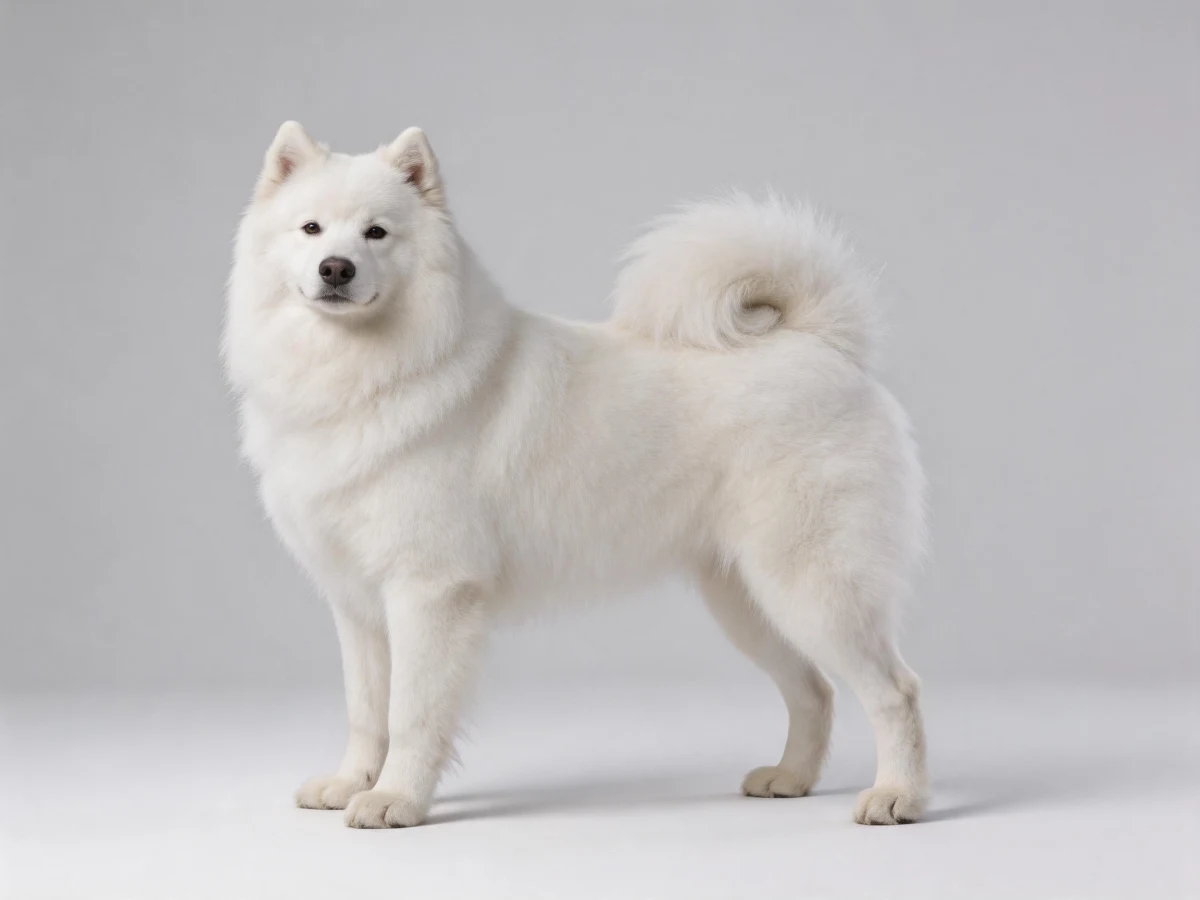
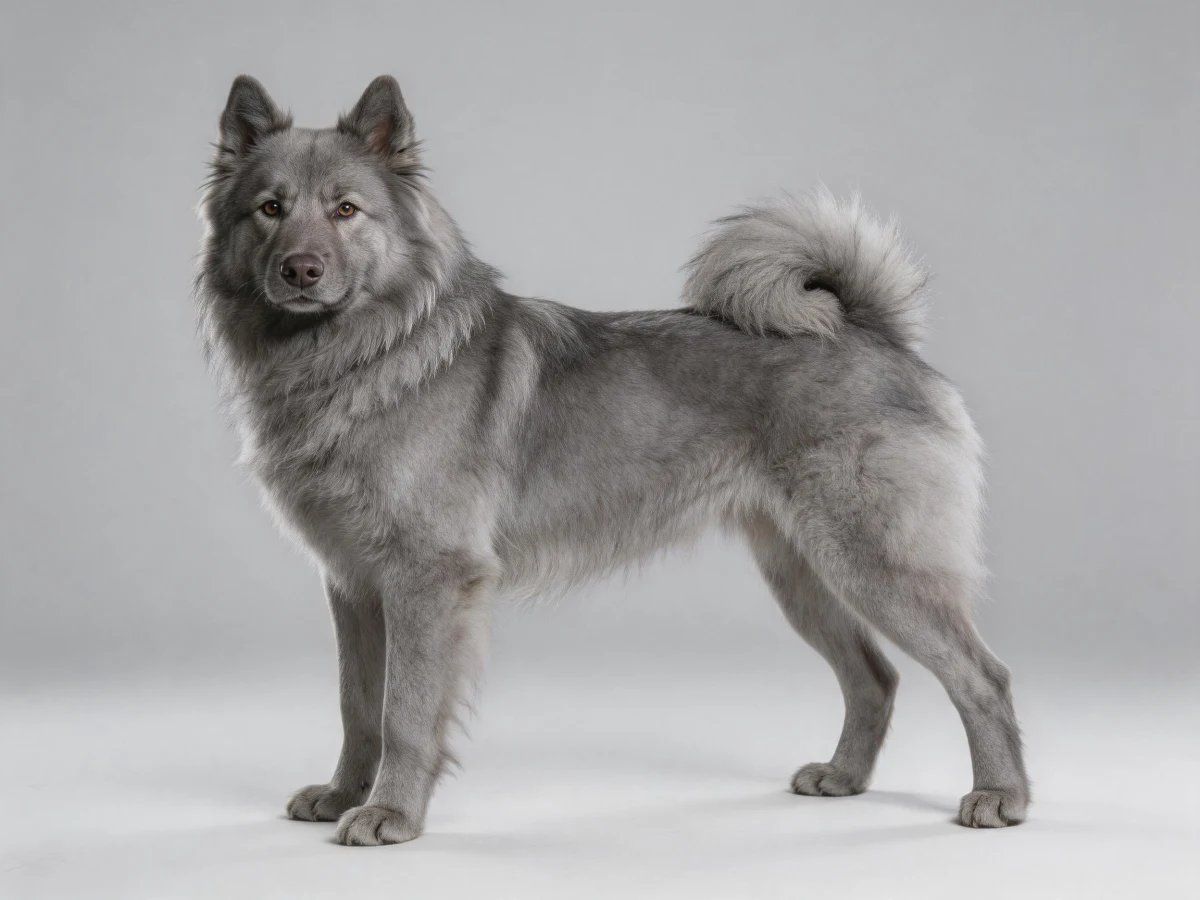
Ears: Prick. Tail: Bushy, carried curled over the back.
🕰 History
A modern breed designed from an idea
The Eurasier is one of the few dog breeds whose origin can be dated to a single decade, traced to a single founder, and explained by a single design goal. It began in 1960 in West Germany, when Julius Wipfel — working with Charlotte Baldamus and a small circle of enthusiasts — set out deliberately to create a companion dog that combined the qualities he most admired in two existing spitz-type breeds. There was no centuries-old landrace behind it, no regional working tradition, no folk history. The Eurasier was conceived as a project: take the dignified, self-possessed character of the Chow Chow and the lively, attached temperament of the Wolfspitz (the German name for the Keeshond), and fix the blend into a stable, breeding-true family dog.
From Wolf-Chow to Eurasier
Wipfel's first crosses paired the Chow Chow with the Wolfspitz, and the resulting dogs were initially called Wolf-Chow — a literal compound of the two parent breeds. The early Wolf-Chow showed the promise Wipfel was after, but he judged the gene pool too narrow and the temperament not yet settled. In the early 1970s a Samoyed was introduced into the breeding programme, adding a third spitz lineage and broadening both the genetic base and the coat and temperament range. With three foundation breeds now in the mix, the original name no longer described the dog. In 1973 the breed was renamed Eurasier — a contraction of Europe and Asia — to capture its dual heritage: the European Wolfspitz and the Asian Chow Chow and Samoyed.
FCI recognition and the Konrad Lorenz connection
The same year, 1973, the Fédération Cynologique Internationale granted the Eurasier full recognition, placing it in Group 5 (Spitz and Primitive Types), Section 5 (Asian Spitz and related breeds), under Standard No. 291. Recognition arrived remarkably quickly for so young a breed, a testament to the consistency Wipfel had achieved. The breed also carries a notable scientific endorsement: the Nobel laureate and ethologist Konrad Lorenz owned a Eurasier obtained from Charlotte Baldamus — a dog formally named Nanette vom Jägerhof, whom he called Babett — and is widely reported to have considered her character among the finest he had known in a dog. The connection to one of the twentieth century's most influential students of animal behaviour is a point of quiet pride within the breed community.
A breed defined by what it is not
The Eurasier's history matters because it explains its purpose. Most spitz breeds descend from working stock — sled dogs, herders, guardians, hunters — and carry working drives that surface in the companion home. The Eurasier was never a working dog. It was bred from the outset for one job: to be a calm, devoted, family-integrated companion. That intentional design is the key to understanding everything else about the breed, from its temperament to its absolute need for close family contact.
Temperament & Personality
The family-companion design, expressed in character
The Eurasier's temperament is the breed's entire reason for existing, and it reflects the deliberate blend of its three founding lines. From the Chow Chow it inherits dignity, self-possession, and a certain reserve; from the Wolfspitz, attentiveness, attachment, and liveliness; from the Samoyed, gentleness and an even disposition. The result is a calm, watchful, even-tempered dog that is deeply bonded to its people and quietly observant of everything around it.
Reserved with strangers, devoted at home
The defining temperamental signature is reserve. A well-bred Eurasier is polite but cool toward strangers — neither timid nor aggressive, simply uninterested in soliciting attention from people outside its family. It will not bound up to a visitor, and it does not give its affection away cheaply. Within its own household, the same dog is affectionate, attentive, and intensely connected, often choosing to be in the same room as its family at all times. This contrast between public reserve and private devotion is exactly what Wipfel selected for, and it is normal breed character rather than shyness.
Quiet, sensitive, and undemonstrative
Eurasiers are notably quiet dogs. They bark sparingly and were never selected as alarm or guard dogs, though their watchfulness means they will note an unusual arrival. They are also emotionally sensitive: harsh handling, family tension, or being shut out of household life all register with them. A Eurasier reads its people closely and responds to tone and mood, which makes it an easy companion for an attentive owner and a poor match for a household that wants a robust, bouncy, push-button dog.
🏡 Living With a Eurasier
The non-negotiable: this dog must live with its family
If there is one absolute rule about living with a Eurasier, it is this: the breed cannot be kennelled, isolated, or kept at arm's length. It was bred specifically for close family integration, and a Eurasier denied that contact suffers for it. Dogs left alone for long stretches, relegated to a yard or kennel, or treated as outdoor animals become withdrawn and unhappy. The Eurasier thrives in a home where it is genuinely part of daily life — present in the living room, included in family routines, and rarely separated from its people for extended periods.
Calm indoors, moderate outdoors
Inside the home the Eurasier is calm and undemanding, content to settle near its family and observe. It is not a hyperactive breed and does not pester for constant activity. Its exercise needs are moderate: a daily walk of reasonable length, the chance to move and explore, and occasional longer outings satisfy a healthy adult. The double coat means it tolerates cold well and enjoys cool-weather activity, while in hot climates exercise should be timed for the cooler parts of the day.
Household fit and other animals
Eurasiers generally do well with children when raised with them, matching their calm, gentle temperament to family life, though their sensitivity means they appreciate respectful handling rather than rough play. They are typically sociable with other dogs and can live peaceably with cats and other pets, particularly when introduced young. The breed adapts to apartment or house living provided the central requirement is met — that it is included in the family's daily life rather than left alone.
🎓 Training & Exercise
Train the sensitive, thinking spitz
The Eurasier is intelligent and learns readily, but it is not a biddable, work-to-please breed in the way a retriever or shepherd is. It brings a spitz independence and a Chow Chow self-possession to training: it weighs requests, decides whether they make sense, and cooperates because it chooses to rather than out of reflexive obedience. This is not stubbornness so much as a thinking dog's preference for partnership over command.
Positive methods and early socialisation
Because the breed is emotionally sensitive, training must be gentle, consistent, and reward-based. Harsh corrections, raised voices, and pressure backfire, producing a dog that shuts down or withdraws rather than one that complies. Short, positive sessions built on praise, food, and a calm relationship work far better. Early, broad socialisation is especially important given the breed's natural reserve: a Eurasier puppy exposed gently and widely to people, places, and situations grows into a confident, settled adult, whereas an under-socialised one can become excessively wary.
Realistic expectations
Owners should expect a polite, well-mannered companion rather than a competition-obedience star, though Eurasiers can and do succeed in lower-key dog sports and activities that suit their temperament. The training goal that matters most is a calm, well-socialised dog that is comfortable in the world and reliably connected to its handler — both of which the breed delivers willingly under patient, positive guidance.
✂️ Grooming & Coat Care
The double spitz coat
The Eurasier carries a full spitz double coat: a thick, soft undercoat beneath a medium-long, loose top coat, with longer feathering on the tail, breeches, and the backs of the forelegs, and shorter hair on the muzzle, face, ears, and the fronts of the legs. The coat is weather-resistant and well-suited to cold conditions, and it gives the breed its characteristic plush, dignified outline.
Routine brushing and seasonal shedding
For most of the year, grooming is straightforward: a thorough brushing once or twice a week keeps the coat clean, prevents matting behind the ears and in the feathering, and distributes skin oils. The picture changes during the seasonal moult, when the undercoat is shed heavily — typically once or twice a year, and more pronounced in unspayed females. During these periods daily brushing with an undercoat rake or slicker is needed to manage the volume of loose hair and keep the dog comfortable. The coat is generally low-odour and stays reasonably clean, so baths are needed only occasionally.
Ears, nails, teeth, and feet
Routine care rounds out the grooming programme: check and clean the ears regularly, trim nails every few weeks, brush the teeth, and keep the hair between the foot pads tidy. The breed should never be shaved — the double coat regulates temperature and protects the skin, and clipping it damages its function and regrowth.
🍖 Diet & Nutrition
Feeding a moderate-energy medium spitz
The Eurasier is a moderately active, medium-sized dog, and its nutritional needs are correspondingly moderate. A complete, balanced diet appropriate to the dog's life stage — puppy, adult, or senior — and formulated for medium breeds suits it well. Portions should be matched to the individual dog's activity level and body condition rather than fed by the bag's generic guideline, because the breed's calm indoor temperament means it does not burn energy lavishly and can gain weight if overfed.
Weight management and the coat factor
Maintaining a lean body condition matters for any breed prone to patellar and joint issues, and the Eurasier is no exception — excess weight loads the knees and hips and works against the orthopaedic health the breed community screens so carefully for. Because the heavy coat can disguise weight gain, owners should assess condition by feel, checking that the ribs are easily palpable beneath the coat. Treats should be counted within the daily ration, and feeding kept consistent.
Practical feeding notes
Most Eurasiers do well on two measured meals a day. As a deep-bodied spitz, sensible feeding practice applies: avoid heavy exercise immediately before or after large meals. Fresh water should always be available, particularly given the insulating double coat in warm weather. Any significant dietary change should be made gradually, and specific nutritional needs are best confirmed with a veterinarian.
🐶 Buying & Adopting a Eurasier
Buying from a health-screening breeder
The Eurasier is an uncommon breed, and the supply of well-bred puppies is limited, so prospective owners should expect waiting lists and plan ahead. The strong recommendation is to buy from a breeder affiliated with a recognised Eurasier club, because the breed's health culture is built around club-mandated screening. A responsible breeder will provide documented health results for the parents — hip and thyroid evaluations at minimum, ideally patella and eye screening as well — and will be able to discuss temperament, socialisation, and the breed's absolute need for family inclusion frankly.
What a good breeder looks for in you
Because the Eurasier does so poorly when isolated, conscientious breeders screen homes carefully and will want to know that the dog will live as part of the family rather than in a kennel or yard. Expect questions about your household, your time at home, and your understanding of the breed's reserve and sensitivity. This scrutiny is a good sign; it reflects breeders who care where their puppies go.
Rescue and adoption
Eurasiers in rescue are rare given the breed's small numbers, but breed clubs and breed-specific rescue networks occasionally place adult dogs needing new homes. Adopting an adult can be an excellent route for the right household, since the breed's calm temperament transfers well to a new family provided the new home offers the close contact the dog needs. Prospective adopters should work through breed-club rescue channels, which understand the breed's particular requirements.
📜 Breed Name Etymology — iDogNames original research
Eurasier: Europe and Asia in one word
The name Eurasier — Eurasian in English — is a deliberate coinage that records the breed's ancestry in a single word. It fuses Eur- (Europe) and -asier (from Asia, Asien in German) to mark the union of the breed's two geographic origins: the European Wolfspitz (Keeshond) on one side, and the Asian Chow Chow and Samoyed on the other. The dog is, quite literally, a Eurasian — a planned synthesis of European and Asian spitz lineages.
From a descriptive compound to a coined name
The breed's naming history is itself instructive. Its first name, Wolf-Chow, was a plain descriptive compound naming the two parent breeds — Wolfspitz and Chow Chow — exactly as the early crosses were made. When the Samoyed entered the programme in the early 1970s, that two-part description no longer fit, and the breeders replaced it in 1973 with the geographic coinage Eurasier. The shift from a literal parent-naming compound to an abstract geographic name mirrored the breed's maturation from an experimental cross into an established breed with its own identity.
Name forms at a glance
| Name | Role | Origin | Literal meaning | First recorded |
|---|---|---|---|---|
| Eurasier | primary | German (coined geographic compound) | Eurasian — the dog of European and Asian heritage | 1973 |
| Wolf-Chow | historical | German (descriptive compound) | the Wolfspitz-and-Chow cross | 1960 |
| Eurasian | alias | English (translation of the German name) | Eurasian; the English-language form of the breed name | 1973 |
| Eurasian Spitz | alias | English | a spitz breed with European and Asian ancestry | — |
| Chow-Wolfspitz | historical | English | early cross name before the modern Eurasier identity | — |
🏛 Naming Traditions — iDogNames original research
How Eurasier owners name their dogs
Because the Eurasier is a young breed with a strong club culture, naming follows familiar pedigree conventions: registered dogs typically carry a kennel-prefix name following the FCI litter-lettering tradition common in German breeding, where all puppies in a given litter share a starting letter. Owners then choose a shorter callname for daily life. The breed's German origin and dual European–Asian heritage give owners three rich naming wells to draw from — German names that honour the breed's homeland, classic spitz names, and names that reflect the Europe-meets-Asia idea built into the breed itself.
Names that honour the founders
The breed's recent, well-documented origin makes its founding figures genuinely available as namesakes. Julius (after Julius Wipfel), Charlotte or Lotte (after Charlotte Baldamus), and Babett (Konrad Lorenz's celebrated Eurasier) all carry real meaning within the breed community and make affectionate, historically grounded callnames.
🐾 Themed Names for Your Eurasier — iDogNames original research
German names for a German breed
The Eurasier's homeland offers a deep well of names. For males: Bruno, Felix, Otto, Max, Heinz, Klaus, Anton, Fritz, and Kaiser. For females: Greta, Heidi, Liesl, Frieda, Elsa, Mitzi, Gisela, and Lotte. German nature and quality words make handsome callnames too: Wald (forest), Schnee (snow — apt for the snowy double coat), Edel (noble), and Stille (quiet), suiting the breed's calm dignity.
Spitz and Northern names
As a true spitz with thick fur and a curled tail, the Eurasier wears Northern and wolf-adjacent names naturally. Consider Loki, Freya, Bjorn, Saga, Nanook, Sasha, Yuki, Storm, Misty, and Aspen. Wolf-grey and black-and-tan coats in particular suit names like Smoke, Ash, Shadow, Sable, and Silver.
Europe-meets-Asia names
The breed's defining concept — the union of European and Asian heritage — invites names that bridge both worlds. From the Chow Chow and Samoyed's Asian side: Mochi, Suki, Tao, Kira, Sora, and Niko. Paired with European names, an owner can lean into the Eurasier idea itself — naming one dog something German and another something Asian to mirror the breed's own dual ancestry. The name Eura, clipped from the breed name, makes a fitting and distinctive callname for a female of this thoughtfully blended breed.
Eurasian heritage names
- Bridge - best for a Eurasier because the breed story bridges European and Asian spitz ancestry
- Eurasia - best for a direct heritage name that explains the breed quickly
- Wolfchow - best for a historical nod to the early Wolf-Chow phase
- Spitzline - best for a dog whose upright ears, coat and tail show spitz type
- Samoyed Thread - best for a name that acknowledges the later Samoyed contribution
- Chow Root - best for a dog with a plush coat and a calm, serious face
- Wolfspitz - best for an owner who knows the German spitz root behind the breed
- Keystone - best for a balanced companion bred for temperament rather than work extremes
Calm companion names
- Harbor - best for a steady Eurasier who feels safe and settled at home
- Kindred - best for a dog whose strongest trait is close family bonding
- Hearth - best for a calm house-centered companion
- Mira - best for a gentle female dog with a soft modern sound
- Luma - best for a warm, quiet dog who brightens the home
- Sol - best for a sunny, friendly companion
- Anchor - best for a dog with a grounded emotional presence
- Stillwater - best for a calm Eurasier with a reflective mood
Plush coat names
- Plush - best for a dense-coated dog whose coat is part of the breed appeal
- Sable - best for a shaded coat with layered color
- Cloud - best for a pale or soft-coated Eurasier
- Foxglove - best for a red or fawn dog with a spitz-fox outline
- Snowcap - best for a cream or gray dog with winter texture
- Ember - best for a red dog with a warm, quiet name
- Silverpine - best for a gray dog with northern-spitz atmosphere
- Thickset - best for a sturdy dog, used affectionately rather than as a weight goal
German family names
- Anka - best for a female dog with a German-style name
- Otto - best for a steady male Eurasier with old-European charm
- Liesel - best for a sweet companion with a soft German sound
- Bruno - best for a sturdy, warm male dog
- Greta - best for a bright female dog with classic simplicity
- Fritz - best for a cheerful male dog with a compact call name
- Marta - best for a calm female dog whose name feels grounded
- Klara - best for a clear, elegant companion name
Spitz expression names
- Prickear - best for a dog whose alert ears define the silhouette
- Curltail - best for a spitz tail carried proudly over the back
- Softmask - best for a dog with gentle facial shading
- Amber Eye - best for a warm-eyed Eurasier with a thoughtful expression
- Quiet Fox - best for a foxlike spitz who is not overly vocal
- Ruffline - best for a dog with a full neck ruff
- Feather Tail - best for a dog with a plumed tail and gentle gait
- Winter Face - best for a northern-looking dog with calm dignity
Training and temperament names
- Balance - best for a breed created around stable companion temperament
- Patience - best for a sensitive dog who learns through calm handling
- Trust - best for a Eurasier whose confidence depends on close bonds
- Focus - best for a dog who enjoys gentle training and household routines
- Boundary - best for a reserved dog learning visitor manners
- Partner - best for a companion whose role is emotional closeness
- Steady - best for a dog whose strength is reliability
- Tempo - best for a household that values calm activity over frenzy
Comparison-aware names
- Chow Link - best for readers comparing the Eurasier with the Chow Chow
- Spitz Link - best for a dog whose heritage points toward German Spitz type
- Samoyed Light - best for a pale dog and a careful nod to the Samoyed line
- Family Spitz - best for a name that emphasizes companionship rather than guarding
- Eurasian Calm - best for a household that wants the breed story in plain words
- Modern Root - best for a relatively modern breed with traceable ancestry
- Companion Line - best for a dog selected for family life
- Gentle Ruff - best for a plush, mild Eurasier with a friendly image
📋 Breed Standard at a Glance
FCI Standard No. 291: the medium companion spitz described
Under FCI Standard No. 291, the Eurasier is a balanced, well-constructed, medium-sized spitz of clearly defined type, classified in Group 5 (Spitz and Primitive Types), Section 5 (Asian Spitz and related breeds), with no working trial. The standard describes a dog of medium bone and well-proportioned build, neither heavy nor light, presenting an impression of strength and dignity without coarseness.
Size, head, and outline
Males stand approximately 52 to 60 cm at the withers and weigh roughly 23 to 32 kg; females stand approximately 48 to 56 cm and weigh roughly 18 to 26 kg. The head is wedge-shaped with a moderate stop, carrying erect, medium-sized prick ears set well apart. The eyes are dark and slightly slanted. The standard accepts a range of tongue pigmentation from pink through spotted to fully blue-black, reflecting the Chow Chow heritage. The tail is set high, well-furred, and carried curled over the back.
Coat, colour, and temperament in the standard
The standard calls for a thick undercoat and a medium-long, loose top coat over the whole body, with shorter hair on the muzzle, face, ears, and the fronts of the legs, and longer feathering on the tail, the backs of the forelegs, and the breeches. All colours and colour combinations are permitted except pure white, white patches, and liver. Recognised colours include fawn, red, wolf-grey, solid black, and black and tan. The standard explicitly addresses temperament, calling for a self-assured, calm, even-tempered dog with high alertness, watchful and reserved toward strangers without being aggressive or shy — temperament being written into the breed standard as a defining requirement rather than an afterthought.
🏆 Recognition
FCI standard No. 291 (5 (Asian Spitz and related breeds)), recognized in 1973.
Other registries
Breed clubs
❓ Frequently Asked Questions
What is a Eurasier's temperament like?
Calm, watchful, and even-tempered, with a defining contrast between public reserve and private devotion. A well-bred Eurasier is cool and polite toward strangers — neither timid nor aggressive, simply uninterested in soliciting attention from people outside its family — while being affectionate and intensely bonded at home, often choosing to stay in the same room as its people. The breed is quiet, barking sparingly, and emotionally sensitive, reading its owners' tone and mood closely. This temperament is not accidental: the Eurasier was bred specifically as a companion, and the FCI standard writes its calm, reserved, watchful character in as a requirement rather than a preference.
How much exercise does a Eurasier need?
Moderate. The Eurasier is a calm, undemanding dog rather than a high-energy one, and a healthy adult is satisfied by a daily walk of reasonable length plus the chance to move and explore, with occasional longer outings. Its thick double coat means it tolerates cold well and enjoys cool-weather activity, while in hot weather exercise is best timed for the cooler parts of the day. It is not a breed that pesters for constant activity, but it should not be left understimulated either; mental engagement and inclusion in family life matter as much as physical exercise for this companion spitz.
What health problems do Eurasiers commonly have?
The Eurasier is generally healthy, supported by an unusually strong breed-club culture of open health databases and mandatory pre-breeding screening. Based on OFA data, the most frequently reported concern is thyroid disease — specifically autoimmune thyroiditis, the heritable form involving thyroglobulin auto-antibodies that lead to hypothyroidism. Patellar luxation is the most common orthopaedic finding, ahead of elbow and hip dysplasia, both of which occur at relatively modest rates in screened dogs. Eye conditions including distichiasis and entropion are also tracked. Responsible breeders screen breeding stock for hips, thyroid, patellas, and eyes and publish results. Typical lifespan is about twelve to fourteen years. This is general information, not veterinary advice.
Are Eurasiers good family dogs?
Yes — the Eurasier was designed to be exactly that, and it excels as a family companion provided one condition is met: it must genuinely live with its family. The breed cannot be kennelled, isolated, or left alone for long stretches without becoming withdrawn and unhappy. Within an attentive household it is calm, gentle, and deeply devoted, and it generally does well with children when raised with them and with other dogs and pets, particularly when introduced young. Its reserve toward strangers calls for broad early socialisation, and its sensitivity means it needs gentle, respectful handling. For a family ready to include the dog fully in daily life, it is an outstanding companion; for a home that wants an outdoor or frequently-alone dog, it is the wrong breed.
How much grooming does a Eurasier need?
The Eurasier has a thick spitz coat that needs regular brushing and extra work during seasonal shedding. It should not be chosen by someone expecting a no-shed companion. Routine coat care, nail trimming, dental care and ear checks are part of normal ownership, and shaving the coat is usually not the right way to manage shedding.
Is the Eurasier a rare breed?
It is less common than many companion breeds, especially outside Europe, so waitlists and careful breeder research are normal. Rarity should not be the main attraction. A good match depends on temperament, health records, socialization, grooming commitment and whether the household wants a sensitive, family-centered spitz.
📚 Sources & Further Reading
Every load-bearing factual claim on this page is anchored to one of the sources below. iDogNames does not synthesize from secondary aggregators.
- akc breed page Eurasier — AKC Breed Profile (Foundation Stock Service) — American Kennel Club (2024)
- fci standard pdf FCI-Standard N° 291 — Eurasier — Fédération Cynologique Internationale (2019)
- breed club official Breed Standard — United States Eurasier Club — United States Eurasier Club (2024)
- breed club official Health — United States Eurasier Club — United States Eurasier Club (2024)
- wikipedia Eurasier — Wikipedia — Wikipedia
- wikidata Eurasier — Wikidata entity Q37946 — Wikidata
- veterinary org Eurasier Dog Breed Health and Care — PetMD (2024)
- other FCI breed nomenclature — Eurasian (No. 291) — Fédération Cynologique Internationale (2024)
- veterinary org Hip Dysplasia in Dogs — Merck Veterinary Manual (2024)