Chow Chow
✨ Key Takeaways
- The Chow Chow is not a Chinese court breed but an all-purpose working dog of ancient China — used for hunting, herding, hauling carts, guarding temples and households, and, in poorer regions, for meat and fur. The AKC describes it bluntly as "an all-purpose dog of ancient China."
- The blue-black tongue is the breed's genuine signature. The AKC notes that the Chow is one of only two AKC-registered breeds with a solid blue-black tongue, the other being the Chinese Shar-Pei. Pink spots are a disqualifying fault under the AKC standard.
- The English name "Chow Chow" is not Chinese. The AKC explains that it is "a sort of mangled English term meaning 'knick-knacks,' dating back to the 1700s" — a pidgin-English label from the 18th-century Canton trade, applied to assorted goods including dogs.
- The deepest Chinese name layer is Songshi Quan (松狮犬, "puffy-lion dog"), and the Chow's distinctive ruff and stilted gait were shaped to evoke the temple-guarding lion of Chinese iconography.
- AKC recognition came in 1903; the Chow Chow Club, Inc., the AKC parent club, was founded in 1906. The breed reached the UK from China in the 1870s and the Chow Chow Club (UK) was founded in 1895 — among the oldest single-breed clubs in the world.
- The breed has a striking, well-documented predisposition to gastric carcinoma. Koterbay et al. (2020, <em>Canadian Veterinary Journal</em>) describe a 106-case series of Chow Chow gastric adenocarcinoma; Seim-Wikse et al. (2013) found an odds ratio around 23 in the Norwegian canine cancer register. The histology resembles human familial diffuse-type gastric carcinoma.
Quick Facts
Common Names & Variants
Modern aliases
Historical names
Modern variants & lines
⚖️ Pros & Cons
Advantages
Trade-offs
Physical Appearance
Recognized colors
Coat
Other
Ears: Prick. Tail: Curled.
🕰 History
A working dog the English mistook for cargo
The Chow Chow's name is the first lie its history tells. There is no Chinese word for the breed that sounds anything like chow chow; the AKC's own breed article is unusually candid about this and explains the name as "a sort of mangled English term meaning 'knick-knacks,' dating back to the 1700s." It was a pidgin-English label applied by British and American merchants in the 18th-century Canton trade — the customs phrase for the assorted Chinese curios, foodstuffs, and live animals that filled the holds heading back to London. The dogs the ships carried home were tagged with the same word as the lacquerware and the porcelain. The breed is older than its name by a couple of millennia, and the name is younger than the trade route it travelled on.
The dog itself is not a Cantonese-port invention. Genetic work on the Asian spitz population dates the Chow's lineage to indigenous central-Chinese dogs of roughly eight thousand years standing, and the surviving Chinese names for it preserve a much older identity than the English label suggests. The deepest Chinese name layer is Songshi Quan (松狮犬), the "puffy-lion dog," a name that anchors the breed to its temple-guard iconography. Older nicknames — Hsiung Kou (熊狗, "bear dog"), Lang Gou (狼狗, "wolf dog"), Hei She Tou (黑舌头, "black tongue") — describe the dog from outside, the way a peasant would name an animal whose work was visible in its body.
The Han record and the temple-guard line
The earliest hard documentation breed historians point to is Han Dynasty (c. 206 BC – 220 AD): pottery figurines, bas-reliefs, and tomb paintings showing a thick-set, prick-eared, curl-tailed hunting dog of clearly Chow-like type. The AKC's expert-advice article works from the same baseline. The figures are interpretive — no one tagged a Han pottery dog with a breed name — but the morphology is specific enough that the lineage is treated as continuous from at least the Han period forward. From the Tang Dynasty (618–907 AD) the documentation gets richer: court records of the era credit one Tang emperor with kennels of as many as 2,500 hunting dogs of the Chow type, the same era that produced the alternative name Tang Quan, "Tang dog." That headcount is dynastic lore rather than audited fact, but the cultural prominence is real.
A dog of every Chinese job
What separates the Chow from the famous Chinese court breeds is the breadth of its working life. The AKC standard introduction is plain about it: this is "an all-purpose dog of ancient China," used for hunting, herding, hauling carts and sleds, and guarding both temples and ordinary households. In poorer northern regions the breed was also a meat and fur animal — a use that breed clubs today don't celebrate but don't pretend away either, because it explains the population's survival into the modern era. The Pug and the Shih Tzu were imperial dogs whose existence depended on the court that owned them; the Chow Chow's existence depended on the millions of Chinese households for whom a tough double-coated dog earned its keep. When the imperial dogs almost vanished after the fall of the Qing, the Chow Chow did not — it was never centralised enough to lose.
Out of Canton, into the West
The Western record begins in the late 18th century. British merchants in Canton — Guangzhou — recorded importing chow-tagged Chinese dogs from the 1780s onward, and the breed appears in a Gilbert White letter from 1781 describing a "wolfish" Chinese dog. The real breed-club beginning is Victorian. Queen Victoria's well-attested taste for unusual dogs gave the Chow Chow a fashionable foothold in 1860s and 1870s Britain, and serious imports followed once travel to and from Hong Kong was routine. The Chow Chow Club, founded in Britain in 1895, is one of the oldest single-breed clubs in the world. The breed reached the United States in 1890 (the first American-registered Chow, "Takya," was AKC-recorded in 1890), and the American Kennel Club gave the breed full recognition in 1903. The Chow Chow Club, Inc., the AKC parent club, was founded in 1906 and has run the breed in the United States ever since.
The 1980s peak and the modern correction
The Chow Chow's American history has one unusual chapter: a sudden, faddish surge in popularity in the late 1980s, when the breed climbed into the AKC's top-ten breeds and was being produced in volumes the gene pool could not safely sustain. The predictable damage followed — temperament inconsistency, structural exaggeration, and a generation of poorly socialised Chows that left the breed with a reputation it had not historically earned. The numbers receded by the 2000s, the parent club tightened breeder education around socialisation and screening, and the modern Chow Chow registered with serious breeders today is a more sane and more sound dog than the supermarket-puppy boom dogs of the late twentieth century. The breed history that matters for buyers is not the Tang emperor's 2,500 dogs — it is the past forty years of breed-club correction.
Temperament & Personality
The standard's word is "dignified"
The AKC breed standard's character section is unusually short, and the three adjectives it chooses are the entire personality of the breed in distilled form: "dignified, serious-minded, and aloof." Read those words as a working description, not a marketing line. The Chow Chow is not a sociable, demonstrative, attention-seeking dog. It does not greet strangers with tail-wagging enthusiasm, does not press for cuddles, and does not solicit affection from people outside its family. What it offers, instead, is a steady, quiet, watchful presence — the dog version of a long-serving household servant rather than a friend who follows you around. Owners who want a dog that loves everyone should choose another breed. Owners who want a dignified, low-volume companion who is genuinely devoted to one or two people will find the Chow exact.
Cat-like, and what that really means
The widely repeated cliché that the Chow Chow is "cat-like" is, like most breed clichés, partly true. The breed is fastidiously clean, grooms itself more than most dogs, has almost no body odour, and is famously easy to house-train — many Chow puppies will not soil a crate from the first weeks. The cat-like comparison extends to social behaviour: the Chow chooses its people deliberately, does not perform affection on demand, and prefers being in the same room to being on the same lap. It is independent in the literal sense, which is also why it does not respond well to repetitive obedience drills aimed at a Labrador's enthusiasm.
The guarding instinct, taken seriously
Centuries as a Chinese temple and household guard produced a discriminating, territorial dog whose default response to a stranger at the gate is suspicion, not greeting. This is the trait that, badly socialised, gives the breed its difficult reputation; well-socialised, it is the trait that makes the Chow a serious, low-noise household guard. A well-raised Chow is not a snapper or a fence-line barker; it is a dog that watches, evaluates, and acts decisively if it decides action is required. The breed therefore demands early, broad, careful socialisation — far more deliberate exposure to people, dogs, sounds, and environments than a friendlier breed needs — to teach the Chow's evaluative mind that most strangers are not threats.
With children, with other dogs, with handlers
The breed-club guidance is consistent and honest. With its own family children, a well-bred Chow is patient and protective; with unfamiliar children, especially the rough-and-rapid handling small children inflict on dogs, the Chow's tolerance is much lower, and breed clubs do not recommend the breed for households with young toddlers unfamiliar with dog-handling rules. With other dogs, same-sex aggression is a recognised tendency, particularly between intact adult males; multi-dog households need careful matching. With handlers, the Chow responds best to calm, consistent leadership and worst to harsh corrections or repetitive obedience drills aimed at a more biddable breed. The dog is bright; it is not biddable. Those are different traits.
Day to day, honestly
An adult Chow Chow in a matched home is quiet, settled, and devoted, with a deep one- or two-person bond and a watchful interest in the household. The breed is content with moderate daily exercise, prefers cooler weather, and lives most comfortably as an indoor dog with secure outdoor access. The caveats are: it is reserved with strangers and not a casual greeter; it requires structured socialisation from puppyhood; it is not a good fit for hot climates, long days alone, novice handlers expecting Golden Retriever enthusiasm, or households with very small children unaware of how to handle a dignified dog. Choose a Chow if the dignified, reserved, lion-shaped guard temperament is what you want. The breed will not be argued into being something else.
🏡 Living With a Chow Chow
A one-family dog that picks its people
The defining fact of living with a Chow Chow is its temperament, which is far closer to a cat than to a typical companion dog. This is a dignified, aloof, deeply independent breed that bonds intensely to one or two people and treats almost everyone else with reserve, suspicion, or open indifference. A Chow does not greet visitors with a wagging body and does not crave the constant contact a retriever needs; it will choose to be in the same room as its person and then settle nearby on its own terms. Owners who want a demonstrative, affectionate dog that adores the whole household and every guest are buying the wrong breed. Owners who respect an animal with strong opinions, who want a calm, clean, quietly loyal guardian rather than a cuddle machine, tend to find the Chow exactly right.
A serious guardian, not a dog-park dog
Bred in China across centuries as a guard dog as well as a hunter and cart-puller, the Chow carries a genuine territorial, protective instinct toward its home and people. It is reserved and frequently same-sex aggressive with other dogs, and it is not a breed for the dog park, for off-lead free-for-alls, or for rough-and-tumble play with unfamiliar dogs. Many regions and insurers treat the Chow as a flagged "type" for liability and breed-specific-legislation purposes, and a prospective owner should check local rules and home-insurance terms before committing. The breed is also a poor match for households with very young or rough-handling children: a Chow that is grabbed, climbed on, or cornered will not tolerate it the way a softer breed might. Early, extensive, ongoing socialisation is not optional with this breed — it is the single biggest factor separating a sound adult Chow from a reactive one.
Exercise, climate, and apartment life
The Chow's exercise needs are moderate rather than demanding: a couple of steady daily walks and some yard time satisfy an adult, and the breed has no interest in being a jogging partner or an endless-fetch dog. That moderate energy makes the Chow surprisingly workable in an apartment, provided it gets its walks and its socialisation. The real environmental caveat is heat. The Chow was built for the cold with a heavy double coat, and it is genuinely heat-intolerant — hot, humid weather calls for early-morning and evening walks, constant shade and water, and never asking the dog to exert in midday sun. Be realistic about the coat indoors too: the dense double coat sheds steadily and blows out in volume twice a year, so a Chow leaves hair on floors and furniture as a permanent condition of ownership.
🎓 Training & Exercise
An independent thinker, not an eager pleaser
Training a Chow Chow asks an owner to unlearn the obedience-dog mindset. This breed was never selected to take direction from a handler all day; it is intelligent but independent, self-possessed, and frankly uninterested in repetitive drills done purely to please. A Chow weighs whether a request is worth its while, and it will simply decline if the answer is no. That is not stupidity or stubbornness in the usual sense — it is a cat-like temperament that responds to respect and consistency, not to nagging. Owners who expect snappy, joyful, retriever-style obedience are setting both themselves and the dog up to fail. The realistic goal is a reliably mannered, well-socialised adult that knows the household rules, not a competition-obedience star.
What backfires — and it backfires badly
The most important training fact about the Chow is that harsh, heavy-handed, or confrontational methods backfire, and with a guardian breed of this size the consequences are serious. A Chow that is bullied, physically corrected, or cornered does not become more compliant; it becomes defensive, distrustful, and potentially dangerous. The breed responds to calm, confident, consistent leadership and to early reward-based training that the dog finds genuinely worthwhile. Pick your rules, enforce them quietly and predictably from puppyhood, and never get into a physical confrontation you are inviting the dog to win. A Chow that respects a fair, steady owner is manageable; a Chow handled with force is the dog that ends up in rescue or worse.
Socialisation is the real curriculum
For this breed the highest-value training is not sit and stay but structured, lifelong socialisation. From the moment a Chow puppy comes home it needs careful, positive, controlled exposure to many people, places, dogs, and handling experiences, so that its natural reserve and territorial instinct settle into discernment rather than reactivity. Teach it to accept grooming, vet handling, and having its feet and face touched early, because the heavy coat and deep facial folds mean a lifetime of hands-on care. A solid recall and a dependable "leave it" matter for safety, but the work that defines a good Chow is the patient, ongoing socialisation that produces an adult which is aloof and watchful without being aggressive.
✂️ Grooming & Coat Care
Two coat varieties, one heavy double coat
The Chow comes in two coat varieties — the familiar profuse rough coat and a shorter, dense smooth coat — and both are true double coats with a soft, woolly undercoat beneath a coarser outer coat. The rough coat carries the breed's signature lion-like ruff around the head and shoulders and abundant feathering on the tail and hindquarters; it is a serious grooming commitment. Plan on thorough brushing several times a week with a slicker brush and a long-pin or undercoat tool that reaches all the way to the skin, not just the surface. Brushing the surface only is the classic Chow mistake: the dense undercoat mats underneath while the outer coat still looks tidy. The smooth variety is easier but still needs regular line-brushing to manage its dense undercoat.
The seasonal blow and the matting hotspots
Twice a year the Chow's undercoat "blows" and sheds in dramatic volume over a few weeks, and during those windows near-daily brushing is the difference between a managed coat and drifts of dead undercoat through the house. The mats that matter form where the coat is densest and where the dog folds and rubs: deep in the ruff around the neck, behind and under the ears, in the armpits and groin, and across the heavily feathered hindquarters and tail. These spots need deliberate, regular attention because a neglected mat tightens against the skin and becomes a painful, sometimes infected, sore. Never shave a Chow down to control shedding — the double coat insulates against both cold and heat, and clipping it can leave the coat growing back patchy and compromise the dog's temperature regulation in a breed that is already heat-sensitive.
Eyes, folds, ears, nails, and teeth
The Chow's heavy facial folds and deep-set eyes are part of routine grooming, not just a health matter: wipe and dry the folds and the area around the eyes regularly to keep them clean and free of trapped moisture and debris. The small, thick ears trap warmth, so check and gently clean them on a weekly schedule, and dry them carefully after any bath. Trim nails every two to three weeks — nails that click on the floor are already too long for a heavy, square-built dog. Brush the teeth several times a week from puppyhood. Because the Chow tolerates handling best when it has accepted it from an early age, doing all of this gently and consistently from puppyhood is what makes lifelong coat and face care possible.
🍖 Diet & Nutrition
Keeping a heavy-coated, moderate-energy breed lean
The Chow's diet headline is weight control. This is a solidly built, square, moderate-energy breed that does not burn calories the way a working sporting dog does, and the profuse coat hides a thickening waistline until it is well advanced. Extra weight is not cosmetic: it loads joints already predisposed to hip and elbow dysplasia and patellar luxation, and it worsens the breed's poor heat tolerance. Feed measured meals against the dog's ideal body condition rather than free-feeding or topping up the bowl, keep treats inside a daily calorie budget, and learn to body-condition-score by feeling for the ribs and the waist with your hands — because on a Chow you cannot judge condition by eye through the coat. Keeping a Chow lean for life is among the most useful things an owner can do for its joints and comfort.
Steady puppy growth
Chow puppies should grow steadily and lean rather than as fast as possible. As a medium, sturdily built breed, the Chow benefits from controlled, even growth on a good-quality puppy diet, fed to keep the puppy in lean condition rather than roly-poly. Overfeeding a growing puppy adds load to developing joints in a breed already screened for hip, elbow, and patella problems, so the goal is measured portions and gradual growth, not a fat puppy. Most Chows move to twice-daily adult feeding once growth slows, with portions set by ideal adult weight — broadly 55–70 lb for males and 44–60 lb for females depending on frame — and by activity level, then adjusted over time by body condition rather than by the bag's chart.
Feeding routine and heat-aware practicalities
Split the daily ration into two measured meals rather than one large one, and make a habit of fresh water always being available, which matters more than usual in a heat-sensitive breed. Avoid heavy exercise in the hour around meals, and in warm weather schedule any real activity for the cool ends of the day rather than after a big meal in the heat. Introduce any diet change gradually over about a week to avoid digestive upset. As with any dog, if a Chow suddenly loses interest in food, struggles to eat, or shows an unusually distended or tense abdomen, treat it as a reason to call a vet rather than something to watch overnight.
🐶 Buying & Adopting a Chow Chow
Start at the parent club, not a classified ad
The Chow Chow Club, Inc. (CCCI) is the AKC parent club for the breed and the right place to begin a search. A breeder worth buying from will be a CCCI member in good standing, will register litters with the AKC, will health-test both parents, will offer a written contract, and will be candid about the breed's temperament and its known health issues rather than insisting their lines have none. Expect a responsible Chow breeder to ask you as many questions as you ask them — about your experience, your household, your children, your other dogs, and your plans for socialisation — because this is a guardian breed that does badly in the wrong hands, and a good breeder is screening for that.
The health screening to ask for
The breed's CHIC health-screening profile gives a buyer a clear checklist to ask about, and a responsible breeder can show results on both parents. It covers an OFA hip evaluation and an OFA elbow evaluation (the Chow's stilted, straight-legged gait and square build sit alongside a real dysplasia record), an OFA eye examination by a boarded veterinary ophthalmologist — important in this breed because the heavy facial folds predispose it to entropion, where the eyelid rolls inward — an OFA patellar luxation evaluation, and an OFA thyroid panel screening for autoimmune thyroiditis. Many breeders add a cardiac evaluation as well. Asking to see this paperwork is consumer due diligence, not medical advice; a breeder who produces current OFA results and discusses entropion and thyroid issues openly is the one to trust, while "our dogs are healthy, we don't bother with tests" is the answer to walk away from.
Rescue and the temperament-first match
Chow rescue is active and worth considering, coordinated through CCCI's rescue network and regional breed-rescue groups, and dedicated Chow and Chow-mix rescues take in dogs surrendered by owners who underestimated the breed's reserve, its grooming demands, or its guardian temperament. For an adopter with realistic expectations and some experience of independent breeds, an adult rescue Chow whose temperament is already known can be a better match than a puppy whose adult character is still forming. A good rescue will be frank about a given dog's tolerance of strangers, other dogs, and children, and will place for the right home rather than the fastest one.
Price, waiting lists, and red flags
A well-bred Chow Chow puppy in the United States runs roughly USD 1,000–3,500 (2024 data), depending on region, lineage, and parent titles, and reputable breeders commonly keep waiting lists. The familiar warning signs apply: puppies advertised well below that range with immediate availability, no health-testing documentation, and no parent-club connection. Be wary of sellers pushing "rare" colours at inflated prices or marketing the Chow purely on looks while ignoring its serious temperament and the work it demands — the cute teddy-bear puppy becomes a large, aloof guardian that needs an experienced, committed owner. A fair price from a health-testing, parent-club breeder, even after a wait, is far cheaper than the lifetime cost and risk of a poorly bred, poorly socialised Chow.
📜 Breed Name Etymology — iDogNames original research
"Chow Chow" is a Canton-pidgin trade label
The most counter-intuitive fact about the breed's name is that it is not Chinese. The AKC's own breed article is explicit: the English name is "a sort of mangled English term meaning 'knick-knacks,' dating back to the 1700s," coined in the pidgin English of 18th-century Canton (Guangzhou) trade. British and American merchants used chow chow as a customs catch-all for miscellaneous Chinese goods loaded for the return voyage — porcelain, lacquerware, pickled foods, curios, and, when the dogs travelled with them, the dogs too. The label that travelled stuck. By the time Victorian London was importing the breed in earnest, Chow Chow had become the English-language breed name, and no Chinese authority ever supplied a competing one to dislodge it.
The folk etymology that chow chow originally meant "edible" in pidgin (because Chinese people ate dogs) is a separate, ugly invention that the breed clubs explicitly reject. The pidgin chow for food entered English from the same Canton-trade dialect, but the breed name and the food word were not the same lexical event — the breed-name chow chow means "miscellaneous goods," not "meat." Honest breed history points at the trade-ledger origin and walks past the folk insult.
The Chinese names: Songshi Quan and its cousins
The breed's deepest authentic name is the one Chinese speakers still use: Songshi Quan (松狮犬). Decomposed, sōng (松) is "pine" or "puffy/fluffy" — the word doubles as the texture-adjective for the breed's profuse standing coat; shī (狮) is "lion"; quǎn (犬) is the literary word for "dog." The literal reading is "puffy-lion dog" — the breed's ruff and the iconography of the Chinese temple-guarding stone lion fused into one name. Songshi Quan is the name the China Kennel Union uses, the name on Chinese breed-club paperwork, and the name a Mandarin-speaking owner is most likely to use today.
Older Chinese nicknames preserve other layers. Tang Quan (唐犬, "Tang dog") points at the dynasty most strongly associated with the breed's hunting reputation. Hsiung Kou (熊狗, "bear dog") describes the bulk and the wide-set head. Lang Gou (狼狗, "wolf dog") flagged the breed's working-dog energy. Hei She Tou (黑舌头, "black-tongue") is the colloquial peasant nickname for the trait that gives the breed away on sight. None of these competed with the trade name in English, but they are the breed's real Chinese inheritance.
The blue-black tongue, and why the breed is named for it
The most genuinely breed-defining trait is the solid blue-black tongue, lips, gums and oral cavity. The AKC notes that the Chow is one of only two AKC-registered breeds with the trait — the other is the Chinese Shar-Pei — and Chinese folk names like Hei She Tou have always foregrounded it. The colour is genetic, not pigment-borrowed from any food: puppies are born with the pink tongues common to all newborn dogs, and the blue-black develops between roughly 8 and 12 weeks. Under the AKC breed standard, pink spots on the tongue are a disqualifying fault for show, which is unusually firm language — most breeds disqualify on colour patterns of the coat or nose, not the mouth.
Pronunciation, and the names that aren't the breed
In English the breed is /ˈtʃaʊ tʃaʊ/, "chow chow" with two identical syllables; the doubling is part of the pidgin original and is preserved in the kennel-club name. In Mandarin, Songshi Quan is roughly "song-shr CHWEN." The aliases to be careful with are the colour-and-cross marketing names. "Smooth Chow" is real and FCI-recognised; "blue Chow" and "cinnamon Chow" are standard coat colours; but "panda Chow" (a black-and-white parti-colour) is a non-standard novelty marketed in some Chinese show rings and is not the breed under any major registry. The crosses — Chowdor (Chow × Labrador), Chow-Pei (Chow × Shar-Pei), Chow-Husky — are real designer crosses, not coat varieties of the Chow.
Name forms at a glance
| Name | Role | Origin | Literal meaning | First recorded |
|---|---|---|---|---|
| Chow Chow | primary | Pidgin English (18th-c Canton trade) | mixed Chinese trade items; knick-knacks | 1781 |
| Songshi Quan | origin country native | Mandarin Chinese | puffy-lion dog | — |
| Tang Quan | historical | Mandarin Chinese | Tang Dynasty dog | — |
| Hsiung Kou | historical | Mandarin Chinese (Wade-Giles) | bear dog | — |
| Chow | alias | English (short form) | short form of the English breed name | — |
🏛 Naming Traditions — iDogNames original research
A Chinese naming culture, not a Western one
If the Chow Chow's heritage is to be honoured in the name, the language that does the work is Chinese, not English. The breed comes from the Han Dynasty heartland; its modern Chinese name is Songshi Quan, the "puffy-lion dog"; and the available naming layers — given names with real Chinese hanzi, traditional Chinese virtues, place names from the breed's heartland, and the lion-and-bear register that the Chinese names themselves reach for — are all richer than the generic English calls (Bear, Lion, Teddy) that most Chow puppies end up wearing. A Chow with a real Chinese name is wearing the heritage; a Chow called "Buddy" could be any breed. There are four coherent, lineage-backed layers to draw from.
Mandarin given names — for the breed's home language
Chinese given names work beautifully on the Chow because the breed is fundamentally Chinese. A few suit the breed's lion-and-temple iconography directly. Lóng (龙, "dragon") is the deepest classical name — short, strong, the most recognisable Chinese symbolic name in the West, and entirely heritage-true. Hǔ (虎, "tiger") and Xióng (熊, "bear") give the same imperial-zoological feel. For colour-anchored choices, Hēi (黑, "black") suits a black Chow, Hóng (红, "red") a red one, and Jīn (金, "gold") any of the lighter-cinnamon shades. Modern Mandarin given names that travel well include Bǎo (宝, "treasure"), Tāo (涛, "great wave"), Jīng (京, "the capital"), and the affectionate doubled form Mèimei (妹妹, "little sister") for a small female. The Cantonese register, since the breed left China through Guangzhou, adds A-Loong (阿龙) and A-Bo (阿宝) — the a- prefix is the standard southern Chinese diminutive of affection.
The lion-and-temple register
The breed's defining iconography is the Chinese guardian lion — the stone shīzi (狮子) that flanks Chinese temple gates and palace entrances, and the same animal the breed's name Songshi Quan directly references. The lion register reaches into Chinese culture properly. Shīzi (狮子, "lion") is the literal heritage name. Fú (福, "fortune/luck") is the syllable carved into temple-guardian symbolism. Shòu (寿, "long life") works well on a breed whose owners want it to live to twelve. Mǎn (满, "full," for completeness) and Xǐ (喜, "joy") are classic Chinese given-name characters. Lion-named English options — Leo, Simba, Aslan — are not heritage-true but are not wrong; they translate the Chinese iconography into a language Western owners read fluently. They are the second-best layer, not the first.
Places and dynasties — the Han and Tang anchor
The third layer reaches for the geography and the dynastic history the breed comes from. Cities of the Han Dynasty heartland and the Tang capital give grounded, place-true names: Cháng'ān (长安, the Tang capital, modern Xi'an), Luòyáng (洛阳, an ancient dynastic capital), Běijīng and Nánjīng (the two ancient capitals), Guǎngzhōu and Hong Kong / Xiānggǎng (the ports the breed left through), Sūzhōu and Hángzhōu (the southern garden cities). Dynastic names work as call names — Hàn (汉) for the Han, Táng (唐) for the Tang, Sòng (宋) for the Song, Míng (明) for the Ming, Qīng (清) for the Qing. Tang doubles as the most heritage-loaded single syllable for a Chow, because the Tang-era association is the strongest in the breed's documented history.
The breed-trait register — black tongue, lion ruff, bear bulk
The fourth layer is descriptive, and it speaks Chinese rather than translating into generic English colour names. Hēishé (黑舌, "black tongue") is the most Chow-specific possible name — the literal trait the breed is known by. Sōngmáo (松毛, "fluffy fur") names the rough coat. Juǎnwěi (卷尾, "curled tail") names the tail set. Lánshé (蓝舌, "blue tongue") is the more poetic register of the same trait. For colour, Zōng (棕, "brown/cinnamon"), Mì (蜜, "honey"), and Wū (乌, "black") give a layered Chinese vocabulary for the standard coat colours. Each is a real Chinese word doing the job that the German working breeds do with German nouns — naming the dog in the language of the people who made it.
What this means for naming a Chow today
The breed offers something most popular American breeds do not: a coherent, single-language naming heritage that is also genuinely distinctive. A Mandarin given name (Lóng, Bǎo, Jīn) is the deepest and most personal choice. A lion-and-temple name (Shīzi, Fú, Shòu) honours the breed's Songshi Quan identity. A dynasty or place name (Tang, Han, Cháng'ān) anchors the dog in the country it comes from. A trait name (Hēishé, Sōngmáo) names the dog by the same logic the breed's Chinese nicknames have always used. The names with no Chow resonance are the generic English ones imported from other coated breeds — calling a Chow "Bear" misses the lion the breed is actually named after, by a millennium of Chinese iconography.
🐾 Themed Names for Your Chow Chow — iDogNames original research
Chinese hanzi names — male
Mandarin given-name characters that suit a male Chow, with the heritage anchor of the breed's Songshi Quan ("puffy-lion dog") identity.
- Lóng (龙, "dragon") — the deepest classical Chinese name; short, recognisable, instantly heritage-true
- Hǔ (虎, "tiger") — the imperial-zoology register; pairs naturally with a strong male Chow
- Xióng (熊, "bear") — references the breed's old Chinese nickname Hsiung Kou, "bear dog"
- Bǎo (宝, "treasure") — modern Mandarin given name; affectionate and warm
- Tāo (涛, "great wave") — strong, contemporary Mandarin name; flows on the tongue
- Jīng (京, "capital") — for Beijing; short, distinctive, easy to call
- Tang (唐) — the dynasty most associated with the breed's hunting reputation
- Hēi (黑, "black") — clean for a black Chow; literal heritage colour
- Jīn (金, "gold") — for cinnamon and cream Chows; warm, prestige-laden character
- A-Loong (阿龙) — Cantonese affectionate form of Lóng, the dialect of the breed's port of export
Chinese hanzi names — female
Mandarin given-name characters with the soft, dignified weight that suits a female Chow's reserved temperament.
- Méi (梅, "plum blossom") — classical Chinese female name; one of the Four Gentlemen of Chinese painting
- Lán (兰, "orchid") — another of the Four Gentlemen; elegant and traditional
- Mèimei (妹妹, "little sister") — affectionate Mandarin diminutive; lovely for a small female
- Xī (曦, "dawn light") — modern poetic name; warm and uncommon
- Lì (丽, "beautiful") — clean single-syllable Chinese female name
- Yún (云, "cloud") — soft and airy; pairs well with a cream or blue Chow
- Bǎo-bǎo (宝宝, "little treasure") — the doubled affectionate form, very common in Chinese households
- Xīng (星, "star") — short, bright, easy to call across a yard
- Yīng (莺, "oriole") — bird name; classical and feminine
- A-Mei (阿梅) — Cantonese affectionate prefix on Méi; southern Chinese diminutive register
Lion, temple, and Chinese mythology
Names that honour the Chow's defining iconography — the Chinese guardian lion that the breed's name Songshi Quan directly references.
- Shīzi (狮子, "lion") — the literal heritage name; the iconography the breed is shaped to evoke
- Fú (福, "fortune/luck") — the syllable carved into temple-guardian symbolism
- Shòu (寿, "long life") — heritage character for longevity, appropriate for a treasured dog
- Xǐ (喜, "joy") — classical Chinese given-name syllable; warm and traditional
- Pánlóng (盘龙, "coiled dragon") — for a curled-tail dog; literally describes the silhouette
- Qílín (麒麟, "qilin") — the auspicious mythical Chinese chimera; rich heritage name
- Fēng (凤, "phoenix") — the female counterpart of the dragon; ceremonial
- Leo — the most heritage-true English lion name; honest translation of the Chinese iconography
- Simba — Swahili for lion; works the same way Leo does
- Aslan — Turkish for lion; literary register, ties to the temple-guard archetype
Chinese place names and dynasties
Cities of the breed's heartland and the dynastic eras that shaped its history.
- Cháng'ān (长安) — the Tang Dynasty capital, modern Xi'an; the city that produced the breed's strongest dynastic association
- Luòyáng (洛阳) — ancient capital of multiple dynasties; classical literary weight
- Běijīng (北京) — Beijing; the imperial capital from the Ming and Qing dynasties
- Sūzhōu (苏州) — the famous southern garden city; elegant and culturally rich
- Guǎngzhōu (广州) — Canton; the breed's port of export to the West
- Hàn (汉) — the Han Dynasty, the earliest documented era for Chow-type dogs
- Táng (唐) — the Tang Dynasty, the era of the breed's hunting prominence
- Sòng (宋) — the Song Dynasty; classical Chinese culture's high point
- Míng (明) — the Ming Dynasty; the imperial-Beijing era
- Qīng (清) — the Qing Dynasty; the last imperial era before Western trade brought Chows to Europe
The blue-black tongue and breed traits
Chinese descriptive names that work the same way the breed's old nicknames did — naming the dog by its most identifiable features.
- Hēishé (黑舌, "black tongue") — the most Chow-specific possible name; the trait the breed is known by
- Lánshé (蓝舌, "blue tongue") — the poetic variant of the same trait
- Sōngmáo (松毛, "fluffy fur") — names the breed's rough double coat
- Juǎnwěi (卷尾, "curled tail") — names the breed-defining tail set
- Zōng (棕, "brown/cinnamon") — for a cinnamon Chow; clean colour name
- Mì (蜜, "honey") — for the lighter golden-red shades
- Wū (乌, "raven-black") — for a black Chow; deeper register than plain hēi
- Lán (蓝, "blue") — the standard colour name, doubles as a given-name character
- Hóng (红, "red") — the standard red-coat colour name
- Yín (银, "silver") — for the rare blue-and-silver shadings; uncommon and elegant
📋 Breed Standard at a Glance
General appearance
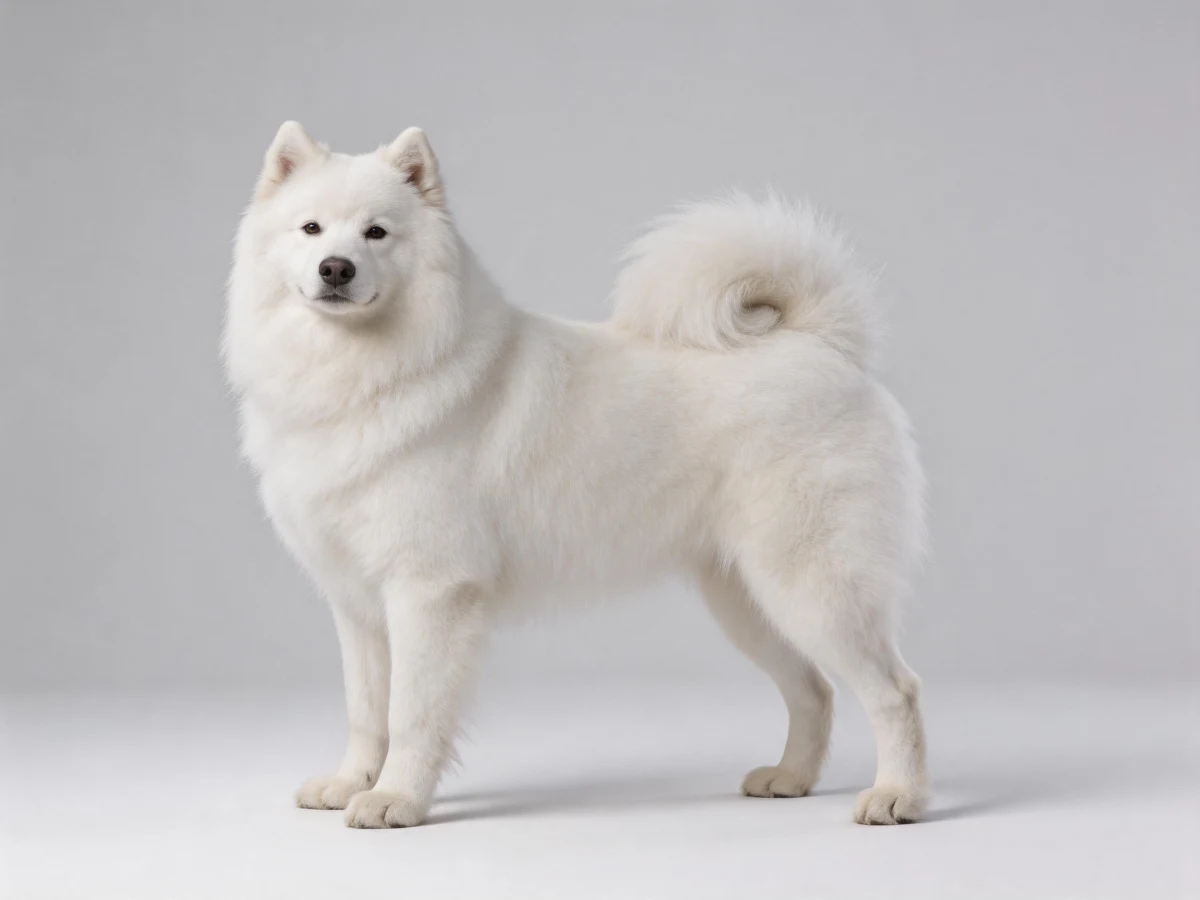
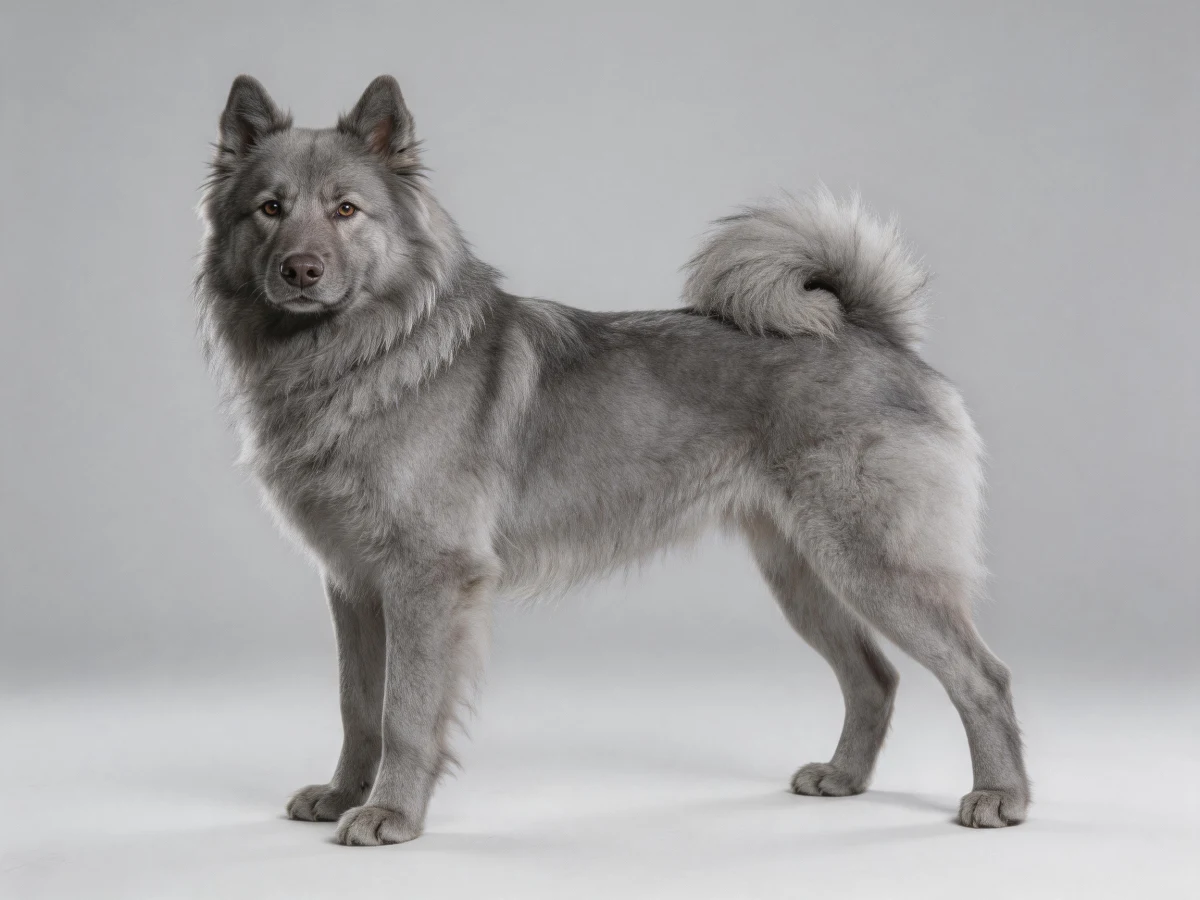
The AKC standard describes the Chow Chow as a powerful, squarely built, compact dog of medium size, leonine in appearance with a proud, dignified bearing and a scowling, aloof expression. The breed is one of the most ancient Chinese types, a spitz-relative developed for guarding, hunting and cart-pulling, and the standard rewards a sturdy, well-balanced dog with heavy bone and a level back rather than any exaggeration. Two unmistakable hallmarks set the Chow apart from every other breed: the blue-black tongue and mouth, and the distinctive stilted, stiff-legged gait that follows from its unusually straight hind legs.
Size, coat, and colour
The Chow is a medium breed: males stand roughly 19–22 inches at the shoulder and weigh about 55–70 lb, while females stand around 18–20 inches and weigh about 44–60 lb. The coat comes in two varieties — a profuse, abundant rough coat carrying the breed's signature lion-like ruff, and a shorter, dense smooth coat — and both are true double coats with a soft woolly undercoat under a coarser outer coat. The standard accepts five solid colours: red, black, blue, cinnamon, and cream. Lifespan is typically 8–12 years.
Head, movement, and temperament
The head is large and broad with a flat skull, a short broad muzzle, and the heavy facial folds and small, thick, rounded, erect ears that give the Chow its characteristic frowning expression; the eyes are dark and deep-set. Movement is the breed's signature short, stilted, stiff-legged stride driven by straight hind legs, distinct from the reaching gait of most breeds. Temperament in the standard is reflected in the whole dog: a dignified, independent, reserved guardian — keen and discerning, devoted to its own people and aloof with strangers — rather than an outgoing, all-comers companion.
🏆 Recognition
Recognized by the American Kennel Club in 1903 as a Non-Sporting breed. FCI standard No. 205 (Section 5 — Asian Spitz and related breeds), recognized in 1957.
Other registries
Breed clubs
❓ Frequently Asked Questions
Are Chow Chows good family dogs?
For the right family, yes — but with real caveats. A Chow is intensely loyal to its one or two people and can be a calm, dignified family guardian, but it is aloof and territorial with strangers and reserved with other dogs, and it does not tolerate rough or careless handling. It suits an experienced, committed household over one with very young or boisterous children, and early, extensive socialisation is essential to a sound adult.
Do Chow Chows shed a lot?
Yes. The Chow carries a heavy double coat (most profuse in the rough variety) that sheds steadily year-round and blows out in dramatic volume twice a year. Expect to brush thoroughly several times a week, rising to near-daily during the seasonal blow, and to vacuum often. Shaving the coat is not a fix and can damage how it grows back.
How much exercise does a Chow Chow need?
Moderate. A couple of steady daily walks plus some yard time satisfy an adult Chow; it is not a jogging partner or an endless-fetch dog. The bigger caveat is heat — the Chow is built for cold and is heat-intolerant, so activity should be scheduled for the cool ends of the day in warm weather, with shade and water always available.
How long do Chow Chows live?
Typically 8–12 years. As with any breed, keeping the dog lean, screening parents for the breed's known issues, and consistent routine care support a healthy span within that range.
Are Chow Chows easy to train?
No — the Chow is intelligent but independent and cat-like, not eager to please, so it will not give snappy retriever-style obedience. It responds to calm, consistent, reward-based training from an experienced owner; harsh or confrontational handling backfires badly in this guardian breed. The most valuable training is lifelong socialisation rather than drilling commands.
Are Chow Chows hypoallergenic?
No. The breed sheds heavily and carries a profuse double coat, so it is not considered hypoallergenic. Anyone with a dog allergy should spend extended time around the breed before committing to one.
How much does a Chow Chow puppy cost?
A well-bred, health-tested puppy from a parent-club breeder typically runs USD 1,000–3,500 (2024 data), often with a waiting list. Be wary of puppies priced well below that with no health-testing paperwork and no parent-club connection, and of sellers charging premiums for "rare" colours.
📚 Sources & Further Reading
Every load-bearing factual claim on this page is anchored to one of the sources below. iDogNames does not synthesize from secondary aggregators.
- akc breed page Chow Chow — AKC Breed Profile — American Kennel Club (2024)
- akc breed page Facts About the Chow Chow That You May Not Know — American Kennel Club (2023)
- akc standard pdf Official Standard of the Chow Chow — American Kennel Club / Chow Chow Club, Inc.
- fci standard pdf FCI Standard No. 205 — Chow Chow — Fédération Cynologique Internationale (1999)
- breed club official The Chow Chow Club, Inc. — AKC parent club (founded 1906) — The Chow Chow Club, Inc.
- academic paper Risk and characteristics of gastric carcinoma in the chow chow dog — Koterbay AM, Muthupalani S, Fox JG, McNiel EA. Can Vet J 61(4):396-400 (2020)
- academic paper Breed predisposition to canine gastric carcinoma — Norwegian register — Seim-Wikse T et al. Acta Veterinaria Scandinavica 55:25 (2013)
- academic paper Pemphigus erythematosus in a chow chow (clinical case) — Can Vet J case report (PMC1255596)
- wikipedia Chow Chow — Wikipedia — Wikipedia
- breed club official The Chow Chow Club (UK, founded 1895) — The Chow Chow Club (UK)