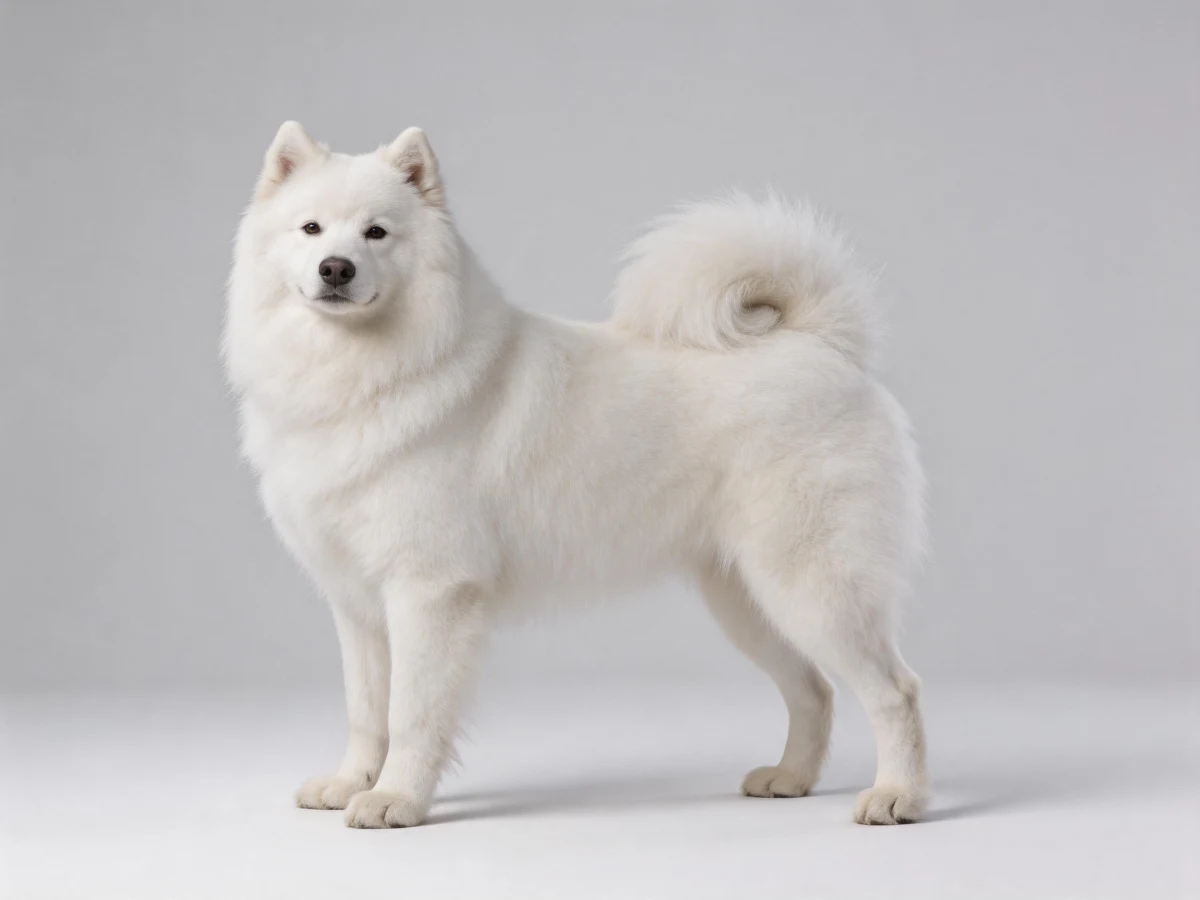
Akita
✨ Key Takeaways
- The Akita is the dog of the Tōhoku Matagi hunters: developed in Akita Prefecture in northern Honshu from medieval Matagi-Inu hunting stock used on bear, boar and serow, narrowed in the seventeenth century into the regional Odate-Inu, and pulled back from near-loss in the early twentieth century after dog-fighting crosses with Tosa, Mastiff and Great Dane diluted the native type.
- The Akita Inu Hozonkai (AKIHO) was founded in Odate in May 1927 by Shigeie Izumi, then mayor of Odate, to preserve the pure Akita type as a Japanese cultural inheritance; the Japanese Ministry of Education declared the breed Tennen Kinenbutsu (Natural Monument) in July 1931, one of seven native Japanese breeds so designated.
- Hachikō (10 November 1923 – 8 March 1935), an Akita owned by Tokyo Imperial University professor Ueno Hidesaburō, waited at Shibuya Station every day for nine years after Ueno died at work on 21 May 1925; a bronze statue by Teru Andō was unveiled at the station in April 1934, with Hachikō himself present, and the breed's international reputation begins there.
- Helen Keller brought the first Akita to the United States: in July 1937 she received the puppy Kamikaze-Go from young police officer Ichiro Ogasawara during a visit to Akita Prefecture; the dog was presented on the ship Chichibu Maru on 12 August 1937 and arrived in America before the end of that year (Kami died of distemper in his first year; Kenzan-Go followed in 1939 as an official gift of the Japanese government).
- Modern Akita registries reflect a postwar genetic fork: the Japanese line was rebuilt by AKIHO around the pure-type Ichinoseki stock and culminated in FCI Standard 255, while the heavier, mastiff-influenced Dewa line favoured by US servicemen became the American Akita (FCI Standard 344, formally split off in 1999) — and the AKC continues to register both types under the single name "Akita."
- The breed-defining health risks are autoimmune and dermatologic: sebaceous adenitis with probable autosomal recessive inheritance (Reichler et al. 2001, <em>Veterinary Dermatology</em>), and uveodermatologic (VKH-like) syndrome associated with the DLA DQA1*00201 allele (Angles et al. 2005, <em>Tissue Antigens</em>) — both with published peer-reviewed literature and CHIC-listed screening programmes.
Quick Facts
Common Names & Variants
Modern aliases
Historical names
Modern variants & lines
⚖️ Pros & Cons
Advantages
Trade-offs
Physical Appearance
Recognized colors
Coat
Other
Ears: Prick. Tail: Curled.
🕰 History
The dog of the bear hunters
The Akita begins as a working tool of a specific class of people in a specific landscape: the Matagi, the traditional mountain hunters of the Tōhoku region in northern Honshu, who for centuries took bear, wild boar and the Japanese serow in the snow-deep ranges of Akita, Aomori, Iwate and Yamagata. The Matagi worked with a regional medium-large hunting dog known broadly as the Matagi-Inu — a Spitz-type, hard-coated, weather-tolerant dog selected for nerve in front of dangerous game rather than speed. Out of that population, by the seventeenth century, an Akita-prefecture variant called the Odate-Inu had narrowed into a recognisable regional type around the city of Odate. The Akita as the modern world knows it is the Odate-Inu, rebuilt.
The fighting-cross damage
The breed nearly lost its identity in the late Meiji and Taisho periods, between roughly 1900 and 1920. Organised dog fighting was a major spectator sport in Akita Prefecture at the time, and the local Odate-Inu was systematically crossed with Tosa, Mastiff, Great Dane and German Shepherd to produce heavier, more aggressive fighting dogs. By the early 1920s the pure regional type was so depleted that it was unclear whether it would survive. The reaction came from the city of Odate itself. Shigeie Izumi, then mayor of Odate, founded the Akita Inu Hozonkai (AKIHO, "Akita Dog Preservation Society") in May 1927 with the explicit mission of preserving the pure Japanese type and culling the foreign-blood look from the breed. The first AKIHO breed standard was formalised in 1938.
1931 — Tennen Kinenbutsu, Natural Monument
The Japanese government intervened directly to support the preservation. On 31 July 1931 the Ministry of Education designated the Akita-ken a Tennen Kinenbutsu ("Natural Monument" of Japan), one of seven native Japanese dog breeds eventually so designated — alongside the Shiba, Kai-ken, Kishu-ken, Hokkaido-ken, Shikoku and Tosa. The designation is not honorific. It places the breed under cultural-property protection and underwrites the AKIHO preservation programme. It is also the reason every Japanese registration of the Akita Inu since 1938 traces back through AKIHO's records.
Hachikō, 1923-1935
The breed's international fame begins with a single dog. Hachikō was born on 10 November 1923 on a farm near Odate, and on 14-15 January 1924 he was sent to Tokyo to live with Ueno Hidesaburō, a professor of agricultural science at Tokyo Imperial University. For about a year and a half, Hachikō walked with Ueno to Shibuya Station each morning and met him there each evening as he returned from work. On 21 May 1925 Ueno collapsed at the university from a cerebral haemorrhage and died. Hachikō went on going to Shibuya Station, every day, around the time of the evening train, for the next nine years and ten months. The Japanese press picked up the story in 1932. A bronze statue by the sculptor Teru Andō was unveiled at Shibuya Station in April 1934 with Hachikō himself present. The dog died on 8 March 1935, and the statue (the original was melted for the war effort; a 1948 replacement by Andō's son stands today) is one of the most visited landmarks in Tokyo. The breed's modern identity outside Japan is downstream of Hachikō.
Helen Keller, Kamikaze-Go, and the American line
The first Akita to enter the United States arrived as a personal gift. In July 1937 Helen Keller visited Akita Prefecture, learned the Hachikō story, and asked to have an Akita of her own. The young police officer Ichiro Ogasawara — a documented Akita enthusiast — provided a puppy from his own kennel named Kamikaze-Go. Ogasawara presented the dog to Keller aboard the ship Chichibu Maru on 12 August 1937 for the voyage home. Kami died of distemper before his first birthday; in July 1939 the Japanese government sent a second dog from the same litter, Kenzan-Go ("Go-Go"), as an official gift to Keller. The Akita Club of America documents the chain of events directly, with photographs.
The postwar fork — Japanese line, American line
The Second World War almost ended the Akita again. Most Japanese dogs were killed for fur (military overcoats) or starved during the war; estimates put the surviving pure-type population at perhaps sixteen dogs at the war's end. The rebuild after 1945 went two ways, and the two ways are now two registered breeds. AKIHO, working from the surviving Ichinoseki-line dogs and excluding mastiff blood, rebuilt the lighter, fox-like Japanese type — what FCI Standard 255 now calls the Akita. US servicemen returning home favoured the heavier, broader-headed, sometimes black-masked Dewa-line dogs that still carried the fighting-cross influence, and that population became the American Akita, formally registered as a separate FCI breed (Standard 344) in June 1999. The AKC, in its own institutional pattern, has continued to register both types under one name: an AKC "Akita" is functionally the American Akita, and a serious Japanese-type breeder in the US registers their dogs with the Japanese Akitainu Club of America rather than the AKC. The breed has, in effect, two histories running in parallel since 1945.
Temperament & Personality
What the standard actually says
FCI Standard 255 gives the Akita's behaviour and temperament in three words: "dignified, composed, faithful." That is the entire description, and the brevity is the point. The breed is reserved, contained, and emotionally invested in its person rather than universally friendly — the temperament most non-Akita owners describe as "aloof" the standard simply calls dignified. An adult Akita meeting a stranger does not jump, fawn, or solicit. It assesses, watches, and decides.
The narrow, intense bond
The Hachikō story is genre-defining for the breed for good reason. Akitas form a bond with their primary person and household that breed clubs across three continents describe in almost identical terms: deep, narrow, lifelong. An Akita that has chosen its person rarely shifts that allegiance and tends to remain present for that person — physically close, watchful, attentive — in a way few other breeds match. The cost of the same trait is that the dog can be slow to accept new household members, partners, or houseguests, and a re-homed adult Akita is a much more demanding adoption than a re-homed adult of most breeds because the new owner is trying to step into a relationship the dog already had with someone else.
Same-sex dog aggression and the small-animal problem
Two limitations are non-negotiable and every parent club says so plainly. First, Akitas — especially same-sex pairs and especially in adulthood — frequently do not coexist with other dogs. The fighting-cross genetics of the 1900-1920 period are not entirely behind the breed, and even well-socialised Akitas can become dog-reactive in maturity. The realistic baseline assumption for the breed is that it will be the only dog in the household. Second, the Matagi hunting heritage produced a high prey drive on small game. Off-lead reliability around cats, livestock, and small dogs is not realistic for most adult Akitas, and dogs raised with a household cat from puppyhood can still be unsafe with an unfamiliar small animal in the open.
Quiet, clean, and self-contained
The rest of the day-to-day Akita temperament is famously easy. The breed is not vocal — Akitas bark when something genuinely warrants it and otherwise carry themselves quietly. They are clean to the point that Japanese owners describe the breed as "cat-like": fastidious about grooming, quick to house-train, dislike of mess. Affection in the home is dignified rather than effusive — the lean, the chin on the knee, the eyes on you when you move around the room — but it is consistent and reliable across the dog's life. The Akita is, in the end, a one-person or one-household breed living in a multi-dog, multi-stranger world: most of its perceived flaws are mismatches between that selection and modern living, not faults in the dog.
🏡 Living With a Akita
A one-family guardian, not a social butterfly
Living with an Akita means living with a large, dignified, intensely loyal guardian that bonds hard to its own household and treats the rest of the world with reserve. This is a Japanese spitz bred to guard and to hunt large game, and that history shows in the temperament: an Akita is calm, quiet, and almost cat-like in the home — many groom themselves and bark little — but it is naturally aloof and suspicious of strangers and will appoint itself protector of its people without being asked. It is devoted and demonstrative with its family and notoriously indifferent or wary toward everyone else. An Akita wants to be near its people rather than confined alone in a yard; isolation breeds frustration in a powerful dog, and a bored, under-occupied Akita is a destructive one. This is a serious, lifelong commitment, not a casual family pet.
The hard truth about other dogs and small animals
The single most important fact a prospective owner must accept is that the Akita is frequently dog-aggressive — especially toward dogs of the same sex — and carries a strong prey drive toward cats and small animals it has not been raised with. This is not a dog-park dog and never will be one; off-leash freedom around unknown dogs is asking for a fight. Many Akitas live happily as the only pet, or with an opposite-sex dog they were raised alongside, but two same-sex Akitas under one roof is a classic recipe for conflict. With children of its own family a well-raised Akita is typically devoted and tolerant, but its size, its guarding instinct, and its low tolerance for rough handling mean interactions with young children must always be supervised, and visiting children are a different matter entirely. Secure containment — solid fencing, never an invisible fence — is non-negotiable.
Exercise, climate, and the experience requirement
An Akita needs moderate daily exercise — a good long walk or two and some structured activity — rather than the relentless cardio of a sporting breed; it is a powerful working dog, not a marathoner, and is content to be calm indoors once its needs are met. The dense double coat makes the breed genuinely cold-hardy and built for a Japanese winter, but it also means hot, humid weather is hard on an Akita, so exercise belongs in the cool of the morning and evening with shade and water always available. None of this suits a first-time owner. The Akita's combination of size, strength, independence, guarding drive, and dog-aggression demands someone with real dog experience, the physical ability to manage a 70-to-100-pound dog on lead, and the commitment to lifelong management.
🎓 Training & Exercise
An independent thinker that will not blindly obey
The Akita is intelligent and highly trainable in the sense that it learns quickly — but it is a spitz, bred to hunt and guard on its own judgement, and it does not have the eager, handler-pleasing biddability of a retriever. An Akita decides whether a request is worth honouring. That independence is not stupidity or stubbornness for its own sake; it is the working temperament of a dog selected to make decisions without a human telling it what to do. Training an Akita succeeds through respect, consistency, and a relationship the dog values, and it fails through repetition drilling, nagging, and any attempt to win by force. This is a strong-willed dog with a long memory; it will work with a handler it trusts and shut down or push back against one it does not.
Why heavy-handed methods backfire badly
Harsh, confrontational, or punishment-based training is the worst possible approach with an Akita. A powerful guarding breed that already views the world with suspicion does not become more obedient under intimidation — it becomes defensive, distrustful, and in a dog of this size and bite, genuinely dangerous. Positive, reward-based methods, kept short and interesting so the dog does not decide drilling is beneath it, are the only sound route. Firm, calm, consistent leadership matters enormously, but firmness means clear and unwavering rules, not physical domination. The owner's job is to be the trustworthy, predictable authority the Akita chooses to follow.
Socialisation is the real curriculum
For the Akita, early and extensive socialisation is not an enrichment extra — it is the central training task and arguably the most important work an owner ever does. A breed this naturally aloof, this protective, and this primed for dog-aggression must be exposed, carefully and positively, to a wide range of people, places, sounds, and well-mannered dogs throughout puppyhood and adolescence, so that its discrimination stays measured rather than tipping into reactivity. A rock-solid recall and a reliable "leave it" are essential given the prey drive, but no amount of obedience replaces a confident, well-socialised temperament. Even a beautifully socialised Akita remains a reserved guardian by nature; the goal is a stable, manageable adult, not a friendly-to-everyone one.
✂️ Grooming & Coat Care
A clean, odour-light dog between the blowouts
The Akita carries a thick double coat — a short, harsh, straight outer coat over a soft, dense undercoat — and for most of the year it is one of the lower-maintenance large breeds to keep clean. Akitas are famously fastidious, groom themselves much like cats, and carry little doggy odour, so routine care is a thorough weekly brush-out with a slicker brush and a comb to lift dead hair, distribute skin oils, and keep an eye on the skin. A bath every couple of months, or when genuinely dirty, is plenty; the coat sheds dirt well and over-bathing strips it. That easygoing weekly cadence, however, describes only the in-between periods.
The seasonal blow is a major event
Twice a year the Akita "blows" its undercoat, and this is a dramatic, weeks-long shed in which the soft undercoat comes out in handfuls and clouds. During these seasonal moults — typically spring and autumn — daily brushing with an undercoat rake or de-shedding tool is the difference between a managed coat and drifts of fluff coating the entire house. Many owners use this window for a bath followed by a high-velocity dry to push the loose coat out faster. Never shave an Akita to control shedding: the double coat insulates against both cold and heat and protects the skin, and clipping it can leave the coat growing back patchy and damaged. The shedding is the genuine grooming cost of the breed, concentrated into two intense periods rather than spread thin.
Ears, nails, teeth, and the skin watch
Beyond coat, the Akita's care is standard but should not be skipped: check and gently clean the ears about weekly and keep them dry, since the breed's upright ears are well ventilated but still benefit from routine inspection. Nails grow fast on a heavy dog and need trimming every few weeks — nails that click on the floor are too long and change how the dog stands and moves. Brush the teeth several times a week from puppyhood as the highest-value long-term habit. Because the breed is notably prone to autoimmune skin conditions, the weekly brush is also the moment to watch the skin and coat closely: any unusual hair loss, scaling, crusting, or sore patches is worth a veterinary check rather than a wait-and-see.
🍖 Diet & Nutrition
Lean is the goal for a heavy working frame
An adult male Akita can weigh 70 to 100 pounds and a female 55 to 77 pounds, and carrying that frame is hard enough on the joints without the extra load of excess weight. The headline nutritional task is keeping an Akita lean: feed measured meals matched to the dog's ideal weight and activity rather than free-feeding, keep treats inside a sensible daily budget, and body-condition-score by feeling for the ribs and waist rather than trusting the eye. A lean Akita protects hips that are predisposed to dysplasia and moves better for life. Feed a complete, balanced diet appropriate to the dog's life stage, and make any change gradually over about a week to avoid digestive upset.
Large-breed puppy growth
Akita puppies grow into large dogs and should be raised on a food formulated for large-breed growth, fed to keep the puppy lean and growing steadily rather than as fast as possible. Rapid growth and excess calcium during the large-breed puppy stage are linked to developmental joint problems, so controlled, even growth is the aim — not a roly-poly, fast-ballooning puppy. Most Akitas move from three or four puppy meals a day down to twice-daily adult feeding as growth slows, with portion size set by ideal adult weight and activity and adjusted by body condition over time.
Bloat awareness and the feeding routine
As a large, deep-chested breed, the Akita carries some risk of bloat and gastric torsion (GDV), a sudden and genuinely life-threatening emergency. The widely advised precautions are practical rather than alarming: split the daily ration into two meals rather than one large one, avoid vigorous exercise in the hour before and after eating, and use a slow-feeder bowl if the dog bolts its food. Owners should learn the warning signs — a distended or hard abdomen, unproductive retching, restlessness and obvious distress — and treat them as an immediate veterinary emergency rather than something to watch overnight.
🐶 Buying & Adopting a Akita
Start at the parent club, not a classified ad
The Akita Club of America (ACA) is the AKC parent club and the right place to begin. It maintains a code of ethics for member breeders, a breeder-referral resource, and rescue contacts. A breeder worth buying from will be an ACA member in good standing, will register litters with the AKC, will health-test both parents, will offer a written contract, and will be openly willing to discuss the breed's known issues — its joints, its eyes, and especially its autoimmune record — rather than insisting their lines are simply "healthy." A good breeder will also question you closely, because a responsible Akita breeder wants to place a guarding breed only with owners equipped to handle it.
The health screening to ask for
The CHIC health-screening profile for the Akita covers four areas, and a responsible breeder can show results on both parents: an OFA hip evaluation, an eye examination by a boarded veterinary ophthalmologist (OFA/ACVO, ideally current within the year), an OFA autoimmune thyroiditis (thyroid panel) evaluation, and sebaceous adenitis screening through the parent-club skin-biopsy programme. Many breeders add DNA tests offered for the breed, such as the prcd form of progressive retinal atrophy (PRA-prcd) and von Willebrand disease type I (a bleeding disorder). The Akita is notably prone to immune-mediated conditions — autoimmune thyroiditis, sebaceous adenitis, a uveodermatologic (VKH-like) syndrome affecting eyes and skin, and pemphigus — so a breeder who tests for and talks frankly about autoimmune issues is the one to trust. "All our dogs are healthy, no need for tests" is the answer to walk away from.
Adoption and breed rescue
Akita rescue is active and well-organised, both through the ACA's rescue network and independent breed-rescue groups, and it exists for a sobering reason: Akitas are regularly surrendered by owners who underestimated the size, the dog-aggression, the containment needs, or the sheer commitment the breed demands. For an experienced adopter willing to take on an adult with a known temperament, breed rescue is an excellent and ethical route — but Akita rescues screen homes carefully, often require Akita experience and secure fencing, and may not place a dog in a home with another same-sex dog or with very young children. Honesty with a rescue about your situation gets the right dog into the right home.
Price, the two types, and the red flags
A well-bred Akita puppy in the United States runs roughly USD 1,500–4,500 in 2024, depending on region, lineage, and parent titles, and the better breeders keep waiting lists. One thing to understand before buying is that the breed exists in two distinct types: the American Akita, larger and accepted in a full range of colours including pinto and black masks, and the Japanese Akita Inu, the foundation type from Akita Prefecture, more refined and restricted to a narrower colour set. The AKC registers the American Akita simply as the "Akita," while many registries worldwide treat the two as separate breeds — so know which type a breeder is producing. The patterns to walk away from are familiar: puppies well under the going rate with immediate availability, no health-testing documentation, no parent-club connection, and a seller who downplays the breed's guarding nature or dog-aggression to make a sale.
📜 Breed Name Etymology — iDogNames original research
"Akita" is a prefecture, not a description
The Akita is named after a place. Akita (秋田) is the name of the prefecture in northern Honshu where the breed was developed; the prefectural name itself decomposes into the kanji 秋 (aki, "autumn") and 田 (ta/da, "rice paddy" or "cultivated field"). The literal meaning is "autumn rice paddy," referring to the prefecture's late-harvest rice country in the cool northern Tōhoku climate. The breed name is therefore geographic, not functional: it does not describe a job, a colour, a temperament, or a founder. It identifies the home region, in the same pattern as "Akita rice" and "Akita beef" — local products designated by their place of origin.
The Japanese full name is Akita-ken (秋田犬) or Akita Inu, both meaning "Akita dog." The two readings reflect Japanese pronunciation choices: ken is the on-yomi (Sino-Japanese reading) of the kanji 犬 ("dog"), while inu is the kun-yomi (native Japanese reading) of the same kanji. AKIHO uses Akita-ken as the formal Japanese name; popular usage and Western cynology have settled on Akita Inu. Both are correct. The English form "Akita" alone — without "Inu" or "ken" — is the international shortcut that became standard with the breed's twentieth-century export.
The predecessor names — Odate-Inu and Matagi-Inu
The Akita carries two important predecessor names that survive in the breed-history literature. Odate-Inu (大館犬, "Odate dog") refers to the regional pre-breed type concentrated around the city of Odate in Akita Prefecture from the seventeenth century onward; it is the immediate ancestor of the modern Akita and the form AKIHO took over in 1927. Matagi-Inu is the broader category name for the medieval Tōhoku hunting-dog type used by the Matagi mountain hunters — a regional working-dog category, not a single breed, from which several modern Japanese breeds (the Akita, the Kishu, the Shikoku) are descended. Both names appear in pre-AKIHO records and are worth knowing because the breed's history is the history of the renaming as much as the breeding.
The 1999 fork — Akita Inu and American Akita
For a period of years the same word, Akita, referred to two genetically and morphologically distinct dogs. In June 1999 the FCI formalised the split: FCI Standard 255 became the Akita (the Japanese type), and FCI Standard 344 became the American Akita. The Kennel Club of the UK and many European registries followed, registering "Japanese Akita Inu" and "American Akita" as separate breeds. The AKC has not split; an AKC-registered "Akita" is, in physical type, the American Akita. This means a buyer should know which type they are buying and check which registry the breeder is using — calling a dog an "Akita" without specifying is, since 1999, ambiguous.
Pronunciation and the aliases that mislead
In Japanese the breed name is [akʲita.iɴɯ], with the stress flat across the syllables and the final u of "inu" almost silent — closer to "ah-KEE-tah EE-nu" than to the English approximation. The standard English pronunciation is /əˈkiːtə/, "uh-KEE-tah." The aliases worth flagging are colour and coat marketing terms. "Long-haired Akita" or "fluffy Akita" describes the recessive moku coat — autosomal recessive, traced to a historical Karafuto-ken (Sakhalin Husky) cross; not shown in Japan and not registrable under FCI Standard 255, but a real coat variety, not a separate breed. "Black-masked Akita" is the marker of the American Akita (FCI 344), not the Japanese Akita Inu (FCI 255), which does not carry a black mask. A "Silver Akita" or "Blue Akita" is a colour-marketing label without standard recognition.
Name forms at a glance
| Name | Role | Origin | Literal meaning | First recorded |
|---|---|---|---|---|
| Akita | primary | Japanese (geographic — prefecture name) | autumn rice paddy (Akita Prefecture, the breed's home region) | 1931 |
| Akita Inu / Akita-ken (秋田犬) | origin country native | Japanese | Akita dog | — |
| Odate-Inu (大館犬) | historical | Japanese | Odate dog | — |
| Matagi-Inu | historical | Japanese | the Matagi hunters' dog | — |
| American Akita | alias | English | the American-line Akita | 1999 |
🏛 Naming Traditions — iDogNames original research
A Japanese-language naming heritage, exclusively
The Akita is one of the few major breeds where the naming heritage is single-language and uncontested. The breed was developed in Japan, preserved by Japanese institutions, and the most documented dogs in its history — Hachikō, Kamikaze-Go, Kenzan-Go, Goromaru-Go — all carry Japanese names. The naming culture that fits the breed is Japanese, drawing from four coherent layers: nature and landscape, virtue and character, samurai and historical, and the five traditional Akita colour names. An Akita with a Japanese name is wearing its actual heritage; an Akita called "Bear" is wearing a generic large-dog name that ignores the breed's documented cultural history.
The five traditional Akita colours
The first naming layer is straight from the breed standard. Japanese Akita registries traditionally recognise five colour names, and each can serve as a dog name with direct breed resonance: Aka (赤, "red"), the russet-fawn colour that is the most common Akita; Shiro (白, "white"), the white Akita; Kuro (黒, "black"), and the related Kuro-goma ("black sesame") for the dark-overlay coat; Tora (虎, "tiger"), used for the brindle pattern; and Goma (胡麻, "sesame"), for the red base with black overlay. Each is a single, short, evocative Japanese word with a direct standard-language meaning. Aka and Shiro are particularly common in Japan as Akita names.
Tōhoku landscape and the breed's home country
The second layer reaches into the geography of Akita Prefecture and Tōhoku. The prefecture's mountains — Iwate, Hakkoda, Chōkai, Akita-Komagatake — offer place-true names. The cities of breed history support more: Odate itself, Akita as a name, the village names of the Matagi country. The Tōhoku climate, deep snow country, supplies the working-environment vocabulary: Yuki (雪, "snow"), Fuyu (冬, "winter"), Kaze (風, "wind"), Yama (山, "mountain"). The breed's element is northern, cold, and forested, and the language has a generous vocabulary for naming a dog into it.
Virtue, character, and the samurai layer
The third layer is the Japanese tradition of meaningful given names, where every choice carries a kanji meaning. The breed's dignified standard temperament matches a register of virtue and character names: Makoto (誠, "sincerity, truth"), Tadashi (正, "right, just"), Isamu (勇, "courage"), Hiroshi (寛, "tolerant" or 弘, "vast"), Akira (明, "bright, clear"), Sakura (桜, "cherry blossom"), Hana (花, "flower"), Suzu (鈴, "bell"). The samurai tradition adds names with weight: Kenshin (after Uesugi Kenshin), Nobunaga, Ieyasu, Musashi (the swordsman). These are real, used Japanese given names, not invented marketing variants.
The historical-Akita layer — Hachikō and the foundation dogs
The most distinctive naming layer is one most breeds do not have: documented historical dogs of the breed whose names are themselves heritage choices. Hachikō (literally "Hachi" plus the affectionate suffix -kō) is the obvious centre, used today as an Akita name in respectful homage rather than direct copying. Kamikaze-Go ("Divine Wind") and Kenzan-Go ("Sword Mountain") are the names of Helen Keller's two dogs and tie the dog to the breed's American foundation. Goromaru-Go is the famous post-war foundation sire from whom most modern Japanese-line Akitas descend. The -Go suffix is the traditional Japanese kennel-name marker for show dogs, in the same role as a European kennel affix.
What this means for naming an Akita today
Naming an Akita well asks for a Japanese name with a real meaning. Aka, Shiro, Kuro, Tora or Goma tie the dog directly to the standard's traditional colours. A Tōhoku landscape word (Yuki, Kaze, Yama) places the dog in its home climate. A virtue name (Makoto, Akira, Isamu) reflects the breed's dignified temperament. A historical-Akita name (Hachi rather than Hachikō, out of respect) reaches back to the dogs that defined the breed's modern identity. Calling an Akita "Max" or "Bear" misses, by an entire civilisation and several centuries of careful preservation, the heritage that makes this breed itself.
🐾 Themed Names for Your Akita — iDogNames original research
The five traditional Akita colours
Single-word Japanese colour names from the breed standard itself. Each is short, distinctive, and ties the dog directly to its registered coat colour.
- Aka (赤) — "red"; the russet-fawn Akita coat colour, the most common in the breed
- Shiro (白) — "white"; the white Akita
- Kuro (黒) — "black"; for a black-sesame Akita
- Tora (虎) — "tiger"; the brindle Akita's standard colour name
- Goma (胡麻) — "sesame"; the red-with-black-overlay coat
- Aka-tora — "red brindle"; specific to brindle Akitas with red base
- Kuro-goma — "black sesame"; for darker overlay coats
- Hai (灰) — "ash, grey"; uncommon but standard Japanese colour word
- Cha (茶) — "tea, brown"; for darker tan tones
- Kin (金) — "gold"; for a particularly bright red coat
Tōhoku nature and weather — the breed's element
Japanese nature words from the snow country of northern Honshu where the breed actually worked.
- Yuki (雪) — "snow"; the breed's element, common Japanese name for white dogs
- Fuyu (冬) — "winter"; clean and seasonally true
- Kaze (風) — "wind"; carries well as a recall
- Yama (山) — "mountain"; for the Tōhoku working country
- Sakura (桜) — "cherry blossom"; the most recognisable Japanese flower name
- Hana (花) — "flower"; soft, traditional, often used for females
- Mori (森) — "forest"; for the Matagi hunting country
- Tsuki (月) — "moon"; clear and resonant
- Hoshi (星) — "star"; uncommon and elegant
- Kawa (川) — "river"; for the Tōhoku watercourses
Virtue and character — samurai register
Japanese given names with documented kanji meanings, drawn from the virtue tradition and from the samurai-name canon.
- Makoto (誠) — "sincerity, truth"; a samurai virtue name
- Tadashi (正) — "right, just"; quiet and strong
- Isamu (勇) — "courage"; direct, samurai-coded
- Hiroshi (寛) — "tolerant" or 弘 "vast"; common male name
- Akira (明) — "bright, clear"; works for either sex
- Kenshin (謙信) — after Uesugi Kenshin, sixteenth-century daimyō
- Musashi (武蔵) — after Miyamoto Musashi, the swordsman
- Hideki (秀樹) — "excellent timber"; classical male given
- Ryu (龍) — "dragon"; punchy, single-syllable
- Tora (虎) — "tiger"; doubles as a colour name and a samurai trait name
Female register
Japanese female given names with traditional meanings, suited to the dignified Akita temperament.
- Sakura (桜) — "cherry blossom"; the canonical Japanese female name
- Hana (花) — "flower"; soft and traditional
- Yuki (雪) — "snow"; works for either sex, particularly resonant for white Akitas
- Aki (秋) — "autumn"; ties directly to the Akita Prefecture name itself
- Suzu (鈴) — "bell"; bright, two-syllable
- Miki (美姫) — "beautiful princess"; classical
- Emi (恵美) — "blessed beauty"; warm and common
- Naomi (直美) — "straightforward beauty"; works in English too
- Kiku (菊) — "chrysanthemum"; the imperial flower
- Hime (姫) — "princess"; short and clear
Foundation dogs and the -Go suffix
Names from the documented Akita historical canon. The traditional Japanese show-kennel suffix is -Go (号), serving the same role as a European kennel affix.
- Hachi (ハチ) — "eight"; Hachikō's actual given name (the -kō is an affectionate suffix). Used today out of respect rather than direct copying
- Kamikaze (神風) — "divine wind"; Helen Keller's first Akita, Kamikaze-Go
- Kenzan (剣山) — "sword mountain"; Helen Keller's second Akita, Kenzan-Go
- Goromaru (五郎丸) — Goromaru-Go, post-war Japanese-line foundation sire
- Ichinoseki (一関) — the Japanese-line foundation kennel name; weighty for a male
- Dewa (出羽) — the historical name for the Akita-Yamagata province; also the rival post-war kennel line
- Matagi — the Tōhoku hunters whose dogs founded the breed
- Odate — the breed's home city in Akita Prefecture
- Shogun (将軍) — "military commander"; classical samurai-rank name
- Ueno (上野) — after Ueno Hidesaburō, Hachikō's owner; for a male, with weight
Geography of Akita Prefecture and Tōhoku
Place-true names from the breed's actual home region.
- Akita (秋田) — the prefecture itself; "autumn rice paddy"
- Tōhoku (東北) — "north-east"; the breed's regional home
- Iwate (岩手) — the neighbouring Tōhoku prefecture and its mountain
- Hakkoda (八甲田) — the Aomori mountain range; deep-snow country
- Chōkai (鳥海) — the Akita-Yamagata stratovolcano
- Komagatake (駒ヶ岳) — "Pony Peak"; the Akita-Komagatake mountain
- Towada (十和田) — the Akita-Aomori crater lake
- Tazawa (田沢) — Lake Tazawa, the deepest lake in Japan, in Akita Prefecture
- Kakunodate — the historic samurai town in Akita Prefecture
- Shibuya (渋谷) — the Tokyo station where Hachikō waited
📋 Breed Standard at a Glance
General appearance
The AKC standard describes the Akita as a large, powerful, alert working dog of substance and heavy bone, with the unmistakable spitz profile of the breeds of Japan: a broad head forming a blunt triangle, small erect ears carried in line with the back of the neck, and a large, full tail curled over or against the back. The overall impression is one of dignity, strength, and balance — a dog clearly built to guard and to hunt large game. Males are noticeably larger and more masculine than females, and the breed should look sturdy and well-muscled rather than rangy.
Size, coat, and colour
Males stand roughly 25 to 27.5 inches at the withers and weigh about 70 to 100 lb; females stand about 23 to 25 inches and weigh around 55 to 77 lb. The coat is a double coat: a thick, soft undercoat beneath a short, harsh, straight outer coat that stands somewhat off the body, slightly longer at the tail. In the American Akita the standard accepts any colour — including white, brindle, and pinto — with rich, brilliant, clear markings, and a black mask is permitted; the related Japanese Akita Inu is restricted to a much narrower colour set. The breed sheds its dense undercoat heavily on a seasonal basis.
Head, movement, and temperament
The head is massive but in balance with the body, with a deep muzzle, small dark eyes set deep and triangular, and the firm erect ears that are a hallmark of the breed; a level or scissors bite is called for. Movement is brisk and powerful with moderate, ground-covering stride and a level topline. Temperament is written into the standard: the Akita is described as alert, courageous, dignified, profoundly loyal to its family, and characteristically aloof and reserved toward strangers — a guardian by nature rather than an indiscriminate greeter. Lifespan is typically 10 to 13 years.
🏆 Recognition
Recognized by the American Kennel Club in 1972 as a Working breed. FCI standard No. 255 (Section 5 — Asian Spitz and Related Breeds (with working trial)), recognized in 1964.
Other registries
Breed clubs
❓ Frequently Asked Questions
Are Akitas good family dogs?
For the right family, yes. A well-raised Akita is devoted, protective, and tolerant with its own household, including children it is brought up with. But this is a large guarding breed that is aloof with strangers, often aggressive toward other dogs, and far too much dog for a first-time owner. It suits an experienced home that can provide secure containment, supervise children, and commit to lifelong management — not a casual family pet.
Do Akitas shed a lot?
Between seasons the Akita is a clean, low-odour, easy-coat breed needing only a weekly brush. Twice a year, though, it "blows" its dense undercoat in a dramatic weeks-long moult that calls for daily brushing with an undercoat rake. Plan for two intense shedding periods rather than constant light shedding. Never shave the double coat to manage it.
How much exercise does an Akita need?
Moderate — a couple of good long walks and some structured activity a day, rather than the relentless cardio of a sporting breed. An Akita is a powerful working dog content to be calm indoors once its needs are met. Because of the strong prey drive and dog-aggression, exercise should be on lead or in a securely fenced space, never loose around unknown dogs.
How long do Akitas live?
Typically 10 to 13 years, which is a reasonable lifespan for a large breed. Keeping the dog lean, screening the parents for the breed's hip, eye, thyroid, and skin issues, and routine veterinary care all support a full, healthy life.
Are Akitas easy to train?
Akitas are intelligent and learn quickly, but they are independent spitz-type dogs that will not blindly obey — an Akita decides whether a request is worth honouring. Training works through respect, consistency, and short, rewarding sessions; harsh, force-based methods backfire badly in a powerful guarding breed. Early, extensive socialisation is the single most important training task.
Are Akitas hypoallergenic?
No. The Akita has a dense double coat that sheds heavily on a seasonal basis and is not considered hypoallergenic. Anyone with a dog allergy should spend extended time around the breed before committing to one.
How much does an Akita puppy cost?
A well-bred, health-tested puppy from a parent-club breeder typically runs USD 1,500 to 4,500 in 2024, often with a waiting list. Note there are two types — the larger American Akita and the foundation Japanese Akita Inu — so know which a breeder produces. Be wary of puppies priced well below the going rate with no health-testing paperwork or parent-club connection.
📚 Sources & Further Reading
Every load-bearing factual claim on this page is anchored to one of the sources below. iDogNames does not synthesize from secondary aggregators.
- akc breed page Akita — AKC Breed Profile — American Kennel Club (2024)
- fci standard pdf FCI Standard No. 255 — Akita (Japanese type) — Fédération Cynologique Internationale (2001)
- fci standard pdf FCI Standard No. 344 — American Akita — Fédération Cynologique Internationale (2006)
- kc uk standard pdf Japanese Akita Inu — Breed Standard — The Kennel Club (UK)
- breed club official Akita Club of America — Helen Keller & the First American Akitas — Akita Club of America
- breed club official Japanese Akitainu Club of America — Breed History — Japanese Akitainu Club of America
- academic paper Sebaceous adenitis in the Akita: clinical observations, histopathology and heredity — Reichler IM et al., Vet Dermatol 12(5):243-253 (2001)
- academic paper Uveodermatologic (VKH-like) syndrome in American Akita dogs is associated with an increased frequency of DQA1*00201 — Angles JM et al., Tissue Antigens 66(6):656-665 (2005)
- news article Hachikō, the Faithful Dog — Nippon.com
- wikipedia Akita (dog) — Wikipedia — Wikipedia