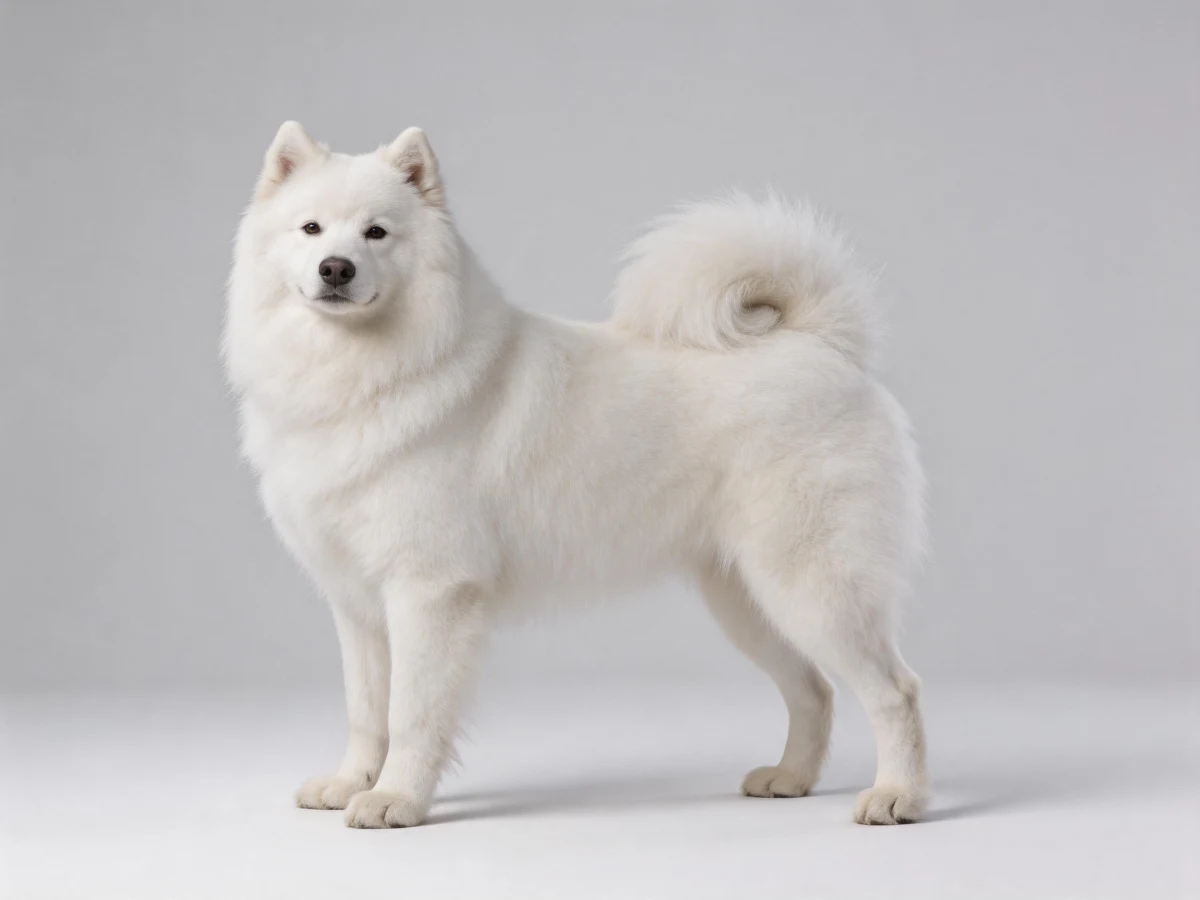
Siberian Husky
✨ Key Takeaways
- The Siberian Husky is a Chukchi sled dog from north-eastern Siberia, not an Alaskan native — it reached North America only in 1908, when William Goosak imported a team to race at Nome during the Alaskan gold rush.
- The breed's defining moment is the 1925 serum run to Nome: 674 miles by 20 mushers and roughly 150 dogs in about 127.5 hours, with Leonhard Seppala and Togo covering the longest and most dangerous stretch and Gunnar Kaasen and Balto running the final leg into town.
- The AKC registered the breed in 1930; the Siberian Husky Club of America formed in 1938 and became the AKC parent club in 1946.
- Health screening is short but specific: an OFA hip evaluation at two years and an annual eye exam by a boarded ophthalmologist, because juvenile cataracts and corneal dystrophy run in the breed (an ACVO survey of 1,345 Siberians found roughly 8% with inheritable cataracts and 3% with corneal dystrophy).
- Zinc-responsive dermatosis is a recognised breed-linked skin disorder — Siberians can show signs even on a normal diet because of impaired zinc absorption.
- This is a high-energy, escape-prone, prey-driven primitive breed bred to run for a living; a fenced yard and a job are minimums, not extras, and recall off-lead is unreliable by design.
Quick Facts
Common Names & Variants
Modern aliases
Historical names
Modern variants & lines
⚖️ Pros & Cons
Advantages
Trade-offs
Physical Appearance
Recognized colors
Coat
Other
Ears: Erect. Tail: Natural (well-furred brush).
🕰 History
A Siberian dog that Alaska borrowed
Almost everything the general public believes about the Siberian Husky's origin is geographically wrong by about four thousand miles. The breed is not an Alaskan dog and was never developed in North America. It is the working sled dog of the Chukchi, a Paleo-Siberian people of the Chukchi Peninsula in the far north-east of Russia, who maintained it as a long-distance freight and family dog across an Arctic coastline where survival depended on a team that could pull a light load very far on very little food. The American Kennel Club is explicit that the breed comes "from the Chukchi people of north-eastern Asia," and the breed travelled to Alaska as an import, not the other way round. Documentation of the Chukchi breeding system is, candidly, sparse — these were dogs of an oral, nomadic culture, not a stud book — but the genetics and the function are consistent: a medium dog bred for endurance, sociability with other dogs, and the ability to live among people in a tent.
The 1908 crossing to Nome
The Siberian's North American story begins with a fur trader. In 1908 a Russian trader named William Goosak brought a team of these Siberian dogs across the Bering Strait to Nome, Alaska, in the middle of the Alaskan gold rush. The motive was money: Nome ran a marquee endurance race, the All-Alaska Sweepstakes, a 408-mile course with a large purse. Goosak entered his comparatively small Siberian dogs in the 1909 running against the bigger freight dogs then standard in Alaska, and they were initially written off as "Siberian rats." The dismissal did not last. In 1910 a young Scotsman, Fox Maule Ramsay, acquired roughly sixty Siberians and entered three teams; his driver, the musher John "Iron Man" Johnson, won that year's Sweepstakes in 74 hours, 14 minutes and 37 seconds. The breed's reputation in Alaska was made on a stopwatch.
Seppala, and a racing dynasty
The figure who links the racing era to the breed's survival is Leonhard Seppala, a Norwegian immigrant who became the dominant musher of the Sweepstakes era, winning the race in 1915, 1916 and 1917 with Siberian teams. Seppala's kennel and his lead dog Togo would later carry the breed into its most consequential moment, and afterwards into its first American breeding programmes. The Siberian in Alaska was, in this period, a competition athlete first — a freighter and a racing dog whose temperament had to tolerate close kennelling and constant human handling.
The 1925 serum run — the breed's defining event
In January 1925 a diphtheria outbreak threatened Nome. The town's only physician, Dr. Curtis Welch, diagnosed the first confirmed case on 20 January and faced an epidemic with no usable antitoxin in town. The nearest serum reached the railhead at Nenana, still 674 miles from Nome across frozen interior Alaska, with the port iced in and aviation unreliable in the cold. The response was a dog-sled relay: roughly twenty mushers and about 150 dogs moved the antitoxin from Nenana to Nome between 27 January and 2 February 1925, covering the distance in about 127.5 hours — five and a half days. Leonhard Seppala and his lead dog Togo ran the longest and most dangerous section, including a gamble across the unstable sea ice of Norton Sound, covering far more ground than any other team. Gunnar Kaasen and his lead dog Balto ran the final 53-mile leg into Nome through a blizzard. The press made Balto the hero and a statue of him went up in New York's Central Park within the year; Seppala said in his memoir that the recognition belonged to Togo. Both judgements have a point, and the breed honours both dogs.
From the serum run to the AKC stud book
National publicity from the serum run turned the Siberian into a recognised breed almost immediately. The American Kennel Club registered it in April 1930. Seppala, with the New England breeder Elizabeth Ricker, established a foundation kennel at Poland Spring, Maine, and his serum-run and racing stock became the genetic base of the American show and pet population. The Siberian Husky Club of America was founded in 1938 and received AKC recognition as the parent club in 1946. Britain's Kennel Club recognised the breed later, and the FCI standardised it under Standard N° 270 in the Nordic Sledge Dogs section.
What the breed kept, and what it lost
What's striking about the modern Siberian is how little its core temperament was bred away from its origin and how much its working context changed. The Chukchi selected for a dog that could run far, get along with the rest of the team, and be safe around children in a confined dwelling — sociability, stamina, low aggression. Those traits survived intact, which is exactly why the breed makes a poor guard dog and a magnificent running partner. What changed is the job: very few Siberians now haul freight across sea ice. The dog still wants to, though, and an owner who forgets that is buying a Chukchi distance athlete and giving it a suburban back garden.
Temperament & Personality
What the standard rewards, and why
The AKC breed standard describes the Siberian's characteristic temperament as "friendly and gentle, but also alert and outgoing." That is not a softened sales line — it is a description of a dog deliberately bred by the Chukchi to be safe in a tent full of children and trustworthy in a team of unrelated dogs pulling under stress. Guarding behaviour, suspicion of strangers, and one-handler possessiveness were liabilities in that working context and were selected against. The result is a breed that, correctly bred, treats a burglar and the postman with the same uncomplicated friendliness. Anyone shopping for a protection dog should stop reading here; the Siberian is the wrong tool.
The independence is a feature, not a flaw
A sled dog leading a team across whiteout terrain has to make decisions a musher cannot see well enough to make for it. The breed was bred to think independently, and that shows up in training as what owners describe as stubbornness. It is more accurate to call it negotiation. A Siberian will learn a cue quickly and then audit whether complying is worth its while. This is why off-lead reliability is poor across the breed — not because the dog is unintelligent, but because it was selected to run forward and decide for itself, and a recall is a request to override exactly the instinct that made it useful.
Prey drive, fences, and the digging
The honest caveats are physical and consistent. Siberians have high small-animal prey drive, are powerful and motivated diggers, and are among the most reliable escape artists in dogdom. A standard garden fence is a suggestion to this breed; secure containment usually means a tall fence with a dug-proofed base, and a Siberian should be considered a flight risk off-lead in any unfenced space. None of this is a temperament defect. It is a distance-running predator behaving as bred. The management burden is real and should be priced in before purchase, not discovered after.
Day to day with a Chukchi athlete
In the right home the Siberian is affectionate, comic, intensely social with people and other dogs, and almost entirely without aggression — a genuinely easy housemate in disposition. The difficulty is never the temperament; it is the energy and the exercise floor. A bored, under-run Siberian howls, redecorates the garden into a series of craters, and chews structurally. The breed needs sustained aerobic work — running, skijoring, bikejoring, recreational sledding, long hikes — not a stroll, and it needs company; it does not thrive isolated. Match the dog to a household that wants a tireless, sociable, slightly anarchic running companion, and the Siberian is hard to better. Match it to a quiet flat and an absent owner, and the breed's own clubs will tell you bluntly that it will not work.
🏡 Living With a Siberian Husky
A pack dog that needs company and a serious job
The Siberian Husky was bred by the Chukchi people of north-eastern Siberia to haul light loads over long distances in a team, living closely with the family between runs — and both halves of that history shape daily life with the breed. A Husky is a pack animal that genuinely dislikes being alone; left isolated for long working days it becomes anxious, vocal, and destructive, and a single Husky often does better with a second dog for company. It is also relentlessly friendly, including toward strangers, which makes it a delightful companion and a famously useless guard dog — a Husky is more likely to invite a burglar in for a tour than to challenge one. Households that are out of the house all day, or that want a watchdog, are a poor match for the breed.
The exercise floor is high, and a bored Husky is a wrecking crew
This is a working sled dog with the stamina to trot for hours, and that engine does not idle quietly in a suburban yard. An adult Husky needs a hard hour or two of real exercise every day — running, hiking, canicross, bikejoring, or pulling a scooter or cart — and mental work on top of it. A Husky that is under-exercised does not mope; it digs craters in the lawn, chews through doors and drywall, scales or tunnels under fences, and howls. Much of the breed's reputation for being "destructive" or "stubborn" is really a reputation for being under-stimulated. The breed is built for cold and can overheat dangerously, so in warm climates the hard exercise belongs in the cool of early morning or evening, with shade and water always available.
Kids, small pets, the prey drive, and apartment reality
Properly socialised Huskies are typically excellent with children and sociable with other dogs, which fits their team-living heritage. The hard caveat is prey drive: a Husky was bred to be lean and hungry and to hunt small game to feed itself, and many will chase — and catch — cats, rabbits, and other small pets. A home with a resident cat needs honest caution and management, and small fluffy pets are often simply incompatible. Huskies can live in an apartment if, and only if, the exercise and companionship needs are met to the letter, but the shedding and the vocalising make considerate neighbours essential. Expect hair as a permanent fact of the household and the breed's signature "talking" howl as a regular soundtrack.
🎓 Training & Exercise
An intelligent dog that was bred to make its own decisions
The Siberian Husky is intelligent and quick to understand what you want — it simply may not see why it should oblige. Sled dogs were selected to keep moving and to think independently on the trail, not to take constant direction the way a Border Collie or a retriever does, so the breed earns its "stubborn" label honestly. Training a Husky means accepting that biddability is not the breed's strong suit and working with its self-interest rather than against it. Short, varied, upbeat sessions that keep the dog guessing beat long repetitive drills, which a clever, easily bored Husky tunes out. Harsh, force-based correction backfires badly: it does not produce a more obedient Husky, just a wary or shut-down one. Reward-based methods, with food the dog actually values, are the only approach that holds its attention.
The recall you can never fully trust — and why off-lead is off the table
The single most important thing to understand about training this breed is that a reliable off-lead recall is, for most Huskies, simply not achievable. The combination of high prey drive and a deep instinct to run means a Husky that slips a lead or clears a fence will keep going — for miles, often deaf to a frantic owner — chasing scent or quarry until exhausted or lost. Responsible Husky ownership treats the dog as a flight risk for life: a secure, high fence that the dog cannot climb or dig under, double-gated where possible, and a lead or long line in any unfenced space. This is not pessimism about training; it is the consensus of the breed clubs, and it is why so many lost-dog notices feature Huskies. Build a recall, reward it richly, and never bet the dog's life on it near a road or open country.
Channelling the drive into pulling sports and key safety cues
A Husky is happiest doing the job it was built for, so the most productive "training" is often a harness sport — recreational sledding, canicross, bikejoring, or scootering — where pulling is the point rather than a fault to correct. Channelling the drive this way drains energy, satisfies the dog, and turns a frustrating trait into a partnership. For everyday life, prioritise a solid "leave it" and an emergency stop, a calm acceptance of harness and crate, and early, generous socialisation with the small animals and situations the dog will meet. Start in puppyhood, keep it fun, and accept that the goal with a Husky is a cooperative companion, not a precision obedience machine.
✂️ Grooming & Coat Care
A self-cleaning double coat built for the Arctic
The Siberian Husky carries a medium-length double coat — a soft, dense undercoat beneath a straight, smooth-lying outer coat — engineered to insulate against extreme cold and, importantly, to shield against heat as well. For most of the year the coat is genuinely low-maintenance: it sheds dirt readily, has little doggy odour, and needs only a weekly brush to stay healthy. Huskies are fastidious and bathe themselves like cats, so full baths are rarely needed — a few times a year, or when the dog is truly dirty, is plenty. The breed's reputation as a grooming nightmare is misleading for ten months of the year; the work is concentrated into two intense windows.
The twice-yearly coat blow — and why you must never shave a Husky
Twice a year, typically spring and autumn, a Husky "blows" its coat: the undercoat releases in dramatic sheets and tufts over a few weeks, and during that window daily brushing with an undercoat rake and a slicker brush is essential to clear the dead coat and spare your home a snowdrift of fur. This is the breed's defining grooming event, and there is no avoiding it. The one rule to hold firm on is that you must never shave a Husky to "stop the shedding" or to keep it cool. The double coat regulates temperature in both directions, insulating against summer heat as well as winter cold, and shaving removes that protection, risks sunburn, and can cause the coat to grow back patchy and damaged. Manage the coat by brushing it out, not by cutting it off.
Ears, nails, teeth, and the things Huskies rarely struggle with
The Husky's erect, well-furred ears get good airflow and the breed is not especially prone to the ear infections that plague drop-eared dogs, but a routine check and gentle clean every week or two remains good practice. Nails grow quickly and need trimming every few weeks — an active Husky on hard ground may wear them down somewhat, but most still need attention. Brush the teeth several times a week from puppyhood, as for any dog. Tidy the hair between the foot pads for traction, and after country walks check the well-furred feet and the thick coat for grass seeds and burrs that can hide against the skin.
🍖 Diet & Nutrition
An efficient metabolism — easy keepers that overeat at their peril
The Siberian Husky has a famously efficient metabolism, a legacy of a breed developed to travel far on small rations of fish and meat in a brutal climate. The practical consequence is that many Huskies are "easy keepers" who thrive on surprisingly modest amounts of food and gain weight readily if fed like a larger, less efficient breed. Free-feeding is a mistake: measure meals against the dog's ideal lean weight, keep treats inside the daily calorie budget, and learn to body-condition-score by feeling for ribs and waist rather than judging by eye. A working Husky in hard winter training burns far more and needs more food, so portions should track the dog's actual workload and condition through the year rather than staying fixed.
Puppy growth and the picky-eater quirk
As a medium breed, a Husky puppy is raised on a quality growth or all-life-stages food fed to keep it lean and growing steadily — not pushed to grow as fast as possible. Most Huskies move to twice-daily adult feeding once growth slows, with portion size set by ideal adult weight (broadly 35–60 lb depending on sex and frame) and activity level, adjusted by body condition over time. Huskies are notorious for being selective, even theatrical, eaters who may refuse a meal or leave food in the bowl; in a healthy, active dog this is usually normal self-regulation rather than a problem, and the answer is not to tempt the dog with ever-richer food but to offer the measured meal and remove it after a set time. Make any diet change gradually over about a week.
Hydration, heat, and feeding around exercise
Because the Husky is cold-adapted and can overheat, fresh water and the chance to cool down matter as much as the food bowl, especially in warm weather and after exertion. The breed is not notably prone to the bloat risk of deep-chested giants, but the sensible habits still apply: avoid hard exercise immediately before and after a large meal, and split the daily ration into two meals rather than one. If a normally enthusiastic worker suddenly goes off its food, loses condition, or shows digestive upset that does not settle, treat it as a reason to consult a vet rather than to keep experimenting with the diet.
🐶 Buying & Adopting a Siberian Husky
Start at the parent club, not a classified ad
The Siberian Husky Club of America (SHCA) is the AKC parent club and the right starting point. It maintains a Code of Ethics for member breeders, a breeder-referral resource, and a coordinated approach to breed rescue. A breeder worth buying from will be an SHCA member in good standing, will register litters with the AKC, will health-test both parents, will offer a written contract and health guarantee, and will be candid about the breed's realities — the escape-artist tendencies, the prey drive, the shedding, and the exercise demand — rather than selling the dog purely on its striking looks. A good Husky breeder is as interested in screening you as you are in screening them.
The health screening to ask for
The Siberian Husky is generally a robust, healthy breed, and its screening focus is the eyes. The CHIC health profile for the breed calls for a hip evaluation (OFA, with the dog 24 months or older) and an eye examination by a boarded veterinary ophthalmologist, recorded through ACVO/OFA or the breed-specific SHOR eye registry and valid for one year. A responsible breeder can show current eye clearances on both parents, because the breed's notable eye conditions — juvenile cataracts, progressive retinal atrophy (PRA), and corneal dystrophy — are exactly what that annual exam is designed to catch, and many breeders add a DNA test for known PRA variants where one applies. Hip dysplasia exists in the breed but at relatively low rates compared with many large breeds. A breeder who produces the OFA and eye paperwork and discusses these conditions openly is the one to trust; "our dogs are healthy, no testing needed" is the answer to walk away from. This is consumer guidance on what to ask for, not veterinary advice.
Rescue is active and full of misunderstood dogs
Husky rescue is large and busy, and that itself is a lesson. Many Huskies land in rescue as adolescents or young adults surrendered by owners who fell for the looks and were unprepared for the howling, the digging, the fence-climbing, and the relentless need to run. For an adopter who genuinely wants this breed and can meet those needs, rescue is an excellent and ethical route, and an adult Husky's temperament and energy level are usually already an open book. SHCA and a network of regional Siberian Husky rescue groups coordinate adoptions across the country.
Price, waiting lists, and the red flags
A well-bred Siberian Husky puppy in the United States runs roughly USD 1,000–2,500 as of 2024, depending on region, lineage, and parent titles, and good breeders often keep waiting lists. The patterns to walk away from are familiar: puppies priced well below that with immediate availability and no health-testing paperwork, and breeders with no parent-club connection. Be especially wary of sellers charging a premium for "rare" colours or for blue eyes — eye colour and the breed's many coat patterns are normal variation, not a separate or superior type, and they say nothing about health or temperament. Watch too for anyone marketing "miniature" Huskies or husky crosses such as Pomskies as if they were the breed; they are not. A fair price from a health-testing, parent-club breeder, even after a wait, is far cheaper than the lifetime cost of a poorly bred or poorly matched dog.
📜 Breed Name Etymology — iDogNames original research
"Husky" is a corrupted ethnonym, not a description
The word "husky" has nothing to do with a husky build, which is the near-universal folk assumption. It is a worn-down corruption of an old word for Arctic peoples. English speakers historically rendered "Esquimaux"/"Eskimo" through a string of dialectal mangulations recorded as Uskee, Uskimay, and Huskemaw; the dogs kept by those communities became "the huskies' dogs," then simply "husky dogs," and finally "huskies." The term is therefore a generic label for northern sled dogs of indigenous Arctic peoples, not the name of one breed. Plenty of distinct sled dogs — Alaskan, Greenland, Mackenzie River, Sakhalin — are or were called "huskies" with no breed precision at all.
"Siberian" is the part that makes it a breed name
What turns the generic "husky" into a specific breed name is the qualifier. "Siberian" pins the dog to its actual geographic and cultural origin: Siberia, and specifically the Chukchi Peninsula in the Russian Far East, the homeland of the Chukchi people who developed it. The full name Siberian Husky is thus a precise piece of provenance — a northern indigenous sled dog (husky) from Siberia, as opposed to the Alaskan dogs the breed competed against and was repeatedly confused with at Nome. Before the name settled, American sources called it the Siberian Dog, the Arctic Husky, and — closest to the truth — the Chukchi dog, after the people who made it.
The Chukchi layer, and an honest unknown
The Chukchi did not use the English word "husky," and they did not keep a breed name in the kennel-club sense. Their relationship to the dog was functional and lexical at the level of the job: Arctic languages of the region carry working terms such as qimmiq ("sled dog") in the broader Eskimo-Aleut family, used across the Arctic from Siberia to Greenland for the dogs that pulled. We should be careful here: qimmiq is Inuit/Eskimo rather than specifically Chukchi, and reconstructing a single "original Chukchi name" for the breed is not something the documented record supports. The honest position is that the breed's English name records its movers and namers — Alaskan racers and American kennel clubs — more than the Chukchi who actually created it.
The clippings, and what they signal
Husky on its own is the universal conversational form, though it is imprecise — it can mean any of several sled breeds. Sibe is the fancier's clipping, used in breed-club and show contexts to mean the Siberian specifically and to disambiguate it from the Alaskan Malamute or Alaskan husky. A buyer should treat marketing labels with care: "wolf husky," "Alaskan Siberian," and "agouti husky breed" are not separate breeds — coat colour (including the wolf-grey agouti pattern) and parentage are being sold as if they were breed distinctions, and they are not.
Name forms at a glance
| Name | Role | Origin | Literal meaning | First recorded |
|---|---|---|---|---|
| Siberian Husky | primary | English (geographic qualifier + corrupted ethnonym) | the Siberian (Chukchi) sled dog | 1930 |
| Husky | historical | English (corruption of "Eskimo") | (dog) of the Arctic / "Eskimo" peoples | — |
| Chukchi sled dog | origin country native | English description of the Chukchi (Paleo-Siberian) origin | the sled dog of the Chukchi people | — |
| Sibe | alias | English (clipping) | short form of Siberian Husky | — |
| qimmiq | historical | Eskimo-Aleut (Inuit); not specifically Chukchi | sled dog | — |
🏛 Naming Traditions — iDogNames original research
Three naming streams, all earned on a sled
The Siberian Husky's naming culture is unusual because it has no single dominant kennel-club tradition the way the German breeds do. Instead it inherits three overlapping streams, each tied to a documented part of the breed's history: a Russian / Chukchi-heritage stream pointing back to Siberia, a sled-dog and serum-run stream pointing back to Nome and 1925, and a coat-and-eye descriptive stream that the breed's exceptional visual variability invites. None is more correct than the others; each is lineage-backed.
The Russian and Chukchi-heritage stream
The deepest layer points home, to Siberia. Russian given names and Siberian geography are the single most coherent heritage choice for the breed because they name the dog after the place and people that actually made it: Mishka (a Russian diminutive, "little bear"), Sasha, Nika, Yuri, Tasha, Sable as a Russian fur reference, and place-and-landscape names such as Tundra, Taiga, Lena (the great Siberian river), Baikal (the Siberian lake), and Anadyr (the river and town near the Chukchi heartland). The cultural honesty of this stream is that it names the dog for its makers rather than for the country that imported it — the same reasoning that makes a Newfoundland heritage name right for a Labrador.
The sled-dog and serum-run stream
The most emotionally loaded layer is the 1925 serum run, and the breed's own community draws on it constantly. Togo and Balto are the obvious heritage names — Seppala's lead dog who ran the hardest section, and Kaasen's lead dog who finished it — and a Siberian named for either is wearing the breed's defining event on its collar. Seppala, Kaasen, and Nome work the same vein. Beyond the named individuals, the sled-work vocabulary itself is a naming resource: Mush, Gee and Haw (the driving commands for right and left), Lead, Trail, Blizzard, Aurora. A handler who knows the breed will read a sled-command name as a deliberate nod to the working heritage rather than a coincidence.
The coat-and-eye descriptive stream
The Siberian is one of very few breeds where descriptive naming is genuinely strong, because its appearance is genuinely variable. Within one standard a litter can hold black-and-white, agouti (wolf-grey), red-and-white, and pure-white dogs, with brown eyes, blue eyes, or one of each. That variability turns colour-and-feature naming from cliché into specificity: Aspen, Frost, Smoke, Ash, and Sable for the coat; Sky, Indigo, and Glacier for the famous blue eyes. A name that pins the individual dog's actual markings is, for this breed specifically, more informative than it would be for a single-coloured breed.
What this means for naming a Siberian today
The breed offers three coherent, history-backed routes and one trap. A Russian or Siberian-geography name (Mishka, Baikal, Tundra) honours the Chukchi origin and is the most under-used and most defensible choice. A serum-run or sled-command name (Togo, Balto, Mush, Aurora) ties the dog to 1925 and the breed's reason for being recognised at all. A descriptive coat-or-eye name (Smoke, Sky, Sable) leans on the breed's real visual range. The trap is the pop-culture wolf cliché — Ghost, Khaleesi, Loki by the thousand — names that say nothing about the dog and everything about the year it was bought. The Siberian has a richer, truer set of heritage hooks than almost any breed; the wolf-meme names waste them.
🐾 Themed Names for Your Siberian Husky — iDogNames original research
Russian and Siberian-heritage names
Russian given names, diminutives, and Siberian geography — the stream that names the dog for the Chukchi homeland that actually created it. The single most defensible heritage choice for the breed.
- Mishka — Russian diminutive, "little bear"; classic and period-true
- Sasha — Russian short form of Alexander/Alexandra; works for either sex
- Nika — clean Russian female name; easy as a recall
- Yuri — strong Russian male given name
- Tasha — Russian diminutive of Natasha; soft and short
- Baikal — the great Siberian lake; geography that points home
- Lena — the major Siberian river; doubles as a clean call name
- Tundra — the breed's working landscape; descriptive and apt
- Taiga — the Siberian boreal forest; under-used and distinctive
- Anadyr — river and town near the Chukchi heartland; deepest heritage pull
Serum-run and sled-dog names
Drawn from the 1925 Great Race of Mercy and the working vocabulary of the trail. These read, to anyone who knows the breed, as a deliberate nod to its defining event.
- Togo — Seppala's lead dog; ran the longest, hardest leg
- Balto — Kaasen's lead dog; finished the relay into Nome
- Seppala — the dominant musher of the era; foundation of the US line
- Nome — the destination of the serum run; short and resonant
- Mush — the driving command itself; one syllable, easy to call
- Gee — the sled command for "turn right"; insider heritage
- Haw — the sled command for "turn left"; pairs with Gee
- Trail — the running surface; clean and on-theme
- Blizzard — the conditions Kaasen ran the final leg through
- Aurora — the northern lights; the breed's Arctic sky
Coat-pattern names
The Siberian's coat range — black, grey, agouti, red, and white — makes descriptive naming genuinely specific rather than generic for this breed.
- Smoke — for the grey-and-white dogs; understated
- Sable — the warm sable-and-white pattern; doubles as a Russian fur nod
- Frost — for the white and silver coats
- Ash — soft grey; short and easy to call
- Aspen — for the pale silver-and-white coats
- Cinder — for the agouti / wolf-grey pattern
- Birch — pale-and-dark contrast; ties to the Siberian forest
- Copper — for the red-and-white dogs with liver points
- Snow — for the pure-white dogs; period-appropriate
- Slate — for the darker grey coats
Eye-colour names
The breed's blue, brown, and split eyes are a signature few breeds share — names that pin the individual dog's actual eyes.
- Sky — for the famous ice-blue eyes
- Indigo — a deeper blue; works for either sex
- Glacier — pale blue with a cold edge; on-heritage
- Sapphire — for the brightest blue-eyed dogs
- Hazel — for the warm brown-eyed dogs
- Topaz — for amber-brown eyes
- Mosaic — for a parti-coloured / split eye
- Echo — for a dog with one blue and one brown eye
- Cyan — a precise blue; short and modern
- Onyx — for the rare very dark, almost-black brown eyes
Arctic and landscape names
The cold-country environment the breed was built for — broader than the Russian-specific stream, still firmly on heritage.
- Yukon — the sub-Arctic river and territory; classic sled-country
- Denali — the great Alaskan peak; ties to the breed's American chapter
- Boreas — the Greek personification of the north wind
- Glacier — ice on the move; pairs with the running gait
- Nanook — Inuit "polar bear"; Arctic and weighty
- Sedna — Inuit sea goddess; a strong female heritage name
- Vega — a bright northern-sky star; clean and short
- Polar — direct, cold-country, easy as a call
- Storm — the conditions the breed was bred to run through
- Kiska — a far-northern Aleutian island; distinctive and Arctic
📋 Breed Standard at a Glance
General appearance
The AKC and UK Kennel Club standards describe the Siberian Husky as a medium-sized working sled dog, quick and light on its feet and graceful in action. The body is moderate and well balanced, with a level topline and a smooth, effortless gait that reveals the breed's purpose — covering ground tirelessly while pulling a light load. The overall impression is of power, speed, and endurance without coarseness or exaggeration, and the bearing is alert and eager rather than heavy or aggressive.
Size, coat, and colour
Males stand roughly 21–23.5 inches at the withers and weigh about 44–60 lb; females stand 20–22 inches and weigh about 35–51 lb, making this a true medium breed rather than a giant. The double coat is medium in length, with a soft, dense undercoat beneath a straight, smooth-lying outer coat that should never be harsh or shaggy. All coat colours from black to pure white are allowed, with a wide range of striking head markings. The eyes are almond-shaped and may be brown or blue — or one of each (heterochromia) — and the standard treats blue and brown eyes as equally acceptable.
Head, movement, and temperament
The head is medium with a slightly rounded skull, a well-defined stop, and high-set, erect, thickly furred triangular ears. The tail is a well-furred brush carried in a graceful sickle curve when the dog is attentive. Movement is smooth and seemingly effortless, with good reach and drive and a level topline on the move. Temperament is explicitly part of the standard: the Siberian Husky is friendly and gentle, alert and outgoing, neither suspicious of strangers nor aggressive with other dogs — a disposition that reflects its history as a team and family dog rather than a guardian.
🏆 Famous Siberian Huskys
Notable real dogs of the breed profiled on iDogNames.
🏆 Recognition
Recognized by the American Kennel Club in 1930 as a Working breed. FCI standard No. 270 (Section 1 — Nordic Sledge Dogs), recognized in 1966.
Other registries
Breed clubs
❓ Frequently Asked Questions
Are Siberian Huskies good family dogs?
Yes, for the right family. Siberian Huskies are friendly, gentle, and typically excellent with children, reflecting their history as team and family dogs. The catch is that they need a great deal of exercise, dislike being left alone, and have a strong prey drive that can put cats and small pets at risk, so they suit active households that can meet those needs rather than first-time owners looking for an easy pet.
Do Siberian Huskies shed a lot?
Yes. The double coat sheds moderately year-round and then "blows" heavily twice a year, in spring and autumn, when the undercoat releases in sheets over a few weeks. A weekly brush keeps things manageable most of the year, rising to daily brushing during the blow. Never shave a Husky to control shedding — the coat insulates against heat as well as cold.
How much exercise does a Siberian Husky need?
A lot. This is a working sled dog with the stamina to run for hours, so an adult needs one to two hours of vigorous daily exercise plus mental work — running, hiking, or harness sports such as canicross and bikejoring. An under-exercised Husky becomes destructive, digging, chewing, escaping, and howling out of boredom.
How long do Siberian Huskies live?
Typically 12 to 14 years. The Siberian Husky is generally a hardy, healthy breed, and its screening focus is the eyes — conditions such as juvenile cataracts, progressive retinal atrophy, and corneal dystrophy are what responsible breeders check for with an annual eye examination.
Are Siberian Huskies easy to train?
Not especially. Huskies are intelligent but independent, bred to think for themselves on the trail, so they are not naturally biddable and earn their stubborn reputation. Short, fun, reward-based sessions work best; harsh methods backfire. A reliable off-lead recall is generally not achievable, so a Husky should be kept on a lead or behind a secure fence for life.
Are Siberian Huskies hypoallergenic?
No. The breed has a heavy-shedding double coat and is not considered hypoallergenic. Anyone with a dog allergy should spend extended time around the breed before committing to one.
How much does a Siberian Husky puppy cost?
A well-bred, health-tested puppy from a parent-club breeder typically runs about USD 1,000 to 2,500 as of 2024, often with a waiting list. Be wary of puppies priced well below that with no health-testing paperwork, and of premiums charged for blue eyes, "rare" colours, or so-called miniature Huskies.
📚 Sources & Further Reading
Every load-bearing factual claim on this page is anchored to one of the sources below. iDogNames does not synthesize from secondary aggregators.
- akc breed page Siberian Husky — AKC Breed Profile — American Kennel Club (2024)
- akc breed page Siberian Husky History: From Arctic Protector to Active Companion — American Kennel Club (2023)
- fci standard pdf FCI Standard No. 270 — Siberian Husky — Fédération Cynologique Internationale (1966)
- breed club official The Siberian Husky Club of Great Britain — breed history (Kennel Club UK affiliated) — The Siberian Husky Club of Great Britain
- breed club official Siberian Husky Club of America — health testing & SHOR eye registry — Siberian Husky Club of America
- academic paper 1925 serum run to Nome — documented relay (674 mi, 20 mushers, ~150 dogs, 127.5 h) — Encyclopedic reference (cross-checked AKC / Smithsonian) (1925)
- health registry Siberian Husky CHIC requirements (hips + annual eye exam) — OFA — Orthopedic Foundation for Animals (OFA / CHIC)
- wikipedia Siberian Husky — Wikipedia — Wikipedia
- book The Complete Siberian Husky — Lorna B. Demidoff & Michael Jennings (Howell Book House) (1978)