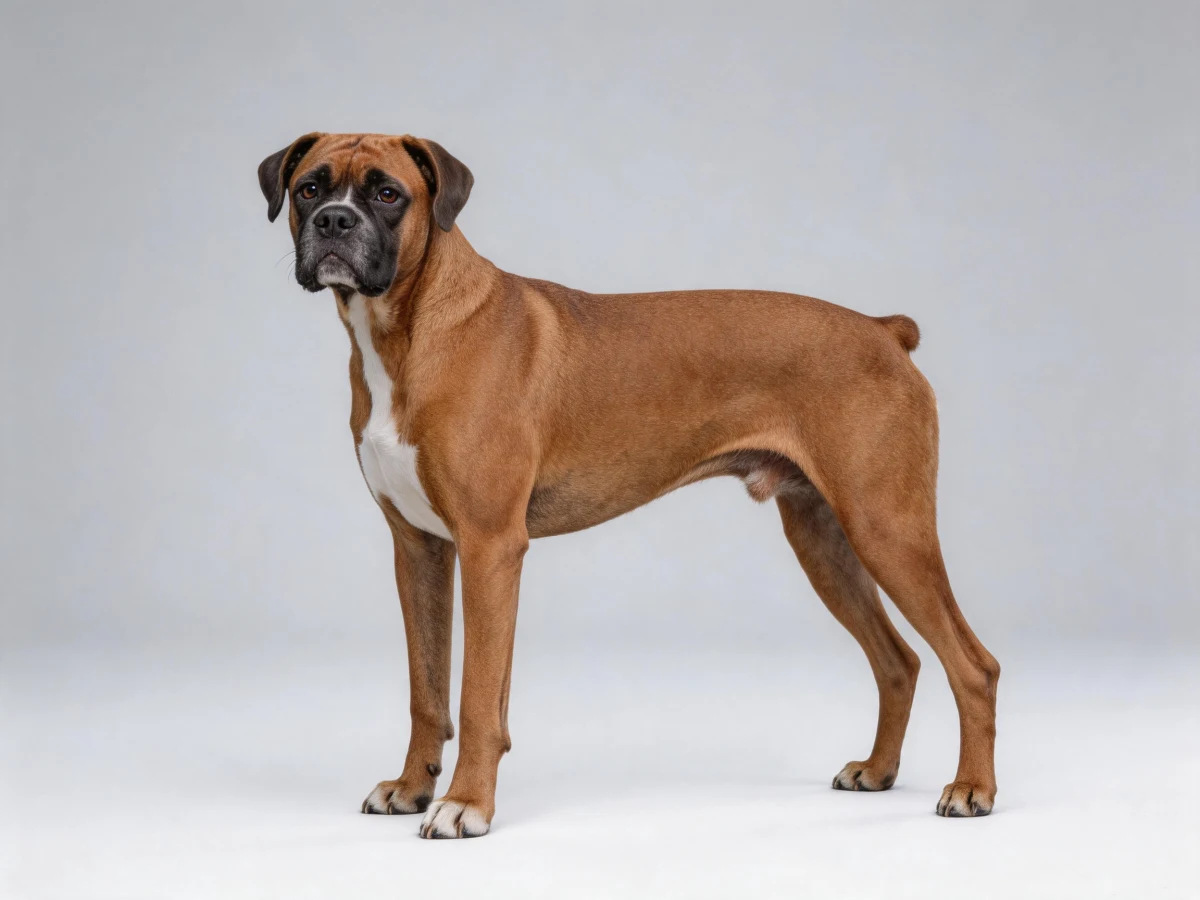
Bullenbeisser
✨ Key Takeaways
- The Bullenbeisser was not a modern kennel breed but a powerful German catch-dog type. Its importance is historical: it sits behind the Boxer and belongs to the wider European tradition of gripping dogs used on large animals.
- Bullenbeisser is extinct or historical, so it should not be presented as a modern pet breed with puppies through commercial channels.
- The safest way to write about it is through documented origin, function, legacy and cultural context rather than invented modern temperament claims.
- Its names and aliases preserve useful evidence about job, place, appearance and later breed influence.
- Health and care sections must be framed historically because no living closed population exists for routine veterinary statistics.
- Name ideas work best when they honour the breed’s real history instead of treating it as a novelty keyword.
Quick Facts
Common Names & Variants
Modern aliases
Historical names
Modern variants & lines
⚖️ Pros & Cons
Advantages
Trade-offs
Physical Appearance
Recognized colors
Coat
Other
Ears: Drop. Tail: High-set natural.
🕰 History
Why this dog matters
The Bullenbeisser was not a modern kennel breed but a powerful German catch-dog type. Its importance is historical: it sits behind the Boxer and belongs to the wider European tradition of gripping dogs used on large animals. A serious encyclopedia entry should begin there, because the dog’s value is not search novelty but its role in the development of later breeds, working traditions or human culture.
Function before fancy
The historical Bullenbeisser was defined by work before modern registry language could fix a show standard. Its purpose was extinct German catch dog used for boar, bear, cattle and bull-baiting; major ancestor of the Boxer. That means the page should describe job, place and evidence, not invent a tidy modern personality profile.
Disappearance and legacy
The breed disappeared as the work changed, as modern kennel breeds absorbed older types, or as colonial and industrial forces disrupted the people who kept it. What remains is a legacy: names, paintings, written descriptions, descendant breeds and cultural memory.
From regional catch dogs to the Boxer
The Bullenbeisser is usually remembered through the Boxer, but it should not be flattened into “old Boxer.” It was part of a broader German and Low Countries catch-dog tradition: powerful gripping dogs used by hunters and butchers for dangerous work with boar, bear, cattle and bulls. These dogs existed before modern breed clubs, and regional varieties differed in size and use.
The smaller Brabanter Bullenbeisser is especially important because it is frequently cited in Boxer history. When 19th-century German breeders began stabilising the Boxer, they drew from this old catch-dog material and crossed it with bulldog-type dogs. Over time the old functional name disappeared as the new kennel breed took shape. The Bullenbeisser therefore belongs in the Boxer’s ancestry, but it was not identical to the modern Boxer in type, selection or social role.
Temperament & Personality
Temperament must be inferred carefully
For an extinct dog, temperament cannot be tested in a living population. The safest statements come from work: a dog bred for extinct German catch dog used for boar, bear, cattle and bull-baiting; major ancestor of the Boxer would need the drive, nerve, endurance and cooperation required by that job.
Avoid modern-pet claims
It would be misleading to say whether the Bullenbeisser is good for apartments, children or novice owners. The honest answer is that it no longer exists as a modern pet breed.
🏡 Living With a Bullenbeisser
Not a living companion breed
No household today can buy a true Bullenbeisser from a responsible breeder, because the breed is extinct or historical. Living-with content should therefore explain context, not give shopping advice.
How to use the history responsibly
Readers interested in the type should study related living breeds, but should not assume a modern dog is a recreated Bullenbeisser unless a transparent preservation programme and sources support that claim.
🎓 Training & Exercise
Training as historical inference
The training needs of the Bullenbeisser can only be discussed through its work. A dog used for extinct German catch dog used for boar, bear, cattle and bull-baiting; major ancestor of the Boxer would have required early handling, steadiness and job-specific control.
Modern lesson
The modern lesson is to respect inherited function. Related breeds still carry traces of the same jobs, and owners should train the living descendant or analogue in front of them rather than romanticising the extinct type.
✂️ Grooming & Coat Care
Coat care in context
The coat is described historically as short, close coat. In a living dog, that would imply practical maintenance, but for an extinct breed the better point is what the coat did for the work or culture.
No modern grooming prescription
There is no show trim or modern grooming routine for a true Bullenbeisser. Grooming content should help readers interpret the coat, not pretend the breed is available today.
🍖 Diet & Nutrition
Historical feeding
Historical working dogs were fed according to place and economy, often on scraps, fish, grain, meat by-products or whatever their keepers could spare. A Bullenbeisser page should avoid pretending there was a modern commercial feeding programme.
Modern analogue caution
Owners of related modern breeds should feed those living dogs according to veterinary advice, age, body condition and workload rather than copying romantic historical feeding.
🐶 Buying & Adopting a Bullenbeisser
Do not shop for an extinct breed
There are no responsible true Bullenbeisser puppies to buy. Claims that a seller has revived an extinct breed should be treated with scepticism unless supported by transparent records, genetic data and reputable breed governance.
Choose related living breeds honestly
If the history appeals to a reader, the useful path is to research related living breeds and choose one for its actual needs today, not for a marketing claim that it is the lost breed reborn.
A descendant is not a revival
Someone interested in the Bullenbeisser should research living breeds by their own modern standards, such as Boxer, Bulldog or Mastiff, without treating any of them as the extinct breed returned.
A responsible page should also avoid using the Bullenbeisser as toughness branding. Its history can be discussed clearly without turning catch-dog work into a sales pitch or a personality promise.
📜 Breed Name Etymology — iDogNames original research
How the name works
Bullenbeisser names should be grounded in the dog’s real history: Boxer ancestor and German catch dog history. Because the breed is extinct or historical, the best names are interpretive and respectful rather than claims that a modern puppy is the lost breed.
What the name should preserve
The strongest name ideas keep the breed attached to its actual origin, work, coat, place and legacy. They avoid random keyword padding and give readers a reason to choose each name.
Translate the force without glamorizing it
The German name is forceful, but the naming section should not become a list of attack words. Better choices point to German history, ancestor status, working context and the later Boxer legacy.
Name forms at a glance
| Name | Role | Origin | Literal meaning | First recorded |
|---|---|---|---|---|
| Bullenbeisser | primary | English | Boxer ancestor and German catch dog history | — |
| German Bulldog | alias | English | historical alias | — |
| Bärenbeisser | historical | English | period name | — |
| Germany | origin country native | English | place origin | — |
| Boxer ancestor and German catch dog history | historical | English | documented function | — |
🏛 Naming Traditions — iDogNames original research
Naming tradition
Bullenbeisser names should be grounded in the dog’s real history: Boxer ancestor and German catch dog history. Because the breed is extinct or historical, the best names are interpretive and respectful rather than claims that a modern puppy is the lost breed.
🐾 Themed Names for Your Bullenbeisser — iDogNames original research
History names
- Archive — for a documented past
- Legacy — for lasting influence
- Relic — old but meaningful
- Chronicle — written history
- Echo — what remains after extinction
- Foundry — for origins and formation
- Keystone — for ancestor status
- Memory — respectful and plain
Work names
- Grip — catch-dog or working power
- Net — fishing and retrieval world
- Field — old sporting work
- Forge — hard working history
- Line — ancestry and descent
- Driver — moving stock or quarry
- Keeper — guarded work
- Tasker — job-first dog
Place names
- Germany — direct homeland name
- Harbor — coastal working world
- Valley — rural origin feel
- Market — old working-town life
- River — water or travel work
- Coast — maritime context
- Village — local landrace roots
- Road — drovers and movement
Legacy breed names
- Ancestor — direct and honest
- Root — foundation dog idea
- Bridge — between old and modern breeds
- Founder — behind later breeds
- Lineage — pedigree history
- Source — where later dogs begin
- Trace — remaining evidence
- Kin — related living breeds
German catch-dog names
- Brabanter — for the smaller regional type behind Boxer history
- Greif — German for grip or grasp
- Eber — boar, a historic quarry
- Bär — bear, from Bärenbeisser
- Stark — strong
- Halten — to hold, the catch-dog job
- Metzger — butcher, old working context
- Boxer — descendant-breed legacy name
German ancestor names
- Ahne - German for ancestor, ideal for the Boxer-history connection
- Stamm - root or stock idea for a foundational dog name
- Linie - lineage word for a breed known through descendants
- Altboxer - clear historical nod to the later Boxer link
- Brabant - regional mastiff-history echo for a historically minded owner
- Munich - German place cue for the Boxer development story
- Zuchtbuch - studbook word used cautiously because this is pre-modern history
- Ursprung - German origin word for a dog named after beginnings
Sober strength names
- Anchor - strong without violent imagery
- Forge - working strength and German industrial mood
- Ironline - lineage plus toughness, but not aggression marketing
- Brace - supportive strength, good for a steady dog
- Gripwell - work-context name softened away from fighting language
- Hearth - domestic counterweight to harsh catch-dog history
- Steadfast - virtue name for reliability rather than intimidation
- Legacy - best for a Boxer-mix household interested in history
📋 Breed Standard at a Glance
No modern breed standard
Because the Bullenbeisser is extinct or historical, there is no living FCI, AKC or national kennel-club standard that can be used like a modern breed standard. Any description must be drawn from period accounts, descendant-breed history and cautious comparison.
Type, not show points
The useful physical description is functional: short, close coat, drop ears, high-set natural tail, and the build required for extinct German catch dog used for boar, bear, cattle and bull-baiting; major ancestor of the Boxer. Precise heights and weights should be avoided unless a source gives them clearly.
Why no single “standard” can be reconstructed
Because the Bullenbeisser predates modern closed registries, it is safer to describe it as a working catch-dog type rather than a uniform show breed. Period terms such as Bärenbeisser and Bullenbeisser refer to function and quarry: bear-biter, bull-biter, gripping dog. That vocabulary tells us what people valued. It does not give a neat modern checklist of height, bite, coat colour and tail carriage.
The likely outline was molosser-like but athletic: broad head, strong jaws, short coat, muscular body and enough agility to seize and hold large animals. Any modern breeder claiming exact recreation should be treated cautiously unless they can show transparent records and explain what sources define the target.
🏆 Recognition
Other registries
❓ Frequently Asked Questions
Does the Bullenbeisser still exist?
No. The Bullenbeisser is treated here as an extinct or historical breed/type, not as a modern kennel breed with responsible puppies available today.
Why is the Bullenbeisser important?
The Bullenbeisser was not a modern kennel breed but a powerful German catch-dog type. Its importance is historical: it sits behind the Boxer and belongs to the wider European tradition of gripping dogs used on large animals.
Can I buy a Bullenbeisser puppy?
A true Bullenbeisser is not available from responsible modern breeders. Any revival or recreation claim should be checked carefully against transparent records, governance and evidence.
What was the Bullenbeisser temperament like?
Temperament can only be inferred from work. A dog used for extinct German catch dog used for boar, bear, cattle and bull-baiting; major ancestor of the Boxer would need the drive and steadiness required for that job, but modern family-pet claims would be speculation.
What did the Bullenbeisser look like?
Descriptions vary by source and period. The safest summary is functional: short, close coat, drop ears and a body suited to extinct German catch dog used for boar, bear, cattle and bull-baiting; major ancestor of the Boxer, without pretending there was a modern show standard.
What names fit a Bullenbeisser-inspired dog?
Use names tied to the real history: place, work, legacy and related living breeds. Avoid names that imply a modern dog is literally the extinct breed.
📚 Sources & Further Reading
Every load-bearing factual claim on this page is anchored to one of the sources below. iDogNames does not synthesize from secondary aggregators.
- wikipedia Bullenbeisser — Wikipedia
- wikidata Bullenbeisser Wikidata entity — Wikidata
- book Boxer ancestor and German catch dog history literature — Breed-history synthesis
- book The cultural history of dog breeds — Cynology reference synthesis
- other iDogNames extinct-breed editorial standard — iDogNames editorial research (2026)
- other Related modern-breed history cross-reference — iDogNames internal taxonomy (2026)
- academic paper Ancient and historical dog population studies — Scientific literature synthesis
- other Museum and archive image/source caution — Editorial source note (2026)
- veterinary org General canine health limitations for extinct breeds — Merck Veterinary Manual (2024)