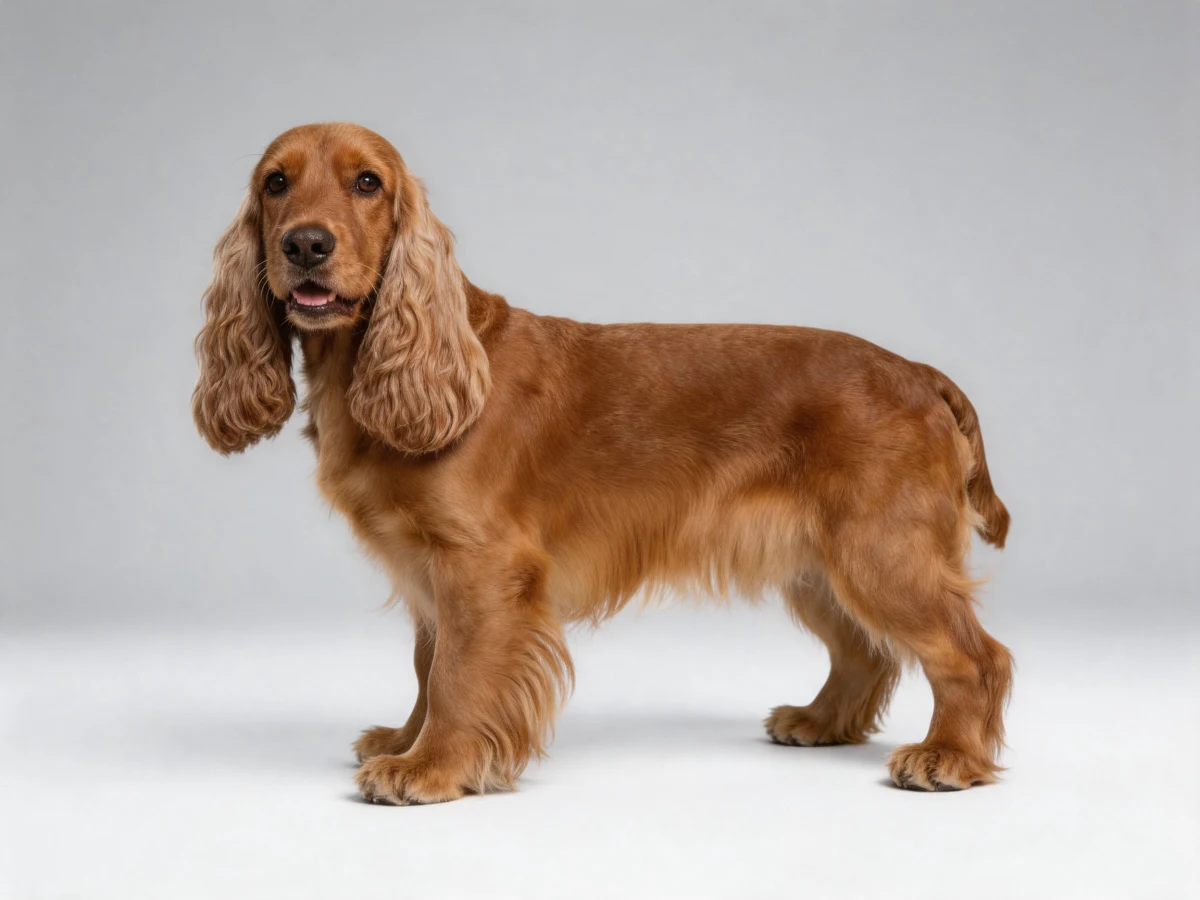
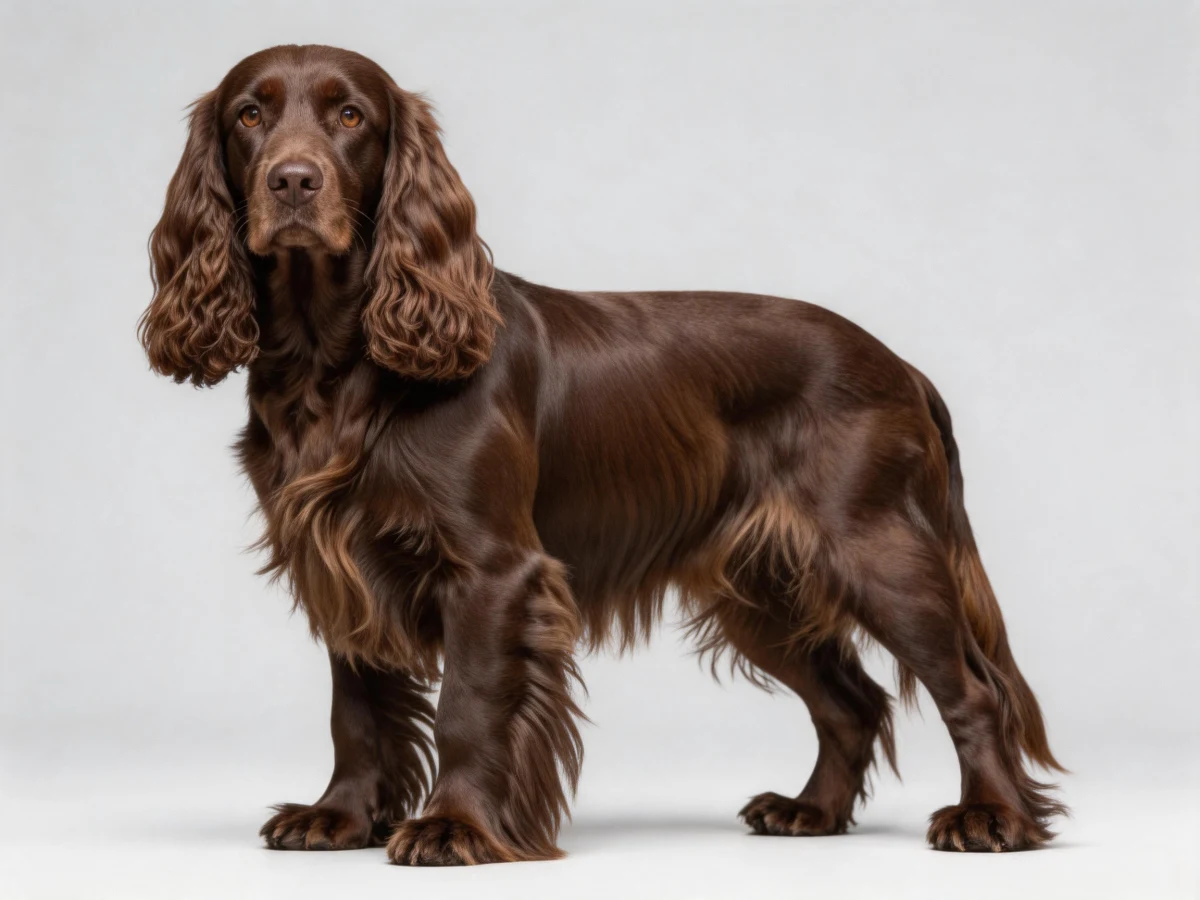
Boykin Spaniel
✨ Key Takeaways
- Born in the Wateree swamps of South Carolina in the early 1900s from a stray dog named Dumpy, the Boykin Spaniel is the only major AKC breed developed entirely within one US state
- The breed was designed to be small enough not to capsize the narrow section boats used by Carolina hunters — earning the nickname the dog that wouldn't rock the boat
- South Carolina designated the Boykin its official state dog in 1985, and September 1 is celebrated as Boykin Spaniel Day across the state
- Three verified genetic health concerns require DNA testing before breeding: Exercise-Induced Collapse (EIC/DNM1), Collie Eye Anomaly (CEA/NHEJ1), and hip dysplasia — OFA data show above-average hip dysplasia incidence in the breed (Tsai & Murphy, 2006)
- AKC full recognition came in December 2009, placing the breed in the Sporting group; it has climbed from rank 108 (2014) to rank 64 (2025)
- The rich liver-brown coat is the breed's only recognised colour; any other coat colour disqualifies the dog under the AKC standard
Quick Facts
Common Names & Variants
Modern aliases
Historical names
⚖️ Pros & Cons
Advantages
Trade-offs
Physical Appearance
Recognized colors
Coat
Other
Ears: Drop. Tail: Docked (traditional); natural bob.
🕰 History
A church-porch stray and the birth of an American breed
The Boykin Spaniel's origin story is unusually precise for a working dog that predates registry culture. Around 1905 — documentation from this period is thin but consistent across the primary breed-club record — a small, stray spaniel-type dog began following a Spartanburg, South Carolina, banker named Alexander L. White home from a church service. White took the dog in, noticed an exceptional aptitude for retrieving, and gave him the name Dumpy. Recognising that his own skills as a trainer were limited, White shipped Dumpy by train to his hunting partner Lemuel Whittaker "Whit" Boykin, a hunter and dog trainer based near Camden, in Kershaw County. That decision is the hinge point of the breed's existence.
Boykin recognised in Dumpy the raw material for something the Carolina hunting community badly needed: a dog compact enough to work from the narrow wooden section boats used to navigate the Wateree River swamps, yet capable enough to flush wild turkey from dense upland cover in the morning and retrieve waterfowl from cold swamp water in the afternoon. No existing breed met all those demands in one package of the right size. The Chesapeake Bay Retriever had the retrieving power but was too large and too rough-coated for swamp navigation. The American Cocker Spaniel was small enough but lacked the drive and water hardiness the terrain required. Boykin set about creating the type, crossing Dumpy with dogs that supplied the missing qualities.
The foundation crosses and what they contributed
The breed's ancestry, as reconstructed by the Boykin Spaniel Club and Breeders Association of America (BSCBAA) and corroborated by the Parker et al. (2007) genomic study, likely includes Chesapeake Bay Retriever, American Water Spaniel, English Springer Spaniel, American Cocker Spaniel, and possibly Pointer. Each cross had a functional rationale. The Chesapeake Bay Retriever contributed cold-water toughness, dense coat oil, and the retrieving drive to persist in rough conditions. The American Water Spaniel — itself a Midwest breed developed for small-boat hunting — added compact build, curly water-resistant coat, and experience working from confined vessels. The springer and cocker added flushing instinct, biddability, and the merry, bustling hunting style that characterises the spaniel family. The Pointer contribution, if present, would have sharpened bird-finding range and speed in upland cover.
What is striking about this foundation is how deliberately it was assembled around the constraints of a specific landscape. The Wateree swamps dictated the size: a dog that capsized the boat was useless regardless of its retrieving ability. The turkey-hunting tradition dictated the temperament: wild turkey are wary birds hunted at close quarters in dense timber, and a dog that crashed noisily through cover would ruin the stalk. The waterfowl element demanded cold-water endurance and a good mouth. Boykin's crosses addressed all three constraints at once, and the consistency of type that emerged — solid liver-brown, compact, with a distinctive wavy or curly coat — was maintained with enough discipline that a recognisable breed emerged within a generation.
The Boykin Spaniel Society and formalising the type
The breed was kept alive and relatively pure by the close-knit hunting community of the South Carolina Midlands for decades before any registry took notice. The Boykin Spaniel Society (BSS), the original breed organisation, was founded in South Carolina and began maintaining a studbook that predates AKC involvement. The studbook has been the primary genealogical record for the breed, and dogs entered in it carry a heritage directly traceable to Dumpy's descendants through documented lines.
South Carolina's pride in the breed found formal expression on September 1, 1985, when the state legislature designated the Boykin Spaniel the official State Dog of South Carolina — a recognition that preceded AKC full recognition by twenty-four years and reflects the breed's deep roots in regional identity. September 1 is now observed as Boykin Spaniel Day across the state, a cultural anchor that no other AKC breed can match for hyperlocal specificity.
The road to AKC recognition
The BSCBAA, formed in the late 1990s to pursue national registry recognition, guided the breed through the AKC's multi-stage recognition process through the 2000s. The breed competed in the AKC Miscellaneous Class and achieved progressive eligibility milestones across 2006–2008 before the AKC granted full recognition in December 2009, placing the Boykin in the Sporting group. The breed's AKC popularity rank has climbed steadily since: from position 108 in 2014 to 65 in 2024 and 64 in 2025 — a trajectory that reflects growing national awareness of a dog that had been a regional secret for nearly a century. The Boykin remains the only major AKC breed that was developed entirely within a single US state, without European roots, and that carries its own state-sanctioned holiday.
Temperament & Personality
The hunting engine in a family-sized body
The Boykin Spaniel presents a temperament profile that is worth examining carefully, because the breed's marketing as a family dog sometimes obscures what is fundamentally a working sporting dog with high drive and a strong need for purposeful activity. What sets the Boykin apart from other spaniels of similar size is the intensity with which it pursues its instincts. On a retrieving task or a turkey-flushing run, this dog is all business — focused, relentless, and indifferent to cold water or difficult terrain. At home, the same intensity becomes something warmer: a dog that is affectionate, enthusiastic, and genuinely engaged with its people.
The breed's disposition toward humans is one of its most consistent traits. Boykins form strong bonds with their immediate family and tend to be warm and sociable with strangers rather than reserved or suspicious. This is not a guard dog and has no territorial aggression to speak of; it is a dog that greets people with a wagging stump of a tail and an expectation that interaction will be positive. The sociability extends well to children — the breed is broadly tolerant of the energy and unpredictability of older children — but the Boykin's hunting drive and enthusiasm can make it too boisterous for very young toddlers who might be knocked over during enthusiastic greetings.
Drive, independence, and the limits of biddability
The Boykin is more biddable than most sporting breeds of comparable drive, and considerably more handler-focused than the independent-minded pointing breeds. This biddability is a legacy of the spaniel and Cocker crosses in its foundation: these dogs were bred to work close to the gun, in constant visual contact with the handler, flushing game into shotgun range rather than quartering far ahead. The result is a dog that genuinely watches its handler, takes directional signals well, and responds to training with the kind of enthusiasm that makes sessions productive rather than frustrating.
That said, the Boykin retains a meaningful level of hunting independence that buyers should factor into their expectations. A dog that detects bird scent is going to move toward that scent, and the recall command will be competing with one of the strongest drive packages in the spaniel family. This is not a flaw — it is the functional design — but it means the breed is not suitable as a casual off-leash dog in unfenced areas until a very reliable trained recall has been established over months of consistent work.
Energy profile and the cost of under-stimulation
The Boykin Spaniel's energy level is above average for the sporting group and substantially above average for a dog of its size. The breed was developed to hunt all day in difficult terrain, and its physical endurance reflects that breeding. A daily walk around the block is not sufficient exercise for an adult Boykin, and an under-exercised individual will find its own outlets: barking, digging, chewing, and anxious behaviour when left alone. The breed is also mentally active, and physical exercise alone does not fully address the need for cognitive engagement. Boykins that participate in hunting, dock diving, spaniel field trials, or obedience work are consistently calmer and more settled at home than those whose exercise is limited to leash walks.
The breed's relationship with other dogs is generally positive, particularly with dogs encountered from an early age. Multi-dog households with active lifestyles suit the Boykin well. Small furry pets — birds especially, but also rabbits and small mammals — are a different matter: the bird-flushing instinct is present at a level that makes cohabitation with pet birds genuinely risky regardless of individual temperament. This is not trainable away; it is the breed's core functional identity.
🏡 Living With a Boykin Spaniel
Space, exercise, and the sporting-dog contract
The Boykin Spaniel is adaptable to suburban life provided the sporting-dog contract is honoured: meaningful daily exercise, mental engagement, and consistent training. The breed has been kept successfully in apartments by owners who commit to twice-daily active exercise sessions, but the default assumption should be a house with a securely fenced yard. The emphasis on "securely fenced" is not incidental — a Boykin that scents a bird or catches a glimpse of moving wildlife will go, and the fence needs to be the thing that stops it rather than a recall command that competes with deep instinct.
In terms of daily routine, the breed thrives on structure. A morning exercise session of forty-five minutes to an hour — off-leash fetch, swimming, or a structured training walk — followed by mental engagement (training, puzzle toys, or hunting-simulation activities) in the afternoon produces a dog that is calm and pleasant company in the house. An unexercised Boykin is a different proposition: vocal, restless, prone to finding its own entertainment in ways that involve furniture or landscaping.
Water, mud, and the practical realities
The Boykin Spaniel has a strong, instinctive affinity for water that is not trainable away and should not be suppressed. Access to swimming — a lake, pond, river, or pool — is the breed's preferred exercise, combining physical output with the sensory stimulation of the aquatic environment it was bred to work. What this means practically: towels at the door, a vehicle that can be cleaned, and an acceptance that the dog will arrive home wet, muddy, and extremely satisfied after a session near water. Owners who find this unacceptable should consider a different breed.
The breed's feathering on ears, belly, chest, and legs collects burrs, debris, and moisture that require attention after outdoor exercise. This is not onerous — a quick check and comb-through after each outdoor session prevents matting — but it is a predictable part of living with a working spaniel.
Children, other dogs, and household pets
The Boykin is broadly good with children, particularly those old enough to engage in active outdoor play. The breed's enthusiasm and moderate size can be overwhelming for toddlers during greetings, but with older children the Boykin is a patient, energetic, and genuinely affectionate companion. Multi-dog households are generally unproblematic, especially when dogs are introduced properly. The firm line is pet birds and small mammals: the bird-flushing drive in a Boykin is not a background trait that can be suppressed with training — it is the breed's reason for existence, and small caged birds or free-ranging pet birds in the same household are at genuine risk regardless of how calm the dog appears.
🎓 Training & Exercise
A spaniel that genuinely wants to cooperate
The Boykin Spaniel sits in an unusually comfortable position on the sporting-dog trainability spectrum. It is neither the hyper-independent pointing dog that works the field on its own logic nor the extremely soft-mouthed retriever that needs constant reinforcement to maintain confidence. The Boykin watches its handler, takes pleasure in the training interaction itself, and retains learned behaviours across sessions with less repetition than many breeds. This is a practical consequence of the spaniel-and-cocker foundation: dogs that worked at heel distance from the gun, flushing game on the handler's signal, needed to be continuously attentive to human cues.
Positive reinforcement with high-value food rewards is the most efficient training approach for the breed. Correction-heavy methods produce a dog that becomes cautious and hesitant in the field — exactly the opposite of the bold, biddable hunting dog the breed should be. Short, varied sessions of ten to fifteen minutes produce better long-term retention than marathon drilling. The breed excels at spaniel field trials, dock diving, obedience, rally, and nose work, and owners who want a sport outlet will find the Boykin an enthusiastic and capable partner.
The recall challenge and water safety
The area where the Boykin's training requires the most sustained investment is recall in high-arousal contexts — specifically near birds, water, and moving wildlife. The breed's hunting drive is not a correctable behavioural issue; it is the core of its functional design. Building a reliable recall means building a conditioned response strong enough to compete with that drive, which requires months of consistent work under progressively more distracting conditions using a long line for safety during the training process. Owners who expect a reliable off-leash recall without doing this work will be disappointed and will place the dog in dangerous situations near roads and open water.
Water-safety management is a specific concern: a Boykin that sees waterfowl on open water may enter the water and commit to a retrieve that takes it further than is safe, particularly in cold conditions or fast-moving rivers. A reliable "here" command maintained with consistent training prevents this.
Puppy socialisation and hunting-line dogs
Early socialisation — exposure to varied people, environments, sounds, and other dogs between eight and sixteen weeks — produces the confident, steady adult the breed is capable of being. Boykins from hunting lines can have an intensity that, without socialisation, tips into over-reactivity or anxiety in non-hunting contexts. Puppy classes, structured exposure to town environments, and regular interaction with unfamiliar people all contribute to producing a dog that is as pleasant in a café as it is in a duck blind.
✂️ Grooming & Coat Care
The coat: beautiful, functional, and manageable
The Boykin Spaniel's rich liver-brown coat — wavy to curly, medium-length, with feathering on ears, chest, legs, and belly — is one of the breed's most visually distinctive features and was selected specifically for function: the texture repels water, the colour provides camouflage in the brown swamp vegetation of South Carolina, and the feathering allows the dog to work through dense cover without significant coat damage.
In practical terms, the coat requires brushing two to three times per week to prevent matting, particularly in the feathered areas. A pin brush for the body and a slicker for the feathering, followed by a metal comb through the ears and behind the elbows (where mats form most readily), is the standard home-grooming routine. Bathing every four to six weeks, or after extended water work, keeps the coat clean and controls the mild dog odour that some owners notice in a wet sporting spaniel. Trimming the ears, feet, and tail to a neat sporting profile is typically done by a groomer every eight to ten weeks, though many hunting-dog owners maintain their own scissors and do a working trim at home.
Ears, eyes, and the swamp dog's maintenance calendar
The Boykin's drop ears — heavy, feathered, and pendulous — trap moisture after water work and create ideal conditions for yeast and bacterial otitis if not attended to regularly. Weekly ear inspection, drying after swimming, and cleaning with a veterinarian-recommended solution prevents most ear infections before they start. Owners who hunt their dogs in water several times a week should check ears after every session. The feathering around the feet collects debris, and checking between the toes and pads after outdoor sessions prevents burrs and foxtails from embedding.
Nail trimming every two to three weeks, tooth brushing multiple times per week (the breed is not reported as particularly prone to dental disease but no medium sporting dog should skip dental hygiene), and regular checking of the anal glands by a veterinarian or groomer complete the maintenance schedule. The overall grooming burden is moderate — less demanding than a Clumber Spaniel's heavy coat but more than a smooth-coated retriever's.
🍖 Diet & Nutrition
Feeding an active sporting spaniel
The Boykin Spaniel is a working-bred, medium-energy dog whose caloric requirement varies significantly with activity level. A Boykin that hunts regularly or participates in active dog sports will require substantially more daily energy than one living a primarily sedentary companion-dog life. The practical starting point for most adult Boykins is 1.5 to 2 cups of a high-quality dry food per day, divided into two meals, with adjustments based on body condition score rather than arbitrary target weights. The dog should show a visible waist and palpable ribs without prominent bony points — the classic "working condition" assessment applies.
Protein and fat quality matter more for sporting dogs than for sedentary breeds. A food with a named animal protein as the first ingredient (chicken, turkey, salmon, or duck are all appropriate choices), adequate fat content for coat health (ten to fifteen percent as-fed for most sporting breeds), and a complete vitamin and mineral profile is the baseline. The wavy, sometimes curly coat benefits from omega-3 fatty acids, particularly DHA and EPA from marine sources; owners who see excessive dryness or dullness in the coat can supplement with a fish oil product at the veterinarian-recommended dose.
Weight management and the EIC-affected dog
Obesity is a real risk in a breed that is often transitioned from active hunting seasons to inactive winters. An overweight Boykin Spaniel places increased load on hip joints already at elevated risk of dysplasia — the two problems compound each other. Maintaining lean body condition year-round, adjusting food intake to match activity level during off-seasons, and using feeding time as a training opportunity (feeding meals from a Kong or puzzle feeder adds mental stimulation to the eating routine) all support long-term joint and metabolic health.
For the small number of Boykins affected by EIC (homozygous for the DNM1 mutation), dietary management has no direct effect on the genetic condition, but maintaining a lean body weight reduces metabolic load during exercise. Affected dogs should never be pushed to the point of heavy panting and exertion that triggers collapse, and feeding and exercise should be separated by at least an hour to avoid exercise immediately after eating.
🐶 Buying & Adopting a Boykin Spaniel
Finding a Boykin Spaniel: the right channels
The Boykin Spaniel market has two distinct segments: hunting-bred stock, which has been produced by the South Carolina sporting community for over a century, and companion/show-bred stock that emerged after AKC recognition in 2009. Both can produce healthy, well-tempered dogs, but they are bred for different end uses, and buyers should be honest with themselves about which profile matches their lifestyle. A family wanting a weekend hiking companion and gentle house dog has different requirements than a waterfowl hunter who needs a dog to work in cold water from October to January.
The BSCBAA and BSS both maintain breeder referral lists and are the most reliable starting points for finding health-tested stock. A responsible Boykin breeder will complete all five CHIC-required health tests — hip evaluation, eye exam, patellar luxation OFA, EIC DNA test, and CEA DNA test — on both parents before producing a litter. Buyers should ask to see the OFA certificates for both parents (verifiable independently at ofa.org by searching the dog's registered name) and the DNA test results for EIC and CEA. A breeder who cannot or will not produce these documents should not be used.
Puppy price, rescue, and realistic expectations
Boykin Spaniel puppies from health-tested, BSCBAA-affiliated breeders typically cost between $800 and $2,000 in 2024, with hunting-line puppies from proven field-trial parents often at the upper end of that range. Prices significantly below $800 from breeders without health documentation should be treated with caution — cutting corners on health testing has a predictable long-term cost in veterinary bills and heartbreak.
Rescue is a meaningful option. The Boykin Spaniel Society maintains a rescue referral network, and adult dogs in rescue are often already house-trained and past the destructive puppy phase. A Boykin in rescue may be there because a hunting owner could no longer keep a dog, or because a family underestimated the breed's exercise needs — in neither case does it imply a defective animal. Adult rescue dogs from the breed's gene pool carry the same genetic health risks as puppies and should ideally come with available health documentation.
📜 Breed Name Etymology — iDogNames original research
Boykin: a surname that became a breed name
The name Boykin Spaniel is a personal eponym — a breed name derived entirely from the surname of its human developer. This places it in a small but significant group of breed names that carry an individual's identity: the Dobermann carries Louis Dobermann's name, the Jack Russell carries the Reverend John Russell's, the Weimaraner carries the Weimar court's. In the Boykin's case, the person honoured is Lemuel Whittaker Boykin, known as "Whit," the hunter and trainer near Camden, South Carolina, who developed the type from a stray dog in the early twentieth century.
What is notable about the Boykin eponym is its completeness. Many breed names carry a personal surname as a modifier (Russell Terrier, Weimaraner), but Boykin stands alone as the first element, followed only by the functional descriptor Spaniel. The structure signals that the individual's contribution was total enough to name the entire type, not merely a variety within an existing type. The surname Boykin is an English surname of uncertain derivation, likely a diminutive form with the -kin suffix common in Middle English personal names (as in Perkin, Tompkin, Wilkin) — a suffix denoting smallness or familiarity. That the breed it names is the compact, endearing, small-enough-not-to-rock-the-boat spaniel of the Carolina swamps is a serendipitous etymological note.
Spaniel: the deep root of the family name
The word spaniel reaches English through Old French espaigneul, meaning "Spanish (dog)," reflecting the medieval European belief that the spaniel type came from Spain or arrived via the Iberian Peninsula. The word enters English writing around the 14th century and by the 16th century is well established as the name for a class of flushing and setting dogs used in bird hunting. The etymology is toponymic rather than descriptive: espaigneul derives from Hispania, the Latin name for the Iberian Peninsula, via Vulgar Latin *Hispaniolus. Whether spaniels actually originated in Spain or whether the name reflects a trade route, a misconception about canine geography, or a conflation with the Spanish setting-dog tradition is a question that historical linguistics cannot fully resolve.
Every breed in the spaniel family carries this same root: Cocker Spaniel, Clumber Spaniel, Field Spaniel, English Springer Spaniel, American Water Spaniel, Sussex Spaniel. The Boykin Spaniel's full name therefore encodes two layers of meaning: a specific individual's contribution (Boykin) and the ancient, possibly Iberian, flushing-dog heritage of the entire spaniel family (spaniel).
Name forms at a glance
| Name | Role | Origin | Literal meaning | First recorded |
|---|---|---|---|---|
| Boykin Spaniel | primary | English (personal eponym + Old French) | the spaniel developed by Boykin; the Spanish-type flushing dog of Boykin's making | 1909 |
| Little Brown Dog | alias | English (descriptive colloquial) | the small brown dog of the Wateree swamps | 1920 |
| Brown Spaniel | historical | English (descriptive) | the brown-coated spaniel | 1910 |
| spaniel | origin country native | Old French / Vulgar Latin | Spanish (dog); a dog of the Spanish-type flushing family | — |
| State Dog of South Carolina | alias | English (official designation) | the official dog of South Carolina | 1985 |
🏛 Naming Traditions — iDogNames original research
The South Carolina naming current
Boykin Spaniel owners draw heavily on the breed's distinctively American, specifically South Carolinian, identity when naming their dogs. No other AKC breed is tied to a single state's cultural geography in quite the same way — the breed has its own state holiday, a founding story with named people and places, and a visual identity (that solid liver-brown coat) that reads unmistakably as a Southern hunting dog. Names that reference these layers of identity carry a resonance for Boykin owners that they would not have for the owner of a cocker or a springer.
The Camden, South Carolina, geography provides a direct naming current: Camden itself, Boykin (the community and the surname), Kershaw (the county), Wateree (the river), and the swamp landscapes that shaped the breed. The hunting tradition opens another set of names that signal the dog's working heritage — marsh, duck, teal, timber, retriever names that suit a dog that is equally at home in turkey blinds and duck boats. The founding story, with its named characters, provides a third layer: Dumpy (rarely used, but occasionally applied affectionately to small or compact males), Whit (for the developer), and Alex or Alec (for Alexander White).
Coat and colour as a naming lens
The Boykin's solid liver-brown coat — the only recognised colour, a warm chocolate that shifts from medium brown to deep mahogany in different lights — is the breed's most immediately visible characteristic and one of the most used naming lenses. Brown-spectrum names in English, Spanish, French, and Indigenous American languages all feel natural on a Boykin. Coffee names, chocolate names, whisky and bourbon names (consistent with the breed's Southern identity), amber and walnut names — all suit a dog whose coat is the colour of strong tea, dark honey, or aged bourbon, depending on the light.
The breed's water-loving, swamp-navigating character also supports a category of names that reference rivers, tides, and wetland landscapes — names that feel appropriate for a dog that was designed to work in the Wateree River system and that will throw itself into any available body of water with uncomplicated joy.
🐾 Themed Names for Your Boykin Spaniel — iDogNames original research
South Carolina heritage names
Camden — the hometown of Whit Boykin, appropriate for any Boykin with deep-South energy. Wateree — the river and swamp system the breed was built to work. Boykin — the community and surname; useful as a call name for a dog from hunting lines. Kershaw — the South Carolina county. Palmetto — South Carolina's state tree and a name that reads warmly on a state-proud dog. Dixie — a broadly Southern name that suits the breed's regional identity. Magnolia — classic Deep South flora. Savannah — the Georgia city but broadly a Southern landscape name, and the Savannah River basin is adjacent Boykin country. Jasper — a South Carolina county and a warm brown gemstone name that suits the coat. Congaree — the South Carolina river and national park in swamp country.
Hunting and water names
Teal — a duck species that Boykins retrieve; short, punchy, and specific to the breed's work. Drake — a male duck; strong and angular. Marsh — the habitat. Decoy — the hunting accessory, an unusual dog name with a knowing quality. Timber — the turkey-hunting terrain, and a solid name for a male. Retriever — ironic as a full name, functional as a nickname shortened to Rev or Triv. Gunner — a sporting-dog staple that fits the Boykin's heritage. Otter — a water mammal; good for a dog with the Boykin's swimming obsession. Wade — simple, watery, and Southern. Ripley — a river-town name with good rhythm. Boone — Daniel Boone; frontier hunting tradition, strong monosyllabic call name. Flint — a gunflint and a river name; excellent for a hunting-line male.
Coat-colour names: chocolate and amber tones
Mocha — a coffee-chocolate blend; suits the warm-brown coat. Cacao — the raw chocolate tone, especially good for a darker-coated dog. Mahogany — the richest end of the Boykin coat spectrum. Sable — the fur trade word for dark brown-black, though the Boykin reads warm brown rather than cold dark. Toffee — the golden-brown lighter end of the coat range. Walnut — medium brown, tactile, Southern. Bourbon — the whisky; perfectly aligned with the breed's South Carolina identity and warm-brown colour. Chestnut — the warm reddish-brown of chestnuts, matching many Boykin coats exactly. Brandy — a amber-brown spirit name; strong and feminine without being cutesy. Cognac — the darker French variant; a dignified name for a dignified-looking spaniel. Sienna — the pigment; earthy brown with a painterly quality.
South Carolina history and character names
Whit — for Whit Boykin, the breed's developer; a quiet insider name for enthusiasts. Alec or Alex — for Alexander White, who found Dumpy; slightly more common but carries the breed's origin story. Calhoun — John C. Calhoun, South Carolina senator; a weighty name for a serious hunting dog. Sumter — Fort Sumter; specifically South Carolinian. Marion — Francis Marion, the Swamp Fox; thematically perfect for a swamp dog. Rutledge — Edward Rutledge, South Carolina signatory to the Declaration of Independence. Beaufort — the South Carolina coastal town; a layered place name. Gullah — the Gullah-Geechee culture of the South Carolina Lowcountry; for a culturally conscious owner.
More American heritage names
- American Trail - best for a Boykin Spaniel name rooted in United States rather than generic style
- Wateree River Swamp region, Camden, Kershaw County, South Carolina Ridge - best for a regional landscape cue tied to the Boykin Spaniel story
- Local Line - best for a name that respects local breed history
- Old Route - best for migration, trade, field or pastoral routes behind the breed
- Heritage Note - best for a page where origin should be treated as context, not decoration
- Village Path - best for rustic, local or landrace-style background
- Working Home - best for a dog whose name should remember Flushing and retrieving wild turkey and waterfowl from small section boats in the South Carolina swamps
- Country Mark - best for a concise country-of-origin cue
More work and purpose names
- Field Note - best for a Boykin Spaniel whose name should point to Flushing and retrieving wild turkey and waterfowl from small section boats in the South Carolina swamps
- Soft Mouth - best for a retrieving dog expected to carry gently
- Search Cast - best for quartering fields or cover in a controlled way
- Reed Fetch - best for water-edge retrieving or marsh imagery
- Feather Find - best for bird-dog heritage without overstating modern use
- Steady - best for a gundog learning calm around birds and movement
- Check Cord - best for careful field training in open places
- Partner - best for a cooperative handler-dog working relationship
More coat and build names
- Rich Liver (chocolate Brown) - best for a Boykin Spaniel whose color or markings deserve a simple call name
- Wavy To Curly, Water-resistant Coat - best for the wavy to curly, water-resistant coat type on this breed
- White Blaze - best for a clear face or chest marking
- Dark Mask - best for a dog with a strong muzzle or face marking
- Weather Coat - best for outdoor or working-dog coat context
- Strong Frame - best for a dog whose build is part of its function
- Bright Eye - best for an alert expression
- Ground Step - best for a name tied to movement and body type
More training and management names
- Recall - best for a Boykin Spaniel whose safe freedom depends on training
- Focus - best for handler attention around distractions
- Marker - best for clear reward timing
- Settle - best for calm at home after activity
- Boundary - best for doors, yards, roads or stock rules
- Neutral Walk - best for calm public behavior
- Checkback - best for a dog learning to return to the handler
- Rest Day - best for balancing drive with recovery
More history-aware names
- Source Note - best for a name that invites accurate breed history
- Old Job - best for remembering Flushing and retrieving wild turkey and waterfowl from small section boats in the South Carolina swamps without turning it into a slogan
- Modern Fit - best for a dog whose current home should match real needs
- Care Plan - best for a name tied to grooming, exercise and health records
- Steward - best for rare or local breeds where preservation matters
- Plain Record - best for choosing documented facts over myths
- Breed Context - best for readers comparing names, history and suitability
- Respect - best for a culturally or regionally rooted breed story
More comparison-aware names
- American Water Spaniel Link - best for readers comparing with the American Water Spaniel
- Cocker Spaniel Link - best for readers comparing with the Cocker Spaniel
- Field Spaniel Link - best for readers comparing with the Field Spaniel
- English Springer Spaniel Link - best for readers comparing with the English Springer Spaniel
- Shared Job - best for comparing related breeds without merging their histories
- Different Role - best for comparing related breeds without merging their histories
- Same Region - best for comparing related breeds without merging their histories
- Name Bridge - best for comparing related breeds without merging their histories
More daily-life names
- Morning Walk - best for a Boykin Spaniel whose day needs real routine
- Trail Check - best for safe outdoor movement and handler awareness
- Home Base - best for a dog that needs a calm place to reset
- Good Fit - best for matching the breed to the right household
- Clear Cue - best for training that avoids confusion
- Slow Intro - best for polite introductions and confidence building
- Calm Door - best for visitor and threshold manners
- Rest Point - best for balancing activity with recovery
More care-aware names
- Vet Record - best for a dog whose health notes should be documented
- Sound Start - best for careful puppy or adoption evaluation
- Coat Check - best for grooming after weather, burrs or field work
- Nail Day - best for routine body handling
- Ear Check - best for breeds whose ears need regular inspection
- Weight Watch - best for keeping structure and joints in mind
- Water Break - best for active dogs working or walking in heat
- Shade Rest - best for climate-aware breaks and recovery
📋 Breed Standard at a Glance
The AKC Boykin Spaniel standard: function encoded in form
The AKC standard for the Boykin Spaniel, adopted with full recognition in December 2009, describes a medium-sized flushing and retrieving dog of Sporting type. The standard is explicitly functional in its framing: every element of the description references the breed's hunting purpose in the swamps of South Carolina.
Size: Males stand 15.5 to 18 inches (39.4–45.7 cm) at the withers, females 14 to 16.5 inches (35.6–41.9 cm). Weight ranges from approximately 30 to 40 lb (13.6–18.1 kg) for males and 25 to 35 lb (11.3–15.9 kg) for females. The standard notes that size is less important than overall balance and functional soundness.
Coat and colour: The coat is flat to moderately curly with medium length on the body, feathering on the ears, chest, legs, and belly. Colour is a rich liver — a warm, medium to dark chocolate brown — and is the only colour permitted under the standard. A small white spot on the chest is tolerated but not preferred; any other colour is a disqualification. The liver colour is the breed's most immediately recognisable feature and serves a functional purpose: it provides natural camouflage against the brown vegetation of the Wateree swamps during turkey hunting.
Head and expression: A broad, rounded skull with a medium-length muzzle and a broad, square upper lip. The expression is described as alert, self-confident, and intelligent. Eyes are brown to yellow, set well apart, with a soft expression. Ears are lobular, set slightly above the eye level, with a moderate amount of feathering, hanging close to the cheeks.
Tail: The Boykin Spaniel's tail is traditionally docked to three to five inches, a practice rooted in the breed's turkey-hunting history where a full tail could create noise in dense cover. Natural bob tails also occur in some lines. Under the AKC standard, a docked tail is preferred but a natural tail (straight or slightly curved) is not penalised.
🏆 Recognition
Recognized by the American Kennel Club in 2009 as a Sporting breed.
Other registries
Breed clubs
❓ Frequently Asked Questions
What is a Boykin Spaniel's temperament like?
Energetic, affectionate, and intensely birdsy. The Boykin bonds closely with its family, is sociable with strangers, and is notably handler-focused for a sporting breed of its drive level. The same intensity that makes it a tireless hunter in the Wateree swamps translates at home into an enthusiastic, engaged companion that wants to be involved in whatever its people are doing. It is not a dog that settles well into a sedentary routine: it needs purposeful activity and will tell you loudly when it is not getting enough. With adequate exercise and engagement, the Boykin is one of the most pleasant medium-sized sporting companions available.
How much exercise does a Boykin Spaniel need?
At least an hour of genuine activity per day, ideally including swimming or active retrieving work. The breed was developed to hunt all day in difficult swamp terrain, and its endurance reflects that heritage. Leash walks meet a fraction of the need; off-leash running, fetch, water work, or a structured sport session (dock diving, spaniel field trials, nose work) meet it properly. Mental stimulation matters as much as physical output — a Boykin that has worked its brain is calmer than one that has only run. Dogs that participate regularly in hunting or active dog sports need significantly more than the one-hour baseline.
What health problems do Boykin Spaniels commonly have?
Three genetically documented concerns require testing before breeding. Hip dysplasia: the only breed-specific published study (Tsai and Murphy, 2006; PMID 16639948) confirmed above-average incidence, and OFA statistics support it — require OFA or PennHIP clearances on both parents. EIC (Exercise-Induced Collapse): a recessive DNM1 mutation (PMID 21782486) causes collapse during intense exercise in affected dogs; DNA test is CHIC-required. CEA (Collie Eye Anomaly): a shared NHEJ1 deletion (PMID 17916641) was confirmed in Boykin Spaniels; severity ranges from subclinical to significant vision loss; DNA test is CHIC-required. Patellar luxation and degenerative myelopathy are additional CHIC requirements. Lifespan is 10 to 15 years in healthy individuals.
Is the Boykin Spaniel a good family dog?
A very good match for active families who provide meaningful daily exercise. The breed is affectionate and patient with children old enough to engage in outdoor play; its enthusiasm and moderate size can knock over very young toddlers during greetings. Multi-dog households work well. The firm caveat is bird pets and small mammals: the Boykin's bird-flushing drive is not trainable away, and small caged birds or free-ranging pet poultry are at genuine risk. Cats introduced during puppyhood are typically tolerated; cats introduced to an adult Boykin are a more uncertain proposition. Overall, the breed rewards an active family that can meet its exercise needs.
Are Boykin Spaniels easy to train?
More trainable than many sporting breeds of comparable drive. The Boykin watches its handler, takes directional signals well, and learns quickly in positive-reinforcement sessions. Short, varied sessions with high-value food rewards produce the best results; correction-heavy methods create a hesitant dog that is worse in the field. The main training investment is recall in high-arousal contexts — near birds, water, and wildlife. A trained recall that competes reliably with the hunting drive requires months of consistent work on a long line before transitioning to off-leash use. The breed excels at spaniel field trials, dock diving, obedience, rally, and nose work.
How much grooming does a Boykin Spaniel need?
Moderate: more than a smooth-coated retriever, less than a heavily-coated spaniel like the Clumber. The wavy to curly coat needs brushing two to three times per week to prevent matting in the feathered areas (ears, chest, belly, legs), with particular attention behind the elbows and on the ear leather where moisture and debris collect. Bathing every four to six weeks. Drop ears trap moisture after water work and need checking and drying after every swimming session to prevent otitis. Professional trimming to a sporting profile every eight to ten weeks keeps the coat manageable. Nails every two to three weeks; regular tooth brushing is important.
How big do Boykin Spaniels get?
A medium-small sporting dog. Males stand 15.5 to 18 inches (39.4–45.7 cm) at the withers and weigh approximately 30 to 40 lb (13.6–18.1 kg). Females stand 14 to 16.5 inches (35.6–41.9 cm) and weigh 25 to 35 lb (11.3–15.9 kg). The size was a deliberate breeding decision: the dog needed to be small enough not to capsize the narrow section boats used to navigate the Wateree River swamps, yet large enough to handle cold-water duck retrieves. The AKC standard notes that balance and functional soundness matter more than hitting a specific weight target.
📚 Sources & Further Reading
Every load-bearing factual claim on this page is anchored to one of the sources below. iDogNames does not synthesize from secondary aggregators.
- akc breed page Boykin Spaniel — AKC Breed Profile — American Kennel Club (2024)
- breed club official Boykin Spaniel Club and Breeders Association of America (BSCBAA) — History and Health — Boykin Spaniel Club and Breeders Association of America (2024)
- breed club official Boykin Spaniel Society — Breed and History — Boykin Spaniel Society (BSS) (2024)
- academic paper Clinical and genetic assessments of hip joint laxity in the Boykin spaniel — Canadian Journal of Veterinary Research, 70(2):148–150 (PMID 16639948) (2006)
- academic paper Breed relationships facilitate fine-mapping studies: A 7.8-kb deletion cosegregates with Collie eye anomaly across multiple dog breeds — Genome Research, 17(11):1562–1571 (PMID 17916641) (2007)
- academic paper Presence and impact of the exercise-induced collapse associated DNM1 mutation in Labrador retrievers and other breeds — Veterinary Journal, 189(2):214–219 (PMID 21782486) (2011)
- health registry OFA Boykin Spaniel Health Statistics — Hip, Patella, Eye, EIC, CEA — Orthopedic Foundation for Animals (2024)
- wikipedia Boykin Spaniel — Wikipedia — Wikipedia
- wikidata Boykin Spaniel — Wikidata entity Q37848 — Wikidata