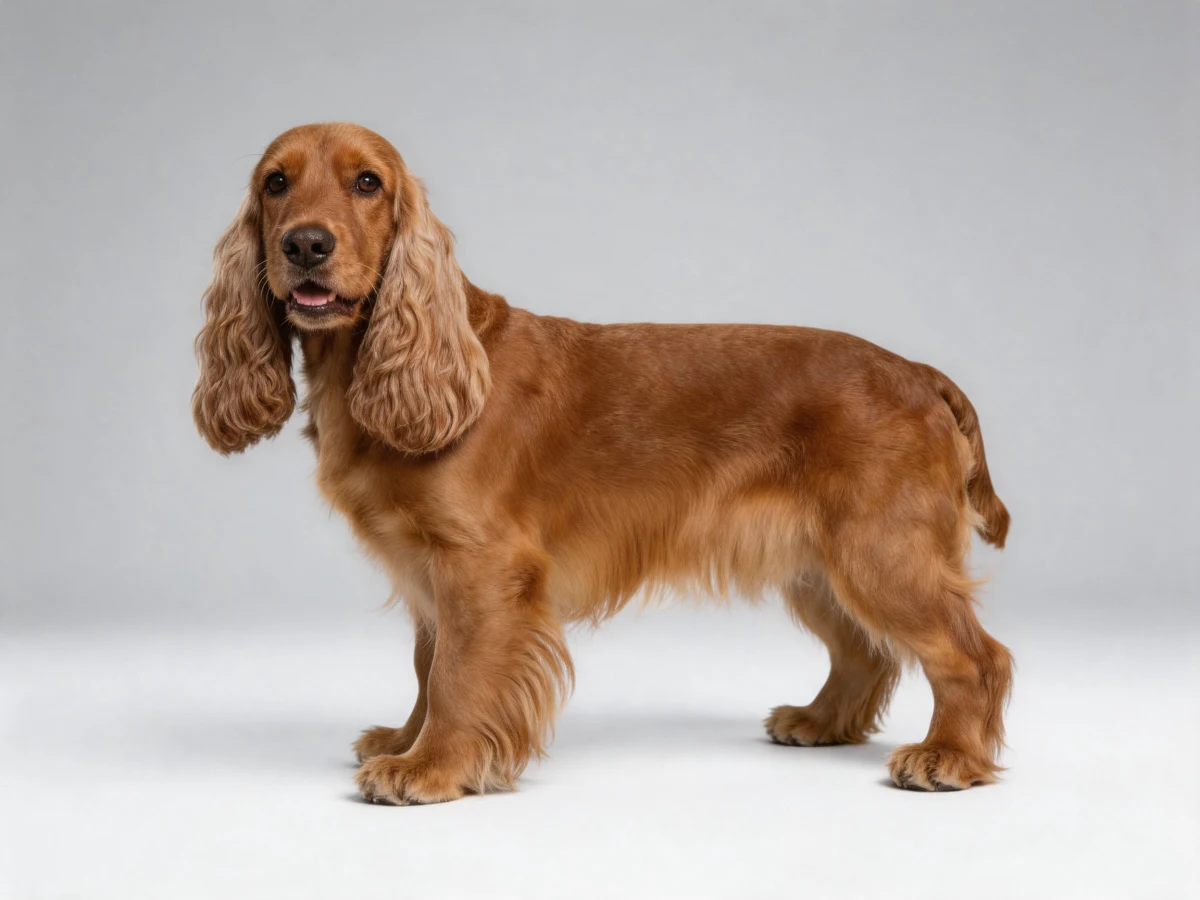
Clumber Spaniel
✨ Key Takeaways
- The Clumber Spaniel is the heaviest and lowest of the land spaniels — a massive, dignified, short-legged flushing dog bred to work dense cover slowly and methodically for aristocratic shooting parties.
- It is named for Clumber Park, the Nottinghamshire estate of the Dukes of Newcastle, where the breed was concentrated and fixed into type from the late 18th century.
- A romantic but unproven tradition holds that the Duc de Noailles sent his French spaniels to Clumber Park around the French Revolution; the English estate that fixed the breed is certain, the French kennel that may have started it is not.
- It is the calm gentleman of the spaniels — mellow, affectionate and dignified, with moderate energy, a real working nose, a stubborn streak, and a habit of carrying things in its soft mouth.
- It was a royal favourite: Prince Albert and King Edward VII kept and shot Clumbers, and it was one of the first breeds AKC-registered in 1878 (a dog named Bustler).
- Its signature genetic disease, PDP1 deficiency (Cameron et al. 2007), causes exercise intolerance and is DNA-testable; other watch-points are hip and elbow dysplasia, entropion/ectropion, a long back and obesity, with a lifespan around 10–12 years.
Quick Facts
Common Names & Variants
Modern aliases
Historical names
Modern variants & lines
⚖️ Pros & Cons
Advantages
Trade-offs
Physical Appearance
Recognized colors
Coat
Other
Ears: Drop. Tail: Straight, feathered, carried low.
🕰 History
A spaniel built like no other
Stand a Clumber Spaniel beside a working Springer and the contrast tells the whole story. Where the other land spaniels are light, busy and quick, the Clumber is the heaviest and lowest of them all \u2014 a long, massive, dignified dog on short legs, with a great domed head, a brooding deep-set eye and an unhurried, rolling gait. It was bred to do one thing supremely well: to push slowly and methodically through dense, low cover, finding and flushing game just ahead of a gun walked at a gentleman\u2019s pace. Almost everything odd about the breed \u2014 the bulk, the low build, the heavy bone, the calm \u2014 follows from that single, leisurely, aristocratic job.
Clumber Park and the Dukes of Newcastle
The breed carries its birthplace in its name. Clumber is Clumber Park, the great Nottinghamshire estate of the Dukes of Newcastle, and it was there, in the late eighteenth and nineteenth centuries, that the white spaniel was concentrated, kennelled and bred into a fixed type. The breed is closely tied to the second Duke of Newcastle and to his gamekeepers \u2014 the name William Mansell is traditionally attached to the early kennel \u2014 who managed the spaniels as part of the estate\u2019s shooting establishment. For most of its early life this was a closed, private dog, the property of a handful of titled sporting families rather than a breed available to the public, which is part of why it remained both distinctive and rare.
The Duc de Noailles and the French Revolution story
Every account of the Clumber repeats a romantic origin tale, and honesty requires flagging it as tradition rather than fact. The story holds that around the time of the French Revolution the Duc de Noailles, fearing for his kennel, sent his prized French spaniels across the Channel to the Duke of Newcastle at Clumber Park, and that these dogs are the foundation of the breed. It is an appealing story and it may carry a grain of truth, but there is no firm documentary proof, and the timeline is awkward; the heavy white spaniel was probably already taking shape on English estates. The breed\u2019s mass and low build have also been explained by traditional infusions of Basset Hound and of Alpine or Pyrenean mountain stock \u2014 again plausible, again unproven. What is certain is the English estate that fixed the type, not the French kennel that may or may not have started it.
A royal shooting dog
The Clumber spent the nineteenth century as a dog of the very top of British society, and it gathered royal patrons. Prince Albert, the consort of Queen Victoria, was a keen fancier and promoter of the breed, and his son the future King Edward VII kept and shot over Clumbers at the royal estate of Sandringham in Norfolk. That royal and aristocratic association \u2014 the breed worked in stately, formal shooting parties on the great estates \u2014 is why the Clumber is sometimes called the royal spaniel, and it shaped the dog\u2019s whole character: a calm, biddable, dignified worker suited to a slow, walked-up shoot rather than the fast, wide-ranging style of the field-trial spaniels.
Recognition, decline and a careful survival
The Clumber was among the earliest breeds to be formally organised. It was one of the first breeds registered by the American Kennel Club in 1878 \u2014 a dog named Bustler is recorded among those founding entries \u2014 and it was recognised in Britain in the Kennel Club\u2019s earliest years, with The Clumber Spaniel Club forming around the turn of the twentieth century to guard the standard. But the breed\u2019s fortunes followed those of the estates that made it. The decline of the great private shoots and the disruption of two World Wars nearly extinguished the Clumber, and it survived only through the care of a small, devoted band of breeders. It remains an uncommon breed today, low in the popularity tables, kept by people who value exactly what it is: a slow, sweet, heavy-headed spaniel with a long and titled history.
Temperament & Personality
The calm, dignified spaniel
The Clumber is the gentleman of the spaniels in the most literal sense \u2014 mellow, dignified and notably low-key for a sporting dog. Where a Springer or a Cocker fizzes with energy, the Clumber moves and lives at a slower, statelier pace, and its character matches its build: steady, affectionate, faintly aloof with strangers but devoted to its own family. It is a thoughtful, almost ponderous dog that takes its time over things, and owners describe a quiet, dependable companion rather than a livewire. This is a spaniel you can have on the sofa at the end of a walk and barely know is there.
Sweet-natured and bonded to family
At home the breed is gentle, loyal and people-oriented, forming a close bond with its household and often attaching itself most strongly to one person. It is generally good with children and tolerant of other dogs, carrying little of the nervy edge some spaniels show, and it is happiest in the thick of family life rather than left to its own devices. The flip side of that devotion is that the Clumber dislikes being left alone for long stretches and can become unhappy and withdrawn if it is isolated; it was bred to live close to people and it expects to.
Stubborn under the sweetness
For all its mild manners the Clumber has a definite independent streak and a slow, deliberate way of deciding whether your request is worth its trouble. It is not stupid \u2014 far from it \u2014 but it is unhurried and a little stubborn, and it will not be bullied or rushed into anything. Training works best when it is patient, consistent, food-motivated and free of harsh correction, because the breed is sensitive and shuts down under heavy-handedness. An owner who treats a Clumber like a fast, eager-to-please retriever will be frustrated; one who works with its measured temperament gets a willing, reliable dog.
Moderate energy, real working drive
It is easy to read the Clumber\u2019s calm as laziness, and that is a mistake. Beneath the dignity is a genuine gundog with real stamina, a superb nose and a strong drive to find and carry game; a working Clumber will push tirelessly through bramble and reed all day. As a companion it has only moderate exercise needs by sporting-breed standards \u2014 good daily walks and some chance to use its nose suffice \u2014 but it is not a dog to be left idle, and a bored Clumber will find mischief, usually involving its mouth. Mental work, scent games and a job to do keep it content.
A mouthy, food-loving, occasionally messy housemate
Three habits define daily life with the breed and an owner should be ready for all of them. The Clumber is intensely food-motivated and prone to obesity, which makes it easy to train but easy to overfeed. It is a carrier by instinct and likes to greet you with something in its mouth \u2014 a shoe, a toy, a cushion \u2014 a charming trait that wants channelling rather than scolding. And the loose lips and visible haw mean it drools and can be a messy drinker, while the heavy coat tracks in mud and water. None of this is a fault; it is simply the price of a heavy, soft-mouthed, soft-faced estate spaniel.
Who the breed suits
The Clumber Spaniel suits an owner who wants a calm, affectionate, dignified companion with moderate energy and is charmed rather than annoyed by drool, shedding and a stubborn streak. It fits a home that can give it daily walks, scent work and plenty of company, and it does well with patient, reward-based handling and a watchful eye on its waistline. It is a poor match for someone wanting a quick, biddable, ultra-athletic spaniel, for a fastidious household, or for anyone who will leave it alone all day \u2014 but for the right person it is one of the sweetest and most distinctive dogs in the gundog group.
🏡 Living With a Clumber Spaniel
The mellow spaniel — a low-key dog with an off switch
The single thing that separates the Clumber Spaniel from the rest of the spaniel family is temperament: where a Cocker or a Springer arrives in the room at a sprint, the Clumber walks. This is a calm, gentle, rather dignified gundog that settles into the household as a quiet, devoted companion and is content to be a low-key housemate between outings. A Clumber is deeply affectionate and loyal with its own family, often forming a particularly strong bond with one person, and it can be aloof or reserved with strangers rather than indiscriminately friendly — a spaniel that greets the world with a thoughtful pause instead of a bounce. That steadiness makes it an easier dog to live with indoors than the higher-octane spaniels, but it is still a working gundog, not an ornament.
Moderate exercise, but the nose and the retrieve still need a job
Do not let the laid-back reputation fool you into under-exercising the breed. A Clumber was built to push through dense cover and flush and retrieve game all day on a long, low, heavy-boned frame, and an adult needs genuine moderate daily exercise — a good walk plus time to use its nose and mouth. The breed thrives on sniffing work, scent games, and gentle retrieving far more than on repetitive lead-walking, and a Clumber given those outlets is the calm dog of its reputation. A bored, under-stimulated Clumber, by contrast, drifts toward weight gain and stubborn, self-directed behaviour. Keep the activity moderate-intensity and joint-friendly rather than frantic: this is a marcher and a sniffer, not a sprinter.
Kids, other pets, climate, and the slobber-and-shed reality
The Clumber's gentle, patient nature makes it a fine family dog that generally does well with children and with other dogs, suiting a calm home better than a chaotic one. Two husbandry facts must be stated plainly before anyone commits, because they surprise owners who expected a tidy dog. First, the Clumber drools and slobbers — those deep, pendulous flews on a heavy head throw slobber after drinking and eating, so this is not a dog for the house-proud. Second, despite the calm manner it sheds steadily, heavier than many spaniels, depositing white hair on dark clothes and furniture year-round. Combined with the deep coat's love of heat retention, the breed prefers temperate conditions and needs care in hot, humid weather: shade, water, and exercise kept to the cool ends of the day.
🎓 Training & Exercise
A thoughtful, sensitive worker — not an instant-obedience dog
The Clumber Spaniel is intelligent and very willing to please the person it loves, but it learns in its own deliberate way and will not be rushed. This is a sensitive, soft breed that responds to a quiet, patient, encouraging handler and shuts down or digs in under harsh corrections, raised voices, or heavy-handed tools. Reward-based training is not just the kind option here — it is the only approach that works, because a Clumber that feels nagged or bullied simply becomes more immovable. Keep sessions short, upbeat, and consistent, finish on a win, and accept that a Clumber reaches the answer at a considered pace rather than a Border Collie's. The reward is a dog that, once it understands a thing, retains it reliably.
Food motivation is the lever — and the trap
The Clumber is notably food-motivated, and that is the trainer's best friend: high-value treats turn a slow learner into a cooperative one, and clicker or marker work suits the breed's deliberate style well. The catch is the breed's stubborn, independent streak — a Clumber that decides a request is not worth the bother will plant itself with quiet conviction, and the more you escalate the more it resists. The handler's job is to make the right choice the easy and rewarding one rather than to win a contest of wills. Be disciplined with the food, too: because the breed both loves to eat and gains weight readily on its heavy frame, count training treats inside the day's calorie budget and use part of the measured meal ration for rewards.
The commands that matter and early socialisation
Channel the gundog wiring rather than fighting it: a Clumber is happiest with a job for its nose and mouth, so reward-based retrieve work, a clean "hold" and "give", and structured scent games give the breed a constructive outlet and a reason to engage. A reliable recall and a solid "leave it" are the highest-value safety skills, since a Clumber following an interesting scent can switch off its ears. Because the breed tends toward reserve with strangers, early and positive socialisation — calm exposure to new people, dogs, surfaces, and places through puppyhood — is what produces a confident, settled adult rather than a wary one. Start a kind puppy class early and keep handling gentle throughout.
✂️ Grooming & Coat Care
A dense, straight, silky coat that asks for steady upkeep
The Clumber wears a dense, straight, flat coat of medium length with a silky texture, abundant feathering on the legs, chest, belly, and ears, and a soft outer texture that is weather-resistant in the field. It is not a wash-and-go coat. Plan on a thorough brush-out two or three times a week with a slicker brush and a comb worked all the way down to the skin, which removes the loose hair this steady shedder is always dropping and keeps the feathering from knitting into mats. A bath every six to eight weeks, or when the dog is genuinely dirty from fieldwork, is usually enough; many owners lightly tidy the feet, hocks, and ear feathering to keep the dog neat without altering the natural coat.
The matting, slobber, and skin-fold hotspots
The feathering is where neglect shows first: behind and under the long ears, in the armpits, on the backs of the thighs, and along the belly and tail, where loose silky hair tangles into mats that tighten to the skin and become sore if left. Work those areas at every grooming session. The Clumber also carries loose skin and folds around that heavy, deep-flewed head, and because the breed slobbers, the flews and any facial folds need wiping clean to stay dry and free of irritation. Keep the trousers and feathered feet checked for grass seeds, burrs, and mud after country walks, since the low-slung frame collects everything the field has to offer.
Ears, eyes, nails, and teeth — the routine checks
Long, low-hung, heavily feathered ears trap warmth and moisture, so a weekly look and a wipe of the visible ear with a vet-recommended cleaner — and careful drying after swimming or bathing — is a core habit that heads off infections. The breed's deep-set eyes with loose lower lids are a known weak point and benefit from gentle regular wiping to clear discharge and to let an owner notice early redness or rubbing. Trim nails every two to three weeks; nails that click on the floor are already long and change how a heavy, long-backed dog carries itself. Brush the teeth several times a week from puppyhood, and trim the hair between the foot pads for traction on smooth floors.
🍖 Diet & Nutrition
Weight is the headline issue on a long, heavy frame
For the Clumber Spaniel, the central nutritional fact is weight control. This is a long-backed, heavy-boned dog that is both strongly food-motivated and naturally laid-back about exercise, a combination that drifts toward overweight unless an owner is deliberate. Excess weight on a Clumber is not cosmetic: the extra load presses directly onto hips and elbows already predisposed to dysplasia and onto a long spine that the breed's build makes vulnerable. Feed measured meals against the dog's ideal lean weight rather than free-feeding or topping up the bowl, keep all treats — including training rewards — inside a daily calorie budget, and learn to body-condition-score by feeling for ribs and a waist rather than trusting the eye. Keeping a Clumber lean for life is the most effective single thing an owner can do for its joints and its back.
Steady, controlled puppy growth
Clumber puppies grow into a substantial, heavy-boned adult — males around 70–85 lb, females around 55–70 lb — and the goal through puppyhood is slow, even, controlled growth rather than a fast-fattened pup. Raising the puppy lean on an appropriate growth diet, fed to a steady curve rather than as much as it will eat, supports sound joint and skeletal development on a frame that will carry real weight. Split feeding into measured meals, make any diet change gradually over about a week to avoid digestive upset, and weigh treats against the day's ration so a food-loving puppy does not overshoot.
Feeding routine and the PDP1 caveat
Most adult Clumbers do well on two measured meals a day, with portion size set by ideal adult weight and activity and adjusted by body condition over time rather than by a bag's generic chart. Use slow-feeder bowls if the dog bolts its food, and resist the pleading eyes of a breed that has perfected the art of begging. One breed-specific note belongs in any feeding conversation: the Clumber can carry PDP1 (pyruvate dehydrogenase phosphatase 1) deficiency, a metabolic condition affecting energy metabolism and exercise tolerance for which a DNA test exists — a reason to confirm a puppy's parents were tested and to discuss any unusual exercise intolerance with a veterinarian rather than guessing at it through diet.
🐶 Buying & Adopting a Clumber Spaniel
Start at the parent club, not a classified ad
The Clumber Spaniel Club of America (CSCA) is the AKC parent club and the right starting point for a buyer in the United States. The Clumber is an uncommon breed — it ranks low in AKC registrations and good litters are few — so expect a real search, a waiting list, and a deposit rather than a puppy available this weekend. A breeder worth buying from will be a club member in good standing, will register litters with the AKC, will health-test both parents, will offer a written contract and health guarantee, and will talk openly about the breed's known issues rather than insisting their lines are simply "healthy." Because the breed is small in numbers, a good breeder will also ask you plenty of questions; treat that scrutiny as a sign you are in the right place.
The health screening to ask a breeder for
The CHIC health-screening profile for the Clumber Spaniel covers four areas, and a responsible breeder can show results on both parents for all of them: an OFA hip evaluation, an OFA elbow evaluation, an eye examination by a boarded veterinary ophthalmologist (OFA/ACVO, screening for entropion, ectropion, and distichiasis on this loose-eyed breed), and a PDP1 (pyruvate dehydrogenase phosphatase 1) deficiency DNA test — the same metabolic exercise-intolerance disorder also seen in the related Sussex Spaniel. Some breeders add patella and shoulder evaluations where advised. These are facts to verify on paper, not medical advice: ask to see the OFA records and the DNA result rather than taking a verbal assurance. A breeder who produces the documents and discusses hips, eyes, intervertebral-disc and long-back awareness, and weight management frankly is the one to trust; "all our dogs are healthy, no tests needed" is the answer to walk away from.
Rescue and rehoming
Because the Clumber is rare, breed rescue is small and works through the CSCA and a network of dedicated volunteers rather than through large regional shelters. Dogs do come up — adolescents and adults surrendered when owners underestimated the slobber, the shedding, the grooming, or the need for steady exercise — and for an adopter willing to take an adult with a known temperament rather than wait for a scarce puppy, breed rescue is an excellent and ethical route. The club's rescue contacts are the place to register interest, and patience is again the rule given how few Clumbers there are.
Price, waiting lists, and the red flags
A well-bred Clumber Spaniel puppy in the United States runs roughly USD 1,500–3,000 (2024) from a health-testing, parent-club breeder, and because the breed is uncommon a waiting list of many months is normal rather than a warning sign. The patterns to walk away from are the familiar ones: puppies offered with immediate availability and no waiting list, no OFA or PDP1 paperwork, prices that seem suspiciously low for so rare a breed, or a seller who cannot connect you to the CSCA. A fair price from a breeder who health-tests and talks honestly about the breed's flaws — the slobber, the shedding, the weight tendency, the eye and joint record — even after a long wait, is far cheaper than the lifetime cost of a poorly bred dog.
📜 Breed Name Etymology — iDogNames original research
A breed named after a park
The Clumber Spaniel is one of the small group of breeds whose name is purely a place, with no descriptive element at all. Clumber is Clumber Park, the Nottinghamshire seat of the Dukes of Newcastle, and the spaniel simply took the name of the estate where it was concentrated and fixed into type. There is no \u201cClumber\u201d quality the word describes \u2014 it is not a colour, a size or a job \u2014 only a four-thousand-acre park in the Dukeries of north Nottinghamshire. The breed name is therefore a piece of English aristocratic geography pinned to a dog.
Where the place name comes from
Clumber Park itself takes its name from the River Clumber (or Clumber Brook), the small watercourse that runs through it and feeds the park\u2019s great lake. The element is an old English river name of obscure meaning, of the kind that fossilise across the English landscape long before they attach themselves to estates or to dogs. So the chain runs river to park to dukedom to breed: the spaniel is, at three removes, named after a Nottinghamshire stream.
Spaniel \u2014 the Spanish dog
The second half of the name is the ancient and well-travelled word spaniel, which traces back through Old French espaigneul to a Latin sense of \u201cSpanish (dog)\u201d \u2014 the type was long believed to have reached the rest of Europe from Spain. By the time the Clumber was bred, spaniel had become the umbrella term for the whole family of long-coated, drop-eared land and water dogs used to find and flush game, from the tiny toy spaniels to the heavy Clumber. The Clumber is the most massive and least typical-looking of the group, but the name correctly files it among the flushing spaniels by job and ancestry.
The royal spaniel and the white spaniel
Two informal by-names attach to the breed and both record real history. The royal spaniel reflects the patronage of Prince Albert and King Edward VII and the breed\u2019s long association with the great shooting estates; it is a nickname earned at Sandringham, not a marketing flourish. The white spaniel simply describes the breed\u2019s most obvious feature \u2014 a predominantly white dog among a family of mostly coloured spaniels \u2014 and is the kind of plain working description that estate keepers would have used long before the breed had a fixed name.
The name in other languages
On the Continent the breed keeps its English place name untranslated. The FCI carries it as the Clumber Spaniel (French \u00c9pagneul Clumber), Standard N\u00b0 109 in Group 8, under British patronage \u2014 the French simply substitutes its own word for spaniel, \u00e9pagneul, and leaves the proper noun alone. Because the name is a specific English estate, there is no native-language equivalent the way there is for a descriptively named breed; \u201cClumber\u201d travels intact, carrying its little piece of Nottinghamshire wherever the breed goes.
Name forms at a glance
| Name | Role | Origin | Literal meaning | First recorded |
|---|---|---|---|---|
| Clumber Spaniel | primary | English (place name + Old French loan) | the spaniel of Clumber Park | 1878 |
| Clumber | origin country native | English (place name) | the Nottinghamshire estate; the river that runs through it | 1780 |
| Spaniel | historical | Old French (from Latin) | Spanish (dog) | 1330 |
| the royal spaniel | alias | English | the spaniel of kings | 1900 |
| \u00c9pagneul Clumber | alias | French | the Clumber spaniel | 1954 |
🏛 Naming Traditions — iDogNames original research
Name the dog from its own estate world
Few breeds give an owner such a specific, well-documented set of naming wells as the Clumber Spaniel, and they beat any generic dog-name list. Five of them are genuinely rooted in this breed and almost no other: Clumber Park and the Nottinghamshire estate world; the Dukes of Newcastle and the royal patrons who kept the breed; the dignified, gentlemanly character; the white-and-lemon coat; and the slow, methodical shooting-field work the breed was built for. Each layer names the dog after something real about it, which is exactly what a good Clumber name should do.
Clumber Park and the Dukeries
The breed\u2019s birthplace is a naming gift. Clumber itself makes a fine, knowing name; so do Newcastle and Nottingham for the dukedom and county, Sherwood for the nearby forest, and Dukeries, the local name for the cluster of ducal estates of which Clumber was one. The park\u2019s own features give Lincoln (after the Lincoln Terrace and the great lake), Cedar and Lime (Clumber\u2019s famous double lime avenue), and Brook for the Clumber stream the park is named for. These are names with a genuine sense of place.
The dukes and the royal patrons
No breed hands you more legitimately grand heritage names. Albert honours Prince Albert, the breed\u2019s great Victorian champion; Edward or Bertie honours King Edward VII, who shot Clumbers at Sandringham; Sandringham itself makes a stately name. Duke, Duchess, Earl, Noble and Regent all play on the breed\u2019s aristocratic standing, and Bustler carries special weight \u2014 it is the name of a Clumber among the first dogs ever registered with the AKC in 1878. Noailles tips its hat, with a wink, to the breed\u2019s romantic French origin story.
The white-and-lemon coat
The breed\u2019s plain white body with lemon or orange markings is a soft, pretty naming well. Snowy, Ivory, Pearl, Blanco and Frost all suit the white ground; Lemon, Marmalade, Ginger, Honey and Apricot name the markings; and Freckle or Speckle nod to the freckled muzzle. Naming a Clumber for its own colours roots the name in the single feature that most sets this white spaniel apart from its coloured cousins.
The shooting field
The Clumber was made for the slow, walked-up estate shoot, and that world is full of good names. The work gives Flush, Quest, Covert, Beater and Ranger; the country and the quarry give Pheasant, Woodcock, Bramble, Bracken, Reed and Heather; and the kit gives Tweed, Gauge and Purdey after the famous London gunmaker. For a breed whose whole purpose was to push game from cover for a gentleman\u2019s gun, these field names sit naturally on the dog.
Names for a dignified gentleman
Finally, the breed\u2019s calm, mellow, faintly grand character invites names that match its dignity. Stately and old-English given names suit it \u2014 Winston, Hugo, Walter, Beatrice, Eleanor, Mabel \u2014 as do quiet words for its temperament such as Sage, Sterling and Major. A breed this dignified and this even-tempered carries a slightly old-fashioned, well-bred English name beautifully, and the deepest, most personal choices remain the park, the royal patrons, and Bustler \u2014 names that say, without a word of explanation, that this is a Clumber Spaniel.
🐾 Themed Names for Your Clumber Spaniel — iDogNames original research
Clumber Park and the Dukeries
Names drawn straight from the breed\u2019s Nottinghamshire birthplace and the estate world that made it.
- Clumber \u2014 the park the breed is named for; the truest name of all
- Newcastle \u2014 after the Dukes of Newcastle who fixed the breed
- Sherwood \u2014 the famous forest near Clumber Park
- Nottingham \u2014 the county and city of the breed\u2019s home
- Dukeries \u2014 the cluster of ducal estates that included Clumber
- Lincoln \u2014 after Clumber Park\u2019s grand terrace and lake country
- Cedar \u2014 for the great trees of the park
- Lime \u2014 after Clumber\u2019s celebrated double lime avenue
- Brook \u2014 the Clumber stream the park is named for
- Stately \u2014 for the great-house world the breed comes from
The dukes and the royal patrons
Real heritage names from the titled and royal owners who kept the breed.
- Albert \u2014 Prince Albert, the breed\u2019s great Victorian champion
- Edward \u2014 King Edward VII, who shot Clumbers at Sandringham
- Bertie \u2014 Edward VII\u2019s familiar name; warm and royal
- Bustler \u2014 a Clumber among the first dogs ever AKC-registered, 1878
- Sandringham \u2014 the royal estate where the breed was shot over
- Duke \u2014 for the Dukes of Newcastle; plain and apt
- Duchess \u2014 graceful and dignified for a bitch
- Regent \u2014 a stately, regal name
- Noble \u2014 names the breed\u2019s aristocratic standing outright
- Noailles \u2014 a wink to the romantic French-origin story
The white-and-lemon coat
Names from the breed\u2019s plain white body and lemon or orange markings.
- Snowy \u2014 for the predominantly white coat
- Ivory \u2014 a soft name for the creamy-white ground
- Pearl \u2014 elegant and pale, for a white dog
- Lemon \u2014 the breed\u2019s classic marking colour
- Marmalade \u2014 cheerful and exact for an orange-marked dog
- Honey \u2014 warm and soft for lemon markings
- Apricot \u2014 a gentle name for pale orange flecking
- Ginger \u2014 plain and warm for an orange-marked Clumber
- Freckle \u2014 a fond name for the freckled muzzle
- Frost \u2014 crisp and white
The shooting field
Names from the slow, walked-up estate shoot the breed was built for.
- Flush \u2014 the moment a spaniel pushes game from cover
- Quest \u2014 the spaniel\u2019s busy, questing search of the ground
- Covert \u2014 the dense cover the Clumber works through
- Beater \u2014 the role the breed plays on a driven shoot
- Bramble \u2014 the thick cover the breed pushes through
- Bracken \u2014 the field fern; rugged and apt
- Reed \u2014 the wet cover a flushing spaniel works
- Purdey \u2014 the famous London gunmaker; sleek and sporting
- Tweed \u2014 the cloth of the shooting estate; very British
- Pheasant \u2014 the classic quarry of the walked-up shoot
Names for a dignified gentleman
Stately, old-English names that suit the breed\u2019s calm, mellow, well-bred character.
- Winston \u2014 weighty and dignified for a grand dog
- Hugo \u2014 old-English and gentlemanly
- Walter \u2014 mannerly and a touch old-fashioned
- Major \u2014 dignified, with a military-estate ring
- Sterling \u2014 for the breed\u2019s sterling, dependable nature
- Sage \u2014 for its calm, thoughtful manner
- Beatrice \u2014 a graceful Victorian name for a bitch
- Eleanor \u2014 stately and old-English
- Mabel \u2014 a fond, period-true name
- Gentry \u2014 names the gentlemanly reputation outright
📋 Breed Standard at a Glance
General appearance
The AKC standard describes the Clumber Spaniel as the heaviest and most massive of the spaniels — a long, low, substantial, heavy-boned dog with a thoughtful, dignified expression. Developed in England as an aristocratic flushing and retrieving gundog associated with Clumber Park, the Duke of Newcastle's Nottinghamshire estate, it was built to work methodically through dense cover rather than to dash, and the standard prizes that powerful, deliberate, business-like build over flash. The overall impression is of strength and substance carried with quiet dignity.
Size, coat, and colour
Males stand about 18–20 inches at the withers and weigh roughly 70–85 lb; females stand about 17–19 inches and weigh about 55–70 lb, making this a medium-height but notably heavy breed. The coat is dense, straight, flat, and silky, of medium length and weather-resistant, with abundant feathering on the legs, chest, belly, and ears. Colour is predominantly white, marked with lemon or orange, with the markings typically found on the head and as freckling on the muzzle and legs — a clean white ground with restrained lemon or orange being the classic look.
Head, movement, and temperament
The head is large, massive, and broad, with a deep stop, a heavy brow, and pronounced flews, and the deep-set eyes show a little haw, giving the breed its characteristic mournful, dignified expression. Movement is free and easy, rolling and powerful rather than flashy, with good reach and drive that lets a heavy dog cover ground efficiently all day. Temperament is part of the standard: the Clumber is described as gentle, loyal, and affectionate, dignified and somewhat aloof with strangers, neither shy nor aggressive — a steady, sensible working companion.
🏆 Recognition
Recognized by the American Kennel Club in 1878 as a Sporting breed. FCI standard No. 109 (Section 1.2 — Flushing Dogs), recognized in 1954.
Other registries
Breed clubs
❓ Frequently Asked Questions
Are Clumber Spaniels good family dogs?
Yes. The Clumber Spaniel is a gentle, calm, affectionate dog that generally does well with children and other pets and makes a devoted, low-key family companion — noticeably more mellow indoors than a Cocker or Springer. It tends to bond closely with its family and can be reserved with strangers. It suits a calm home, and owners should be ready for its slobber and steady shedding.
Do Clumber Spaniels shed a lot?
Yes, more than many spaniels. Despite the calm reputation the dense, silky coat sheds steadily year-round, leaving white hair on clothes and furniture, so plan to brush two or three times a week and vacuum often. The breed also drools and slobbers from its deep flews, which is a separate tidiness factor to weigh before committing.
How much exercise does a Clumber Spaniel need?
Moderate but real. A Clumber is laid-back compared with other spaniels, yet it is still a working gundog that needs a good daily walk plus outlets for its nose and retrieve — sniffing work, scent games, and gentle fetch suit it better than frantic running. Keep activity joint-friendly on its long, heavy frame, and exercise in the cooler parts of the day in hot weather.
How long do Clumber Spaniels live?
Typically 10–12 years. Keeping the dog lean is one of the most effective ways an owner can protect its joints and long back over that lifespan, since the breed gains weight easily on a heavy frame.
Are Clumber Spaniels easy to train?
They are intelligent and willing but deliberate and a touch stubborn, so they are not an instant-obedience breed. They are very food-motivated, which makes reward-based, patient, short training sessions effective; harsh corrections backfire with this sensitive dog. Expect a considered learner that retains commands well once it understands them.
Are Clumber Spaniels hypoallergenic?
No. The Clumber sheds steadily and also drools, so it is not considered hypoallergenic. Anyone with a dog allergy should spend extended time around the breed before committing.
How much does a Clumber Spaniel puppy cost?
A well-bred, health-tested puppy from a parent-club breeder typically runs USD 1,500–3,000 (2024). Because the breed is uncommon, expect a waiting list of many months. Be wary of puppies offered with immediate availability and no OFA hip, elbow, eye, or PDP1 DNA-test paperwork.
📚 Sources & Further Reading
Every load-bearing factual claim on this page is anchored to one of the sources below. iDogNames does not synthesize from secondary aggregators.
- akc breed page Clumber Spaniel — AKC Breed Profile — American Kennel Club (2024)
- fci standard pdf FCI Standard No. 109 — Clumber Spaniel — Fédération Cynologique Internationale (1954)
- kc uk standard pdf Spaniel (Clumber) — Breed Standard — The Kennel Club (UK)
- breed club official Clumber Spaniel Club of America — Clumber 101 — Clumber Spaniel Club of America
- breed club official The Clumber Spaniel Club (UK) — History of the Breed — The Clumber Spaniel Club
- academic paper Identification of a canine model of pyruvate dehydrogenase phosphatase 1 deficiency — Cameron JM, Maj MC, Levandovskiy V, MacKay N, Shelton GD, Robinson BH — Mol Genet Metab 90(1):15–23 (PMID 17095275) (2007)
- academic paper Hip dysplasia in a clumber spaniel — Stark DM — Veterinary Record 112(9):207 (PMID 6836910) (1983)
- health registry PDP1 DNA Test — Pyruvate Dehydrogenase Phosphatase 1 Deficiency — Orthopedic Foundation for Animals (OFA)
- wikipedia Clumber Spaniel — Wikipedia — Wikipedia