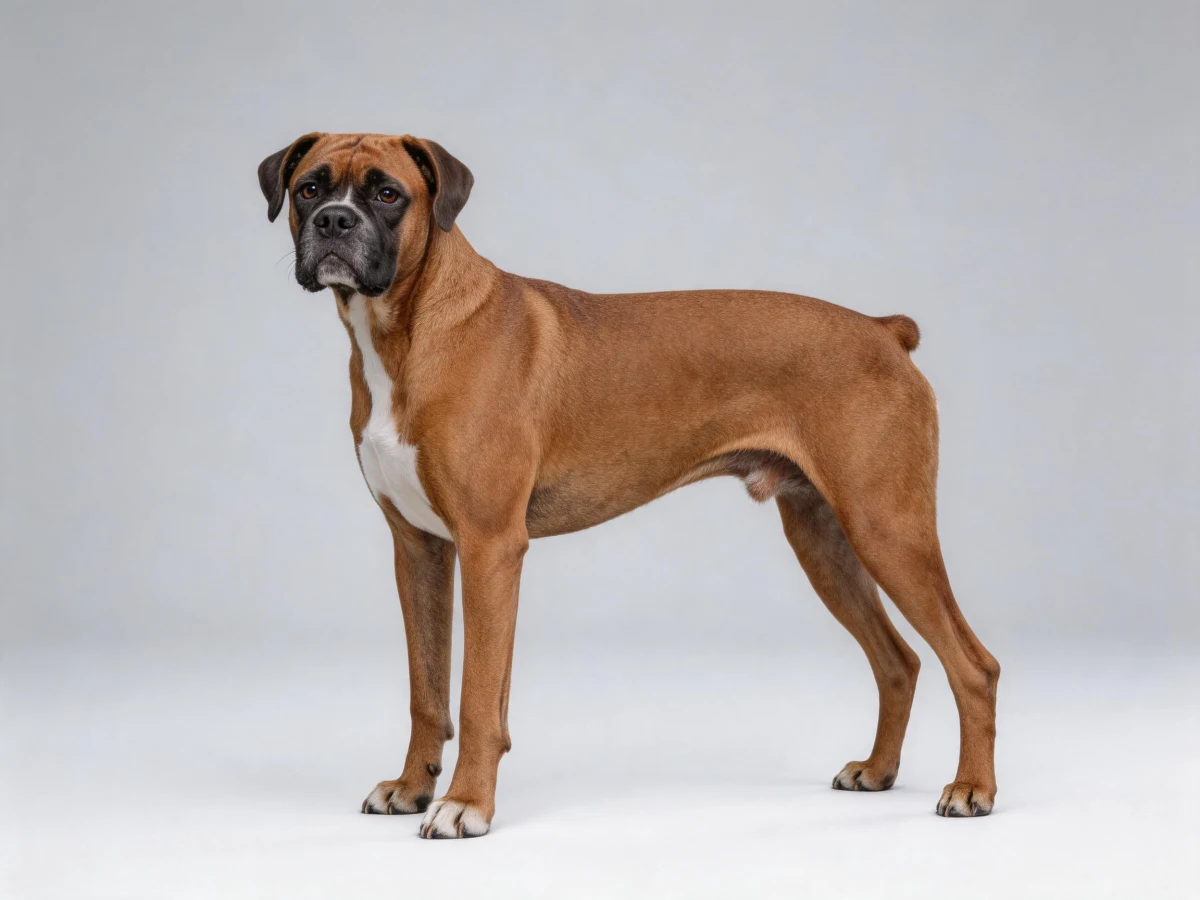
Alaunt
✨ Key Takeaways
- The Alaunt was a medieval dog type, not a modern breed with one fixed standard.
- Sources describe several forms, often blending sighthound speed, mastiff power and catch-dog utility.
- Its legacy appears in discussions of dogues, mastiffs, bulldogs and hunting dogs, but direct pedigrees are often interpretive.
- No modern Alaunt puppy can be verified as the original historical population.
- Health, lifespan, price and family-dog claims would be invented for the extinct type.
- Names should draw on medieval work, Alan tradition, guard duty, boar hunting and source-aware legacy.
Quick Facts
Common Names & Variants
Modern aliases
Historical names
Modern variants & lines
⚖️ Pros & Cons
Advantages
Trade-offs
Physical Appearance
Recognized colors
Coat
Other
Ears: Drop or cropped in s. Tail: Long working tail.
🕰 History
A medieval type, not a closed breed
The Alaunt belongs to the period before kennel-club breeds. It was a broad medieval working-dog type associated in tradition with the Alans and later with European hunting, guarding, war and butcher-dog work. Old descriptions do not describe one tidy population with a single standard.
Some sources divide Alaunts into forms such as Gentil, Veantre and Boucherie, which hints at a spectrum from faster hunting dogs to heavier catch dogs. That variety is the point: the Alaunt is best understood as a historical type family.
Speed, power and grip in the old hunting world
Medieval hunts needed dogs that could find, course, hold or pressure large game depending on the job. Alaunt descriptions often sit between sighthounds and mastiffs, suggesting a dog valued for force and athleticism. It should be discussed plainly, without turning dangerous historical work into romance.
The type later appears in ancestry discussions for dogues, mastiffs, bulldogs and other powerful working dogs. Those links are plausible historical influence, not clean modern pedigree math.
Disappearance through absorption
The Alaunt faded because its roles were absorbed into regional mastiffs, boarhounds, dogues, bulldogs and other emerging types. The name remained in texts while the living populations were renamed, crossed or replaced.
The Alaunt as a family of uses
The Alaunt is strongest when written as a work-shaped family rather than a single silhouette. Medieval writers cared about whether a dog could course, hold, guard or serve a butcher-yard role. Those categories could overlap, but they were not modern breed varieties with fixed registration boundaries.
That distinction protects the page from a common SEO trap: treating one dramatic extinct name as the secret ancestor of every powerful dog. The Alaunt belongs in the conversation, but influence is not the same thing as proof.
Why it links to several modern groups
The page can responsibly link toward mastiffs, dogues, bulldog-type dogs and sighthounds because the historical descriptions sit at the intersection of speed and force. Each link should be phrased as context. A Dogue de Bordeaux, Mastiff, Boxer or Bulldog is a living breed with its own records, not a modern Alaunt.
Temperament & Personality
Inferred from hard work
Alaunts would have been selected for nerve, drive, physical confidence and handler usefulness. That is not the same as a modern family temperament profile. The old work asked for courage and control under pressure.
Several forms mean several temperaments
A lighter hunting Alaunt and a heavier butcher-dog Alaunt would not have behaved identically. The page should not flatten them into one personality.
Modern claims need skepticism
A modern dog advertised as an Alaunt may be a recreation, cross or marketing label. Its temperament must be judged as that living dog, not as the medieval type.
Courage needs context
Words such as brave, hard or powerful can become empty hype if they are detached from the work. For the Alaunt, courage meant usefulness in dangerous medieval tasks, many of which modern readers should understand historically rather than admire uncritically.
Different forms, different behaviour
A lighter Alaunt used in the chase would likely have needed speed and visual focus. A heavier butcher-dog form would have needed close control and physical force. The page should keep that range visible.
🏡 Living With a Alaunt
No original Alaunt to own
The medieval Alaunt is extinct as a documented continuous breed. A household cannot buy the original dog. Readers who like the story should study living mastiff, dogue, bulldog or sighthound breeds on their current merits.
Power-dog realities
The Alaunt legacy points toward strength, prey interest, guarding potential and serious handling needs. In living relatives, those traits require secure management, early socialization and thoughtful breed choice.
Do not let the name do the evaluating
A romantic historical label does not make a dog suitable. Current health, temperament, structure and breeder ethics matter more than medieval branding.
The recreation problem
Some modern programs use old names to signal a desired look. That can be interesting, but it is not the same as uninterrupted breed survival. A buyer should evaluate present-day dogs by transparent records and welfare, not by medieval vocabulary.
What readers can compare instead
Readers who like the Alaunt story may compare living mastiffs, dogues, Boxers, Bulldogs, sighthounds and working catch-dog descendants, then choose by current temperament and health.
🎓 Training & Exercise
Control mattered historically
Dogs used for hunting large game or catch work had to be physically capable and controllable. The exact methods are lost, but the need for reliable handling is obvious from the work.
Modern parallel
For living powerful breeds, foundation work should include leash manners, recall, neutrality around animals, release cues, cooperative handling and calm impulse control.
Avoid hardness myths
The Alaunt story should not be used to justify harsh training. A strong dog still learns best from clear structure, consistency and welfare-focused handling.
Control as the ethical center
A powerful historical dog type only makes sense when paired with control. For modern relatives, that means calm leash skills, reliable release, neutral social exposure and handlers who prevent rehearsed over-arousal.
Do not train for the old job
The page should not encourage readers to recreate medieval catch or conflict work. Its training value is historical explanation and modern safety context.
✂️ Grooming & Coat Care
Functional coat only
Most Alaunt descriptions suggest a short practical coat, but no living show standard describes texture, trimming or colour faults.
Working care
A large hunting or guard dog would have needed feet, skin and mouth checked after work. This is functional context rather than a modern grooming schedule.
Name from outline, not trim
Names can reflect power, speed, medieval work and old spelling more honestly than invented coat details.
Coat is secondary to function
The Alaunt was remembered for work, not grooming. A short coat appears in many descriptions, but the page should avoid colour charts and trim language that imply an active standard.
Working care as historical texture
Feet, shoulders, mouth and skin would have mattered in hard work. Those details add practical texture without pretending to be a modern care guide.
🍖 Diet & Nutrition
Fed by medieval economy
Alaunts would have been fed according to household, estate, kennel or butcher-yard practice. That world did not use modern calorie charts.
No puppy feeding advice
Because the historical population is gone, there is no ethical Alaunt puppy diet or growth plan to publish.
Living power breeds differ
Current large breeds need diet plans based on growth rate, body condition, veterinary advice and the specific breed, not the Alaunt name.
Large working dogs and food economy
Alaunts would have eaten according to the resources of noble households, kennels, hunts, butchers or farms. Food quality and consistency would have varied widely.
No performance formula
A modern raw, high-protein or supplement recommendation would be pure projection. Living large breeds need current veterinary planning instead.
🐶 Buying & Adopting a Alaunt
Do not shop for the original
A true medieval Alaunt cannot be bought. Programs using the name today should explain exactly what breeds they use and what they mean by Alaunt.
Ask for present-day facts
For any living dog marketed with an Alaunt story, ask for health testing, temperament goals, structure, pedigree transparency and owner support.
Choose by the dog in front of you
History can be fascinating, but suitability comes from the living dog, not a vanished label.
A recreation checklist
If a modern breeder uses Alaunt, ask whether it is a registered modern breed, a cross, a reconstruction project or a descriptive type. Ask for health testing, temperament goals, pedigrees and a written explanation of the historical claim.
A name is not preservation
Preservation requires records and a population, not just an old word attached to a powerful dog.
📜 Breed Name Etymology — iDogNames original research
How the name works
Alaunt names should feel medieval, forceful and evidence-aware: old spellings, Alan tradition, boar-hunting vocabulary, guard duty, dogue legacy and the split between speed and strength.
What the name should preserve
For a historical or extinct breed, a good name points to documented place, work, appearance, language or legacy. It should not imply that a modern puppy is literally the vanished population revived.
Name forms at a glance
| Name | Role | Origin | Literal meaning | First recorded |
|---|---|---|---|---|
| Alaunt | primary | Old French / Middle English | dog associated with the Alans or Alan-type hound | — |
| Alant | historical | Old French | older spelling of Alaunt | — |
| Alan Dog | alias | English | dog linked by tradition to the Alans | — |
| Alaunt Gentil | historical | Old French | lighter or noble hunting form in old classifications | — |
| Alaunt Boucherie | historical | Old French | butcher or catch-dog form in old classifications | — |
🏛 Naming Traditions — iDogNames original research
Naming tradition
Alaunt names should feel medieval, forceful and evidence-aware: old spellings, Alan tradition, boar-hunting vocabulary, guard duty, dogue legacy and the split between speed and strength.
🐾 Themed Names for Your Alaunt — iDogNames original research
Medieval names
- Alant - old spelling with direct evidence value
- Bayeux - Norman and medieval atmosphere
- Manor - estate and hunt setting
- Gable - old hall and inn-sign feel
- Prior - period title
- Ledger - historical records
- Folio - bookish medieval record
- Marshal - controlled power
Alan tradition names
- Alan - tradition behind the breed name
- Steppe - migration-route image
- Sarmatia - broad ancient-history echo
- Rider - mounted-warrior context
- Banner - war and heraldry image
- Route - movement across Europe
- Oath - old guard-dog seriousness
- Vigil - watchfulness
Hunt and guard names
- Boar - large-game context
- Quarry - old hunting term
- Hold - catch-dog function stated plainly
- Ward - guard duty
- Grip - working ability without glamour
- Brace - pair of hounds
- Palisade - defensive image
- Torch - night-watch feel
Legacy names
- Dogue - dogue-family echo
- Mastiff - heavy-dog legacy
- Founder - ancestry theme
- Root - source of later types
- Forge - powerful but crafted
- Iron - strength without hype
- Boulder - mass and steadiness
- Echo - vanished type remembered
More Europe heritage names
- Europe Trail - best for a Alaunt name rooted in Europe rather than generic style
- Medieval Europe, associated in tradition with the Alans and later western hunting and guard dogs Ridge - best for a regional landscape cue tied to the Alaunt story
- Local Line - best for a name that respects local breed history
- Old Route - best for migration, trade, field or pastoral routes behind the breed
- Heritage Note - best for a page where origin should be treated as context, not decoration
- Village Path - best for rustic, local or landrace-style background
- Working Home - best for a dog whose name should remember broad medieval catch, hunting, guard and war-dog type rather than a modern standardized breed
- Country Mark - best for a concise country-of-origin cue
More work and purpose names
- Earthdog - best for a Alaunt with terrier working history
- Vermin Line - best for ratting or vermin-control context
- Dig Rule - best for a terrier whose drive needs boundaries
- Bold Heart - best for courage without exaggerating aggression
- Recall - best for a small fast dog who must come back reliably
- Settle - best for building an indoor off-switch
- Toy Find - best for legal prey-substitute games
- Gate Check - best for door and yard management
More coat and build names
- Varied; No Living Standard - best for a Alaunt whose color or markings deserve a simple call name
- Short Working Coat Coat - best for the short working coat coat type on this breed
- White Blaze - best for a clear face or chest marking
- Dark Mask - best for a dog with a strong muzzle or face marking
- Weather Coat - best for outdoor or working-dog coat context
- Strong Frame - best for a dog whose build is part of its function
- Bright Eye - best for an alert expression
- Ground Step - best for a name tied to movement and body type
📋 Breed Standard at a Glance
No modern standard
The Alaunt has no living AKC, FCI or Kennel Club standard. It is a historical type with variant forms, not a breed defined by exact measurements.
A defensible outline
A cautious outline is a large, short-coated, athletic and powerful working dog used in medieval hunting, guarding and catch contexts, with some forms leaning more sighthound and others more mastiff.
Legacy, not identity
Modern dogues, mastiffs and bulldogs may be discussed near the Alaunt, but they remain separate living breeds with their own standards.
Variant forms are the standard problem
Alaunt Gentil, Veantre and Boucherie point to multiple working forms. That variety makes a single modern standard inappropriate.
Best-use summary
The standard section should function as a caution label: large, short-coated, athletic, powerful and historically varied, with no safe measurements or fault list.
🏆 Recognition
Other registries
❓ Frequently Asked Questions
Does the Alaunt still exist?
No. The Alaunt is treated here as an extinct medieval dog type, not a living standardized breed.
Was the Alaunt one breed?
Probably not in the modern sense. Historical sources describe related forms used for different kinds of hunting, guarding and catch work.
Is the Alaunt the ancestor of modern mastiffs?
It is often discussed in mastiff and dogue history, but direct ancestry claims should be written cautiously.
Can I buy an Alaunt puppy?
You cannot buy the original medieval Alaunt. Modern dogs using the name are recreations or marketing labels that need present-day evaluation.
What was the Alaunt temperament like?
Only work-based inference is safe: courage, drive, strength and handler control mattered. Modern family-dog promises would be speculation.
What names fit an Alaunt-inspired dog?
Medieval, guard, hunting, Alan-tradition and mastiff-legacy names fit best.
📚 Sources & Further Reading
Every load-bearing factual claim on this page is anchored to one of the sources below. iDogNames does not synthesize from secondary aggregators.
- wikipedia Alaunt — Wikipedia
- other Dogue de Bordeaux breed-history context — American Kennel Club
- other Mastiff breed-history context — American Kennel Club
- wikipedia List of extinct dog breeds — Wikipedia
- book Dogs: The Ultimate Dictionary of over 1,000 Dog Breeds — Trafalgar Square Publishing (2001)
- book The Atlas of Dog Breeds of the World — TFH Publications (1995)
- book Archive.org historical dog-book collections — Archive.org
- veterinary org Merck Veterinary Manual dog owner library — Merck Veterinary Manual (2024)
- other iDogNames extinct-breed editorial standard — iDogNames editorial research (2026)