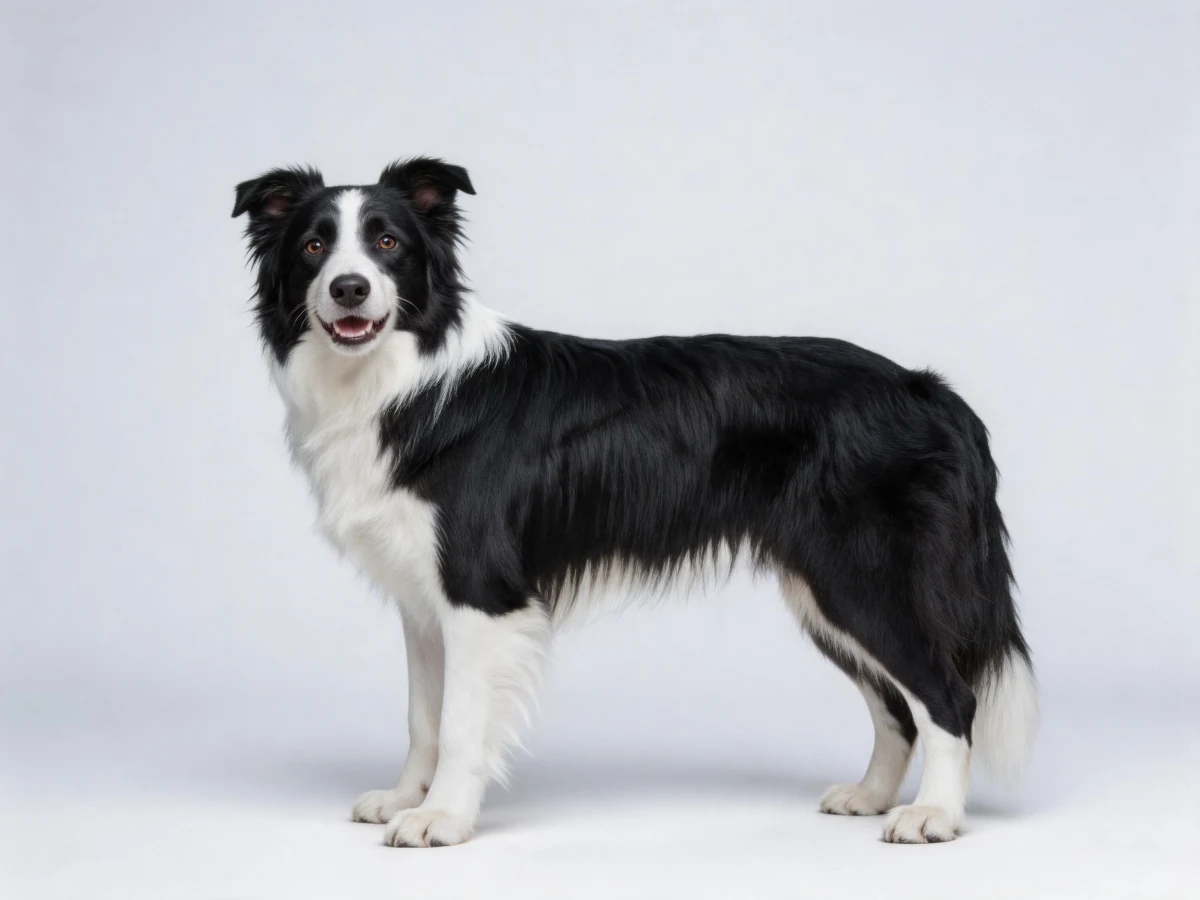
Shetland Sheepdog
✨ Key Takeaways
- The Shetland Sheepdog is a Shetland Islands farm dog before it is anything else: the locals called the small working herder the toonie dog, after the Shetland word "toon" for farm or croft, and the breed was earning its keep on the islands long before any Kennel Club fixed a standard.
- It is not a miniature Rough Collie. The Sheltie's foundation crosses include small Scottish Collies, the small Yakki dog brought in by Greenland whalers, Pomeranians and other Spitz-type dogs, and King Charles Spaniels — only later were Rough Collies deliberately bred in by James Loggie and others to fix breed type.
- The name itself records a fight: the Shetland Collie Club formed in 1908, the Kennel Club registered the first Shetland Collie (Badenock Rose) in 1909, Rough Collie fanciers objected to the borrowed name, and by 1914 the breed had been formally renamed the Shetland Sheepdog.
- A bright, vocal, biddable herder, not a sleeve-dog. Stanley Coren's working-and-obedience intelligence ranking placed the Sheltie at 6 of 138 breeds — a dog that learns commands in fewer than five repetitions and complies on first cue around 95% of the time.
- The breed-defining health risks are eyes, drug sensitivity, and skin: Collie Eye Anomaly (the NHEJ1 deletion mapped across collie-line breeds by Parker et al., 2007), the MDR1/ABCB1 ivermectin-sensitivity mutation (Mealey et al., 2001), and familial dermatomyositis (Hargis & Mundell, 1992; linkage on chromosome 35) — all have peer-reviewed published evidence.
- Six colour varieties are correct: sable, shaded sable, tri-colour, blue merle, bi-black and bi-blue. "White Sheltie" is a disqualification; "merle to merle" breeding produces homozygous double-merle dogs with high rates of deafness and blindness and is rejected by every responsible breed club.
Quick Facts
Common Names & Variants
Modern aliases
Historical names
Modern variants & lines
⚖️ Pros & Cons
Advantages
Trade-offs
Physical Appearance
Recognized colors
Coat
Other
Ears: Semi-prick (tipped). Tail: Saber.
🕰 History
A dog the islands made small
The Shetland Sheepdog is what happens when a Scottish working dog meets the geography of an Arctic-edge archipelago. The Shetland Islands sit roughly 170 km north of mainland Scotland, in the same latitude band as Anchorage and southern Greenland — a hundred or so islands scoured by North Atlantic wind, with thin soil, no real woodland, and only one viable economic story: small-scale crofting, sheep, ponies, and fishing. Everything Shetland produces is small. The Shetland sheep is a small, light-boned primitive breed; the Shetland pony is the world's smallest working pony; the Shetland goose, the Shetland cattle and the Shetland duck are all dwarfed equivalents of their mainland kin. The Sheltie is the dog version of the same story — a working herder selected to be hardy, light on the croft's thin pasture, and cheap to feed.
The local name is the most honest one. Long before the breed had a kennel-club identity, Shetlanders called the small island farm dog the toonie dog. The word is not a child's invented label: toon (or toun) is the Shetland word for a farm or croft holding, preserved from the Old Norse tún via Norn, the extinct North Germanic language spoken on Shetland and Orkney until roughly the 18th century. The toonie dog was therefore the farmyard dog — the croft's all-purpose herder, watcher, and lookout. That working identity is the breed's foundation; the show name came almost a century later.
The crosses behind the small dog
Honest breed histories admit that the modern Sheltie is not a single line. The pre-kennel-club island dog was a generic Shetland working type, and several outside crosses are documented or strongly traditioned. Small mainland Scottish Collies were the most important — visiting fishermen and crofters brought dogs from the Scottish mainland for centuries, and small Collie blood is the breed's spine. The American Kennel Club's own history of the breed accepts a second strand: the Yakki or "Greenland Yakkie," a small black-and-tan dog around 14 inches at the shoulder, brought ashore at Lerwick and the other Shetland ports by Greenland whaling and fishing fleets. King Charles Spaniel crosses appear in early island registrations, and the breed's spitz traits — the pricked ear-set, the curled-up tail of some early specimens, the small size — point to Pomeranian or Iceland Spitz contributions from other visiting boats. None of that is romance; it is what you would expect of a port-town farm dog on a busy 18th- and 19th-century North Atlantic sea route.
1908: the breeders organise, and start a fight
The breed's modern paper trail starts in 1908. James Loggie, a Shetland breeder and dog-dealer based in Lerwick, founded the Shetland Collie Club that year and drafted the first breed standard. A second body, the English Shetland Collie Club, was formed in the same year on the Scottish mainland. The Kennel Club in London accepted registrations the following year: in 1909 a bitch named Badenock Rose was registered as the first Shetland Collie, and the breed was formally on the books. Loggie's strategic decision — and a contested one ever since — was to bring small Rough Collies into the gene pool to fix and stabilise type. It worked: the first English Shetland champion's dam, Gesta, was herself a Rough Collie.
The fight was over the name. Rough Collie fanciers in England — the people running an already-established show breed — objected to a different dog being registered as any kind of "Collie." The dispute simmered, the Kennel Club re-categorised the registrations, and by 1914 the breed had been formally renamed the Shetland Sheepdog. The change of label is the reason Shelties and Rough Collies look related but are now described, in every standard, as distinct breeds. The American Kennel Club had meanwhile admitted the breed under the Shetland name: the first AKC-registered Sheltie, a dog called Lord Scott, was entered in 1911.
An island breed crosses the Atlantic
American development was steady and club-driven. The American Shetland Sheepdog Association was founded in 1929 as the AKC parent club; through the 1930s and 40s the breed's American type drifted a little taller and more coated than the British, and the standards diverged slightly to reflect that. In the United Kingdom the English Shetland Sheepdog Club and the Scottish Shetland Sheepdog Club kept the more moderate, working-shaped type closer to the islands' original. Both populations descend from the same Shetland-Rough-Collie reconstruction of 1908–14; the differences are stylistic, not genetic. By the second half of the 20th century the Sheltie had become one of the steadier top-30 AKC breeds, ranked in the 20s in the 2024 registration figures and persistent in popularity in the UK as well.
What the breed was actually doing
The historical job is sometimes oversold. A Sheltie is not a long-distance gathering dog the way a Border Collie is — the Shetland crofts are too small for that, the sheep are small and biddable, and the field of work is the toon (the croft yard) and the adjoining park rather than the open hill. The breed's true job was a generalist's: keeping the small Shetland sheep off the kitchen garden, moving the ponies, alerting the household to approaching strangers across a sparse landscape, and policing the small predators. The breed's biddability and bark are working features of that job description — alert, ready, vocal, and small enough to be no risk to a Shetland ewe.
Temperament & Personality
A bright dog with an opinion
The single most-quoted finding on Sheltie temperament is Stanley Coren's working-and-obedience intelligence ranking: in The Intelligence of Dogs the breed sits at 6 of 138 — fewer than five repetitions to learn a new command, and compliance on first cue around 95% of the time. The number is convenient shorthand and broadly fair, but it misses the texture. The Sheltie is bright in a herding-dog way: it watches you, anticipates, problem-solves, and forms strong opinions about how the household should run. That is a gift for the handler who likes to train and a problem for one who does not.
Vocal — by design, not by accident
Shelties bark. The breed was selected for centuries on the toon to alert at strangers and to signal during herding work, and the bark is part of the package. A Sheltie tells you when the post arrives, when the neighbour walks past, when something moves on the road, and sometimes when nothing at all visible has moved. Adult dogs in trained homes settle, but the alert-bark instinct is not eliminable — it is manageable. Households in attached housing, families sensitive to noise, and owners who treat barking as a fault rather than a feature should weigh that honestly before buying. Quiet-on-cue is a Sheltie's hardest training class, and the breed clubs say so.
Sensitive — handlers, take the hint
The Sheltie is a soft dog. Sharp corrections, raised voices, or inconsistent rules produce a shut-down, slinking, anxious dog rather than a corrected one. The breed responds beautifully to clear, upbeat, reward-based training and to handlers with a quiet, confident manner. It does not respond well to dominance-based methods or to households with high-volume arguments — the dog reads them as threats and absorbs the stress. The flip-side strength is that a Sheltie is remarkably easy to live with once it knows the rules: it does not push, does not pick fights, and rarely needs the same correction twice.
Devoted to the household, suspicious of the new
The breed is famously affectionate with its family — leaning, eye-contact, follow-you-room-to-room, the herding dog's reflexive monitoring of the people it has chosen. With strangers it is initially reserved, which is breed-standard correct. The FCI standard and the AKC standard both describe a dog that is "reserved" or "not nervous, never shy or vicious" — wary on first meeting, polite once introduced. A Sheltie that approaches strangers with the bounding enthusiasm of a Labrador is unusual; one that hides behind its handler and shakes is poorly socialised and was probably under-exposed as a puppy.
The herder, indoors
A Sheltie indoors keeps doing its job. It tracks the movement of children, of bikes, of running feet; it nudges and circles; it watches the door. The herding instinct can be redirected — agility, treibball, trick training, herding instinct tests, even teaching the dog to retrieve specific named objects — but it does not switch off. Households that pretend the breed is a placid lapdog get a frustrated, vocal, sometimes nippy Sheltie; households that give the brain a job get one of the easier and more rewarding companion dogs.
🏡 Living With a Shetland Sheepdog
A small dog with medium-dog needs
The Sheltie's size is misleading. At 9–10 kg the breed slots into a small-dog footprint, but the energy and engagement requirement is that of a medium working herder. A walk around the block is not exercise; it is a warm-up. An adult Sheltie wants 60–90 minutes of real activity a day — varied between aerobic work (fetch, jogging, off-lead in safe areas), brain work (trick training, scent games, fetch-named-object), and structured outlets (agility, rally, herding instinct). The breed is well suited to apartment living in physical terms — small body, neat habits — but only if the owner is honest about the activity bill that comes with it.
The vocal household, managed
Sheltie barking is a household-design problem more than a training one. The single most useful intervention is reducing trigger access: a dog that cannot see the front pavement from the window cannot bark at every passer-by. Frosted film on lower window panes, baby gates that limit the dog's "patrol route," and a designated quiet-place mat (with the place command trained from puppyhood) prevent more barks than any number of corrections after the fact. "Quiet" on cue, trained calmly and rewarded heavily, gives the handler a back-end tool. The combination produces a Sheltie that alerts and stops, rather than one that simply alerts.
Children, dogs and other pets
A well-socialised Sheltie is a fine family dog. The breed is gentle and tolerant with children once introductions are managed, though the herding instinct can produce nipping at running heels in young dogs — a behaviour to interrupt and redirect from puppyhood, not to ignore. With other dogs Shelties are usually sociable, though they can be selective with high-prey-drive or boisterous individuals. With cats raised alongside them they coexist; with introduced cats the chase instinct may surface and require management. Small pet birds and rodents should not be left out around any herding breed.
Climate, coat and the outdoor question
The double coat is built for Shetland — wind, sleet, and a damp cool summer — and the breed handles cold weather effortlessly. Heat is a real concern: a Sheltie in 30°C is uncomfortable, and a Sheltie in 35°C with a thick coat is at risk of heat stress. Exercise in summer should move to dawn and dusk, water should be constant, and shaving the double coat to "cool the dog down" is a mistake (it removes the insulating undercoat, exposes the skin to sun, and damages the coat's regrowth). Outdoor-only kennelling is wrong for the breed for a different reason: a Sheltie isolated from the household becomes anxious, vocal, and difficult. The breed lives indoors.
🎓 Training & Exercise
What the breed makes easy
A Sheltie is one of the easier breeds in the world to teach a behaviour to. The basics — sit, down, stay, recall, leave-it, place, loose-lead walking — can be on cue within a few weeks of consistent reward-based work. The breed reads the handler's tone, anticipates patterns, and offers behaviour generously. For an owner used to stubborn or independent breeds, the experience can feel slightly disconcerting: you ask, the dog does it, the dog asks what next.
What the breed makes hard
The same anticipation is a problem in three specific areas. First, barking — the breed wants to alert, and "quiet" is the single hardest command to make reliable. Second, recall around motion — a Sheltie that has decided to herd a bicycle, a jogger, or a flock of garden birds is harder to call off mid-chase than the everyday calm recall suggests. Third, generalising commands — Shelties learn behaviours in the context they first practised them and need deliberate work to transfer the cue to new environments. A dog that sits perfectly in the kitchen may not sit at all on the first walk in a new park until the cue is rehearsed there.
The handling style that works
Reward-based, marker-based training with a soft voice and clear criteria is the dominant approach used by the breed clubs and competitive Sheltie handlers. The Sheltie wants information about what is right; it does not need corrections to extinguish wrong behaviour. Withholding reward and asking again is usually all the "correction" required. Aversive handling — leash pops, shouting, physical force — produces measurable shutdown in the breed, and competitive trainers will tell anyone who asks that a Sheltie ruined by harsh handling rarely fully recovers.
Sports the breed was made for
Agility is the breed's signature sport — small, fast, biddable, the Sheltie is over-represented at the top of agility leaderboards in every country. Obedience, rally, trick dog, scentwork, freestyle, and herding instinct trials all suit the breed. Conformation showing demands the moderate Sheltie body, square outline, level topline, and full coat presentation, with the additional commitment of grooming hours. The single sport the breed is not strong in is high-bite-force protection work — the Sheltie is too small and too soft for that, and trying to make a personal-protection dog out of one is a category error.
✂️ Grooming & Coat Care
The double coat, weekly
The Sheltie's coat is a long, harsh straight outer coat over a short, dense, woolly undercoat — engineered for North Atlantic weather and built to shed dirt as it dries. Weekly grooming for an adult Sheltie is one full-coat brush-out, taking 20–30 minutes if the coat is in good condition: a slicker brush to lift the outer coat, a pin brush or wide-toothed comb to work through the undercoat down to skin, and attention to the mane, frill, breeches, and behind the ears (where mats form first). The face, ears, feet and front of the legs are smooth and need very little. Done weekly the coat stays mat-free; skipped for three weeks and it does not.
The coat blow
Twice a year — typically spring and autumn — the Sheltie sheds its undercoat in a concentrated event known to breed people as "blowing coat." For two to four weeks the undercoat comes out in tufts; a daily brush-out with a slicker and an undercoat rake produces astonishing volumes of soft fluff and is non-negotiable if the dog is not to mat. Spayed and neutered dogs sometimes shed continuously at a lower level rather than in two big events, and intact bitches typically blow coat after each heat. None of it is a hygiene problem — Shelties are nearly odourless and the coat self-cleans of mud — but the brushing must happen.
What not to do: shaving
The single most common Sheltie grooming mistake is shaving the coat in summer "to cool the dog down." Don't. The double coat insulates against heat as well as cold, the undercoat regrows uneven and patchy, and the long harsh outer coat may take years to come back correctly. Shaving also exposes pale or merle skin to sun damage. The right summer management is brush, hydrate, exercise at cool hours, and offer a damp towel or paddling pool — not clippers.
Nails, teeth, ears, anal glands
Nails want trimming every 3–4 weeks; a Sheltie hates having its feet held and the habit is best built from puppyhood. Teeth want daily brushing — small herding breeds run a higher dental-disease risk than working breeds for reasons not fully explained. Ears are clean and well-set and rarely need attention; a quick visual check during the weekly brush-out is sufficient. Anal glands typically express themselves on small herders that have proper firm stools and adequate fibre; chronic soft stools or scooting warrants vet attention, not amateur expression.
🍖 Diet & Nutrition
Calories for a working-sized small dog
An adult Sheltie at maintenance weight (around 9–10 kg, ranging 6 to 12 kg by sex and frame) needs roughly 450 to 700 kcal per day depending on activity, age and metabolism. Active agility or herding-trial dogs sit at the high end; sedentary spayed/neutered seniors at the low end. The breed is not a heavy eater and is not particularly prone to greedy overeating, which makes its obesity risk a measurement-and-treats problem rather than a food-bowl problem.
What lean condition looks like
Under the coat — and this is the trap — a Sheltie can carry a kilogram or two of body fat invisibly. The honest check is hands rather than eyes: ribs easily felt with a light covering, waist visible from above, abdomen tucked from the side, a body condition score of 4 or 5 out of 9. If the owner cannot feel ribs without pressing, the dog is overweight; if the owner can see ribs, it is underweight. Long-coated breeds reward owners who learn this hand assessment, because the visual cue is unreliable.
Diet composition
A complete, balanced, age-appropriate commercial food is the default for the breed and there is no reason to over-engineer. Sheltie people who feed home-prepared or raw diets do so successfully when the recipe has been formulated by a veterinary nutritionist; unformulated raw and home-cooked diets are the leading cause of nutrient deficiencies in pet dogs and are not safer just because they are "natural." Treats should be counted into the daily caloric budget — at 600 kcal per day a 30-kcal treat is 5% of the food, and three of them in an afternoon is meaningful. Single-ingredient treats (small training cubes of chicken or low-fat fish) work well.
Watchpoints: MDR1, pancreatitis, dental
Two diet-related health levers matter specifically for the Sheltie. First, the MDR1 mutation means certain anti-parasiticide doses (high-dose ivermectin, milbemycin or moxidectin) need adjustment; routine heartworm prevention is safe. Second, small herding breeds run a slightly elevated pancreatitis risk; sustained high-fat diets, scrap-feeding and table fat are best avoided, especially in middle age. Dental disease prevalence on the breed argues for daily teeth-brushing and dental-format kibble or chews approved by the Veterinary Oral Health Council.
🐶 Buying & Adopting a Shetland Sheepdog
Choosing a breeder
The good Sheltie breeder is easy to recognise and not hard to find. Membership of a parent breed club (the American Shetland Sheepdog Association in the US, the English Shetland Sheepdog Club in the UK, or their regional equivalents), pedigreed dogs registered with the AKC or KC, full health screening (hips, ACVO eye exam, MDR1 DNA test, CEA DNA test, ideally DMS haplotyping), and a willingness to show paperwork without prompting are baseline. A breeder who keeps puppies until eight weeks at minimum, raises them in the house rather than a kennel, takes back any dog at any age, and asks the buyer harder questions than the buyer asks is the breeder to use.
Red flags
The Sheltie market has a few specific bad signs. "Toy Sheltie" or "miniature Sheltie" puppies advertised below standard size are usually undersized examples bred for the look, often inbred, and at higher risk of patellar luxation, dental crowding, and behavioural fragility. "Rare colour" puppies — particularly double-merle pairings sold as "lethal whites" — are deliberately produced from merle-to-merle breedings and carry high rates of deafness and blindness; no responsible breeder produces them. Online-only sellers with a credit-card-and-courier delivery model, no in-person visit, no parent dogs shown, and discount pricing are the textbook puppy-mill pipeline. Price below club-breeder norms is a red flag, not a bargain.
Adoption and rescue
The breed clubs maintain active rescue networks. The American Shetland Sheepdog Association coordinates regional Sheltie rescue groups; the UK clubs run their own. A rescued adult Sheltie is often the better choice for first-time owners — temperament is known, training basics are usually in place, and the lifetime commitment is matched to a known dog. The trade-off is supply: well-bred Shelties are not heavily surrendered, and rescue waiting lists are long. Mixed-breed Sheltie-type dogs from general shelters are a different proposition; the herding-breed temperament is a fair indicator of needs but the health screening is unknown.
What a puppy costs
A health-tested, pedigreed Sheltie puppy from a club breeder in the US ranges roughly $1,500–$3,000 in 2024–2025, with show-prospect lines and proven kennels at the upper end. The UK market sits in roughly the same band converted to sterling. Lower asking prices typically reflect missing health testing or an unethical source. The lifetime cost of the dog — food, grooming, vet care, agility classes, the inevitable middle-age dental work — vastly exceeds the purchase price, and the breeder's quality is the single best predictor of how that lifetime cost will land.
📜 Breed Name Etymology — iDogNames original research
"Shetland Sheepdog" — three words doing three jobs
The breed's modern name is descriptive English, and each part is doing taxonomic work. Shetland is the place of origin — the Shetland Islands of Scotland — and the word itself comes from the Old Norse Hjaltland, the Norse name for the archipelago, which evolved through Norn into modern Shetland. Sheepdog is the breed's working classification under the Kennel Club's group system, distinguishing the breed from the larger Rough Collie and from the unrelated Border Collie. The combined name was not the original: the breed was registered with The Kennel Club in 1909 as the Shetland Collie, and was forced to drop "Collie" only after fanciers of the Rough Collie objected to the borrowed name. The Kennel Club formally settled on Shetland Sheepdog by 1914.
The local name: the toonie dog
Long before the kennel-club name, the breed had a Shetland one. Islanders called the small island farm dog the toonie dog — the dog of the toon, the Shetland word for a farm or croft holding. The vocabulary is Norn-derived: Shetland Norn, the extinct North Germanic language spoken on Shetland and Orkney until roughly the 18th century, descended from Old Norse, and the Shetland toon traces back to the Old Norse tún, meaning an enclosed plot of cultivated land. The English word "town" comes from the same root. A toonie dog, therefore, is the croft's resident farm dog — the herder and watcher of the small enclosed land. It is the most honest single-word description of what the breed was bred to do.
"Sheltie" — informal, universal
The everyday short name is Sheltie, pronounced /ˈʃɛlti/ — a simple diminutive of "Shetland" with the affectionate -ie suffix common to Scottish English (compare Yorkie, Doggie, Wee bairnie). The form appears in print from the 1910s and was in universal informal use among breeders and owners by the 1930s. It is not a registered name in any kennel club, but it is what owners call their dogs, what the rescues use, and what the breed clubs accept in informal materials. "Sheltie" has no Shetland-language origin; it is a clean English diminutive on a Shetland word.
"Peerie dog" and other historical names
A second local name, less universal but documented in older Shetland sources, is the peerie dog. Peerie is the Shetland word for "small" or "little," a Norn loan from a Norse root preserved in modern Shetland dialect (Shetland fishermen still talk about the peerie boats). A peerie dog was a small dog, generally — not exclusively the breed — but the term was used of the toonie dog often enough that it appears in the breed's lore. The fairy dog name sometimes attached to the breed in early 20th-century writing is more romantic than philological — Shetland folk culture is rich with trow (troll) and fairy lore, and the connection to a small island dog was a Victorian-era flourish rather than a working term.
What is not the breed
Two name-aliases are worth flagging because they are wrong. "Miniature Collie" is a marketing label, not a registered name; the breed is genetically and standardly distinct from the Rough Collie (which is also called the Collie in the UK and the Rough Collie or Collie in the US). "Toy Sheltie" is a deliberate down-sizing of the breed below standard height and is not recognised by any kennel club — undersized dogs may be bred and sold under the label, but they are not a separate breed and the practice carries the health risks of any deliberate under-size selection (patellar luxation, dental crowding, increased fragility).
Name forms at a glance
| Name | Role | Origin | Literal meaning | First recorded |
|---|---|---|---|---|
| Shetland Sheepdog | primary | English (descriptive) | the working sheepdog of the Shetland Islands | 1914 |
| Sheltie | alias | Scottish English (diminutive) | the little Shetland (dog) | — |
| Toonie dog | origin country native | Shetland Norn / Shetland dialect | the croft's dog | — |
| Shetland Collie | historical | English | the Shetland version of the Collie | 1908 |
| Miniature Collie | alias | English (marketing label) | small version of the Collie (incorrect) | — |
🏛 Naming Traditions — iDogNames original research
A Shetland naming culture, not a generic Scottish one
The Sheltie offers something unusual among pedigree breeds: a single, geographically tight, linguistically distinctive naming heritage. The Shetland Islands are not "Scotland" the way the Highlands are; they were ruled by Norway until 1469, retain a distinct Norn-derived vocabulary in everyday speech, and have place-names, folk culture, and personal traditions that look more Scandinavian than Celtic. Naming a Sheltie from this layer — Shetland geography, Norn vocabulary, Shetland heritage names — gives the dog a heritage anchor that no other naming choice does. Naming a Sheltie "Bonnie" or "Skye" defaults to a generic Scottish-clan setting that the breed does not actually come from.
The Shetland geography layer
The strongest naming layer is the islands themselves. There are about 100 islands in the Shetland archipelago and roughly 15 inhabited ones, each with a short, clean, sonorous name: Yell (the second-largest island), Unst (the northernmost inhabited island in the British Isles), Foula (a small westernmost island, dramatic cliffs), Whalsay, Bressay, Fetlar, Mousa (with its Iron Age broch), Papa Stour, Fair Isle (between Shetland and Orkney, famous for knitwear), Muckle Roe. Towns and headlands add another tier: Lerwick (the capital, the obvious choice for a strong male dog), Scalloway (the old capital), Sumburgh (the south tip and the airport), Eshaness (the dramatic west-coast cliffs), Tingwall (the old Norse assembly site), Sandwick, Hillswick.
The Norn vocabulary layer
The richest and most distinctive layer is Shetland Norn — the extinct Norse-descended language whose vocabulary is preserved in modern Shetland dialect. Voe (a small bay or sea-inlet) gives a soft, water-related name; geo (a sea-cut chasm in a cliff) is short and dramatic; kame (a ridge) is monosyllabic and strong; ness (a headland) reads as a clean masculine name; ayre (a sand or gravel beach) is unusual and pretty. Working vocabulary: peerie (small), muckle (large), bonny (pretty), sma' (small, the contracted form). Animal and weather vocabulary: raan (a rough sea), simmer (summer), winter, tang (seaweed), selkie (the Norn-derived word for a seal — a beautiful name for a black-and-white blue-merle bitch).
The Shetland heritage layer
Shetland's history is dense with names that suit the breed. The annual Up Helly Aa fire festival in Lerwick centres on a Viking-style longship-burning ceremony and gives names like Jarl (the Up Helly Aa festival's chief — a Norse word for earl, perfect for a strong male) or specific historical figures from Shetland's Norse past. The Shetland sheep breed gives Tup (a ram); the Shetland pony tradition gives Shetlander directly. The famous Shetland knitwear of Fair Isle gives that island name a double resonance. The fishing heritage gives boat names — Smack, Sixareen (the traditional Shetland six-oared fishing boat) — and the music tradition gives names from the famous Shetland fiddle players such as Aly (after Aly Bain).
What this means for naming a Sheltie today
The breed rewards a naming choice that goes one click deeper than generic Scottish. A geographic name (Lerwick, Unst, Foula, Yell, Sumburgh) ties the dog to the archipelago that made it. A Norn-vocabulary name (Peerie for a small bitch, Selkie for a blue-merle, Voe for a soft female, Kame for a strong male) speaks the language of the people who bred it. A heritage name (Jarl, Norn, Tang, Smack) records the Viking-Norse-fishing-island culture in a single word. The names with no Sheltie resonance are the generic Scottish-Highland ones borrowed from Border Collies and Westies; calling a Sheltie "Hamish" or "Skye" misses, by 170 km of North Sea, the heritage that makes the breed itself.
🐾 Themed Names for Your Shetland Sheepdog — iDogNames original research
Shetland islands and headlands
The archipelago itself — about a hundred islands, fifteen inhabited — gives the cleanest heritage names for the breed.
- Lerwick — the Shetland capital; weighty and grounded, strong for a male
- Yell — Shetland's second-largest island; single sharp syllable, easy recall
- Unst — the northernmost inhabited island in the British Isles
- Foula — small westernmost island with dramatic cliffs; soft, distinctive female name
- Fetlar — the "garden of Shetland"; lush and unusual
- Mousa — the island with the Iron Age broch; clean two syllables
- Bressay — Lerwick's harbour island; flows beautifully
- Whalsay — the fishing isle; distinctive
- Sumburgh — Shetland's south tip and ancient Jarlshof site
- Eshaness — the dramatic west-coast cliffs; for a striking-looking dog
Norn vocabulary — male
Words from Shetland Norn, the extinct North Germanic language of the islands.
- Ness — Norn-derived word for a headland; one strong syllable
- Kame — a ridge; clean and stern
- Jarl — Old Norse for earl; the title of Lerwick's Up Helly Aa festival chief
- Tang — Shetland word for seaweed; unusual and authentic
- Muckle — Shetland for "large"; ironic for a small dog or accurate for a big one
- Smack — a traditional Shetland fishing boat type
- Tup — a ram in Shetland speech; punchy
- Selkie — the Norn-derived word for a seal; a folk-culture name
- Raan — a rough sea; for a stormy character
- Brae — Shetland for a hill or slope
Norn vocabulary — female
Softer Norn and Shetland words for a bitch.
- Peerie — Shetland Norn for "small" or "little"; the affectionate breed name
- Voe — a small bay or sea-inlet; soft and water-related
- Ayre — a sand or gravel beach; rare and pretty
- Simmer — summer, in Shetland dialect; warm
- Bonny — pretty, in Scots and Shetland speech
- Sma' — small, the contracted Shetland form
- Hjalti — the original Norse name for Shetland (whence "Hjaltland")
- Geo — a sea-cut chasm in a cliff; dramatic two-letter beauty
- Norna — feminine form of Norn; a literal language name
- Mara — Shetland word for a nightmare/sea-spirit; folkloric
Shetland heritage and Norse past
Names from the Up Helly Aa festival, the Viking-Norse legacy, and the fishing-knitting culture of the islands.
- Hjaltland — the Old Norse name for Shetland itself; the deepest heritage name
- Sixareen — the traditional Shetland six-oared open fishing boat; commanding
- Norn — the extinct Shetland language itself; unusual and rooted
- Aly — after Aly Bain, the famous Shetland fiddler; soft and musical
- Tirval — from Tirvalstadr, an old Norse settlement name
- Vaila — a small inhabited Shetland island
- Haaf — the Shetland deep-sea cod fishery; a working name
- Bonxie — the Shetland name for the great skua bird
- Tirrick — the Shetland name for the Arctic tern; small and quick
- Maalie — the Shetland name for the fulmar
Sheltie working register
Names from the breed's job description — the herder, the alert dog, the toonie dog.
- Toon — the Shetland word for a farm or croft; the source of "toonie dog"
- Croft — the small Shetland landholding; straightforward and authentic
- Heddle — a weaving term from the famous Shetland knitwear tradition
- Yowe — Shetland for a ewe; quiet, female
- Geld — a yeld (non-breeding) ewe in Shetland speech
- Caa — Shetland for a drive or gathering of sheep; the herding command
- Dyke — the dry-stone wall that crosses every Shetland croft
- Park — Shetland for an enclosed grazing field
- Hill — the unfenced common pasture above the toon
- Roo — Shetland verb for plucking the Shetland sheep's wool by hand
Colour-and-coat names
Names tied to the six recognised Sheltie colour varieties.
- Sable — the most common Sheltie colour; the obvious heritage choice
- Merle — for a blue merle dog; the colour name as the dog's name
- Slate — the cool grey of a blue-merle base coat
- Pewter — silver-grey, for a blue-merle
- Bracken — the russet-brown of moorland; for a rich sable
- Heather — Shetland moorland; a soft female name
- Tundra — for the cold sub-Arctic palette of a blue-merle
- Onyx — for a bi-black
- Mica — for the silver flash in a blue-merle coat
- Marble — for the mottled blue-merle pattern
📋 Breed Standard at a Glance
The standard, summarised
The FCI Breed Standard N° 88 places the Shetland Sheepdog in Group 1 (Sheepdogs and Cattledogs), Section 1 (Sheepdogs), with working trial — country of origin Great Britain. The general appearance asks for "a small, long-haired working dog of great beauty, free from cloddiness and coarseness," giving the impression of a graceful, beautifully balanced animal with no part exaggerated. The AKC standard reads similarly, with two notable differences: the AKC sets the ideal height at 13–16 inches (33–41 cm) at the shoulder and disqualifies dogs above or below that range, where the FCI specifies an ideal of 37 cm for dogs and 35.5 cm for bitches.
Head, expression and ears
The head should be long, refined, wedge-shaped from above and side, with parallel planes of skull and muzzle. The expression is the breed's defining feature: alert, gentle, intelligent, slightly questioning, never sharp or vacant. Almond-shaped, medium-sized dark eyes (with blue or merle eyes permitted in blue merles) and small, semi-erect ears set high on the skull and "tipped" (about three-quarters erect with the top quarter folding forward) deliver the look. Fully prick ears and fully drop ears are both incorrect.
Body, coat and movement
The body is slightly longer than tall (measured from prosternum to point of buttock vs. withers to ground), with a level topline, well-sprung ribs, modest tuck-up, and a saber tail reaching at least to the hock and carried low or in a slight upward sweep at the end. The double coat carries a profuse mane and frill, with feathering on forelegs and breeches and a smooth face, ears, and feet. Movement should be smooth, balanced, ground-covering, with good reach and drive — a small herder's trot, not a hackney action.
Colour and disqualifications
Six colour varieties are correct: sable (golden to mahogany with white), shaded sable, tri-colour (black with white and tan), blue merle (with white and tan), bi-black, and bi-blue. White or rust-coloured nose, height outside the standard range, undershot or overshot bite, and dogs visibly outside the breed type are disqualifications under the AKC standard. The Kennel Club (UK) is broadly equivalent. Predominantly white dogs (more than 50% white) and double-merle dogs are disqualifications and disqualifying breeding decisions respectively.
🏆 Recognition
Recognized by the American Kennel Club in 1911 as a Herding breed. FCI standard No. 88 (Section 1 — Sheepdogs (with working trial)), recognized in 1948.
Other registries
Breed clubs
❓ Frequently Asked Questions
Are Shetland Sheepdogs good family dogs?
Yes. The Sheltie is devoted, gentle, and closely bonded to its household, which makes it a strong family companion for homes that include it in daily life. Two breed traits shape the fit: Shelties tend to be reserved or shy with strangers and need early, ongoing socialisation, and they are alert, vocal watchdogs that will bark at arrivals and activity. With training and company they suit families well; they do not do well left alone and isolated for long stretches.
Do Shetland Sheepdogs shed a lot?
Yes. The Sheltie carries a profuse double coat — a long, harsh outer coat over a dense undercoat — and sheds year-round with two heavy seasonal "blows," typically spring and autumn, when the undercoat releases in quantity. Plan on brushing two to three times a week, rising to daily during a coat blow, and on regular vacuuming. The coat should be line-brushed, not shaved; shaving a double coat can damage how it regrows.
How much exercise does a Shetland Sheepdog need?
Moderate to high. Bred as a working farm herder on the Shetland Islands, the Sheltie wants a daily mix of physical exercise and a job for its mind. A brisk walk plus active play covers the body; the breed truly thrives with a structured outlet such as obedience, agility, rally, or herding, where its speed and biddability shine. A bored, under-worked Sheltie often channels that energy into barking and fence-running.
How long do Shetland Sheepdogs live?
Typically 12 to 14 years. It is a generally long-lived herding breed when kept lean and well cared for. Buyers should be aware of conditions documented in the breed — Collie eye anomaly, von Willebrand disease type III, and dermatomyositis — and of an MDR1 (ABCB1) gene variant that affects sensitivity to certain drugs; a known MDR1 status is information to share with a veterinarian, not a basis for self-treatment.
Are Shetland Sheepdogs easy to train?
Very. The Sheltie is among the most trainable breeds and a regular star in obedience and agility competition — bright, quick to learn, and eager to please. Because the dog is sensitive, reward-based methods work best; harsh corrections tend to shut a Sheltie down rather than motivate it. The main training project owners take on is managing the breed's readiness to bark, which responds well to early, consistent work.
Are Shetland Sheepdogs hypoallergenic?
No. The Sheltie has a heavy double coat that sheds substantially and is not considered hypoallergenic. Anyone with a dog allergy should spend extended time around the breed before committing to one.
How much does a Shetland Sheepdog puppy cost?
A well-bred, health-tested puppy from a responsible breeder typically runs about USD 1,200 to 2,500 (2024), and litters average around five puppies, so good breeders often keep a waiting list. Be cautious of puppies priced far below that with no health-testing paperwork. The American Shetland Sheepdog Association (ASSA) is the AKC parent club and a starting point for finding member breeders.
📚 Sources & Further Reading
Every load-bearing factual claim on this page is anchored to one of the sources below. iDogNames does not synthesize from secondary aggregators.
- akc breed page Shetland Sheepdog — AKC Breed Profile — American Kennel Club (2024)
- akc breed page Shetland Sheepdog History: A Pint-Sized Package — American Kennel Club (2023)
- fci standard pdf FCI Standard No. 88 — Shetland Sheepdog — Fédération Cynologique Internationale (2013)
- kc uk standard pdf Shetland Sheepdog — Breed Information (UK) — The Kennel Club (UK)
- breed club official American Shetland Sheepdog Association — parent club & breed history — American Shetland Sheepdog Association
- academic paper Ivermectin sensitivity in Collies is associated with a deletion mutation of the mdr1 gene — Mealey KL et al., Pharmacogenetics 11(8):727–733 (2001)
- academic paper Breed relationships facilitate fine-mapping studies: A 7.8-kb deletion cosegregates with Collie eye anomaly across multiple dog breeds — Parker HG et al., Genome Research 17(11):1562 (2007)
- academic paper Beyond the MHC: A canine model of dermatomyositis shows a complex pattern of genetic risk involving novel loci — Evans JM et al., PLOS One (2017)
- wikipedia Shetland Sheepdog — Wikipedia — Wikipedia
- book The New Complete Shetland Sheepdog — Maxwell Riddle & Catherine Coleman Harris (Howell Book House) (1988)