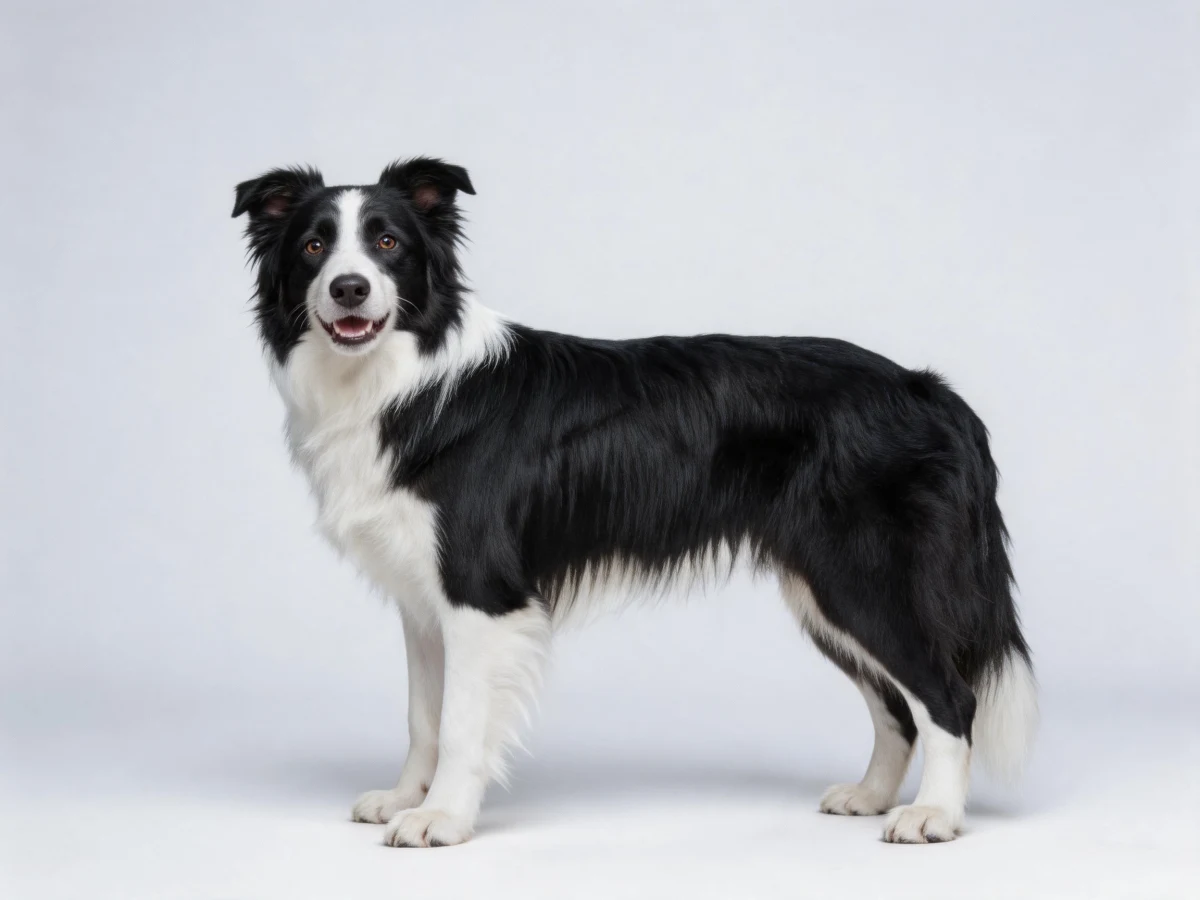
Koolie
✨ Key Takeaways
- The Koolie is an Australian working herding dog descended from Collie-type dogs brought by German settlers in the 19th century; 'German Koolie' and 'German Collie' are synonyms.
- It is recognised by the Australian Sporting Registrar (ASR) and the Koolie Club of Australia; it is NOT recognised by the ANKC, FCI, or AKC.
- Type varies considerably — height roughly 38 to 58 cm, short or medium coat, solid or merle or tricolour — because the breed was always selected for working ability rather than appearance.
- The merle coat (called 'tiger' in Koolie circles) is common; merle-to-merle matings must be avoided to prevent double-merle deafness and eye abnormalities. BAER hearing testing is essential for merle breeding stock.
- Energy requirements are very high; the Koolie needs daily structured work or sport and is not suited to low-activity households.
- Collie Eye Anomaly (CEA) and hip dysplasia are the primary hereditary health concerns to screen for in breeding stock, alongside the merle-specific risks.
- The Koolie is differentiated from the Australian Cattle Dog (a heel-biting drover) and the Australian Shepherd (an American breed) by its heritage, working style, and history.
Quick Facts
Common Names & Variants
Modern aliases
Historical names
⚖️ Pros & Cons
Advantages
Trade-offs
Physical Appearance
Recognized colors
Coat
Other
Ears: Prick or semi-prick. Tail: Medium, curved or saber set.
🕰 History
Working cattle country calls a new dog into being
Unlike most herding breeds, the Koolie was not planned by a kennel club or shaped by a studbook committee: it grew out of need, place, and the dogs that German settlers brought with them when they arrived in the colonies of South Australia and Victoria during the 1800s. Those immigrants — many of them from Württemberg and Silesia — brought short-haired smooth-coated collies of the type then common in central Europe: dogs bred to move livestock methodically across farmland, responsive to voice and eye-contact rather than to the physical force that a droving dog uses. Landed in a continent whose climate, terrain, and stock work were unlike anything the dogs had encountered before, those collies were crossed with whatever partners the settlers could find — almost certainly including Rough or Smooth Collies brought on other ships and, in some accounts, Border Collie blood from British settlers working nearby — and a type emerged that was shaped entirely by what it had to do: move cattle and sheep across the vast paddocks and ranges of southeastern Australia, often in intense heat, over distances that would have broken a less hardy dog.
The name and its German roots
The word Koolie almost certainly derives from "Collie," filtered through the Australian accent and possibly through the German settlers' own pronunciation of the English word — "Coolie" and "German Coolie" are older spellings that appear in 19th-century Australian agricultural records, and "German Collie" remains in use as a synonym today. The fact that the colonial breed came to be called a German Collie or German Koolie — rather than simply a Collie — reflects the stock-worker community's clear awareness that these dogs were connected to the German immigrant farmers who brought the original collie blood. Over generations the accent mark softened the name further, and "Koolie" became the dominant modern spelling, used both by the Koolie Club of Australia (founded in 2000) and in the Australian Sporting Registrar recognition that followed.
A dog defined by function, not by form
What makes the Koolie's history genuinely unusual is that its people never chased uniformity of appearance. The settlers who bred these dogs cared whether a dog could hold a mob of cattle on the road for ten hours in forty-degree heat, or move a flock of sheep through a narrow race without scattering them. A dog that could do that work was a Koolie, and a dog that looked identical but couldn't was not — regardless of colour, coat length, or size. The result is a breed that, even today, shows more variation in physical type than virtually any other recognised herding dog. Koolies range from roughly 38 cm to 58 cm at the shoulder. They come in short and medium coats, in solid colours, in bicolour and tricolour patterns, and in merle — the dappled or marbled coat caused by the merle gene — which turns up in the breed's most photographed form: the so-called "tiger" Koolie with its striking irregular patches. No two merle Koolies look quite alike, and the community of working Koolie people has historically treated that variety as evidence that the breed is still honestly selected for utility rather than cosmetics.
Merle, "tiger" Koolies, and the double-merle caution
The merle coat is the Koolie's most visually distinctive feature and the source of the breed's most important health consideration. The merle pattern is caused by a dominant gene (M) that dilutes patches of the base coat colour, producing the marbled, swirled, or flecked effect seen in blue merle and red merle individuals; the Koolie community has traditionally called these dogs "tiger" Koolies because the broken patterning can resemble a tiger's dappling when the merle is coarse. Single-copy merle dogs (Mm genotype) are healthy, and single-copy merle to non-merle matings are the safe practice. The critical caution is double merle: when two merle-carrying parents are mated, statistically a quarter of the resulting puppies inherit two copies of the merle gene (MM genotype). Double-merle dogs are frequently deaf — because the merle gene, in double dose, disrupts the development of the pigment cells in the inner ear that are essential for hearing — and may also be affected by ocular abnormalities including microphthalmia (abnormally small eyes), missing or deformed iris tissue, and impaired vision. Responsible Koolie breeders screen breeding stock for hearing with BAER (Brainstem Auditory Evoked Response) testing and do not breed merle to merle. This risk is not unique to the Koolie — it is shared by every merle-carrying breed, including the Australian Shepherd and the Border Collie — but it deserves explicit acknowledgement in any honest account of the breed.
From working register to formal recognition
For most of the 20th century the Koolie existed simply as the working dog of southeastern Australian pastoralists: recorded only in the memories of the stockmen who worked them, verified by performance rather than by pedigree, and invisible to the show-ring world. The founding of the Koolie Club of Australia in 2000 was the turning point: the Club began keeping a formal breed register, developing a breed standard, and lobbying for recognition. The Australian Sporting Registrar (ASR) subsequently recognised the Koolie as a breed, granting it a formal status within Australia's working-dog framework. What the Koolie has not attracted — and which its community has largely not pursued — is recognition by the Australian National Kennel Council (ANKC), which governs formal conformation showing in Australia, or by the international bodies, the Fédération Cynologique Internationale (FCI) and the American Kennel Club (AKC). The breed sits, by choice or by circumstance, outside the mainstream show world, and most people involved in Koolies prefer it that way: they argue that functional selection and show-ring selection are two different objectives, and that the first produced a dog worth having.
What the Koolie is — and is not
Several misunderstandings persist about the Koolie that a careful account should clear up. First, it is not the same as an Australian Cattle Dog (Blue Heeler), which is a separate breed developed from a cross of Smooth Collie, Dalmatian, and Dingo blood to produce a heel-biting driving dog. The Koolie is a strong-eyed heading and mustering dog — it works by eye pressure and flanking rather than by gripping or heeling — and its collie ancestry is direct and acknowledged. Second, it is not simply an Australian Shepherd under a different name: the Australian Shepherd is an American breed developed independently (despite its misleading name), and while both breeds share merle colouring and herding heritage, they are distinct populations with separate histories. Third, the Koolie's formal status is real but modest: ASR recognition means there is an official registry and a breed standard, but the breed has none of the FCI or ANKC infrastructure that brings show schedules, international export certificates, or inclusion in major kennel club databases. A buyer should know what they are getting into: a working-bred, genuinely functional herding dog that happens to also be beautiful.
Temperament & Personality
A working dog that brings the paddock into your house
The Koolie is, without qualification, a working dog first. Every instinct that makes it outstanding in the paddock — the intense focus, the physical energy, the drive to engage with moving things, the sensitivity to pressure and signal from a handler — those same instincts are present and switched on in a suburban house with nothing to herd. This is not a criticism of the breed; it is an honest description of what its breeders selected for over 150 years. A Koolie that is given a real job, or a consistent, challenging programme of work-equivalent activity, is an even-tempered, deeply biddable, and remarkably sensitive dog. A Koolie that has no outlet for those instincts becomes anxious, over-stimulated, destructive, or fixated — and it becomes those things quickly, because the engine that drives a good working dog is powerful in exact proportion to how useful it is in the field.
Intelligence, sensitivity, and the handler relationship
Koolies are widely reported by working stockmen to be among the most biddable and handler-attentive dogs in the Australian pastoral tradition. This is not the same as trainability in the sense of performing a set routine: it is a deep attunement to human cues — voice, body posture, eye contact, timing — that makes an experienced handler feel as though the dog is reading their intentions rather than waiting for commands. That sensitivity is a gift with the right handler, because it means the dog responds to very light signals and builds an almost intuitive partnership with someone who communicates consistently. The same sensitivity can become a problem with a handler who is inconsistent, angry, or who uses heavy-handed correction: a Koolie under punitive pressure tends to shut down or become avoidant rather than push through, and it takes time to rebuild trust once it has been broken. Patient, clear, reward-oriented handling brings out the breed at its best.
Energy level and the real cost of ownership
The Koolie's energy level is high — genuinely high, not "high for a herding dog" but high by any standard. A working Koolie may cover 30 to 60 kilometres in a day of mustering; even a non-working dog carries that capacity, and it needs somewhere to go. Daily exercise requirements are substantial: multiple hours of active movement, including off-lead running where possible, combined with mental work that engages the dog's head as well as its legs. A Koolie that gets only a single 30-minute lead walk per day is an unhappy and difficult dog within a short time. This is one of the clearest suitability filters for the breed: if your life cannot accommodate serious daily physical and mental engagement with a dog, the Koolie is not the right choice, however appealing its appearance or intelligence may be.
Sociability, wariness, and the role of early handling
Koolies are typically loyal and warm with their own people, including children they have been raised with — the breed's essential biddability carries over into gentle, attentive family interaction when the dog is properly managed and exercised. With strangers the picture is more variable: some lines are open and easy-going, while others carry a natural wariness that reflects the breed's working orientation rather than aggression. Early and broad socialisation — exposure to many people, environments, vehicles, other dogs, and novel situations during the first three to four months of life — is important for developing a Koolie that remains stable and adaptable in the situations a pet or sport dog is likely to encounter. A poorly socialised Koolie can become reactive or anxious in ways that are genuinely difficult to manage in an adult dog. The breed is not typically aggressive toward people, but it may give its affections slowly to those outside its immediate circle.
🏡 Living With a Koolie
The right environment — and what that means in practice
The Koolie is one of the clearest "matched home" dogs in the working breed world. The breed's requirements are real and non-negotiable, and the mismatch between those requirements and the reality of a typical suburban household is the single biggest source of failed Koolie placements. What the breed needs, fundamentally, is space and work. Rural or semi-rural homes where the dog can run freely in safely secured ground, ideally combined with some form of legitimate herding or stock-dog activity, are where Koolies genuinely thrive. Urban and inner-suburban environments are not impossible, but they demand a compensating commitment to daily sport, structured nose-work, agility, or other high-engagement activities that city life makes harder to schedule consistently.
Fencing and containment
Secure perimeter fencing is essential. The Koolie's drive and athleticism mean it will find gaps, climb, or dig under barriers that would contain a less motivated dog, and a Koolie that has learned to escape is a Koolie that will escape repeatedly. The minimum requirement is solid, full-height fencing with no gaps at ground level, and ideally inward-angled extensions at the top for the most determined climbers. A dog that escapes into traffic, livestock country, or a neighbour's poultry run creates immediate dangers; the time and cost of proper fencing at the outset is far smaller than the cost of recovering or replacing an escaped dog, or of managing the damage it may cause.
Children, other pets, and the herding instinct
Koolies raised with children generally do well with them — the breed's biddability and its attention to human signals translate into a dog that is responsive rather than rough, and it is not a breed with a bite history related to family interaction. The caveat is the herding instinct: a Koolie that is not given adequate management and direction will attempt to herd children, particularly younger ones who run or squeal, by circling, bumping, or nipping at heels. This is not aggression; it is the breed doing what it was bred to do, applied to the wrong target. The solution is consistent management, adequate exercise, and teaching children how to interact calmly with the dog rather than running around it. With other dogs, the Koolie is generally sociable if socialised early, though its intense energy and tendency to initiate play relentlessly can be overwhelming for more placid breeds. Livestock other than what the dog is actually supposed to be herding — chickens, pet rabbits, cats — require careful introduction and supervision, as the herding instinct can tip over into chasing with a young or under-exercised dog.
Mental stimulation as a non-negotiable
Physical exercise alone is not enough. The Koolie's intelligence and work-orientation mean it needs mental occupation as well — problem-solving, learning, and the engagement of its decision-making capacity alongside raw physical output. Herding trials, agility, flyball, nose-work (scent detection), trick training, and interactive puzzle feeders all serve this function to varying degrees, and the best Koolie owners treat daily mental engagement as just as mandatory as the walk. A dog that is physically tired but mentally unstimulated is still a dog that has nowhere to put its restless intelligence, and the results — obsessive behaviour, self-reinforcing habits such as fence-running or shadow-chasing, or compulsive circling — are exactly what experienced Koolie people warn newcomers about most strongly.
🎓 Training & Exercise
Extraordinary raw material, with the expectations that brings
The Koolie is, by any measure, a highly trainable dog — quick to learn new behaviours, responsive to handler cues, and strongly motivated to engage with its person. These qualities, combined with its physical athleticism and stamina, make it outstanding at herding, agility, flyball, disc dog, and any other active canine sport that rewards both speed of learning and physical performance. The challenge for a new owner is not that the Koolie is hard to train but that it learns too fast: a dog this quick to pick up on patterns will learn the wrong things — the rules that aren't supposed to apply, the behaviours that get reinforced by accident — just as readily as it learns what is intended, and it will generalise and refine those behaviours with the same efficiency it brings to formal training.
Reward-based methods and the sensitivity question
The Koolie responds best to clear, reward-based handling that is consistent, well-timed, and calm. The breed's sensitivity to human emotional state means that an anxious, frustrated, or unpredictable trainer produces an anxious, hesitant, or shutdown dog; the handler who maintains a calm, confident, and positive working relationship with the dog gets the full benefit of its intelligence and drive. Aversive methods — those that use pain, fear, or heavy compulsion — work against the Koolie's temperament: the breed can become avoidant or anxious under persistent punishment, and the trust damage that results is slow to repair. This does not mean the Koolie needs to be handled with excessive softness; it means the corrections used should be clear, fair, and proportionate to what the dog actually understood, not what the handler assumed it knew.
Herding-specific training and the stock-dog path
For owners who have access to stock — sheep, cattle, or even ducks and geese as training aids — Koolie training on the farm or on a herding trial field is the context in which the breed is most naturally itself. The Koolie herds by "strong eye" and flanking — holding a mob of animals by its intense gaze and its willingness to move in wide arcs around them — rather than by gripping or heeling. Developing this instinct into a controlled, responsive working partnership takes an experienced trainer and patient, systematic exposure, starting with manageable stock, building to the dog's natural pace, and rewarding the handler-directed flank rather than the self-initiated rush. Even in a companion or sport context, channelling the herding instinct through structured work rather than suppressing it produces a more stable and satisfied dog.
Early socialisation and preventing problem behaviours
The most important training intervention a Koolie owner can make is during the first four months of a puppy's life. A puppy that meets a wide variety of people, environments, vehicles, sounds, other dogs, and — importantly for a herding breed — livestock and moving objects during this period grows into an adult that can approach novelty with curiosity rather than fear or over-excitement. Conversely, a puppy raised in a restricted environment and exposed to the wider world only after the socialisation window closes is at a much higher risk of developing the fear-based reactivity, the noise sensitivity, or the obsessive herding-substitute behaviours that experienced Koolie people know as the consequences of under-socialisation. Puppy classes, controlled exposure walks in busy environments, and deliberate exposure to the sounds and sights of farm life where relevant are all investments that pay off across the dog's entire working life.
✂️ Grooming & Coat Care
Two coat types, two slightly different routines
The Koolie comes in two coat lengths: a short, smooth coat and a medium-length coat with a modest amount of feathering on the rear of the legs and underside of the tail. Both are practical working-dog coats that carry no need for professional grooming, clipping, or stripping — the Koolie is not a breed that requires a grooming appointment. The short coat needs a brisk weekly brush with a firm-bristle brush or rubber curry comb to remove dead hair and keep the skin healthy; the medium coat benefits from a slightly more thorough combing, particularly behind the ears, in the armpits, and around the hind leg feathering, where loose hair can mat if allowed to build up. Both coats shed — moderately year-round and more heavily in the seasonal moults of spring and autumn — and during those periods, brushing every second or third day keeps loose hair manageable.
Bathing and the working-dog approach
Koolies do not need frequent bathing. A dog in regular work or outdoor activity needs washing when it is genuinely dirty or smelly rather than on a fixed schedule, using a mild dog shampoo that does not strip the coat's natural oils. Drying should be thorough in cold weather, particularly around the ear canals. Between baths, a wipe-down with a damp cloth removes surface dirt from a working dog efficiently. The predominantly short coat of most Koolies dries quickly, which makes bath-day less of a production than it is with longer-coated breeds.
Ears, nails, and the post-work check
Ear care is important for the Koolie because the breed frequently works in long grass and scrub where grass seeds can lodge in the ear canal. Weekly inspection of both ears — looking for redness, discharge, odour, or the dog pawing at its ear or holding its head to one side — is the minimum. Any suspicion of a grass seed or infection warrants a veterinary assessment rather than home treatment: probing for a grass seed without the right tools makes the situation worse. Nails should be checked monthly and trimmed when they extend beyond the pad — a working dog covering hard ground may wear them naturally, but dogs exercised on soft ground accumulate nail length quickly, and long nails alter gait and put unnatural stress on toes and pasterns. Dental hygiene follows the same principles as for any dog: regular tooth-brushing with canine toothpaste is the most effective preventive for periodontal disease. After every outing in long grass or scrub, run both hands over the dog's coat, check between every toe, examine the eyelids, and look into the ear openings for grass seeds — this post-work check catches the majority of seed problems before they become abscesses.
🍖 Diet & Nutrition
Feeding a high-energy working dog — and its pet-household equivalent
The Koolie's dietary needs track its activity level more directly than those of many breeds, because the variation between a dog working eight-hour mustering days and the same dog resting on the weekend is genuinely large. A working Koolie in the field burns substantial energy and requires a diet with the protein and fat content to support sustained athletic output — typically a high-quality complete working-dog or performance-level dry food, or an equivalent fresh or raw diet formulated to meet the dog's caloric demands. A companion Koolie doing daily sport and recreational exercise operates at a lower caloric demand and should be fed to that level rather than to a working-dog ration, or excess weight accumulates quietly over months. Body-condition scoring — assessing the dog's silhouette and feeling the ribs for the right amount of fat covering — is the most practical daily guide; ribs should be palpable under a thin layer of fat, a waist should be visible from above, and a tuck-up behind the last rib should be visible from the side.
Feeding schedule and food-bloat considerations
Adult Koolies do well fed twice a day — morning and evening — rather than in a single large meal. This approach distributes energy intake more evenly, suits the dog's digestive comfort, and reduces the risk of gastric dilatation in a breed that works hard physically. As a precaution that applies to any medium-to-large working dog, a gap of approximately two hours between a full meal and vigorous activity is sensible practice; a dog fed and immediately driven hard is more likely to experience digestive discomfort, and while the Koolie is not a giant deep-chested breed with the very highest bloat risk, the basic feeding practice is sound for any active dog. Fresh water must be available at all times, with access particularly important on working days and in hot weather, when fluid loss through panting is significant.
Puppies, seniors, and the transitions
Koolie puppies grow quickly and should be fed a complete puppy food appropriate to their projected adult size — a medium-breed puppy formula is typically appropriate — in three or four small meals per day for the first few months, transitioning to twice-daily adult feeding as they mature. Large portions in a single meal strain a growing puppy's digestion and can contribute to developmental problems in fast-growing skeletal tissue; steady, appropriate growth is preferable to accelerated growth. As the Koolie ages — from around seven or eight years onward — metabolic rate gradually declines, and the ration should be adjusted to prevent obesity, which is the most common nutritional problem in senior dogs. A veterinarian can advise on the timing and extent of any dietary transition, and regular weight and body-condition checks become more important as the dog moves through middle age into senior status.
🐶 Buying & Adopting a Koolie
Finding a Koolie: where the breed actually lives
The Koolie is not a breed sold by pet shops or produced by commercial puppy operations in meaningful numbers. Its breeding population is concentrated among working-dog people — farmers, stockmen, and herding sport competitors — primarily in South Australia, Victoria, New South Wales, and Queensland, with smaller numbers elsewhere in Australia. Outside Australia the breed is genuinely rare: occasional dogs reach New Zealand and a small population has developed in parts of the United States and Europe through working-dog enthusiasts, but a prospective buyer in most countries outside Australia should expect to either import from Australia or accept a significant wait for a domestic litter. The Koolie Club of Australia (www.koolie.com.au) maintains a breeder register and is the correct first contact for anyone who wants to find an ethical source.
What to look for in a responsible breeder
The Koolie is not a breed with formal health-testing requirements enforced by a national kennel club, because it operates outside the ANKC framework. That means the buyer's own due diligence matters more than it might with a breed that has a structured health-testing programme. The questions to ask any Koolie breeder are these: Do you breed merle to merle? (The answer should be no, without exception.) Are the merle parents BAER tested? (They should be.) Have the parents had their eyes examined for CEA and their hips radiographed? (Both are good practice, even if not mandatory.) Can you meet the parents and see where the puppies are raised? (A breeder who raises puppies in the farm environment and socialises them from birth gives buyers a significant advantage.) What is the breeding goal — working ability, sport, or primarily appearance? (The honest Koolie community prioritises function, and a breeder focused only on colour and coat should prompt additional scrutiny.) A breeder who welcomes these questions and answers them with specific documentation, rather than vague reassurance, is one whose puppies are worth waiting for.
Rescue and rehoming
Working-dog rescues and general Australian dog rescue organisations periodically have Koolies and Koolie crosses available for rehoming. Many of these dogs are working-bred animals that have ended up in homes that could not meet their exercise and stimulation requirements — exactly the mismatch that makes them difficult to rehome into ordinary pet households, but potentially good candidates for an experienced, active owner who can provide the engagement the dog needs. The Koolie Club of Australia can sometimes assist with connecting prospective adopters to rehoming dogs. For sport-dog homes or experienced herding enthusiasts, an adult rescue Koolie with known working instinct and temperament can be a faster route to a good match than waiting for a puppy.
Is the Koolie the right dog?
The honest answer for most households is: probably not, and that is not a criticism of the breed. The Koolie is an extraordinary working dog — genuinely intelligent, athletic, biddable, and long-lived — but its requirements are not compatible with a typical suburban life unless the owner is deeply committed to providing daily structured activity, mental engagement, and the time that takes. An active rural family that farms, competes in herding trials or dog sports, and has the space and fencing to support a high-drive working dog will find the Koolie a rewarding, versatile, and affectionate partner. A household that wants a companion dog that is manageable on two 30-minute walks a day will find the Koolie an exhausting and difficult one. Knowing clearly which description fits your life before you acquire the dog is the kindness the breed deserves.
📜 Breed Name Etymology — iDogNames original research
From "Collie" to "Koolie" — the phonetic journey
The name Koolie is almost certainly a direct phonetic derivative of "Collie," the English word for the herding dogs that German settlers brought to South Australia and Victoria in the 1800s. The process by which "Collie" became "Koolie" reflects two overlapping factors: the way German speakers pronounced the English word (the German "Oo" vowel sitting closer to the English long-U than to the short "O" of "Collie"), and the way Australian English itself treats vowel sounds in informal, working-life vocabulary. The older spelling "Coolie" — used in 19th-century agricultural records — captures that intermediate phonetic stage before the spelling settled into its current form. The full name "German Koolie" or "German Coolie," which appears in early documents alongside the short form, made explicit what everyone in the farming community already knew: these were the dogs of the German settlers, and they were Collies. As the breed developed across generations of Australian-born dogs and Australian-born breeders, the German qualifier faded from everyday use in some regions while remaining attached in others.
German Collie — the parallel name
The alternative name "German Collie" follows a different logic: it uses English words to record what the historical record confirms — that the founding Collie blood came via German immigrant stockmen. This name has never entirely disappeared from use, and it appears regularly in working-dog communities in South Australia, where the German settlement history is most directly remembered. For all practical purposes, "Koolie," "German Koolie," and "German Collie" refer to the same dog; the Koolie Club of Australia uses "Koolie" as the official name, and that usage has become standard in recognition documents and in the breed literature produced since the Club's founding in 2000.
The word "collie" itself
The English word "collie" has a disputed etymology of its own — the most widely cited derivation connects it to the Scottish Gaelic word "coilear" (meaning "useful" or "faithful"), while other scholars have connected it to "col" (black, as in coal), a reference to the dark colouring of early working sheepdogs on the Scottish Border. Neither derivation is certain, and the word appears in written English from at least the 17th century to describe herding dogs of the type now associated with Rough Collies, Smooth Collies, and Border Collies. The Koolie inherits this etymological lineage by adoption: it carries the name of the type it descended from, filtered through the Australian pastoral experience that shaped it into something distinct.
Name forms at a glance
| Name | Role | Origin | Literal meaning | First recorded |
|---|---|---|---|---|
| Koolie | primary | English (Australian pastoral adaptation) | the Collie (herding dog) of the German settlers; informally, the Australian working collie | 2000 |
| German Koolie | alias | English (Australian pastoral compound name) | the Collie brought and developed by German settlers | — |
| German Collie | alias | English (parallel common name) | the Collie of the German settlers | — |
| Coolie | historical | English (19th-century Australian spelling) | an older spelling of the same name, representing the same phonetic value | — |
| Collie | historical | English (Scottish dialect origin, disputed) | the herding dog of the Scottish Border; ancestor type of the Koolie | — |
🏛 Naming Traditions — iDogNames original research
What the working dog community names its Koolies
Among the stockmen and herding-trial competitors who have kept the Koolie for generations, practical, clear-sounding names with one or two syllables are the norm — names that carry across a paddock, distinguish one dog from the others in the yard, and can be called sharply when a mob is moving. Short names ending in a vowel or a voiced consonant carry better outdoors than longer, consonant-heavy names: Ace, Bess, Flash, Dash, Jet, Nell, Remy, Sage are the kinds of names that come naturally in a working kennel. The merle coat, the breed's most visually arresting feature, also inspires colour-based names: Storm, Dusk, Mist, Slate, Smoke, Ember — words that catch the marbled, dappled quality of a blue or red merle coat — are common in Koolie circles, and they fit the dog visually and temperamentally. The Australian pastoral world adds a third vein: place names, outback words, and Aboriginal-derived names that connect the dog to the country it was shaped by.
Sport-dog owners — those who compete in agility, herding trials, or obedience — often choose names that work as positive cues and stand out clearly in a noisy trial environment: bright, distinct names that do not sound like any common obedience command and that the dog can learn to associate reliably with itself. For this community, the Koolie's intelligence and athleticism inspire names that carry a sense of energy and precision. Whatever the naming context, the breed's history gives a rich set of directions: the German settler origin, the collie ancestry, the Australian landscape, the merle coat, and the working life that defined the breed all offer genuine material for a name that fits.
🐾 Themed Names for Your Koolie — iDogNames original research
Working-dog and Australian pastoral names
- Ace — the universal stockdog name; earned, not given
- Dash — for speed across the paddock
- Flash — a classic Australian working-dog name for a quick mover
- Nell — traditional Australian sheepdogs have always had Nells
- Bess — a steady, dependable name for a steady, dependable dog
- Remo — short, sharp, carries well at distance
- Blue — the traditional Australian name for any blue-coated working dog
- Dusty — the colour of Australian dry-country roads and a Koolie on a long muster
Merle coat and colour-inspired names
- Storm — for the grey-blue swirl of a blue merle coat
- Mist — the soft blur of morning fog and a silver-grey merle
- Slate — the cool, flat grey of the darkest blue merle patches
- Ember — glowing red-merle colour with warm undertones
- Smoke — the cool haze of a lightly marked merle
- Dusk — the transitional colours of a merle coat at the day's end
- Flint — for a merle with strong dark patches and a sharp edge
- Cinder — grey-and-black, for a deep blue merle with dark patches
German heritage names (honouring the founding settlers)
- Klaus — a solid German given name; honours the breed's Württemberg roots
- Greta — a German name that has long crossed into English use
- Fritz — direct, energetic, and unambiguously German
- Lena — short and clear; a German diminutive with working-dog practicality
- Rolf — one syllable in use, firm consonant for calling across distance
- Ida — a common name among 19th-century German settler families in South Australia
- Ernst — earnest, serious; fits a dog that takes its work seriously
- Heidi — the most internationally recognisable German pastoral name
Australian landscape and nature names
- Mallee — the Australian scrubland the breed worked through
- Spinifex — the tough grass of Australian inland country
- Wattle — Australia's national flower; bright yellow, quick-growing, resilient
- Gully — the creek-cut landform of Australian pastoral country
- Ridgeline — for a dog that covers ground on the high ground
- Jarrah — the hardwood of Western Australian forests; dense and enduring
- Billabong — the oxbow waterhole; Australian pastoral landscape landmark
- Mulga — the hardy acacia scrub of Australian dry country
More Australian heritage names
- Australian Trail - best for a Koolie name rooted in Australia rather than generic style
- South Australia and Victoria; developed by German settlers across the southeastern pastoral zones from the mid-1800s Ridge - best for a regional landscape cue tied to the Koolie story
- Local Line - best for a name that respects local breed history
- Old Route - best for migration, trade, field or pastoral routes behind the breed
- Heritage Note - best for a page where origin should be treated as context, not decoration
- Village Path - best for rustic, local or landrace-style background
- Working Home - best for a dog whose name should remember working stock herding dog bred to muster and move cattle and sheep across large Australian paddocks and ranges
- Country Mark - best for a concise country-of-origin cue
More work and purpose names
- Earthdog - best for a Koolie with terrier working history
- Vermin Line - best for ratting or vermin-control context
- Dig Rule - best for a terrier whose drive needs boundaries
- Bold Heart - best for courage without exaggerating aggression
- Recall - best for a small fast dog who must come back reliably
- Settle - best for building an indoor off-switch
- Toy Find - best for legal prey-substitute games
- Gate Check - best for door and yard management
More coat and build names
- Red (solid) - best for a Koolie whose color or markings deserve a simple call name
- Short Or Medium, Smooth Or Feathered Coat - best for the short or medium, smooth or feathered coat type on this breed
- White Blaze - best for a clear face or chest marking
- Dark Mask - best for a dog with a strong muzzle or face marking
- Weather Coat - best for outdoor or working-dog coat context
- Strong Frame - best for a dog whose build is part of its function
- Bright Eye - best for an alert expression
- Ground Step - best for a name tied to movement and body type
📋 Breed Standard at a Glance
Recognition status and what it means
The Koolie is recognised by the Australian Sporting Registrar (ASR) and maintained by the Koolie Club of Australia, which has developed a breed standard and keeps the official register. It is not recognised by the Australian National Kennel Council (ANKC) — the body that governs conformation showing and formal breed records for most pedigree dogs in Australia — and has no FCI or AKC recognition. This means that Koolie registrations are issued through the ASR and the Koolie Club rather than through ANKC state bodies, and Koolies are not eligible for ANKC-recognised dog shows. The breed community has largely accepted this situation as consistent with the breed's working-dog identity: formal show recognition would impose the selection pressure of conformation judging on a dog whose type has always been defined by function rather than appearance.
General appearance and the range of type
The Koolie Club standard describes a medium-sized, athletic herding dog with a lean, muscular build and the stamina to work long hours in Australian conditions. Height at the shoulder typically ranges from approximately 38 cm to 58 cm, with males generally taller than females, and weight from approximately 15 kg to 24 kg for dogs within the standard range. The standard acknowledges a relatively wide range of type as consistent with the breed's working heritage: variation in size, coat length, and colour is accepted provided the dog presents the athletic, balanced build and the herding temperament that define the Koolie as a working tool. The overall impression is of a functional, alert, lean herding dog — not heavy-boned like a livestock guardian, not as finely built as a sighthound, but proportioned for endurance, agility, and sustained effort in variable terrain.
Coat, colour, and the merle question in the standard
The Koolie comes in two coat lengths: short (smooth) and medium (with light feathering). Both are accepted. The range of recognised colours is wide: solid red, solid black, solid blue, red merle, blue merle, and tricolour combinations are all found in the breed. The striking merle coats — called "tiger" within the Koolie community for their dappled or marbled patterning — are accepted and common, but the standard and the Club's health guidance are explicit that merle-to-merle mating is not acceptable practice, because of the deafness and ocular abnormalities associated with double-merle genetics. Eyes may be brown, blue, or one of each (heterochromia), particularly in merle individuals; all are accepted. Ears may be pricked, semi-pricked, or drop, reflecting the variation in the breed's collie foundation stock.
🏆 Recognition
Other registries
Breed clubs
❓ Frequently Asked Questions
What is a Koolie's temperament like?
The Koolie is a highly intelligent, handler-sensitive, and energetic working dog. With its own people it is loyal, warm, and deeply biddable — forming close partnerships with consistent owners who communicate clearly. Its instinct is to work: without adequate physical and mental engagement it becomes anxious, restless, or develops obsessive herding-substitute behaviours. It tends toward wariness with strangers in some lines and benefits from broad socialisation in puppyhood. Calm, reward-based handling brings out the best of the breed; heavy correction damages the trust it extends to its handler. It is not aggressive toward people, but it is not a relaxed companion for low-activity households.
How big does a Koolie get?
The Koolie is a medium-sized dog with a notably wide range of type reflecting its functional rather than conformation-based selection history. Males typically stand approximately 42 to 58 cm at the shoulder, females 38 to 53 cm, and weight ranges from roughly 15 to 24 kg. Some individuals fall outside this range in either direction. The wide variation in size — wider than in most recognised herding breeds — is a direct consequence of the breed always having been selected for working ability first; a dog that could muster cattle efficiently in any size was bred from, regardless of whether it matched a size ideal.
What health problems do Koolies have?
The Koolie's most significant heritable health concerns are merle-related. Double-merle dogs (those inheriting the merle gene from both parents) are frequently deaf and may have severe eye abnormalities including microphthalmia and iris coloboma. Responsible breeders never breed merle to merle, and BAER hearing testing of merle breeding stock is essential. Collie Eye Anomaly (CEA), caused by a recessive NHEJ1 mutation, is a risk in any collie-descent breed and should be screened for with a DNA test. Hip dysplasia is a concern in medium-to-large working herding breeds; radiographic screening of breeding stock is good practice. Formal breed-specific health data is limited because the registered population is small; precise prevalence figures for any condition are not available. Reported lifespan in healthy working lines is 12 to 18 years. This is general educational information, not veterinary advice.
Are Koolies good family dogs?
For the right family — active, experienced with dogs, with space and a genuine commitment to daily structured activity — the Koolie can be an excellent companion: loyal, responsive, affectionate, and deeply engaged with its people. It is generally good with children it has been raised with, provided it receives sufficient exercise to keep its herding instinct from redirecting onto running children. It is not suited to a typical suburban household that cannot provide multiple hours of daily physical and mental activity; an under-exercised Koolie becomes difficult and destructive quickly. The breed is rare outside Australia, so acquisition often means contacting Australian breeders or a substantial wait for a domestic litter. It is a dog for committed, active, dog-experienced homes.
How much grooming does a Koolie need?
The Koolie is a low-maintenance breed for grooming. The short coat needs only a weekly brush with a firm-bristle brush or rubber curry comb, with more frequent brushing during seasonal moults; the medium coat benefits from slightly more thorough attention to feathered areas to prevent matting. Neither coat length requires clipping, stripping, or professional grooming. Bathing is occasional — when the dog is genuinely dirty — using a mild dog shampoo. Ears should be checked weekly for signs of irritation or grass-seed entry; nails require monthly checking and trimming; teeth benefit from regular brushing. The most important regular task for a working or outdoor Koolie is a post-outing hands-on check for grass seeds lodged in feet, ears, and eyes.
How much exercise does a Koolie need?
A Koolie needs exercise that matches its history and build. Plan for daily movement, training and mental work connected to working stock herding dog bred to muster and move cattle and sheep across large Australian paddocks and ranges. The right amount depends on age, health and individual temperament, so owners should balance activity with rest rather than relying on a one-size routine.
📚 Sources & Further Reading
Every load-bearing factual claim on this page is anchored to one of the sources below. iDogNames does not synthesize from secondary aggregators.
- breed club official Koolie Club of Australia -- official breed club and register — Koolie Club of Australia (2024)
- wikipedia Koolie -- Wikipedia — Wikipedia
- wikidata Koolie -- Wikidata entity Q1757143 — Wikidata
- veterinary org Deafness in Dogs: BAER Testing and Merle-Related Hearing Loss — Louisiana State University School of Veterinary Medicine (2024)
- veterinary org Collie Eye Anomaly -- Genetic Disease Overview — Orthopedic Foundation for Animals (2024)
- veterinary org Hip Dysplasia -- Evaluation and Screening — Orthopedic Foundation for Animals (2024)
- veterinary org Merle Ocular Dysgenesis and Double Merle Health Effects — Merck Veterinary Manual (2024)
- book The New Encyclopedia of the Dog — Dorling Kindersley (2000)
- other Australian Working Dogs -- Heritage and History — National Purebred Dog Day (2020)