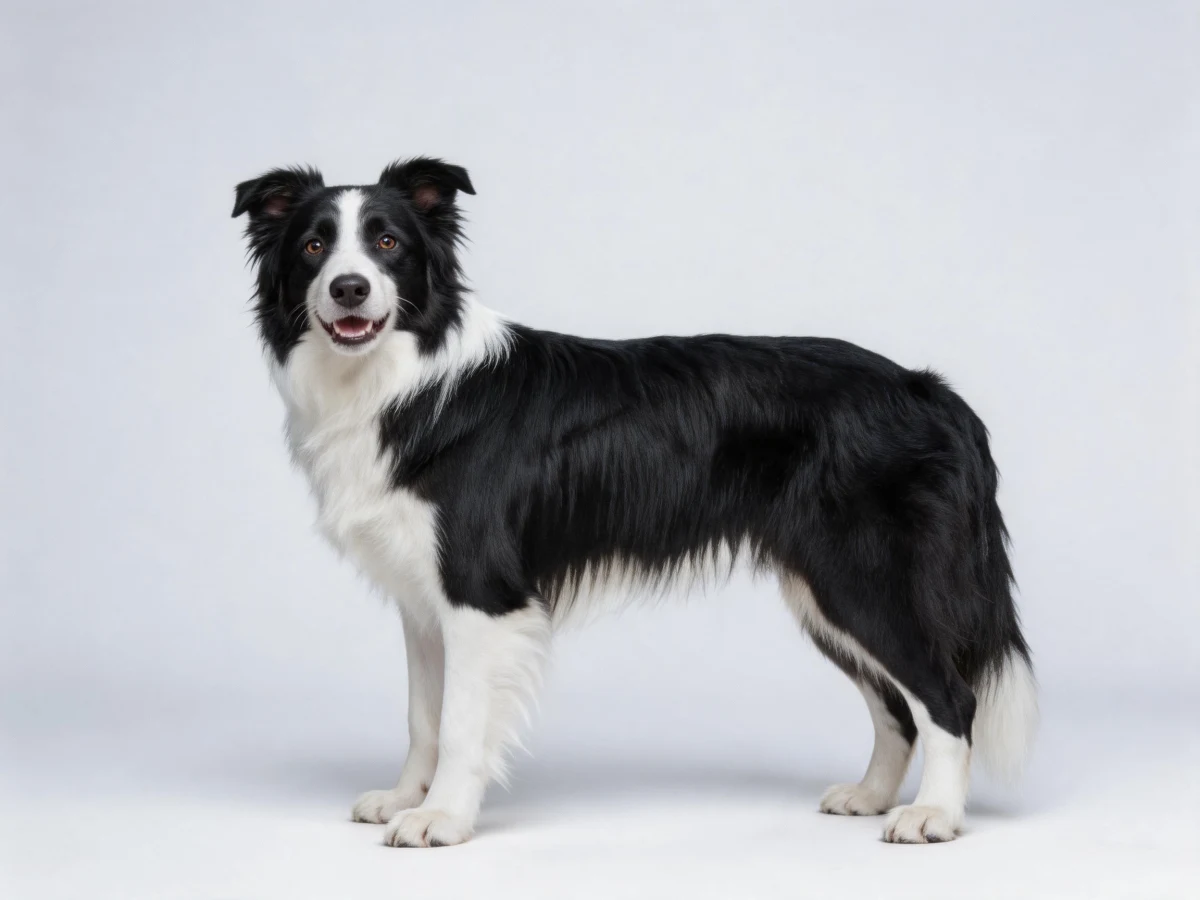
English Shepherd
✨ Key Takeaways
- A medium-sized American working farm dog of British collie descent, standing 46-58 cm and weighing 18-29 kg, with a medium-length double coat in four recognised patterns: black-and-white, sable-and-white, tricolour, and black-and-tan.
- A generalist farm dog that herds with a loose-eyed, upright posture -- not the crouching eye-pressure style of the Border Collie -- while also controlling vermin, guarding the yard, and serving as a family companion.
- Recognised by the United Kennel Club (continuous registration from the early twentieth century), the English Shepherd Club Registry, and the National English Shepherd Registry; not AKC or FCI recognised.
- On the Livestock Conservancy conservation priority list, reflecting a small but dedicated breeding community focused on working ability rather than show conformation.
- Heritable health priorities include hip dysplasia (OFA testing recommended), Collie Eye Anomaly and PRA (DNA tests available), and the MDR1 drug-sensitivity mutation common to collie-descent breeds -- owners and vets should know the dog's MDR1 status before prescribing relevant medications.
- Highly biddable and responsive, forming strong bonds with its household, but needs meaningful physical and mental engagement to remain settled; a working-farm or active-rural home is the natural fit.
Quick Facts
Common Names & Variants
Modern aliases
Historical names
⚖️ Pros & Cons
Advantages
Trade-offs
Physical Appearance
Recognized colors
Coat
Other
Ears: Semi-erect to button. Tail: Natural; low carriage.
🕰 History
Born on the American farm, not the British trial field
Across the length and breadth of the British Isles and Ireland, working-class farmers kept a type of collie-descent dog that was good at almost everything: it gathered and moved livestock with a calm loose eye rather than a pressuring stare, caught rats and groundhogs along the barn foundation, helped on the hunt, watched the yard at night, and minded the children during the day. That dog — unfixed by any formal standard, known locally as farm collie, shepherd dog, or simply the dog — arrived in North America aboard every wave of British and Irish settlement from the seventeenth century onward. In the valleys of Appalachia, on the Illinois prairie, and across the timbered uplands of the Ohio country, farmers selected the same qualities the settlers' grandparents had valued at home: an adaptable, biddable, generalist partner who could shift between herding the hogs at dawn, trailing a deer at noon, and lying under the supper table at dusk without losing either its usefulness or its good temper. That process of vernacular selection across two centuries of American farming is the origin of the English Shepherd.
Three centuries of selection on the working farm
The dogs brought by British settlers were not a single registered breed but a broad collie-type population sharing ancestry with the dogs that would later produce the Rough Collie, the Border Collie, and other British herding breeds. In America they were crossed where necessary with whatever working dogs were at hand, but the core traits — the loose-eyed, upright herding posture, the biddable and responsive temperament, the medium build suited for all-day work — were maintained because farmers depended on them. Unlike the Border Collie, which was being simultaneously refined in Britain for competitive sheep-dog trials, the American farm collie was optimised for versatility across a mixed farm rather than for maximum intensity on a single task. The distinction is fundamental: an English Shepherd working hogs will move them with a decisive charge and a bark if needed; a Border Collie bred for trial work would crouch and eye them from a distance, a technique that impresses judges but can leave a field of ornery sows unimpressed. English Shepherd breeders and the breed clubs have consistently described this difference as a feature, not a deficiency.
The United Kennel Club and the first formal recognition
The United Kennel Club, founded in 1898, was from the outset more sympathetic to working American breeds than the American Kennel Club, and it was through the UKC that the farm collie population received its first formal identity. The UKC began registering collie-type farm dogs in the early twentieth century, and the name English Shepherd was formalised to acknowledge the British-origin working collie stock that most of these dogs descended from — distinguishing them from the Australian Shepherd (a name that refers to the Basque shepherd culture of California, not to Australia) and from the show-line Scotch Collie. Exact dates of early registration records vary by source, but UKC recognition of the type is documented to at least the 1920s; the breed has been registered there continuously and the UKC English Shepherd standard remains the primary formal reference in the United States.
Multiple registries, and a conservation effort
Because the English Shepherd was maintained by farmers rather than by a single kennel club, several registries emerged to record it. The English Shepherd Club Registry (ESCR) and the National English Shepherd Registry (NESR) both operate alongside the UKC, reflecting the breed community's preference for maintaining working ability as the primary criterion for registration rather than conformance to a single detailed physical standard. The Livestock Conservancy, the leading American organisation for heritage breeds of livestock and working dogs, has placed the English Shepherd on its conservation priority list — a recognition that, despite the breed's continued presence in farm communities, the population of dogs working in their traditional role is small enough to warrant deliberate preservation. The AKC does not recognise the English Shepherd, and the FCI has not recognised it either; the breed is distinctly American in its organisational home, and most breeders within the community consider the emphasis on working ability over show conformation to be one of the breed's defining values.
The generalist tradition under pressure from specialist breeds
Through the mid-twentieth century the English Shepherd was a common sight on American farms, but as farming became more mechanised and as specialist herding breeds — the Border Collie in particular — gained popularity with competitive stockdog handlers, the farm collie role contracted. The Border Collie's intense herding drive and trainability made it the breed of choice for formal sheepdog trialling, while the English Shepherd's broader versatility made it harder to market to a public that had come to associate herding dogs with the competitive arena. The breed persisted in rural communities where the old generalist ideal was still valued, and a revival of interest in heritage farming and farm-dog traditions from the late twentieth century onward has brought renewed attention to it. Today the English Shepherd remains primarily a working farm and rural companion dog, bred by a dedicated community that prizes the qualities that made it essential before tractors replaced horses and before herding became a sport rather than a livelihood.
Temperament & Personality
Biddable, steady, and quietly self-reliant
The English Shepherd was shaped by the demands of the mixed American farm: a dog that had to be tractable enough to take instruction from an overworked farmer, but independent enough to manage routine tasks without moment-to-moment direction. The result is a temperament that is unusually well-balanced for a herding breed — willing and attentive with its people, but confident rather than clingy, and capable of making sensible decisions on its own when required. Most experienced owners describe the breed as highly biddable in the sense that it reads human intent quickly and responds to mild corrections without drama, but not a breed that shuts off its own judgment. A well-bred English Shepherd is neither a nervous dog nor a dominant one; it occupies a middle ground of steady confidence that makes it comfortable across a wide range of settings as long as it has meaningful work.
A dog that bonds hard and claims its household
English Shepherds are intensely loyal to their own family and tend to appoint themselves the unofficial supervisors of the household — tracking the movements of their people, checking on the children, and positioning themselves where they can observe everything. In a home this can shade into shadow-following or mild guardedness around strangers if the dog is not properly socialised. The breed is typically reserved rather than unfriendly with unfamiliar people; it takes stock of a new person before deciding they are acceptable, then is warm and accepting once that decision is made. Early and broad socialisation is important precisely because the guardian and watchdog instinct is real.
Herding instinct and the family setting
The herding drive in an English Shepherd is genuine but expressed differently from that of the Border Collie. Where the Border Collie tends to stalk, crouch, and apply eye pressure, the English Shepherd typically works upright, moving livestock with a combination of positioning, bark, and body pressure — a style adapted to working mixed farm animals rather than being specialised for trial-field sheep. In a household with children, this manifests as an inclination to circle and gather, which is charming when managed but can alarm small children if not redirected. The drive is easy to redirect because the breed is responsive and aims to please; the key is giving it a legitimate outlet, whether through stock work, herding games, or treibball. A bored English Shepherd with unsatisfied herding instinct is an inventive dog, and its inventions are not always ones the furniture survives.
Intelligence and the working-dog compact
English Shepherds learn new concepts quickly, and the flip side of that intelligence is that a mentally under-occupied dog finds its own stimulation. Owners who treat the English Shepherd as a general-purpose companion without providing the mental engagement a farm dog expects will encounter a dog that investigates everything and vocalises its opinion. The traditional working compact — the dog does a real job in exchange for a real role in the family — is not a quaint sentiment for this breed; it is a practical description of how to keep one happy.
🏡 Living With a English Shepherd
Rural by design, adaptable by nature
The English Shepherd was bred for the mixed American farm, and that background is the starting point for any honest assessment of how the breed fits different living situations. A dog that spent two centuries helping manage livestock, controlling vermin, and ranging across acres of farm ground has a default setting that assumes space, activity, and a clear job to do. Given those things, an English Shepherd is an exceptionally agreeable partner: calm indoors when it has had sufficient exercise and mental engagement, gentle with children and household animals it has been raised alongside. The adjustments required when those conditions are not met are significant, and prospective owners in suburban or urban settings need to plan for that gap before it becomes a problem.
Exercise, range, and daily routine
A healthy adult English Shepherd needs substantial daily exercise — a realistic minimum of an hour and a half of purposeful movement per day. On-leash walking alone does not satisfy a breed bred to range and make decisions; off-leash time in a secure area, herding work, hiking, or structured sporting activities are more appropriate outlets. The breed is athletic and sure-footed across varied terrain. Puppies and adolescents need controlled exercise — extended forced runs before the growth plates close can cause lasting joint damage — but from about eighteen months onward the breed has the stamina for serious physical activity alongside an active owner.
Children, other animals, and the household structure
English Shepherds raised with children and socialised appropriately are typically patient, gentle, and actively engaged with younger household members. The herding instinct means that toddlers in motion can trigger a circling response, which is worth managing through training but is not a sign of aggression. With other dogs the breed is generally sociable; with livestock, cats, and poultry it adapts well if introduced young, as farm-dog selection favoured a dog that could live alongside the animals it worked. Secure fencing is a non-negotiable: the breed has the drive and athleticism to test boundaries if inadequately contained.
Climate, housing, and the practical setup
The English Shepherd's medium-length double coat gives it reasonable tolerance for both cold and warm conditions, though not suited to extreme heat without shade and water management. The coat sheds heavily during seasonal changes. A house with a yard is the natural home; motivated owners in less ideal settings have made the breed work with rigorous daily exercise and enrichment routines, but it requires genuine commitment.
🎓 Training & Exercise
Biddable for a herding breed — but read the contract first
The English Shepherd's reputation for trainability is well-earned but comes with an important caveat. This is a breed developed to respond to the farmer who provided a meaningful job and clear expectations, not to perform repetitive obedience drills for abstract praise. Training that connects to a purpose lands quickly and sticks reliably; training that seems arbitrary tends to produce a dog that does the minimum required and then looks for something more interesting. Understanding that distinction before starting makes the training relationship with an English Shepherd much more productive.
Positive methods and partnership-based approach
English Shepherds respond best to clear, consistent, positive-reinforcement methods. The breed is sensitive to tone; harsh corrections or a training atmosphere of frustration are counterproductive, producing avoidance rather than enthusiasm. Reward-based training works well because the breed is genuinely motivated by the approval of its people and by the pleasure of doing something correctly. Experienced English Shepherd trainers note that the dog learns best when it understands the purpose behind an exercise — training sessions benefit from clear structure and logical progression rather than random collections of cues. Shaping is particularly effective with a breed this intellectually engaged.
Socialisation as foundation work
The English Shepherd's natural reserve with strangers and its guardian instinct make early socialisation one of the most important investments a new owner can make. Puppies exposed to a wide variety of people, environments, sounds, and situations during the critical window of seven to sixteen weeks develop into dogs that read new circumstances calmly. This is not about producing indiscriminate friendliness — the breed is inherently more selective — but about building the confidence that allows the dog to distinguish between genuinely novel but harmless situations and genuine threats. A well-socialised English Shepherd is steady and self-possessed; an under-socialised one can develop an exaggerated wariness that is difficult to walk back in adulthood.
Advanced work: stock, sport, and canine careers
For owners with access to livestock, the English Shepherd's natural herding ability is a pleasure to develop. The breed typically needs only modest direction to begin working stock competently — the instinct is there — and the loose-eyed upright style translates well across species, from sheep and cattle to pigs and ducks. For those without livestock, herding trials, agility, nosework, tracking, and treibball all offer appropriate outlets. The breed has also been used in search and rescue, therapy dog programmes, and as assistance dogs. Whatever the discipline, the principle is the same: give it a real job and it will meet the standard.
✂️ Grooming & Coat Care
A working coat that earns its keep
The English Shepherd carries a medium-length double coat — a weather-resistant outer layer over a dense, insulating undercoat — selected over centuries for practical outdoor work rather than aesthetic effect. It dries reasonably quickly, sheds mud and debris without retaining them, and does not mat readily. The coat does not require professional trimming or shaping. What it does require is regular brushing, a reliable shedding management programme, and the ear, nail, and dental hygiene that all dogs need regardless of coat type.
Brushing frequency and shedding management
Under normal conditions a thorough brush-through once or twice a week using a slicker brush or pin brush, followed by a metal comb through the feathering on the legs, chest, and tail, keeps the coat in good condition. During the spring and autumn coat blows — when the undercoat is released in volume — daily brushing with an undercoat rake or deshedding tool is a practical necessity. Owners who establish the brushing routine from puppyhood find the adult dog cooperative. Bathing is necessary only when the dog is genuinely dirty; over-bathing strips the coat oils that contribute to its weather resistance.
Ears, nails, and dental care
The semi-erect to drop ear carriage means that air circulation to the ear canal can be reduced compared with a prick-eared breed, and the denser coat around the ear opening can trap moisture after bathing or swimming. Monthly inspection for redness, odour, or discharge is a sensible routine. Nails should be trimmed every three to four weeks for dogs exercised primarily on soft ground. Daily tooth-brushing with a dog-specific fluoride-free toothpaste, supplemented by appropriate dental chews, is the most effective way to prevent periodontal disease.
Seasonal and working-dog considerations
Dogs that work in agricultural settings or that exercise in long grass and woodland should be checked for ticks after every outing — around the ears, in the groin and axillae, between the toes, and along the ventral midline. Appropriate tick and flea prevention should be discussed with a veterinarian, with particular attention to the MDR1 gene mutation documented in this breed; the practitioner should be aware of the breed's drug-sensitivity profile before prescribing any product from the avermectin or macrocyclic lactone family.
🍖 Diet & Nutrition
Feeding a versatile, active farm dog
The English Shepherd is a medium-sized, athletic breed that maintained working condition on mixed American farms, routinely covering significant ground in a day. A genuinely working farm English Shepherd has higher caloric demands than a companion dog of the same frame that spends most of its day indoors; feeding programmes need to reflect the actual activity level of the individual dog rather than a generic breed average.
Life-stage nutrition and portion management
During puppyhood — from weaning to roughly twelve months, with a transitional phase through eighteen months as growth plates close — the English Shepherd requires a diet formulated for large-breed puppies or for all life stages with appropriate calcium-to-phosphorus ratios. Overfeeding during growth is associated with accelerated growth rates that increase the risk of developmental orthopaedic problems in breeds with documented hip dysplasia susceptibility. Feeding to a lean body condition — where the ribs can be felt easily but are not visually prominent — is more protective of joint health. Adult English Shepherds should be fed twice daily. Senior dogs from about eight years onward may benefit from a diet with adjusted protein quality and caloric density as metabolic rate and activity level change.
Diet quality and practical choices
The English Shepherd community has no single consensus on the ideal diet format — dry kibble, wet food, raw feeding, and home-prepared diets all have proponents, and each format has evidence-supported advantages and practical trade-offs. The consistent advice from veterinary nutritionists is to use a food that meets AAFCO nutritional guidelines for the dog's life stage, to monitor body condition and adjust portions at least every three months, and to ensure treats and supplements constitute no more than ten percent of total daily caloric intake. Fresh water should be available continuously, particularly for active working dogs in warm conditions.
Weight management and joint health
Given the documented prevalence of hip dysplasia in the breed, maintaining a lean healthy body weight across the dog's entire life is one of the most effective things an owner can do to reduce the severity of joint disease. Every additional kilogram of body weight increases load on the hip and elbow joints with every step the dog takes; the relationship between excess body condition and accelerated arthritic progression in dysplastic joints is well-established in veterinary orthopaedics. Portion control and regular body condition assessment are the owner's responsibility across the dog's full lifespan.
🐶 Buying & Adopting a English Shepherd
A working-community breed — where to begin
Finding an English Shepherd from a responsible breeder requires more research effort than finding a popular AKC-registered breed, but the English Shepherd community is genuinely small and connected, and breeders who are serious about the breed are generally well-known within it and invested in the dog's working integrity rather than in producing volume. The right starting points are the English Shepherd Club Registry (ESCR), the National English Shepherd Registry (NESR), and the UKC, all of which maintain breeder information. The Livestock Conservancy, which has placed the breed on its conservation priority list, is also a useful contact for prospective owners interested in the heritage context.
What a responsible breeder looks like
A responsible English Shepherd breeder will discuss the health testing history of both parents with specificity — hip and elbow OFA evaluations, CEA DNA results, PRA panel results, and MDR1 status at a minimum — and will share documentation rather than simply asserting the parents are healthy. They will be transparent about the working history of their lines and will ask searching questions about the buyer's lifestyle, experience with herding breeds, activity level, and plans for the dog's engagement — a breeder who places a puppy without asking about the match is prioritising revenue over the dog's welfare.
Puppy prices, waiting lists, and what to expect
English Shepherd puppies from health-tested, working-bred stock typically range from several hundred to over a thousand US dollars, with significant variation depending on the breeder's location and the depth of health testing conducted. Because the breeding community is small and serious breeders do not produce litters on a commercial schedule, waiting lists are common. Prospective buyers should expect to wait one to two litters before a suitable puppy is available from a particular breeder. Puppies from internet advertisers without health-testing documentation, multiple breeds simultaneously available, and year-round availability should be approached with the same scepticism appropriate to any such source.
Adoption and rescue considerations
English Shepherds and English Shepherd mixes appear in rescue settings — typically dogs acquired by owners who underestimated the breed's exercise and mental engagement requirements. General herding-breed rescues in agricultural regions of the United States are the most likely source; the breed clubs can often provide referrals. An adult dog from rescue comes with the advantage of a known temperament. The assessment of a working herding breed in rescue requires some expertise; an evaluator familiar with the breed type is more reliable than a generic shelter assessment.
📜 Breed Name Etymology — iDogNames original research
An American breed with a British name — where the label comes from
The name "English Shepherd" is a formal registration label rather than an ancient folk designation, and it was chosen to perform a specific function: to identify the collie-descent working farm dog of British settler origin as a distinct type from the Australian Shepherd, the Border Collie, and the show Rough Collie, all of which were simultaneously present in the early-twentieth-century American dog world. The word "English" refers not to England specifically but to the British Isles more broadly — the dogs that founded the American farm collie population came from England, Scotland, Ireland, and Wales in roughly equal proportion — and "Shepherd" identified the dog's primary working role in the British tradition, even though in practice the American farm dog was as likely to be working cattle and hogs as sheep. The name was formalised through the United Kennel Club registration process in the early twentieth century and has been the breed's official designation in the UKC and the breed clubs since.
Collie: from Scottish Gaelic to the American farm
The parent category from which the English Shepherd descends is the "collie" — a word whose etymology has been a matter of genial scholarly dispute for over a century. The most widely accepted derivation traces it to the Scottish Gaelic "caileach" or to the Scots word "coaly," referring to the black-faced sheep ("coally sheep" or "colley sheep") that these dogs were traditionally used to herd in the Border counties of Scotland and northern England. The link between the dark-faced sheep and the herding dog transferred from the animal to its manager, and "collie" gradually became the standard term for the long-nosed, herding-type dog of the Scottish and English uplands. The English Shepherd inherited this ancestry — its collie-type head, herding instinct, and moderate build are direct expressions of the same original population — and the word "collie" appears in many of the breed's informal historical designations: farm collie, old-fashioned collie, common farm shepherd.
Shepherd: the pastoral tradition in English
The word "shepherd" comes from Old English "sceaphierde" — a compound of "sceap" (sheep) and "hierde" (herd, keeper) — and has been in continuous use to denote the keeper of sheep, and by extension the dog that assists the keeper, since the Old English period. As a dog-name element "shepherd" in the British tradition carried connotations of working legitimacy, intelligence, and pastoral partnership that were distinct from the connotations of "hound" (which implied hunting by scent) or "terrier" (which implied earth work). When the United Kennel Club formalised the name "English Shepherd," the word "shepherd" positioned the breed within the herding-dog tradition rather than the sporting-dog or companion-dog traditions, which was accurate to its working history and remains so today.
Name forms at a glance
| Name | Role | Origin | Literal meaning | First recorded |
|---|---|---|---|---|
| English Shepherd | primary | English (American registration label) | the shepherd dog of English/British origin | 1927 |
| Farm Collie | alias | English (American vernacular) | the collie-type dog of the farm | — |
| Shepherd | historical | Old English (sceaphierde) | keeper of sheep | — |
| Collie | historical | Scots / Scottish Gaelic | the dog of the coal-faced sheep; the dark-faced-sheep dog | — |
| Old-Fashioned Collie | historical | English (American breed-community term) | the collie as it was before specialisation for the show ring or the trial field | — |
🏛 Naming Traditions — iDogNames original research
Farm, field, and the American working tradition
English Shepherd owners reach naturally for names that reflect the breed's American working heritage — farm and field vocabulary, the American landscape, and the British Isles traditions that gave the breed its ancestry. Short, two-syllable names that carry across a field have an appropriateness for a breed whose original owners called it to work from a distance: names like Ranger, Dusty, Brindle, Tucker, or Sable sit naturally on a dog that spent two centuries earning its keep across the American countryside. The breed's four recognised coat colours — black-and-white, sable-and-white, tricolour, and black-and-tan — provide a direct naming vein: Sable, Ember, Tansy, Ash, and Brindle all speak to the coat in a way that fits a working-dog naming tradition. The British Isles ancestry gives a second vein: Scottish and Irish place names, Celtic given names, and names from the pastoral and farming traditions of the British uplands all fit a breed whose DNA traces back to the working dogs of those landscapes.
🐾 Themed Names for Your English Shepherd — iDogNames original research
American farm and working-dog tradition names
- Ranger — for a dog bred to range across farm and field
- Tucker — a classic American working-dog name
- Scout — for the watchful, observant farm guardian
- Dusty — an earthy name for a farm dog at home in the fields
- Brindle — traditional working-dog coat name
- Maverick — for the independent-minded farm collie
- Flint — hard and reliable, like a good farm tool
- Grit — for the stamina and tenacity the breed is known for
Coat colour names — sable, black, tan, and white
- Sable — directly from the most common English Shepherd colour pattern
- Ember — for the warm mahogany tones in a rich sable coat
- Ash — for the blue-grey cast visible on black-and-white dogs
- Tansy — a golden herb; for the golden sable shade
- Toffee — for the warm tan markings of the tricolour and black-and-tan
- Birch — white bark and dark markings; suited to a black-and-white dog
- Roan — for the mixed-pigment appearance of a white-ticked coat
- Chalk — clean and simple, for a predominantly white-marked dog
British Isles heritage and pastoral names
- Fergus — Old Irish/Gaelic, meaning "man of vigour"; apt for a working farm dog
- Heather — the moorland plant of the British uplands the breed's ancestors worked
- Briar — thorny fieldside plant; a name for a dog that works through cover
- Cairn — the stone marker of the Scottish hill country
- Glen — a Scottish valley; a short, strong name for a herding dog
- Fern — the forest floor plant of the British woodland edge
- Rowan — the mountain ash tree of the Scottish uplands
- Breck — a Scots word for a hillside; distinctive and pastoral
Herding, livestock, and farm vocabulary names
- Drover — one who moves livestock; the working role in one word
- Shepherd — directly from the breed name; worn with quiet pride
- Hollow — for the farm hollows and creek bottoms the breed worked
- Bale — the organised, useful output of farm work
- Furrow — the ploughed row; an earthy farm name
- Croft — a small farm of the British tradition; for a dog of that heritage
- Bramble — the thorny hedgerow the farm collie worked beside for centuries
- Flock — the animal group the breed was built to manage
- Thresh — the harvest activity; an uncommon and distinctive farm name
- Dale — the broad valley of the English and Scottish uplands; a farm-country name
More American heritage names
- American Trail - best for a English Shepherd name rooted in United States rather than generic style
- Eastern and central United States; developed from British and Irish collie-type farm dogs brought by settlers Ridge - best for a regional landscape cue tied to the English Shepherd story
- Local Line - best for a name that respects local breed history
- Old Route - best for migration, trade, field or pastoral routes behind the breed
- Heritage Note - best for a page where origin should be treated as context, not decoration
- Village Path - best for rustic, local or landrace-style background
- Working Home - best for a dog whose name should remember versatile all-purpose farm dog: herding cattle, hogs, sheep, and poultry with a loose-eyed upright style; cont
- Country Mark - best for a concise country-of-origin cue
More work and purpose names
- Earthdog - best for a English Shepherd with terrier working history
- Vermin Line - best for ratting or vermin-control context
- Dig Rule - best for a terrier whose drive needs boundaries
- Bold Heart - best for courage without exaggerating aggression
- Recall - best for a small fast dog who must come back reliably
- Settle - best for building an indoor off-switch
- Toy Find - best for legal prey-substitute games
- Gate Check - best for door and yard management
More coat and build names
- Black-and-white - best for a English Shepherd whose color or markings deserve a simple call name
- Straight To Slightly Wavy, Double Coat - best for the straight to slightly wavy, double coat type on this breed
- White Blaze - best for a clear face or chest marking
- Dark Mask - best for a dog with a strong muzzle or face marking
- Weather Coat - best for outdoor or working-dog coat context
- Strong Frame - best for a dog whose build is part of its function
- Bright Eye - best for an alert expression
- Ground Step - best for a name tied to movement and body type
📋 Breed Standard at a Glance
UKC standard — general appearance and size
The English Shepherd is a medium-sized, well-balanced working dog of collie type with a moderately long double coat, a level topline, and a natural or docked tail carried low at rest and raised not above the level of the back in action. The overall impression is of a capable, athletic farm dog — neither extreme in any physical quality nor refined toward an aesthetic ideal — with the substance to work all day and the agility to handle varied terrain. The breed standard maintained by the United Kennel Club emphasises working ability and sound structure over dramatic physical features, which is reflected in the relatively moderate proportions that characterise the breed across its colour variants.
Size, weight, and proportion
Males typically stand 48 to 58 centimetres at the withers and weigh in the range of 20 to 29 kilograms; females are somewhat smaller, typically 46 to 53 centimetres and 18 to 27 kilograms. The breed is slightly longer in body than tall at the withers — a rectangular rather than square outline — which accommodates the reach and drive of a long-distance working dog. The head is moderate, with a slightly rounded skull, a defined stop, and a medium-length muzzle; the ears are medium-sized, set well apart, and carried semi-erect to folded forward at the tip depending on the individual. Eyes are oval to almond-shaped and typically brown, with a calm, intelligent expression that conveys attentiveness rather than tension.
Coat, colour, and recognised patterns
The coat is straight to slightly wavy, of medium length, with a dense weather-resistant undercoat. Feathering is present on the ears, backs of the forelegs, the hindquarters, and the tail. The four recognised colour patterns are: black-and-white, sable-and-white (ranging from golden through mahogany sable), tricolour (black, white, and tan), and black-and-tan. White markings typically appear on the muzzle, blaze, collar, chest, belly, and feet in a pattern reminiscent of the broader collie group. Merle is not a recognised colour in the English Shepherd standard and is not part of the breed's authentic colour heritage, distinguishing it further from the Australian Shepherd, where merle is common and widely recognised.
🏆 Recognition
Other registries
Breed clubs
❓ Frequently Asked Questions
What is the English Shepherd's temperament like?
The English Shepherd is biddable, affectionate with its own household, and quietly self-reliant — a dog that reads human intent quickly and responds well to mild, clear guidance without the obsessive intensity of the Border Collie. It forms strong bonds with its family and takes a supervisory interest in all household members, including children. With strangers it is naturally reserved rather than unfriendly, warming once it has made its assessment. A well-bred, well-socialised English Shepherd is steady and confident; one that has been under-socialised or under-occupied may be over-watchful or inventively destructive.
How big does an English Shepherd get?
The English Shepherd is a medium-sized breed. Males typically stand 48 to 58 centimetres at the withers and weigh 20 to 29 kilograms; females are somewhat smaller at 46 to 53 centimetres and 18 to 27 kilograms. The build is athletic and slightly rectangular — longer in body than tall — reflecting a dog bred for all-day working movement across varied farm terrain rather than for a show-ring silhouette.
What are the main health concerns in English Shepherds?
The English Shepherd is a generally sound, long-lived breed with a typical lifespan of 12 to 15 years. The principal heritable health concerns are hip dysplasia (OFA radiographic evaluation recommended for all breeding stock), Collie Eye Anomaly and Progressive Retinal Atrophy (both DNA-testable), and the MDR1/ABCB1 gene mutation that causes drug sensitivity to ivermectin and related compounds — a finding common to most collie-descent herding breeds that every owner and treating veterinarian should be aware of. Responsible breeders test for all four conditions and share results openly.
Is the English Shepherd a good family dog?
For an active household — ideally rural, with space and a genuine working or sporting outlet for the dog — the English Shepherd is a patient, affectionate, and highly engaged family partner that is particularly attentive to children. The herding instinct to gather and circle is real and should be managed through training rather than treated as a temperament fault. The breed is better suited to experienced dog owners or those prepared to invest in training and daily structured engagement than to a first-time owner seeking a low-maintenance companion. City or flat living is possible with rigorous daily exercise but is far from the breed's natural setting.
How much grooming does an English Shepherd need?
The English Shepherd requires moderate grooming: a thorough brush-through once or twice a week under normal conditions, increasing to daily brushing during the spring and autumn seasonal coat blows when the dense undercoat is shed in volume. The medium-length double coat does not mat readily and needs no professional trimming or shaping. Routine care includes monthly ear checks, regular nail trimming (every three to four weeks for dogs exercised primarily on soft ground), and daily tooth-brushing to prevent the periodontal disease that is common across all dog breeds.
How much exercise does a English Shepherd need?
A English Shepherd needs exercise that matches its history and build. Plan for daily movement, training and mental work connected to versatile all-purpose farm dog: herding cattle, hogs, sheep, and poultry with a loose-eyed upright style; cont. The right amount depends on age, health and individual temperament, so owners should balance activity with rest rather than relying on a one-size routine.
📚 Sources & Further Reading
Every load-bearing factual claim on this page is anchored to one of the sources below. iDogNames does not synthesize from secondary aggregators.
- breed club official UKC English Shepherd Breed Standard — United Kennel Club
- breed club official English Shepherd Club (ESC) -- breed information and registry — English Shepherd Club
- breed club official The Livestock Conservancy -- English Shepherd conservation priority listing — The Livestock Conservancy
- wikipedia English Shepherd -- Wikipedia — Wikipedia
- wikidata English Shepherd -- Wikidata entity Q1339065 — Wikidata
- book The New Encyclopedia of the Dog — Dorling Kindersley (2000)
- health registry OFA Hip Dysplasia -- evaluation and screening — Orthopedic Foundation for Animals
- veterinary org MDR1 / ABCB1 Gene Mutation in Dogs -- Washington State University Veterinary Clinical Pharmacology Lab — Washington State University College of Veterinary Medicine
- breed club official National English Shepherd Registry (NESR) — National English Shepherd Registry