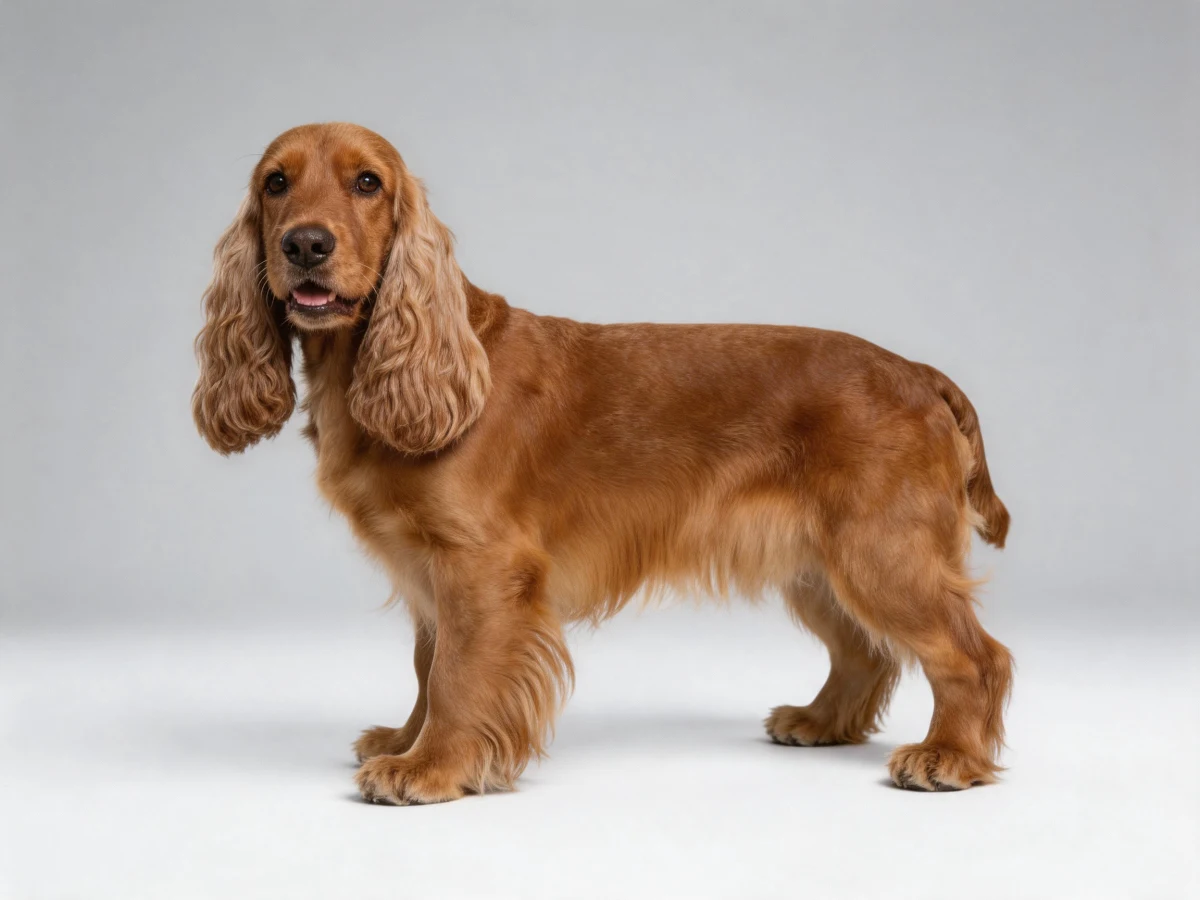
Cavalier King Charles Spaniel
✨ Key Takeaways
- The Cavalier is not an ancient breed — it is a deliberate 20th-century recreation of the long-nosed toy spaniel painted at Charles II's Stuart court, triggered by the American Roswell Eldridge's prize at Crufts from 1926.
- It split formally from the flatter-faced King Charles Spaniel: a UK breed club formed in 1928 and the Kennel Club recognised the Cavalier in its own right in 1945; the AKC granted full recognition in 1995.
- Mitral valve disease (MVD) is the breed's defining health story — cardiac disorders were the single largest disease category (31.7%) and heart murmur the most common single disorder (30.9%) in Summers/O'Neill et al. (2015).
- A formal MVD breeding protocol exists: drawn up by veterinary cardiologists, advised to UK breeders in 1996 and US breeders in 1998, built on annual cardiologist auscultation and a minimum breeding age — a Danish mandatory scheme cut murmur risk by roughly 73% (Birkegard et al., 2016).
- Chiari-like malformation / syringomyelia and the BCAN-microdeletion episodic falling syndrome are documented neurological concerns; MRI and DNA screening exist for them respectively.
- A correct Cavalier is genuinely sweet-tempered and people-dependent, with almost no guarding instinct — a companion breed in the literal sense, ill-suited to long isolation.
Quick Facts
Common Names & Variants
Modern aliases
Historical names
Modern variants & lines
⚖️ Pros & Cons
Advantages
Trade-offs
Physical Appearance
Recognized colors
Coat
Other
Ears: Drop, long feathered. Tail: Natural, carried level.
🕰 History
An American's advertisement, and a breed brought back from a painting
Most breeds are old dogs with a recent registry. The Cavalier King Charles Spaniel is almost the opposite: a recent dog rebuilt from old paintings. The breed in its modern form does not predate the 1920s, and it exists because of a single irritated American. In 1926 Roswell Eldridge, a wealthy United States breeder visiting England, looked at the toy spaniels in the British show ring and decided they were the wrong shape. The dogs painted at the Stuart court — long-nosed, flat-skulled, with a high-domed forehead and a chestnut thumb-mark — had been bred away into the short, snub-faced King Charles Spaniel of Victorian fashion. So Eldridge bought the type back into existence with prize money.
His advertisement in the Crufts catalogue is on the record, and it is unusually specific for a piece of breed history. He offered, per the American Kennel Club's breed history, £25 — a serious sum, on the order of a year's wages for a labourer of the period — to the best male and best female "Blenheim Spaniels of the Old Type, as shown in pictures of Charles II's time, long face, no stop, flat skull, not inclined to be domed with spot in centre of skull." He committed the prizes for five consecutive years.
The Stuart anchor: why "King Charles" at all
The name reaches back to Charles II, king of England, Scotland and Ireland from 1660. Toy spaniels were so attached to the Restoration court that the type acquired the king's name; the 17th-century diarist's image of the king surrounded by little spaniels is the founding cliché of the breed and, for once, broadly accurate to the Stuart period. The Blenheim variety carries a second aristocratic anchor — it is named for Blenheim Palace, seat of the Dukes of Marlborough, where the red-and-white toy spaniels were bred. The point that matters for the history is that the Cavalier's lineage is genuinely Stuart-era in type, even though the continuous modern population is a 20th-century reconstruction. The dogs Eldridge wanted were the ones the Marlborough and court lines had looked like before fashion shortened the face.
Crufts, 1926-1928: the type comes back
The first response to the prize was thin. The AKC's history records that only a handful of dogs entered Eldridge's special classes at Crufts in 1926, and they were closer to accidents — older King Charles Spaniels that happened to throw back to the long-nosed type — than to a deliberate breeding programme. That changed quickly. By 1928 enough breeders were working toward the old type that they founded a club for it at Crufts and adopted a male called Ann's Son, bred by Miss Mostyn Walker, as the living template for the written standard. The breed-defining cruelty of the story is that Eldridge himself died in 1928, before the third year of his prizes, and never saw the type he had paid to resurrect take hold.
The split from the King Charles Spaniel
For roughly two decades the reconstructed dog was treated as a long-faced variety of the existing King Charles Spaniel rather than a breed. The separation was formalised in 1945, when the Kennel Club in Britain recognised the Cavalier King Charles Spaniel as a breed in its own right, distinct from the short-faced King Charles Spaniel (known in the United States as the English Toy Spaniel). The two are still separate breeds with separate standards: the Cavalier is the larger, long-nosed dog; the King Charles Spaniel is the smaller, domed, snub-nosed one. The shared half of the name is the source of near-universal confusion, and it is a confusion baked into the registry record itself.
Crossing to America, slowly
The breed reached the United States well before it was an AKC breed. American fanciers formed the Cavalier King Charles Spaniel Club, USA in 1954, and that club ran the breed as a non-AKC registry for decades, in part out of a deliberate wariness about the effects of rapid show popularity. The American Kennel Club granted the breed full recognition only in 1995, placing it in the Toy Group, with the American Cavalier King Charles Spaniel Club as the parent club. The FCI lists the breed under Standard N° 136, Group 9 (Companion and Toy Dogs), Section 7 (English Toy Spaniels), with the United Kingdom as the country of origin.
What the history actually means
What's striking about the Cavalier is that its origin story is, unusually, fully documented and recent — there is no thin patch where a breed historian has to reconstruct from trade routes and guesswork. The cost of that documentary clarity is a narrow founding base: the modern breed was rebuilt from a small number of dogs in a short window, which is the structural reason its inherited-disease story is as concentrated as it is. The Cavalier is a breed that was created to be a companion, recreated to look like the past, and is now living with the genetic consequences of how few dogs that recreation used.
Temperament & Personality
What the standard demands: no nervousness, no guarding
The breed standard is, for once, a reliable temperament description rather than aspiration. The FCI standard for the Cavalier requires a dog that is "sporting, affectionate, absolutely fearless" and explicitly "gay, friendly, non-aggressive; no tendency towards nervousness." That last clause is the load-bearing one. The Cavalier was recreated as a court companion, and the temperament was selected as hard as the long nose: a correct Cav is socially open with strangers, soft with children, and tolerant of other dogs almost to a fault. A suspicious, snappy or fear-reactive Cavalier is not the breed working harder — it is a breeding or socialisation failure.
The companion-dog trade-off
The flip side of "absolutely fearless and non-aggressive" is "almost no guarding instinct." The breed will announce a visitor and then, characteristically, try to befriend them. People wanting a watchdog have the wrong spaniel. The other structural trait is dependence: this dog was bred for centuries-old laps and then re-bred in the 1920s to be a constant companion, and it does not do isolation well. A Cavalier in a home where someone is usually present is a settled, sweet, undemanding dog. The same animal alone for a full working day, every day, is a candidate for separation distress. That is a design feature, not a flaw to train out.
The sporting-spaniel residue
It is easy to file the Cavalier as a pure lapdog and miss the spaniel in it. The breed retains a working nose, a liking for a thrown object, and enough drive that some individuals will flush birds and chase scent with real enthusiasm — the AKC profile is candid that the Cavalier "will gleefully chase a squirrel" and has little road sense, which is why the breed is kept leashed near traffic. This is a small dog with a gundog's curiosity rather than a strictly decorative one, and it benefits from a daily walk and some nose work, not just a cushion.
Living with one, honestly
Day to day the Cavalier is one of the most genuinely easy companion temperaments in the toy group: biddable, food-motivated, gentle with elderly owners and children alike, and adaptable to flat or house. The hard caveats are not behavioural but situational. This is not a dog for someone away from home all day. Its trust of strangers means it is not a security asset. And — covered in the health section — its sweetness can mask cardiac and neurological disease that the breed carries at unusually high rates, so a calm, affectionate Cavalier still needs the screening paperwork behind it. The temperament is the easy part; the health is where the diligence goes.
🏡 Living With a Cavalier King Charles Spaniel
A lap dog that means it
The Cavalier King Charles Spaniel was bred for one job above all others: to be a companion. Generations of selection toward the gentle Stuart-court toy spaniel produced a dog whose whole orientation is toward people, and the practical result is a small spaniel that wants to be on you rather than merely near you — in your lap on the sofa, pressed against your leg at the desk, following you from room to room. This affectionate, eager-to-please nature is the breed's headline charm and also its central caveat: a Cavalier bonds hard and tolerates solitude poorly. A dog routinely left alone for long working days is a Cavalier at real risk of separation distress, and the breed suits a home where someone is around for much of the day, or that can arrange daycare, a sitter, or a midday visit.
Moderate exercise, real adaptability
Behind the spaniel ancestry sits a genuinely modest exercise need. A daily walk plus some play and a little training is enough to keep most Cavaliers content — they are happy in an apartment, happy in a townhouse, happy wherever their people are. That said, the spaniel underneath the lap dog is real: many Cavaliers will gladly chase a ball, follow a scent, or flush a bird if given the chance, and they enjoy a longer ramble when offered one. Because the breed has an instinct to follow its nose and little traffic sense, a securely fenced yard and a lead in open areas matter more than the small size suggests.
Children, other pets, and the climate caveat
Cavaliers are reliably good with children and with other animals; the breed is sociable rather than scrappy, generally welcoming other dogs, cats it is raised with, and visitors alike — which makes it a poor watchdog and a wonderful family one. As with any toy breed, play with young children should be supervised so a small dog is not dropped or stepped on. The single silky coat offers limited insulation, so a Cavalier is sensitive to temperature at both ends: it needs protection and shorter outings in cold or wet weather, and shade, water, and cool timing in heat. Shedding is moderate and constant rather than dramatic — expect fine hair on clothes and furniture as a steady fact of ownership.
🎓 Training & Exercise
Why Cavaliers are easy — and the one real catch
The Cavalier is a soft, biddable, people-pleasing dog, and that temperament makes it genuinely easy to train for a companion's life: it learns house manners, basic obedience, and tricks readily, motivated by food, praise, and above all the chance to be close to its person. Positive, reward-based methods are not just preferable but necessary — a Cavalier is sensitive enough that harsh corrections or a sharp tone produce a worried, shut-down dog rather than a more obedient one. The one real catch is the opposite of stubbornness. Because the breed is so eager and so attached, an inconsistent owner accidentally rewards clinginess, begging, and attention-seeking, and a sweet dog quietly trains its household instead of the other way round.
Housetraining and the spaniel nose
Like many toy breeds, Cavaliers can be slower to fully housetrain than larger dogs, and the answer is the same proven recipe: a consistent schedule, frequent trips outside, generous reward for getting it right, and patience rather than punishment for accidents. The spaniel heritage also shows up as a nose that switches on outdoors; a Cavalier on a scent can briefly tune out its handler, which is why a reliable recall — built on a long line and reinforced for life with high-value rewards — is the most valuable safety skill the breed can learn, especially given its lack of road sense.
Socialisation and the clingy trap
Early, varied, positive socialisation in puppyhood — to people, other dogs, handling, and everyday sights and sounds — builds the confident, friendly adult the breed is known for. Just as important is teaching a Cavalier to be calmly alone in small doses from the start: short, undramatic absences, a comfortable settle spot, and food-puzzle work that makes time apart neutral rather than frightening. Building that independence early is the single best counter to the separation issues the breed is prone to. Puppy classes are an excellent foundation, both for manners and for the controlled exposure to other dogs and handlers that keeps a Cavalier socially easy. Keep sessions short, frequent, and upbeat — a few minutes of focused, rewarding work several times a day fits the breed's attention span and its love of interaction far better than one long drilling session.
✂️ Grooming & Coat Care
A silky single coat with feathering
The Cavalier wears a single, silky coat of moderate length, with no harsh curl and with long "feathering" on the ears, chest, legs, feet, and tail. Because it is a single coat, grooming is moderate rather than heavy, but the feathering is the work. A thorough brush-out several times a week — working a comb or pin brush right down to the skin through the ears, the chest, the leg feathering, and behind the elbows — keeps the coat clean and tangle-free and lets the owner check the skin underneath. A bath every few weeks, or when genuinely dirty, suits the breed; the standard calls for a natural, untrimmed coat, so the feathering is kept long rather than scissored into shape.
Matting hotspots and the feet
The long feathering is exactly where mats form: behind and under the long pendant ears, in the armpits, on the trousers and the backs of the legs, and on the tail. These spots need specific, regular attention because a neglected mat tightens against the skin and becomes a sore. The hair between the foot pads and around the feet should be tidied to keep traction on smooth floors and to stop grit, grass seeds, and debris collecting after walks. The Blenheim, tricolour, black-and-tan, and ruby coats all groom the same way; colour changes nothing about the maintenance.
Ears, nails, teeth, and skin
Those heavily feathered, low-hanging ears trap warmth and moisture and sit over the ear canal, so the breed is prone to ear problems — a weekly check and a wipe of the visible ear with a vet-recommended cleaner, plus careful drying after every bath, is a core habit rather than an optional one. Nails grow quickly and need trimming every two to three weeks; nails that click on the floor are already too long. As a small breed, the Cavalier is prone to dental disease, so brushing the teeth several times a week from puppyhood is one of the highest-value long-term health habits an owner can build. A weekly once-over of the skin under the feathering catches problems early, and getting a puppy used to having its ears, feet, and mouth handled from the very start makes every later grooming and dental session far easier on both of you. Wiping the face and the area below the eyes keeps the white of a Blenheim or tricolour coat clean and helps prevent staining.
🍖 Diet & Nutrition
Small dog, easy weight gain
The nutritional fact that matters most for a Cavalier is portion discipline. This is a small, food-motivated, lap-loving dog that burns relatively few calories, and it gains weight easily — a few extra treats or table scraps a day add up fast on a frame this size, and surplus weight is bad news for a breed already carrying real cardiac and orthopaedic concerns. Feed measured meals against the dog's ideal weight rather than free-feeding or topping the bowl up by eye, keep treats inside a daily calorie budget (use part of the measured ration for training), and learn to body-condition-score by feeling for the ribs and waist rather than trusting the eye. Keeping a Cavalier lean is one of the most useful everyday things an owner can do for its heart, joints, and longevity.
Puppy growth and feeding routine
Cavalier puppies are usually raised on a complete food formulated for small or toy-breed growth, fed in several small meals a day because little stomachs cannot hold much at once, then settling to twice-daily feeding as adults. Portion size should be set by ideal adult weight — broadly 13–18 lb depending on frame — and activity level, and adjusted over time by body condition rather than by the number on the bag. Any change of diet should be made gradually over about a week to avoid digestive upset. Fresh water should always be available.
Toy-breed cautions
Very young or very small toy puppies can be prone to low blood sugar if they go too long between meals, so regular small feedings in puppyhood matter; an owner should ask their breeder and vet about the right schedule for their individual pup. The small mouth also makes dental disease and the build-up of tartar a real concern, which is another reason daily dental care and appropriately sized food and chews earn their place. As with any breed, treats and human food are easy to over-give in a dog this size, so they are best kept to a small fraction of daily calories. Because the Cavalier is so people-oriented and so willing to beg sweetly at the table, the discipline really sits with the household rather than the dog: agree on who feeds what, weigh out the daily ration, and count every treat against it so a charming face does not quietly turn into an overweight one.
🐶 Buying & Adopting a Cavalier King Charles Spaniel
Start at the parent club, not a classified ad
The American Cavalier King Charles Spaniel Club (ACKCSC) is the AKC parent club and the right place to begin. It maintains a Code of Ethics for member breeders, a breeder-referral resource, and breed-rescue connections. A breeder worth buying from will be an ACKCSC member in good standing, will register litters with the AKC, will health-test both parents, will offer a written contract and health guarantee, and — crucially for this breed — will talk openly and specifically about heart health in their lines rather than insisting their dogs are simply "healthy."
The single most important question: ask about the heart
Mitral valve disease (MVD) is extremely common in the Cavalier and tends to appear earlier in life than in most breeds — this is the defining health fact of buying one, and it is why the heart conversation is non-negotiable. Responsible breeders follow an MVD breeding protocol that broadly recommends breeding only from older parents whose hearts have stayed clear of a murmur, and they screen breeding dogs with an annual cardiologist examination. Ask to see those cardiac results on both parents. Beyond the heart, the breed is associated with Chiari-like malformation and syringomyelia (CM/SM), screened through an MRI scheme run under the BVA/KC framework, and with episodic falling and curly coat/dry eye, both of which have DNA tests. The CHIC profile for the breed lists cardiac, eye examination (OFA/ACVO), patella, hip evaluation, the episodic falling DNA test, and the curly coat/dry eye DNA test — a good breeder can show this paperwork on the parents. Naming these issues is consumer fact, not medical advice: a breeder who produces heart and DNA results and discusses MVD frankly is the one to trust, while "our dogs are healthy, no need for tests" is the answer to walk away from.
Rescue and rehoming
Because Cavaliers are popular and people-oriented, breed rescue regularly takes in adolescents and adults rehomed when owners underestimate the companionship needs, the grooming, or simply face a change in circumstances. The ACKCSC and regional Cavalier rescue groups coordinate rehoming, and for an adopter willing to take an adult dog with a known temperament rather than wait for a puppy, breed rescue is an excellent and ethical route — an adult Cavalier's affectionate nature is usually already an open book.
Price, waiting lists, and the red flags
A well-bred Cavalier King Charles Spaniel puppy in the United States ran roughly USD 1,800–4,500 in 2024, depending on region, lineage, and parent titles, and the better breeders keep waiting lists of months. The patterns to walk away from are familiar: puppies advertised well below that range with immediate availability, no health-testing or cardiac documentation, and no parent-club connection. Be especially wary of any seller who cannot or will not show heart screening on the parents — given how common and early MVD is in this breed, that paperwork is the most important thing a buyer can insist on. A fair price from a heart-testing, parent-club breeder, even after a wait, is far cheaper than the lifetime cost of a poorly bred dog.
📜 Breed Name Etymology — iDogNames original research
A breed named for a king, and a temperament word
The full name unpacks into two distinct claims. "King Charles" is straightforwardly historical: the toy spaniels of the type were associated with the court of Charles II, the restored Stuart king after 1660, closely enough that the dog took the monarch's name and kept it through every subsequent reshaping of the type. "Cavalier" is the disambiguating word added in the 20th century to separate the recreated long-nosed dog from the short-faced King Charles Spaniel — and it is not a random flourish. A Cavalier, in 17th-century English, was a Royalist supporter of the Stuart crown during the Civil War, the opposite of a Roundhead Parliamentarian. Attaching "Cavalier" to "King Charles Spaniel" is therefore a tightly period-appropriate choice: a Royalist's word, fixed to a king's dog, for the breed bred back toward that king's era.
"Blenheim": a battle, a palace, a colour
The breed's signature colour name has the deepest etymology of all. Blenheim is the English form of Blindheim, the Bavarian village where the Duke of Marlborough won the Battle of Blenheim in 1704. The grateful Crown built Marlborough a palace and named it Blenheim Palace; the red-and-white toy spaniels bred there became "Blenheim" spaniels, and the chestnut thumb-print marking on a white skull became the "Blenheim spot" or "Blenheim lozenge." So the colour of a lapdog is, by transmission, named after a War of the Spanish Succession battlefield in Bavaria. Eldridge's 1926 advertisement asked specifically for "Blenheim Spaniels of the Old Type" — the colour name was load-bearing in the document that recreated the breed.
The pre-registry words
Before the kennel-club names, the type was described by function. Stuart and Georgian English called small house spaniels "comforter" spaniels — kept, the period belief ran, to draw fleas and warm laps. The dogs were also simply "toy spaniels." None of these are formal breed names, but they are the honest occupational vocabulary the modern registry name sits on top of, in the same way the Rottweiler's "Metzgerhund" predates "Rottweiler." The Cavalier's pre-registry name was its job: comfort.
Aliases, and the confusion that is structural
Cavalier, Cav and CKCS are the standard short forms, used interchangeably in AKC publications and veterinary records. The unavoidable confusion is with the King Charles Spaniel: in the United States the short-faced breed is called the English Toy Spaniel, partly to reduce exactly this collision. The two share a name and a Stuart heritage but are separate breeds with separate standards — the Cavalier is the larger, long-nosed dog, recreated in the 1920s; the King Charles Spaniel is the older registry's small, domed, snub-nosed dog. Any naming guide that treats them as one breed is reproducing a registry-level ambiguity, not simplifying it.
Name forms at a glance
| Name | Role | Origin | Literal meaning | First recorded |
|---|---|---|---|---|
| Cavalier King Charles Spaniel | primary | English (descriptive + royal eponym) | the Royalist (long-nosed) King Charles spaniel | 1928 |
| King Charles Spaniel | historical | English (royal eponym) | the spaniel of King Charles | — |
| Blenheim Spaniel | historical | English (toponym, via battle and palace) | the red-and-white spaniel bred at Blenheim Palace | — |
| Cav | alias | English (clipping) | short form of Cavalier | — |
| Comforter Spaniel | historical | Early Modern English (occupational) | lap-warming companion spaniel | — |
🏛 Naming Traditions — iDogNames original research
A naming culture with a Stuart spine
The Cavalier's naming tradition is unusually coherent because the breed's whole identity points at one historical moment — the Restoration court of Charles II — and the names that fit it cluster around that moment rather than scattering. Three layers run through how these dogs are named: the Stuart-royal layer that the breed is literally named for, the English-aristocratic kennel layer inherited from the Marlborough/Blenheim line, and the toy-companion layer of soft, affectionate call names. They are distinguishable, and a well-chosen Cavalier name usually lands deliberately in one of them.
The Stuart-royal layer
This is the layer the breed name itself sits in, and it is the richest. The obvious anchor is the king: Charles / Charlie is the breed's own eponym and the single most period-correct name a Cavalier can carry. Around it sits the actual Stuart dramatis personae — Charles and his brother James (James II), the queens Catherine (Catherine of Braganza, Charles II's queen) and Henrietta (Henrietta Maria, Charles I's queen), and the Restoration court figures Nell (Nell Gwyn), Rupert (Prince Rupert of the Rhine), and Barbara (Barbara Villiers). The political vocabulary of the era works too: Cavalier itself, Royalist, Stuart, Restoration, Whitehall (the Stuart palace). Naming a Cavalier from this layer is not theming for its own sake — it is naming the dog after the exact court that gave it its name and shape.
The Blenheim / aristocratic kennel layer
The second layer comes from the breed's documented colour heritage and the Marlborough connection. Blenheim works as a name directly; so does Marlborough, Sarah (Sarah Churchill, Duchess of Marlborough), and Woodstock (the estate Blenheim Palace stands on). The named foundation dog of the modern breed, Ann's Son (the 1928 template for the standard, bred by Miss Mostyn Walker), gives a genuine pedigree anchor — Ann as a call name carries a real piece of the breed's recreation. The British-aristocratic register more broadly — Duchess, Windsor, Ascot, Chelsea, Mayfair — sits naturally on a breed bred for English drawing rooms and palace laps, without tipping into parody.
The toy-companion layer
The third layer is the practical one: soft, two-syllable call names that suit a small affectionate dog and carry well across a room without sounding like a working command. The breed's gentleness invites names like Daisy, Lily, Bonnie, Teddy, Biscuit, Pippin — and the Blenheim colour invites palette names (Ruby, the breed's own whole-colour variety; Chestnut; Pearl for the white ground). This is where most pet Cavaliers actually land, and there is nothing wrong with it; the difference iDogNames draws is that an owner who knows the Stuart and Blenheim layers exist can choose a soft name on purpose rather than by default.
What this means for naming a Cavalier today
The heritage offers three honest routes, all documented. A Stuart-court name (Charlie, Catherine, Rupert, Nell) ties the dog to the exact monarchy that named it. A Blenheim/aristocratic name (Blenheim, Marlborough, Sarah, Windsor) honours the colour heritage and the Marlborough line. A soft toy-companion name (Ruby, Daisy, Pippin) suits the breed's actual temperament. The names that fight the breed are the ironic-tough ones — calling a 7-kilogram court spaniel "Tank" or "Killer" works against everything the dog is, and against three centuries of why it has the name it has.
🐾 Themed Names for Your Cavalier King Charles Spaniel — iDogNames original research
Stuart court names — the breed's own eponyms
Drawn from the Restoration court of Charles II, the exact period the Cavalier was recreated to resemble. These are the most heritage-accurate names the breed can carry.
- Charlie — for Charles II himself; the breed's literal namesake
- Catherine — Catherine of Braganza, Charles II's queen
- Henrietta — Henrietta Maria, Charles I's French queen
- Rupert — Prince Rupert of the Rhine, Royalist cavalry commander
- Nell — Nell Gwyn, Charles II's most famous companion
- James — James II, Charles's brother and successor
- Barbara — Barbara Villiers, Duchess of Cleveland
- Whitehall — the Stuart royal palace; a place-name with weight
- Stuart — the royal house the breed is bound to
- Royalist — what a "Cavalier" actually was in the Civil War
Blenheim and Marlborough heritage names
From the breed's documented colour and the Marlborough line that bred the red-and-white spaniels at Blenheim Palace.
- Blenheim — the colour, the palace, and the 1704 battle in one word
- Marlborough — the dukedom that bred the Blenheim spaniels
- Sarah — Sarah Churchill, Duchess of Marlborough
- Woodstock — the estate Blenheim Palace stands on
- Ann — for Ann's Son, the 1928 foundation dog of the modern breed
- Duke — the Marlborough title; period-appropriate without parody
- Windsor — British royal seat; sits naturally on the breed
- Ascot — the royal racecourse; English-aristocratic register
- Churchill — the Marlborough family name
- Mayfair — the London address the breed belongs to
Coat and colour names — the four varieties
The standard recognises exactly four colours: Blenheim, tricolour, black and tan, and ruby. These names work that palette precisely rather than generically.
- Ruby — the breed's own whole-coloured rich-red variety
- Chestnut — the exact word for the Blenheim markings
- Pearl — for the "pearly white" Blenheim ground colour
- Lozenge — the prized Blenheim thumb-spot on the skull
- Sable — heraldic black; suits the black-and-tan variety
- Cinnamon — warm red, true to the Blenheim chestnut
- Domino — for the tricolour's black-and-white pattern
- Copper — the tan points on the black-and-tan
- Marble — the broken-coloured Blenheim and tricolour read
- Russet — a precise word for the Blenheim red
Soft companion call names
For the breed's true nature — a gentle, people-loving toy spaniel. Two-syllable, warm, easy to call.
- Daisy — soft, classic, the archetypal Cavalier name
- Teddy — for the breed's plush, affectionate feel
- Pippin — small, bright, English; carries well
- Bonnie — "pretty" in Scots; gentle and traditional
- Biscuit — warm and food-fond, like the breed
- Lily — delicate, English-garden register
- Coco — short and affectionate; common on Blenheims
- Hattie — old-English diminutive; suits a small lapdog
- Winnie — gentle, period-friendly, easy on the ear
- Maisie — soft two-syllable English call name
English-garden and pastoral names
For the sporting-spaniel half of the breed — the dog that still chases a squirrel — kept genteel rather than working-harsh.
- Clover — pastoral, soft, suits a country-house spaniel
- Willow — English-garden; gentle and graceful
- Hazel — hedgerow name; warm and period-appropriate
- Poppy — bright English wildflower; very common on the breed
- Wren — small English bird; light and quick like the dog
- Bramble — hedgerow word; a nod to the spaniel's nose
- Heath — open English country; understated
- Fern — soft, green, English-pastoral
- Bluebell — English woodland flower; gentle and seasonal
- Hawthorn — hedgerow tree; quietly English
📋 Breed Standard at a Glance
General appearance
The AKC and UK Kennel Club standards describe the Cavalier King Charles Spaniel as an active, graceful, well-balanced toy spaniel — elegant and royal in bearing, sweet and gentle in expression, with absolutely no trace of coarseness. The breed traces to the toy spaniels of the Stuart court, and the modern Cavalier was deliberately bred back toward that longer-nosed historical type early in the twentieth century, encouraged by Roswell Eldridge's 1926 Crufts prize for spaniels of the old pattern. The overall impression is of a natural, untrimmed companion spaniel of great refinement.
Size, coat, and colour
This is a true toy: dogs stand roughly 12–13 inches at the shoulder and weigh about 13–18 lb, with dogs and bitches close in size and proportion. The coat is single, of moderate length, silky and free from curl, with long feathering on the ears, chest, legs, feet, and tail; the standard asks for the coat to be kept natural and untrimmed. Four colours are recognised: Blenheim (rich chestnut markings on a pearly white ground), tricolour (black and white with tan points), black-and-tan, and ruby (a whole-coloured rich red). Litters average about four puppies.
Head, movement, and temperament
The head is almost flat between the high-set ears, with a shallow stop, a full muzzle tapering gently, and large, round, dark, lustrous eyes set well apart that give the breed its characteristic soft, melting expression. Movement is free and elegant, with good reach in front and drive behind and a level topline. Temperament is written into the standard: the Cavalier should be gay, friendly, non-aggressive, and fearless — affection for all is a hallmark of the breed, and any tendency toward nervousness or aggression is a serious fault.
🏆 Recognition
Recognized by the American Kennel Club in 1995 as a Toy breed. FCI standard No. 136 (Section 7 — English Toy Spaniels), recognized in 1955.
Other registries
Breed clubs
❓ Frequently Asked Questions
Are Cavalier King Charles Spaniels good family dogs?
Yes. The Cavalier was bred purely as a companion and is gentle, affectionate, and reliably good with children and other pets, making it an excellent family dog. The main trade-off is that the breed bonds hard and dislikes being left alone for long stretches, so it suits a home where someone is around much of the day. As with any toy dog, play with young children should be supervised so a small dog is not dropped or injured.
Do Cavalier King Charles Spaniels shed a lot?
They shed moderately and steadily rather than dramatically. The single silky coat with its long feathering needs brushing several times a week to stay tangle-free, and you should expect some fine hair on clothes and furniture as a normal fact of ownership. The breed is not a heavy seasonal "blower" the way a double-coated dog is.
How much exercise does a Cavalier King Charles Spaniel need?
Modest amounts. A daily walk plus some play and a little training keeps most Cavaliers happy, and the breed adapts well to apartment living. The spaniel ancestry means many enjoy a longer ramble, a game of fetch, or following a scent when offered one, but the baseline requirement is low compared with sporting breeds.
How long do Cavalier King Charles Spaniels live?
Typically about 9 to 14 years. The breed has notable health concerns — most prominently early-onset mitral valve disease (heart) and Chiari-like malformation/syringomyelia — which is why buying from a breeder who heart-tests and DNA-tests their breeding dogs matters so much for a Cavalier.
Are Cavalier King Charles Spaniels easy to train?
Generally yes for companion life. Cavaliers are soft, eager to please, and respond very well to reward-based training, though like many toy breeds they can be slower to fully housetrain, so consistency and patience help. Harsh corrections backfire with such a sensitive dog. A reliable recall is worth building, because the spaniel nose can briefly override a Cavalier outdoors.
Are Cavalier King Charles Spaniels hypoallergenic?
No. The Cavalier sheds and is not considered a hypoallergenic breed. Anyone with a dog allergy should spend extended time around the breed before committing to one.
How much does a Cavalier King Charles Spaniel puppy cost?
A well-bred, health-tested puppy from a parent-club breeder typically ran USD 1,800 to 4,500 in 2024, often with a waiting list of several months. Be cautious of puppies priced well below that with no health-testing paperwork — and given how common early-onset heart disease is in this breed, insist on seeing cardiac screening results for both parents.
📚 Sources & Further Reading
Every load-bearing factual claim on this page is anchored to one of the sources below. iDogNames does not synthesize from secondary aggregators.
- akc breed page Cavalier King Charles Spaniel — AKC Breed Profile & History (revived Stuart-type spaniel) — American Kennel Club (2024)
- fci standard pdf FCI Standard No. 136 — Cavalier King Charles Spaniel — Fédération Cynologique Internationale (1955)
- breed club official The Kennel Club (UK) — Cavalier King Charles Spaniel breed information & heart scheme — The Kennel Club (UK)
- breed club official American Cavalier King Charles Spaniel Club (AKC parent club) — American Cavalier King Charles Spaniel Club
- academic paper Prevalence of disorders recorded in Cavalier King Charles Spaniels attending primary-care veterinary practices in England — Summers JF, O'Neill DG et al., Canine Genetics and Epidemiology (2015)
- academic paper Breeding Restrictions Decrease the Prevalence of Myxomatous Mitral Valve Disease in Cavalier King Charles Spaniels over an 8- to 10-Year Period — Birkegard AC et al., Journal of Veterinary Internal Medicine (2016)
- health registry MVD Breeding Protocol for Cavalier Breeders (veterinary cardiology consensus) — Cavalier Health (Blenheim Company) (1998)
- wikipedia Cavalier King Charles Spaniel — Wikipedia — Wikipedia
- book The Cavalier King Charles Spaniel: An Owner's Companion — Sheila Smith (The Crowood Press) (1999)