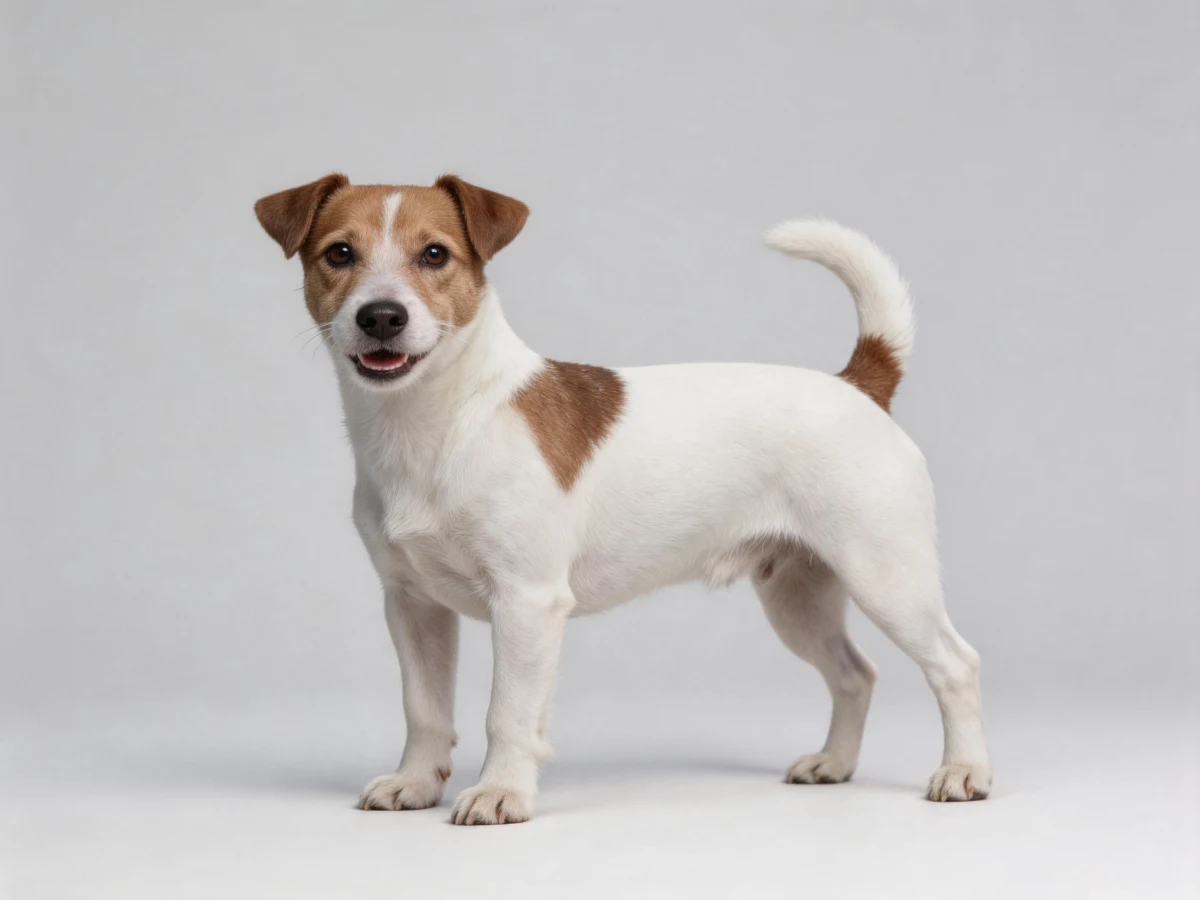
Mountain Feist
✨ Key Takeaways
- A small, agile American tree dog of the rural South and Appalachia, standing 12-18 inches and weighing 12-30 pounds, bred for generations to hunt squirrels and small game and recognised by the United Kennel Club as a separate breed on 1 February 2015
- Not a planned pedigree breed but a regional working type, descended from crosses of hunting hounds (for nose and treeing instinct) and terriers (for size, grit and prey drive); George Washington recorded a small foist looking yellow cur in his 1770 diary and the word feist gave English the adjective feisty
- Hunts using sight, sound and scent at once, working virtually silent on the track and then barking steadily once it has treed the game -- an extremely alert, quick and tireless little hunter
- A short, dense, smooth coat in any color, requiring almost no grooming; the UKC standard requires erect v-shaped ears and a scissors bite, and lists albinism, non-erect or cropped ears, and long/wire coats as disqualifications
- Affectionate, loyal and unusually trainable for a working hunter, but a small dog with a big exercise requirement and intense prey drive -- it needs daily activity, mental work and secure fencing, and is not a low-effort lapdog
- Generally hardy and long-lived (about 10-15 years) with few breed-defining inherited problems, though as a small dog it is prone to dental disease and patellar luxation; recognised by the UKC, not by the AKC or FCI
Quick Facts
Common Names & Variants
Modern aliases
Historical names
⚖️ Pros & Cons
Advantages
Trade-offs
Physical Appearance
Recognized colors
Coat
Other
Ears: Erect, v-shaped. Tail: Straight, natural or docked.
🕰 History
A barnyard dog with a place in the founders' diaries
George Washington recorded a "small foist looking yellow cur" in his Mount Vernon diary in 1770, and Abraham Lincoln set a "fice" loose on a treed bear in his poem "The Bear Hunt" -- two of the earliest written glimpses of the small American hunting dog that would eventually be standardised as the Mountain Feist. Long before any kennel club took notice, the feist was simply the all-purpose vermin dog of the rural South: a quick, gritty, low-maintenance little hunter kept on farms and homesteads across the Appalachian highlands and the wider Southeastern United States to tree squirrels, clear barns of rats and turn its hand to whatever small game the household needed. The Mountain Feist is the direct, working-bred heir of that tradition, and its history is not the story of a planned breed at all but of a regional type forged by use and finally written down in the twenty-first century.
Terrier grit crossed onto hunting-hound blood
The feist was built from the two kinds of dog a frontier farmer was most likely to own. The United Kennel Club's own standard puts it plainly: like the cur breeds, the feist breeds were developed in the rural South by people who needed cheap, hardy, low-maintenance dogs to hunt small game and kill vermin, and the feist was often the result of crosses between hunting hounds and terriers. From the terrier side came the compact size, the sharp prey drive, the courage to face a cornered rat and the bright, alert disposition; from the hound side came the nose and the instinct to follow and mark game. The blend was never standardised by pedigree -- it was standardised by the job. A dog that treed squirrels reliably and earned its keep was bred from; one that did not was not. Generations of that ruthless practical selection, rather than any studbook, produced the modern type.
What "mountain" means in the name
The "Mountain" in Mountain Feist points to the Appalachian and Ozark highlands where the squirrel-treeing line of feist was most carefully kept. Squirrel hunting was a serious source of meat and sport in the mountain South, and hill-country hunters selected hard for the traits that mattered on steep, timbered ground: a dog small and agile enough to scramble through rough terrain, fast enough to beat a squirrel to the tree, and clever enough to mark exactly where the animal had gone up. The result was a tight, athletic little tree dog rather than a general-purpose ratter. The name records a habitat and a hunting style as much as a place of origin, and it is what most clearly separates this line from the broader feist family it grew out of.
Near loss, then organised revival
For most of its existence the feist survived purely as working stock, passed between hunting families with no registry to protect it, and by the latter part of the twentieth century the type was thin enough on the ground to worry the people who valued it. The wider feist population had narrowed sharply, and dedicated squirrel-dog hunters and preservation-minded breeders began organising to keep the working lines intact. Their efforts ran through hunting clubs, breed associations and a culture of competitive squirrel hunts -- nite hunts and bench shows -- that gave breeders a public yardstick for quality. That organised community is what carried the type from a scattering of farm dogs into a recognised breed, and it is the same community that supplies most Mountain Feists today: hunters breeding for performance first.
United Kennel Club recognition in 2015
The United Kennel Club had already recognised the closely related Treeing Feist in 1998, and on 1 February 2015 it recognised the Mountain Feist as a separate breed, placing it in the Terrier Group with its own written standard. That recognition is the single most important date in the breed's formal history, because it is the moment an old regional working type acquired a fixed description -- height and weight ranges, coat, ear carriage, bite, gait -- against which dogs could be judged. The UKC remains the breed's primary registry; the Mountain Feist is not recognised by the American Kennel Club or the Fédération Cynologique Internationale, and an honest account places it squarely in the world of working and performance registries rather than the international show world. The standard itself is candid about its purpose: the Mountain Feist is to be evaluated as a working dog, and honourable scars from field work are explicitly not to be penalised.
Temperament & Personality
A working tree dog, bright and busy
The Mountain Feist's temperament is the temperament of a small, hard-driving squirrel dog, and the breed's character only makes sense against that job. The UKC standard sums the breed up in three words -- agile, active and alert -- and adds that these are extremely alert dogs that hunt using sight, sound and scent at once. In the home that translates into a busy, switched-on little companion that misses very little, watches everything that moves and has an engine well out of proportion to its size. This is not a placid lapdog that happens to be small; it is a compact athlete bred to spend its days quartering rough timber, and the same energy and curiosity that make it deadly on squirrels make it a lively, demanding presence indoors.
Affectionate with its people, devoted and biddable
For all its drive, the feist is a genuinely affectionate breed with its own family. Generations of living as a farm dog -- working alongside people by day and living close to them by night -- left a dog that bonds hard to its household and wants to be involved in whatever is happening. It is typically friendly, loyal and eager to please its owner, which is part of why it trains more readily than many primitive working types. That attachment has a flip side: a feist left alone for long stretches with nothing to do is an unhappy, often noisy dog, because it was bred to be a constant working partner rather than a solitary yard ornament. With children it has been raised among it is usually playful and tolerant, though its quickness and intensity suit an active family better than a sedentary one.
Prey drive, the voice and the alert nature
Two traits define the breed for any prospective owner. The first is an intense, hard-wired prey drive: this is a dog selected for centuries to chase, tree and mark small animals, and that instinct does not switch off because the dog lives in town. Squirrels, cats, rabbits and other small pets will be treated as quarry unless the dog has been raised with them from puppyhood, and even then the drive toward outdoor wildlife stays live. The second is the voice. A Mountain Feist works largely silent on the track -- the standard notes they are virtually silent in pursuit -- and then opens up with a steady, insistent bark once the game is treed, holding and "barking up" until the hunter arrives. That treeing bark is a prized working asset and a real consideration in a suburban home: an alert, under-occupied feist will readily find things to bark up, from the neighbour's cat to a bird on the fence. The breed makes a keen little watchdog precisely because nothing escapes its notice; the same alertness becomes nuisance barking in a dog that is bored.
🏡 Living With a Mountain Feist
Energy first: a small dog with a big requirement
The Mountain Feist is one of those breeds whose modest size badly undersells its needs. It is a hard-running working hunter, and a couple of short strolls around the block will not touch it. The breed wants real daily exercise -- brisk walks, vigorous play, room to run, and ideally some outlet for its nose and treeing instinct such as fetch, flirt-pole work, scent games or actual hunting. A feist that gets that comes home content and settles into a calm, affectionate housemate; a feist that does not turns its considerable energy on the household, becoming restless, destructive and vocal. This is the single most common mismatch with the breed: people who choose it for its small, low-maintenance looks and then discover they have taken on an athlete. It can live happily in a smaller home, including an apartment, but only if the owner commits to meeting the exercise need every day rather than relying on the floor space.
Family life, other pets and the fence line
Within an active household the feist is an affectionate, engaged family dog that is good with children it knows and thrives on being included. The complications are the usual ones for a high-drive hunter. Strong prey drive means cats and small pets are a real consideration -- a feist raised with a household cat from puppyhood may accept it as family, but small rodents, rabbits and birds are simply not a safe match, and a strange neighbourhood cat is fair game. With other dogs the breed is generally sociable, especially with the canine company it hunts and lives alongside, though early socialisation pays off as it does with any terrier-influenced breed. Secure fencing matters more than the dog's size suggests: a feist that marks a squirrel over the fence is athletic, determined and quick to find a gap, and its instinct is to follow game wherever it goes.
Climate, company and the right rhythm
The short, smooth single coat gives the breed little protection against extremes. A Mountain Feist tolerates warm weather reasonably well but feels the cold, and in a hard winter it needs a coat for outdoor work and a warm place indoors rather than life in an unheated kennel. It is fundamentally an indoor-bonded dog: bred to live close to its people, it does poorly shut away alone and does best when it shares the household's daily life. Owners who hunt have the easiest time of it, because the breed's needs and its purpose line up perfectly; but a feist can be an excellent companion for a non-hunting home too, provided that home is active, fits in real daily exercise, and gives the dog's quick mind something to do. Match the rhythm of the household to the energy of the dog and the Mountain Feist is a delightful, devoted companion; fail to, and its drive will fill the gap in ways the owner will not enjoy.
🎓 Training & Exercise
Quick to learn, keen to please
Among the working hunting breeds the Mountain Feist is one of the more trainable. It is intelligent, attentive and strongly attached to its handler, and that combination of brains and biddability means it picks up house manners, basic obedience and the routines of daily life faster than many independent-minded hunters. Generations of close partnership with people -- a feist works within sight and sound of its hunter, reading the handler as much as the quarry -- bred in a dog that wants to cooperate. It responds best to upbeat, reward-based methods that channel its eagerness, and it has the focus to enjoy training as a game. Short, varied, motivating sessions suit the breed's busy mind far better than long, repetitive drilling, which a bright dog quickly finds dull.
Early socialisation and the terrier streak
For all its eagerness, the feist carries a genuine terrier streak: it can be bold, stubborn and quick to make up its own mind, and it has a low tolerance for boredom and for heavy-handed correction. Early, broad socialisation is the foundation that keeps those traits in productive bounds. A puppy that meets a wide range of people, dogs, environments, sounds and -- where relevant -- household animals during its first months grows into a confident, settled adult, while one raised in isolation can become reactive, over-attached or sharp. Firm, kind consistency works; the dog needs to learn early that pushiness does not pay and that the handler is a reliable, fair leader. Harsh handling tends to backfire with a sensitive, intelligent breed, producing avoidance rather than cooperation.
Recall, prey drive and realistic limits
The honest limit of feist training is recall in the presence of live game, exactly as it is for any high-drive hunter. A dog that recalls perfectly in the garden can become temporarily deaf the instant it marks a squirrel, because chasing and treeing is the strongest instinct two centuries of selection built into it. Treating that as defiance misreads the breed. The practical answer is the standard one: build recall steadily in progressively more distracting settings, reward it generously, and rely on a long line or securely enclosed ground wherever squirrels, cats or other temptations are about. Owners who accept that off-lead reliability around game is hard-won, rather than assumed, avoid the disappointment that catches people who expect a small companion dog's compliance from a working tree dog.
Channelling the instinct into work and sport
The kindest and most effective training an owner can offer is a real outlet for the breed's drive. Where squirrel hunting is legal and appropriate, that is the obvious one, and the breed excels at it -- silent on the track, accurate at marking and tireless at treeing. For owners who do not hunt, the same instincts feed easily into dog sports and structured games: scent work and tracking engage the nose; agility, flyball and trick training suit the breed's athleticism and quickness; and a simple flirt pole or a game of fetch gives the prey drive a legitimate target. A feist with a job is a focused, satisfied dog; one with nothing to chase invents its own quarry. Match the activity to the dog's genuine talents and the Mountain Feist is a willing, capable and rewarding partner.
✂️ Grooming & Coat Care
A short working coat that asks almost nothing
The Mountain Feist wears one of the lowest-maintenance coats in the dog world. The standard describes it as short, dense and smooth, with a hair length of roughly an inch or less, and that practical jacket needs no clipping, no stripping and no professional grooming whatsoever. A weekly going-over with a soft brush, a rubber curry comb or a grooming mitt lifts dead hair, spreads the skin's natural oils and keeps the coat looking clean and glossy. The breed sheds, but modestly and manageably, and a slight increase in brushing through the spring and autumn coat changes keeps loose hair under control in the home. Bathing is occasional -- when the dog is genuinely dirty or smells of the field rather than on any fixed schedule -- using a mild dog shampoo, since over-bathing strips the coat of the oils that keep it weather-resistant. For an owner who wants a hunting dog without a grooming commitment, the feist is close to ideal.
Teeth and ears: where the real attention goes
Because the coat asks so little, the meaningful grooming for this breed is dental and routine health care. As a small dog, the Mountain Feist is prone to the tartar and periodontal disease that affect the small breeds generally, and a lifelong dental routine is the most valuable grooming habit an owner can adopt: daily brushing with a canine toothpaste, supported by dental chews and veterinary checks. The breed's erect, v-shaped ears are an advantage -- they are far better ventilated than a drop ear and far less prone to chronic infection -- but they still earn a regular look, especially in a dog that works in cover, to catch grass seeds, ticks, redness or debris early. A gentle wipe of the visible part of the ear with a veterinary cleaner when needed is usually all that is required.
Nails, eyes and the post-work check
Nails need checking roughly monthly. A feist worked or walked regularly on hard ground may wear them down naturally, but a dog exercised mostly on soft going will need trimming before the nails grow long enough to alter its gait or splay its small, well-arched feet. Eyes should be glanced at regularly and wiped clean of any normal discharge. For a breed that hunts in rough cover, a hands-on check after every outing belongs in the routine alongside the brush: run the hands over the skin and coat, feel between the toes and around the ears for grass seeds, ticks and thorns, and look the dog over for the small cuts and scrapes that working country inevitably produces. It is simple husbandry, and on a hardy little working dog it is most of what grooming amounts to.
🍖 Diet & Nutrition
Feeding a small, high-energy hunter
The Mountain Feist is a small dog with a working dog's metabolism, and its diet has to respect both facts. A good-quality complete dog food formulated for small or active breeds, matched to the dog's life stage -- puppy, adult or senior -- and to its real activity level, is the sensible baseline. Small breeds have proportionally high energy needs for their size and small stomachs to meet them, so a calorie-dense, well-balanced food fed in correctly sized portions suits the feist better than bulky low-quality fare. The amount on the bag is a starting point, not a prescription; hands-on body-condition scoring is the more reliable everyday guide. A feist in good condition has ribs that are easily felt under a thin covering, a clear waist seen from above and a visible tuck-up behind the ribs from the side. Because the breed's small frame makes a surprisingly small amount of excess weight significant, accuracy matters: a feist carrying even a pound or two too much is proportionally far more overloaded than a big dog would be.
Matching intake to the working season
For owners who hunt, the feist's energy needs swing with the season, and the commonest feeding mistake is to keep feeding at the working rate once the work has stopped. During the squirrel-hunting months a hard-driven feist burns a great deal and needs a generous, high-quality intake to sustain long days in the timber; out of season, when the same dog is doing a fraction of the work, the ration must come down to match or the weight creeps on before anyone notices. Overweight is more than a cosmetic problem in this breed: excess load strains small joints, predisposes to patellar trouble, and shortens both the working life and the long lifespan the breed is otherwise capable of. Measured meals rather than free-choice feeding, restraint with table scraps, and counting any training or hunting treats inside the daily ration rather than on top of it are the habits that keep a feist in trim.
Schedule, water and life-stage feeding
Adult Mountain Feists are normally fed twice a day, morning and evening, rather than in one large meal; splitting the ration steadies the dog's energy and is easier on a small digestion. Fresh water must always be available, and demand rises sharply on working days and in warm weather, so a hunter should carry water for the dog in the field. Puppies need more frequent, smaller meals appropriate to their age -- a fast-growing small-breed puppy is typically fed three or four times a day, transitioning to the adult twice-daily pattern as it matures -- and a senior feist may need a food adjusted for lower activity and the dental realities of an older small dog. Throughout, the principle is the same: feed the dog in front of you, watch its condition, and adjust the bowl to the body rather than to the label.
🐶 Buying & Adopting a Mountain Feist
A hunter's breed, sold mostly within the hunting world
The Mountain Feist presents an unusual buying picture for a dog of its appeal, because it remains overwhelmingly a working breed sold within a working community. The great majority of litters are bred by squirrel-dog hunters breeding for performance first, and the dogs are most often advertised through hunting clubs, breed associations, squirrel-dog forums and word of mouth rather than through the general puppy market. A prospective owner should set expectations accordingly: the right route is to approach the United Kennel Club's breeder resources and the feist hunting community directly, talk to people who hunt their dogs, and be prepared to explain how the puppy will be exercised and occupied. The breed is genuinely affordable and is not a fashionable, marked-up designer dog, but the trade-off is that finding a well-bred pup often means looking in places a casual buyer would not think to look.
What a responsible breeder looks like
Because the breed is bred for work, the best breeders evaluate their stock as working dogs, and that is exactly what a buyer should want. A responsible feist breeder hunts or trials their dogs, can show or describe the parents' working ability, raises puppies underfoot with early handling and socialisation, and is open about the health and soundness of their lines -- willing to discuss dental and orthopaedic soundness, to mention any problems seen, and to screen breeding stock where it makes sense. Expect to be asked searching questions in return: a good breeder wants to know whether the buyer can give a high-drive little hunter the exercise, engagement and secure environment it needs, and will steer a sedentary or first-time-overwhelmed buyer toward a quieter breed. A breeder who offers a puppy on demand with no questions, no working background and no interest in where the dog is going is a warning sign rather than a convenience. Meeting the dam, seeing the conditions the litter is raised in, and asking to see registration are basic, reasonable steps.
Adoption and a sober assessment of fit
Breed-specific feist rescue exists but is modest, and feists and feist-type dogs also turn up in general and small-dog rescue, often as dogs whose drive proved too much for a home that wanted a quiet companion -- precisely the mismatch this guide aims to prevent. For an adopter who genuinely wants an active little dog, a rescued feist can be a rewarding choice, with the usual caveat that an adult's history and prey drive should be assessed honestly, especially around cats and small pets. Whether buying or adopting, the honest question is the same: can you provide a small but seriously energetic hunting dog with daily exercise, mental work, secure fencing and the company of a household it lives close to? For an active home -- ideally one that hunts, but equally one that will commit to sport, scent work and real daily activity -- the Mountain Feist is a sound, affectionate, long-lived and rewarding partner. For a household wanting a small, low-effort lapdog, it is the wrong dog, and recognising that before the purchase is a kindness to everyone, the dog most of all.
📜 Breed Name Etymology — iDogNames original research
A breezy little word from the barnyard
Few breed names have an origin as earthy as the feist's. The word derives from the older American expression "fysting curre" or "fisting cur," in which the first element comes from the Middle English verb fysten -- to break wind -- the same root that gives modern English "fizzle." A feist was, quite literally, a small "windy" or "stinking" cur, and the term settled into Southern American usage as the everyday name for a small, lively, often noisy little dog. The UKC standard itself opens its history by noting that the word "feist" is an ancient one referring to a small, often noisy dog. The name is therefore descriptive in the most homely way: it labels the type by its size and its character rather than by any region, owner or quarry.
Fice, feist and feisty
The same word travelled through American English in several spellings. "Fice" and "fyce" are old variants -- Abraham Lincoln used "fice" in his poem "The Bear Hunt," picturing the small dog yapping bravely round a treed bear -- and George Washington's 1770 diary entry describing a "small foist looking yellow cur" preserves yet another spelling of the same idea. From the dog came the adjective "feisty": a feist was touchy, excitable and full of spirit out of all proportion to its size, and English borrowed exactly those qualities into the word we still use for a person who is spirited and quick to bristle. The dog gave its temperament to the language, which is a fair summary of the breed itself.
"Mountain" -- a place and a type
The qualifier "Mountain" distinguishes this line within the broader feist family. It records the Appalachian and southern highland country where squirrel-treeing feists were most carefully kept and bred, and where the hunting style that defines the breed -- a small, agile dog working steep, timbered ground to tree game -- was honed. When the United Kennel Club separated the Mountain Feist from the Treeing Feist as a distinct breed in 2015, the name marked that distinction formally. So the full name reads, in effect, as "the small spirited hill-country tree dog": the old barnyard word for the type, narrowed by a single adjective to the mountain squirrel dog the standard now describes.
Name forms at a glance
| Name | Role | Origin | Literal meaning | First recorded |
|---|---|---|---|---|
| Mountain Feist | primary | American English | the small spirited hill-country tree dog | 2015 |
| Feist | historical | Middle English / American English | a small windy or stinking cur; a small lively dog | — |
| Fice (Fyce) | alias | American English (variant spelling) | a small spirited dog | — |
| Mountain | historical | English (Old French montaigne, Latin mons) | of the mountains; the highland squirrel-dog line | — |
| Feisty | alias | American English (adjective derived from the dog) | spirited, touchy and full of fight out of proportion to size | — |
🏛 Naming Traditions — iDogNames original research
Down-home Southern names for an all-American dog
Because the Mountain Feist is so completely a creature of the rural American South, owners who want a name that fits the breed reach naturally for its Appalachian and country roots. Plain, sturdy, old-fashioned names sit perfectly on a feist -- Hank, Otis, Bell, Daisy, Jed -- the kind of names that would not look out of place called across a holler at dusk. Place names from the breed's homeland work just as well: Smoky for the Great Smoky Mountains, Ozark, Dixie, Cumberland or Blue Ridge tie a dog directly to the country that made it. And the breed's whole reason for being -- treeing squirrels in the timber -- offers an obvious, affectionate vein of hunting names that owners have used for generations.
The word "feist" itself points to a second, playful direction. A feist is spirited, quick and bold out of all proportion to its size, so names that nod to that fizz -- Scrappy, Sparky, Pistol, Banjo, Biscuit -- catch the breed's bright, busy character. Whichever way an owner leans, the strongest Mountain Feist names are the ones that reflect what the dog actually is: a small, gritty, quick-witted Southern hunting dog with more spark than a dog twice its size, and a heritage that runs straight back through the barnyards and squirrel woods of Appalachia.
🐾 Themed Names for Your Mountain Feist — iDogNames original research
Appalachian and Southern country names
- Smoky -- for the Great Smoky Mountains at the heart of feist country
- Dixie -- a classic name of the American South
- Ozark -- for the southern highlands where treeing feists thrived
- Cumberland -- the Appalachian plateau and gap, deep in the breed's home range
- Holler -- the mountain hollow, pure Appalachian country
- Blue Ridge -- the eastern range that gives the highlands their name
- Tennessee -- squirrel-dog country and a warm Southern name
- Georgia -- a soft, traditional name from the breed's home region
Plain old-fashioned country names
- Hank -- a sturdy, down-home name for a farm dog
- Otis -- old-fashioned, friendly and rural
- Jed -- short, plain and Appalachian to the bone
- Daisy -- a simple, sweet name for a country bitch
- Bell -- a clear, ringing name, fitting for a vocal treeing dog
- Maybelle -- a warm, old-timey Southern female name
- Gus -- a homely, dependable name for a working little dog
- Sadie -- a classic country name with a friendly ring
Spirited "feisty" names
- Scrappy -- for a small dog with outsized grit
- Pistol -- quick, bold and full of fire
- Sparky -- for the breed's bright, busy energy
- Banjo -- lively, twangy and unmistakably Appalachian
- Biscuit -- warm, country and a little cheeky
- Dynamite -- a small package with a big bang
- Rebel -- for an independent terrier streak
- Spitfire -- spirited and quick to bristle, like the breed itself
Hunting, squirrel and treeing names
- Squirrel -- a cheeky nod to the breed's lifelong quarry
- Treetop -- where a feist sends its game and where it bays
- Hunter -- plain and true to the breed's purpose
- Ranger -- for a dog that quarters rough timber all day
- Scout -- for the methodical, searching way a feist works cover
- Timber -- the squirrel woods the breed was made for
- Bark -- for the steady treeing voice that marks the game
- Acorn -- the squirrel's food and a small, fitting woodland name
- Hickory -- a hardwood of the Southern squirrel woods
- Chase -- for the silent pursuit that is the feist's trademark
Additional squirrel and treeing names
- Squirrel Bell - best for a feist whose voice marks small game
- Tree Mark - best for treeing-dog context
- Hickory - best for a wooded Appalachian name
- Hollow Oak - best for a classic squirrel-woods image
- Ridge Scent - best for a dog working hill country
- Tail Flag - best for an excited little hunting dog
- Creek Jump - best for an agile dog crossing rough ground
- Timber Check - best for a dog verifying scent in woods
Additional Appalachian place names
- Blue Ridge - best for a mountain-region name
- Smoky - best for a Smoky Mountains cue
- Cumberland - best for an Appalachian plateau name
- Ozark - best for a broader upland working-dog place name
- Laurel - best for mountain-laurel landscape imagery
- Clinch - best for a river-region name
- New River - best for an Appalachian river name
- Cabin Porch - best for a small country dog at home
Additional feist-training names
- Recall - best for a quick dog who must return reliably
- Focus - best for handler attention around small game
- Marker - best for clear reward timing
- Settle - best for teaching an energetic dog indoor calm
- Boundary - best for road, yard and property rules
- Small Game - best for historical function used with context
- Checkback - best for a woods dog who checks in
- Off Switch - best for balancing drive with household life
📋 Breed Standard at a Glance
UKC standard -- general appearance and purpose
The Mountain Feist is recognised by the United Kennel Club, which placed the breed in the Terrier Group on 1 February 2015. The standard describes an agile, active, small tree dog whose body is slightly longer than it is tall, and it insists that the dog be evaluated as a working animal: faults are to be weighed by how much they would interfere with the dog's ability to work, and honourable scars from field work are not to be penalised. Whatever the size of the individual, the legs must be long enough to let the dog move quickly and with agility over rough terrain. The overall impression is of a balanced, athletic little hunter built for speed, scrambling and endurance in timber rather than for the show ring.
Head, ears, coat and colour
The head is blocky and proportionate, with a broad, flat skull, a moderate stop, parallel planes and a strong, long muzzle deep enough to balance the skull; the teeth meet in a scissors bite, and undershot or overshot mouths are disqualified. The nose is black or self-coloured and the brown eyes range from dark to amber. The ears are a defining feature: v-shaped, set at the outside edges of the skull and required to be erect, though the standard sensibly notes that ear carriage may not stabilise until a dog is mature and that pups under a year should not be penalised for varying carriage; cropped ears, and ears that are not erect, are disqualifications. The coat is short, dense and smooth, about an inch or less in length, and the breed may be any colour or combination of colours; albinism, and a semi-wire, wire or long coat over more than half the body, are disqualifications.
Body, tail, size and gait
The body is slightly longer than tall, with a moderately wide and deep chest reaching to the elbow, well-sprung ribs, a level back and a slight to moderate tuck-up; the small, compact, slightly oval feet have well-arched toes. The tail, set at the end of the croup, may be natural or docked and is carried in an upward curve when the dog is alert. Height runs from 12 to 18 inches at the withers, with an ideal working weight of 12 to 30 pounds depending on the dog's height; dogs under 12 or over 18 inches are an eliminating fault, the standard's priority being a dog of working size. Movement is smooth and effortless with good reach and strong rear drive, and the breed is capable of great bursts of speed when needed -- the gait of a quick, nimble tree dog made to cover broken ground at pace.
🏆 Recognition
Other registries
Breed clubs
❓ Frequently Asked Questions
What is a Mountain Feist temperament like?
The Mountain Feist is an agile, active and extremely alert little tree dog with a big-dog engine in a small frame. With its own family it is affectionate, loyal and eager to please -- unusually trainable for a working hunter -- and it makes a keen watchdog because very little escapes its notice. Two traits define it: an intense prey drive that sends it after squirrels, cats and small animals, and a working voice that runs nearly silent on the track and then barks steadily once game is treed. It bonds closely to its people and does poorly left alone and idle; it is a busy, devoted companion for an active home rather than a placid lapdog.
How big does a Mountain Feist get?
The Mountain Feist is a small breed. Under the UKC standard it stands 12 to 18 inches at the withers, with an ideal working weight of 12 to 30 pounds depending on the dog height; dogs under 12 or over 18 inches are an eliminating fault. The body is slightly longer than it is tall, and whatever the size the legs must be long enough to let the dog move quickly and with agility over rough terrain. It is a compact, athletic little hunter rather than a delicate toy.
What health problems do Mountain Feists have?
The Mountain Feist is generally a hardy, long-lived breed -- typically about 10 to 15 years -- shaped by functional working selection rather than fashion, with few breed-defining inherited problems, though it is recently recognised and not yet studied at large scale. As a small dog its commonest real concerns are dental disease, which a lifelong brushing routine helps prevent, and patellar luxation (a slipping kneecap), which a veterinarian can check for. Its erect, well-ventilated ears resist the chronic infections that trouble drop-eared breeds. Keeping the dog lean protects its small joints. This is general educational information, not veterinary advice.
Are Mountain Feists good family dogs?
For an active household the Mountain Feist can be an excellent, affectionate family dog -- loyal, playful and good with children it has been raised among. The caveats are its needs, not its nature: it is a small dog with a serious exercise requirement and a busy mind, so it needs real daily activity and engagement or it becomes restless and vocal. Its strong prey drive makes it a poor match for cats and small pets unless raised with them, and it needs secure fencing. It is not a low-effort lapdog, but for a family that will give it exercise, training and a job to do it is a devoted, rewarding companion.
How much grooming does a Mountain Feist need?
Very little, where the coat is concerned. The short, dense, smooth coat needs only a weekly brush with a soft brush, rubber curry comb or grooming mitt, with a little extra during seasonal shedding, and occasional bathing when the dog is genuinely dirty -- no clipping or stripping is needed. The real care priorities are dental and routine: daily tooth-brushing matters in this small breed to prevent periodontal disease, the erect ears need an occasional check (they resist infection well), nails need monthly trimming if not worn down naturally, and a hands-on check for ticks and grass seeds after work in cover is sensible for this rough-country hunter.
How much exercise does a Mountain Feist need?
A Mountain Feist is small to medium in size but often very active. It needs daily exercise, training, play and legal scent or treeing-style outlets. Because many are quick and prey-aware, recall, leash safety and a reliable indoor off-switch are important.
📚 Sources & Further Reading
Every load-bearing factual claim on this page is anchored to one of the sources below. iDogNames does not synthesize from secondary aggregators.
- breed club official UKC Official Mountain Feist Breed Standard — United Kennel Club (2020)
- breed club official UKC Mountain Feist Breed Page — United Kennel Club (2024)
- wikipedia Mountain Feist -- Wikipedia — Wikipedia
- wikipedia Treeing Feist -- Wikipedia — Wikipedia
- wikipedia Feist (dog breed) -- Wikipedia — Wikipedia
- other Feist -- Etymology, Origin and Meaning — Online Etymology Dictionary (2024)
- other Mountain Feist, Treeing Feist -- A Look at Squirrel Hunting Dogs — Project Upland (2021)
- veterinary org Patellar Luxation in Dogs -- overview — Merck Veterinary Manual (2024)
- veterinary org Dental Disease in Dogs -- prevention and care — Merck Veterinary Manual (2024)