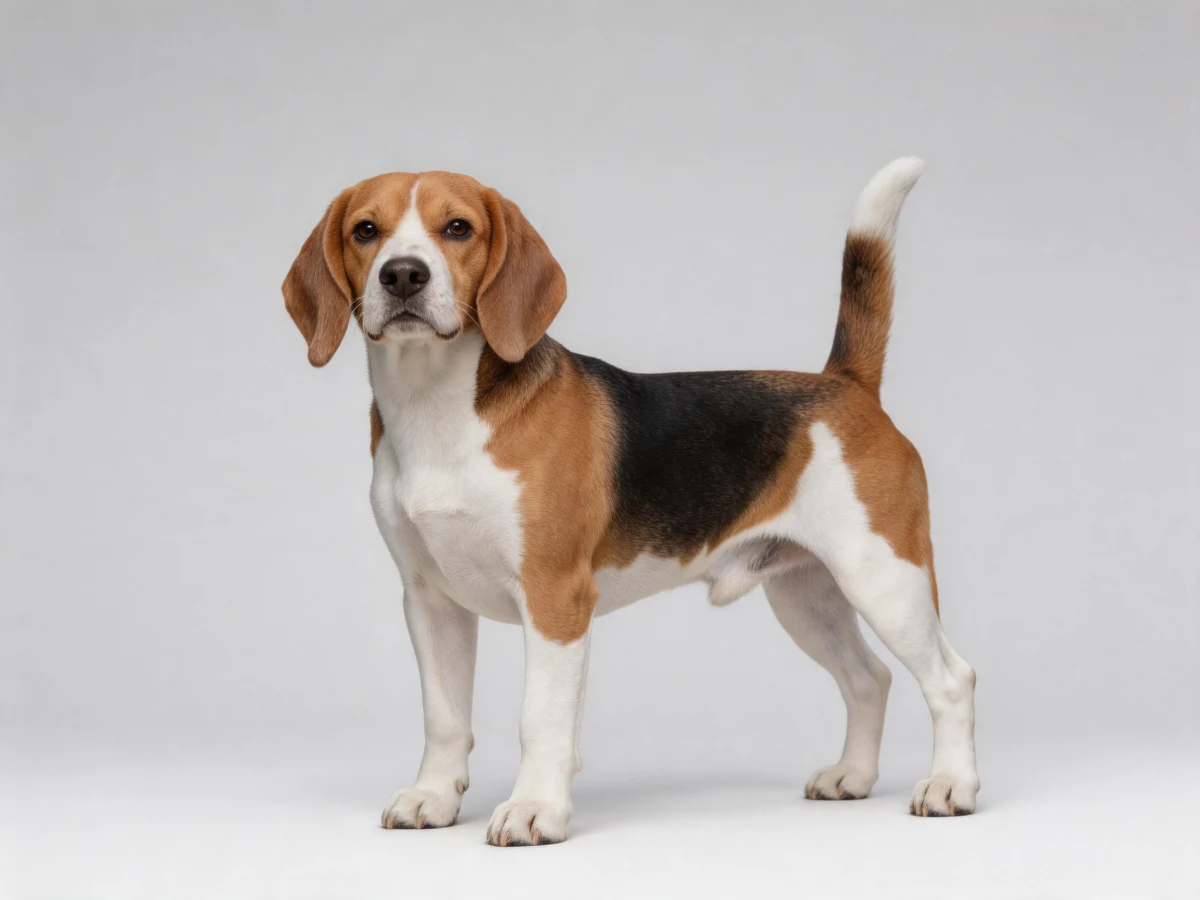
Treeing Walker Coonhound
✨ Key Takeaways
- The Treeing Walker Coonhound is an American hunting breed developed in Virginia and Kentucky from Walker Foxhound stock, including the famous Tennessee Lead outcross of November 1852.
- Its defining function is trailing quarry by scent and then holding it treed by barking — a voice that changes from a trail bay to a sharp chop when the quarry is located in a tree.
- The UKC recognised the breed as a distinct type in 1945; AKC full recognition followed in 2012, making it the AKC's 174th recognised breed.
- The breed is athletic, vocal, and strongly scent-driven — a superb match for active rural households and hunters, and a significant management challenge in confined urban environments.
- Primary health considerations are coonhound paralysis (acute polyradiculoneuritis), hip dysplasia, and ear disease from the drop-ear anatomy; breed-specific literature is sparse but general working-hound guidance applies.
- The Treeing Walker is distinct from all other coonhound breeds — Black and Tan, Bluetick, Redbone, Plott, American English — in ancestry, history, and voice character, though all share the treeing function.
Quick Facts
Common Names & Variants
Modern aliases
Historical names
⚖️ Pros & Cons
Advantages
Trade-offs
Physical Appearance
Recognized colors
Coat
Other
Ears: Drop. Tail: Long, carried upright when working.
🕰 History
Virginia foxhound roots and the Walker family
The Treeing Walker Coonhound's story begins not in the raccoon woods of Kentucky but with a Virginia fox-hunter. In 1742, Thomas Walker of Albemarle County — physician, explorer, and a man of scientific habit — imported English Foxhounds and began the line that would eventually bear his name. Walker's Virginia hounds were bred for speed and drive over rough terrain, qualities that the fox-chasing culture of the Piedmont prized above nearly everything else. These were not slow, deliberate trailing hounds but fast, clear-voiced dogs that could gallop after a fox across pasture and forest for hours. That founding emphasis on pace and voice would prove decisive a century later, when the same bloodline was redirected toward a very different quarry.
By the early 19th century, Walker hounds had spread through Virginia and into Kentucky, carried by hunting families who moved with the westward migration. In Madison and Garrard Counties of central Kentucky, the Maupin and Walker families became the breed's primary custodians. George Washington Maupin and his brother Thomas Howard Maupin hunted seriously and traded stud services; John W. Walker and his relatives across Garrard County did the same. Their hounds were fast, leggy, and vocal — foxhound in character — but the coonhunting culture of the region was pulling breeders toward dogs that would leave the trail, strike a tree, and bark until the hunter arrived. The transition from foxhound to coonhound was not a single decision but a decades-long selection process shaped by the practical demands of the night hunt.
Tennessee Lead: the founding outcross
On 20 November 1852 — the date preserved in Maupin family correspondence — a black-and-tan hound of unknown origin entered the Walker line. The dog had been taken from a deer chase in Tennessee near Albany, Kentucky, reportedly by a drover named Tom Harris, and sold to George Washington Maupin the same day. The dog's origins were disputed even at the time: one account places his original owners as deer hunters John Jolly, Mark Jolly, or Andrew Kraft near the Cumberland Mountains of Overton County, Tennessee; another says he came from a different Tennessee county entirely. What was beyond dispute was the dog's quality. Tennessee Lead, as he became known, possessed what those who saw him described as exceptional game sense, drive, speed, and a clear, short voice — a chop, not the drawn-out bugle of a trailing hound. On the day Maupin acquired him, Lead was bred to a bitch called Red May, and the offspring included a female called White Mag who became a foundation dam of the line.
Lead's influence spread quickly. His speed and scenting ability in red-fox hunting made him a sought-after stud. About five years after 1852, Jason Walker — a Madison County banker and relation of the hunting Walkers — imported three English hounds to cross with the Lead-descended stock. By 1868 the Maupins were producing hounds noticeably different from the general Virginia foxhound population: faster, more intense, with a distinctive voice. They kept no formal breeding records — that documentary gap is worth acknowledging honestly, because much of the early history rests on family recollection and oral tradition rather than written stud books.
By approximately 1870, the Walker Brothers of Garrard County — W.S., Arch, and Wade Walker — purchased breeding stock from Joe and Wash Maupin and began the systematic work of fixing the type. These men dispersed Walker hounds through Missouri, Texas, Tennessee, and across the South, and it is their name that attached permanently to the breed. The Tennessee Lead cross had introduced an element — presumably English Foxhound or a close relative, though the exact ancestry was never documented — that gave the Walker its characteristic combination of speed, hard drive, and the chopping voice that distinguishes a treed coonhound from one still on trail.
From foxhound registry to coonhound recognition
The United Kennel Club, founded in 1898, was the first registry to embrace working coonhounds. In 1905, at the request of breeders, the UKC registered Walker hounds with coonhound characteristics under the English Coonhound designation — a collective category that grouped several American coonhound strains together. This administrative convenience was always a compromise. Walker breeders considered their dogs a distinct type with a specific history, and they pushed for separate recognition throughout the early decades of the 20th century. The UKC granted that recognition in 1945, establishing the Treeing Walker Coonhound as its own breed — a decision that formally separated the Walker from the other coonhound strains sharing the English Coonhound umbrella.
American Kennel Club recognition came much later. The AKC admitted the Treeing Walker Coonhound to its Foundation Stock Service in 1995, a holding category for rare or emerging breeds. The breed completed the pathway to full recognition on 1 January 2012, entering the Hound group as the AKC's 174th recognised breed. That 17-year journey through the FSS reflects both the breed's established working population — it was never at risk of extinction — and the deliberate pace of AKC admission for breeds with strong existing non-AKC registries. For most Treeing Walker owners and hunters, UKC and PKC (Professional Kennel Club) events remained more relevant than AKC competition long after 2012, and they remain so today.
The treeing function: what separates the Walker from other hounds
Understanding the Treeing Walker requires understanding what treeing means as a functional demand. A trailing hound — a Bloodhound, a Basset — is bred to follow a cold or hot scent trail with steadiness, persistence, and accuracy, and to report that trail to the hunter continuously. The Bloodhound's purpose ends when it finds the quarry; treeing is not part of its mandate. The Treeing Walker's purpose is different in kind: it trails at speed, closes the distance rapidly, and then, when the quarry escapes into a tree or a den, shifts from trailing mode to treeing mode — circling the base, marking the location, and producing a continuous, urgent bark called a chop that tells the hunter both that the quarry is located and that it is treed. The voice change from the drawn-out bay on the trail to the sharp chop at the tree is not incidental; it is the breed's communication system, and breeders have selected for that distinction for over 150 years. A Walker that does not chop at the tree, or that leaves the tree before the hunter arrives, fails the core function for which it was created.
Raccoon is the primary quarry in American coonhunting tradition, but the Treeing Walker is a versatile hunter — used on squirrel, opossum, cougar, and black bear across different regions. The versatility is a product of the original Walker foxhound athleticism: a dog fast enough to keep up with a red fox can certainly cover the ground needed for large-game pursuit. What's striking about the breed's functional range is how deliberately it remained tied to practical hunting culture. Unlike many sporting breeds that shifted primarily toward the show ring in the 20th century, the Treeing Walker retained a dominant working population — the majority of dogs registered with UKC and PKC are hunting dogs, not show or companion animals — and breed standards on both sides of the working-show divide describe essentially the same dog.
Temperament & Personality
A dog that is always listening for something
The Treeing Walker Coonhound carries a particular quality that anyone living with one recognises quickly: an attentiveness to environmental sound and scent that sits just below the surface at all times. The breed is not anxious or hyperactive at rest — a well-exercised Walker is a calm, sociable housedog — but there is an alertness that never fully switches off. This is not a flaw. It is the sensory orientation of a dog selected over 150 years to detect, classify, and respond to scent and sound in the dark, often alone or in a small pack, with no handler present to direct it. The Walker makes decisions. It has to. That cognitive independence is woven through the temperament in ways that shape everything from how the dog interacts with its family to how it responds in training.
Within the family, the Walker is affectionate and demonstrative. The breed forms strong attachments to its people and is generally comfortable with children — its activity level and physical confidence suit it well to households where dogs are played with actively rather than just walked politely on a lead. What it is not is a dog that tolerates long periods of isolation and boredom with equanimity. A Walker left alone for extended hours in a house with no outlet will find its own activity: vocal performance, olfactory investigation of kitchen surfaces, or tunnel projects in the garden. The breed is not destructive by disposition; it is working-dog restless in a medium-large frame, and the combination demands management.
Sociability and the pack history
Coonhounds were bred to run in packs, and the Treeing Walker's social orientation reflects that history. The breed is typically easy with other dogs, particularly other hounds, and most individuals introduced to a multi-dog household settle in without significant difficulty. Dog-aggression is not a breed characteristic, though individual variation exists as in any breed, and introductions should be managed sensibly. Small animals present a different calculus: the prey drive that makes the Walker a reliable hunting dog is genuine, and small pets — rabbits, cats not established in the household, small dogs with fast, erratic movement — trigger a chase response that training can moderate but not eliminate from the motivational base. Households with small pets need to manage this honestly.
With strangers, the Walker is typically neither shy nor aggressive. Most individuals are sociable, curious, and self-assured — a reflection of the working-dog confidence that was essential when the breed operated independently in the field. Some individuals are initially reserved with unfamiliar people, which is within normal range for the breed, but prolonged shyness or fearfulness is atypical and warrants attention. Early and broad socialisation — varied environments, different people, multiple settings — builds on the breed's natural social ease and prevents the sensory reactivity that can develop in any hound breed if the early-life stimulus diet is too narrow.
The voice: what it means and what it costs
The Treeing Walker is a vocal breed by design. The chop at the tree is the point — it is the information the hunter needs — and the trail bay that precedes it is part of the same communication system. In a domestic setting, this means a dog that barks at outdoor stimuli, that vocalises when left alone or under-exercised, and that can be heard at considerable distance. Neighbours in close proximity will form opinions about this. The breed is not suited to apartment living or to situations where near-continuous barking is an immediate problem. In a rural or suburban property with space and tolerant neighbours, the vocalisation is manageable with exercise, training, and mental enrichment. The important thing is to understand that reducing the voice through punishment contradicts the breed's function and will produce frustration rather than quiet.
Intelligence and the independent problem-solving mind
Walker hounds score well on scent-work tasks and on any activity that channels their tracking instinct. What they are less naturally oriented toward is the kind of obedience work — precise heeling, stationary stays at distance, reliable off-lead recall in stimulating environments — that requires deferring to a handler's judgment over the dog's own assessment of the situation. This is not a training failure; it is the functional orientation of a dog whose job was to work independently, to make choices in the field without handler input, and to persist in those choices until the quarry was located and treed. The Walker's intelligence is real, but it runs in a particular direction: toward solving the hunt, not toward awaiting instruction. Handlers who work with that direction rather than against it — using the drive, building value for checking in, making the recall a gateway to the interesting thing rather than an end of fun — find the Walker entirely workable.
🏡 Living With a Treeing Walker Coonhound
Space, exercise, and the containment problem
The Treeing Walker Coonhound is not a dog that lives well in a small apartment. The physical dimensions alone — males standing 22 to 27 inches at the withers and weighing 50 to 70 lb — put it at the top of the medium-large range, and the working-dog energy level means that physical space matters not just for comfort but for the dog's behavioural welfare. A house with a securely fenced yard is the baseline environment. The fencing element is non-negotiable: a Walker that catches a scent trail will follow it, and its athletic capability means that inadequate fencing is a genuine escape risk. The breed is a capable climber and a determined digger when motivated; fence-height matters, and digging aprons or buried wire at fence bases are worth considering for dogs that show fence-testing behaviour.
The off-lead question is one that Walker owners navigate constantly. In a securely fenced area, the breed recalls well and enjoys free movement. In unfenced territory, the combination of nose and drive means that a Walker on a scent trail is, in practical terms, unreachable until the trail ends or the dog decides to return. This is not a training failure; it is the breed operating as designed. Off-lead exercise in unfenced public spaces is a management risk rather than a training challenge, and experienced Walker owners typically use long lines (15 to 30 meters) rather than free running in areas where the dog cannot safely self-direct.
Energy, exercise requirements, and the working dog mind
An adult Treeing Walker needs a minimum of one to two hours of genuine exercise per day — not a short pavement walk but sustained activity that allows the dog to move at its natural pace, use its nose, and expend the working-dog energy that accumulates in any scenthound living at rest. The breed's historical role as a night hunter that could run for hours across rough terrain sets the metabolic baseline. Dogs that receive adequate exercise are notably calm and easy in the house; dogs that do not vocalize, pace, and investigate everything at nose height with increasing intensity.
Scent-work activities are particularly well-matched to the breed's abilities and provide mental exhaustion that physical exercise alone does not deliver. Formal nose-work classes, tracking, and field-work all channel the Walker's primary cognitive strength. Some individuals take well to agility; the breed's athleticism is real, though its preferred pace is a sustained canter rather than the explosive acceleration agility courses reward. Hunting — in areas where it is legal and the owner is equipped for it — is the activity for which the dog is most thoroughly prepared, and working Walkers that hunt regularly show notably fewer of the behavioural problems associated with unmet working-drive.
Children, other pets, and household compatibility
The Treeing Walker is generally good with children. The breed's pack history contributes to a social ease and physical confidence that translates well to family life; it is not a fragile or reactive dog in the presence of children's energy. Supervision is always appropriate for any dog-child interaction, and the Walker's size means that an enthusiastic greeting could unintentionally knock over a small child. With older children who interact actively — running, playing fetch, hiking — the Walker is an excellent match.
Other dogs are generally fine, particularly other hounds. The pack orientation of the breed means that multi-hound households often work well, and Walkers typically settle conflicts within their own hierarchy without much human intervention. Small animals require a different assessment. The prey drive is real and breed-typical, and small pets — rabbits, guinea pigs, hamsters, cats not established in the household — are at genuine risk. Cats raised with the dog from puppyhood are usually tolerated; cat introductions to an established adult Walker are a more careful project and may not succeed.
Day-to-day living and indoor behaviour
Well-exercised Treeing Walkers are calm, friendly, and undemanding in the house. The breed is not hyperactive indoors; it rests comfortably, enjoys proximity to its people, and generally respects household objects once past the adolescent phase. What requires consistent management is the nose: Walker hounds counter-surf, investigate bins, and follow olfactory evidence up stairs, through partially-open doors, and into areas they are not meant to access. This is scenting behaviour, not defiance, and it is most effectively managed by environmental controls (secured bins, gate management, reliable drop cue) rather than correction-based training that cannot compete with olfactory motivation of this order.
The vocal element of daily life with a Walker should be planned for. The breed is not silent. Triggers include outdoor wildlife, passing dogs, the mail, and the particular stimulation of being left alone. Neighbours and household members should have realistic expectations, and consistent training to interrupt the alert bark at an early stage — before the dog has fully committed to the vocal sequence — reduces the volume without trying to eliminate an instinct.
🎓 Training & Exercise
Working with the scenthound mind
Training a Treeing Walker Coonhound productively begins with an accurate model of how the dog processes information and makes decisions. The Walker was developed to work independently, to follow a scent trail over hours and miles without handler input, to make choices in the field based on sensory data rather than instruction, and to persist in that work until the quarry was located and treed. That cognitive structure is the exact opposite of the handler-deferring, instruction-following orientation of a retriever or herding breed. It does not mean the Walker is unintelligent or untrainable — it means that the training approach must work with the dog's motivational architecture rather than against it.
The most effective training method for the breed is positive reinforcement with high-value food rewards, short sessions, and an emphasis on making the desired behaviour more rewarding than the competing environmental stimulus. The Walker is food-motivated and responds well to clear, consistent reward-based training. What it does not respond well to is punishment-based or compulsion-based methods: aversive training in a dog with the Walker's independent problem-solving character tends to produce shutdown or avoidance rather than the anxious compliance it sometimes produces in more handler-dependent breeds. A Walker that has learned that defiance leads to punishment does not reliably comply; it learns to avoid the handler.
Recall: the central training project
For most Treeing Walker owners, recall is the single most important and most challenging training objective. The breed's scent-driven independent streak means that a Walker on a trail will not reliably disengage to return to a handler, particularly in the early stages of training or in novel, high-stimulation environments. Building a reliable recall requires early investment: start in low-distraction environments, establish a solid recall cue with extremely high reward value (real meat, not dry biscuit), and build the behaviour over months through progressive distraction increases before testing it in the field. The recall should function as a gateway behaviour — recall means you get access to something great — rather than a termination signal. A Walker that associates the recall cue with the end of interesting activity will be slower to respond than one that has learned the cue reliably predicts a reward event.
In practice, experienced Walker owners use long lines (15 to 30 metres) for off-lead exercise in unfenced areas until the recall is proofed reliably in multiple environments over an extended period. This is not a failure of training; it is an honest acknowledgment of the motivational hierarchy in a bred scent-trailer. The long line allows freedom of movement and nose-use while preventing the chase-and-disappear scenario that can end badly near traffic or in hunting seasons.
Crate training and confinement
Crate training is worth investing in early and thoroughly. A Walker that is comfortable in a crate has a safe, calm rest space, and the owner has a management tool for the times when the dog cannot be supervised. Introduction should be gradual: the crate is a good thing associated with meals, treats, and rest, never a punishment space. The breed's den-resting instinct means that most Walkers take to crate training without significant difficulty when the introduction is done well. Crates are particularly useful in the adolescent phase — the six-to-eighteen-month window — when the drive is at full adult intensity and the impulse control is still developing.
Nose work and scent-based activities
The most direct route to a mentally satisfied Treeing Walker is a training programme that puts the nose to work. Formal nose-work classes (based on the NACSW framework in the US) teach the dog to search for a specific target odour in containers, interiors, and vehicles — exactly the kind of systematic olfactory problem-solving that suits the Walker's primary cognitive strength. Tracking and trailing activities, whether competitive or informal, are similarly well-matched. A Walker that has had two hours of nose-work training is more behaviorally satisfied than one that has had four hours of physical exercise alone, because mental exhaustion through the primary drive produces a qualitatively different calm.
Adolescence and the patience required
Treeing Walker adolescence — roughly six months to two years — is the phase at which most owners encounter the breed's independent streak most sharply. This is the developmental window during which the working drive comes fully online, impulse control is still maturing, and the dog begins making its own environmental decisions with increasing confidence. The adolescent Walker tests boundaries not maliciously but as a function of the same independent problem-solving that will eventually make it a capable hunting dog. Consistent management, adequate exercise, and patient positive-reinforcement training carry the dog through this phase; punishment-based responses to adolescent behaviour typically worsen the relationship and do not accelerate the maturation timeline.
✂️ Grooming & Coat Care
A low-maintenance coat in a high-maintenance body
The Treeing Walker Coonhound's short, smooth, single coat is one of the least demanding in the scenthound world. No trimming, stripping, scissoring, or professional grooming visits are required to maintain the coat in working and show condition. A weekly wipe-down with a rubber grooming mitt or a hound glove removes loose hair, stimulates the skin, and distributes the natural oils that give the coat its characteristic glossy finish. The breed sheds moderately year-round, with somewhat heavier shedding in spring and autumn; the short hair is relatively easy to manage on furniture and clothing compared with longer-coated breeds, though a lint roller is a practical household item in any Walker home.
Bathing frequency depends on the dog's lifestyle. A working Walker that hunts in brush and creek beds may need a bath every two to four weeks during the active season; a companion Walker with a more controlled environment can go four to six weeks between baths. Use a mild dog shampoo, rinse thoroughly to prevent residue irritation, and dry the ear canals carefully after any bath or water exposure.
Ear care: the most important maintenance task
The long, hanging ears that define the Walker's hound silhouette create the breed's primary grooming challenge. The pendant ear flap restricts air circulation in the canal, creating the warm, moist environment in which Malassezia yeast and bacterial species proliferate. Weekly inspection is the baseline for any drop-eared hound, and for Walkers that swim, work in wet undergrowth, or are prone to ear issues, inspection and drying after every water exposure is prudent. Normal ear canals look pale pink, smell unremarkable, and show no significant discharge. Brown or dark discharge, unusual odour, head-shaking, pawing at the ear, or the dog holding the head tilted are all signs of otitis externa requiring veterinary assessment. Do not insert cotton swabs into the canal; clean the accessible outer ear with a cotton ball and a veterinarian-recommended cleaner.
Nails, teeth, and routine care
Nail trimming is required every two to three weeks for most dogs, or more frequently if the nails grow fast. Working Walkers that spend time on abrasive surfaces — gravel, hard-packed trail — may wear their nails naturally, but dogs kept primarily on soft ground or indoors will need regular trimming. Overgrown nails alter the dog's foot posture and can cause gait changes and joint strain over time. The quick (blood vessel) in the nail is visible in light-coloured nails and requires care to avoid; in dark nails, trim small increments and watch for the appearance of a grey circle indicating proximity to the quick.
Dental disease is the most common health finding in dogs across all breeds, and the Walker is not exempt. Daily toothbrushing is the gold standard; even three times per week makes a substantial difference to long-term periodontal health. Use a dog-specific enzymatic toothpaste — human toothpaste contains xylitol, which is toxic to dogs — and a soft-bristled brush or finger brush. Dental chews, water additives, and veterinary dental cleaning under anaesthesia provide supplementary dental management, but none replaces physical mechanical brushing as the primary intervention.
Seasonal and field-specific care
Working Treeing Walkers require additional post-hunt care. After time in brush or woodland: check the coat and skin for ticks, particularly in the ear folds, between the toes, around the collar, in the groin, and in any skin folds. In tick-endemic areas, use veterinarian-recommended tick prevention and perform full-body tick checks after every field session. Check the paw pads for cuts, abrasions, or embedded debris; working dogs on rough terrain accumulate small injuries that become significant if not caught early. Burrs and seeds can mat into the ear canal interior even in short-coated hounds; inspect and remove them promptly.
In hot weather, hounds working at pace generate substantial heat, and the scenthound's reliance on its nose means that any obstruction to respiratory function is doubly costly. Ensure that working dogs have access to water on trail, avoid intense work during the hottest hours, and watch for early signs of heat exhaustion: excessive panting, drooling, behavioural sluggishness. The Walker's short coat offers minimal thermal insulation in cold; in cold-weather hunting, dogs benefit from the body heat of kennelling together or from canine jackets during waiting periods between runs.
🍖 Diet & Nutrition
Feeding a working-weight athlete
The Treeing Walker Coonhound is an athletic, medium-to-large breed whose nutritional requirements shift meaningfully depending on activity level. A working Walker hunting multiple nights per week has caloric needs substantially above those of a companion Walker exercised for an hour a day, and feeding both dogs the same ration produces either an underfed hunting dog or an overweight companion. The principle is to feed to body condition rather than to a fixed cup measurement: the ribs should be easily palpable with light pressure but not visible, the waist should be evident from above and from the side, and the flank tuck should be present. Reassess body condition monthly and adjust the ration accordingly.
For most companion Walkers, a complete commercial dry food (kibble) meeting AAFCO nutrient profiles for the dog's life stage — puppy, adult maintenance, or senior — is entirely adequate. Choose a product formulated for large-breed dogs, as these typically have controlled calcium-to-phosphorus ratios appropriate for breeds in the Walker's size range. Working Walkers during active season may benefit from a performance food (typically 26–28% protein, 18–20% fat) that supports sustained athletic output; this is not necessary during the off-season and can lead to weight gain in inactive dogs.
Meal frequency and bloat risk
The Walker's deep chest places it in the risk population for gastric dilatation-volvulus. Two or more smaller meals per day rather than a single large ration reduces the gastric volume at any one time and is the simplest preventive measure available to owners. Enforce a rest period of at least one hour before and after eating: do not exercise the dog immediately before a meal or allow vigorous activity for an hour post-meal. Some veterinary nutritionists also recommend raised food bowls for large dogs; the evidence on raised feeders and GDV risk is mixed and has shifted in the literature over time — discuss the current evidence with your veterinarian when setting up your dog's feeding station.
Dry food fed with a small addition of water or canned food slows eating speed and may reduce air ingestion during meals. Puzzle feeders and slow-feeder bowls are effective alternatives for dogs that eat very rapidly. Rapid eating is a risk factor for both GDV and oesophageal discomfort, and is worth addressing in any large, deep-chested breed.
Protein quality and joint health
High-quality animal protein is the appropriate primary macronutrient for a working scenthound. Look for named meat sources (chicken, beef, lamb, fish) listed as the first ingredient rather than generic meal or plant protein as the dominant protein fraction. The Walker's joint health — particularly hip health — benefits from diets that support a lean, working-weight body condition; obesity is the single most modifiable risk factor for hip dysplasia progression and osteoarthritis development in any breed. Supplements of omega-3 fatty acids (EPA and DHA from marine sources) have the best evidence base for anti-inflammatory benefit in dogs with joint conditions; discuss dosing with a veterinarian before supplementing, particularly in dogs with specific health conditions.
Puppies, seniors, and special conditions
Walker puppies should be fed a large-breed puppy food formulated with controlled calcium and phosphorus ratios that support steady, moderate growth rather than rapid growth. Rapid skeletal growth in large breeds is associated with developmental orthopaedic disease; large-breed puppy foods help modulate the growth rate. Do not supplement calcium in a puppy already eating a complete commercial food; excess calcium disrupts the calcium-phosphorus balance and worsens, rather than prevents, skeletal developmental issues. Transition puppies to adult food at 12 to 18 months.
Senior Walkers (eight years and older) often benefit from foods with slightly reduced calorie density to manage the reduced metabolic rate and activity level that accompany ageing, combined with maintained or increased high-quality protein to preserve muscle mass. Kidney function screening at the annual veterinary check informs whether phosphorus restriction is indicated. Any significant change in appetite, water consumption, or body weight in a senior dog warrants veterinary investigation rather than dietary adjustment alone.
🐶 Buying & Adopting a Treeing Walker Coonhound
Who the Treeing Walker Coonhound is and isn't suited to
An honest assessment before acquisition saves considerable difficulty later. The Treeing Walker Coonhound is a superb dog for active households — hunting families, runners, hikers, or anyone who wants a large, athletic, scenthound companion that will thrive on sustained daily activity. It is not suited to apartment living, to owners who work long hours without dog-care coverage, to homes with very small pets unless managed with extreme care, or to owners who require a reliably off-lead dog in unfenced environments. This is not breed criticism; it is a description of a dog whose purpose-bred characteristics are genuinely incompatible with certain lifestyles.
Finding a responsible breeder
The majority of Treeing Walker Coonhounds are bred by working hunters with UKC and PKC registrations, not by AKC show-oriented breeders. This means the buyer's market is somewhat different from many AKC breeds: you are more likely to find the best dogs through connections with coonhunting clubs and field-trial networks than through the AKC breeder referral system, though both exist and both can produce healthy, well-tempered dogs. The National Treeing Walker Coonhound Association maintains breeder contacts and can direct buyers toward member breeders committed to the breed's working and health standards.
Regardless of registration type, ask every breeder for OFA hip evaluations on both parents. Ask about the health history of the pedigree going back at least two generations — have there been cases of polyradiculoneuritis in the lines? What is the typical lifespan of dogs in the breeder's line? A breeder who engages these questions with specific, honest answers is a better prospect than one who deflects to generalisations. Visit the facility. Meet the dam. Assess the environment in which puppies are raised: early socialisation quality (exposure to different people, sounds, and surfaces in the first eight weeks) has lasting effects on temperament.
Prices and what they mean
Puppies from working lines with health-tested parents typically range from $600 to $1,200 in the current (2024) market. Dogs from titled hunting parents or proven field-trial lines may command higher prices. Prices below this range warrant scrutiny: very cheap puppies may come from breeders who are not health-testing parents or investing in early socialisation. Prices well above the typical range for this breed are unusual and should be explained by specific merit (field-trial titles, tested parents, exceptional pedigree) rather than assumed to indicate superior quality.
Adoption and rescue
Treeing Walker Coonhounds are among the most commonly available hound breeds in American shelters and rescue organisations, for a straightforward reason: their exercise, containment, and vocalisation requirements exceed what many first-time or unprepared owners can manage. This makes rescue a genuine and often excellent option for an experienced owner who understands the breed and can provide the right environment. Breed-specific and hound-specific rescues often have Walkers available; general shelters in the American South and Appalachian region frequently hold them. Adult rescues skip the puppy developmental phase and come with established temperament, which many experienced adopters prefer.
The ethical considerations of rescue adoption for a hunting breed are occasionally raised: some dogs in rescue come from working backgrounds and carry specific field-trained behaviours. In most cases this is an asset rather than a liability for an active family. Some working-line dogs are noise-sensitive, which can complicate urban or suburban placement; ask shelters and rescue coordinators for temperament assessments and any available background on a dog's history before adoption.
The first year: what to expect
The first year with a Walker puppy is shaped by the adolescent independent streak, the growing voice, and the explosive energy of a working-breed dog coming into its adult drives. Invest in training early — enroll in a puppy class at eight to twelve weeks, establish a recall cue immediately, and begin crate training in the first week. Set up the environment for management: secure the yard, assess the fence, establish management protocols for small household pets. The first year is also the period in which the bond forms most thoroughly; a Walker that has been well-exercised, trained with positive methods, and socialised broadly in its first year is one of the most enjoyable large-dog companions available.
📜 Breed Name Etymology — iDogNames original research
What the three words are actually saying
Treeing Walker Coonhound is a three-element compound, and each element earns its place. Treeing is the participial form of the verb to tree: to drive quarry up a tree and hold it there by barking until the hunter arrives. This is not a metaphor or a loose description; it names the specific behavioural function that distinguishes this breed from trailing hounds that locate but do not fix quarry in a vertical position. Walker is a personal surname — the Walker family of Virginia and Kentucky who developed the founding foxhound stock from Thomas Walker's 1742 English imports and then, through the Maupin connection and the Tennessee Lead outcross, directed the line toward the demands of coonhunting. Coonhound is a compound of coon (a shortening of raccoon, itself from the Algonquian word aroughcun or arahkun, first recorded in English in 1608) and hound (Old English hund, from Proto-Germanic *hundaz, a word for any hunting dog before the modern narrowing to large trailing breeds).
The Algonquian core of a quintessentially American name
The word raccoon is one of the most durably Algonquian words in American English. The animal was named in English by John Smith in his accounts of the Virginia colony around 1608, recorded as aroughcun, from the Powhatan Algonquian word describing the animal — the etymology of the Powhatan term itself refers to a creature that scratches with its hands. The English shortening to raccoon and then the informal coon happened across the 17th and 18th centuries as the animal became a standard part of American frontier subsistence and sport culture. A breed name containing coon is therefore carrying a pre-colonial Algonquian word through the working-dog vocabulary of the American South — a linguistic trace of the continent's indigenous languages embedded in a modern breed name that looks entirely English on the surface.
Hound: the narrowing of a broad word
Old English hund (related to Latin canis and Greek kyon, all from a Proto-Indo-European root for dog) originally meant any dog used for hunting. By the Middle English period the word had begun its narrowing toward the specific sense of a trailing or scent-following dog, and by the modern period hound in English refers to a dog that works primarily by nose (or, in the sighthound branch, by sight at speed). The AKC Hound group formalises this dual meaning: it contains both sighthounds (Greyhound, Saluki, Whippet) and scenthounds (Bloodhound, Beagle, Basset Hound, and all five American coonhound breeds). The Treeing Walker belongs unambiguously to the scenthound division.
The surname as breed name: Walker
Personal surnames in dog-breed names typically mark one of two things: the person who created or fixed the type (Jack Russell, Dobermann, Weimaraner) or the family that stewarded the most influential strain (Walker). The Walker case is more accurately the second category. Thomas Walker of Albemarle County, Virginia imported foundational English hounds in 1742; later generations of the extended Walker family in Kentucky — W.S., Arch, and Wade Walker of Garrard County — were the breeders who fixed the coonhound type and distributed it across the South. The name attaches to the strain rather than to a single individual inventor, which is historically more accurate and explains why the breed carries a surname without a given name: there is no single Thomas or John Walker in the way there is a single Jack Russell.
Name forms at a glance
| Name | Role | Origin | Literal meaning | First recorded |
|---|---|---|---|---|
| Treeing Walker Coonhound | primary | English (functional compound) | the Walker-line hound that drives raccoons up trees | 1945 |
| Walker | alias | English (surname as breed shorthand) | shorthand for the Walker-developed coonhound strain | 1870 |
| English Coonhound (Walker strain) | historical | English (registry classification) | collective UKC designation grouping Walker hounds before 1945 separate recognition | 1905 |
| Raccoon | origin country native | Algonquian (Powhatan) | the animal this hound was bred to hunt; name embedded in the breed name via coonhound | 1608 |
| TWC | alias | English (initialism) | breed community initialism used in field-trial and rescue contexts | 1990 |
🏛 Naming Traditions — iDogNames original research
The coonhunting naming culture
Treeing Walker Coonhounds come from a specific American working-dog culture with its own naming conventions, and understanding those conventions produces more resonant names than a generic dog-name list. Coonhound naming in the American South and Appalachian tradition favoured single-syllable or two-syllable names that carried clearly through the night woods and were easily bellowed from a distance — names that a hunter standing at the base of an oak at midnight could call out and have his dog recognise above the sound of its own barking. This functional pressure shaped the tradition toward clean, consonant-heavy names that project well acoustically.
Single syllables with hard consonants project furthest and cut through ambient noise most cleanly: Buck, Blaze, Scout, Trace, Chase, Duke, Flint, Dash, Rex, Jet. Two-syllable names that stress the first syllable work almost as well at distance: Ranger, Tracker, Hunter, Thunder, Banjo, Copper, Juniper, Rambler, Trigger, Holler. The tradition also includes names drawn from Southern landscape and season: Ridgeline, Hollows, Hickory, Cane, Kudzu, Creek, Briar, Thistle, Sumac, Locust.
Naming for the breed's physical signature
The tricolor coat — white base with black saddle and tan points — is one of the Walker's most distinctive visual features and generates a natural naming theme. Color-inspired names with depth beyond the obvious include: Obsidian, Inkwell, Parchment, Tallow (for the cream-white chest and belly), Ember, Tanbark, Russet (for the tan markings), Saddle, Patch, Motley, Domino, Skunk (affectionate nickname for strongly-marked tricolors), Badger, Magpie. The glossy, athletic build suggests names from speed and movement: Arrow, Comet, Bolt, Streak, Sprint, Windfall.
Tennessee Lead and the breed's own naming heritage
The Treeing Walker has a specific cast of founding characters whose names are worth drawing on for dogs from working lines or for owners who want a name with genuine provenance. Lead — Tennessee Lead, the foundational outcross dog of November 1852 — is the most historically resonant name in the entire breed's story, and it works well as a dog name. Maupin honours George Washington Maupin, who acquired Lead and produced the foundational cross. Walker itself (as a dog's name) honours the family; Wade, Arch, and Garrard name specific historical figures in the breed's Garrard County, Kentucky chapter. For dogs from the Virginia foxhound side of the lineage: Albemarle (the county of Thomas Walker's estate), Thomas, Tucker.
Voice-inspired names: the chop
The Walker's distinctive working voice — the trail bay that sharpens to a chop at the tree — is an unusual naming theme with real depth. Chopper is the most direct, used by working hunters for generations. Bugle names the other characteristic Walker voice: a clear, ringing bugle on fresh trail. Bell, Bellow, Echo, Clarion, Resonance, Timbre, Cadence, Chorus — all draw from the acoustic heritage of a breed whose primary communication system is its voice.
🐾 Themed Names for Your Treeing Walker Coonhound — iDogNames original research
Names from Appalachian landscape and Southern hunting country
The terrain the Treeing Walker Coonhound was built for — the ridges, hollers, creek bottoms, and second-growth hardwood forests of Appalachia and the upper South — provides a rich naming vocabulary. Ridge, Hollow, Crest, Bluff, Shoal, Ford, Bottoms, Cane, Sycamore, Pawpaw, Buckeye, Osage, Chestnut, Hickory, Persimmon. Season-names that fit the nocturnal coonhunting tradition: Harvest, October, Equinox, Frost, Solstice, Vesper, Dusk, Nightfall, Waxing, Crescent (the moon phases matter in coonhunting — hunters go out on dark of the moon).
Names from American frontier and hunting heritage
The breed's era of development — mid-19th-century Kentucky and Tennessee — coincides with the full flowering of American frontier culture. Boone (Daniel Boone, the defining Kentucky frontiersman), Crockett (Davy Crockett, Tennessean and hunter), Bowie, Flintlock, Powder, Ramrod, Flint, Tinder. Geographic names from the Walker's home territory: Garrard (Garrard County, Kentucky), Madison (Madison County, Walker family country), Cumberland, Clinch, Powell, Clinchfield, Shenandoah, Holston. River names particularly suit the Walker — the breed crosses creeks nightly: Green, Barren, Salt, Licking, Kentucky, Nolin, Rough.
Names from the night hunt
Coonhunting is fundamentally a nocturnal activity, and the Walker's entire sensory world is oriented toward darkness, sound, and cold air carrying scent. Night-and-astronomy themed names: Orion (the hunter's constellation), Rigel, Sirius (the dog star), Vega, Arcturus, Nova, Zenith, Nadir, Umbra, Penumbra, Phosphor (the morning star), Luna, Selene, Waning. Sound-and-voice names (honouring the chop): Chord, Timber, Resonance, Treble, Basso, Baritone, Fanfare, Reveille, Taps (ironic, for a breed that is very much awake at night).
Names drawing from the raccoon connection
The primary quarry of the Treeing Walker provides an unusual and original naming pool. The word raccoon comes from Algonquian aroughcun, and that Indigenous-language root can be honoured in naming: Arahkun, Arago. The raccoon's behaviour generates names: Bandit (the classic, for the masked face), Ringtail, Washer (raccoons wash their food), Grub, Marauder, Pilferer. For owners who want the irony of a coonhound named for its quarry: Rocky, Crocco, Procyon (the genus name of the common raccoon, Procyon lotor), Lotor (species epithet, from Latin lavare, to wash).
Classic field-trial and kennel names from the coonhound tradition
Field-trial culture has its own naming conventions for Treeing Walkers, tending toward bold, one-word declarations: Leadman, Tennessee, Thunder Road, Night Hawk, Blue Moon, High Timber, Cold Nose, Iron Will, Hard Drive, Long Trail. For registered names (which often include a kennel prefix and can be longer): Ridgeline's Tennessee Lead Legacy, Walker's Last Light, Garrard County Phantom, Maupin's Midnight Run.
More American heritage names
- American Trail - best for a Treeing Walker Coonhound name rooted in United States rather than generic style
- Kentucky and Virginia; developed across the coonhound belt of the American South and Appalachian foothills Ridge - best for a regional landscape cue tied to the Treeing Walker Coonhound story
- Local Line - best for a name that respects local breed history
- Old Route - best for migration, trade, field or pastoral routes behind the breed
- Heritage Note - best for a page where origin should be treated as context, not decoration
- Village Path - best for rustic, local or landrace-style background
- Working Home - best for a dog whose name should remember trailing and treeing raccoons and other game by night; hunting in packs and alone across rough terrain
- Country Mark - best for a concise country-of-origin cue
More work and purpose names
- Cold Nose - best for a Treeing Walker Coonhound tied to older scent trails
- Track Bell - best for a hound whose voice marks the trail
- Scent Check - best for a dog that confirms track direction
- Long Trail - best for endurance over rough or wooded country
- Forest Cast - best for methodical search through cover
- Leash Rule - best for wildlife and road-safety management
- Checkback - best for a trail dog who learns to return to the handler
- Settle - best for calm at home after scent work
More coat and build names
- Tricolor (white - best for a Treeing Walker Coonhound whose color or markings deserve a simple call name
- Smooth, Fine, Glossy Coat - best for the smooth, fine, glossy coat type on this breed
- White Blaze - best for a clear face or chest marking
- Dark Mask - best for a dog with a strong muzzle or face marking
- Weather Coat - best for outdoor or working-dog coat context
- Strong Frame - best for a dog whose build is part of its function
- Bright Eye - best for an alert expression
- Ground Step - best for a name tied to movement and body type
More training and management names
- Recall - best for a Treeing Walker Coonhound whose safe freedom depends on training
- Focus - best for handler attention around distractions
- Marker - best for clear reward timing
- Settle - best for calm at home after activity
- Boundary - best for doors, yards, roads or stock rules
- Neutral Walk - best for calm public behavior
- Checkback - best for a dog learning to return to the handler
- Rest Day - best for balancing drive with recovery
More history-aware names
- Source Note - best for a name that invites accurate breed history
- Old Job - best for remembering trailing and treeing raccoons and other game by night; hunting in packs and alone across rough terrain without turning it into a slogan
- Modern Fit - best for a dog whose current home should match real needs
- Care Plan - best for a name tied to grooming, exercise and health records
- Steward - best for rare or local breeds where preservation matters
- Plain Record - best for choosing documented facts over myths
- Breed Context - best for readers comparing names, history and suitability
- Respect - best for a culturally or regionally rooted breed story
More comparison-aware names
- Black and Tan Coonhound Link - best for readers comparing with the Black and Tan Coonhound
- Bluetick Coonhound Link - best for readers comparing with the Bluetick Coonhound
- Redbone Coonhound Link - best for readers comparing with the Redbone Coonhound
- American English Coonhound Link - best for readers comparing with the American English Coonhound
- Shared Job - best for comparing related breeds without merging their histories
- Different Role - best for comparing related breeds without merging their histories
- Same Region - best for comparing related breeds without merging their histories
- Name Bridge - best for comparing related breeds without merging their histories
More daily-life names
- Morning Walk - best for a Treeing Walker Coonhound whose day needs real routine
- Trail Check - best for safe outdoor movement and handler awareness
- Home Base - best for a dog that needs a calm place to reset
- Good Fit - best for matching the breed to the right household
- Clear Cue - best for training that avoids confusion
- Slow Intro - best for polite introductions and confidence building
- Calm Door - best for visitor and threshold manners
- Rest Point - best for balancing activity with recovery
More care-aware names
- Vet Record - best for a dog whose health notes should be documented
- Sound Start - best for careful puppy or adoption evaluation
- Coat Check - best for grooming after weather, burrs or field work
- Nail Day - best for routine body handling
- Ear Check - best for breeds whose ears need regular inspection
- Weight Watch - best for keeping structure and joints in mind
- Water Break - best for active dogs working or walking in heat
- Shade Rest - best for climate-aware breaks and recovery
📋 Breed Standard at a Glance
AKC and UKC standards: the same working dog, described twice
The Treeing Walker Coonhound is governed by two major breed standards: the AKC standard (effective with full recognition in January 2012) and the UKC standard (in place since separate recognition in 1945). Both describe the same working type, with minor emphasis differences reflecting the registries' distinct traditions. The UKC standard predates the AKC by 67 years and reflects the working-breed culture of American coonhunting; the AKC standard formalises the breed for conformation competition while maintaining functional descriptors that keep the working purpose central.
Size and proportion
Males stand 22 to 27 inches (approximately 55.9 to 68.6 cm) at the withers; females 20 to 25 inches (50.8 to 63.5 cm). Weight is not specified by the AKC standard — the standard describes weight as proportional to height and working condition. In practice, males typically weigh 50 to 70 lb (22.7 to 31.8 kg) and females somewhat less. Dogs outside the height range are disqualified from conformation competition (except that puppies may be undersize). The overall body proportion is described as square or slightly longer than tall, reflecting the balance between the stride length needed for speed and the compactness needed for endurance.
Head, ears, and expression
The head is described as broad, with a moderately long, slightly domed skull and a moderately deep, squared muzzle. The ears are long and pendant, set moderately low, reaching to the tip of the nose when drawn forward — characteristic of the coonhound group. The eyes are dark brown or hazel, with a soft, pleading expression that contrasts with the breed's intense working focus. The overall expression should convey intelligence and alertness without hardness or anxiety.
Coat, colour, and markings
The coat is smooth, fine, and glossy. The preferred colour pattern is tricolor — white with black and tan markings — with the black typically appearing as a saddle, mantle, or spots on a white base, and tan trim on the face, feet, and under the tail. Bicolor variations (white and black; white and tan) are acceptable. Any other colour combination is penalised. Albinism is a disqualifying fault in the UKC standard. The coat's gloss is a functional asset: it sheds burrs, mud, and debris more easily than a rougher coat, which matters in the dense undergrowth that coonhunting typically traverses.
Voice and working characteristics
Uniquely among breed standards, the Treeing Walker Coonhound standard explicitly describes the working voice as a breed characteristic. The UKC standard specifies a clear bay on the trail that should change to a distinct chop when treed. The AKC standard echoes this. The voice change — from the sustained, melodic trail bay to the sharp, urgent chop at the tree — is the breed's primary communication signal and the principal way a coonhunter knows that the quarry has been successfully treed. Breeders and judges who work with the standard understand that a Walker without a clear, breed-typical voice does not fully meet the standard's intent, even in a conformation ring where the voice cannot be practically evaluated.
🏆 Recognition
Recognized by the American Kennel Club in 2012 as a Hound breed.
Other registries
Breed clubs
❓ Frequently Asked Questions
What is a Treeing Walker Coonhound's temperament like?
Alert, affectionate, and independently minded. The Treeing Walker bonds closely to its family and is sociable with children and other dogs, but it maintains the working-dog independence of a breed that was selected to trail and tree quarry for hours without handler direction. It is not handler-deferring in the way a retriever is. A well-exercised Walker is calm and pleasant in the house; an under-exercised one is vocal, restless, and finds its own entertainment. The breed is curious, confident, and easy with people it knows — less predictably easy with the small household animals its prey drive was built to pursue.
How much exercise does a Treeing Walker Coonhound need?
One to two hours of genuine activity daily — not a short pavement walk but sustained movement that allows the dog to use its nose and cover ground at its natural pace. The breed's working-hound baseline is hours of night hunting across rough terrain; the companion dog version of that demand is still substantial. Nose-work, tracking, and scent-based dog sports provide mental exhaustion that physical exercise alone does not. Under-exercised Walkers vocalise, pace, and excavate gardens with impressive commitment.
What health problems do Treeing Walker Coonhounds commonly have?
Coonhound paralysis (acute polyradiculoneuritis) is the most diagnostically distinctive condition — an immune-mediated ascending paralysis triggered by raccoon-saliva exposure, described by Cummings et al. (Neurology, 1979, PMID 572511; Acta Neuropathologica, 1982, PMID 7072488). Most affected dogs recover with supportive care. Hip dysplasia is the primary orthopaedic concern; OFA hip radiographs are recommended for breeding stock. Drop-ear anatomy predisposes to otitis externa. The deep chest puts the breed in the GDV risk category. Overall, it is a robust, working-selected breed with a documented lifespan of 12 to 13 years.
Are Treeing Walker Coonhounds good family dogs?
A good match for active families who can meet the exercise requirements and accept the vocal element. The breed is affectionate with children and generally easy with other dogs. Small pets — rabbits, guinea pigs, cats not established in the household — are at genuine risk from the prey drive and require careful management or separation. The Walker needs a securely fenced yard and is not suited to apartment living. Families who hunt, hike, or run regularly find the breed an excellent companion; those looking for a quiet, low-energy housedog will find it a poor fit.
Are Treeing Walker Coonhounds easy to train?
Trainable with the right approach, but not handler-deferring by nature. The breed responds well to positive reinforcement with high-value food rewards and short, varied sessions. Recall is the most challenging element: a Walker on a scent trail will follow that trail before responding to a recall cue unless the recall has been thoroughly proofed in progressively distracting environments over a long period. Compulsion-based training is counterproductive with this breed. Nose-work, tracking, and hunt-oriented activities channel the drive productively and produce a more cooperative dog across all training contexts.
How much grooming does a Treeing Walker Coonhound need?
Very little coat grooming. The short, smooth, single coat needs a weekly wipe with a rubber grooming mitt and occasional baths — every four to six weeks for a companion dog, more often for a working dog in the field. No trimming, stripping, or professional grooming is required. Ear care is the most important maintenance task: weekly inspection and prompt drying after water exposure prevent the otitis externa to which all drop-eared hounds are prone. Nail trimming every two to three weeks, regular toothbrushing, and post-hunt tick checks round out the routine for working dogs.
How big do Treeing Walker Coonhounds get?
Males stand 22 to 27 inches (55.9 to 68.6 cm) at the withers; females 20 to 25 inches (50.8 to 63.5 cm). Weight is not fixed by the breed standard but in practice ranges from 50 to 70 lb (22.7 to 31.8 kg) for males and somewhat less for females. The body proportion is square or slightly longer than tall. Dogs outside the AKC and UKC height ranges are eliminated from conformation competition. There is no miniature or toy variant of the breed.
📚 Sources & Further Reading
Every load-bearing factual claim on this page is anchored to one of the sources below. iDogNames does not synthesize from secondary aggregators.
- akc breed page Treeing Walker Coonhound — AKC Breed Profile — American Kennel Club (2024)
- other Treeing Walker Coonhound — UKC Breed Standard — United Kennel Club (2024)
- breed club official National Treeing Walker Coonhound Association — National Treeing Walker Coonhound Association (2024)
- academic paper Experimental coonhound paralysis: animal model of Guillain-Barré syndrome — Neurology, 29(8):1163–1166 (PMID 572511) (1979)
- academic paper Coonhound paralysis. Further clinical studies and electron microscopic observations — Acta Neuropathologica, 56(3):167–178 (PMID 7072488) (1982)
- health registry OFA Disease Statistics — Treeing Walker Coonhound — Orthopedic Foundation for Animals (2024)
- wikipedia Treeing Walker Coonhound — Wikipedia — Wikipedia
- wikidata Treeing Walker Coonhound — Wikidata entity Q39244 — Wikidata
- book The Maupins, the Walkers, and Tennessee Lead — Appalachian History (2018)