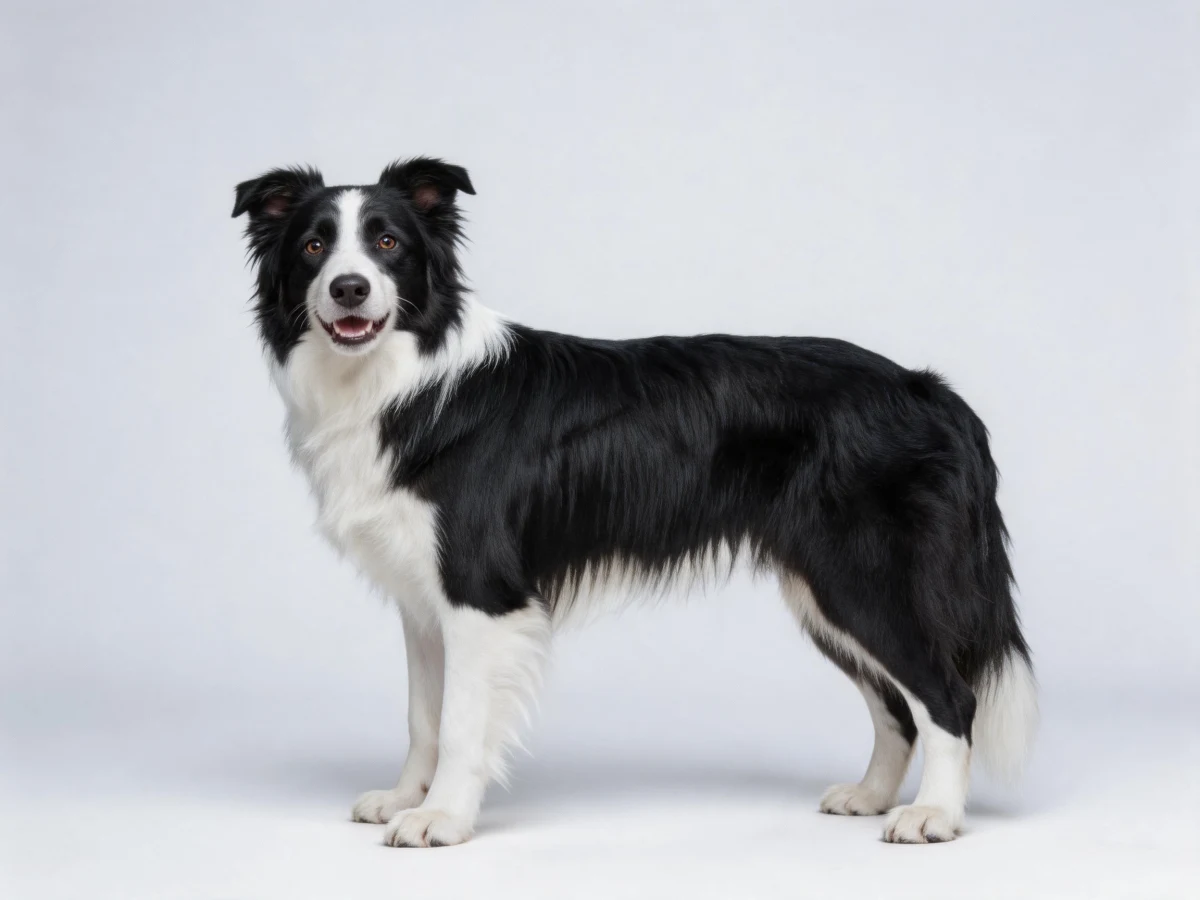
Basque Shepherd Dog
✨ Key Takeaways
- A native Basque herding and farm dog -- the Euskal Artzain Txakurra -- from the Basque Country (Euskal Herria) across the western Pyrenees of northern Spain and south-west France, used for centuries to gather sheep and to watch over the farmhouse and its stock
- Comes in two recognised varieties distinguished mainly by coat: the smoother, fawn-or-red Gorbeiakoa (named for the Gorbea region) and the rougher, wirier Iletsua (whose name means shaggy), usually cinnamon or fawn
- Medium-sized and rectangular in outline, some 10-20 per cent longer than tall, standing roughly 47-63 cm; a sound, agile working build with oval brown or amber eyes and medium pendent or folded ears
- Highly intelligent, biddable and devoted, with a watchful farm-dog streak; widely held to be one of the foundation types behind the Australian Shepherd, carried to the Americas by migrant Basque shepherds
- Recognition is national, not international: recognised by the Real Sociedad Canina de Espana in January 1996 in both varieties and as a Spanish native breed (Gorbeiakoa 2001, Iletsua 2002), but NOT recognised by the FCI or the AKC
- A high-energy working herder rather than a low-key pet -- it needs plenty of exercise, mental work, company and ideally a real job, and suits an active rural or working home rather than a sedentary one
Quick Facts
Common Names & Variants
Modern aliases
Historical names
⚖️ Pros & Cons
Advantages
Trade-offs
Physical Appearance
Recognized colors
Coat
Other
Ears: Triangular, drop. Tail: Low-set, carried low or curved.
🕰 History
A herding dog of the Basque mountains
The Basque Shepherd Dog -- in its own language the Euskal Artzain Txakurra -- is the native herding dog of the Basque Country, the historic land of Euskal Herria that straddles the western end of the Pyrenees across northern Spain and the adjoining south-west of France. For centuries it was the everyday working dog of the Basque shepherd: the dog that gathered and drove the flocks of sheep up to the summer pastures and back down again, that helped manage goats, cattle and horses, and that kept watch over the farmhouse and the stock around it. Like most genuine regional working breeds it was shaped by its job and its landscape long before anyone thought to write a standard for it, and for most of its history it existed simply as the shepherd dog of the Basque hills rather than as a named, registered breed.
An ancient pastoral type
The breed is often described as very old, and there is a real basis for that reputation even if the popular claims should be read carefully. Bones resembling dogs of this type have been recovered from Neolithic sites in the region, and dogs that look much like the modern Basque Shepherd appear in the frescoes and carvings of Basque churches and monasteries from the sixteenth century onward, which at the very least places a herding dog of this kind in the country for many centuries. What that ancestry does not amount to is an unbroken, documented pedigree -- the figures of many thousands of years that circulate online describe a general pastoral lineage rather than this exact standardised breed, and the honest position is that the Euskal Artzain Txakurra is an ancient regional type only recently defined and registered.
The likely ancestor of the Australian Shepherd
One of the most interesting threads in the breed history reaches well beyond the Pyrenees. Basque shepherds were among the migrant pastoralists who carried their working dogs to the Americas and to Australia in the nineteenth and twentieth centuries, and the Basque Shepherd is widely held to be one of the foundation types behind the Australian Shepherd -- the American herding breed that, despite its name, owes much of its origin to Basque sheepmen working in the western United States. The shared traits are easy to see: the same obsession with movement, the same close focus on the handler, the same quick working intelligence. The Aussie is the famous, internationally recognised descendant; the Euskal Artzain Txakurra is the older, far less known dog that helped make it.
Two coats, two varieties
A defining feature of the breed is that it comes in two recognised varieties, distinguished mainly by coat. The Gorbeiakoa -- named for the region around Gorbea (Gorbeia) on the border of Bizkaia and Araba -- carries a softer, smoother coat and tends toward fawn or a fire-red colour. The Iletsua, whose name means hairy or shaggy in Basque, has a rougher, harsher, wirier coat and tends toward cinnamon or fawn. The two varieties share the same general type and herding purpose and differ chiefly in their jackets and in small points of size, and any account of the breed has to treat them together as two faces of a single Basque herding dog rather than as separate breeds.
Recognition: national, not international
Formal recognition of the Basque Shepherd Dog has been a Spanish national affair, and the dates are worth stating plainly. The Real Sociedad Canina de Espana, the Spanish national kennel club, recognised the breed in January 1996 in both its varieties and published a written standard, and the Spanish authorities afterward acknowledged it as a native Spanish breed -- the Gorbeiakoa in 2001 and the Iletsua in 2002. What the breed does not currently hold is recognition by the Federation Cynologique Internationale or by the major English-speaking registries such as the American Kennel Club, so internationally it remains a regional breed largely unknown outside its homeland. That obscurity has nothing to do with the dog quality and everything to do with how recently and how locally it has been formalised.
A working dog still at work
Unlike many old breeds that survive mainly as show or companion dogs, the Basque Shepherd has never stopped doing its original job. In the Basque Country it is still a genuine working herder on real farms and pastures, prized by shepherds for its biddability and stamina rather than for any show points, and a good deal of its character today is preserved precisely because it continues to earn its keep moving stock. That living working role is the breed best guarantee of remaining what it has always been: a sound, useful, intelligent Basque herding dog rather than an ornament.
Temperament & Personality
The bright, busy mind of a herder
The Basque Shepherd is first and foremost a herding dog, and almost everything about its temperament follows from that. It is highly intelligent, quick to learn and strongly focused on its person, with the alert, willing, work-oriented mind of a breed selected for generations to read stock and respond to a shepherd. Dogs of this type are happiest when they have something to do and someone to do it with, and they bond closely and work eagerly with an owner who gives them direction. That biddability -- the readiness to take instruction and to keep at a task -- is one of the breed most attractive traits and a large part of why Basque shepherds have valued it for so long.
Devoted to its family, watchful of strangers
Toward its own family the Basque Shepherd is loyal, affectionate and attentive, forming a strong attachment to its people and to the place it regards as home. Its farm-dog background also gives it a protective, watchful streak: it tends to be a good and naturally alert watchdog, reserved rather than instantly friendly with strangers, and ready to announce anything out of the ordinary. This is not the indiscriminate suspicion of a dedicated livestock-guardian breed but the sensible wariness of a working farm dog, and with proper socialisation it learns to take ordinary visitors in its stride while still letting its people know when something genuinely warrants attention.
Energy that needs an outlet
The flip side of all that intelligence and drive is that this is a high-energy breed that does not thrive on idleness. A Basque Shepherd with too little to do -- too little exercise, too little mental work, too little contact with its people -- is prone to the familiar problems of an under-employed herding dog: restlessness, barking, busy-bodying and the invention of its own jobs, which rarely suit the household. With other animals it can be variable, sometimes less easy-going than it is with people, and its herding instinct may show as a tendency to gather or chivvy whatever moves. None of this is a fault in the dog; it is simply the working temperament asking for an outlet, and a prospective owner has to be ready to provide one.
🏡 Living With a Basque Shepherd Dog
An active home, ideally with space and a job
The Basque Shepherd is a medium-sized, energetic herding breed, and the single most important question for a would-be owner is whether the home can meet its need for exercise and occupation. It is at its best on a farm or smallholding with stock to work, or in an active rural or semi-rural household that can give it long daily exercise and a real outlet for its mind -- herding, where available, but also the dog sports, long walks and structured games that channel its drive. It is poorly suited to a sedentary household or to apartment life with little to do; a bored, under-exercised dog of this type quickly becomes a frustrated and noisy one.
Family, children and other animals
Within an active family the Basque Shepherd is an affectionate and engaged companion, generally good with children it has been raised among and devoted to its people. Its herding instinct means it may try to gather or nudge running children, so, as with any herding breed, interactions with young children are best supervised and the dog gently discouraged from chivvying. With other dogs and small animals it is more variable and can be less tolerant than it is with people, so early socialisation and sensible introductions matter, particularly in a multi-pet home.
Containment, the watchdog voice and the weather
Two practical realities shape day-to-day life with the breed. The first is its watchful, vocal nature: this is an alert farm dog that will bark to announce visitors and disturbances, which is an asset on a farm but something to manage thoughtfully in a home with close neighbours. The second is its working coat and constitution: a robust, weatherproof herding dog bred for a wet, hilly climate, it is comfortable outdoors in most conditions but, like any dog, needs shade and water in heat and should always have proper shelter. A secure, well-fenced area is sensible for a dog with this much drive and curiosity, and time spent with its people -- not isolation in a kennel -- is what keeps it settled.
🎓 Training & Exercise
Training a willing, quick learner
The Basque Shepherd is one of the more straightforward herding breeds to train, for the simple reason that it was bred to take direction and to work with a handler. It is intelligent and biddable, picks things up quickly, and responds well to clear, consistent, reward-based methods that engage its mind. Harsh or heavy-handed handling is both unnecessary and counterproductive with a sensitive, people-focused dog like this; what it wants is a fair leader, a clear job and the chance to get things right. Owners who keep training varied and purposeful, and who give the dog real tasks rather than empty drills, generally find it a pleasure to work with.
Socialisation for a watchful farm dog
Because the breed carries a naturally alert, somewhat reserved attitude to strangers and can be variable with other animals, early and broad socialisation is the most valuable investment an owner can make. A Basque Shepherd puppy should meet a wide range of people, dogs and situations while young, so that its watchfulness matures into sound judgement rather than over-reactivity, and so that it learns to be calm and mannerly around the ordinary comings and goings of life. A well-socialised dog of this type is discriminating and steady; a poorly socialised one can be unnecessarily wary or pushy.
Channelling the herding drive
The most important thing to understand about training this breed is that its energy and herding instinct need a legitimate channel. Where real stock work is available it is the ideal outlet, and a working dog is usually a calm, satisfied dog. Where it is not, the substitute is structured activity that occupies both body and mind -- herding-style training, agility and other dog sports, scent games, advanced obedience and plenty of vigorous daily exercise. Trying to suppress the drive simply produces a frustrated dog; giving it a constructive outlet is the whole secret to a happy, well-behaved Basque Shepherd.
✂️ Grooming & Coat Care
Two coats, one practical routine
Grooming a Basque Shepherd depends a little on which variety you have, but in both cases the demands are moderate and the routine is straightforward. The Gorbeiakoa carries a softer, smoother coat of medium length, while the Iletsua -- the name means shaggy -- has a rougher, harsher, wirier coat; both are practical working jackets rather than high-maintenance show coats. For most of the year a thorough brushing once or twice a week is enough to remove dead hair, keep the coat clean and free of tangles, and let the owner check the skin underneath. The rougher Iletsua coat in particular is low-fuss and weather-shedding by design, exactly as a hill shepherd would want.
Seasonal shedding and bathing
Like most coated working breeds the Basque Shepherd sheds, and shedding rises during the seasonal moults, when more frequent brushing helps lift out the loosened hair and keeps it under control in the home. The coat should not be clipped short in the belief that it will keep the dog cooler -- a working coat helps regulate temperature and protect the skin, and shaving it does more harm than good. Bathing is needed only occasionally, when the dog is genuinely dirty, using a mild dog shampoo and drying the coat properly afterward; over-bathing strips the coat of the natural oils that help it shed water and dirt.
Ears, nails, teeth and the outdoor check
Beyond the coat, the rest of the routine is the usual one and should not be skipped. The pendent or folded ears need checking regularly for redness, discharge or odour and gentle cleaning with a veterinarian-approved product, with extra care to dry them after wet weather. Nails should be trimmed when they grow long enough to click on hard ground or alter the dog stance, which for an active outdoor dog may be less often than for a house pet. Teeth benefit from regular brushing with a canine toothpaste to hold off periodontal disease. For a dog that works and plays outdoors, a hands-on check after time on rough ground -- feeling through the coat and between the toes for grass seeds, ticks, thorns and small injuries -- is the most valuable husbandry habit of all.
🍖 Diet & Nutrition
Feeding an active, medium-sized herder
The Basque Shepherd nutritional needs follow from what it is: a medium-sized, athletic working dog with real daily energy demands. A good-quality complete food matched to the dog life stage -- puppy, adult or senior -- and to its actual activity level is the sensible foundation, and a hard-working farm dog will need more fuel than a less active companion of the same size. The feeding guide on the bag is a starting point to be adjusted by eye and hand rather than a fixed prescription, and the reliable everyday measure is body condition: ribs easily felt under a light covering, a visible waist and a tidy abdominal tuck.
Growing a herding puppy steadily
How a puppy is fed during its growth has lasting consequences for joint health, and the Basque Shepherd is no exception. Puppies should be raised on a diet formulated for their growth, fed as several small meals a day reducing in frequency as they mature, with the aim of steady, unhurried development rather than the fastest possible weight gain. Keeping a growing dog lean and avoiding overfeeding protects developing joints in an athletic breed that will spend its life turning and stopping at speed.
Condition, treats and fresh water
For an active adult, keeping the dog lean and well-muscled is one of the best health investments an owner can make: excess weight burdens the joints and dulls the very athleticism the breed is prized for. Measured meals, restraint with scraps and counting any training treats within the daily ration all help, and treats are easily worked into the reward-based training this clever breed enjoys. Fresh water must always be available, with demand rising after hard work and in warm weather. As with any deep-bodied dog, splitting the daily food into more than one meal and avoiding hard exercise immediately around mealtimes is a sensible habit.
🐶 Buying & Adopting a Basque Shepherd Dog
A rare breed close to its homeland
The Basque Shepherd is uncommon outside the Basque Country, and a prospective owner should understand from the outset that this is not a breed found through a casual local search anywhere else. The strongest concentration of dogs, and of genuine expertise, remains in the Basque Country and the wider Spain, where the breed is still worked on farms and registered through the Spanish national kennel club. Outside that region the population is small, and a serious enquirer abroad should expect to research carefully, to be patient, and in some cases to travel or import rather than to find a puppy quickly.
Finding a responsible breeder
Because the breed sits outside the major international registries, the usual show-record signals matter less here than evidence of sound working temperament and honest health practice. A responsible Basque Shepherd breeder breeds for correct herding temperament and physical soundness, is transparent about the health and screening of the parents, and is candid about what the dog needs -- in particular its energy and its need for work and company. The best starting points are the Spanish breed authorities and established working and pastoral breeders in the homeland who can document their dogs lineage and working background. Treat any seller offering instant availability, or claims of international pedigree the breed does not hold, with scepticism.
Adoption and an honest self-assessment
Breed-specific rescue for the Basque Shepherd is limited by its rarity, though dogs of herding type do turn up in general and herding-breed rescue, typically working dogs that ended up in homes unable to meet their needs -- exactly the mismatch a prospective owner should aim to avoid. Whether buying or adopting, the decisive question is the same: can you give an intelligent, high-energy herding dog plenty of exercise, mental work, company and ideally a real job to do? For an active rural or working home that wants a clever, devoted partner, the Basque Shepherd is a rewarding dog. For a quiet, sedentary household wanting an easy, low-energy pet, it is the wrong choice, and recognising that before committing is the kindest decision for everyone, the dog above all.
📜 Breed Name Etymology — iDogNames original research
The dog of the Basque shepherd
The breed name is straightforwardly descriptive of what the dog is and where it comes from. In Basque it is the Euskal Artzain Txakurra, which means the Basque shepherd dog -- euskal for Basque, artzain for shepherd, and txakurra for dog -- so the native name records the breed function and homeland in a single phrase. In Spanish the same dog is the Pastor Vasco, the Basque shepherd, and in English it is rendered as the Basque Shepherd Dog. Across all three languages the meaning is identical: this is the herding dog of the Basque Country.
Two varieties, two Basque names
The names of the two varieties are themselves pieces of Basque. The Gorbeiakoa is named for Gorbea, or Gorbeia, the mountain and region on the border of Bizkaia and Araba with which the smoother-coated variety is associated; the suffix marks it as belonging to that place. The Iletsua takes its name from the Basque word for hair, and means hairy or shaggy -- a direct reference to the rougher, longer-textured coat that distinguishes this variety from the smooth-coated Gorbeiakoa. The two names neatly capture the way the breed divides: one by place, the other by coat.
A name rooted in the Basque language
What ties all of this together is the Basque language itself, Euskara, one of the oldest and most distinctive languages of Europe and unrelated to the Romance languages around it. The breed name belongs wholly to that language and to the pastoral world it describes, which is part of why the dog feels so completely a creature of its own corner of the western Pyrenees. Whatever language frames it, the constant element is the shepherd: the breed is identified, in every form of its name, by its lasting bond with the herders of the Basque Country.
Name forms at a glance
| Name | Role | Origin | Literal meaning | First recorded |
|---|---|---|---|---|
| Euskal Artzain Txakurra | origin country native | Basque (Euskara) | the Basque shepherd dog | — |
| Basque Shepherd Dog | primary | English (descriptive) | the herding dog of the Basque Country | — |
| Pastor Vasco | alias | Spanish | the Basque shepherd | — |
| Gorbeiakoa | alias | Basque (Euskara) | the one from Gorbea | — |
| Iletsua | alias | Basque (Euskara) | hairy, shaggy | — |
🏛 Naming Traditions — iDogNames original research
Basque names for a Basque dog
Because the Basque Shepherd is so completely a creature of its homeland, the names that suit it best come from the same world. The Basque language, Euskara, is rich in short, strong words and traditional given names that sit naturally on a clever, devoted herding dog -- names drawn from the mountains, the weather, the colours of the coat and the working life of the shepherd. A Basque or Spanish name roots the dog in the country that made it and tends to wear far better than a generic pet name on a breed with this much regional character.
Names that nod to the dog colouring and its job work just as well as those rooted in place. The breed whole-coloured fawn, red and cinnamon coats invite warm, earthy names, while its herding role and alert, watchful nature suit plain, capable names that match a working partner. The strongest choices, as with any breed, are those that reflect what the dog genuinely is: an intelligent, hard-working Basque herding dog, sound in body and quick in mind.
🐾 Themed Names for Your Basque Shepherd Dog — iDogNames original research
Basque given names
- Eneko -- a classic Basque male name, the root behind the Spanish Inigo
- Kepa -- the Basque form of Peter, plain and strong
- Aitor -- a legendary Basque name, the mythical father of the Basques
- Nahia -- a graceful Basque female name meaning wish or desire
- Maite -- the Basque word for beloved, a warm name for a devoted dog
- Unai -- a Basque name meaning cowherd or shepherd, fitting for a herding dog
- Iker -- a popular Basque male name with the sense of visitation
- Edurne -- a Basque female name evoking snow
Mountains and homeland
- Gorbea -- the mountain and region that names the smooth-coated variety
- Aralar -- a storied mountain range of the Basque Country
- Anboto -- a dramatic Basque peak steeped in legend
- Bilbo -- the Basque name for the great city of Bilbao
- Ebro -- the great river running along the southern edge of the country
- Pirinio -- Basque for the Pyrenees, the dog mountain homeland
- Urkiola -- a high mountain pass and natural park in the region
- Bizkai -- after Bizkaia, a heartland province of the breed
Coat and colour names
- Gorri -- Basque for red, for the fire-red Gorbeiakoa coat
- Hori -- Basque for yellow, for a warm fawn dog
- Cinnamon -- plain English for the Iletsua signature colour
- Fawn -- directly naming the breed soft fawn shade
- Sutondo -- evoking the hearth fire, for a warm-red coat
- Hondar -- Basque for sand, for a pale fawn dog
- Russet -- a reddish-brown name for the red-coated variety
- Iletsu -- after the shaggy variety own name, for a rough-coated dog
Working and nature names
- Artzain -- Basque for shepherd, the dog very calling
- Txakur -- Basque simply for dog, plain and apt
- Zaindu -- from the Basque to guard or watch over
- Lagun -- Basque for friend or companion, what the dog truly is
- Azkar -- Basque for quick or clever, for a sharp-minded herder
- Haize -- Basque for wind, for a fast, tireless worker
- Mendi -- Basque for mountain, the breed working ground
- Ardi -- Basque for sheep, the stock the dog was born to move
- Bihotz -- Basque for heart, for a loyal, big-hearted dog
- Kemen -- Basque for courage or vigour, for a spirited worker
Basque country names
- Euskal - best for a name that keeps the Basque-language root visible
- Bizkaia - best for a regional Basque place name with working-dog context
- Gorbeia - best for a mountain-linked name related to the Gorbeiakoa type
- Iraty - best for a pastoral Pyrenean landscape name
- Aralar - best for a Basque mountain-range cue
- Bilbao - best for a city name that still signals Basque origin
- Urkiola - best for a nature-park mountain name with herding texture
- Ebro Wind - best for a broader northern-Spain landscape sound
Herding and pasture names
- Artzain - best for an owner who wants the Basque shepherd word visible
- Txakur - best for a dog name drawn from Basque dog vocabulary
- Flockline - best for a herding dog whose name explains work
- Gatewise - best for a dog learning entrances, pens and routines
- Hill Whistle - best for a responsive sheepdog with handler focus
- Pasture Bell - best for a dog tied to grazing country
- Gather - best for a dog with herding movement and strong recall practice
- Penfold - best for a practical farm-dog name tied to enclosures
Coat and type names
- Gorbeiakoa - best for a dog whose name references the smoother-coated variety
- Iletsua - best for a shaggy-coated dog and a direct variety clue
- Russet Coat - best for a red or fawn Basque Shepherd Dog
- Woolmark - best for a dog whose coat and sheep work both matter
- Copper Field - best for a warm-colored herding dog
- Rough Meadow - best for a shaggy dog with pasture identity
- Smooth Hill - best for a shorter-coated dog with upland energy
- Amber Flock - best for a bright-coated dog with sheepdog context
📋 Breed Standard at a Glance
General appearance and type
The Basque Shepherd Dog is described in its Spanish standard as a medium-sized, rustic herding dog of strong, rectangular outline, typically some 10 to 20 per cent longer in body than it is tall at the withers. The overall impression is of a sound, agile, well-balanced working dog built for stamina and movement rather than for exaggeration, with no feature overdone. The breed is recognised by the Real Sociedad Canina de Espana in two varieties -- the Gorbeiakoa and the Iletsua -- and is not recognised by the FCI or the AKC.
Size, head, eyes, ears and tail
The two varieties are close in size. In the Gorbeiakoa, dogs stand roughly 47 to 61 cm at the withers and weigh about 18 to 36 kg, with bitches a little smaller; in the Iletsua, dogs stand about 47 to 63 cm and bitches around 46 to 58 cm, with weights broadly similar. The head is in proportion, the muzzle clean, and the eyes are oval and either brown or amber with an alert, intelligent expression. The ears are of medium size and triangular, carried pendent or folded. The tail is set low and carried low or in a gentle curve, never tightly curled over the back.
The two coat varieties
The coat is the feature that divides the breed into its two recognised varieties. The Gorbeiakoa, named for the Gorbea region, carries a soft, smooth coat of moderate length -- shorter on the face and on the front of the legs and longer behind them -- usually fawn or a fire-red colour, with some darkening of the muzzle common in red dogs. The Iletsua, whose name means hairy or shaggy, carries a rougher, harsher, wirier coat of moderate length, usually cinnamon or fawn. Both are whole-coloured working coats rather than patched or marked, and the difference between them is essentially one of texture: the smooth jacket of the Gorbeiakoa and the rough jacket of the Iletsua.
🏆 Recognition
Other registries
Breed clubs
❓ Frequently Asked Questions
What is a Basque Shepherd Dog's temperament like?
The Basque Shepherd is an intelligent, biddable herding dog, strongly focused on its person and quick to learn, with the alert, willing, work-oriented mind of a breed bred for generations to read and move stock. With its own family it is loyal, affectionate and attentive, and its farm-dog background gives it a watchful, protective streak that makes it a good natural watchdog -- reserved rather than instantly friendly with strangers. It is a high-energy breed that does not thrive on idleness: a dog with too little to do becomes restless and noisy, and its herding instinct may show as a tendency to gather or chivvy whatever moves. With proper socialisation and a real outlet for its drive, it is a devoted and rewarding partner for an active owner.
How big does a Basque Shepherd Dog get?
The Basque Shepherd is a medium-sized, athletic herding dog of rectangular outline, typically some 10 to 20 per cent longer in body than it is tall at the withers. The breed comes in two varieties of similar size: in the Gorbeiakoa, dogs stand roughly 47 to 61 cm at the withers and weigh about 18 to 36 kg, with bitches a little smaller; in the Iletsua, dogs stand about 47 to 63 cm and bitches around 46 to 58 cm, with weights broadly comparable. The build is sound and agile rather than heavy -- a working herder made for stamina and movement.
What health problems do Basque Shepherd Dogs have?
The Basque Shepherd is generally a hardy, sound working breed with a good typical lifespan of around 12 to 15 years, though as a regional breed recognised only nationally it has little formal health data, so precise prevalence figures should be treated with caution. As with most medium-sized active breeds, hip dysplasia is worth keeping in mind, and responsible breeders screen breeding stock for hip soundness where schemes exist. Like the herding group generally it may carry inherited eye conditions, so eye screening of breeding stock and prompt attention to any visual trouble are sensible, and its pendent or folded ears and outdoor working life mean routine ear care and good parasite control matter too. This is general educational information, not veterinary advice.
Are Basque Shepherd Dogs good family dogs?
For an active home the Basque Shepherd is a devoted and engaged family dog, affectionate with its own people and generally good with children it has been raised among. But it is a high-energy working herder, not a low-key pet: it needs plenty of exercise, mental work and company, and its herding instinct means it may try to gather or nudge running children, so interactions with young children should be supervised. It can be more variable with other dogs and small animals than with people, so early socialisation matters. It suits an active rural or working household that can give it a real job or its equivalent, and is the wrong choice for a sedentary home wanting an easy, low-energy companion.
How much grooming does a Basque Shepherd Dog need?
Moderate, and a little easier in the rough-coated Iletsua than the smooth-coated Gorbeiakoa. For most of the year a thorough brushing once or twice a week removes dead hair, keeps the medium-length working coat clean and free of tangles, and lets you check the skin underneath, with more frequent brushing during the seasonal moults when the dog sheds more heavily. The coat should not be clipped short, as a working coat helps regulate temperature and protect the skin, and bathing is only occasional, when the dog is genuinely dirty. Beyond the coat, the pendent or folded ears need regular checking and cleaning, nails trimming when long, and teeth brushing; for an outdoor dog a hands-on check for ticks, grass seeds and small injuries after time on rough ground is the most valuable habit.
How much exercise does a Basque Shepherd Dog need?
A Basque Shepherd Dog is an active herding breed that needs daily movement, training and mental work. Walks alone may not be enough for many individuals; games, recall, agility-style tasks, herding foundations where appropriate, and calm settling routines all help. The goal is purposeful activity, not endless chaos.
📚 Sources & Further Reading
Every load-bearing factual claim on this page is anchored to one of the sources below. iDogNames does not synthesize from secondary aggregators.
- wikipedia Basque Shepherd Dog -- Wikipedia — Wikipedia
- breed club official Real Sociedad Canina de Espana -- Spanish national kennel club — Real Sociedad Canina de Espana (RSCE) (1996)
- other Basque Shepherd Dog -- breed standard summary — Dog Breed Standards
- other The Basque shepherd dog, a very old and intelligent breed -- About Basque Country — About Basque Country (2018)
- wikidata Basque Shepherd Dog -- Wikidata entity — Wikidata
- other Basque Shepherd Dog breed information — Wag!
- veterinary org Hip Dysplasia -- evaluation and screening — Orthopedic Foundation for Animals (2024)
- veterinary org Inherited eye disease screening in dogs — Orthopedic Foundation for Animals (2024)
- veterinary org Routine health care and preventive medicine for dogs — Merck Veterinary Manual (2024)