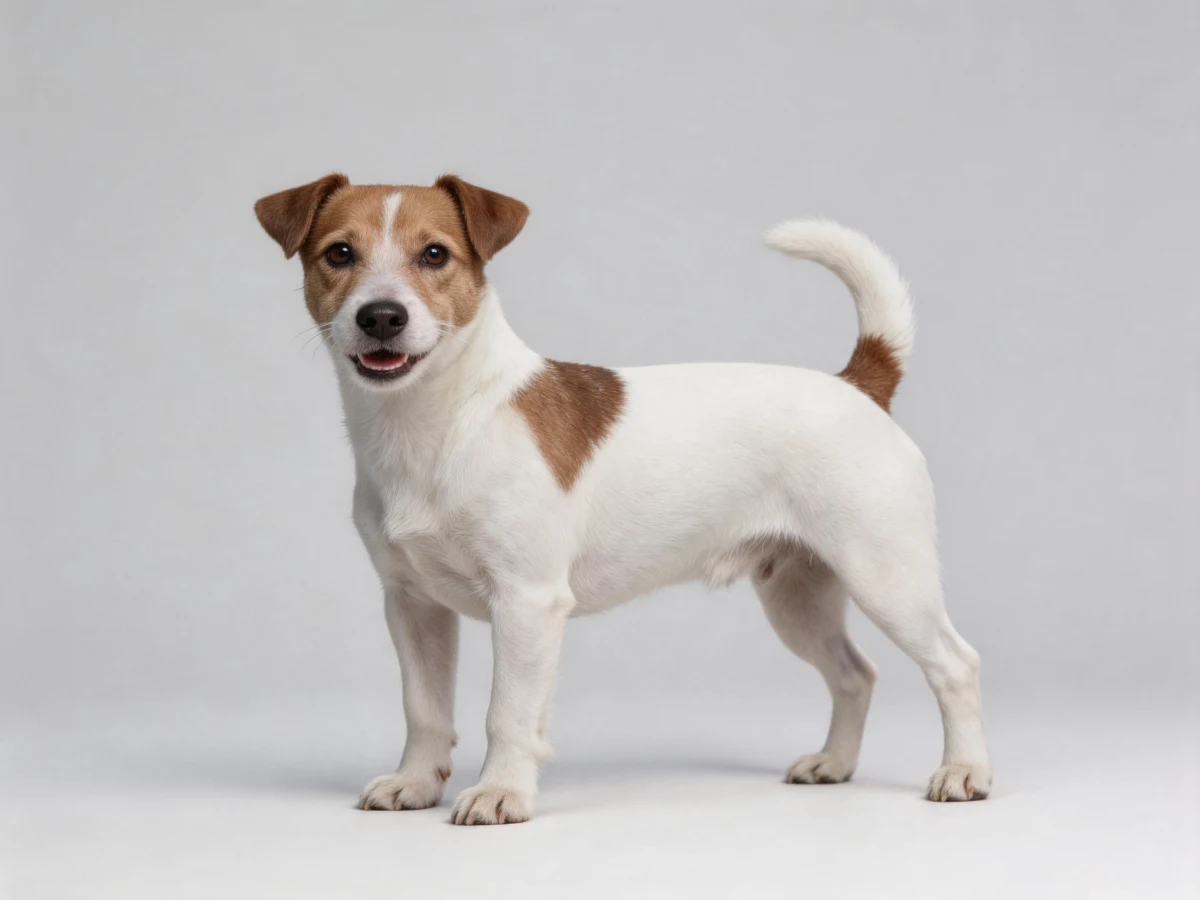
Wire Fox Terrier
✨ Key Takeaways
- The Wire Fox Terrier was bred in the English shires to be carried to a foxhunt, sent down the earth after a fox the hounds had run to ground, and trusted to bolt it back out or hold it at bay alone — the predominantly white coat exists so huntsmen could tell dog from fox at the mouth of the hole.
- The Wire and the Smooth Fox Terrier were long shown and bred as two coats of one breed; England treated them as separate from the late 1800s, but the AKC did not formally split them into distinct breeds until 1985.
- No breed has dominated the Westminster Kennel Club show like the Wire: fifteen Best in Show wins between 1915 and 2019, nearly double the next breed's eight.
- Two icons made the breed world-famous in the 1930s — Skippy, who played Asta in The Thin Man films, and Herge's Snowy (Milou), Tintin's white wire-haired companion.
- The breed's defining health test is for primary lens luxation: a splice-site mutation in the ADAMTS17 gene (Farias et al., 2010) causes this painful, blinding eye disease, it is recessive, and a DNA test means two carriers should never be bred together.
- This is a high-energy, high-prey-drive earth terrier with a big dog's nerve in a small body — bold, funny, vocal, prone to dig and chase, best walked on lead, and a poor match for anyone expecting a docile small dog.
Quick Facts
Common Names & Variants
Modern aliases
Historical names
Modern variants & lines
⚖️ Pros & Cons
Advantages
Trade-offs
Physical Appearance
Recognized colors
Coat
Other
Ears: Small V-shaped drop. Tail: Set high, carried up.
🕰 History
Bred to go down the hole the foxhound could not
The Wire Fox Terrier owes its existence to a gap in the English foxhunt. A pack of foxhounds could run a fox across miles of shire country, but when the fox went to ground — bolted into an earth, a drain, or a rabbit warren — the hounds were useless. What the hunt needed was a small, hard, leggy dog that could be carried to the spot, sent down the hole, and trusted to either bolt the fox back into the open or hold it at bay underground until the terriermen dug down. That job, in the great foxhunting counties of the Midlands in the first half of the 19th century, is the whole reason the breed exists. Everything decorative about the modern show dog — the chiselled head, the dense crinkled jacket, the cocky stance — sits on top of a working specification written by men with spades.
The colour was part of the specification. A working fox terrier was bred to be predominantly white so that the huntsmen could tell dog from fox in the half-light at the mouth of an earth and not put a terrier to the spade by mistake. The legs had to be long enough to keep up with a trotting horse on the way to the meet, the body small enough to fit a fox's earth, the jaw strong, and the temperament absolutely without quit. The standard's famous line that the dog should stand "on the tip-toe of expectation" is a description of a working animal poised to be sent to ground, not a piece of show-ring poetry.
Two coats, one dog, and a very long engagement
For most of the breed's history the Wire and the Smooth Fox Terrier were treated as two coats of a single breed rather than two breeds. They were bred to one another freely in the 19th century — the Wire is widely held to carry a good deal of Smooth blood, brought in to refine the head and improve the white colour and markings — and they were registered and judged together for decades. The Kennel Club in Britain recognised the fox terrier early, with a breed club founded in 1876, and the dogs were among the first registered. Yet the formal divorce came astonishingly late. In England the two were treated as separate breeds from the late 19th century, but the American Kennel Club did not split the Wire Fox Terrier and the Smooth Fox Terrier into two distinct breeds until 1985 — making the Wire, on paper, one of the more recent breeds on the AKC register despite a documented history reaching back well over a century before that.
The most successful show dog in America
What happened to the breed in the show ring is without parallel. The Wire Fox Terrier has won Best in Show at the Westminster Kennel Club show fifteen times — more than any other breed in the event's history, and nearly double the eight wins of the next breed, the Scottish Terrier. The first of those Westminster wins came in 1915 and the most recent in 2019, when a Wire named King took the title. No breed has been so consistently rewarded by American show judges across more than a century. The reason is partly the dog itself — a Wire in full hand-stripped trim, squared off and standing alert, is a textbook of terrier outline — and partly a self-reinforcing tradition: the breed attracted the best handlers and breeders precisely because it kept winning, which in turn kept it winning. The flip side is that the show dog and the working dog diverged, and the modern Wire is far more often a companion and a show competitor than a dog put to ground.
The terrier the showring built — and the terriers it built
The Wire's success in the ring did more than decorate the breed; it reshaped it and helped found others. The squared, short-backed, narrow-fronted outline that show breeders selected for is now so standardised that a modern Wire looks markedly different from the rangier working terriers of the 1880s, and the change was driven by judging fashion rather than function. The breed also sat at the centre of the late-Victorian terrier-making boom. Breeders reaching for particular coats, colours, and working styles drew on fox terrier blood to help fix several of the newer terrier breeds, and the Wire's near relations in the Welsh and Lakeland hill country — the Welsh Terrier, the Lakeland Terrier, and the Sealyham — share both a broken coat and a good deal of common ancestry with it. A Wire standing beside a Welsh Terrier shows the kinship at a glance: same harsh jacket, same alert square build, different colour. The breed is, in that sense, both a finished product and a founding stock.
Asta, Snowy, and a decade of fame
The breed's second wave of fame came from popular culture. In the 1930s a Wire Fox Terrier called Skippy, trained in Hollywood, played Asta — the quick, comic terrier of Nick and Nora Charles in The Thin Man (1934) and its sequels, and the dog who steals scenes in Bringing Up Baby (1938) opposite Katharine Hepburn and Cary Grant. Asta made the Wire the fashionable American dog of the decade, and demand spiked accordingly. A continent away, the breed had already been immortalised in print: Hergé's comic hero Tintin travelled the world with Snowy — Milou in the original French — a small white wire-haired fox terrier whose look was reportedly inspired by a terrier belonging to the proprietor of a café Hergé frequented around 1929. Between Asta on the American screen and Snowy on the European page, the Wire Fox Terrier became one of the most recognisable dogs of the 20th century, even to people who never met one.
The honest version of the breed's story keeps the working root in view. The early shire terriers are thinly documented — the men who bred them kept few stud books and the Smooth-and-Wire interbreeding muddies the pedigree record — so claims about exact crosses are tradition more than archive. What is firmly fixed are the later dates: the British breed club in 1876, the long shared registration, the AKC split in 1985, fifteen Westminster wins between 1915 and 2019, and the Asta-and-Snowy fame of the 1930s. That arc is the real story: a hunt-country digging dog turned into the most decorated show dog in America and a worldwide cultural icon, while the spade-and-earth job that shaped it quietly faded.
Temperament & Personality
A big dog's nerve in a small dog's body
The Wire Fox Terrier was bred to face a cornered fox underground, alone, with no human help within reach, and that single fact explains almost everything about the breed's character. This is a dog with enormous courage, a high pain threshold, a quick temper, and a complete absence of the off switch most companion breeds have. The standard asks for a dog "on the tip-toe of expectation," and that is exactly what you get: an alert, busy, opinionated animal that treats the world as a series of things to investigate, chase, or challenge. People who love the breed love precisely this electricity. People who are surprised by it were usually expecting a small dog to behave like a small dog.
Bold, funny, and relentlessly busy
At home a well-raised Wire is affectionate, comic, and devoted, with a clownish streak that the Asta films captured exactly. The breed bonds hard to its family and wants to be in the middle of everything. But it is not a placid lap dog. The energy level is high and the curiosity is constant; a Wire needs real daily exercise and, just as importantly, mental work, or it will invent its own entertainment — usually digging, barking, or dismantling something. The terrier brain is sharp and independent, which makes the dog quick to learn and equally quick to decide your instruction is optional. A bored Wire is a destructive Wire.
Prey drive is not a quirk, it is the job
The instinct to chase and kill small animals is not a behaviour problem in this breed; it is the breed. A Wire Fox Terrier was selected for generations to pursue quarry into a hole and not stop, and that drive comes hard-wired. Squirrels, rabbits, cats it has not been raised with, and the neighbour's guinea pig are all at genuine risk. The practical consequences are firm: a Wire should be walked on lead or in secured ground, because a recall — however well trained — competes with a hundred generations of breeding to ignore the human and follow the scent. Many Wires also dig, enthusiastically and to a professional standard, and a garden is something to be managed rather than admired.
Dog-to-dog friction and the terrier fire
Like most earth terriers, the Wire can be scrappy with other dogs, particularly same-sex adults, and will rarely back down once challenged — the breed was never bred to be diplomatic. Early, ongoing socialisation tempers this considerably, and many Wires live happily with a calm companion dog, but the owner should expect a terrier's readiness to stand its ground rather than a retriever's eagerness to make friends. The barking is loud, frequent, and pointed; the hill of an earth terrier was supposed to announce things, and the modern dog announces everything. A Wire that has learned barking gets a reaction will keep at it.
What the breed needs from a day
The Wire is not a high-mileage athlete in the way a Border Collie is, but it is relentlessly busy, and the distinction matters when matching the dog to a home. A long, varied walk with plenty of sniffing, a vigorous game, and a few minutes of training or a food puzzle will satisfy most Wires far better than a single long trudge. The breed thrives on novelty — new routes, new scents, new problems to solve — and stagnates on routine. Earthdog trials, terrier racing, barn hunt, and the simple permitted job of a sanctioned digging pit all give the instinct a legal outlet, and a Wire that gets one is a calmer dog in the house. Apartment living is possible for the breed but demanding, because the barking that suits a detached cottage carries straight through shared walls.
Trainable, on the terrier's terms
Few breeds are more rewarding to train well or more frustrating to train badly. The Wire is genuinely clever and food-motivated, and short, varied, upbeat sessions produce a quick, willing worker. Drilling and heavy-handed correction produce a defiant, evasive one — the terrier reads coercion as a contest and tends to win it. The realistic owner accepts that house-training takes patience, that off-lead reliability around prey may never be total, and that the dog will always have opinions. Matched to an active, humorous household that wants a bold, engaged, characterful companion and will give it work and firm consistency, the Wire Fox Terrier is one of the most entertaining dogs alive. Matched to a quiet home expecting a docile small dog, it is a daily surprise.
🏡 Living With a Wire Fox Terrier
A live wire that wants a job, not a cushion
Day-to-day life with a Wire Fox Terrier is life with a small dog that runs on a working terrier's engine. This is an animal selected to be carried to a foxhunt and sent underground alone, and the household version of that dog is busy, watchful, and perpetually employed in some self-assigned project. A Wire is genuinely devoted and loves being in the thick of family activity, but it does not idle well. The practical exercise floor is a good hour a day split between physical work and brain work: a brisk varied walk heavy on sniffing, a vigorous game, and a short training drill or food puzzle satisfy a Wire far better than one long plod. A Wire that is merely walked, with nothing for its mind, fills the gap itself — and its chosen hobbies are digging, barking, and taking apart whatever is reachable.
The fence and the lead are non-negotiable
Two hard facts shape every Wire household, and both come straight from the breed's hunting design. The first is prey drive: squirrels, cats it was not raised beside, rabbits, and the neighbour's small pets are at real risk, and a Wire in pursuit treats even a trained recall as a suggestion. It is a leashed-walk-or-secured-ground breed, full stop. The second is the digging and the climbing — a Wire is a champion escape artist that will tunnel under a fence or scale a low one to chase what it has spotted. A garden needs a genuinely secure, dig-proofed boundary (buried mesh or a dug-in skirt), not a token one, and the dog should never be trusted loose in unfenced open country.
Kids, other dogs, climate, and the noise question
A well-socialised Wire is a marvellous, comic family dog and does well with children old enough to respect a busy small dog that will not be mauled or cornered. With other dogs it carries the earth terrier's readiness to stand its ground, particularly toward same-sex adults, so calm introductions and ongoing socialisation matter more than with a soft breed. The Wire is hardy and weather-tolerant — the harsh broken coat handles cold and damp shire weather well, though common sense applies in real heat. The breed physically fits a flat, but the vocal, pointed alert-barking that suited a detached cottage carries straight through shared walls, so apartment life demands real management of the noise. The upside on shedding is real: a correctly hand-stripped wire coat sheds very little.
🎓 Training & Exercise
Clever and food-motivated, but never servile
The Wire Fox Terrier is a sharp, quick-learning dog that takes obedience on its own terms. It is not biddable in the retriever sense — it was bred to make independent decisions underground, out of sight and earshot of any handler, and that self-reliance is wired in. The motivation that works is food and genuine fun: short, fast, varied sessions with high-value rewards produce a willing, eager worker. What backfires is drilling and heavy-handed correction. A Wire reads coercion as a contest, digs in, and tends to win, turning evasive and defiant rather than compliant. Repetition for its own sake bores the dog; keep sessions brief, upbeat, and always changing, and quit while the Wire still wants more.
The one real catch: recall around prey
The honest limit of Wire training is off-lead reliability near small animals. An owner can build a beautiful recall in the garden and still watch it evaporate the instant a squirrel breaks cover, because a hundred-odd generations of breeding to chase quarry into a hole outrank the cue to come back. This is not a training failure; it is the breed working as designed. The realistic plan is to train a strong recall on a long line, reinforce it for life with high-value rewards, and still default to lead or secured ground anywhere prey might appear. Early, ongoing socialisation with other dogs and with the family cat (raised together from puppyhood) tempers the friction, but should be treated as risk-management rather than a guarantee.
House-training, manners, and the legal outlet
Expect house-training to take patience and consistency — small terriers are not the quickest to housetrain, and a strict routine of frequent, supervised trips out plus crate work pays off. The highest-value manners commands for this breed are a reliable "leave it" and "off," a settled "place," and quiet-on-cue to manage the alert-barking before it becomes a self-rewarding habit. Above all, give the terrier instinct a sanctioned job: earthdog trials, barn hunt, terrier racing, a permitted digging pit in the garden, or scent games all channel the drive that would otherwise rebuild your flowerbeds. A Wire with a legal outlet for its energy and its nose is a calmer, easier dog in the house.
✂️ Grooming & Coat Care
A harsh broken coat built to be hand-stripped
Grooming is the single biggest commitment a Wire owner takes on, and it starts with understanding the coat. The Wire wears a double coat: a dense, wiry, broken outer jacket with the crisp texture of coconut matting over a finer undercoat. That harsh texture is functional — it shed dirt and shrugged off brambles in the field — and it is maintained by hand-stripping, the process of plucking out dead outer hairs (by finger and thumb or a stripping knife) rather than cutting them. Stripping pulls the coat from the root so the new growth comes in correctly harsh and keeps the bright white-with-markings colour. A pet Wire is typically rolled (stripped a little at a time on a rolling schedule) or fully stripped a few times a year; a show dog is stripped far more meticulously.
Why clipping is the easy mistake
Most groomers will offer to clip a Wire because it is faster, and many pet owners accept — but clipping cuts the coat instead of removing the dead hair, and over time it softens the harsh texture and dulls the crisp white-and-tan into a hazier, woollier, off-colour coat that also tends to mat and trap dirt more readily. Owners who want the true Wire jacket either learn to hand-strip themselves or find a terrier-experienced groomer who strips. Between strippings the coat needs regular brushing and combing — a slicker and a comb a few times a week — to keep it clean and tangle-free, with particular attention to the furnishings, the longer softer hair on the muzzle (the beard) and the legs that is the breed's signature trim and the place where mats and debris collect.
Beard, legs, ears, nails, and teeth
The beard and leg furnishings are a daily reality: they pick up food, water, and mud, so they need wiping and frequent combing to stay free of mats and staining. Bathe sparingly — over-bathing softens a wire coat and works against the texture stripping is trying to preserve — and concentrate on keeping the furnishings clean rather than washing the whole dog often. Check the small V-shaped drop ears regularly and keep them clean and dry, since a folded ear traps warmth and moisture. Nails grow fast on an active digging breed and need trimming every two to three weeks; nails that click on the floor are already too long. Brush the teeth several times a week, because small terriers accumulate dental tartar readily, and tidy the hair between the foot pads for traction.
🍖 Diet & Nutrition
A small, active dog that is easy to overfeed
The headline nutritional issue for a Wire Fox Terrier is portion arithmetic. This is a small, lean, athletically built dog — adult males run roughly 15 to 19 lb and females a touch lighter — so its daily calorie need is genuinely small, and it is alarmingly easy to overfeed by eye. A few too many treats, scraps from the table, or feeding from a scoop rather than a measured cup tips a 17 lb terrier into overweight quickly, and the extra load is unkind to a small dog's joints, including a breed already noted for the juvenile hip condition Legg-Calvé-Perthes. Feed measured meals matched to the dog's ideal lean weight and activity, keep treats inside a daily calorie budget (use part of the measured ration for training rewards), and learn to body-condition-score by feeling for ribs and a visible waist rather than trusting the bowl.
Puppy growth and the move to adult feeding
A Wire puppy should be raised on a complete food appropriate for a small-breed puppy, fed in several small meals a day and kept lean and steadily growing rather than chubby. With an average litter of around four puppies, breeders usually start weaning onto solids in the normal way and a buyer should keep the puppy on whatever diet the breeder used, changing food only gradually over a week or so to avoid digestive upset. Most Wires move to twice-daily adult feeding once growth slows, with the portion set by ideal adult weight and activity level and adjusted by body condition over time. Free-feeding (leaving food down all day) is a poor fit for a breed this easy to fatten.
Feeding routine for a busy terrier
Two measured meals a day suit the Wire's energy and appetite better than one. The breed is not a deep-chested giant and does not carry the bloat risk of the big sporting and working dogs, so the feeding cautions are the ordinary ones rather than emergency ones: fresh water always available, treats counted into the day's total, and any diet change made slowly. Because the beard and muzzle furnishings drag through food and water, a Wire benefits from a narrow or shallow bowl that keeps the beard cleaner, and from a wipe of the furnishings after meals. If a Wire ever loses interest in food, especially alongside a suddenly painful or cloudy eye, that is a reason to see a vet promptly rather than to change the food, given the breed's known eye risk.
🐶 Buying & Adopting a Wire Fox Terrier
Start with the parent club
The American Fox Terrier Club (AFTC) is the AKC parent club for both the Wire and the Smooth Fox Terrier, and it is the right starting point — it maintains a breeder-referral resource, a code of ethics for member breeders, and a rescue network. A breeder worth buying from will be an AFTC member or hold an equivalent national-club standing, will register litters, will health-test both parents and show you the results, will offer a written contract, and will talk frankly about the breed's known issues rather than insisting their lines have none. Because the AKC split the Wire from the Smooth Fox Terrier in 1985, make sure paperwork and parentage are specifically Wire Fox Terrier, not the smooth-coated breed.
The exact health screening to ask a breeder for
This breed has unusually testable health risks, which makes a buyer's checklist concrete. The AKC's CHIC programme for the Wire Fox Terrier centres on three screens that a responsible breeder can document on both parents: a Primary Lens Luxation (PLL) DNA test (the ADAMTS17 mutation — a simple cheek swab; the rule is that two carriers must never be bred together), a Patella evaluation for luxating kneecaps, and an eye examination by a boarded veterinary ophthalmologist (OFA/ACVO). Beyond the CHIC minimum, ask whether puppies are BAER hearing-tested for congenital deafness, which matters in a predominantly white breed, and whether the breeder screens for or knows the line's history of Legg-Calvé-Perthes and cardiac issues. A breeder who hands over the PLL and eye paperwork without being chased is the one to trust; "our dogs are all healthy, no testing needed" is the answer to walk away from.
Rescue and the smooth-versus-wire question
Fox terrier rescue is coordinated through the AFTC's rescue network and regional groups, and it regularly takes in adolescents and adults surrendered by owners who underestimated the prey drive, the digging, the barking, or the grooming. For an adopter who wants a known adult temperament rather than the lottery of a puppy, breed rescue is an excellent and ethical route. One caution specific to this breed: rescues and rehomers sometimes label any wire-coated terrier a Wire Fox Terrier, so a careful adopter confirms the dog is actually a Wire rather than a Smooth Fox Terrier, a Welsh or Lakeland Terrier, or a wirehaired cross.
Price, waiting lists, and red flags
A well-bred Wire Fox Terrier puppy in the United States runs roughly USD 1,500–3,500 (2024), with the better breeders keeping waiting lists of several months because litters average only about four puppies. The patterns to avoid are the familiar ones: puppies priced well below that range with immediate availability, no PLL or eye paperwork, no parent-club connection, and a seller who cannot tell you whether the parents were tested. Be wary too of anyone marketing a "rare" colour or a non-stripped "easy-care" coat as a selling point — the standard's predominantly-white-with-markings colouring and the hand-stripped jacket are the breed, not an upgrade. A fair price from a health-testing, parent-club breeder, even after a wait, is far cheaper over a 12-to-15-year life than the cost of a poorly bred dog with a luxating lens.
📜 Breed Name Etymology — iDogNames original research
A name that is a complete job description
"Wire Fox Terrier" is one of the most transparent breed names in the dog world: every word is functional, and read together they describe a coat, a quarry, and a working method. There is no obscure foreign root, no patron's surname, no place-name to decode — the English simply says what the dog is and what it was for. That plainness is itself a clue to the breed's origins among working hunt-country men who named dogs by what they did, not by fashion.
The word terrier is the oldest and most important part. It comes, through Old French terrier ("of the earth"), from the Latin terra, "earth" or "ground." A terrier is, etymologically and literally, an earth-dog: a dog that goes to ground after its quarry. The whole tribe of terriers is named for this single behaviour — pursuing animals such as foxes and badgers into their burrows — and the Wire Fox Terrier is one of the most literal embodiments of the word. When you call the breed a terrier you are calling it, in dog-Latin, "the earth one."
"Fox" — the quarry that named the dog
The middle word names the prey. The fox terrier was bred specifically to work the red fox in the context of the mounted foxhunt: when hounds drove a fox to ground, the fox terrier was sent in to bolt it back out or hold it at bay. Naming a terrier for its quarry was the ordinary English practice — the otterhound for the otter, the badger-dog (which German turned into Dachshund) for the badger — and the fox terrier follows the same logic exactly. The dog is, in plain words, the earth-dog for foxes.
"Wire" — the coat that split the breed
The first word distinguishes this dog from its smooth-coated sister. Wire (also written wirehaired or wire-haired) describes the harsh, dense, broken outer coat — hair with the texture of coir or coconut matting, the opposite of the Smooth Fox Terrier's short flat jacket. The older, equally accurate term was broken-coated or rough-coated: the coat is "broken" because the wiry guard hairs interrupt the smooth line a short coat would give. When the two coats were finally separated into distinct breeds, the coat-word became the breed-word, and "Wire" did the entire job of telling the two dogs apart.
The aliases and the diminutive
In casual British and Australian use the breed is often simply the Foxie, an affectionate diminutive that lumps Wire and Smooth together, and the abbreviation WFT is common among breeders and in pedigrees. The fuller historical forms — Wire-haired Fox Terrier and Wirehaired Fox Terrier — are the names under which the breed was registered for much of the 20th century before the shorter "Wire Fox Terrier" became standard. None of these aliases carries any new meaning; they are spelling and shorthand variants of the same plain English description.
Pronunciation
The name is said exactly as it is spelled: /ˌwaɪər ˈfɒks ˌtɛrɪər/ — "WIRE FOX TERR-ee-er," with the main stress on "fox." The only word that ever causes trouble is terrier itself, which is three syllables ("TERR-ee-er"), not two; the doubled R keeps the first vowel short. There is no silent letter and no foreign sound anywhere in the name, which is fitting for a breed whose entire identity is built on doing an obvious job well.
Name forms at a glance
| Name | Role | Origin | Literal meaning | First recorded |
|---|---|---|---|---|
| Wire Fox Terrier | primary | English | the wire-coated earth-dog for foxes | 1870 |
| Wire-haired Fox Terrier | historical | English | the wire-haired fox terrier | 1870 |
| terrier | historical | Old French / Latin | earth-dog | 1400 |
| Foxie | alias | English (colloquial) | little fox (terrier) | 1900 |
| Asta | alias | English (fictional) | the Asta dog | 1934 |
🏛 Naming Traditions — iDogNames original research
Naming an English working terrier
The Wire Fox Terrier's naming heritage runs along three honest tracks, and the best names lean on the real ones rather than on generic small-dog cuteness. The first and deepest is the breed's own working culture — the English foxhunt, the shire countryside, and the vocabulary of hounds, horses, and earths that produced the dog. The second is the breed's extraordinary fame: Asta, Snowy, and the show-ring dynasty give a set of names with genuine documentary weight. The third is the dog's look and character — the predominantly white coat, the black-and-tan markings, the cocky terrier swagger. A name drawn from the first track plants the dog in its real history; a name from the second nods to its fame; a name from the third simply suits the animal in front of you.
The foxhunt and the shire country
Because the breed was made by and for the mounted foxhunt, the language of hunting is the truest naming source of all. The great hunt countries themselves give resonant names: Quorn and Belvoir (after two of the most famous Leicestershire hunts), Pytchley, Cottesmore, and Melton (Melton Mowbray, the spiritual capital of foxhunting). The trade gives Reynard (the literary name for the fox, from the medieval beast-fable), Tally (from "tally-ho," the cry at sighting the fox), Copper and Russet (the fox's colour), Hunter, Chase, and Bramble and Bracken for the cover a fox runs through. For a dog literally bred to go down a hole after a fox, Reynard and Tally are about as authentic as a name can be.
The English countryside and the working register
The second strand of the working heritage is the plain English of the shires and the kennel. Honest terrierman's names — short, hard, easy to shout down a hole — fit the breed's history exactly: Pip, Nip, Scrap, Flint, Digger, Spud, Tess, Vixen (the female fox), Gyp, and Bess. The English landscape adds Hedge, Stile, Meadow, Heath, and Briar. These are not glamorous names, and that is the point: a working terrier in 1880 was far likelier to be a Pip or a Vixen than a Maximilian, and the plainness is part of the breed's authentic character.
The famous Wires — Asta, Snowy, and the show ring
Few breeds give the owner so many famous namesakes to choose from. Asta — after Skippy, the Wire who played the Charles family's terrier in The Thin Man — is the most loaded and most fitting of all, instantly recognisable to anyone who knows the films. Snowy and its French original Milou honour Tintin's inseparable white wire-haired companion. Skippy names the real dog behind Asta. King recalls the Wire who took Best in Show at Westminster in 2019, and Westminster itself nods to the breed's record fifteen wins there. These are names with real anchors — a film, a comic, a show — rather than invented "cute" names, and they let an owner who knows the breed's story name the dog after it.
Names from the coat and the markings
The breed's distinctive colouring is a natural and gentle naming source. The predominantly white coat suggests Snowy (which doubles as the Tintin tribute), Frost, Chalk, Domino, and Pepper (for the black-and-white). The black-and-tan markings give Sable, Tanner, Smudge, and Patch. And the breed's cocky, comic, fearless personality invites character names — Scout, Rascal, Spark, Gizmo, Whiskey, and Sprocket — that match the busy, mechanical energy of a dog that never stops. The deepest and most personal heritage names, though, remain the working ones: a Wire called Reynard, Quorn, Vixen, or Pip is wearing the breed's real history rather than its fame.
🐾 Themed Names for Your Wire Fox Terrier — iDogNames original research
The foxhunt — quarry, cry, and country
Names drawn straight from the mounted foxhunt that created the breed — the truest heritage layer for an earth terrier.
- Reynard — the literary name for the fox, from the medieval beast-fable; the dog's own quarry
- Tally — from "tally-ho," the huntsman's cry at sighting the fox
- Vixen — the female fox; a sharp, fitting name for a fiery bitch
- Quorn — the famous Leicestershire hunt, in the breed's home country
- Belvoir — another great Leicestershire hunt (said "Beaver")
- Melton — Melton Mowbray, the historic capital of English foxhunting
- Copper — the fox's russet colour
- Chase — the pursuit itself; brisk and apt
- Bracken — the hill fern a fox runs through for cover
- Hunter — plain, hard-working, and historically true
The working terrier — short, hard names
The plain kennel names a 19th-century terrierman would have shouted down an earth — easy to call and authentically unglamorous.
- Pip — the classic small-terrier name; one crisp syllable
- Nip — quick and terrier-true
- Scrap — for a dog that never backs down
- Flint — hard, sparking, and tough
- Digger — the breed's favourite hobby, made a name
- Spud — a homely English working-dog name
- Tess — a soft, traditional bitch name from the shires
- Gyp — an old country terrier name
- Bess — plain, period, and warm
- Briar — the thorny cover of the hedgerow
The famous Wires — screen, comic, and show ring
Names with real documentary anchors, from the breed's extraordinary fame across film, comics, and the Westminster ring.
- Asta — the Charles family's terrier in The Thin Man (1934), the most famous Wire of all
- Snowy — Tintin's inseparable white wire-haired companion
- Milou — Snowy's original French name; elegant and authentic
- Skippy — the real Hollywood Wire who played Asta
- King — the Wire who won Best in Show at Westminster in 2019
- Westminster — for the breed's record fifteen Best in Show wins
- Nick — for Nick Charles, Asta's owner in The Thin Man
- Nora — for Nora Charles; the female counterpart
- Tintin — Snowy's globe-trotting boy reporter
- Hergé — the Belgian cartoonist who created Snowy
The coat and markings
Names for the breed's signature predominantly white coat and its black-and-tan markings.
- Frost — for the clean white jacket
- Chalk — bright and white
- Domino — for the black-and-white pattern
- Pepper — speckled black on white
- Sable — for the dark markings
- Tanner — for the tan points
- Smudge — for a face marking
- Patch — for the saddle of colour
- Domino — a tidy black-and-white name
- Coco — a nod to the coir-textured wire coat
The terrier character — busy and bold
Names that match the breed's cocky, comic, never-still personality.
- Scout — for the endlessly investigating nose
- Rascal — the clownish, mischievous streak
- Spark — for the dog's electric energy
- Gizmo — small, busy, and mechanical
- Sprocket — for a dog that runs like clockwork
- Dash — quick and lively
- Jagger — for the strut and swagger
- Bramble — prickly and quick, like the dog
- Whiskey — bold and warming
- Turbo — for the dog's permanent overdrive
📋 Breed Standard at a Glance
General appearance
The AKC and FCI standards describe the Wire Fox Terrier as a balanced, alert, square-built working terrier — short-backed, standing well up on the leg, and giving the impression of a dog "standing over a lot of ground" despite its small size. The outline should be neat and clean, the dog poised "on the tip-toe of expectation," conveying speed, endurance, and the nerve of an earth dog ready to be sent to ground. Bone and strength are wanted without coarseness; the silhouette is the breed's hallmark.
Size, coat, and colour
This is a small breed. Dogs stand about 36–39 cm at the withers (roughly 14.2–15.4 in; the standard sets a ceiling of not over 15.5 in for a dog) and bitches a little less at about 34–37 cm (around 13.4–14.6 in), with a balanced dog in show condition weighing in the region of 15–19 lb. The coat is the defining feature: a dense, harsh, broken (wire) double coat with the crisp texture of coconut matting over a finer undercoat, traditionally hand-stripped. Colour is predominantly white, with black, tan, or black-and-tan markings; brindle, red, or liver markings are objectionable.
Head, movement, and temperament
The head is long and well-chiselled with a flat, moderately narrow skull, a strong jaw, small dark deep-set eyes "full of fire," and small V-shaped ears dropping forward close to the cheek. Movement should be straight and driving, the legs moving parallel, with good reach in front and strong propulsion behind. Temperament is part of the standard: the Wire should be alert, quick of movement, keen of expression, and "on the tip-toe of expectation," bold and friendly rather than shy or savage. The Wire Fox Terrier and the Smooth Fox Terrier were recognised as separate breeds by the AKC in 1985.
🏆 Famous Wire Fox Terriers
Notable real dogs of the breed profiled on iDogNames.
🏆 Recognition
Recognized by the American Kennel Club in 1985 as a Terrier breed. FCI standard No. 169 (Section 1 — Large and medium sized Terriers), recognized in 1955.
Other registries
Breed clubs
❓ Frequently Asked Questions
Are Wire Fox Terriers good family dogs?
Yes, for the right family. A well-socialised Wire is a bold, funny, devoted companion that thrives in an active household and does well with older children who respect a busy small dog. It is not a placid lap dog: the breed needs real daily exercise and mental work, has a strong prey drive that puts cats and small pets at risk, and can be assertive with other dogs, so it suits engaged owners rather than a quiet home expecting a docile little dog.
Do Wire Fox Terriers shed a lot?
No, a correctly maintained wire coat sheds very little, which is part of the breed appeal. The catch is that the harsh broken coat is kept by hand-stripping (plucking the dead hair) rather than brushing alone, plus regular combing of the beard and leg furnishings. Clipping the coat instead of stripping it softens the texture and dulls the colour over time, so low shedding comes with a real grooming commitment.
How much exercise does a Wire Fox Terrier need?
Plan on about an hour a day, split between physical activity and brain work. A long varied walk heavy on sniffing, a vigorous game, and a short training or scent session suit the breed far better than one long plod. Bred as a working earth terrier, a Wire that is under-exercised invents its own jobs, usually digging, barking, and destruction. Walks should be on lead or in securely fenced ground because of the prey drive.
How long do Wire Fox Terriers live?
Typically 12 to 15 years. The Wire is a hardy, long-lived small breed with no catastrophic structural problems. Its main inherited concerns — primary lens luxation, congenital deafness, and luxating patella — are largely testable, so a puppy from health-screened parents has the best odds of a long, sound life.
Are Wire Fox Terriers easy to train?
They are clever and quick to learn but independent and stubborn, so they train on their own terms. Short, upbeat, food-motivated sessions work well; drilling and harsh correction backfire because a terrier treats coercion as a contest. The hardest part is reliable recall around prey, which competes with deep hunting instinct, so most owners keep the dog on lead or in secured ground rather than trusting off-lead reliability near small animals.
Are Wire Fox Terriers hypoallergenic?
No breed is truly hypoallergenic, but a hand-stripped Wire sheds very little and is often tolerated better than a heavy-shedding double-coated dog by people with mild allergies. There is no guarantee, and the coat still needs stripping to stay low-shedding. Anyone with a dog allergy should spend extended time around the breed before committing.
How much does a Wire Fox Terrier puppy cost?
A well-bred, health-tested puppy from a parent-club breeder typically runs USD 1,500 to 3,500 (2024), often with a waiting list of several months because litters average only about four puppies. Be wary of puppies priced well below that range with no PLL or eye-test paperwork and no parent-club connection, and of sellers charging a premium for a "rare" colour or an easy-care non-stripped coat.
📚 Sources & Further Reading
Every load-bearing factual claim on this page is anchored to one of the sources below. iDogNames does not synthesize from secondary aggregators.
- akc breed page Wire Fox Terrier — AKC Breed Profile — American Kennel Club (2024)
- fci standard pdf FCI Standard No. 169 — Fox Terrier (Wire) — Fédération Cynologique Internationale (2009)
- kc uk standard pdf Fox Terrier (Wire) — Breed Standard — The Kennel Club (UK)
- breed club official American Fox Terrier Club — parent club, breed history and health — American Fox Terrier Club
- academic paper An ADAMTS17 splice donor site mutation in dogs with primary lens luxation — Farias FHG et al., Investigative Ophthalmology & Visual Science 51:4716-4721 (PMID 20375329) (2010)
- academic paper ADAMTS17 mutation associated with primary lens luxation is widespread among breeds — Gould D et al., Veterinary Ophthalmology 14:378-384 (PMID 22050825) (2011)
- academic paper International Veterinary Epilepsy Task Force: idiopathic epilepsy of genetic or suspected genetic origin in purebred dogs — Hülsmeyer V-L et al., BMC Veterinary Research 11:175 (PMID 26316206) (2015)
- academic paper Genome-wide linkage study of atopic dermatitis in West Highland White Terriers — Salzmann CA et al., BMC Genetics 12:37 (PMID 21510878) (2011)
- wikipedia Wire Fox Terrier — Wikipedia — Wikipedia