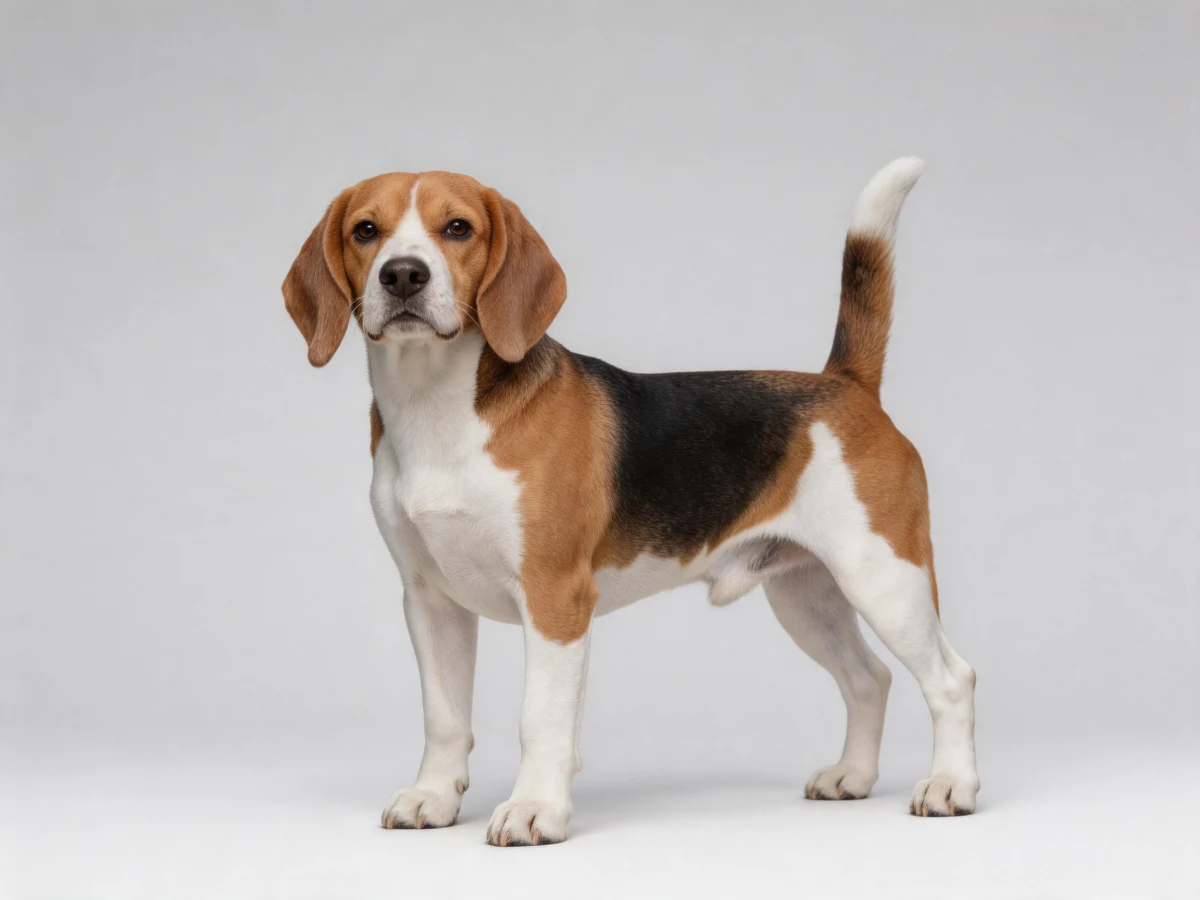
Talbot Hound
✨ Key Takeaways
- The Talbot Hound is an extinct historical scent-hound type, not a modern breed with puppies for sale.
- Its importance lies in medieval and early modern hound culture, heraldry and the background of later British scent hounds.
- Most descriptions emphasize a large, white, slow, deep-nosed trailing hound, but exact measurements cannot be reconstructed safely.
- The Talbot should be discussed through source evidence and legacy, not through invented modern temperament or health statistics.
- Name ideas fit best when they draw on tracking, old Britain and France, heraldry, white hounds and Bloodhound ancestry.
- The page should help readers understand the old hound world without collapsing the Talbot into the modern Bloodhound.
Quick Facts
Common Names & Variants
Modern aliases
Historical names
Modern variants & lines
⚖️ Pros & Cons
Advantages
Trade-offs
Physical Appearance
Recognized colors
Coat
Other
Ears: Drop. Tail: Hound tail.
🕰 History
A white hound from the old scent-hound world
The Talbot Hound belongs to the era before modern kennel clubs fixed breeds into closed studbooks. It is usually described as a large white scent hound of medieval and early modern Britain and France, valued for following a line steadily rather than for explosive speed. In that world, hounds were understood by work, kennel, region and reputation more than by the precise breed labels readers expect today.
Heraldry, literature and hound ancestry
The name survived in heraldry, inn signs and written accounts, which is part of why the Talbot can feel both famous and hard to pin down. It is often placed in the background of the Bloodhound and Southern Hound, but that should be framed as historical relationship and influence, not a simple modern pedigree chart. The safest account is that the Talbot represents an old deep-nosed hound tradition from which later British scent hounds drew.
Why the breed disappeared
The Talbot did not vanish in a single clean event. Old hound strains were absorbed, renamed, crossed or replaced as hunting practices changed and modern breeds became standardized. What remained was the image of the white tracking hound and the name itself, which still helps explain the ancestry language around Bloodhounds and other scent hounds.
A name older than modern breed boundaries
The Talbot Hound is most useful when readers understand that its name comes from a pre-registry world. Medieval and early modern hounds were sorted by kennel, work, colour, owner and reputation before they were sorted by closed studbook. A Talbot could therefore be famous in language and heraldry while still resisting the clean boundaries of a modern breed page.
This is why the page should not force a single origin story. It should explain a recurring white scent-hound image and a remembered hound type, then keep the evidence limits visible.
Heraldic fame can blur dog history
The Talbot survived in signs, coats of arms and literary references long after the living hound type disappeared. Heraldry preserves memory, but it also simplifies. A white hound on a shield is not a veterinary record, a breed standard or proof of exact body type.
A stronger page tells readers how to use those clues: they show cultural importance and repeated visual identity, not a complete modern profile.
Temperament & Personality
Temperament by function, not fantasy
No one can test Talbot temperament in a living population. The sound way to write about it is to infer from work: a large trailing hound needed patience, nose, endurance, steadiness and enough cooperation to work with huntsmen and other hounds. It was not selected as a modern apartment companion or a novelty pet.
Slow work was not weakness
Descriptions of the Talbot as slow should not be read as clumsy or useless. Slow, methodical trailing can be a virtue when the job is to hold a cold scent and work it honestly. That old hound temperament would likely have been persistent, vocal and single-minded on scent.
Limits of the evidence
Claims that the Talbot was ideal with children, easy for beginners or suited to modern suburban life would be invention. The breed is extinct, and the useful lesson is about inherited hound traits rather than pet recommendations.
The nose is the safest temperament clue
The most defensible behavioural point is the work: a deep-nosed hound needed persistence, patience and a willingness to stay with scent. That is more useful than generic claims about loyalty or gentleness.
Pack and handler context
The Talbot likely belonged to a kennel and hunt system, not a modern single-dog companion routine. Cooperation with people and other hounds mattered, but the exact household temperament cannot be recovered.
🏡 Living With a Talbot Hound
Not a living companion breed
A true Talbot Hound cannot be bought, adopted or responsibly bred today because the breed is extinct as a living population. This section therefore belongs to historical interpretation, not household advice. Readers who like the Talbot idea should study living scent hounds such as Bloodhounds, foxhounds, harriers, beagles or bassets and judge those breeds on their current needs.
What the old type suggests
If a modern relative carries similar hound instincts, the practical realities are voice, scent drive, secure fencing, patience in training and a need for work that lets the nose matter. Those are lessons from the Talbot tradition, not proof that any modern dog is a revived Talbot.
Avoiding recreation claims
Sellers sometimes use extinct-breed names loosely. A dog with white colouring or hound shape is not a Talbot unless a serious preservation program can show transparent records and a defensible definition of what is being preserved.
What modern hound readers should learn
A reader attracted to the Talbot story should think in terms of scent-hound realities: voice, nose, fencing, patience and exercise that lets the dog use its strongest sense. Those lessons belong to living hounds, not to a purchasable Talbot.
Do not let white colour decide identity
A large white hound, a Bloodhound relative or a reconstructed-looking dog is not automatically a Talbot. Colour can inspire names, but identity requires records that do not exist for ordinary modern dogs.
🎓 Training & Exercise
Historical training was kennel training
A Talbot would have been trained inside a hunting and kennel system: following a scent line, working among other hounds, responding to huntsmen and learning the rhythms of the chase. That is different from modern companion obedience, so the article should not pretend to offer a puppy class plan for a dog that no longer exists.
The modern lesson for scent hounds
For related living hounds, the lesson is to respect the nose. Long-line recall, scent games, steady handling and management around wildlife make more sense than trying to remove inherited trailing instinct.
What backfires
Punishment-heavy handling is a poor match for deep-nosed hounds because it does not make scent less rewarding. Cooperation has to be built before the dog is overwhelmed by a line.
Cold-scent patience
The old Talbot reputation makes most sense around slow trailing and cold scent. Training lessons for living scent hounds should therefore emphasize patience, long-line work, safe scent games and realistic recall management.
Horn, voice and routine
Historical hounds learned within a system of huntsmen, other hounds, horn or voice signals and repeated kennel routine. That setting should be described as context, not converted into a modern puppy plan.
✂️ Grooming & Coat Care
A practical hound coat
The Talbot is usually pictured or described as a short-coated white hound. That suggests a practical coat rather than elaborate grooming, but there is no surviving show standard or grooming routine for the breed.
Field care in context
Historical hounds would have needed feet, ears and skin checked after work, especially because trailing dogs push through cover and rough ground. This is a functional inference from hound work, not a modern grooming prescription.
White coat as a name theme
The white coat matters most today as a clue in art, heraldry and naming. It can inspire names such as Chalk, Alabaster or Banner without implying that colour alone recreates the breed.
White coat as evidence, not a care plan
The white hound image is central to the Talbot story, but it does not tell us bathing frequency, shedding level or skin problems. A short practical coat and field checks are the only cautious grooming points.
Field-care texture
Feet, ears, scratches and burrs would have mattered for any working scent hound in cover. That adds historical texture without pretending to be a surviving care manual.
🍖 Diet & Nutrition
Historical feeding only
Talbot Hounds would have been fed according to the kennel economy of their time, not modern commercial diet charts. Bones, scraps, grain mixtures and meat by-products were part of historical dog keeping, but the details varied by household and period.
No modern feeding plan
Because there is no living Talbot population, the page should not prescribe calories, puppy growth rates or supplements. Living scent hounds need diets chosen for their age, size, body condition and workload.
Keep the distinction clear
Historical feeding is useful context; it is not advice for a modern dog. Readers should use current veterinary guidance for living breeds.
Kennel economy
A Talbot would have been fed inside a household or kennel economy, with food shaped by class, season and local supply. The page should not publish a modern feeding schedule for a dog that no longer exists.
Living hounds need current advice
For Bloodhounds, foxhounds, harriers or beagles, diet should follow the current breed, age, workload and veterinarian. Talbot history adds context, not nutrition data.
🐶 Buying & Adopting a Talbot Hound
Do not shop for a Talbot
There are no responsible Talbot Hound puppies for sale. The breed is extinct, and a breeder using the name today should be asked exactly what dogs are behind the program and why the Talbot label is being used.
Choose a living hound honestly
If the Talbot story appeals to a reader, the practical path is to meet living scent hounds and choose one for its real current temperament, voice, size, exercise needs and health record.
Evidence over romance
A white hound, a Bloodhound cross or a recreated-looking dog is not automatically a Talbot. Strong claims need strong documentation.
Revival claims need strong records
If a modern seller uses the Talbot name, ask what breed or cross the dog actually is, what records support the claim and whether the term is historical inspiration rather than breed identity.
Better language for modern dogs
Talbot-inspired is the safer phrase for a modern white scent-hound type. It preserves the history without pretending the extinct population is back.
📜 Breed Name Etymology — iDogNames original research
How the name works
Talbot Hound names should feel old, houndy and grounded in the breed's surviving evidence: white coat, heraldry, medieval hunting, deep scent work and its link to later British hounds.
What the name should preserve
The strongest name ideas keep the page attached to documented place, work, appearance and legacy. For an extinct or historical breed, names should not imply that a modern puppy is literally the lost dog reborn.
Name forms at a glance
| Name | Role | Origin | Literal meaning | First recorded |
|---|---|---|---|---|
| Talbot Hound | primary | English | historic hound called Talbot | — |
| Talbot | alias | English | Talbot hound shorthand | — |
| Talbot Dog | alias | English | dog of the Talbot type | — |
| Talbot Hounde | historical | Middle English | old written hound form | — |
| White Hound | historical | English | white scent hound | — |
🏛 Naming Traditions — iDogNames original research
Naming tradition
Talbot Hound names should feel old, houndy and grounded in the breed's surviving evidence: white coat, heraldry, medieval hunting, deep scent work and its link to later British hounds.
🐾 Themed Names for Your Talbot Hound — iDogNames original research
White hound names
- Alabaster — white stone and old-world tone
- Chalk — plain white coat image
- Ivory — pale and formal
- Banner — heraldic white-hound feel
- Ghost — vanished breed and pale coat
- Linen — medieval textile softness
- Pearl — white but dignified
- Warden — old estate guardian mood
Tracking names
- Line — the scent trail
- Sleuth — old word for tracking hound
- Trace — what a hound follows
- Deepnose — literal trailing gift
- Quest — patient search
- Cast — working for scent
- Trail — simple and accurate
- Voucher — hound-book flavour
Medieval names
- Talbot — direct historical name
- Bayeux — Norman echo
- Abbey — old Britain and France
- Manor — estate hunting world
- Prior — medieval title
- Gable — inn-sign atmosphere
- Herald — from heraldry
- Tanner — old working craft
Legacy names
- Blood — Bloodhound ancestry link
- Southern — Southern Hound connection
- Ancestor — honest extinct-breed theme
- Root — foundation idea
- Ledger — old record books
- Echo — surviving memory
- Relic — old but meaningful
- Archive — source-based history
More British heritage names
- British Trail - best for a Talbot Hound name rooted in United Kingdom rather than generic style
- Britain and France in medieval and early modern hound tradition Ridge - best for a regional landscape cue tied to the Talbot Hound story
- Local Line - best for a name that respects local breed history
- Old Route - best for migration, trade, field or pastoral routes behind the breed
- Heritage Note - best for a page where origin should be treated as context, not decoration
- Village Path - best for rustic, local or landrace-style background
- Working Home - best for a dog whose name should remember large white scent hound associated with slow, deep-nosed trailing and later Bloodhound and Southern Hound hist
- Country Mark - best for a concise country-of-origin cue
More work and purpose names
- Cold Nose - best for a Talbot Hound tied to older scent trails
- Track Bell - best for a hound whose voice marks the trail
- Scent Check - best for a dog that confirms track direction
- Long Trail - best for endurance over rough or wooded country
- Forest Cast - best for methodical search through cover
- Leash Rule - best for wildlife and road-safety management
- Checkback - best for a trail dog who learns to return to the handler
- Settle - best for calm at home after scent work
More coat and build names
- White In Many Heraldic And Literary Descriptions - best for a Talbot Hound whose color or markings deserve a simple call name
- Short Hound Coat Described Historically Coat - best for the short hound coat described historically coat type on this breed
- White Blaze - best for a clear face or chest marking
- Dark Mask - best for a dog with a strong muzzle or face marking
- Weather Coat - best for outdoor or working-dog coat context
- Strong Frame - best for a dog whose build is part of its function
- Bright Eye - best for an alert expression
- Ground Step - best for a name tied to movement and body type
📋 Breed Standard at a Glance
No modern breed standard
The Talbot Hound has no living FCI, AKC or Kennel Club standard. It predates modern registry definitions, so it should be described as a historical hound type rather than a breed with exact height, weight, colour and movement clauses.
The consistent historical picture
The repeated picture is a large, white, deep-nosed scent hound with long ears and a deliberate trailing style. That is enough for a useful encyclopedia description, but not enough to invent precise measurements or show-ring faults.
Relationship to later hounds
The Talbot is best treated as part of the ancestry language around Bloodhounds, Southern Hounds and the wider British scent-hound tradition. It helps explain where later hounds came from without replacing their own standards and histories.
A standard would overstate the evidence
The page can safely describe a large white trailing hound with long ears and deep-nosed work. It should not invent height, weight, gait, faults or exact proportions.
Best internal use
Use the Talbot page as a historical bridge to Bloodhound, foxhound, harrier and scent-hound ancestry topics. Living-breed standards belong on the living breed pages.
🏆 Recognition
Other registries
❓ Frequently Asked Questions
Does the Talbot Hound still exist?
No. The Talbot Hound is treated here as an extinct historical hound type, not a living kennel breed.
What did the Talbot Hound look like?
The safest summary is a large white scent hound with long ears and a deep-nosed trailing style. Exact height and weight claims should be avoided because no modern standard survives.
Was the Talbot Hound the same as the Bloodhound?
No. It is often discussed in Bloodhound ancestry and old hound history, but the modern Bloodhound is a living breed with its own standard and record.
Can I buy a Talbot Hound puppy?
A true Talbot Hound is not available from responsible modern breeders. Treat revival claims cautiously unless they provide transparent records and a defensible preservation plan.
What was the Talbot Hound temperament like?
Temperament can only be inferred from work: patient, scent-focused, persistent and suited to trailing in a kennel or hunt setting. Modern family-pet claims would be speculation.
What names fit a Talbot-inspired dog?
Use names tied to old hound work, white coat, heraldry, medieval Britain and France, or later scent-hound legacy.
📚 Sources & Further Reading
Every load-bearing factual claim on this page is anchored to one of the sources below. iDogNames does not synthesize from secondary aggregators.
- wikipedia Talbot Hound — Wikipedia
- wikidata Talbot Hound Wikidata entity — Wikidata
- book The History of the Dog — Archive.org historical dog-book collections
- other Bloodhound breed-history context — American Kennel Club
- other Bloodhound Club history context — The Association of Bloodhound Breeders
- other Heraldry and old hound iconography — Wikimedia Commons
- book De Canibus Britannicis — Historical text collections (1576)
- other iDogNames extinct-breed editorial standard — iDogNames editorial research (2026)
- veterinary org Merck Veterinary Manual dog owner library — Merck Veterinary Manual (2024)