Greek Harehound
✨ Key Takeaways
- The Greek Harehound is Greece’s native black-and-tan scent hound, recognised by the FCI under Standard No. 214 and bred above all to track and drive hare by scent.
- It is a working hound rather than a fashionable companion breed: voice, stamina, nose, independence and prey drive are central to its identity.
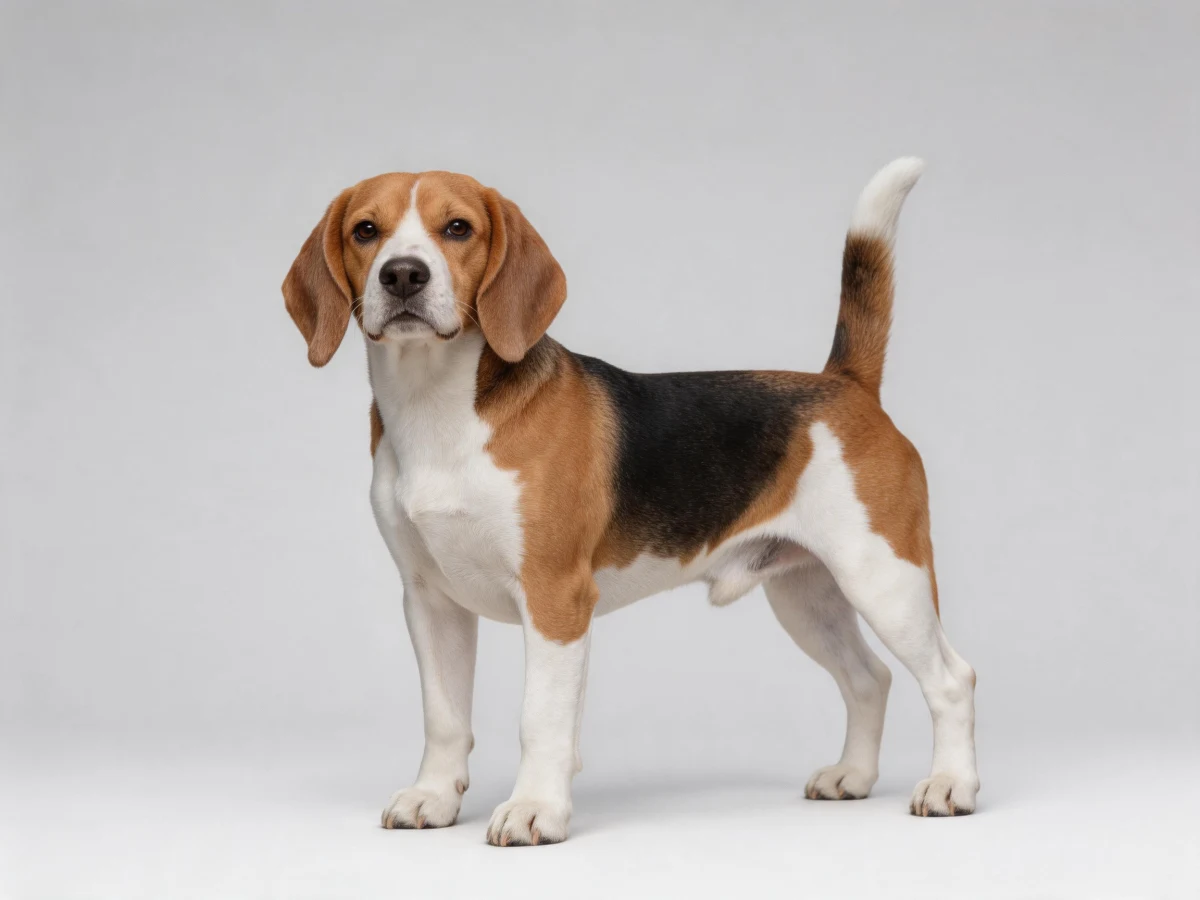
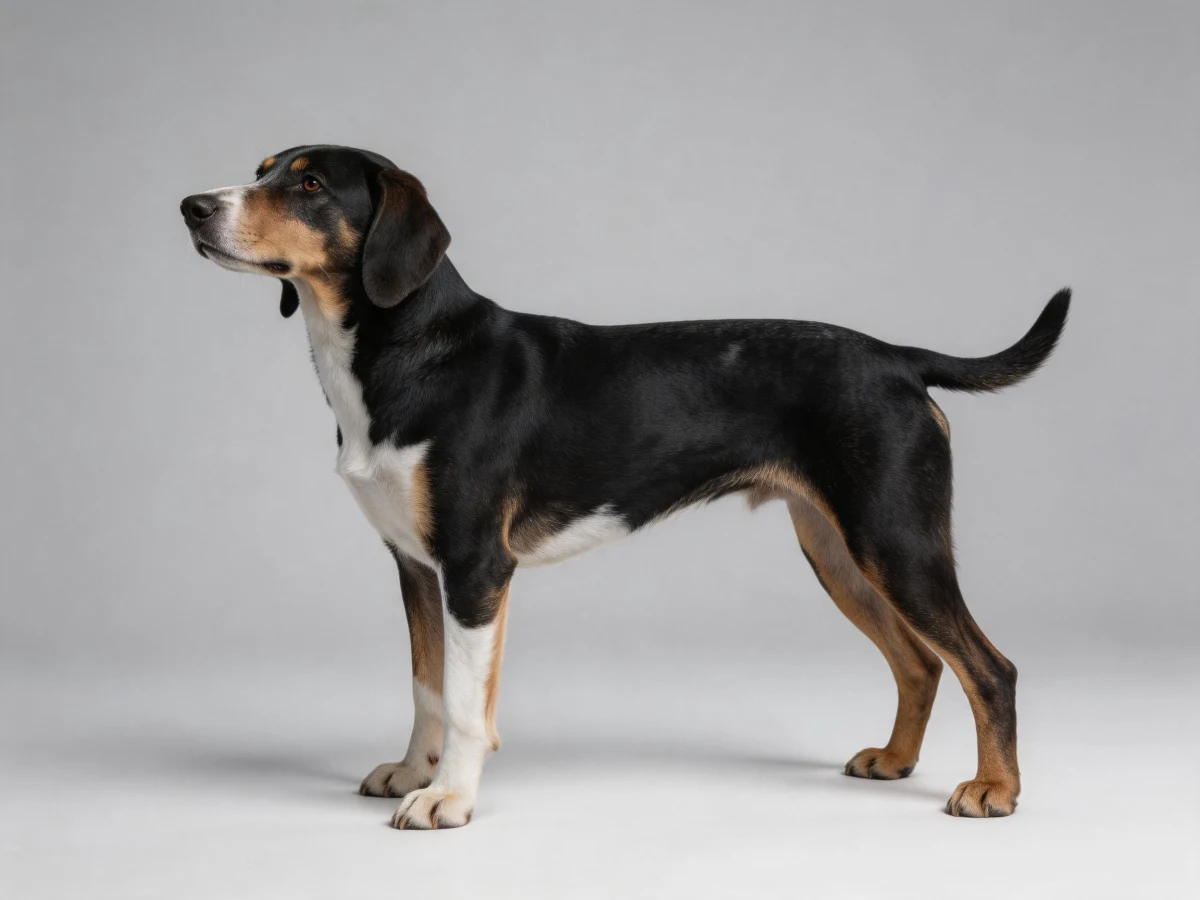
- The breed is medium-sized, short-coated and athletic, generally 47-55 cm at the withers, with a dense black-and-tan coat and long drop ears.
- Temperament is affectionate with its household, determined in work, alert and sometimes reserved, but not a low-energy apartment ornament.
- Health information is relatively thin outside Greece; the best advice is to select sound working lines and screen hips, ears and eyes sensibly.
- Names fit best when they draw on Greece, hare-hunting, mountain country, black-and-tan colouring and the breed’s Hellenic name.
Quick Facts
Common Names & Variants
Modern aliases
Historical names
Modern variants & lines
⚖️ Pros & Cons
Advantages
Trade-offs
Physical Appearance
Recognized colors
Coat
Other
Ears: Drop. Tail: Sabre.
🕰 History
A native hound of Greece
The Greek Harehound, known in Greek as the Hellenikos Ichnilatis, is the national scent hound of Greece and one of the most distinctive black-and-tan hunting dogs of southeastern Europe. Its modern standard is recent, but the type belongs to a much older Mediterranean hunting tradition: lean, tough hounds that followed hare over stony ground, through scrub and across hills where a fast eye alone was not enough. The dog’s value lay in its nose, stamina and voice, not in show-ring ornament.
Built around hare work
The breed’s whole body and temperament are explained by its work on hare. It was bred to search widely, find the line, open on scent and push quarry through difficult country for the hunter. That task favoured an athletic medium-sized dog with a short weather-sensible coat, strong feet, long drop ears that help gather scent, and the mental independence to keep working when the handler is not close. Its black-and-tan colouring is not a decorative flourish: it is the fixed, recognisable look of the breed in the FCI standard.
Recognition and rarity
The Greek Harehound is recognised by the FCI as Standard No. 214 in Group 6, the scent hounds and related breeds. It is not an AKC fully recognised breed and remains uncommon in the English-speaking world, which is why good information on it can feel scattered. In Greece it is valued by hunters who still understand it as a practical dog first. Any modern account should therefore resist turning it into a generic family-pet article; this is a real working hound with a real voice, a real nose and a real need for country, exercise and management.
Why the breed is not just a generic hound
A weak Greek Harehound article would simply call it a “rare hound from Greece” and stop there. The breed deserves more precision. It is a national scent-hound tradition fixed into a modern FCI standard, and its work is hare rather than fox, deer or general pack hunting. That matters because hare work selects for a dog that can puzzle out a cold, twisting line, push through rough cover and give tongue clearly enough for a hunter to follow the chase in broken country.
The Greek landscape also matters. Rocky hills, scrub, dry heat and rural hunting traditions shaped a dog that had to be durable, economical and independent. Its short black-and-tan coat, moderate size and spare body are practical answers to that country. This is why the breed should be compared with other European scent hounds only after its Greek setting is understood.
Temperament & Personality
Affectionate at home, driven outside
With its own people the Greek Harehound can be affectionate, loyal and steady, but in the field it is a focused scent hound. Once on a trail it is expected to think, persist and speak, which means the same qualities that make it valuable to hunters can make it challenging in a suburban home. It is not naturally clingy or soft; it is a capable worker that cooperates with a handler while retaining its own judgement.
Prey drive, voice and reserve
Prey drive should be assumed to be high. Rabbits, cats and small wildlife can trigger pursuit, and recall is difficult when the dog is hot on scent. The breed can also be vocal because giving tongue is part of its traditional work. Many individuals are reserved with strangers rather than indiscriminately friendly, so socialisation matters.
🏡 Living With a Greek Harehound
A hound for active, realistic homes
The Greek Harehound suits owners who understand hounds: people who can provide secure fencing, long walks, scent work, rural exercise or actual hunting, and who will not be shocked by a dog that follows its nose. It can live as a companion when its needs are met, but it is a poor choice for a home that wants quiet compliance, effortless recall or a low-drive dog.
Management matters
Secure containment is essential. Off-lead freedom should be limited to safe areas because a scent line can override training. The short coat is easy, but the long ears need regular checks, especially after work in grass or scrub. The dog is happiest when it has meaningful movement, sniffing and a job-like outlet.
🎓 Training & Exercise
Train the nose, do not fight it
Training works best when it channels the Greek Harehound’s nose instead of pretending the nose does not exist. Reward-based recall, long-line practice, scent games and calm handling build cooperation. Harsh repetition is a bad match for an independent hound and can make the dog tune out.
Socialisation and voice control
Early socialisation helps the breed accept people, traffic, other dogs and everyday life beyond the hunt. Owners should also train a quiet cue and manage barking, while recognising that voice is part of the breed’s inherited work. The realistic goal is a controlled hound, not a silent one.
A realistic hound-training plan
A Greek Harehound owner should train three things early: recall on a long line, calm handling around strangers and a controlled outlet for scenting. The dog should be rewarded for checking in before it is ever trusted near wildlife, and even then management remains essential. Hounds do not fail recall because they are unintelligent; they fail because scent is the work they were bred to value most.
Scent work, tracking games and structured searching are not gimmicks for this breed. They give the dog a legal, safe version of the problem it was born to solve. That is also why punishment-heavy training is counterproductive: it may suppress the dog near the handler while doing nothing to build cooperation when the nose switches on.
✂️ Grooming & Coat Care
Low-maintenance short coat
Grooming is straightforward. The short, dense black-and-tan coat needs weekly brushing, more during seasonal shedding, and bathing only when dirty. After hunting or rough-country exercise, the important work is inspection: ears, pads, nails, eyes and skin should be checked for grass seeds, thorns, ticks and scrapes.
Routine care
Trim nails before they alter the gait, brush teeth regularly and keep the ears clean and dry. This is a practical working hound, so grooming is less about styling and more about keeping a useful dog comfortable and sound.
🍖 Diet & Nutrition
Feed for athletic condition
The breed should be kept lean and muscular. A complete diet matched to age and workload is the sensible baseline, with more fuel needed during hunting season or heavy exercise and less during quieter periods. Body condition is the guide: ribs easy to feel, waist visible and no excess weight blunting stamina.
Avoid overfeeding a hound
Because scent hounds can be food-motivated, treats should be counted inside the daily ration. Fresh water matters after work and in warm weather. Active dogs may benefit from two meals rather than one large meal, especially around strenuous exercise.
🐶 Buying & Adopting a Greek Harehound
Finding the breed
Outside Greece the Greek Harehound is rare, so a buyer may need to contact breed clubs, FCI-linked kennels or serious hunting communities. The right breeder values working ability, soundness and temperament, not novelty. Ask about the parents’ work, voice, stability, health and living conditions.
Fit before rarity
Rarity alone is not a reason to own one. The honest question is whether you want a true scent hound with prey drive, voice and independence. If yes, the breed can be deeply rewarding. If no, a more biddable companion breed will be kinder for both owner and dog.
Rarity is not the same as fit
A Greek Harehound is best approached as a real scent hound, not as an exotic Greek novelty. Ask how the parents work, how vocal the line is, what prey-drive management looks like, and whether the breeder places dogs into non-hunting homes at all.
Readers who like the hound style but need a more common comparison can research Beagle, Plott or English Foxhound pages, then compare voice, containment, recall and exercise honestly.
📜 Breed Name Etymology — iDogNames original research
How the name works
Greek Harehound names work best when they sound rooted in Greece rather than generic. The breed’s own Greek name, Hellenikos Ichnilatis, points toward Hellenic history, mountain country, scent work and the hare. A good name can honour the dog’s black-and-tan coat, its voice on the line, or its homeland without turning the page into a random list of Greek words.
What the name should preserve
The strongest name ideas keep the breed attached to its actual origin, work, coat, place and legacy. They avoid random keyword padding and give readers a reason to choose each name.
Use Greek names with breed context
Hellenikos Ichnilatis is not just a decorative Greek phrase; it points to a Greek tracking hound. Names should therefore connect to scent, black-and-tan markings, mountains, hare country or Greek language in a way a reader can understand.
Name forms at a glance
| Name | Role | Origin | Literal meaning | First recorded |
|---|---|---|---|---|
| Hellenikos Ichnilatis | primary | Greek | Greek tracker | — |
| Greek Harehound | alias | English | Greek hound for hare | — |
| Hellenic Hound | alias | English | hound of Greece | — |
| Ichnilatis | historical | Greek | tracker | — |
| Black-and-tan Greek Hound | historical | English | black-and-tan hound of Greece | — |
🏛 Naming Traditions — iDogNames original research
Naming tradition
Greek Harehound names work best when they sound rooted in Greece rather than generic. The breed’s own Greek name, Hellenikos Ichnilatis, points toward Hellenic history, mountain country, scent work and the hare. A good name can honour the dog’s black-and-tan coat, its voice on the line, or its homeland without turning the page into a random list of Greek words.
🐾 Themed Names for Your Greek Harehound — iDogNames original research
Greek heritage names
- Hellas — Greece in Greek identity
- Athena — wise and watchful
- Nikos — a strong Greek given name
- Dimitri — traditional and sturdy
- Kostas — familiar Greek classic
- Thalia — bright and graceful
- Yannis — friendly and easy to call
- Sofia — wisdom, simple and elegant
Hunting and scent names
- Tracker — literal fit for Ichnilatis
- Hare — direct nod to quarry
- Scout — for a searching hound
- Quest — for a dog always on a line
- Echo — for a giving-tongue hound
- Trail — plain scent-hound meaning
- Cast — for casting for scent
- Lyra — musical, for a hound voice
Black-and-tan names
- Onyx — for the black coat
- Ember — warm tan points
- Shadow — dark and swift
- Copper — tan marking name
- Sable — black-brown richness
- Bronze — glowing tan
- Kohl — deep black
- Cinder — dark with fire underneath
Greek landscape names
- Olympus — mountain grandeur
- Pindus — rugged Greek range
- Aegean — sea and homeland
- Thessaly — old hunting country
- Arcadia — wild pastoral Greece
- Delphi — historic and resonant
- Sparta — spare and strong
- Crete — island strength
Names with Greek meaning
- Ichnos — Greek root meaning track or trace
- Lagos — Greek for hare, direct and accurate
- Thera — from Greek hunting language, sharp and memorable
- Mavra — dark, for the black coat
- Chalkos — bronze, for tan points
- Oros — mountain, for rough Greek country
- Phoni — voice, for a hound that gives tongue
- Dromos — road or course, for a trailing dog
Greek scent-hound names
- Ichnos - Greek-rooted track or trace idea, ideal for a dog always following a line
- Lagos - Greek hare word context, best used as a quiet nod to original work
- Kynigos - hunter-related Greek sound for a serious field hound
- Monopati - means path or trail in Greek usage, good for a nose-down dog
- Vouno - mountain word for a hound with rugged-country stamina
- Mavra - black feminine form, useful for black-and-tan coloring
- Kastano - chestnut-brown tone for tan points or warm eyes
- Fonara - voice-themed name for a hound with a big carrying bay
Greek landscape names
- Pindos - mountain range name for a tough, athletic hound
- Epirus - northern Greek region with a strong old-country sound
- Thessaly - open-country Greek place name for a rangy dog
- Aegean - clear Greek geography without turning the name into myth filler
- Arcadia - pastoral Greek region, soft enough for a household hound
- Olympus - large name for a confident dog, best when used sparingly
- Attica - place-based name with a crisp call shape
- Delphi - Greek place name for an alert, watchful dog
📋 Breed Standard at a Glance
FCI Standard No. 214
The FCI standard describes the Greek Harehound as a medium-sized, short-coated scent hound, strong without heaviness and dry rather than coarse. Height is generally about 47 to 55 cm. The head is long and noble, the ears hang close to the cheeks, the eyes are brown and lively, and the tail is carried in a sabre shape. The standard colour is black and tan, a sharp and functional two-colour pattern that makes the breed immediately recognisable.
A hound made for work
The ideal Greek Harehound is not exaggerated in any direction. It needs enough substance for rough ground, enough length of leg for endurance, enough chest for lung room and enough soundness to hunt for hours. Movement should be free and efficient. The standard’s practical centre is clear: this is a hare-hunting dog whose outline, coat and character all support scent work.
🏆 Recognition
Other registries
❓ Frequently Asked Questions
Where does the Greek Harehound come from?
The Greek Harehound comes from Greece and is the country’s native black-and-tan scent hound. Its Greek name, Hellenikos Ichnilatis, means roughly “Greek tracker,” which describes its job exactly: finding and driving hare by scent over difficult terrain.
Is the Greek Harehound a good family dog?
It can be affectionate and loyal in an active, hound-aware home, but it is first a working scent hound. Expect prey drive, independence, voice and a need for substantial exercise. It is not a quiet, low-drive pet for owners who dislike hound behaviour.
How much exercise does a Greek Harehound need?
A lot. It needs long walks, running or field-style work, scent games and secure space. A quick walk around the block will not satisfy a breed built to trail hare for hours.
What colour is the Greek Harehound?
The standard colour is black and tan. The coat is short, dense, close and smooth, making grooming easy, but field checks for ears, feet and skin are important after work.
Is the Greek Harehound easy to train?
It is intelligent but independent. Reward-based training, long-line recall practice and scent work suit it best. Recall around wildlife is always a management issue because the breed was designed to follow scent.
What health issues are known in the Greek Harehound?
Published breed-specific data are limited. The most sensible focus is practical screening for sound hips and joints, healthy ears and clear eyes, plus keeping the dog lean and fit. This is general information, not veterinary advice.
📚 Sources & Further Reading
Every load-bearing factual claim on this page is anchored to one of the sources below. iDogNames does not synthesize from secondary aggregators.
- fci standard pdf FCI Standard No. 214: Hellenic Hound — Federation Cynologique Internationale
- wikipedia Greek Harehound — Wikipedia
- wikidata Greek Harehound Wikidata entity — Wikidata
- veterinary org Otitis Externa in Dogs — Merck Veterinary Manual (2024)
- veterinary org Hip Dysplasia in Dogs — Merck Veterinary Manual (2024)
- veterinary org Dental Disorders of Dogs — Merck Veterinary Manual (2024)
- book Scent hound field practice and hare-hunting traditions — Breed history synthesis
- other Greek native dog-breed context — Hellenic cynology references
- other iDogNames internal breed taxonomy audit — iDogNames editorial research (2026)