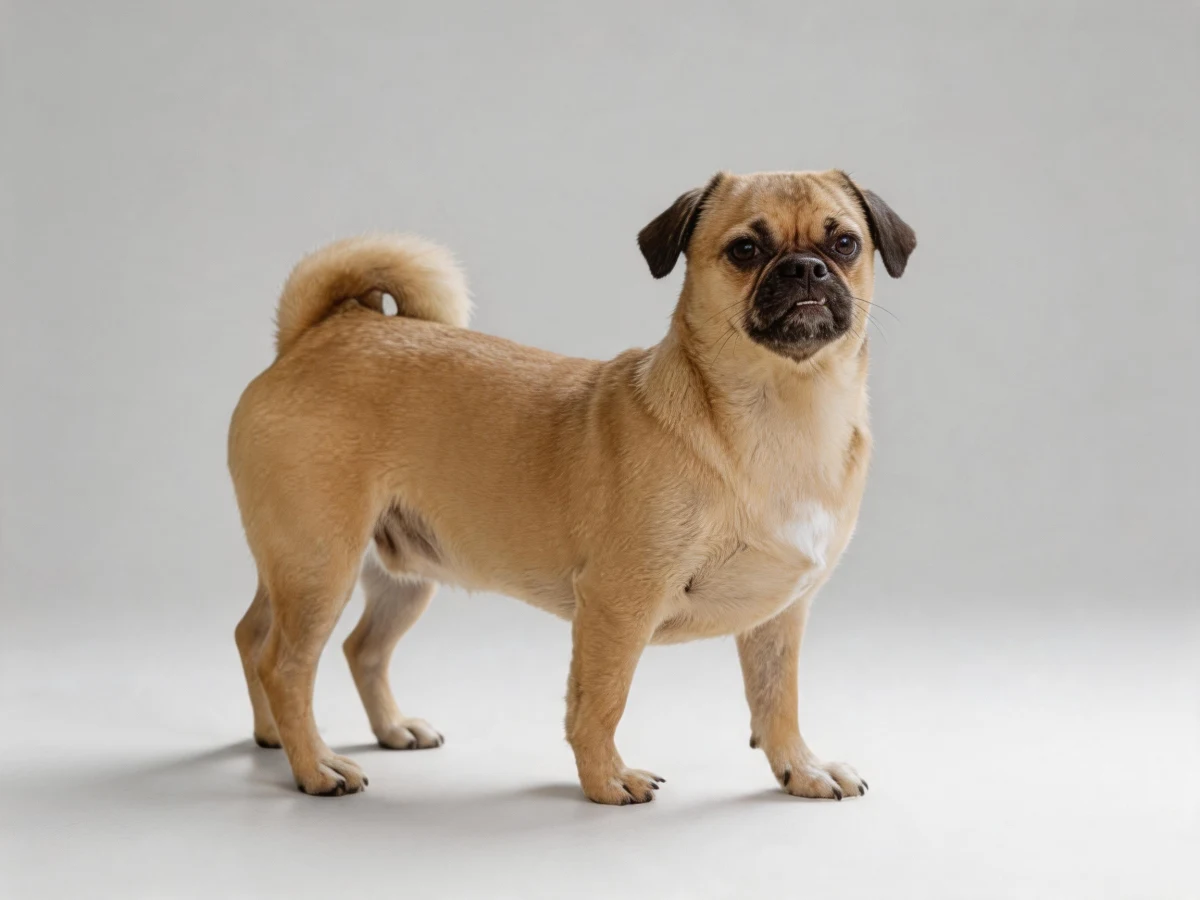
Chorkie
✨ Key Takeaways
- The Chorkie is a designer cross of the Chihuahua and the Yorkshire Terrier, developed mainly in the United States in recent decades and bred as a tiny, spirited lap-and-purse companion with a big personality
- It is a toy-sized dog, roughly 15 to 23 cm tall and around 2 to 5 kg, but because two distinct toy breeds sit behind it, size, coat and looks vary between individuals, so honest descriptions use ranges and the promise of a fixed teacup size is not reliable
- The coat is variable, from the long silky Yorkie coat to the short smooth Chihuahua coat; it can shed less than some breeds but is not truly hypoallergenic, and a longer coat needs frequent brushing and regular grooming
- Temperament is bold, devoted, lively and alert, drawing on two watchful toy breeds; the Chorkie bonds closely with its people, can bark and be feisty, and is often not the best match for homes with very young children
- Health is the core caution: both parents are toy breeds carrying patellar luxation, dental crowding and juvenile hypoglycaemia in pups, with tracheal collapse and portosystemic liver shunt from the Yorkie and hydrocephalus with an open molera from the Chihuahua, plus heart concerns; crossing reduces but does NOT eliminate these risks, so buyers must demand health screening of both parents and avoid teacup breeding, with lifespan roughly 12 to 16 years
- It is registered by designer and hybrid registries but is not recognised by the FCI, the American Kennel Club or the UK Kennel Club
Quick Facts
Common Names & Variants
Modern aliases
Historical names
Modern variants & lines
⚖️ Pros & Cons
Advantages
Trade-offs
Physical Appearance
Recognized colors
Coat
Other
Ears: Erect. Tail: Varied.
🕰 History
A modern toy-companion cross
The Chorkie is a recent designer cross of two of the most popular toy breeds in the world: the Chihuahua and the Yorkshire Terrier. Like most of its kind, it emerged chiefly in the United States within the last few decades, on the same wave of interest in small companion crosses that produced the Maltipoo, the Morkie and the Pomchi. The aim was straightforward and frankly commercial: to fold the bold, devoted character of the Chihuahua together with the confident, glamorous terrier spirit of the Yorkshire Terrier into a single tiny, portable, big-personality lap dog. From the outset the Chorkie was conceived as a companion and "purse dog" rather than any kind of worker, even though one of its parents, the Yorkie, began life as a working ratter.
Two toy breeds with very different roots
The two parents behind the Chorkie come from opposite ends of the world and from quite different beginnings. The Chihuahua is the national dog of Mexico and one of the oldest and smallest toy breeds, with a long heritage in Central America as a tiny companion. The Yorkshire Terrier, by contrast, is a Victorian creation from the north of England, developed in the mills and mines of Yorkshire and Lancashire to kill rats and later refined into a fashionable, long-coated lap dog. The Chorkie therefore blends a Mexican companion breed with a British working terrier, and that mix of ancestry is much of why the cross is so spirited: a Chorkie tends to carry the Chihuahua's loyal boldness alongside the Yorkie's terrier confidence and curiosity.
A cross, not a settled breed
It is important to be clear about what the Chorkie is and is not. It is a designer cross, not a standardised pedigree breed: it is not recognised by the Fédération Cynologique Internationale, the American Kennel Club or the UK Kennel Club, and there is no single official standard fixing its appearance. It is registered instead by designer and hybrid registries. Because two small but quite distinct breeds sit behind it, the Chorkie varies a good deal from one dog to the next in size, coat and looks — even littermates can differ — and any honest account has to speak in ranges rather than fixed numbers. The cute name and premium price attached to the cross should not be mistaken for a guarantee of a fixed, predictable little dog.
Temperament & Personality
A big personality in a tiny package
The Chorkie is, by reputation and by the nature of its two parent breeds, a bold, lively and intensely devoted little dog with far more personality than its size suggests. The Chihuahua brings fierce loyalty, a sharp watchfulness and a tendency to bond very closely with one or two favourite people; the Yorkshire Terrier brings confident, curious, plucky terrier spirit and a love of being at the centre of things. Blended together, these tend to produce a spirited, affectionate companion that adores its people, is alert to everything around it, and is often surprisingly brave for such a small dog. Many Chorkies are playful, busy and full of character, which is much of the cross's appeal.
Loyal, alert and quick to bark
Both parent breeds are natural little watchdogs, and the Chorkie usually inherits that trait: it tends to be alert, quick to notice visitors or noises, and ready to sound off about them. This makes for a keen watchdog in a tiny frame, but it also means that barking can become a real issue if it is not managed early with calm, consistent training. The Chorkie typically forms an intense attachment to its household and can be wary of strangers, so early socialisation matters to keep that watchfulness from tipping into nervousness or excessive yapping. It is a dog that wants to be involved in everything its people do and does not take kindly to being shut away.
Feisty, and not always a dog for small children
The flip side of so much spirit is that the Chorkie can be feisty, stubborn and prone to "small-dog syndrome" if it is indulged or never taught manners. Both parent breeds are strong-willed, and a Chorkie that has learned it can rule the house with a bark or a snap can become demanding. For this reason, and because the dog is so tiny and fragile, the Chorkie is often not the ideal choice for a home with very young children: a small child can easily hurt a dog this delicate, and a startled or cornered little dog may snap in self-defence. With gentle, considerate older children and respectful handling it can do well. As with any cross, an individual may lean more toward the Chihuahua or the Yorkie, and socialisation and upbringing shape the adult far more than the label does.
🏡 Living With a Chorkie
A small dog that suits flats and attentive homes
Living with a Chorkie is, for the right household, a real delight: it is an affectionate, portable, big-character companion that fits happily into flats and small homes and asks mainly for company, modest exercise and inclusion in daily life. Its tiny size makes it well suited to apartment living and to owners who want a dog they can take almost anywhere. What does not vary is the breed's need for human company and engagement. This is a devoted little dog, bred from two intensely people-oriented breeds, and it does not thrive shut away or left alone for long stretches; a home that is empty all day is not a fair match for a dog this attached, and loneliness often shows up as barking, destructiveness or anxiety.
Modest exercise, but a busy little mind
The Chorkie needs daily exercise to stay fit and content, but its needs are modest compared with a larger or more athletic dog — a couple of short walks and some indoor play usually suit it well. Because the terrier and Chihuahua sides both bring a busy, curious mind, mental stimulation matters as much as physical exercise: simple training games, puzzle toys and short, varied sessions help keep a clever little dog occupied and out of mischief. Care is needed on the practical side, too. A Chorkie is small and fragile, so it should be protected from rough play, falls from furniture and arms, and the feet of larger dogs and people. The Yorkie heritage can bring a tendency to a collapsing windpipe, so a harness rather than a neck collar is wiser for walks, and small dogs feel the cold and need protection in chilly weather.
A devoted companion at heart
The Chorkie's temperament makes it an engaging companion for the right owner: it is typically devoted, lively and affectionate, and bonds very closely with its household. Because it is so small and can be feisty, households with very young children should think carefully, since a little dog can be hurt by clumsy handling and may snap if frightened. It can live happily alongside other pets when raised together and properly introduced, though its terrier boldness means it should be supervised around much larger dogs that could injure it in play. Households should also be ready for the realities — a watchdog that can bark, a dog that wants company and frets if left, a coat that needs regular brushing and grooming, and a small mouth that needs serious dental care. For an attentive household that can give it time, gentle structure and daily company, the Chorkie is a rewarding and loving little companion.
🎓 Training & Exercise
Clever, but with a stubborn streak
The Chorkie is an intelligent and quick-witted little dog, drawing on the terrier cleverness of the Yorkshire Terrier and the sharp attentiveness of the Chihuahua, but both parent breeds are also known for a stubborn, strong-willed streak, so training calls for patience and consistency. Short, upbeat, reward-based sessions suit it far better than repetition or harsh correction, which a small, sensitive dog can find off-putting and which can make a wilful dog dig in. Food motivates most Chorkies strongly, which is a useful training lever, though treats must be counted into the daily ration to guard against weight gain in such a small frame. With kind, consistent guidance a Chorkie can learn good manners and a surprising repertoire of tricks; without it, a clever, bored little dog will happily train its owner instead.
House-training, barking and small-dog syndrome
Three training challenges stand out for this cross. The first is house-training: like many toy breeds, the Chorkie can be slow and inconsistent to house-train, partly because a tiny bladder simply needs frequent, predictable opportunities, so a calm routine, plenty of patience, generous reward and (for many owners) crate or pen training get the best results. The second is barking: both parents are vocal watchdogs, so a Chorkie can become a persistent barker unless it is taught early and calmly what is and is not worth announcing. The third is small-dog syndrome — because a Chorkie is little and endearing, it is easy to indulge behaviour that would never be tolerated in a big dog, and a Chorkie allowed to rule the house can become demanding or snappy. Treating it as a proper dog, with clear, gentle, consistent rules, keeps its bold character delightful rather than difficult.
Early socialisation is essential
Because both parent breeds can be wary of strangers and quick to bark, early and thorough socialisation is especially important for the Chorkie. Exposing a puppy gently and positively to a wide range of people, dogs, places, sounds and everyday experiences during its first months helps it grow into a confident, settled companion rather than a timid, reactive or yappy one. The same gentle early handling around the face, mouth, ears, eyes and feet makes a lifetime of grooming, tooth brushing, nail trims and vet checks far easier — particularly important in a breed that needs regular dental care and coat care. Puppy classes, calm introductions and plenty of positive outings all serve a young Chorkie well, and a little dog that learns the world is safe and interesting grows up far happier and easier to live with.
✂️ Grooming & Coat Care
A variable coat that usually needs regular care
Grooming a Chorkie depends on the coat it inherits, which varies because two quite different coat types sit behind it: the long, fine, silky single coat of the Yorkshire Terrier and the short or sometimes long coat of the Chihuahua. Most Chorkies have a soft, medium-to-long coat that needs genuine, regular care — brushing several times a week, and for many dogs every day, to prevent the fine hair from tangling and matting, especially around the ears, legs and under the body. A longer-coated Chorkie often benefits from professional grooming or a tidy trim every few weeks to keep it comfortable and manageable. A shorter-coated Chorkie that takes after a smooth Chihuahua needs less brushing, but still benefits from regular grooming. It is also worth being honest that, although the fine Yorkie-type coat can shed less than some breeds, no dog is truly hypoallergenic, and the coat is variable from dog to dog.
Eyes, ears and that small mouth
Whatever the coat, several care points apply across the board. The eyes should be kept clean and watched, since small dogs can be prone to tear staining and both parent breeds carry eye concerns. The ears — which may be the erect "bat" ears of the Chihuahua, the small upright ears of the Yorkie, or something in between — should be checked regularly, kept clean and dry, with any hair in the canal managed by a groomer or vet, since trapped moisture and hair invite infection. Dental care deserves special emphasis: the small, crowded mouth inherited from two toy parents is highly prone to dental disease, so regular tooth brushing and veterinary dental checks are genuinely important rather than optional in this breed, and are among the most valuable things an owner can do for a Chorkie's long-term health.
Nails, skin, warmth and weight
Nails should be kept short with regular trimming, since small house dogs often do not wear them down naturally and overlong nails are uncomfortable and can affect the gait. The skin should be watched for redness, itching or flaking, and over-bathing avoided so the coat's natural oils are not stripped. Because the Chorkie is so small and fine-coated, it feels the cold keenly and benefits from a coat or jumper in chilly weather and from being kept warm and dry. Weight is a care issue as much as a health one: a chubby toy dog strains tiny joints and can worsen a slipping kneecap, so portions and treats should be measured and the dog kept lean. Building all this handling — brushing, ear checks, tooth brushing, nail trims — into a young Chorkie's routine early makes a lifetime of care far easier for dog and owner.
🍖 Diet & Nutrition
Small portions, judged by body condition
The Chorkie is a tiny dog, and its food needs are correspondingly small, but careful feeding matters because excess weight is hard on a little dog's joints and a toy dog can become overweight on what looks like a very modest amount. The sound baseline is a complete, good-quality diet formulated for small or toy breeds, matched to the dog's life stage (puppy, adult or senior) and activity level, and fed in measured amounts rather than left down all day. The quantity on the bag is a starting point, not a rule: the reliable everyday guide is body condition, judged by hand and eye. A dog in good order has ribs that are easily felt under a light covering, a visible waist from above and a tuck-up behind the ribs. Small-breed kibble, sized for a tiny mouth, is often easier for a Chorkie to eat and can help with dental wear.
Puppy feeding and the hypoglycaemia risk
A Chorkie puppy is very small, and like other toy-breed puppies it does best on several small meals spread evenly through the day rather than one or two large feeds. This is not just a matter of comfort: tiny toy puppies have very little energy reserve and can be vulnerable to juvenile hypoglycaemia, a dangerous drop in blood sugar that shows as weakness, trembling, wobbliness or collapse and is a veterinary emergency. Frequent feeding, never letting a young puppy go too long without food, and watching closely for these signs are important precautions in the early months, and any concern should be discussed promptly with a veterinarian. As the puppy matures, meals taper toward two or three measured feeds a day. A good-quality complete food for small-breed puppies, fed to the maker's guide and adjusted by body condition, is the sensible foundation.
Weight, water and treats
Keeping a Chorkie lean is one of the most valuable health investments an owner can make: excess weight strains tiny joints, can worsen slipping kneecaps, and shortens active, comfortable life, and a food-motivated little dog can put on weight quickly if treats are not counted. Fresh water should always be available. The simplest nutritional rule for the breed is to feed a sound complete diet in measured amounts suited to a toy dog, count treats within the daily ration, and let body condition — not the scoop or the scales alone — be the final guide. Because a small mouth is prone to dental disease, dental-friendly feeding and chews can help, though they do not replace tooth brushing. Specific dietary questions, and any concern about a tiny puppy's blood sugar or an older dog's needs, are best discussed with a veterinarian.
🐶 Buying & Adopting a Chorkie
The breeder choice is critical
Because the Chorkie crosses two toy breeds that each carry significant health concerns, choosing a source carefully matters enormously. Demand for tiny, cute designer crosses has drawn in a wide range of breeders, from conscientious programmes that health-test their stock to commercial operations and puppy mills that breed for looks, novelty, "teacup" size and a high price with little regard for health or temperament. Since no major kennel club governs the cross, there is no official register to lean on, so the integrity of the individual breeder is the buyer's main safeguard. A responsible breeder health-tests both parents — patella evaluation, a cardiac check and eye examination at least, with attention to the Yorkie line for liver-shunt and tracheal problems and to the Chihuahua line for hydrocephalus and heart issues — is open about the results, raises puppies in the home with early socialisation, does not send puppies home too young or dangerously small, and is plainly more interested in placing dogs well than in making a quick sale.
Beware "teacup" marketing and fragile extremes
Be especially wary of the marketing built around this cross. The Chorkie is sold heavily on being tiny and adorable, and some breeders push for ever-smaller "teacup" or "micro" dogs at a premium price. This is a genuine welfare warning sign: deliberately breeding for extreme smallness concentrates exactly the toy-breed problems described in the health section — fragile bones, dental crowding, hypoglycaemia, collapsing windpipe, open molera and hydrocephalus — and produces a more delicate, less healthy dog, not a better one. Treat "teacup" claims, guarantees of a fixed tiny adult size, and marketing built chiefly on a cute name and a high price as reasons for caution rather than excitement. A good breeder talks honestly about the health of both parent breeds and about the realistic adult size of their dogs, and would never market fragility as a feature.
Adoption and an honest self-assessment
Adoption is well worth considering: Chihuahuas, Yorkshire Terriers and their many small crosses turn up in breed-specific and general rescues in large numbers, often through no fault of their own, and a rescue can be a fine way to give a little dog a home while sidestepping the breeder lottery and the teacup trade. Whichever route you take, the honest questions are the same: can the household give this devoted, lively, fragile little dog the company, gentle handling, patient training, dental and coat care, weight management, warmth and protection from injury that it needs — and is it the right match for the home, given the dog's tendency to bark, its attachment to its people, and the care needed around very young children? For an attentive owner ready to meet those needs, the Chorkie is a charming, spirited and loving companion. For a home that is out all day, or one with very small children, or one chasing the smallest possible "teacup," a different choice would be fairer to the dog.
📜 Breed Name Etymology — iDogNames original research
Chorkie — a portmanteau of its parents
The name Chorkie is a portmanteau built from its two parent breeds: Cho from Chihuahua and rkie from Yorkie, the affectionate short form of Yorkshire Terrier. It follows the modern designer-dog naming convention in which parent breeds are fused into a single playful, memorable word, much as Morkie, Chug and Yorkiepoo are formed. The name tells you, more or less, exactly what the dog is, and its bright, snappy sound suits a bright, snappy little dog. The cross is also written Chorkie or Yorkie-Chi, and is occasionally called a Yorkie-Chihuahua mix or, informally, a purse dog after the way these tiny companions are so often carried.
Chihuahua — a Mexican namesake
The Chihuahua, one parent of the cross, takes its name from the Mexican state of Chihuahua, the largest state in Mexico, where dogs of the type were first noticed by travellers in the nineteenth century. The breed is widely held to descend from small companion dogs of ancient Mexico, and it remains the national dog of Mexico and a proud symbol of the country. That Mexican heritage of a tiny, bold, intensely loyal companion carries strongly into the Chorkie, which often shows the same devotion to its favourite people and the same surprising courage in a very small frame.
Yorkshire Terrier — a Victorian working name
The other parent lends the second half of the name and much of the coat. The Yorkshire Terrier is named for Yorkshire, the county in the north of England where the breed was developed in the nineteenth century from small terriers brought south by workers during the Industrial Revolution. Originally bred to catch rats in the mills, mines and textile works of Yorkshire and Lancashire, the "Yorkie" was later refined into a glamorous, long-coated lap dog and became a fashionable Victorian companion. That terrier working past lives on in the Chorkie's confident, curious, plucky character, while the Yorkie's fine silky coat is one of the looks a Chorkie may inherit.
Name forms at a glance
| Name | Role | Origin | Literal meaning | First recorded |
|---|---|---|---|---|
| Chorkie | primary | English | Chihuahua crossed with Yorkshire Terrier | — |
| Chihuahua | historical | Spanish | of Chihuahua (the Mexican state) | — |
| Yorkshire Terrier | historical | English | terrier of Yorkshire | — |
| Chorkie full name | primary | English breed-name analysis | standard full name used for the Chorkie | — |
| American origin descriptor | origin country native | English editorial descriptor | country or regional origin cue for the Chorkie | — |
🏛 Naming Traditions — iDogNames original research
Names that suit a spunky little purse dog
The Chorkie is, above all, a tiny, spirited, big-personality companion bred for the lap and the handbag, and its name ideas tend to flow naturally from that bold little character. Many owners reach for sassy, spunky names that match the breed's outsized confidence and feisty terrier-meets-Chihuahua attitude, suiting a dog that clearly believes it is far larger than it is. Others lean into the glamorous "purse dog" image with chic, fashionable, pampered-pet names, since the Chorkie is so often a stylish little companion carried in style. Because the Chorkie is so clearly a treasured companion rather than a working dog, there is real freedom to choose a name that is simply cute, bold and personal — and a short, clear name tends to suit a small dog that is quick to respond and quick to bark.
The breed's two heritages offer further rich seams to draw on. The Chihuahua parent brings a strong Mexican and Spanish association, so lively Spanish names sit beautifully on a Chorkie and nod to the breed's roots as the national dog of Mexico. The Yorkshire Terrier parent brings a British, Victorian, Yorkshire association, which invites smart British or vintage names with a touch of old-fashioned charm. The dog's evident pluck and cleverness invite bold, feisty names too — names that wink at how much spirit fits into so small a frame. On the practical side, as for any small companion, a name that is short, clear and easy to call tends to work best in everyday life and in training. The happiest Chorkie names tend to be those that capture what the dog actually is: a tiny, bold, charming and devoted little companion with a personality many sizes too big for it.
🐾 Themed Names for Your Chorkie — iDogNames original research
Sassy, spunky names
- Pixie — tiny, lively and mischievous for a spirited little dog
- Rebel — bold and cheeky for a fearless purse-sized character
- Sassy — perfect for a feisty little dog with plenty of attitude
- Diva — for a glamorous little dog that knows it is the star
- Spark — bright and quick for an alert, energetic companion
- Nacho — fun and cheeky, with a playful Mexican wink
- Boss — ironic and apt for a tiny dog that rules the house
- Zip — short and snappy for a fast, busy little dog
Chic purse-dog names
- Coco — chic and stylish for a fashionable little companion
- Gigi — playful and elegant, perfect for a petite charmer
- Prada — glamorous and luxe for a pampered purse dog
- Bella — pretty and sweet for a beloved little female
- Tiffany — refined and fashionable for a glamorous pet
- Pearl — small, precious and refined for a treasured dog
- Velvet — soft and luxurious for a silky-coated charmer
- Fifi — fond and chic, a classic little-companion name
Mexican and Spanish names (Chihuahua side)
- Paco — a warm, friendly classic with a Mexican feel
- Rosa — meaning rose, pretty and bright for a female
- Diego — a bold, handsome Spanish name for a plucky male
- Lola — lively and fun, a charming Spanish-flavoured name
- Chico — meaning little one, ideal for a tiny dog
- Sol — meaning sun, bright and cheerful for a sunny companion
- Pepe — playful and affectionate, a fond Spanish nickname
- Mango — sweet, warm and fun for a golden-toned charmer
British and Yorkshire names (Yorkie side)
- Duke — a smart, dapper name for a confident little dog
- Bramble — a charming British country name for a spirited terrier
- Winston — vintage, British and full of character
- Pip — tiny, tidy and very British, perfect for a small dog
- Daisy — fresh and sweet, a much-loved British favourite
- Alfie — fond, cheeky and classically British for a lively male
- Maisie — bright and friendly, a sweet vintage British name
- Bertie — dapper and old-fashioned for a charming little gent
More American heritage names
- American Trail - best for a Chorkie name rooted in United States rather than generic style
- United States Ridge - best for a regional landscape cue tied to the Chorkie story
- Local Line - best for a name that respects local breed history
- Old Route - best for migration, trade, field or pastoral routes behind the breed
- Heritage Note - best for a page where origin should be treated as context, not decoration
- Village Path - best for rustic, local or landrace-style background
- Working Home - best for a dog whose name should remember a tiny teddy-bear-sized companion and purse dog combining the bold, loyal Chihuahua with the confident, glamor
- Country Mark - best for a concise country-of-origin cue
More work and purpose names
- Earthdog - best for a Chorkie with terrier working history
- Vermin Line - best for ratting or vermin-control context
- Dig Rule - best for a terrier whose drive needs boundaries
- Bold Heart - best for courage without exaggerating aggression
- Recall - best for a small fast dog who must come back reliably
- Settle - best for building an indoor off-switch
- Toy Find - best for legal prey-substitute games
- Gate Check - best for door and yard management
More coat and build names
- Black And Tan - best for a Chorkie whose color or markings deserve a simple call name
- Varied Coat - best for the varied coat type on this breed
- White Blaze - best for a clear face or chest marking
- Dark Mask - best for a dog with a strong muzzle or face marking
- Weather Coat - best for outdoor or working-dog coat context
- Strong Frame - best for a dog whose build is part of its function
- Bright Eye - best for an alert expression
- Ground Step - best for a name tied to movement and body type
📋 Breed Standard at a Glance
A designer cross, not a fixed standard
The Chorkie has no formal breed standard from a major international kennel club, because it is a designer cross rather than a standardised pedigree breed. It is not recognised by the FCI, the American Kennel Club or the UK Kennel Club, and so there is no authoritative document fixing its ideal proportions, gait, faults or disqualifications. It is registered instead by designer and hybrid registries. The description that follows is therefore a general picture of the typical Chorkie, drawn from its two parent breeds and from how the cross is bred, rather than a precise blueprint — and the most accurate thing one can say about a Chorkie's appearance is that it varies, often considerably, between individuals, because two distinct toy breeds sit behind it and the cross is not bred to a fixed type.
Size, build and the parent influence
The Chorkie is a toy-sized dog, sitting at the very small end of the scale and blending the tiny Chihuahua with the little Yorkshire Terrier. Height typically runs from roughly 15 cm to 23 cm at the shoulder, and weight from around 2 kg up to about 5 kg, with any individual sitting somewhere within those ranges according to which parent it favours. These are general ranges, not fixed limits, and the popular promise that a Chorkie will always be a "teacup" is not reliable, and breeding for extreme smallness should be treated as a warning sign rather than a selling point. The overall build tends to be compact and fine-boned, with a small head that may be rounded or apple-shaped after the Chihuahua, dark expressive eyes and a small body, though proportions vary from dog to dog.
Coat, colour and expression
The coat is among the most variable features. It may be long, fine and silky after the Yorkshire Terrier, short and smooth after a smooth Chihuahua, or anything in between, and is usually soft. Colours are wide-ranging and include black and tan, blue and tan, brown and chocolate shades, gold, cream, fawn and combinations of these, often with the rich tan markings of the Yorkie or the varied patterns of the Chihuahua. The ears may be erect after either parent, or carried semi-erect. The expression is one of the breed's chief charms: bright, dark, alert eyes set in a small, often rounded face give a Chorkie a lively, appealing look full of character. Beyond these broad points, individual conformation varies a great deal, and it would be misleading to claim the precise specifics that a true kennel-club standard provides.
🏆 Recognition
Other registries
❓ Frequently Asked Questions
Where does the Chorkie come from?
The Chorkie is a designer cross of the Chihuahua and the Yorkshire Terrier, developed mainly in the United States within the last few decades on the wave of interest in small companion crosses. It was bred as a tiny, portable, big-personality lap dog and "purse dog," combining the bold loyalty of the Chihuahua with the confident terrier spirit of the Yorkie. Although the cross is new, its parents carry long histories from opposite ends of the world: the Chihuahua is the national dog of Mexico, named for the Mexican state of Chihuahua and descended from small companion dogs of ancient Mexico, while the Yorkshire Terrier is a Victorian creation from the north of England, bred to kill rats in the mills and mines and later refined into a glamorous lap dog. The Chorkie is a cross rather than a standardised breed: it is registered by designer and hybrid registries but is not recognised by the FCI, the American Kennel Club or the UK Kennel Club.
How big does a Chorkie get?
The Chorkie is a toy-sized dog, blending two of the smallest breeds. Height typically runs from roughly 15 cm to 23 cm at the shoulder, and weight from around 2 kg up to about 5 kg, with any individual sitting somewhere within those ranges according to which parent it favours. Because two distinct toy breeds sit behind it and the cross is not standardised, these are general ranges rather than fixed limits, and size can vary even between littermates. A particular caution applies here: the popular promise of a fixed "teacup" or "micro" Chorkie is not reliable, and deliberately breeding for extreme smallness concentrates toy-breed health problems and produces a more fragile, less healthy dog. A responsible breeder will explain the realistic adult size of their line rather than market the smallest possible puppy.
Do Chorkies shed, and what is the coat like?
The Chorkie coat is variable, because two quite different coats sit behind it: the long, fine, silky single coat of the Yorkshire Terrier and the short or long coat of the Chihuahua. Most Chorkies have a soft, medium-to-long coat in colours such as black and tan, blue and tan, brown, gold, cream or fawn. The fine Yorkie-type coat can shed less than some breeds, but the honest answer prospective owners need is that no dog is truly hypoallergenic and the coat is variable from dog to dog. In practice a longer-coated Chorkie needs real work — brushing several times a week, often daily, to prevent matting, plus professional grooming or a tidy trim every few weeks. A shorter, smooth-coated Chorkie needs less brushing but still benefits from regular grooming and, like all Chorkies, diligent dental care.
What is the Chorkie temperament like?
The Chorkie is a bold, devoted, lively little dog with a personality many sizes too big for it, drawing on two spirited toy breeds: the loyal, alert Chihuahua and the confident, curious Yorkshire Terrier. It is typically affectionate and intensely attached to its people, often bonding most closely with one or two favourites, and it makes a keen little watchdog that is quick to notice and announce visitors. The main cautions are that it can bark a lot if not trained early, can be feisty and stubborn, and is prone to small-dog syndrome if indulged. Because it is so tiny and fragile, and may snap if frightened, it is often not the best match for homes with very young children. It is strongly attachment-prone and does not suit homes that are out all day. Individuals vary with which parent they favour and with upbringing, so early socialisation and meeting the parents matter.
What health problems do Chorkies have?
This is the most important question for the breed. Crossbreeding can broaden the gene pool but does not eliminate inherited disease, and a Chorkie can inherit from either parent. Several toy-breed problems run through both: patellar luxation (a slipping kneecap), dental disease from crowded teeth in a small mouth, and, in very young puppies, juvenile hypoglycaemia — a dangerous drop in blood sugar that is a veterinary emergency. From the Yorkshire Terrier side come tracheal collapse (a weakening of the windpipe, which is why a harness is wiser than a collar), portosystemic liver shunt, Legg-Calvé-Perthes disease and eye conditions such as progressive retinal atrophy. From the Chihuahua side come hydrocephalus (fluid on the brain), sometimes linked to an open molera or soft spot in the skull, along with patellar luxation, dental disease and heart conditions. Both parents can carry heart murmurs and valve disease. Sensible screening includes patella, cardiac and eye checks, with attention to the Yorkie line for liver and tracheal problems. Lifespan is generally long, often around 12 to 16 years. The best protection is a breeder who health-tests both parents and avoids teacup breeding. This is general educational information, not a substitute for veterinary advice.
How much grooming does a Chorkie need, and is it good with families?
Grooming depends on the coat: a longer, Yorkie-type coat usually needs brushing several times a week, often daily, to prevent matting, plus professional grooming every few weeks, while a shorter, Chihuahua-type coat needs less brushing but still regular care. Across the board, the eyes need watching for tear staining, the ears need checking and keeping dry, the nails need regular trimming, and the small, crowded mouth needs genuine dental care with regular tooth brushing. As a family dog the Chorkie is devoted and affectionate but is tiny, fragile and can be feisty, so it is often better suited to homes with gentle older children than with toddlers, who could hurt it or be snapped at. It can live with other pets when raised together, though it should be supervised around much larger dogs. It wants company and can bark and fret if left alone, so it suits an attentive household that can give it time, warmth, gentle structure and the grooming and dental care it needs.
📚 Sources & Further Reading
Every load-bearing factual claim on this page is anchored to one of the sources below. iDogNames does not synthesize from secondary aggregators.
- other Chihuahua Dog Breed Information — American Kennel Club
- other Yorkshire Terrier Dog Breed Information — American Kennel Club
- other Patellar Luxation in Dogs — Merck Veterinary Manual (2024)
- other Dental Disease in Dogs (Periodontal Disease) — Merck Veterinary Manual (2024)
- other Hypoglycemia (Low Blood Sugar) in Dogs — Merck Veterinary Manual (2024)
- other Tracheal Collapse in Dogs — Merck Veterinary Manual (2024)
- other Portosystemic Shunts (Liver Shunts) in Dogs — Merck Veterinary Manual (2024)
- other Congenital and Inherited Disorders of the Nervous System in Dogs — Merck Veterinary Manual (2024)
- breed rescue org Yorkshire Terrier Club of America Health and Rescue Information — Yorkshire Terrier Club of America