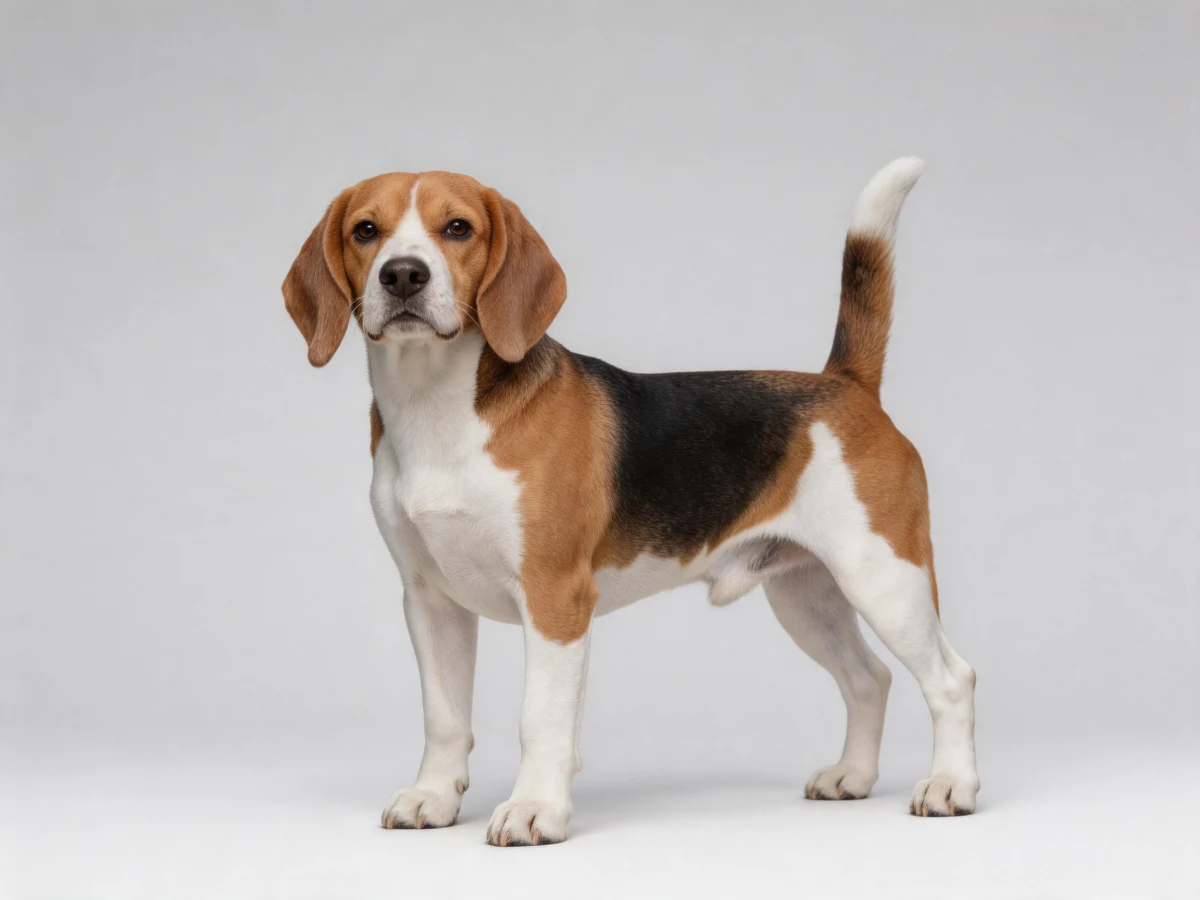
Portuguese Podengo
✨ Key Takeaways
- The Portuguese Podengo is an ancient Iberian rabbit-hunting hound that uses sight, scent and sound together, with a wedge head, erect ears and a lean athletic build.
- It comes in three sizes that are never interbred — Pequeno (small), Médio (medium) and Grande (large) — and two coat types, smooth (pelo liso) and wire (pelo cerdoso).
- The FCI treats all of them as one breed under Standard No. 94 (Group 5, Section 7), while the AKC recognised only the Pequeno fully in the Hound Group in 2013 and keeps the Médio and Grande in its Foundation Stock Service.
- Temperament is intelligent, alert, affectionate with family, reserved with strangers, independent-minded and high in prey drive — a thinking hound rather than a biddable one.
- Generally a hardy, long-lived primitive breed, but with sparse breed-specific health literature, so specific-condition claims should be treated cautiously.
Quick Facts
Common Names & Variants
Modern aliases
Historical names
Modern variants & lines
⚖️ Pros & Cons
Advantages
Trade-offs
Physical Appearance
Recognized colors
Coat
Other
Ears: Erect. Tail: Long, sabre or sickle shape.
🕰 History
An ancient hound of the Iberian Peninsula
The Portuguese Podengo belongs to the small family of erect-eared, wedge-headed primitive hounds that the FCI groups together as the Mediterranean and Iberian hunting dogs — a family that also includes the Ibizan Hound, the Pharaoh Hound, and the Cirneco dell'Etna. These dogs share a recognisable phenotype: a lean, athletic frame, a tapering wedge-shaped head, large upright triangular ears, and an alert, foxy expression. The type is genuinely old in the Iberian Peninsula, where Podengo-like hounds have hunted rabbit and small game for many centuries. Beyond that, the breed's deep history must be handled with care.
A popular account holds that the ancestors of the Podengo arrived in Iberia aboard Phoenician and Roman trading ships, brought by merchants who carried small hunting and ratting dogs around the Mediterranean. This is a plausible and frequently repeated hypothesis, and it fits the general pattern of how primitive hounds spread along the ancient trade routes — but it is a hypothesis, not a documented lineage. The honest position, which serious breed historians take, is that the Podengo is an ancient Iberian rabbit-hunting hound whose precise origins predate reliable written records. The Phoenician and Roman trade-dog theories are interesting and not unreasonable; they are not proven, and the modern breed should not be described as a literal survival of a specific ancient dog.
A working hound in three sizes
What is certain is the breed's role in Portugal. The Podengo developed as a versatile hunting dog that uses sight, scent, and sound together — coursing quarry it can see, trailing it by nose when it cannot, and giving voice on the chase. Rabbit was the central quarry, and the Portuguese hunting tradition scaled the dog to the job. Three distinct sizes emerged: the Pequeno (small), which flushes rabbits from dense scrub and stone walls and is small enough to follow them into cover; the Médio (medium), the all-round rabbit-coursing hound; and the Grande (large), used on larger game including deer and wild boar. The three sizes are not interbred — they are bred as separate populations — but the FCI treats them as one breed under a single standard.
Each size also occurs in two coat types: the smooth coat (pelo liso), short, dense and harsh; and the wire coat (pelo cerdoso), longer and rough with a characteristic beard on the muzzle. The smooth coat is regarded as the older, traditional form; the wire coat is generally considered the result of crossing introduced during the 20th century. Both are fully accepted within the breed standard.
Recognition: one breed, several doors
The Fédération Cynologique Internationale recognises the Podengo Português under a single standard — Standard No. 94, in Group 5 (Spitz and primitive type), Section 7 (primitive type hunting dogs) — which covers all three sizes and both coats together. The Clube Português de Canicultura maintains the breed in its homeland.
The American Kennel Club took a different, size-divided route. The smallest variety, the Portuguese Podengo Pequeno, was admitted to the AKC Stud Book and became eligible to compete in the Hound Group from 1 January 2013 — the date of its full recognition — with the Portuguese Podengo Pequenos of America as its parent club. The medium and large varieties, registered together as the Portuguese Podengo (Médio/Grande), did not advance on the same timetable: they remain in the AKC's Foundation Stock Service and have competed in the Miscellaneous Class rather than holding full Hound Group recognition. The practical consequence is that an American reader will encounter two separate AKC breed pages — one for the fully recognised Pequeno, one for the still-advancing Médio/Grande — describing what the FCI considers a single breed in three sizes.
Temperament & Personality
Bright, busy, and self-directed
The Podengo is a lively, intelligent, and intensely alert dog whose temperament reflects its working heritage. Across all three sizes it is curious, playful, and affectionate with its own people, while reserved — sometimes markedly so — with strangers until it has taken their measure. This watchfulness makes the breed a naturally good watchdog: a Podengo notices everything and is rarely shy about announcing it. The Pequeno in particular has earned a reputation as a charming and well-mannered housemate, but the underlying temperament is a busy hunting hound, not a passive lapdog.
Independence is the defining trait. Like the other primitive Iberian hounds, the Podengo was bred to make its own decisions in the field — to read scent, sight, and sound and act on them without waiting for instruction. That self-reliance translates at home into a dog with strong opinions, a quick mind, and a tendency to weigh whether a request is worth obeying. Owners who enjoy a thinking, interactive dog find the Podengo delightful; owners expecting reflexive obedience can find it frustrating.
Prey drive is real and should not be underestimated regardless of size. The Pequeno was bred to catch rabbits, and the larger sizes to pursue boar and deer; a Podengo that sees a small animal moving will give chase. The breed is generally sociable with other dogs and, when raised together, can live with cats, but small fast-moving pets remain at risk.
🏡 Living With a Portuguese Podengo
Fitting the dog to the household
The first practical question with a Podengo is which one. A Pequeno is a small dog of roughly four to six kilograms that can live comfortably in a flat provided it is exercised and mentally engaged; a Grande is a large, powerful hunting hound that needs space and a securely fenced area. The same breed name therefore covers wildly different household footprints, and a prospective owner should match the size to their living situation honestly rather than assume the small-dog reputation applies across the board.
What all Podengos share is a need for activity and a need for a secure boundary. These are athletic, agile dogs — even the Pequeno is a remarkable jumper and climber — with a hunting instinct that will take them over or under inadequate fencing in pursuit of quarry. A reliable, escape-proof yard is close to non-negotiable, and off-lead freedom in unfenced areas should be granted only where recall has been genuinely proofed, which is a long project in this breed.
Indoors, a well-exercised Podengo is companionable and affectionate, often closely bonded to one or two family members and inclined to follow them from room to room. The breed is alert and vocal — it will bark at arrivals and unusual events — so the watchdog tendency should be factored into any household where noise is a concern. With children the breed is generally good, particularly when raised with them, though the smaller sizes need the usual protection from rough handling.
🎓 Training & Exercise
Training a thinking hound
The Podengo is intelligent and learns quickly, but it is not a biddable breed in the obedience-trial sense. The same independence that made it an effective solo hunter means it evaluates requests rather than simply complying, and it switches off rapidly under repetitive drilling. Training succeeds when it is short, varied, rewarding, and framed as a game the dog wants to play. Positive reinforcement with high-value food and genuine engagement works; heavy-handed correction produces a dog that shuts down or avoids the handler.
Recall is the central challenge, as it is with every sight-and-scent hound. A Podengo locked onto a moving rabbit is following millennia of selective breeding, and no recall cue competes with that on equal terms unless it has been proofed patiently over months in progressively more distracting environments. Until that work is done, a long line and secure spaces are the responsible defaults.
Early, thorough socialisation pays particular dividends in this breed because of its natural reserve with strangers. Puppies exposed confidently to a wide range of people, dogs, environments, and surfaces grow into discerning but settled adults; under-socialised Podengos can become unduly suspicious or sharp. The breed's athleticism and quick mind make it well suited to dog sports — agility, lure coursing, and scent-work all channel its instincts productively and give the busy temperament a constructive outlet.
✂️ Grooming & Coat Care
Two coats, both low-maintenance
Grooming demand depends entirely on which coat the dog carries, and both varieties are easy. The smooth coat (pelo liso) is short, dense, and harsh; it needs little more than a weekly going-over with a rubber grooming mitt or a soft brush to remove dead hair, plus the occasional bath. Shedding is low to moderate and easily managed.
The wire coat (pelo cerdoso) is longer and rougher, with a characteristic beard on the muzzle. It also sheds little but benefits from a slightly more frequent brushing to keep it tidy and free of debris picked up on walks; some owners hand-strip or tidy the coat lightly, but the breed is not meant to be trimmed or scissored into shape, and the natural, rustic look is correct. Neither coat requires professional grooming.
The rest of the routine is standard and shared across sizes and coats. The erect ears should be checked and cleaned periodically, though their open carriage makes them far less prone to trouble than a hound's drop ears. Nails need regular trimming — the larger sizes especially, where overlong nails affect the working gait. Teeth should be brushed regularly. After hunting or country walks the coat should be checked for ticks, grass seeds, and burrs, which the rough wire coat in particular can collect.
🍖 Diet & Nutrition
Feeding an active, size-variable breed
Because the Podengo spans roughly four kilograms in the Pequeno to nearly thirty in the Grande, there is no single feeding prescription — portions must be scaled to the individual dog's size, age, and activity level. What the sizes share is that these are lean, athletic, working-built hounds that hold condition best when kept genuinely trim. The correct outline is a dog with a visible waist and easily felt ribs; the breed should never carry the soft padding that creeps onto less active companions.
A complete, good-quality diet appropriate to life stage suits the breed well, divided into two meals a day for adults to keep energy steady. Active working or sporting Podengos need more calories than sedentary companions, and intake should be adjusted to maintain the lean working condition rather than fixed to a bag's generic guideline. The smaller Pequeno, like most small dogs, has a fast metabolism and benefits from measured, regular feeding.
The breed has no widely documented breed-specific dietary sensitivity, so ordinary canine nutrition principles apply: fresh water always available, treats counted within the daily ration, and any diet change made gradually. As with deep-chested dogs generally, avoiding heavy exercise immediately around large meals is a sensible precaution for the larger sizes.
🐶 Buying & Adopting a Portuguese Podengo
Finding a Podengo responsibly
The Portuguese Podengo is uncommon outside Portugal, and the first thing a prospective owner must settle is which variety they are actually seeking, because availability differs sharply. The Pequeno is the most widely bred abroad and has an established parent club in the United States, the Portuguese Podengo Pequenos of America; the Médio and especially the Grande are considerably rarer outside their homeland, and a serious search may involve waiting lists, travel, or contact with Portuguese breeders.
Whatever the size, the markers of a responsible breeder are the same. Look for someone who breeds within the recognised standard, is candid about the limited breed-specific health data rather than overstating guarantees, evaluates the orthopaedic and ocular health of their breeding stock, raises puppies in the home with early socialisation, and is willing to talk frankly about the breed's independence, prey drive, and escape ability. A good breeder asks the buyer as many questions as the buyer asks them, and stands behind their dogs for life.
Adoption is a genuine option and worth pursuing. Podengos and Podengo mixes do turn up in rescue — particularly in Portugal and through podenco/podengo-focused rescues that move dogs out of Iberia — and breed-specific rescue contacts via the parent clubs are the best route. Because the breed's working instincts are strong regardless of origin, any adopted Podengo should go to a home prepared for secure fencing, patient recall training, and an active, busy companion.
📜 Breed Name Etymology — iDogNames original research
The word "Podengo"
The breed name is built from a national adjective and a hound type-word: Portuguese for the country of origin, and Podengo, the Portuguese word for this whole class of erect-eared hunting hound. The interesting element is podengo itself. It descends from Old Galician-Portuguese podengo, attested from around the 13th century and appearing in Latin texts as early as the 11th century. Its deeper origin is genuinely uncertain: etymologists trace it to a pre-Roman Paleo-Hispanic substrate or, alternatively, to a Suevic or Gothic Germanic source, without being able to settle the question.
The word is the direct cognate of Spanish podenco, which names the closely related Spanish hounds (the Podenco Ibicenco, Podenco Canario, and others). Portuguese podengo and Spanish podenco are the same Iberian word in two national spellings, both denoting a stiff-eared hound used historically for rabbit hunting — which is exactly what the breed is. The three Portuguese size-names are simply the ordinary Portuguese adjectives: pequeno (small), médio (medium), and grande (large).
Name forms at a glance
| Name | Role | Origin | Literal meaning | First recorded |
|---|---|---|---|---|
| Portuguese Podengo | primary | English with Portuguese loanword | the Portuguese podengo — a Portuguese erect-eared hunting hound | 1200 |
| Podengo Português | origin country native | Portuguese | the Portuguese podengo; the native name used by the FCI and in Portugal | 1200 |
| Podengo Pequeno | alias | Portuguese | the small podengo; the smallest of the three sizes | 1200 |
| podengo | historical | Old Galician-Portuguese | a stiff-eared hound used for rabbit hunting | 1100 |
| Portuguese Warren Hound | alias | English | Portuguese rabbit-warren hunting hound | — |
🏛 Naming Traditions — iDogNames original research
How Podengos tend to be named
Because the breed is small in number and strongly tied to its homeland, owners outside Portugal often reach instinctively for Portuguese names — a way of honouring an unusual dog's heritage. Names drawn from the Portuguese language, from Portuguese places, food, and culture, and from the broader Iberian and Mediterranean world all sit naturally on a Podengo and signal that the owner knows what they have chosen.
The breed's character also points toward certain styles of name. This is an alert, quick, sometimes comical dog with large expressive ears and a busy mind, so lively, characterful names suit it better than grand or stately ones — the Podengo is more clever-imp than noble-statesman. The hunting heritage offers another seam, with names that nod to rabbits, the chase, and the field. Many owners simply pick a name that matches the individual dog's outsized personality, which in this breed is rarely in short supply.
🐾 Themed Names for Your Portuguese Podengo — iDogNames original research
Portuguese names
The most fitting names for a Portuguese Podengo come straight from the Portuguese language and culture. For dogs: Tó, Zé, Vasco, Duarte, Bento, Caju, Pedro, Tiago. For females: Beatriz, Inês, Mariana, Leonor, Catarina, Lara, Maria, Rita. Affectionate Portuguese words also make warm names — Querido or Querida (darling), Amigo (friend), Joia (jewel), Doce (sweet).
Portuguese places and culture
Portugal's geography and culture supply evocative options: Lisboa, Porto, Sintra, Belém, Tejo (after the Tagus river), Algarve, Douro, Minho. Cultural and culinary nods work well for a food-motivated hound — Pastel (after the pastel de nata custard tart), Vinho, Bacalhau, Caldo, Azulejo (the painted tiles), Fado (the national song), Galo (the Rooster of Barcelos, a Portuguese emblem).
Iberian and Mediterranean names
Because the Podengo belongs to the wider family of Iberian and Mediterranean primitive hounds, names from that broader world suit it too: Iberia, Lusitano, Sol (sun), Mar (sea), Brisa (breeze), Oliva (olive), Sombra (shade). These connect the dog to the sun-baked landscape its ancestors hunted across.
Hunting and character names
The breed's rabbit-hunting role and lively personality invite playful, active names. For the chase: Coelho (rabbit), Caçador (hunter), Flecha (arrow), Raposa (fox), Veloz (swift), Lebre (hare). For the breed's comic, big-eared, busy character: Pulga (flea), Foguete (rocket), Travesso (mischievous), Saltão (jumper) — names that celebrate a dog that is rarely still and never dull.
Portuguese place names
- Tejo - best for a Podengo named after the Tagus River in Portuguese form
- Douro - best for a strong river-and-wine-country Portuguese name
- Lisboa - best for a city-rooted name with obvious Portuguese identity
- Algarve - best for a sunny southern place cue
- Serra - best for a hound with hill-country energy
- Azulejo - best for a patterned dog and a Portuguese tile-art reference
- Mar - best for a short name meaning sea in Portuguese
- Fado - best for a soulful, musical Portuguese culture name
Size-variety names
- Pequeno - best for the small variety and a direct size cue
- Medio - best for the medium variety in a clear Portuguese-style word
- Grande - best for the large variety without implying heaviness
- Three Sizes - best for a name that celebrates the breed unusual size range
- Small Warren - best for a rabbit-hunting Pequeno image
- Middle Hound - best for a balanced Medio-type companion
- Big Podengo - best for a Grande-type dog when said with affection
- Sizewise - best for an owner who wants the variety question built into the name
Coat and ear names
- Wirecoat - best for a rough-coated Podengo with rustic texture
- Smoothcoat - best for a sleek dog whose coat care is simple
- Prickear - best for a dog whose upright ears define the outline
- Rustwire - best for a rough-coated red or fawn dog
- Goldsmooth - best for a smooth fawn dog with warm color
- Earflag - best for a dog with expressive upright ears
- Scrubcoat - best for a Podengo whose coat fits dry brush country
- Sunfur - best for a golden dog with a bright Portuguese mood
Rabbit-hound names
- Coelho - best for a name tied to rabbit hunting in Portuguese context
- Warren - best for a Podengo name that explains the traditional quarry setting
- Scrub Trail - best for a dog with dry-country hunting ancestry
- Stonewall - best for a hound working around rough rural terrain
- Quick Turn - best for a nimble dog who changes direction fast
- Noseflash - best for a scent-and-sight hound with quick reactions
- Brushline - best for a dog who moves through low cover
- Dry Track - best for a dog whose story belongs to hot, rocky country
Family Podengo names
- Pico - best for a small Podengo with a bright call name
- Luz - best for a cheerful dog and a Portuguese word meaning light
- Nina - best for a friendly female companion
- Bento - best for a male dog with a Portuguese human-name feel
- Rafa - best for a quick, playful dog
- Mina - best for a smaller female dog with a soft name
- Tico - best for an alert little Podengo with comic energy
- Sol - best for a sunny, warm-coated dog
Training-aware names
- Recall - best for a primitive hound household that practices safe return cues
- Boundary - best for a dog who needs secure fencing and clear rules
- Focus - best for a quick hound learning handler attention
- Compass - best for a trail dog who ranges and checks back
- Steady - best for impulse-control practice around motion
- Marker - best for reward-based training with precise timing
- Leashline - best for a prey-aware dog managed responsibly outdoors
- Partner - best for a Podengo whose household balances independence and affection
Comparison-aware names
- Ibizan Link - best for readers comparing the Podengo with the Ibizan Hound
- Pharaoh Link - best for a name that nods to prick-eared Mediterranean hound comparisons
- Podenco Cousin - best for a dog whose type sits near Spanish podencos without confusing breeds
- Primitive Hound - best for a transparent type name with training implications
- Portuguese Warren - best for a name that explains place and function together
- Rabbit Dog - best for a plain-English function name
- Med Hound - best for a Mediterranean hound look with a short call shape
- Old Scrub - best for a rustic name tied to terrain and old work
📋 Breed Standard at a Glance
One standard, three sizes, two coats
The Podengo Português is a primitive-type hunting hound of lean, athletic build, presented under FCI Standard No. 94 (Group 5, Section 7) as a single breed divided into three sizes that are never interbred. The head is a tapering wedge, the ears are erect, triangular and very mobile, the eyes are small, almond-shaped and honey to brown, and the overall expression is alert and intelligent. The body is slightly longer than tall, with a level back, moderate tuck-up, and a long sabre or sickle tail carried low at rest and raised when the dog is alert.
The three sizes, by the standard's general ranges, are: the Pequeno (small), roughly 20–30 cm at the withers and about 4–6 kg; the Médio (medium), roughly 40–56 cm and about 16–20 kg; and the Grande (large), roughly 56–71 cm and about 20–30 kg. Exact figures vary slightly between the FCI standard and individual registries, and where a precise published number is not confirmed it should be left unstated rather than guessed.
Two coat varieties are recognised in every size: the smooth (pelo liso), short, dense and harsh; and the wire (pelo cerdoso), longer and rough with a beard on the muzzle. Accepted colours are yellow and fawn in light, normal and dark shades, plus black and brown, either solid or with white markings, or white with patches of those colours. The dog should look natural, balanced, and fit for work, with no exaggeration anywhere in its conformation.
🏆 Recognition
Recognized by the American Kennel Club in 2013 as a Hound breed.
Other registries
Breed clubs
❓ Frequently Asked Questions
How big does a Portuguese Podengo get?
Three, and they are never interbred. The Pequeno (small) stands roughly 20–30 cm and weighs about 4–6 kg; the Médio (medium) stands roughly 40–56 cm and weighs about 16–20 kg; and the Grande (large) stands roughly 56–71 cm and weighs about 20–30 kg. The FCI treats all three as a single breed under Standard No. 94, but the AKC recognised only the Pequeno fully in the Hound Group in 2013, keeping the Médio and Grande in its Foundation Stock Service. Each size historically hunted quarry scaled to its build, from rabbits for the Pequeno up to deer and wild boar for the Grande.
What kind of coat does the Portuguese Podengo have?
Two, and both occur in every size. The smooth coat (pelo liso) is short, dense and harsh; it is regarded as the older, traditional form of the breed. The wire coat (pelo cerdoso) is longer and rough, with a distinctive beard on the muzzle, and is generally considered the result of crossing introduced during the 20th century. Both are fully accepted in the breed standard, both are low-maintenance, and the dog is meant to look natural rather than trimmed or scissored. Accepted colours are yellow and fawn in light, normal and dark shades, plus black and brown, either solid, with white markings, or white with coloured patches.
What is the Portuguese Podengo's temperament like?
Lively, intelligent, alert and affectionate with its own family, while reserved with strangers until it has assessed them — which makes it a naturally good watchdog. The defining trait is independence: bred to hunt by reading sight, scent and sound on its own initiative, the Podengo thinks for itself and evaluates requests rather than obeying reflexively. Prey drive is strong across all sizes, so small fast-moving animals can trigger the chase. It is generally sociable with other dogs and, raised together, can live with cats. Owners who enjoy a quick, interactive, characterful dog find it delightful; those expecting automatic obedience can find it challenging.
Is the Portuguese Podengo a healthy breed?
It is generally regarded as a healthy, hardy and long-lived breed — lifespans of roughly twelve to fifteen years are commonly cited — and it benefits from a natural, unexaggerated conformation typical of primitive landrace hounds. An important honest caveat is that the Podengo is numerically small outside Portugal, so peer-reviewed, breed-specific health data are sparse; any list of conditions is extrapolated from general canine medicine rather than robust breed-level studies. Sensible precautions are the ordinary ones for an active hound: orthopaedic and ocular evaluation of breeding stock, routine ear checks (helped by the open erect ears), and buying from a transparent, health-testing breeder rather than relying on an invented risk list.
How much exercise does a Portuguese Podengo need?
Needs vary by size variety and individual, but the Portuguese Podengo is an active hound that benefits from daily exercise, enrichment and safe places to run or explore. Secure fencing and recall practice matter because hunting interest and quick reactions can make casual off-leash freedom risky.
Is a Portuguese Podengo a good family companion?
It can be, especially in an active home that appreciates alertness, independence and hound behavior. Families should match the size variety to their space and handling ability, supervise children, and plan for training and enrichment. The breed should not be chosen only for rarity or the prick-eared look.
📚 Sources & Further Reading
Every load-bearing factual claim on this page is anchored to one of the sources below. iDogNames does not synthesize from secondary aggregators.
- akc breed page Portuguese Podengo Pequeno — AKC Breed Profile — American Kennel Club (2024)
- akc breed page Portuguese Podengo (Médio/Grande) — AKC Breed Profile — American Kennel Club (2024)
- fci standard pdf FCI Standard No. 94 — Podengo Português — Fédération Cynologique Internationale (2024)
- breed club official Portuguese Podengo Pequenos of America (PPPCA) — Portuguese Podengo Pequenos of America (2024)
- wikipedia Portuguese Podengo — Wikipedia — Wikipedia
- wikidata Portuguese Podengo — Wikidata entity Q39063 — Wikidata
- other podengo — Wiktionary etymology — Wiktionary
- breed club official American Portuguese Podengo Medio/Grande Club — American Kennel Club / American Portuguese Podengo Medio-Grande Club (2024)
- veterinary org Patellar Luxation in Dogs and Cats — Merck Veterinary Manual (2024)