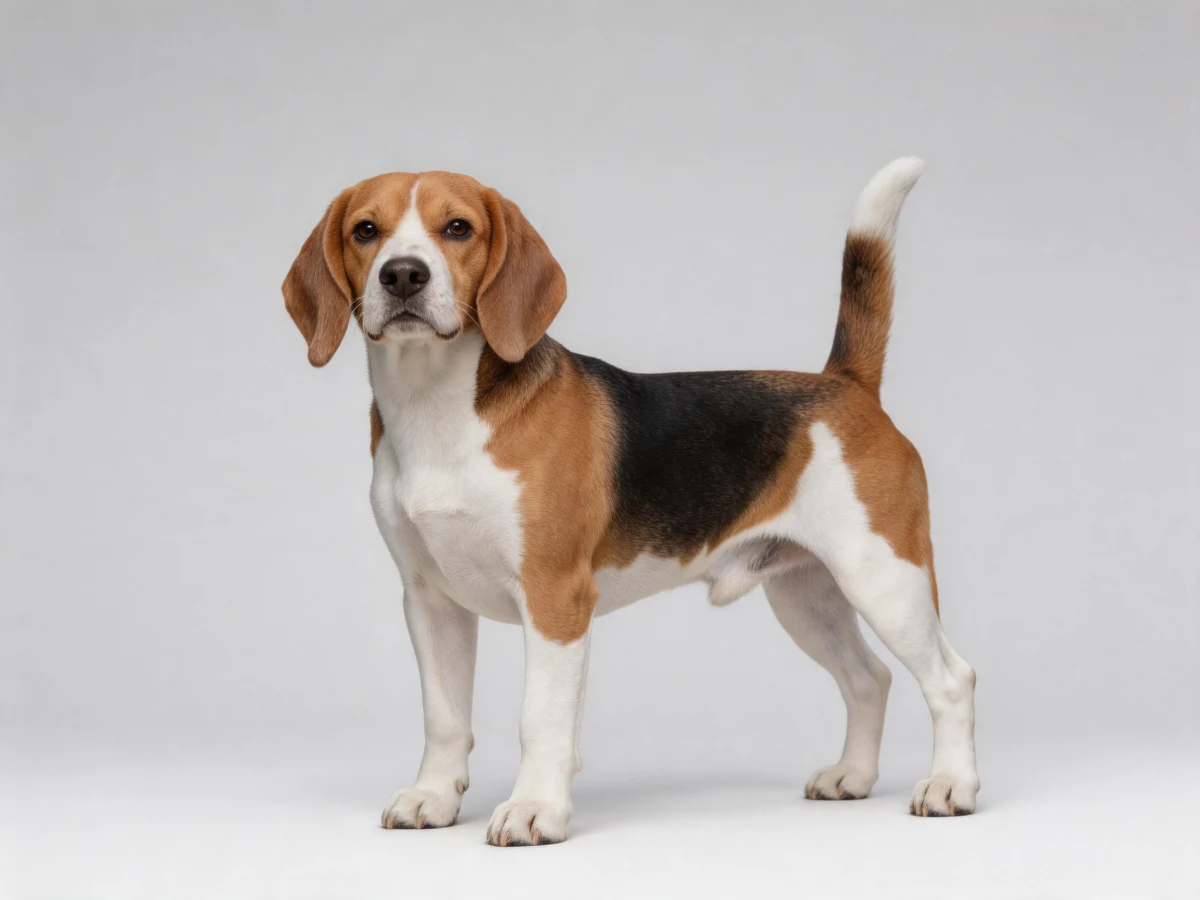
Norman Hound
✨ Key Takeaways
- The Norman Hound was an extinct French scenthound from Normandy.
- Sources describe it as large, slow, strong-voiced and useful for long stag hunts.
- It is often placed behind Bloodhound and Talbot ancestry stories, but those links should be phrased cautiously.
- The breed became rare as faster hound types replaced it.
- No modern health, price or family-pet data exists.
- Names should draw on Normandy, stag hunting, old hound voice and scent-hound legacy.
Quick Facts
Common Names & Variants
Modern aliases
Historical names
Modern variants & lines
⚖️ Pros & Cons
Advantages
Trade-offs
Physical Appearance
Recognized colors
Coat
Other
Ears: Drop. Tail: Hound tail.
🕰 History
A slow voice from Normandy
The Norman Hound was a large French scenthound from Normandy, remembered less for speed than for nose, endurance and voice. Old accounts place it in the world of stag hunting, where a slow, methodical hound could work for hours.
That speed profile matters. Slow did not mean useless; it meant the hound belonged to a different hunting style from later faster foxhounds.
Normans, St. Hubert and later hounds
Sources often connect the Norman Hound with St. Hubert hounds and with later Bloodhound and Talbot ancestry stories. Those links are historically plausible as influence, but they are not a modern DNA pedigree.
A responsible page explains that old hound families interbred, travelled and changed names before kennel-club boundaries existed.
Decline under faster fashion
The Norman Hound was becoming rare by the 18th century as hunters preferred faster hounds. Sources describe only one pack remaining in the 1830s and extinction declared by the late 19th century.
Its disappearance is a change-in-use story rather than a simple failure of one dog.
Why it deserves its own page
The Norman Hound helps readers understand why Bloodhound, Talbot, Basset and Beagle histories keep reaching back to older French and Norman scenthounds.
It is an ancestry-and-function page, not a modern purchase guide.
Temperament & Personality
Temperament by documented work, not wishful modern traits
The safest way to describe Norman Hound temperament is through its documented work: large slow scenthound used for stag hunting and influential in later hound ancestry stories. That can suggest the kind of behaviour people selected for, but it cannot produce a modern personality guarantee.
This page therefore avoids claims such as easy family pet, good apartment dog or predictable with children. There is no living registered population to test, and several sources describe a type or working role rather than a closed breed.
What can be inferred cautiously
The safest behavioural clues are scent focus, stamina, pack tolerance and a strong voice. Old sources also describe slowness, which should be treated as job style.
Do not repeat insulting old judgements about intelligence as if they were modern behavioural science.
How to compare living dogs
Readers who like the Norman Hound story should compare it with living breeds that carry a similar job or ancestry, especially Bloodhound, Talbot Hound, Basset Hound and Beagle. Those living breeds need to be judged by their own standards, health data and current breeders, not by the extinct name.
A historical hound, drover, spaniel or water-rescue experiment can teach useful context, but it should not become a shortcut for evaluating a real dog in a modern home.
🏡 Living With a Norman Hound
Not a modern companion-breed page
Norman Hound is treated here as a historical encyclopedia subject. It is not a breed a reader can normally buy, adopt or compare through routine puppy listings.
If the name appears in modern marketing, ask what dogs are actually behind it, what records exist, and whether the term is historical inspiration rather than living breed identity.
What modern readers can take from it
A reader attracted to the Norman Hound should study living scenthounds, especially Bloodhounds and Bassets, for real ownership needs.
The page can explain why deep voice, long ears and cold-nose work are recurring hound themes.
Internal comparison without duplication
The practical value of this page is comparison: it can support history sections for Bloodhound, Talbot Hound, Basset Hound and Beagle, while keeping the extinct or historical identity separate.
That separation matters for trust. A white hound, a springer-type spaniel, a cur dog or a water-loving large dog is not automatically a revived Norman Hound.
🎓 Training & Exercise
Training was job training
There is no surviving modern training manual for a living Norman Hound population. Training should be discussed through the work people expected: large slow scenthound used for stag hunting and influential in later hound ancestry stories.
Historical handling often happened in a pack, kennel, farm, hunt, island community or state breeding program, which is not the same as a modern pet-obedience routine.
Modern lesson
Modern lesson: a cold-nosed hound needs patient handling, long-line safety and scent outlets.
Hound voice and independence are traits to manage, not moral flaws.
Names should not invent ability
A name can honour work, place or history, but it should not imply that a modern dog automatically has the lost breed's instincts.
Use historically grounded names as interpretation, not as a claim of identity.
✂️ Grooming & Coat Care
Coat and care as historical evidence
The coat note for Norman Hound is best read as a physical clue, not a grooming prescription: sources describe a broad range from white to tricolour or black, but no living standard survives.
There is no modern show trim, approved colour chart or care routine for a true Norman Hound.
Functional care in context
A short hound coat would likely have been practical, while ears and feet mattered after long hunts.
The broad colour range belongs to historical description, not a modern show chart.
Naming from appearance
Coat, ear shape, tail carriage, landscape and tools can all inspire names, but colour alone should never be used to claim that a modern dog is the historical breed.
🍖 Diet & Nutrition
Historical feeding is context, not a diet plan
A Norman Hound would have been fed inside the economy of its time and place: hunt kennel, cattle road, island household, Soviet working kennel or sporting estate.
That context can be described, but it should not be converted into a modern feeding schedule.
What to avoid
Do not assign calorie ranges, puppy growth plans, supplement routines or breed-specific food sensitivities to an extinct population.
Living related dogs should be fed according to current veterinary guidance, body condition, workload and the health data for their actual breed.
🐶 Buying & Adopting a Norman Hound
Do not shop for the extinct label
There are no responsible ordinary Norman Hound puppies for sale as a verified historical population.
A seller using the name should be asked for transparent records, a clear breed definition, current welfare practices and an explanation of how the extinct or historical label is being used.
Choose a living breed honestly
If the history appeals to a reader, the practical route is to meet living breeds related by work or body type and choose one for its real needs today.
Historical interest is valuable. It should not turn into rarity marketing.
📜 Breed Name Etymology — iDogNames original research
How the name works
Norman Hound names should feel French, old-hound and stag-hunt grounded: Normandy towns, deep voices, slow scent lines, St. Hubert echoes and Bloodhound-Talbot legacy.
What the name should preserve
For a historical or extinct breed, the strongest name ideas point to documented place, work, appearance, language, source evidence or later legacy. They should not imply that a modern puppy is literally the lost population revived.
Name forms at a glance
| Name | Role | Origin | Literal meaning | First recorded |
|---|---|---|---|---|
| Norman Hound | primary | English | hound from Normandy | — |
| Norman Staghound | alias | English | Norman hound for stag hunting | — |
| Normand Hound | alias | English / French | Normandy hound | — |
| Chien Normand | origin country native | French | Norman dog | — |
| St. Hubert hound context | historical | English / French | old scenthound ancestry context | — |
🏛 Naming Traditions — iDogNames original research
Naming tradition
Norman Hound names should feel French, old-hound and stag-hunt grounded: Normandy towns, deep voices, slow scent lines, St. Hubert echoes and Bloodhound-Talbot legacy.
Name-list guardrail
The name list below is intentionally interpretive: it explains why each name fits the historical record. It does not present Norman Hound as a modern puppy category.
🐾 Themed Names for Your Norman Hound — iDogNames original research
Normandy names
- Norman - direct breed name
- Rouen - Normandy city
- Bayeux - Norman historical place
- Caen - Normandy place
- Seine - river route
- Calvados - regional name
- Abbey - Norman monastic landscape
- Duke - Norman nobility image
Stag-hunt names
- Stag - main quarry context
- Hart - old deer word
- Bay - hound-bay moment
- Voice - noted hound sound
- Deepnote - deep hound cry
- Sixhour - long slow hunt image
- Track - scent path
- Covert - where quarry lies
Scenthound names
- Hubert - St. Hubert hound link
- Talbot - legacy hound link
- Blood - Bloodhound context
- Nose - core work
- Trail - plain hound word
- Flews - hound-head detail
- Dewlap - old hound feature
- Ledger - old records
Legacy names
- Ancestor - foundation idea
- Root - where lines begin
- Archive - source memory
- Echo - extinct voice
- Relic - old but useful
- Lineage - hound ancestry
- Slowhand - methodical rather than weak
- Stamina - long work
More French heritage names
- French Trail - best for a Norman Hound name rooted in France rather than generic style
- Normandy and later Norman-influenced hound history in Britain Ridge - best for a regional landscape cue tied to the Norman Hound story
- Local Line - best for a name that respects local breed history
- Old Route - best for migration, trade, field or pastoral routes behind the breed
- Heritage Note - best for a page where origin should be treated as context, not decoration
- Village Path - best for rustic, local or landrace-style background
- Working Home - best for a dog whose name should remember large slow scenthound used for stag hunting and influential in later hound ancestry stories
- Country Mark - best for a concise country-of-origin cue
More work and purpose names
- Cold Nose - best for a Norman Hound tied to older scent trails
- Track Bell - best for a hound whose voice marks the trail
- Scent Check - best for a dog that confirms track direction
- Long Trail - best for endurance over rough or wooded country
- Forest Cast - best for methodical search through cover
- Leash Rule - best for wildlife and road-safety management
- Checkback - best for a trail dog who learns to return to the handler
- Settle - best for calm at home after scent work
More coat and build names
- White - best for a Norman Hound whose color or markings deserve a simple call name
- Short Hound Coat Coat - best for the short hound coat coat type on this breed
- White Blaze - best for a clear face or chest marking
- Dark Mask - best for a dog with a strong muzzle or face marking
- Weather Coat - best for outdoor or working-dog coat context
- Strong Frame - best for a dog whose build is part of its function
- Bright Eye - best for an alert expression
- Ground Step - best for a name tied to movement and body type
📋 Breed Standard at a Glance
No modern kennel standard
Norman Hound has no living AKC or FCI breed standard in the ordinary sense used for extant breeds.
A useful summary must therefore describe the historical type: a large extinct Norman scenthound, remembered for stamina, voice and slow stag-hunting work.
What should stay uncertain
Exact height, weight, gait, fault lists, lifespan and breeder rules should remain blank unless a source states them clearly.
For several of these breeds, old writers disagreed or used terms more broadly than modern readers expect.
Best internal use
Use this page as a history bridge to Bloodhound, Talbot Hound, Basset Hound and Beagle, not as a replacement for those living breed pages.
🏆 Recognition
Other registries
❓ Frequently Asked Questions
Is the Norman Hound extinct?
Yes. It is treated here as an extinct French scenthound from Normandy.
Where was the Norman Hound from?
It was from Normandy in France and is linked in sources to old French and Norman hound traditions.
What did Norman Hounds hunt?
They are mainly described as large scenthounds used in stag hunting, valued for nose, voice and endurance more than speed.
Is the Norman Hound an ancestor of the Bloodhound?
Some sources place it in Bloodhound and Talbot ancestry discussions, but the relationship should be stated cautiously rather than as a simple pedigree.
What health issues did Norman Hounds have?
No living population exists for a modern health profile, so disease rates and lifespan should not be invented.
What names fit a Norman Hound?
Normandy place names, stag-hunting terms, deep-voice names and scent-hound legacy names fit best.
📚 Sources & Further Reading
Every load-bearing factual claim on this page is anchored to one of the sources below. iDogNames does not synthesize from secondary aggregators.
- wikipedia Norman Hound — Wikipedia
- book Hounds in old days — Vinton & Co. (1913)
- book Hounds of the World — Swan Hill Press (2000)
- wikipedia List of extinct dog breeds — Wikipedia
- book Dogs: The Ultimate Dictionary of over 1,000 Dog Breeds — Trafalgar Square Publishing (2001)
- book The Atlas of Dog Breeds of the World — TFH Publications (1995)
- book Archive.org historical dog-book collections — Archive.org
- veterinary org Merck Veterinary Manual dog owner library — Merck Veterinary Manual (2026)
- other iDogNames extinct-breed editorial standard — iDogNames editorial research (2026)