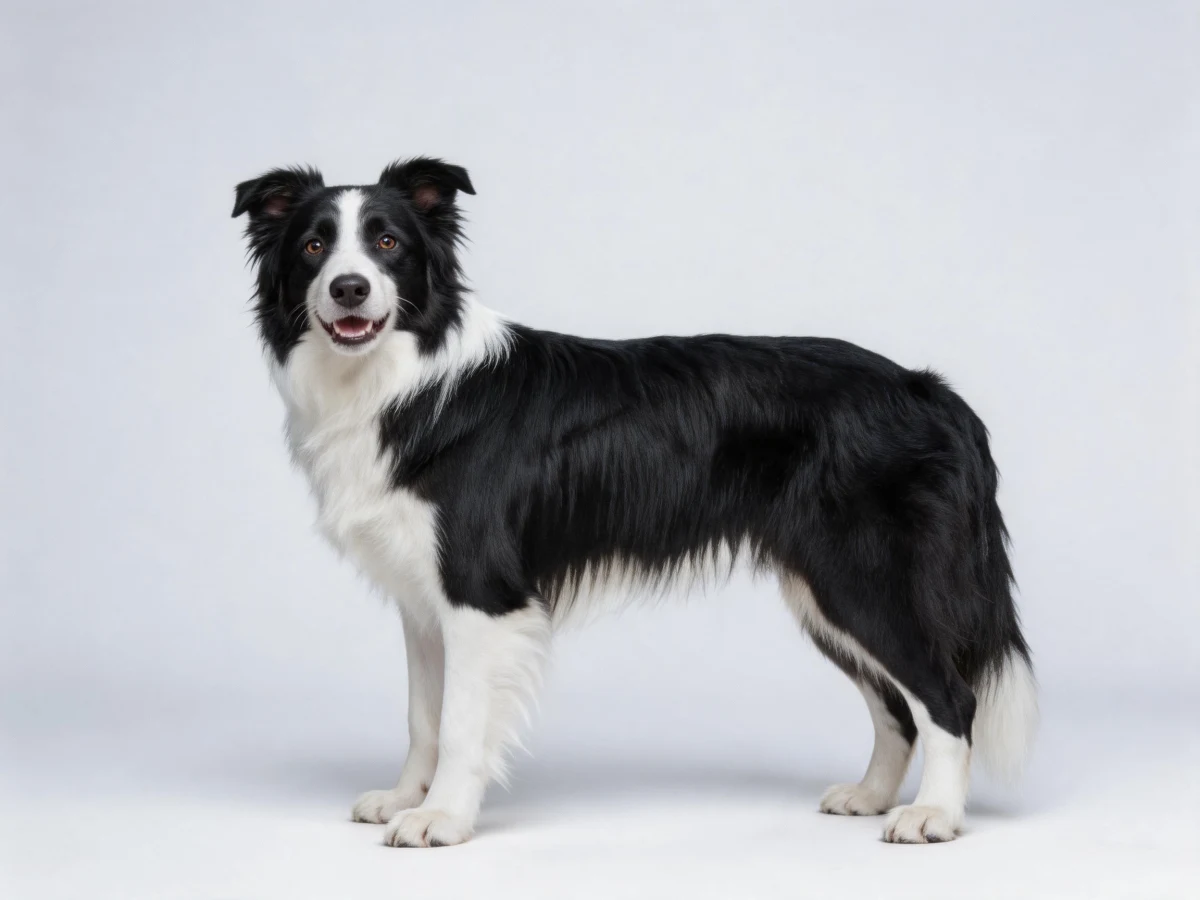
Miniature American Shepherd
✨ Key Takeaways
- The Miniature American Shepherd is a US-developed herding breed, not just a marketing name for any small Aussie.
- It grew from small Australian Shepherd-type dogs associated with western stock and horse-show culture.
- The breed is small but intense: smart, active, biddable, and quick to notice movement.
- Coats include black, red, blue merle, and red merle, with copper and white markings.
- Health discussion should include hips, eyes, MDR1 status, and responsible merle breeding.
- Names fit best when they draw on western ranch life, herding intelligence, small size, merle color, and the old Mini Aussie nickname.
Quick Facts
Common Names & Variants
Modern aliases
Historical names
Modern variants & lines
⚖️ Pros & Cons
Advantages
Trade-offs
Physical Appearance
Recognized colors
Coat
Other
Ears: Semi-erect. Tail: Natural bob or natural.
🕰 History
A small American herder
The Miniature American Shepherd developed in the United States from smaller Australian Shepherd-type dogs, especially in the western horse-show and stock-dog world. The old nickname Mini Aussie still follows the breed, but the modern registered breed name matters: it is the Miniature American Shepherd, a US breed with its own AKC standard.
Western stock and horse-show culture
The breed's appeal was a smaller herding companion that could travel, work, and live close to people while keeping the intelligence, coat color, and movement awareness associated with Australian Shepherd-type dogs. Its size made it attractive around horse shows and active homes, but the herding mind remained very real.
Recognition and identity
The AKC recognized the Miniature American Shepherd in the Herding Group in 2015. Since then the breed has had to balance popularity with type: small enough to be distinct, but still sound, athletic, and herding-capable rather than a toy version selected only for color.
A small American herder with a name shift
The Miniature American Shepherd's history is tied to smaller Australian Shepherd-type dogs in the United States, but its modern identity is not simply a shrunken nickname. Recognition under the Miniature American Shepherd name reflects a separate breed path, a defined size range, and an American herding context shaped by ranches, horse shows, and companion sport homes.
Popularity can distort priorities
Merle coats, blue eyes, and convenient size make the breed easy to market. That same popularity can tempt careless breeding. A strong history section should explain why the breed's value is not color-first: it is a small, athletic, intelligent herding dog whose mind and structure matter more than a flashy puppy photo.
Temperament & Personality
Small body, serious brain
The breed is bright, responsive, affectionate, and quick to learn. It often bonds tightly to its household and watches movement closely. Owners who want a small dog but not a sleepy dog may love it; owners expecting an easy lap pet may be overwhelmed.
Herding instincts
Chasing, circling, barking, and nipping at motion can appear if the dog is not trained. Those behaviors come from herding ancestry, not bad character, but they must be redirected into training, sport, games, and calm household rules.
Small dog, serious pattern recognition
Miniature American Shepherds often notice everything: routines, footsteps, training patterns, family emotions, and moving objects. That intelligence is delightful when guided and exhausting when ignored. Owners should expect a dog that learns quickly, including lessons the owner did not mean to teach.
🏡 Living With a Miniature American Shepherd
Active small-dog homes
The MAS can fit many home sizes if exercise and mental work are real. Daily walks, fetch with rules, trick training, agility, rally, herding lessons, and puzzle work all help. Without those outlets, the dog may bark, pace, or invent jobs.
Family fit
Many are devoted family companions, but their sensitivity and motion awareness mean they need thoughtful handling around young children. Secure fencing, socialization, and a predictable routine are useful.
Not a toy-size lifestyle
The breed's compact size can fit apartments or smaller homes, but only when exercise and mental work are real. A bored MAS may bark, chase shadows or movement, herd people, or become hyper-attached. The best homes build daily rhythms of walks, training, calm rest, and problem-solving.
🎓 Training & Exercise
A fast learner
Reward-based training works very well because the breed wants feedback and often enjoys solving problems. Keep sessions short, clear, and varied. This is a dog that can learn both good and bad patterns quickly.
Teach an off switch
Impulse control, settle cues, calm greetings, recall, and polite leash work are as important as tricks. A Miniature American Shepherd with an off switch is a joy; one without it can run the household.
Teach an off switch as deliberately as tricks
Because the breed can be fast and handler-focused, owners often teach skills and sports but forget rest. Mat work, crate comfort, calm watching, and release cues are as important as agility tunnels or frisbee. A Miniature American Shepherd that can settle is easier to take into real life.
✂️ Grooming & Coat Care
Double coat routine
Brush weekly and more often during seasonal shedding. The coat should remain natural and weather-resistant, not shaved. Check feathering, ears, tail, and trousers for mats or burrs after outdoor work.
Everyday care
Nails, teeth, ears, and body condition need routine attention. Blue or light eyes do not need special mythology, but any redness, cloudiness, or vision concern deserves veterinary care.
Protect the weather coat
The medium double coat helps with weather and should not be shaved for convenience. Brushing, undercoat removal during shedding, and checking feathering after hikes maintain the coat's function. Grooming should keep the dog clean and comfortable while preserving the natural herding-dog outline.
🍖 Diet & Nutrition
Feed for lean athleticism
A complete diet suited to age and activity is enough for most dogs. Keep the dog lean, not padded, because agility and joint health matter in a fast herding breed.
Training rewards
Food rewards are helpful but should be counted. Active sport dogs may need more fuel than quiet companions, but body condition remains the guide.
🐶 Buying & Adopting a Miniature American Shepherd
Look beyond color
A responsible breeder can explain structure, size, temperament, eye and hip screening, MDR1 status, and merle genetics. They will not sell a puppy only on blue eyes or pattern.
Fit matters
Choose the breed if you want a small, brilliant, active herding partner. If you want a low-drive small dog, choose differently.
Ask what the puppies do when nothing is happening
A breeder can show you movement, color, and cute photos, but temperament shows up in recovery, curiosity, startle response, and rest. Ask how puppies are introduced to surfaces, sounds, handling, crates, children, and calm downtime. That information matters as much as whether the dog has blue eyes.
📜 Breed Name Etymology — iDogNames original research
Name meaning and origin
Miniature American Shepherd names should sound quick, bright, and western. The best choices draw on herding, horse-show travel, merle color, blue eyes, and the dog's compact but serious working mind.
- Miniature American Shepherd (English, primary) -- rooted in miniature + American + shepherd; used on this page with the practical meaning "small American herding dog."
- MAS (English, alias) -- rooted in initials; used on this page with the practical meaning "breed abbreviation."
- Mini American (English, alias) -- rooted in miniature American; used on this page with the practical meaning "short common form."
- Mini Aussie (English, historical) -- rooted in miniature Australian Shepherd nickname; used on this page with the practical meaning "older common nickname."
- Miniature Australian Shepherd (English, historical) -- rooted in older development name; used on this page with the practical meaning "small Australian Shepherd-type dog."
Name forms at a glance
| Name | Role | Origin | Literal meaning | First recorded |
|---|---|---|---|---|
| Miniature American Shepherd | primary | English | small American herding dog | — |
| MAS | alias | English | breed abbreviation | — |
| Mini American | alias | English | short common form | — |
| Mini Aussie | historical | English | older common nickname | — |
| Miniature Australian Shepherd | historical | English | small Australian Shepherd-type dog | — |
🏛 Naming Traditions — iDogNames original research
Naming tradition
Miniature American Shepherd names should sound quick, bright, and western. The best choices draw on herding, horse-show travel, merle color, blue eyes, and the dog's compact but serious working mind.
🐾 Themed Names for Your Miniature American Shepherd — iDogNames original research
Western ranch names
- Ranger -- open-country herder
- Austin -- western city feel
- Roo -- Aussie nickname echo
- Dusty -- arena and trail image
- Maverick -- independent western spirit
- Rebel -- spark in a small frame
- Dakota -- wide-open sound
- Mesa -- southwestern landscape
Herding and sport names
- Scout -- reads the field
- Ace -- fast learner
- Dash -- quick and short
- Tess -- classic working-dog feel
- Kip -- crisp training name
- Ryder -- horse-show route
- Fly -- agility energy
- Keeper -- watchful worker
Merle and eye names
- Merle -- direct coat pattern
- Blue -- eyes or blue merle
- Indigo -- deep blue tone
- Storm -- grey merle feel
- Copper -- tan points
- Nova -- bright markings
- Comet -- flashy and fast
- Skye -- blue-eyed softness
Small but mighty names
- Pip -- tiny and bright
- Cricket -- springy energy
- Ziggy -- playful motion
- Pixel -- small and sharp
- Moxie -- big confidence
- Tango -- quick footwork
- Jett -- speedy dark dog
- Bindi -- small, lively, memorable
Horse-show and travel names
- Rodeo -- western event culture
- Trailer -- horse-show travel joke
- Arena -- training-ground name
- Rein -- horse and control reference
- Saddle -- western companion feel
- Denver -- western city
- Cheyenne -- western place name
- Ticket -- little traveler energy
Brainy herder names
- Puzzle -- clever pattern solver
- Logic -- for a dog that reads sequences
- Cue -- training-focused and short
- Pivot -- quick turns and focus
- Signal -- handler-aware
- Tempo -- sport rhythm
- Focus -- sharp working attention
- Vector -- direction and speed
Merle-pattern names
- Mottle -- patterned coat
- Granite -- grey merle texture
- Marble -- swirled markings
- Dapple -- spot pattern
- Sterling -- silver-blue tone
- Russet -- red coat warmth
- Speck -- small markings
- Prism -- color variation
More American heritage names
- American Trail - best for a Miniature American Shepherd name rooted in United States rather than generic style
- California and the western United States Ridge - best for a regional landscape cue tied to the Miniature American Shepherd story
- Local Line - best for a name that respects local breed history
- Old Route - best for migration, trade, field or pastoral routes behind the breed
- Heritage Note - best for a page where origin should be treated as context, not decoration
- Village Path - best for rustic, local or landrace-style background
- Working Home - best for a dog whose name should remember small American herding dog developed from small Australian Shepherd-type dogs for stock work, horse-show life,
- Country Mark - best for a concise country-of-origin cue
More work and purpose names
- Flockline - best for a Miniature American Shepherd rooted in small American herding dog developed from small Australian Shepherd-type dogs for stock work, horse-show life,
- Gatewise - best for a dog who learns field, yard and gate routines
- Stock Sense - best for controlled work around livestock
- Steady - best for calm pressure instead of frantic chasing
- Boundary - best for fences, roads and household rules
- Marker - best for precise reward-based training
- Partner - best for a cooperative handler-dog relationship
- Settle - best for a working dog learning home calm
More coat and build names
- Black - best for a Miniature American Shepherd whose color or markings deserve a simple call name
- Medium Double Coat Coat - best for the medium double coat coat type on this breed
- White Blaze - best for a clear face or chest marking
- Dark Mask - best for a dog with a strong muzzle or face marking
- Weather Coat - best for outdoor or working-dog coat context
- Strong Frame - best for a dog whose build is part of its function
- Bright Eye - best for an alert expression
- Ground Step - best for a name tied to movement and body type
📋 Breed Standard at a Glance
AKC herding type
The Miniature American Shepherd is a small herding dog with balanced proportions, moderate bone, a weather-resistant coat, and alert expression. Height limits are central to breed identity, but the dog should still look athletic and capable.
Color and eyes
Black, blue merle, red, and red merle are typical, with or without white markings and tan points. Eye color can vary, including blue or marbled eyes, but color should never outweigh soundness.
Size should not erase substance
The breed must be small, but it should not look fragile or toy-like. Correct type is balanced, athletic, and capable of real herding movement. Bone, feet, topline, coat, expression, and drive should all support the idea of a compact worker.
🏆 Recognition
Recognized by the American Kennel Club in 2015 as a Herding Group breed.
Other registries
Breed clubs
❓ Frequently Asked Questions
Where did the Miniature American Shepherd develop?
It developed in the United States from smaller Australian Shepherd-type dogs, especially in western stock and horse-show settings.
Is it the same as a Mini Aussie?
Mini Aussie is an older common nickname, but the AKC breed name is Miniature American Shepherd.
Is the breed high energy?
Yes. It is small, but it is a true herding dog and needs exercise, training, and mental work.
What colors can Miniature American Shepherds have?
Black, red, blue merle, and red merle are typical, with or without tan points and white markings.
What health screening matters?
Hips, eyes, MDR1 status, and responsible merle breeding are important discussion points. This is general information, not veterinary advice.
What names suit a Miniature American Shepherd?
Western, herding, merle, and quick small-dog names work well: Ranger, Scout, Ace, Merle, Blue, Copper, Pip, and Moxie.
📚 Sources & Further Reading
Every load-bearing factual claim on this page is anchored to one of the sources below. iDogNames does not synthesize from secondary aggregators.
- akc breed page Miniature American Shepherd Dog Breed Information — American Kennel Club
- akc standard pdf Miniature American Shepherd Breed Standard — American Kennel Club
- breed club official Miniature American Shepherd Club of the USA — MASCUSA
- wikipedia Miniature American Shepherd — Wikipedia
- wikidata Miniature American Shepherd Wikidata entity — Wikidata
- health registry MDR1 Drug Sensitivity — Washington State University Veterinary Clinical Pharmacology Laboratory
- health registry Canine Health Information Center — Orthopedic Foundation for Animals
- veterinary org Hip Dysplasia in Dogs — Merck Veterinary Manual (2024)
- veterinary org Otitis Externa in Dogs — Merck Veterinary Manual (2024)
- veterinary org Dental Disorders of Dogs — Merck Veterinary Manual (2024)