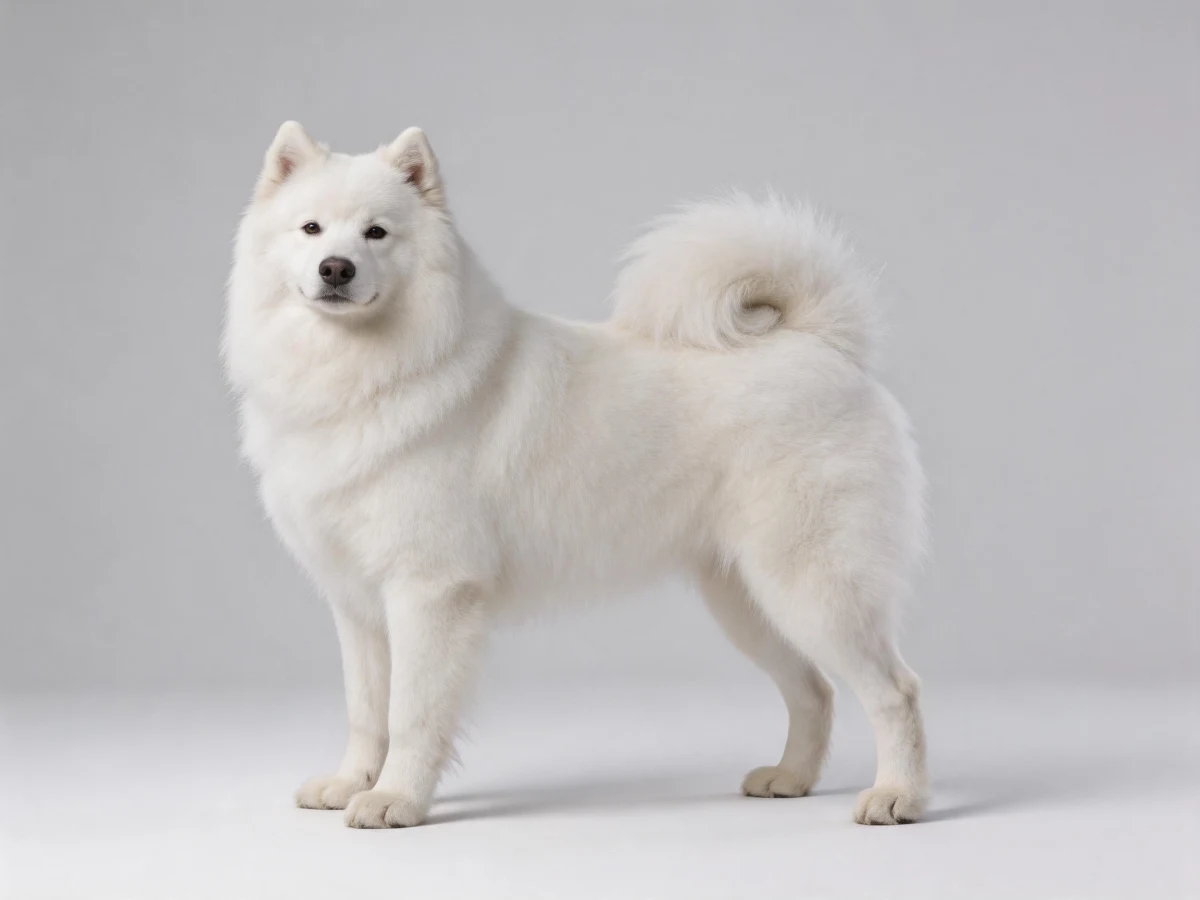
Chukotka Sled Dog
✨ Key Takeaways
- Ancient aboriginal Arctic sled dog of the maritime Chukchi people, bred over centuries for endurance hauling across sea ice and tundra
- The principal ancestral foundation of the modern Siberian Husky: early 20th-century American imports from Chukotka formed the breed
- Recognised by the Russian Kynological Federation (RKF); NOT recognised by the FCI or AKC
- A working landrace, not a closed-studbook purebred: more physical variation than the standardised Siberian Husky
- Cooperative pack nature, high endurance, dense double coat suited to extreme cold; not suited to hot climates or apartment life
Quick Facts
Common Names & Variants
Modern aliases
Historical names
⚖️ Pros & Cons
Advantages
Trade-offs
Physical Appearance
Recognized colors
Coat
Other
Ears: Erect, triangular. Tail: Well-furred, curled over back when alert.
🕰 History
Ancient sled dogs of the Chukchi Peninsula
Long before any Western cynologist gave this dog a studbook entry, the maritime Chukchi people of the Chukchi Peninsula had bred and worked it for centuries across the Arctic coastline of the far north-east of Russia. The Chukotka Sled Dog — known in Russian as the Чукотская ездовая, or Chukotskaya Yezdovaya — is the aboriginal working dog of this region, shaped not by a gentleman breeder's deliberate programme but by the relentless pressure of survival in one of the most extreme environments on earth. Its job was to haul loaded sleds great distances over sea ice and tundra, to assist hunters pursuing sea mammals along the Arctic coast, and to travel in large, cooperative teams that could work all day on a lean ration. Dogs that could not do this did not leave descendants. The result, after many generations, is an animal of remarkable endurance, thermal resilience, and cooperative temperament — qualities bred in not by aesthetic choice but by necessity.
The working context: sea ice, tundra, and the maritime Chukchi
The Chukchi people are a Paleo-Siberian culture whose traditional territory spans the Chukchi Peninsula, the Arctic coast, and the shores of the Bering Sea. Their subsistence economy depended on sea-mammal hunting — walrus, seal, beluga — supplemented by reindeer herding among the inland groups, and the sled dog was the technology that made long-distance winter travel possible at all. A typical working team was large by the standards of modern recreational mushing: the Chukchi ran teams of multiple dogs in a fan-hitch arrangement that spread the load across sea ice and gave each dog more freedom of movement than the tandem-hitch configuration later adopted in North America. The dogs were not a single standardised type from a closed studbook; the Chukotka Sled Dog is a landrace, meaning its uniformity comes from functional selection within a shared environment rather than from written breed standards or formal pedigree records. Physical variation across the landrace is real and expected — it is part of what distinguishes it from the later kennel-club breeds derived from it.
The ancestral link to the Siberian Husky
The most consequential fact in the breed's history — and the one that places it firmly in the story of Arctic dogs worldwide — is that the modern Siberian Husky descends directly from Chukotka Sled Dogs imported to Alaska in the early twentieth century. The fur trader William Goosak brought a team of these Siberian dogs to Nome, Alaska, in 1908 to compete in the All-Alaska Sweepstakes, and the musher Leonhard Seppala subsequently obtained dogs directly from Chukotka through continued imports. The American Kennel Club recognised the Siberian Husky in 1930 on a foundation of these imported Chukotka stock. Genomic studies, including a widely cited 2015 paper in Current Biology (Skoglund et al.) that analysed ancient sled-dog DNA, confirmed the Chukotka Sled Dog as the principal genetic source of the modern Siberian Husky, and the same research found that the Chukotka lineage traces back more than nine thousand years through the Siberian Arctic — among the oldest documented dog populations in the world. The relationship is not merely a breed tradition but a genomic fact: the Siberian Husky is, in the most direct sense, a standardised kennel-club descendant of this landrace.
How the Chukotka dog differs from the Siberian Husky
A reader familiar only with the Siberian Husky should understand that the Chukotka Sled Dog is not the same animal in a different coat colour. The two share an origin, but more than a century of divergent selection has produced recognisable differences. The Chukotka dog is a working landrace selected for hauling capacity, endurance under traditional arctic conditions, and cooperation in large teams; it exhibits more physical variation than the Siberian Husky, which has been refined by closed-studbook breeding for a relatively uniform show and sport type. The Chukotka dog tends to be somewhat heavier-bodied and more variable in build than the standardised Siberian. Its role was freight transport and sea-mammal hunting assistance, not sled racing or the companion-pet market. It has never been shaped by the cosmetic considerations — eye colour, coat marking, overall silhouette — that inevitably enter a breed once show judges begin to evaluate it. The comparison is less "same dog, different passport" and more "ancestor and descendant in different selection environments."
Recognition, preservation, and the modern situation
The Chukotka Sled Dog is recognised by the Russian Kynological Federation (RKF) with a working breed standard, which represents formal national recognition in Russia. It is not recognised by the Fédération Cynologique Internationale (FCI) and is not registered by the American Kennel Club. The breed's survival as a distinct landrace type is a matter of some concern among researchers and working-dog enthusiasts, because the long-term pressure of commercial sled-dog culture — which favours leaner, faster racing-type dogs — has eroded traditional Chukotka working populations in parts of their home range. Efforts by Russian breeders and cultural preservation groups to maintain the aboriginal type have been documented, but the working population remains a fraction of what sustained the Chukchi economy across centuries of Arctic subsistence. The breed occupies a genuinely important place in canine history: it is simultaneously one of the oldest continuously working sled-dog lineages and the genetic root of one of the world's most popular recognised breeds.
Temperament & Personality
Cooperative by selection, not by training alone
The Chukotka Sled Dog's temperament is the product of a specific and demanding working context. A dog that ran in a large team over sea ice and tundra — potentially for many hours with other dogs it did not choose as companions — had to be cooperative by nature. Inter-dog aggression, possessiveness, or the kind of dominant instability that could disrupt a working fan-hitch were expensive liabilities in a subsistence economy where a quarrelling team could be fatal. The result is a dog with a naturally social and cooperative disposition toward other dogs, quite different from the dominant-streak found in some other Nordic breeds, and genuinely comfortable living and working in close company with a pack. This is one of the traits the Siberian Husky shares most visibly with its Chukotka ancestor, and one of the most practically important for anyone keeping this dog.
Alert and capable, without aggression toward people
With people, the Chukotka Sled Dog is typically alert, engaged, and willing — the temperament of a working partner rather than an ornamental companion or a protection dog. Chukchi working dogs lived in close proximity to families, including children, and selection pressure on aggression toward humans ran in only one direction. The breed is not a guard dog; it lacks the wariness and territorial instinct that guardians require, and expecting it to function as one is a misreading of its history and its nature. Its alertness is the alertness of a working animal aware of its environment, not the reactive hyper-vigilance of a livestock guardian or the suspicion of a protection breed.
Independent judgement and the limits of recall
Arctic sled dogs must make decisions their drivers cannot always see well enough to make for them — choosing the safe ice, reading the terrain, navigating in low-visibility conditions. That independent judgement was a survival asset in the Chukotka working context, and it survives in the modern dog as the same characteristic any musher or owner of Arctic breeds knows: a strong pull toward forward motion, limited recall in the face of compelling stimuli, and a capacity to problem-solve that reads, in an urban environment, as stubbornness. The dog is not untrainable; it is trained most effectively by handlers who work with its working nature rather than against it.
Endurance and energy: a working dog's requirements
The Chukotka Sled Dog is a high-energy working breed in the most direct sense. The endurance it was selected for is not sprint speed — this is not a racing dog optimised for short fast efforts — but sustained effort over distance and time, the capacity to keep working across a long arctic day on a moderate ration. That working metabolism and drive does not switch off because the dog lives in a kennel or a house rather than on the trail. An under-exercised, under-stimulated Chukotka dog is an unhappy and often destructive one, and its energy requirements should be understood as a minimum rather than a target.
Trait Scores
All 1–5 ratings sourced from AKC breed traits. NULL = unrated for this breed.
Trainability & cognition
Personality
Activity & adaptability
Social compatibility
Grooming & physical
🏡 Living With a Chukotka Sled Dog
A working dog in any context
The Chukotka Sled Dog is, at its core, a working animal that has adapted to live alongside people rather than a companion breed that happens to have a working history. This is a practical distinction that matters: the dog's needs for activity, company, and purposeful engagement are genuine and substantial, not optional extras. In its traditional context it lived among the Chukchi as a working partner and a community member, not as a household pet in the contemporary Western sense, and its requirements reflect that. A home that can meet its needs for sustained daily exercise, canine company, and cold-weather outdoor activity will find it an adaptable and cooperative housemate; a home that cannot will find it vocal, restless, and physically demanding.
Space and climate
The breed's Arctic origins are not merely decorative. The dense double coat, the compact but well-furred extremities, and the overall physical constitution of the Chukotka dog are adaptations to extreme cold, and the dog is significantly more comfortable in cold climates than in warm ones. In hot or humid environments it requires careful management — shade, available water, reduced exercise during the heat of the day — and it is not a suitable breed for regions with sustained high summer temperatures without appropriate precautions. It does not require arctic conditions to live well, but it is better suited to cold and temperate climates than to tropical or desert ones. Where space is concerned, the breed is not suited to apartment life; it needs room to move and access to outdoor space where it can exercise at a working pace.
With children and other dogs
The breed's traditional life among Chukchi families, including children, means it is generally safe and tolerant around children it is raised with, provided the usual precautions for any large, energetic working dog are observed. It is not a fragile or nervous animal that startles easily, but it is also a powerful dog with the momentum of a draft animal, and unsupervised interaction with very young children carries the ordinary risks of size and energy rather than any breed-specific aggression concern. With other dogs the breed's natural pack sociability is one of its most distinctive traits; it was bred to work in cooperative teams and generally does well with other dogs when properly introduced. Cats and small animals require more consideration, as working-dog prey drive can be significant.
Containment and the pull of the open trail
The breed's drive to move forward and cover ground — the same drive that made it an effective sled dog over long distances — means that containment must be taken seriously. A Chukotka dog that finds a gap in fencing or an unlatched gate will follow its instinct to travel, and it can cover distance quickly. Secure perimeter fencing, reliable lead habits in unfenced areas, and the practical reality that the dog's recall under high-distraction conditions is limited by its working nature are all features of life with this breed that owners should plan for rather than discover.
🎓 Training & Exercise
Intelligent and cooperative — within the working frame
The Chukotka Sled Dog is an intelligent dog with a long history of working closely alongside people, and it is not inherently difficult to train. The right starting point is to understand what kind of intelligence was selected for: problem-solving in field conditions, cooperation within a team, and the capacity to work reliably alongside dogs and people over long periods. This is not the same profile as a high-compliance herding breed or a retrieve-and-return gun dog; it is a working partnership intelligence, more lateral than linear, and it responds best to training methods that treat it as a capable partner rather than a subject to be commanded. Calm, consistent, reward-based handling works well; harsh or confrontational methods tend to produce a dog that disengages rather than complies.
Foundation work: socialisation and pack manners
Because the breed's temperament is naturally sociable with both people and other dogs, early socialisation is less about overcoming innate wariness than about building confidence and familiarity in a variety of contexts. A puppy that meets a range of people, environments, sounds, and dogs during its socialisation window grows into a steady, adaptable adult. The breed's pack nature means it is well suited to multi-dog households, but the conventions of that household still need to be established clearly and early so that the dog's cooperative nature gets directed rather than left to find its own rules.
Recall, containment, and working-dog realism
The most important training reality with any Arctic sled dog, including the Chukotka dog, is that off-lead recall in an open environment is not a given and cannot be treated as one. A dog bred to travel forward over long distances, making its own navigational decisions, is not a dog that automatically turns back toward its handler on a whistle. Recall can be built and reinforced, and for everyday purposes in a fenced environment the dog is cooperative and responsive; in genuinely open country with competing stimuli — other animals, novel terrain, a compelling scent — the limits of that recall will become apparent. Managing this through secure environments, long lines in open areas, and structured exercise opportunities is more practical than expecting competition-level off-lead reliability in all conditions.
Channelling the drive: work, sport, and engagement
The most effective training approach with this breed is to give its working drive a legitimate outlet. Where sledding, skijoring, bikejoring, canicross, or weight-pulling are accessible, they harness the dog's physical capacity and forward drive in a constructive direction and produce a dog that is noticeably more settled in the home. Structured nose-work and tracking also engage the dog's problem-solving capacity. Formal competitive obedience — the kind that rewards instant, precise compliance — is not where this breed's strengths lie, though a working-dog-experienced trainer can bring the Chukotka dog to a solid everyday obedience baseline. The key is matching the training goals to the dog's genuine nature rather than expecting it to perform as a breed it is not.
✂️ Grooming & Coat Care
A double coat built for the Arctic
The Chukotka Sled Dog carries a dense double coat: a soft, thick undercoat that provides insulation against extreme cold, and an outer layer of guard hairs that sheds water, snow, and ice. This coat is a genuine functional adaptation rather than a cosmetic feature, and caring for it correctly is the central grooming task for this breed. It does not require trimming, clipping, or professional grooming in the sense of sculpting or shaping — doing so would compromise its functional structure. What it does require is consistent brushing to prevent the undercoat from matting, particularly during the heavy shedding seasons, and a basic routine of inspection and cleaning for the dog's overall health.
The two moults and the weekly routine
The breed undergoes two significant coat moults each year — typically in spring and autumn — during which the dense undercoat blows out in quantity. At these times daily brushing with a slicker brush and undercoat rake is the only practical way to keep the shed hair from accumulating in the home and to prevent the loose undercoat from matting against the skin. Outside the moult seasons, brushing two to three times a week maintains the coat in good condition and keeps the guard coat clean. Bathing is needed only occasionally — a few times a year or when the dog is genuinely dirty — using a mild dog shampoo followed by thorough rinsing. The coat of an Arctic breed is naturally water-resistant and can take longer to wet through than expected; ensure the shampoo reaches the undercoat. After bathing, thorough drying before the dog is exposed to cold prevents chilling despite the coat's insulating properties.
Nails, teeth, and the post-exercise check
Nail length should be checked monthly. Working dogs active on hard surfaces often wear their nails naturally, but a dog exercised primarily on soft or snowy ground will need regular trimming to prevent nails from growing long enough to affect gait or posture. Dental care — ideally daily brushing with a canine toothpaste — is the most effective measure against the periodontal disease that affects the majority of dogs by middle age if dental hygiene is not maintained. Ears should be inspected weekly for redness, discharge, or unusual odour; unlike drop-eared breeds, the Chukotka dog's upright ears have reasonable ventilation, reducing (though not eliminating) the risk of ear infection. After exercise in rough terrain, a quick check of the paws — between the toes for ice balls in winter, or cuts and embedded debris — is a worthwhile habit for a working breed.
🍖 Diet & Nutrition
Feeding a working Arctic dog
The Chukotka Sled Dog was historically maintained on a lean traditional diet — predominantly sea-mammal meat and fish in the Chukchi coastal economy — and an important practical characteristic of working Arctic sled dogs is an efficient metabolism that can sustain significant output on a relatively modest intake compared with similarly sized working breeds. This efficiency is both an asset and a management consideration: the breed does not generally need very high volumes of food, and overfeeding produces excess weight that places undue strain on the joints of a dog built for sustained movement rather than static carrying of bulk. A good-quality complete dog food appropriate to the dog's life stage and genuine activity level is the baseline; the amount should track the dog's actual work output rather than simply following the feeding guide on the packaging.
Matching intake to workload
The most common nutritional error with working-dog breeds is failing to adjust the ration to match seasonal variation in workload. A Chukotka dog that is actively sledding, skijoring, or otherwise working hard requires significantly more calories than the same dog spending a quiet week in the kennel out of season. Maintaining a year-round working ration on a resting dog produces gradual weight gain that can be difficult to reverse once established and that significantly accelerates joint wear. Body-condition scoring — assessing the dog by feel rather than by the scale alone, checking for easily felt ribs and a visible waist — is a more reliable practical guide to correct condition than any fixed portion size. A well-conditioned Chukotka dog should be athletic rather than lean to the point of visible ribs, but never padded with excess weight.
Feeding schedule, water, and field practice
Adult dogs are typically fed twice daily, morning and evening, rather than in a single large meal; this is the conventional practice for working dogs of this type and reduces the risk of digestive upset in an active animal. Working sled-dog tradition favours feeding after the day's work rather than before it, allowing the dog to rest and digest rather than working on a full stomach — a practice with both practical and physiological justification. Fresh water must always be available, and consumption increases sharply during and after exercise and in warm weather. In winter working conditions, ensure water does not freeze and that dogs have access to liquid water rather than snow alone, since eating snow to meet hydration needs draws on thermal reserves. Puppies require more frequent meals appropriate to their developmental stage, transitioning to the adult twice-daily pattern as they approach physical maturity.
🐶 Buying & Adopting a Chukotka Sled Dog
A rare breed outside Russia
The Chukotka Sled Dog is not a breed that prospective owners will find readily available through ordinary pet-dog channels. Outside Russia, the breed is genuinely rare; it is not recognised by the AKC, the KC, or the FCI, and it does not appear in the mainstream Western pet market. Within Russia, breeders working to maintain the aboriginal Chukotka type under the Russian Kynological Federation standard exist, but they are a small community focused on preserving a working landrace rather than supplying a consumer pet market. A prospective owner should begin with the understanding that acquiring one of these dogs will require patience, research, and direct engagement with Russian breeders or preservation organisations — and may require international transport with all the veterinary, documentation, and import requirements that entails.
Where to look and what to expect
The right starting point is the Russian Kynological Federation (RKF), which maintains the breed standard and the studbook for the Chukotka Sled Dog within Russia. Breed enthusiasts and preservation groups active in Russia, including organisations connected to the Chukotka region itself, may be a further source of information and breeder contacts. Because this is a working landrace, responsible breeders will be primarily oriented toward the breed's working capacity, health, and genetic integrity rather than toward pet placement, and they will ask searching questions about a potential buyer's experience with working sled breeds, their capacity to provide appropriate exercise and cold-climate conditions, and their reasons for wanting this specific dog rather than its more readily available descendant, the Siberian Husky. A buyer who cannot articulate why the aboriginal working landrace is the right dog for their situation — rather than the standardised AKC/FCI breed derived from it — is unlikely to be well matched.
Health testing and responsible acquisition
In the absence of established breed-specific health databases for the Chukotka Sled Dog, the minimum to ask a breeder is whether breeding animals have been assessed for hip health and whether any ophthalmic screening has been carried out. Given the breed's ancestral connection to the Siberian Husky, attention to the eye conditions documented in that breed is prudent. A breeder who is transparent about health practices, who can discuss the working ability and temperament of both parents, and who raises puppies in conditions appropriate to a working Arctic breed deserves more confidence than one who is simply selling dogs. Price data for this breed is not standardised and varies significantly by breeder, lineage, and country of import; approach any readily available, low-priced listing with appropriate caution.
Is this the right dog?
The honest prerequisite conversation is about whether the Chukotka Sled Dog is the genuinely appropriate choice over the Siberian Husky or another related breed. For someone who wants a working sled dog of the original aboriginal Chukchi type — for preservation reasons, for traditional working purposes, or out of serious interest in the landrace as distinct from its kennel-club descendants — this dog is irreplaceable. For someone who simply wants an Arctic-type companion and is not committed to the specific landrace, the Siberian Husky offers a much more accessible population with a well-established health database and a global breeder community. The Chukotka Sled Dog is the right dog for a specific kind of owner: experienced with working Nordic breeds, able to provide serious cold-climate exercise and housing, and genuinely motivated by the working landrace rather than by the standardised breed. For that owner it is a remarkable animal with a deeper history than almost any recognised breed can claim.
📜 Breed Name Etymology — iDogNames original research
What the name means and where it comes from
The name Chukotka Sled Dog is a direct descriptive compound in English: it identifies the dog by its place of origin — the Chukotka Peninsula and the broader Chukotka region of far north-eastern Russia — and its primary function. There is no hidden etymology here; it is a transparent working label applied by modern cynologists and registrars to distinguish the aboriginal landrace from the standardised kennel-club breeds derived from it. In Russian the breed is known as the Чукотская ездовая (Chukotskaya Yezdovaya), where Чукотская is the adjectival form of Chukotka and ездовая (yezdovaya) means "sled" or, more literally, "riding/pulling" — the adjective applied to sled dogs in Russian, as in ездовая собака (sled dog).
Chukotka: the place name and its origins
Chukotka derives from the name of the Chukchi people (Чукчи, Chukchi), the Paleo-Siberian indigenous group who have inhabited the Chukchi Peninsula for thousands of years. The Chukchi name for themselves, in their own language, is rendered variously in scholarly transliteration but relates to words meaning "rich in reindeer" in the inland dialect tradition — a label that emphasises their herding culture. The peninsula and region take their name from this people, giving the dog breed its geographic designation. The Russian suffix -ская (-skaya) is a standard adjectival ending for feminine nouns in Russian, converting the place name Chukotka into the adjective "of Chukotka" or "Chukotkan."
Reading the name in context
The English form Chukotka Sled Dog is the most commonly used designation in international working-dog and preservation-breed literature. An alternative English form, Chukchi Sled Dog, uses the people's name rather than the region's name and appears in some older sources, particularly American mushing literature that predates the more precise geographic terminology now favoured. Both names refer to the same aboriginal landrace. The distinction between Chukotka (a place) and Chukchi (a people) is a useful one to maintain: it maps the difference between geographic and ethnic designation, and the RKF standard uses the geographic form, making Chukotka Sled Dog (or Chukotskaya Yezdovaya) the formally registered name.
Name forms at a glance
| Name | Role | Origin | Literal meaning | First recorded |
|---|---|---|---|---|
| Chukotka Sled Dog | primary | English (descriptive compound) | the sled dog of Chukotka | — |
| Chukotskaya Yezdovaya | origin country native | Russian (official registered name) | the sled dog of Chukotka | — |
| Chukchi Sled Dog | alias | English (older alternative designation) | the sled dog of the Chukchi people | — |
| Chukotka | historical | Russian (geographic name, from the Chukchi people) | the land of the Chukchi | — |
| Yezdovaya Sobaka | historical | Russian (generic functional term) | sled dog | — |
🏛 Naming Traditions — iDogNames original research
Names from the Arctic world this dog comes from
The Chukotka Sled Dog carries thousands of years of Arctic history, and the naming traditions most resonant for this breed reach into the Chukchi Peninsula, the culture of the Chukchi people, and the broader world of Arctic geography and working-dog heritage. Traditional Chukchi personal names — Tygrena, Umka (a Chukchi word for polar bear, also familiar from Soviet animation), Naukanska, Kivak — connect the dog to its original human partners. Geographic names from north-eastern Russia give a different kind of anchoring: Anadyr (the regional capital), Lorino (a Chukchi coastal village with a famous walrus-hunting tradition), Bering (the strait named for Vitus Bering, connecting the dog's homeland to the sea it worked beside), and Kolyma (the great north-eastern Russian river) all carry the specific flavour of this remote and remarkable region.
Mushing culture and the breed's own history offer a second vein. The great mushers and dogs of the early Nome races — Seppala, Togo, Balto — are touchstones of the working heritage this breed helped create, though they belong to the American chapter of the story. Names that evoke cold, endurance, and the Arctic landscape — Frost, Tundra, Kira (a clean Slavic name), Polaris, Taiga — sit naturally on a dog of this lineage, and Russian personal names of the same spare, strong register have the additional resonance of matching the breed's country of recognition and cultural origin.
🐾 Themed Names for Your Chukotka Sled Dog — iDogNames original research
Chukchi and Arctic heritage names
- Umka — Chukchi word for polar bear; the name of a beloved Soviet animated polar bear, honouring the Arctic world this dog comes from
- Tygrena — a traditional Chukchi personal name; rare and distinctive
- Lorino — a Chukchi coastal village on the Bering Sea, site of a famous traditional walrus hunt; a geographically precise nod to the breed's maritime context
- Anadyr — the capital and largest city of Chukotka; the administrative and cultural heart of the region
- Kivak — a Chukchi name evoking the far north-east; short and easy to call across ice
- Bering — the strait separating Russia from Alaska, named for Danish-Russian explorer Vitus Bering; the water highway across which the breed's descendants first reached North America
- Naukanka — a Chukchi settlement near the tip of the Chukchi Peninsula; one of the most geographically remote place names in Russia
Working sled-dog heritage and mushing tradition
- Togo — Leonhard Seppala's legendary lead dog, who ran the longest and most dangerous section of the 1925 serum run; a name inseparable from the breed's descendants
- Seppala — for the great Norwegian-American musher who ran Chukotka-origin dogs in the Nome races and the serum run; a strong, distinctive name
- Nome — the Alaskan gold-rush city where Chukotka dogs first demonstrated their capabilities to Western audiences
- Balto — the lead dog on the final leg of the serum run; universally recognised in the sled-dog world
- Sweepstakes — for the All-Alaska Sweepstakes, the great Nome race that made the breed famous outside Russia; unusual and meaningful
- Kaasen — Gunnar Kaasen, Balto's driver on the final serum-run leg; a mushing-history name with Nordic resonance
Arctic landscape and nature names
- Tundra — the vast treeless Arctic plain across which sled teams traveled; evocative of the breed's natural territory
- Taiga — the boreal forest zone south of the tundra; the broader Siberian ecological world
- Polaris — the North Star, the fixed point that Arctic travelers have always navigated by
- Frost — simple and direct; a name that carries the Arctic cold that shaped this dog
- Kira — a clean Slavic name, widely used in Russia; sits naturally on a female dog of Russian heritage
- Kolyma — the great north-eastern Siberian river; a name with historical weight and geographic precision
- Storm — for the Arctic weather this dog was bred to work through
- Glacier — for the ice fields this breed crossed as a matter of routine
Russian and Slavic names
- Vega — a bright star name used in Russian; short, strong, and easy to call
- Buyan — a traditional Russian name for a bold, lively dog; used in Russian folklore
- Zara — Slavic in origin, meaning "dawn"; bright and brief
- Taika — a Finnish-adjacent name also used in northern Russia; evokes the north
- Ruslan — a classic Russian male name from literary tradition; carries weight and history
- Neva — Russia's famous river; a name with sweep and geographic resonance
More Russian heritage names
- Russian Trail - best for a Chukotka Sled Dog name rooted in Russia rather than generic style
- Chukotka / the Chukchi Peninsula, far north-eastern Siberia, Arctic coast Ridge - best for a regional landscape cue tied to the Chukotka Sled Dog story
- Local Line - best for a name that respects local breed history
- Old Route - best for migration, trade, field or pastoral routes behind the breed
- Heritage Note - best for a page where origin should be treated as context, not decoration
- Village Path - best for rustic, local or landrace-style background
- Working Home - best for a dog whose name should remember Aboriginal Arctic sled dog of the maritime Chukchi people; hauling heavy loads long distances over sea ice and
- Country Mark - best for a concise country-of-origin cue
More work and purpose names
- Prickear - best for the upright-eared silhouette of a Chukotka Sled Dog
- Curltail - best for a curled or carried spitz tail
- Double Coat - best for weather-ready coat context
- North Watch - best for alert northern-dog imagery
- Quiet Cue - best for managing vocal alerts
- Recall - best for independence managed through training
- Snow Trail - best for northern or winter landscape mood
- Routine - best for daily activity and rest structure
More coat and build names
- Black - best for a Chukotka Sled Dog whose color or markings deserve a simple call name
- Double Coat, Dense Undercoat Coat - best for the double coat, dense undercoat coat type on this breed
- White Blaze - best for a clear face or chest marking
- Dark Mask - best for a dog with a strong muzzle or face marking
- Weather Coat - best for outdoor or working-dog coat context
- Strong Frame - best for a dog whose build is part of its function
- Bright Eye - best for an alert expression
- Ground Step - best for a name tied to movement and body type
📋 Breed Standard at a Glance
Russian Kynological Federation standard: general type
The Chukotka Sled Dog is recognised by the Russian Kynological Federation (RKF) with a working breed standard that codifies the type developed over centuries by the maritime Chukchi people of north-eastern Russia. It is not recognised by the Fédération Cynologique Internationale (FCI) or the American Kennel Club (AKC). The standard describes a medium-sized, well-balanced, powerfully built dog of the northern spitz type, designed for sustained work in extreme cold. The general impression is of a hardy, compact, cooperative working animal rather than a refined show dog — functional in every proportion, with nothing excessive.
Size, build, and coat
Males stand approximately 55 to 67 cm at the withers and weigh in the region of 20 to 28 kg; females are slightly smaller, in the range of 52 to 62 cm and 18 to 25 kg. These are working dimensions — substantial enough for draft work over distance, not so heavy as to be an inefficient traveller. The coat is the breed's most visibly Arctic feature: a dense, soft insulating undercoat covered by straight or slightly wavy guard hairs of medium length, giving weather protection in conditions that would compromise a shorter-coated dog. Colour and pattern vary across the landrace — solid colours, parti-colours, and a range of markings are all found, reflecting the landrace character of the population. The tail is well-furred and typically carried over the back in a loose curl when the dog is alert, in the classic Nordic spitz fashion.
Head, ears, and working requirements
The head is moderately broad with a well-defined stop and a moderately tapered muzzle — neither the extreme breadth of a molosser nor the extreme fineness of a sight hound. The eyes are typically brown, almond-shaped, and set obliquely, with the alert, attentive expression consistent with a working dog aware of its environment. The ears are erect, triangular, and of medium size, sitting high on the skull and mobile, serving both the sensory and thermoregulatory functions that upright ears provide in cold climates. The overall head conveys intelligence and alertness without the dramatic typiness of a show-refined breed. The standard's emphasis on working capacity reflects the breed's history: this is a dog evaluated for what it can do, not how it looks in a ring.
🏆 Recognition
Other registries
Breed clubs
❓ Frequently Asked Questions
What is the Chukotka Sled Dog's temperament like?
The Chukotka Sled Dog is a cooperative, alert, and energetic working breed shaped by centuries of team sled work. With people it is typically friendly and engaged rather than suspicious or aggressive — it was never a guard dog, and the Chukchi kept it in close contact with families including children. Its most distinctive trait is a natural sociability with other dogs: bred to work in large cooperative teams, it generally gets along well with other dogs when properly introduced. It is a high-energy breed with an independent streak in open environments, and it is emphatically not a sedentary companion dog. It does best with experienced working-dog owners who can provide sustained exercise and purposeful engagement.
How big is the Chukotka Sled Dog?
The Chukotka Sled Dog is a medium-sized working breed. Males typically stand 55 to 67 cm at the withers and weigh in the region of 20 to 28 kg; females are somewhat smaller, generally 52 to 62 cm and 18 to 25 kg. It is a powerfully built and well-muscled dog for its size, with the compact, endurance-oriented build of a long-distance draft animal rather than the leaner racing build of sprint sled dogs. Physical variation across the landrace population is broader than in closed-studbook breeds.
What health issues does the Chukotka Sled Dog have?
Formal breed-specific health data for the Chukotka Sled Dog is limited; as a working landrace it has not been the subject of large-scale health surveys. The functional selection pressure of generations of Arctic working life has produced a generally robust dog, but the absence of published data means known risks must be inferred from what is documented in closely related breeds. Hip dysplasia is a reasonable concern in a medium-to-large working breed, and radiographic hip evaluation of breeding stock is prudent. Given the ancestral connection to the Siberian Husky, ophthalmic screening for cataracts and progressive retinal atrophy merits attention. The breed is cold-adapted and requires careful management in hot or humid climates to prevent heat stress. This is general educational information, not veterinary advice.
How much exercise does the Chukotka Sled Dog need?
The Chukotka Sled Dog has high exercise requirements consistent with a working draft breed selected for endurance across long Arctic distances. Sustained daily physical activity at a genuine working pace is necessary, not optional; short pavement walks are insufficient for this breed. Sledding, skijoring, canicross, bikejoring, and long hikes in cold weather are ideal outlets. The breed was also selected for cooperative pack work, so canine company during exercise is natural and beneficial. An under-exercised Chukotka dog becomes restless and vocal. Rural or semi-rural living with substantial outdoor space suits the breed far better than urban or apartment settings.
How much grooming does the Chukotka Sled Dog need?
The Chukotka Sled Dog carries a dense double coat requiring regular brushing but no clipping or professional styling. Two to three brushing sessions per week maintain the coat between the two annual moults; during the heavy spring and autumn coat blows, daily brushing is necessary to manage the volume of shed undercoat. The outer coat is naturally water-resistant and the breed does not require frequent bathing — a few times a year is typical, or when genuinely dirty. After winter exercise, check paws for ice balls between the toes. Ears, being erect and well-ventilated, have lower infection risk than drop-eared breeds, but should still be inspected weekly. Nails need monthly checking and teeth benefit from regular brushing.
Is the Chukotka Sled Dog a vocal breed?
Some Chukotka Sled Dog individuals are naturally vocal, especially when the breed history includes alerting, trailing or working with a handler at distance. Owners should teach useful alert cues, quiet cues and calm routines rather than rewarding constant noise.
📚 Sources & Further Reading
Every load-bearing factual claim on this page is anchored to one of the sources below. iDogNames does not synthesize from secondary aggregators.
- breed club official Russian Kynological Federation (RKF) -- breed registrar — Russian Kynological Federation (RKF) (2024)
- wikipedia Chukotka sled dog -- Wikipedia — Wikipedia
- academic paper Genomic and archaeological evidence suggests a dual origin of domestic dogs -- Skoglund et al., Science, 2015 — Science / American Association for the Advancement of Science (2015)
- wikipedia Siberian Husky -- Wikipedia — Wikipedia
- wikipedia Chukchi people -- Wikipedia — Wikipedia
- wikidata Chukotka sled dog -- Wikidata entity Q1083698 — Wikidata
- book The New Encyclopedia of the Dog — Dorling Kindersley (2000)
- veterinary org Hip Dysplasia -- evaluation and screening — Orthopedic Foundation for Animals (2024)
- veterinary org Heat Stroke in Dogs -- recognition and management — Merck Veterinary Manual (2024)