Chilean Terrier
✨ Key Takeaways
- Chile's first and only formally recognised native breed, developed from Smooth Fox Terrier-type dogs crossed with local Chilean dogs during the 17th to 19th centuries
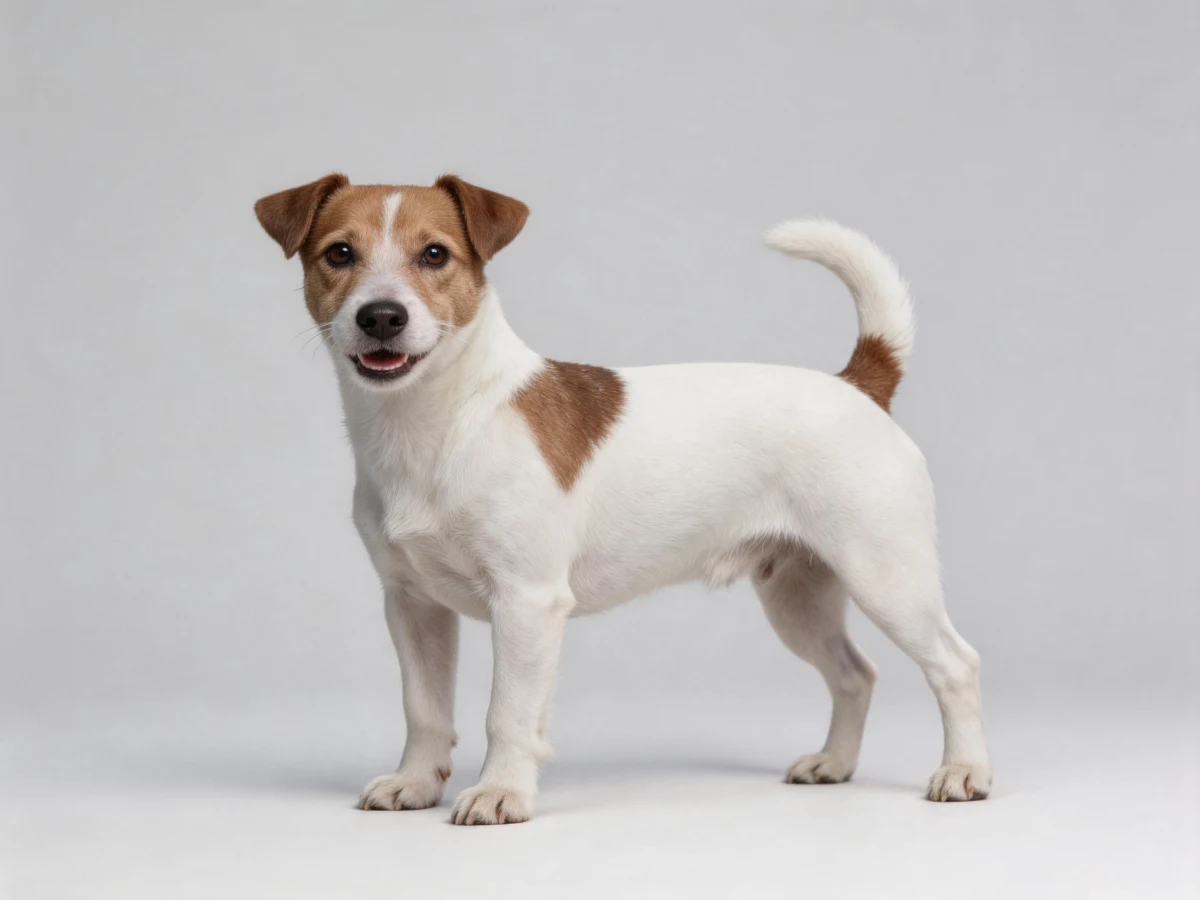
- Small, smooth-coated ratting terrier: males 32-38 cm, 5-8 kg; females 28-35 cm, 4-7 kg; predominantly white with striking black-and-tan tricolour head markings
- Recognised by the Kennel Club de Chile (KCC); classified in ACW Group 3 (Terriers) since 2011; not yet FCI, AKC or KC (UK) recognised
- Active, lively and affectionate with its own people; reserved with strangers; strong prey drive makes cohabitation with small pets a real consideration
- Lifespan 12-15 years; primary health concerns are patellar luxation, Legg-Calve-Perthes disease, progressive retinal atrophy, and potential congenital deafness in white-coated individuals
- Featured as the dog Washington in the Chilean comic strip Condorito since 1949 — a cultural icon in its homeland
Quick Facts
Common Names & Variants
Modern aliases
Historical names
⚖️ Pros & Cons
Advantages
Trade-offs
Physical Appearance
Recognized colors
Coat
Other
Ears: Semi-erect. Tail: Natural, carried upright.
🕰 History
Chile's first native breed — born in the farmyards of the central valley
Long before any kennel club took notice, the Chilean Terrier was already living in Chilean farmyards and warehouses, doing the job it was bred for: keeping grain stores, stables and domestic premises free of rats. Unlike most terrier breeds, which were shaped by the organised fox-hunting culture of Britain, the Terrier Chileno evolved from working necessity rather than sporting fashion, and the men who bred it were farmers and labourers who cared far more about a dog's killing rate than its show-ring profile. That utilitarian origin gives the breed a directness of character and a hardiness unusual even among small terriers, and it is the reason the dog survived and multiplied across Chile while its aristocratic European cousins remained largely unknown in South America.
European roots, South American soil — the Fox Terrier crosses of the 19th century
The breed's immediate ancestors arrived in Chile from Europe during the 17th to 19th centuries, brought by Spanish colonists, British merchants, and other immigrants who landed in the ports of Valparaíso and Coquimbo and made their way inland. Among the dogs they brought were Smooth Fox Terrier-type ratting terriers, the compact, agile, smooth-coated working dogs that were already indispensable to the European livestock economy and that adapted with equal speed to Chilean conditions. Over the following generations these imported Fox Terrier-type animals crossed naturally with the mixed small dogs already present in Chilean households and farms — dogs of no fixed breed but considerable local adaptation — and from those crosses a recognisably distinct type began to emerge. The white body coat with boldly coloured head markings, the erect or semi-erect V-shaped ear, the short dense coat, and the lean athletic build appeared with growing consistency across the country's agricultural heartland, and by the latter decades of the 19th century breeders and observers were already distinguishing this type from the pure Smooth Fox Terrier that had founded it.
The Condorito connection — a national breed enters popular culture
The Chilean Terrier's place in the national imagination was cemented not by a kennel-club decree but by a cartoon strip. In 1949 the cartoonist René Ríos Boettiger — known by his pen name Pepo — launched Condorito, the satirical comic-strip character who would become one of the most beloved figures in Chilean popular culture, exported across Latin America and read by generations of Chileans. Among Condorito's regular cast was a small white dog named Washington, drawn unmistakably as a Chilean Terrier — the correct tricolour head, the smooth white body, the alert V-shaped ears. The strip's enormous popularity meant that the dog's type was instantly recognisable to anyone raised on Condorito, and this informal cultural visibility did more than any breed society to embed the Terrier Chileno in the collective Chilean identity. The breed had become, through the comic pages, an emblem of everyday Chilean life.
Formalisation and the push for recognition
The impulse to standardise and protect the breed formally gathered momentum in the late 20th century. The Kennel Club de Chile (KCC) took on the Terrier Chileno as Chile's first and only native breed, and a formal written breed standard was developed and approved by the KCC in the late 1990s. The standard codified what breeders and farmers had long understood instinctively: the height and weight ranges, the tricolour head colouring, the preferred ear carriage, and the essential temperament traits that distinguish the Terrier Chileno from the Smooth Fox Terrier and the other related breeds that had contributed to its foundation. In 2011 the Asociación Canina Mundial (ACW), a Latin American canine federation, classified the breed within its Group 3 (Terriers), giving the Terrier Chileno its first formal international classification. Full FCI recognition had not been achieved as of the date of this article, and the path to it — which requires a stable registered population, a functioning studbook, and the FCI's own assessment process — remains the breed's next major institutional milestone.
The first Chilean breed — and what that means
The Terrier Chileno's status as Chile's first and, to date, only formally recognised native breed carries cultural weight that extends beyond the dog-breeding world. In a country where the national canine identity has long been shaped by imported European breeds — German Shepherds as police dogs, Labradors as family pets, Fox Terriers as the breed that spawned the Chilean variant — the formal recognition of a Chilean original matters to national pride in a way that a breed club alone could not create. The Chilean Terrier's story is also a reminder of how most of the world's working breeds actually developed: not through the deliberate planning of wealthy sportsmen, but through the unprogrammed selection pressure of the farm and the workshop, where only the dogs that worked survived to breed. Whether or not the Terrier Chileno eventually achieves FCI recognition, it is already something more interesting than a show-ring category — it is a living record of what dogs become when a country's geography, economy and culture shape them over two centuries without interference from outside.
Temperament & Personality
Lively, alert and loyal — a genuine working terrier character
The Terrier Chileno carries the temperament of a dog selected for farm work rather than for a drawing room, and that background gives it a character quite distinct from the show-bred terriers that share its ancestry. The breed standard calls for a dog that is dócil (docile), alerta (alert), vivaz (lively), and reservado con los extraños (reserved with strangers) — four words that capture the essential tension in any good working terrier: cooperative with its own people, quick and responsive in the field, and sensible enough not to fawn over every stranger it meets. With its family the Chilean Terrier is notably affectionate and loyal, forming a close bond that makes it an excellent companion as well as a working dog, and its lively intelligence means it engages readily with household life rather than existing in its own terrier world.
The prey drive — strong, focused, and never quite switched off
Bred for two centuries to locate, pursue and kill rats and other small rodents, the Chilean Terrier has a prey drive that is genuinely strong and runs deep. It is not a vague hunting instinct that a few generations of pet breeding have softened; it is the defining purpose that shaped the breed, and it manifests in the characteristic terrier alertness to movement, the quick, certain reaction to any small scurrying animal, and the focused tenacity that made the breed valuable in the farmyard. Owners who share their home with cats, rabbits, guinea pigs or other small animals should understand this honestly: the Terrier Chileno's instinct toward small, fast-moving prey is powerful and reliable, and it does not discriminate between the rat in the grain store and the hamster in the cage. This is not an aggression problem — it is a purpose working as designed — and matching the dog to a household where that drive can be respected or channelled is a matter of honest breed selection rather than training.
Reserved with strangers, not fearful
The breed's reserve toward unfamiliar people is a consistent trait that shows up in the standard and in the practical observation of experienced owners. The Terrier Chileno is not shy or anxious in the sense that might suggest a nervous temperament; it simply does not offer immediate friendliness to people it does not know, and it tends to observe before it engages. Well-socialised dogs will be politely curious rather than withdrawn, and they do not typically show the fearful snapping that afflicts some poorly bred small terriers, but they are not the kind of dog that greets every visitor with exuberant tail-wagging. This makes the breed a dependable watchdog — it will alert the household to strangers and unusual sounds with quick, clear vocalisation — without the liability of a dog that barks at everything or threatens indiscriminately.
Intelligence and independence — the terrier paradox
Like virtually all the terrier group, the Terrier Chileno is an intelligent dog with an independent streak that can complicate training for owners who expect instant compliance. The same quick thinking and self-reliance that made it an effective unsupervised ratter means it forms its own judgements and can be selective about which human instructions it chooses to act on, particularly when there is something more interesting at nose level. This is not disobedience in the sense of defiance; it is the natural attitude of a working dog that was historically left to manage a problem without a handler standing over it. Experienced terrier owners recognise and work with this trait; owners coming from biddable retriever or herding breeds sometimes find it frustrating until they adjust their expectations and their methods.
🏡 Living With a Chilean Terrier
Compact enough for many homes, active enough to need real exercise
The Chilean Terrier's small size — males typically 32 to 38 cm at the withers, females 28 to 35 cm, both sexes between 4 and 8 kg — makes it a genuinely portable companion that can live comfortably in a modest urban apartment if its exercise and stimulation needs are honestly met. What the breed does not do well is sit quietly in a corner: it is an active, agile, curious dog with the stamina and drive of a working terrier, and an under-exercised Terrier Chileno becomes restless, vocal and inventive about finding its own entertainment, usually at the expense of household items. Two good walks a day with some off-lead running in a safely enclosed area, supplemented by interactive play and scent games that give the nose something to do, form a workable daily routine for a Terrier Chileno kept as a companion.
Fencing and the prey drive — a non-negotiable combination
Any garden or outdoor space available to a Terrier Chileno must be securely fenced. The breed's prey drive is reliable and fast: a rat, cat, squirrel or rabbit seen moving on the far side of a low fence is more than enough to send a Terrier Chileno over or through an inadequate barrier without a second thought. The fence does not need to be tall in the way that a Labrador-proof barrier must be — the breed is small — but it needs to be gap-free and solid at the base, because a terrier that wants through a fence will probe methodically for a weak point. Off-lead work in open, unsecured areas requires a high degree of trained recall, which is achievable with this breed but demands consistent effort to maintain against the pull of a live scent.
Children, cats and other dogs
With children it has grown up alongside, the Terrier Chileno is typically playful, tolerant and good-humoured, with the energy to keep up with active children and the good sense not to be intimidated by their noise and movement. Very young children who have not yet learned to respect a small dog's personal space should be supervised in the usual way, as any small dog can be startled into snapping, but the breed is not inherently sharp or irritable. With other dogs of similar or larger size, Terrier Chilenos are generally sociable when properly introduced, though males can show same-sex assertiveness that benefits from early socialisation and confident handling. Cats and small pets in the household remain a genuine risk: the breed's rat-killing instinct is well developed, and a cat that runs will trigger the same response as any other fleeing small animal. Households that keep both should introduce any arrangement with care and maintain management rather than assuming instinct will eventually shut off.
Separation and boredom — knowing the risks
The Terrier Chileno's history as a farm dog that worked alongside people, rather than in a pen or a pack separate from the household, has produced a breed with a real attachment to human company. Left alone for long periods regularly, it tends to become anxious and noisy. The bark is the breed's working instrument — a quick, carrying alarm that announced a rat find or a stranger in the farmyard — and an anxious or bored Terrier Chileno will use it liberally, which is a consideration in apartment living or in densely populated neighbourhoods. Providing a settled daily routine, adequate exercise before departure, and enrichment toys or food puzzles to occupy the dog in the owner's absence addresses the practical side; an owner whose lifestyle involves very long hours away from home should consider whether the breed fits their situation.
🎓 Training & Exercise
Intelligent and willing — if the method suits the breed
The Terrier Chileno is a genuinely intelligent small dog that picks up new tasks quickly when the training method is appropriate to its character. The key to that appropriateness is understanding what the breed is: a purpose-built working terrier with a strong independent streak and a prey drive that competes with every human instruction whenever something interesting is in the environment. Reward-based training — clear marking of the wanted behaviour followed immediately by something the dog genuinely values, whether that is a treat, a brief game with a toy, or simple enthusiastic praise — works well with this breed and is the method consistently recommended for small terriers by professional trainers who know the type. Heavy-handed or correction-heavy training methods tend to produce a terrier that either shuts down and disengages or that becomes more reactive, neither of which is useful.
Early socialisation — the investment that pays the longest dividend
A Terrier Chileno that is well socialised during its first four to five months of life — exposed in a controlled, positive way to a wide range of people of different ages and appearances, to other dogs of different sizes, to household environments, traffic, and the routine sounds of town and country — grows into a dog that is confident, manageable and pleasant to live with. A poorly socialised Terrier Chileno, by contrast, tends toward the sharp, reactive end of the breed's temperament range, and the reserve toward strangers that is a mild and acceptable trait in a well-socialised dog becomes a liability in one that has never learned to take an unfamiliar world in its stride. The investment of time and effort in socialisation during the puppy period is the highest-return training work an owner of this breed can do, and it saves far more time and trouble than remedial work with an anxious adult.
Recall and the prey drive — managing the honest limit
The area where training reaches its natural ceiling with the Terrier Chileno, as with almost all terriers, is recall in the presence of live prey. A dog that calls back perfectly in the garden may become effectively unreachable the moment it strikes a rat line or glimpses a rabbit moving in cover: the same instinct and drive that made it a useful farm worker was selected precisely because it overrides distractions, and a recall that can be broken by a moving mouse would have been useless in the grain store. The working answer is the standard one for a prey-driven small terrier: build recall in progressively more challenging environments, reinforce it consistently and generously every time it is achieved, and treat a long lead or securely enclosed ground as a non-negotiable default in any area where live prey might be present. This is not a training failure; it is the breed's design working as intended.
Tricks, games and keeping the brain occupied
The breed's intelligence and its history of unsupervised problem-solving mean it excels at the kinds of training that turn a working instinct into a game: hide-and-seek with objects, scent-discrimination exercises, nosework, rat-tunnel agility, and the active engagement of trick-training that keeps the dog thinking and the handler interesting. Chilean Terriers trained regularly on varied, novel tasks tend to be calmer, more focused and more responsive to basic obedience than those given only repetitive drills, because the mental engagement satisfies the working drive that a rat hunt would otherwise provide. Short, varied sessions with high value rewards and a trainer who remains patient and consistent get far better results than long drilling sessions that bore the dog into selective attention.
✂️ Grooming & Coat Care
A short, practical coat that asks very little
The Chilean Terrier's coat is one of its most practical features — short, smooth, dense and close-lying, giving a clean, neat appearance without any of the maintenance demands of a wire-coated or long-coated terrier. No stripping, clipping or professional grooming is required under any circumstances; a weekly pass with a soft-bristle brush or a rubber grooming mitt is sufficient to remove dead hair and surface dirt, and to bring a shine to the white coat. During the twice-yearly moult — typically spring and autumn — shedding increases and more frequent brushing, every two or three days, keeps loose white hair off furniture and dark clothing. Bathing is occasional rather than scheduled, prompted by genuine dirtiness or the dog rolling in something unpleasant rather than by a fixed calendar interval; the short coat dries rapidly after bathing, and a mild dog shampoo that does not strip the skin's natural oils is appropriate.
Ears, eyes and the V-shaped ear carriage
The Terrier Chileno's characteristic V-shaped, forward-folding ears — partially erect or semi-erect, set high on the skull — create a less enclosed ear canal than the fully pendulous drop ear of a spaniel or hound, which reduces but does not eliminate the risk of wax accumulation and infection. The ears should be inspected weekly for redness, unusual discharge, odour, or signs that the dog is shaking its head or scratching at its ears, any of which warrant a veterinary visit rather than home treatment. Gentle cleaning of the outer ear canal with a veterinarian-approved cleaner on a cotton pad is appropriate when wax accumulates; nothing should be pushed into the canal. The eyes, set alert and dark in the white-and-tan head, tend to collect a small amount of discharge at the inner corner; wiping with a clean damp cloth removes this before it crusts.
Nails, teeth and the hands-on post-exercise check
Nails should be checked monthly and trimmed when they have grown long enough to click on hard floors or to alter the dog's gait. A Terrier Chileno exercised regularly on pavements and concrete may wear its nails naturally, but one that runs primarily on grass or soft ground will need more frequent trimming. The quick — the blood vessel within the nail — recedes with regular trimming; dogs whose nails are allowed to overgrow develop a long quick that makes correction trimming more difficult and more likely to cause bleeding. Dental care is a genuine priority for this breed given small dogs' susceptibility to periodontal disease: daily brushing with a canine toothpaste and an appropriately sized brush is the most effective tool, starting in puppyhood so the dog accepts it as normal. After vigorous outdoor exercise — particularly on terrain with grass seeds, thorns or undergrowth — a brief hands-on check of the coat, paws, and ear canals catches the minor injuries and embedded foreign bodies that become serious if they go undetected.
🍖 Diet & Nutrition
Feeding a small, active terrier — matching intake to output
The Chilean Terrier is a small, energetic dog whose nutritional needs are straightforward when matched honestly to its actual activity level. A good-quality complete dog food appropriate to the dog's life stage — puppy, adult or senior — provides the balanced nutrition the breed needs without supplementation, and the amount fed should be calibrated against the dog's real energy expenditure rather than fixed at a single year-round ration. A Terrier Chileno that is working actively, walking long distances daily, or participating in nose-work and agility training burns meaningfully more than one that lives a quieter life, and the feeding guide on any bag of dog food is a starting point rather than a prescription. The most reliable guide to getting the ration right is body-condition scoring: a dog in good condition has ribs that are easily felt under a thin covering of flesh, a visible waist when viewed from above, and a clear tuck-up behind the ribs when seen from the side.
Avoiding overweight — the most important nutritional discipline
Small terriers are prone to the gradual accumulation of excess weight when the owner's portion size drifts upward over time, particularly if training treats are added to an already sufficient daily ration rather than counted within it. For the Chilean Terrier, which carries health risks including patellar luxation and Legg-Calvé-Perthes disease, maintaining a lean bodyweight throughout life is more than cosmetic: excess load on a small dog's joints accelerates the deterioration of an already compromised knee or hip joint and brings forward the point at which lameness becomes a functional problem. An owner who keeps their Terrier Chileno lean from puppyhood and adjusts the ration downward whenever the dog's activity decreases is making one of the most effective health interventions available without a veterinary prescription. Treats should be small, low-calorie, and accounted for within the daily food total rather than offered in addition to it.
Schedule, water and the puppy transition
Adult Chilean Terriers are fed twice daily — morning and evening — rather than once, which steadies blood-sugar levels through the day and moderates the enthusiasm that can lead a small terrier to bolt a single large meal and suffer digestive discomfort. Fresh water should be available at all times; a small dog's water requirement rises sharply on warm days and after vigorous exercise, and dehydration in a small, fast-drying body can develop quickly. Puppies require three to four smaller meals per day appropriate to their age, transitioning gradually to the adult two-meal pattern as they approach twelve months. Any change of food — whether because the dog is moving from puppy to adult formula, because a new brand is being introduced, or because a veterinarian has recommended a prescription diet — should be made gradually over seven to ten days, mixing increasing proportions of the new food into the old, to avoid the digestive upset that abrupt dietary changes reliably produce in small dogs.
🐶 Buying & Adopting a Chilean Terrier
A rare breed outside Chile — and realistic expectations about availability
The Chilean Terrier is, outside its homeland, effectively unknown. Within Chile it is the recognised national breed with an established club structure and show circuit under the Kennel Club de Chile (KCC), but the breed has not spread internationally in the way that its Fox Terrier and Rat Terrier relatives have, and finding a reputable breeder in any country other than Chile is genuinely difficult. A prospective owner in North America, Europe or elsewhere should set realistic expectations from the outset: locating a Terrier Chileno may involve direct contact with Chilean breeders, the KCC, or the ACEPE (Asociación Chilena de Productores y Exhibidores de Perros) — the Chilean body that promotes breed recognition and maintains show records — followed by a waiting period and the practical and veterinary requirements of international transport. There is no standardised international price for the breed, and any source offering ready availability of a Chilean Terrier at standard companion-dog prices without a waiting period or breeder vetting process deserves scepticism.
What a responsible breeder looks like for this breed
Because formal health-testing protocols for the Terrier Chileno are not as developed as those for long-established FCI and AKC breeds, the signals of responsible breeding must be read in other ways. A serious Terrier Chileno breeder will be able to describe the health history of the dam and sire's lines, will have had the breeding pair assessed by a veterinarian, and will raise the question of patellar luxation — the most commonly cited heritable concern — proactively rather than waiting to be asked. They will have socialised the litter in a household or working environment from birth, not isolated in an outdoor kennel, and they will ask as many questions of the prospective owner as the prospective owner asks of them: about living arrangements, experience with terrier breeds, plans for exercise and training, and the presence of small pets in the household. A breeder who is indifferent to where the puppy goes once payment is made is a warning sign regardless of breed.
Adoption and the working-dog rescue pathway
Within Chile, Terrier Chilenos occasionally appear in general rescue organisations, typically as dogs surrendered by owners who underestimated the breed's exercise needs, prey drive or terrier independence. The ACEPE and the KCC are appropriate first contacts for anyone in Chile seeking a rescue dog of this type. Outside Chile, dedicated breed rescue for the Terrier Chileno does not exist as an organised operation because the breed is too rare internationally to sustain one; general small-terrier rescues occasionally carry dogs of Chilean Terrier type, though accurate breed identification in rescue dogs is unreliable without genetic testing. Whether purchasing from a breeder or adopting from a rescue, the fundamental question is the same: does the household have the space, time, exercise commitment, and experience with an active, prey-driven small terrier to meet what this breed genuinely needs? For households that can answer yes, the Terrier Chileno is an affectionate, lively and historically significant companion. For those who cannot, a different breed is the more honest choice.
📜 Breed Name Etymology — iDogNames original research
Terrier — the English and Latin thread
The word terrier entered English from the Old French terrier, itself derived from the medieval Latin terrarius, meaning "of or relating to the earth" — from terra (earth, ground). The reference is functional and precise: terriers were dogs bred to pursue quarry into the earth, to "go to ground" into burrows, dens and warrens after foxes, rats, rabbits and badgers, and to hold or drive out whatever was below. The name is therefore not a description of appearance but of job: a terrier is, etymologically, an earth-worker. This Latin-French thread connects the Terrier Chileno, born in the farmyards of South America, to the entire European terrier tradition and to the Fox Terrier-type ancestors that gave it its working instinct.
Chileno / Chilean — a national adjective that carries cultural weight
The adjective chileno (Spanish; Chilean in English) identifies the breed as a national creation in the most direct way available — the country's own name attached to the dog. Chile itself takes its name from a word of uncertain origin: the most widely cited etymology traces it to the indigenous Mapuche word chilli or chile, possibly meaning "where the land ends" or "the deepest point of the earth," referring to the long, narrow southward extension of South American land that describes the country's geography. Another tradition links the name to the Quechua word for cold (chiri). The precise source remains debated by historians, but the attachment of the national name to the breed is a deliberate marker of origin and identity: this is not a breed that happened to develop in Chile but a breed that Chileans recognise as their own, the first and so far only native Chilean breed to carry a formal standard.
Ratonero Chileno — the working name and its meaning
The informal alternative name Ratonero Chileno — literally "Chilean ratter" or "Chilean rat-catcher" — is the most descriptive label the breed has acquired, and it gives a cleaner picture of the dog's original purpose than the more formal Terrier Chileno. Ratón is the standard Spanish word for mouse or rat; ratonero as a noun describes an animal or person that catches them. The word carries none of the social stigma it might in English; in the Spanish-speaking world the ratonero is simply a functional specialist, a category that includes several formally recognised ratter breeds in Spain and elsewhere. The Chilean variant of the term situates the breed precisely: a rat-catching dog of Chilean origin and type, shaped by Chilean farms and warehouses rather than by the fox-hunting estates of England from which its ancestors departed.
Name forms at a glance
| Name | Role | Origin | Literal meaning | First recorded |
|---|---|---|---|---|
| Terrier Chileno | primary | Spanish (national-breed designation) | the Chilean earth-dog; the terrier of Chile | 1990 |
| Chilean Terrier | alias | English (direct translation of Terrier Chileno) | the terrier of Chile | — |
| Ratonero Chileno | alias | Spanish (functional working name) | Chilean rat-catcher | — |
| Chilean Fox Terrier | historical | English (earlier international label) | a Chilean terrier of Fox Terrier descent | — |
| Washington | historical | Spanish / Chilean popular culture (comic-strip name) | the dog character in Condorito; the breed's most famous popular-culture representation | 1949 |
🏛 Naming Traditions — iDogNames original research
Chilean roots, terrier energy — where the best names come from
Because the Terrier Chileno is as much a piece of national history as it is a dog breed, owners who want a name that fits the animal often reach toward Chilean culture, geography and language. Spanish names — the mother tongue of Chile — sit naturally on a dog with this history: Pisco (the national spirit), Lúcuma (the golden Andean fruit beloved in Chilean desserts), Copihue (the national flower, a red-and-white lantern-like bloom from the rainforest of the south), and Cóndor (the Andean condor that graces the national coat of arms) all connect the dog's name directly to its country of origin. The cartoon-strip character Washington, the Terrier Chileno that appeared in Condorito from 1949 onward and became one of the breed's most famous cultural representations, is itself a name worth honouring in a new puppy.
The breed's tricolour head colouring — white body, black-and-tan head — offers a second naming vein: Antorcha (torch, for the bright tan markings), Negro (black, for the mask), Canela (cinnamon, for the warm tan shading) or simply Blanco and Blanca for the white ground coat. Terrier energy, speed and alertness suggest a third thread: Rayo (lightning), Chispa (spark) and Flecha (arrow) all suit the quick, agile character. The strongest names for this breed are those that tie the dog to its identity — either Chilean in reference or terrier in spirit — rather than names that could belong to any small dog of any origin.
🐾 Themed Names for Your Chilean Terrier — iDogNames original research
Chilean geography, culture and national symbols
- Copihue — the Chilean national flower; red-and-white, like the breed's colouring
- Cóndor — the Andean condor on Chile's coat of arms; a name of altitude and freedom
- Atacama — the world's driest desert, in northern Chile; stark and striking
- Patagonia — Chile's wild southern wilderness; bold and expansive
- Lautaro — the young Mapuche military leader who resisted Spanish conquest; a name of fierce loyalty
- Valpo — a nickname for Valparaíso, Chile's colourful port city and UNESCO heritage site
- Cochrane — Lord Cochrane, the Scottish admiral who helped build the Chilean Navy; historically resonant
Chilean food, drink and everyday culture
- Pisco — the Chilean national spirit, distilled from Muscat grapes in the Elqui Valley
- Lúcuma — the golden Andean superfruit that flavours Chile's most beloved ice cream
- Empanada — the folded pastry central to Chilean street food and family celebrations
- Mote — husked wheat, the base of the classic Chilean summer drink mote con huesillos
- Terremoto — the "earthquake" cocktail of pipeño wine and pineapple ice cream; memorably Chilean
- Sopaipilla — the round fried pumpkin bread sold on cold Santiago evenings
Condorito and popular culture names
- Washington — the Terrier Chileno in the Condorito comic strip; the breed's most famous fictional representative
- Condorito — the beloved comic strip character himself; perfect for a bold, characterful dog
- Pepo — the pen name of Condorito's creator René Ríos; a tribute to the breed's cultural sponsor
- Coné — Condorito's nephew, a regular in the strip; a short, punchy name for a small dog
Tricolour coat and terrier-spirit names
- Blanco — Spanish for white; for the breed's predominant body colour
- Blanca — the feminine form; clean and classic for a bitch
- Canela — Spanish for cinnamon; for the warm tan head markings
- Antorcha — torch; for the bright fire of tan above the dark mask
- Chispa — spark; for the quick, electric terrier temperament
- Rayo — lightning; for the speed and alertness of a working ratter
- Flecha — arrow; fast, direct and to the point
- Máscara — mask; for the striking black-and-tan head pattern
More Chilean heritage names
- Chilean Trail - best for a Chilean Terrier name rooted in Chile rather than generic style
- Central valley of Chile; agricultural heartland between Santiago and Valparaíso Ridge - best for a regional landscape cue tied to the Chilean Terrier story
- Local Line - best for a name that respects local breed history
- Old Route - best for migration, trade, field or pastoral routes behind the breed
- Heritage Note - best for a page where origin should be treated as context, not decoration
- Village Path - best for rustic, local or landrace-style background
- Working Home - best for a dog whose name should remember farm and warehouse ratter; hunting small rodents and rabbits on Chilean agricultural estates, keeping grain st
- Country Mark - best for a concise country-of-origin cue
More work and purpose names
- Earthdog - best for a Chilean Terrier with terrier working history
- Vermin Line - best for ratting or vermin-control context
- Dig Rule - best for a terrier whose drive needs boundaries
- Bold Heart - best for courage without exaggerating aggression
- Recall - best for a small fast dog who must come back reliably
- Settle - best for building an indoor off-switch
- Toy Find - best for legal prey-substitute games
- Gate Check - best for door and yard management
More coat and build names
- White Body With Black-and-tan (tricolour) Head Markings - best for a Chilean Terrier whose color or markings deserve a simple call name
- Short, Smooth, Dense Coat - best for the short, smooth, dense coat type on this breed
- White Blaze - best for a clear face or chest marking
- Dark Mask - best for a dog with a strong muzzle or face marking
- Weather Coat - best for outdoor or working-dog coat context
- Strong Frame - best for a dog whose build is part of its function
- Bright Eye - best for an alert expression
- Ground Step - best for a name tied to movement and body type
More training and management names
- Recall - best for a Chilean Terrier whose safe freedom depends on training
- Focus - best for handler attention around distractions
- Marker - best for clear reward timing
- Settle - best for calm at home after activity
- Boundary - best for doors, yards, roads or stock rules
- Neutral Walk - best for calm public behavior
- Checkback - best for a dog learning to return to the handler
- Rest Day - best for balancing drive with recovery
📋 Breed Standard at a Glance
KCC standard — general appearance and size
The Chilean Terrier is a small, smooth-coated terrier classified by the Kennel Club de Chile (KCC) as Chile's first and only native breed. The breed standard describes a lean, athletic, alert dog of small-to-medium frame: males stand 32 to 38 cm at the withers, with an ideal of 35 cm; females stand 28 to 35 cm, with an ideal of 32 cm. Weight ranges from 5 to 8 kg in males (ideal 6.5 kg) and 4 to 7 kg in females (ideal 5.5 kg). The overall impression is of a trim, balanced terrier built for agile work rather than power — functional, light on its feet, and clearly bred for purpose rather than ornament.
Head, coat and the defining tricolour pattern
The head is the breed's most distinctive visual feature. The skull is moderate, the foreface cleanly proportioned, and the eyes dark and alert in expression. The ears are set high and carried in a characteristic V-shape that folds forward, giving the breed an expression of focused attention. The coat is short, smooth and dense, close-lying and low-maintenance. The colour pattern is the breed's signature: the body is predominantly white, and the head carries black and tan (tricolour) markings distributed across the skull, muzzle, and around the eyes in a way that is both consistent and visually striking. Minor white body markings may be present, but the concentrated head colouring is the defining characteristic that distinguishes the Terrier Chileno from a white Smooth Fox Terrier with random body patches.
Body, temperament standard and recognition status
The body is that of a working terrier: a level topline, a deep enough chest for adequate lung room, a strong loin, and well-angulated hindquarters that provide the drive and spring of a dog built to work in confined spaces and pursue prey through rough ground. The tail is carried upright and is not docked under the KCC standard. Temperament is explicitly addressed in the KCC standard, with the ideal described as dócil (docile), alerta (alert), vivaz (lively), and reservado con los extraños (reserved with strangers) — a formulation that captures the working terrier balance between cooperation with its household and appropriate wariness of the unfamiliar. Internationally, the Asociación Canina Mundial (ACW) classifies the breed in its Group 3 (Terriers) since 2011. Full FCI recognition had not been achieved at the time of this article. No AKC or KC (UK) recognition exists.
🏆 Recognition
Other registries
Breed clubs
❓ Frequently Asked Questions
What is a Chilean Terrier's temperament like?
The Chilean Terrier is lively, alert and affectionate with its own family, forming a close loyal bond, while remaining reserved and watchful around strangers — a balance described precisely in the KCC breed standard as docile, alert, lively, and reserved with strangers. The breed has a genuine and reliable prey drive, a legacy of two centuries of farm-rat selection, and it is not well suited to households with cats, rabbits or other small pets. With people it is not aggressive; with other dogs of similar size it is generally sociable when properly introduced, though early socialisation is important. An intelligent independent thinker with the typical terrier streak, it responds best to consistent reward-based handling rather than heavy correction.
How big does a Chilean Terrier get?
The Chilean Terrier is a small dog. The KCC breed standard sets males at 32 to 38 cm at the withers, with an ideal of 35 cm, and females at 28 to 35 cm, with an ideal of 32 cm. Weight ranges from 5 to 8 kg in males (ideal 6.5 kg) and 4 to 7 kg in females (ideal 5.5 kg). The build is lean and athletic rather than heavy-boned: this is a working ratter built for speed and agility in tight spaces, not a substantial terrier like the Bull or Airedale.
What health problems do Chilean Terriers have?
The Chilean Terrier is generally a robust, long-lived breed with a typical lifespan of 12 to 15 years. The most commonly noted heritable health concerns are patellar luxation (kneecap dislocation, the primary orthopaedic concern in most small terriers), Legg-Calve-Perthes disease (avascular necrosis of the femoral head, presenting as hip joint deterioration in young dogs), progressive retinal atrophy, and congenital sensorineural deafness, which may be linked to the breed's predominantly white coat. Dental disease is common in small dogs generally and benefits from regular brushing. Breed-specific health surveys have not been conducted at scale, so the full picture rests on veterinary observation and general small-breed patterns rather than prevalence data. This is general educational information, not veterinary advice for any individual dog.
Are Chilean Terriers good family dogs?
For an active household that can meet the breed's exercise needs and understands terrier character, the Chilean Terrier is an affectionate, loyal and entertaining companion that does well with children it has grown up with. The strong prey drive makes households with cats, rabbits or other small pets a genuine risk that requires honest assessment rather than assumption of compatibility. The breed's independence and reserved character toward strangers suit experienced terrier owners better than first-time dog owners expecting effortless compliance. Outside Chile the breed is very rare, and locating a reputable breeder will likely require contact with Chilean breed clubs and a waiting period.
How much grooming does a Chilean Terrier need?
Very little. The short, smooth, dense coat needs only a weekly pass with a soft-bristle brush or rubber grooming mitt, with more frequent brushing during the spring and autumn moults. No clipping, stripping or professional grooming is required at any time. Bathing is occasional, prompted by dirt rather than a schedule. The V-shaped semi-erect ears need weekly inspection for wax build-up and early signs of infection, though their partially open carriage reduces the risk compared with fully pendant ears. Nails should be checked monthly, teeth brushed regularly to prevent the periodontal disease that is common in small dogs, and a brief hands-on post-exercise check catches grass seeds and ticks before they become a problem.
How much exercise does a Chilean Terrier need?
A Chilean Terrier needs exercise that matches its history and build. Plan for daily movement, training and mental work connected to farm and warehouse ratter; hunting small rodents and rabbits on Chilean agricultural estates, keeping grain st. The right amount depends on age, health and individual temperament, so owners should balance activity with rest rather than relying on a one-size routine.
📚 Sources & Further Reading
Every load-bearing factual claim on this page is anchored to one of the sources below. iDogNames does not synthesize from secondary aggregators.
- breed club official Kennel Club de Chile (KCC) -- official breed registry — Kennel Club de Chile (2024)
- wikipedia Chilean Terrier -- Wikipedia — Wikipedia
- breed club official ACEPE -- Asociacion Chilena de Productores y Exhibidores de Perros — ACEPE A.G. (2024)
- other Chile's First Breed -- National Purebred Dog Day — National Purebred Dog Day (2019)
- other Chilean Terrier -- animalia.bio breed profile — Animalia (2024)
- book The New Encyclopedia of the Dog — Dorling Kindersley (2000)
- veterinary org Patellar Luxation in Dogs -- Cornell University College of Veterinary Medicine — Cornell University College of Veterinary Medicine (2024)
- veterinary org Legg-Calve-Perthes Disease -- Merck Veterinary Manual — Merck Veterinary Manual (2024)
- veterinary org Congenital Deafness in Dogs -- BAER testing overview — Orthopedic Foundation for Animals (2024)