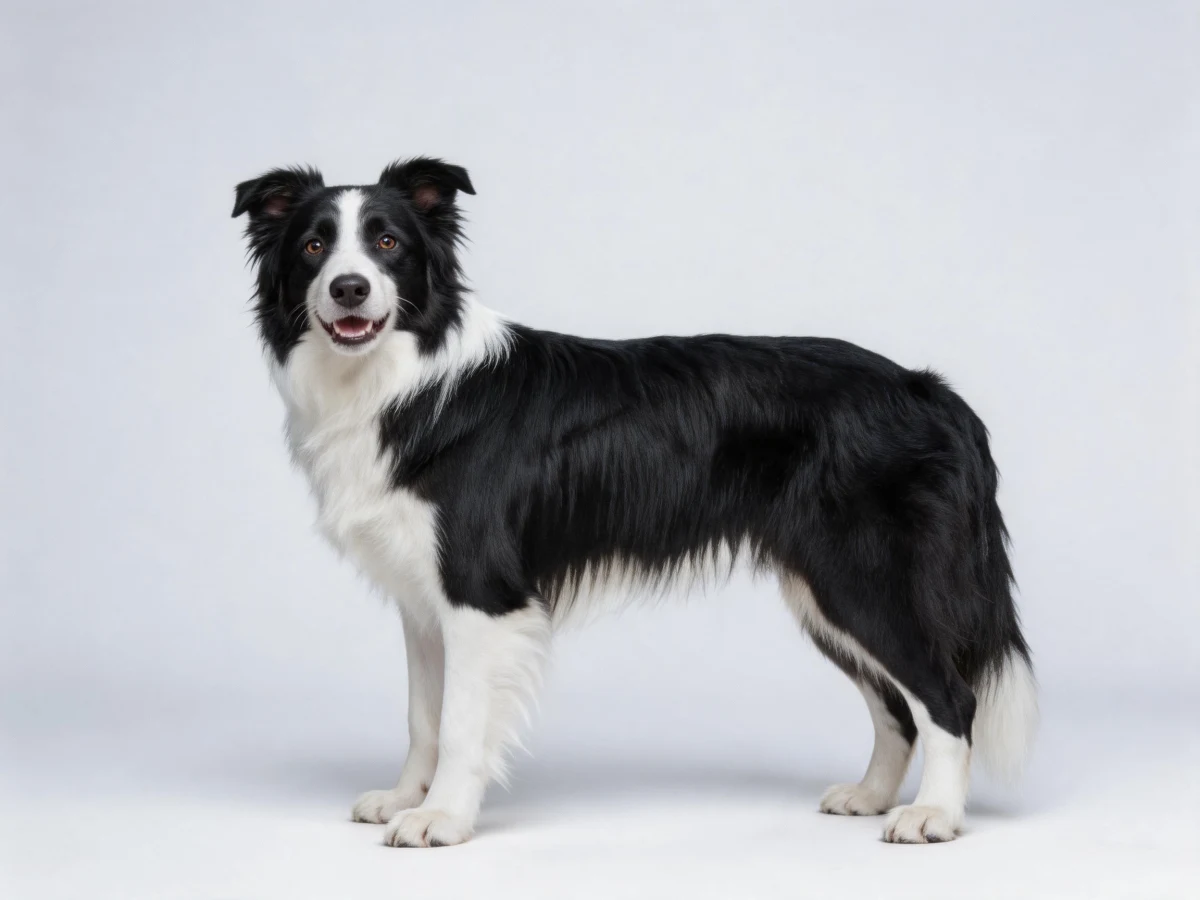
Bearded Collie
✨ Key Takeaways
- The Bearded Collie is an old Scottish hill collie — the “Beardie,” also called the Highland or Mountain Collie — bred by Border and Highland shepherds and drovers to gather and drive sheep and cattle over rough, wet open ground.
- It worked loose-eyed and upstanding, gathering with bark and body rather than the silent crouching “eye” of the Border Collie, which left it bold, vocal and independent.
- As the droving trade declined the breed nearly disappeared; Mrs G. O. (Olive) Willison rebuilt the modern registered breed from the 1940s, founding her Bothkennar line on the brown bitch Jeannie of Bothkennar and the grey dog Bailie of Bothkennar.
- Recognition followed the revival: KC (UK) Challenge Certificates from 1959, FCI definitive acceptance in 1967 (Standard No. 271), the Bearded Collie Club of America founded in 1969, and full AKC recognition in 1976.
- It is the joyful “bouncing Beardie” — exuberant, affectionate, clever but a touch headstrong and slow to mature; an active companion that needs real exercise, plenty of company and committed coat care, not a quiet low-maintenance pet.
- The breed’s landmark inherited disease is hypoadrenocorticism (Addison’s), shown to be highly heritable (about 0.76) by Oberbauer et al. 2002 and confirmed polygenic by Gershony et al. 2020; eye disease, hip dysplasia and autoimmune thyroiditis are other watch-points, with median lifespan near 14 years.
Quick Facts
Common Names & Variants
Modern aliases
Historical names
Modern variants & lines
⚖️ Pros & Cons
Advantages
Trade-offs
Physical Appearance
Recognized colors
Coat
Other
Ears: Drop. Tail: Long, low-set, well-feathered.
🕰 History
The drover's dog of the Scottish hills
The Bearded Collie was not bred for a ring or a registry; it was bred for the weather. On the bleak, wet, wind-scoured hill country of the Scottish Borders and Highlands, a shepherd or a cattle drover needed a dog that could work all day in driving rain, gather half-wild sheep off a mountainside, and push a herd of cattle down to market over miles of bad ground \u2014 and stay warm and willing while doing it. The answer was a long, shaggy, harsh-coated collie the hill men simply called the beardie, after the chin whiskers that frame its face. For centuries it had no stud book and needed none: it was a working tool of the drove road and the croft, passed shepherd to shepherd, judged only by whether it could do the job. Names like the Highland Collie, the Mountain Collie and the broad-Scots Hairy Mou\u2019ed Collie all describe the same hardy, weatherproof hill dog.
Origins in the droving trade
Where the type first came from is argued but its working home is not. The most-repeated account points to Central European herding dogs \u2014 often given as Polish Lowland Sheepdogs left or traded on the Scottish coast in the early sixteenth century \u2014 crossed onto the native herding collies, producing the shaggy droving dog that thrived in the Scottish hills. Whatever the exact mix, the Bearded Collie became the drover\u2019s collie of Peeblesshire and the Border counties, a dog used as much for moving cattle along the drove roads as for shepherding sheep. It worked loose-eyed and upstanding rather than in the low, creeping crouch of the Border Collie, gathering and driving with bark and body rather than the silent \u201ceye.\u201d That working style \u2014 noisy, bold, independent, built to think for itself on open ground \u2014 is stamped on the breed\u2019s character to this day.
Near-loss and the verge of extinction
A working dog with no registry is only as safe as its job. As the droving trade declined and farm work changed, the old beardie thinned out across the hills, and by the years around the Second World War the breed as a recognisable, breeding population was close to disappearing. The hardy farm strain survived here and there in the hands of Border shepherds who still valued it, but as a dog the wider public could obtain and breed to a type, it had nearly slipped away. The Bearded Collie\u2019s story is therefore one of two lives: the long anonymous working life on the Scottish hill, and the deliberate twentieth-century rescue that gave it a second one.
Olive Willison and the Bothkennar revival
The modern breed owes its existence to one woman and, by her own telling, to a happy accident. In 1944 Mrs G. O. (Olive) Willison set out to acquire a Shetland Sheepdog and instead was sent a brown working bitch who turned out to be a Bearded Collie. That bitch became Jeannie of Bothkennar, named for Willison\u2019s kennel, and she so charmed her owner that Willison resolved to find her a mate and revive the breed. The mate appeared by chance: walking on a beach, Willison met a man emigrating from Scotland and persuaded him to part with his grey dog, who became Bailie of Bothkennar. Jeannie and Bailie are the foundation pair of the modern registered Bearded Collie, and almost every show Beardie traces to them. Willison spent the following decades promoting the breed, gathering further hill stock, and building it back into a recognised pedigree dog from the brink.
Recognition and the modern Beardie
From the Bothkennar foundation the breed climbed steadily back. The Kennel Club in Britain made Bearded Collies eligible for Challenge Certificates in 1959, opening the path to championship status and steadily growing popularity. The F\u00e9d\u00e9ration Cynologique Internationale accepted the breed on a definitive basis in 1967 under British patronage as Standard No. 271. In the United States the Bearded Collie Club of America was founded in 1969, and the American Kennel Club granted full recognition in the Herding Group in 1976. The breed enjoyed a burst of fashion in the 1970s and 1980s and has since settled into the role of a much-loved, moderately popular companion and a still-capable herding and agility dog \u2014 the hill drover\u2019s collie, carried out of near-extinction and into the modern home.
Temperament & Personality
The bouncing, joyful hill dog
The Bearded Collie is famous among its owners for one quality above all: an irrepressible, bouncing high spirits that has earned it the nickname \u201cthe bouncing Beardie.\u201d This is an exuberant, demonstrative, enthusiastic dog that greets the day and most of its inhabitants with delight, often quite literally bouncing on stiff legs when excited. Bred to work loud and upstanding on the open hill rather than silent and low like a Border Collie, it kept the bold, outgoing, vocal character that job demanded. A Beardie is rarely a quiet, retiring dog; it is a sociable extrovert that wants to be in the thick of family life and tends to assume everyone is as pleased to see it as it is to see them.
Bright, independent and a touch headstrong
Centuries of working stock at a distance, making its own decisions on ground its handler could not see, left the breed clever and self-reliant \u2014 and that independence shows in training. A Bearded Collie is intelligent and trainable but it is not the automatically obedient dog the Border Collie is reputed to be; it has opinions, it can be stubborn, and it will weigh whether your request is worth its while. It does best with patient, upbeat, reward-based training kept varied enough to hold its interest, and it can sour quickly under harsh or repetitive handling. Owners who succeed treat the Beardie as a partner to be persuaded rather than a subordinate to be commanded.
Affectionate and devoted to its people
For all its boisterousness the breed is deeply people-oriented and affectionate, devoted to its family and happiest when included in whatever is going on. It generally gets on well with children, matching their energy and tolerating their company, and it is usually sociable with other dogs. It is not a guard dog by temperament \u2014 it may bark to announce a visitor, and the breed is fairly vocal in general, but it is far too friendly to make a deterrent. The flip side of all that sociability is that a Beardie does not thrive left alone for long days; it is a companion breed in the fullest sense and can grow bored, noisy and destructive without company and occupation.
Energy that has to go somewhere
This is a working herding dog in a shaggy coat, and the energy is real. A Bearded Collie needs substantial daily exercise \u2014 long walks, free running, a job to do \u2014 and it shines at active dog sports such as herding, agility, obedience and flyball, where its athleticism and enthusiasm find an outlet. Denied that, the same bounce that delights its owners turns into restlessness, barking and mischief. The honest summary is that the Beardie is a wonderful, funny, loving companion for an active household and a poor choice for a sedentary one; it needs to move, and it needs to be busy.
Slow to mature and forever young
Bearded Collie people warn newcomers that the breed grows up slowly and, in spirit, never entirely does. A Beardie keeps a clownish, puppyish exuberance well into adulthood, staying playful and a little silly for years, which is much of its charm and occasionally its frustration. Combined with the bounce and the energy, this means the breed asks for an owner with a sense of humour and a tolerance for a big, hairy dog that thinks it is still a puppy.
Who the breed suits
The Bearded Collie suits an active, social household that wants a joyful, involved, demonstrative dog and can give it both real exercise and real company \u2014 a family that hikes, a home that takes up agility or herding, an owner who enjoys a dog with personality and is ready for the grooming the coat demands. It suits poorly the person wanting a calm, biddable, low-maintenance dog, an owner away all day, or anyone unprepared for the coat. Match it well and the Beardie is one of the most endearing of all the herders; match it badly and you have a bored, noisy, matted dog with energy to burn and no place to burn it.
🏡 Living With a Bearded Collie
The "Bouncing Beardie" needs a job and a partner
The phrase Beardie people use about their own breed is the "Bouncing Beardie," and it is not a marketing line — it is a warning about daily life. The Bearded Collie was bred to spend long Scottish days driving cattle and sheep across hills in foul weather, and it carries that exuberant, tireless, bounding energy straight into a suburban living room. This is a joyful, clownish, deeply people-oriented dog that wants to be in the thick of the family and genuinely struggles when shut out of it. A Beardie parked alone in a yard or left through long working days does not become calm; it becomes the bouncy, barky, destructive dog that fills rescue waiting lists. Households that want a placid ornament should look elsewhere — a Beardie needs an owner who treats exercise and shared activity as a daily non-negotiable, not a weekend extra.
Exercise is a floor, not a target
An adult Bearded Collie needs a solid hour or more of real activity every day, and it strongly prefers activity with a purpose attached — a long hillwalk, a herding session, agility, a structured fetch-and-recall game, or scent work. The lean, athletic frame under all that coat is built for stamina, and a single lead-walk around the block does not touch it. Crucially, the Beardie needs mental work as much as physical work: a tired body with an idle brain still bounces. Owners who give the breed a genuine job — even an invented one like trick training or nose games in the garden — get the affectionate, biddable companion the breed can be. Owners who under-exercise it get barking, digging, and a dog that herds the children and the vacuum cleaner.
Kids, other pets, climate, and the coat reality
A well-socialised Beardie is affectionate and excellent with children and usually sociable with other dogs, though its herding instinct can show up as nipping at heels or circling running kids — early redirection sorts this out. The harsh shaggy double coat was built for Highland weather, so the breed tolerates cold and wet far better than heat; in hot, humid climates it needs early-morning or evening activity, shade, and water. Apartment life is possible only for an owner committed to meeting the full exercise and mental load, because a frustrated Beardie is a vocal one and neighbours notice. Be honest about the coat before committing: it sheds heavily on a seasonal cycle, traps mud and water in the beard and legs, and deposits hair and tracked-in damp as a permanent condition of ownership.
🎓 Training & Exercise
Smart, willing — and a touch independent
The Bearded Collie is intelligent and people-oriented, and it learns quickly when training is upbeat and rewarding. But this is a working collie that was bred to make its own decisions out on the hill, so it carries a streak of independence and a dash of stubbornness that a purely obedient breed does not. A Beardie will happily work with you, not merely for you — it wants the session to be fun, varied, and worth its while. Drilling the same command flatly bores it, and a bored Beardie improvises. The owners who do best treat training as a game the dog wants to win, keep sessions short and lively, and reward generously with food, play, and the chance to move.
Harsh handling shuts a Beardie down
The single most important thing to understand about training this breed is its sensitivity. The Bearded Collie does not respond to heavy corrections, harsh tones, or domineering handling the way a tougher breed might shrug them off — it shuts down, loses confidence, and learns slower, not faster. Positive, reward-based methods are not just preferable for the Beardie; they are the only approach that works with its temperament. An owner who escalates pressure when the dog "won't listen" is usually looking at a dog that has simply switched off under stress. Early, broad socialisation matters too: exposure to people, places, sounds, and other dogs in puppyhood produces the confident, outgoing adult the breed is meant to be.
Channel the herding instinct and build a recall
A Beardie is a herding dog to its core, and that instinct needs an outlet or it finds its own — chasing, circling, and heel-nipping at moving children, cyclists, and other pets. Giving it a legitimate channel (herding instinct classes, agility, treibball, fetch with structure) turns a nuisance drive into a partnership. Because the breed is fast, athletic, and easily distracted by something worth chasing, a rock-solid recall trained on a long line and reinforced for life with high-value rewards is the most valuable safety skill an owner can build. Start a reward-based puppy class early and keep it going through the long, goofy adolescence, when a previously biddable youngster will test every boundary it can find.
✂️ Grooming & Coat Care
A long shaggy double coat that mats to the skin
Grooming is the headline commitment of Bearded Collie ownership, and prospective owners should hear it plainly: this is a long, flat, harsh, shaggy double coat over a soft undercoat, and left alone it mats heavily and quickly. A correct adult coat in full length needs thorough brushing and combing right down to the skin several times a week — not a surface tidy. The technique that matters is line-brushing: lifting the coat in sections and working from the skin outward so dead undercoat and tangles come free before they felt. Misting the coat lightly first protects the hair from breaking. This is a real, recurring time cost measured in hours per week, not minutes.
The matting hotspots and the beard problem
Mats do not form evenly — they concentrate in predictable hotspots, and these need targeted attention every session: behind and under the ears, in the armpits, on the breeches (the trousers at the back of the thighs), the belly, and the legs where the dog brushes through grass and mud. A neglected mat tightens against the skin and becomes a sore. Then there is the beard itself, the feature that names the breed: the long face hair traps food, water, and slobber every single day, so the muzzle and beard need regular wiping and combing to stay clean and to avoid a damp, smelly face. Many pet owners reasonably decide the full coat is more than they want to maintain and keep the dog in a shorter "puppy" or pet trim, which cuts the workload sharply while keeping the breed comfortable.
Seasonal shed, plus ears, nails, and teeth
The Bearded Collie sheds heavily on a seasonal cycle, blowing coat in volume, and through those weeks daily combing is the difference between a managed coat and drifts of dead undercoat through the house. A coat change to watch for is colour: many Beardies are born dark and fade or shift shade as they mature, which is normal breed development, not a coat problem. The drop ears trap warmth and moisture, so check and gently clean them weekly and dry them after wet walks and baths, with extra care because hair grows around the canal. Trim nails every two to three weeks — if they click on the floor they are too long — and brush the teeth several times a week from puppyhood, the single highest-value long-term habit for any dog.
🍖 Diet & Nutrition
Feed the athlete, watch the hidden frame
The Bearded Collie is a lean, athletic working dog under a deceptively bulky coat, and that coat is exactly why weight management takes deliberate effort: you cannot see the waistline through all that hair, so owners drift into overfeeding without noticing. The discipline that matters is body-condition scoring by hand — feeling for the ribs and the tuck-up under the coat rather than judging by eye or by the scale. Feed measured meals matched to the dog's ideal weight and real activity level rather than free-feeding, and keep training treats inside a daily calorie budget by carving them out of the measured ration. A working Beardie in agility or herding burns far more than a companion dog and needs feeding to match, then dialling back when the activity drops.
Puppy growth and feeding routine
As a medium breed, the Beardie does not carry the same large-breed growth cautions as a giant dog, but the principle still holds: raise the puppy lean and growing steadily on a quality puppy food rather than pushing for fast gains, and let the active, leggy frame fill out at its own pace. Most Beardies settle into twice-daily adult feeding once growth slows, with portions set by ideal adult weight — broadly 40–60 lb depending on sex and frame — and adjusted over time by body condition. Split the daily ration into two meals rather than one large bowl, keep fresh water available (the beard will redistribute a fair amount of it onto your floor), and make any diet change gradually over about a week to avoid digestive upset.
The beard, treats, and a clean feeding area
The breed's signature beard creates a practical, breed-specific feeding wrinkle no Golden or smooth-coated dog owner has to think about: the face hair traps wet food, kibble dust, and water at every meal, which can sour and irritate the skin if it is never cleaned. A quick beard wipe after meals, and a comb-through when it gets crusty, keeps the muzzle healthy. Raised or shallow bowls and a wipeable feeding mat make daily life easier. Beyond that the Beardie has no exotic dietary demands — a complete, life-stage-appropriate diet, honest portion control against that hidden athletic frame, and consistency are what the breed actually needs.
🐶 Buying & Adopting a Bearded Collie
Start at the parent club, not a classified ad
The Bearded Collie Club of America (BCCA) is the AKC parent club and the right starting point. It maintains a breeder-referral resource, a code of ethics for member breeders, and coordinates breed rescue. A breeder worth buying from will be a BCCA member in good standing, will register litters with the AKC, will health-test both parents, will offer a written contract and health guarantee, and will talk openly about the breed's real health record — including its well-known association with Addison's disease — rather than insisting their lines are simply "healthy." Litters are not large (the breed averages around seven puppies), good breeders are few, and a wait is normal and worth it.
The health screening to ask for
Responsible Bearded Collie breeders screen to the breed's CHIC requirements, and you should ask to see results on both parents for all three: a hip evaluation (OFA), an eye examination by a boarded veterinary ophthalmologist (OFA/ACVO), and an autoimmune thyroiditis (thyroid) test through OFA. Beyond that core, conscientious breeders also pursue OFA thyroid panels and DNA testing for hereditary cataract or collie eye anomaly where a test is available for the line. The breed's hard truth is hypoadrenocorticism — Addison's disease — which the Bearded Collie is notably associated with, so it is fair and useful to ask a breeder directly about Addison's, autoimmune thyroiditis, and pemphigus in their pedigree and how they breed away from them. A breeder who produces the OFA paperwork and discusses Addison's frankly is the one to trust; "all our dogs are healthy, no need for tests" is the answer to walk away from. (This is buyer fact-gathering, not veterinary advice.)
Rescue and the rare-breed reality
The Bearded Collie is an uncommon breed, so dedicated breed rescue is correspondingly small and runs largely through the BCCA and regional volunteer networks rather than big shelters. Dogs that do come into rescue are frequently adolescents or adults surrendered by owners who underestimated the exercise need, the noise, or above all the grooming — exactly the commitments this breed demands. For an adopter willing to take an adult with a known temperament and (often) an already-managed coat, breed rescue is an excellent and ethical route, and an adult Beardie's character is usually an open book.
Price, waiting lists, and red flags
A well-bred Bearded Collie puppy in the United States runs roughly USD 1,200–2,500 (2024), depending on region, lineage, and parent titles, and because good breeders are scarce, a waiting list of several months is normal. The patterns to walk away from are familiar: puppies offered well below that range with immediate availability, no health-testing documentation, no parent-club connection, and sellers who cannot or will not discuss Addison's disease. Remember too that coat colour normally changes as a Beardie matures — a dog born dark commonly lightens — so be wary of anyone charging a premium for a "rare" colour, since shade shift is ordinary breed development, not a special type. A fair price from a health-testing, BCCA-affiliated breeder, even after a wait, is far cheaper than the lifetime cost of a poorly bred dog.
📜 Breed Name Etymology — iDogNames original research
A name written on the dog\u2019s own face
The Bearded Collie is one of the rare breeds whose name is simply a description of what you are looking at. The long facial hair that hangs from the chin and cheeks reads, to any eye, as a beard \u2014 and so the shaggy hill collie of Scotland became the Bearded Collie, the collie with the beard. The everyday short form, Beardie, is the same word worn down to an affectionate nickname. It is among the most honest of all breed names: not a place, not a patron, not a borrowed foreign term, just the most obvious physical feature of the dog made into its name.
Collie \u2014 the Scots word for a sheepdog
The load-bearing half of the name is collie, the Scots and northern-English word for a herding dog. Its origin is debated: the likeliest explanations trace it either to the Scots coaly (coal-black, after the dark colour of many old working sheepdogs) or to an old dialect word for something useful or for the sheep themselves. Whatever its root, by the time the breed was being written about, collie simply meant a Scottish herding dog, and it is shared across the family \u2014 the Border Collie, the Rough and Smooth Collie, the Bearded Collie \u2014 with a descriptive word in front telling each apart. For the Beardie that word is its beard.
Beardie \u2014 the hill men\u2019s name
Before the breed had a registry it had a nickname, and that nickname is still its truest name. Scottish shepherds and drovers called the dog the beardie, a plain, fond, working-class word for the bewhiskered collie that worked their hills. It long predates the formal \u201cBearded Collie\u201d of the show world and carries the breed\u2019s working identity in a single affectionate syllable. To call the dog a Beardie is to use the herders\u2019 own name for it.
Highland, Mountain and Hairy Mou\u2019ed Collie
The breed travelled under several older descriptive names, all of them landscape or appearance words. The Highland Collie and the Mountain Collie name the high, rough Scottish country the dog worked; the broad-Scots Hairy Mou\u2019ed Collie \u2014 the \u201chairy-mouthed collie\u201d \u2014 names the very beard that the modern name fixes on, in the dialect of the men who bred it. These are not separate breeds but earlier regional names for the same hill collie, and they record the breed\u2019s home and look in plain speech.
Bothkennar \u2014 a kennel name that founded a breed
The single most important proper name in the breed\u2019s vocabulary is not a place of origin but a kennel: Bothkennar, Olive Willison\u2019s prefix. Jeannie of Bothkennar and Bailie of Bothkennar, the brown bitch and the grey dog she built the modern breed from in the 1940s, carry the name in their own, and almost every modern pedigree Beardie descends from Bothkennar stock. A kennel name thus became, in effect, the surname of the reconstructed breed \u2014 the word that marks the line between the old anonymous hill dog and the registered Bearded Collie of today.
Name forms at a glance
| Name | Role | Origin | Literal meaning | First recorded |
|---|---|---|---|---|
| Bearded Collie | primary | English (descriptive) | the collie with the beard | 1818 |
| Collie | origin country native | Scots / Northern English | herding dog | 1650 |
| Beardie | alias | Scots (colloquial) | the bewhiskered one | 1900 |
| Highland Collie | historical | English / Scots (descriptive) | the collie of the Scottish highlands | 1850 |
| Bothkennar | alias | English (kennel name) | of Olive Willison\u2019s Bothkennar kennel | 1944 |
🏛 Naming Traditions — iDogNames original research
Name the dog from its Scottish hill heritage
The Bearded Collie hands an owner an unusually specific set of naming wells, all rooted in this breed and no other: the Scottish hill country and droving trade it comes from; the founders of the modern breed and their Bothkennar dogs; the beard, coat and bouncing character that define it; the Scots and Gaelic language of its homeland; and the colours of its weather-faded coat. Each of these names the dog after something genuinely its own, which beats a generic name list every time. A Beardie is a Scottish working dog with a documented twentieth-century rescue behind it, and both halves of that story make wonderful names.
The Scottish hills and droving trade
The breed was made on the open hill, and the Scottish landscape is full of names that fit it. Heather, Bracken, Bonnie, Glen, Munro (for a Highland peak), Tweed (the Border river and the cloth), Skye, Nessie and Cairn all carry the dog\u2019s home country. The droving life gives Drover, Piper, Shepherd and Border. For a hardy collie bred to gather sheep off the Scottish hills, a landscape-and-work name from its own homeland sits more naturally than any invented one.
The founders and the Bothkennar dogs
No breed gives better heritage names than one rescued by a single, documented founder. Willison honours Olive Willison, who brought the breed back from the brink; Bothkennar is her kennel name, the surname of the modern breed. Best of all are the foundation dogs themselves: Jeannie, the brown bitch Willison built the line on, and Bailie, the grey dog she found on a beach. Olive names the founder directly. These are the real animals and people the registered Bearded Collie descends from, and they make names only a knowing Beardie owner would choose.
The beard and the coat
The breed\u2019s defining feature names it, and it can name the dog too. Beardie itself, Whiskers, Scruffy, Shaggy, Mop and Fringe all play on the long hair and beard, while the bouncing character gives Bouncer, Tigger, Bounce and Spring. Muppet suits the friendly, hairy, clownish look perfectly. For a dog whose whole identity is its shaggy coat and its irrepressible spring, a name drawn from those two features fits like nothing else.
Scots and Gaelic words
The breed\u2019s homeland gives a beautiful well of native words. Bonnie (pretty), Laddie and Lassie, Hamish, Angus, Fergus, Bruce and Wallace carry the Scots and Highland flavour, while Gaelic gives Greig, Bran (the legendary hound), Mac and Nessa. These names place the dog firmly in Scotland, where the beardie worked its hills for centuries before anyone wrote a standard for it.
Coat colours, dark to faded
The Bearded Collie comes in black, blue, brown and fawn and famously fades and re-darkens through life, which makes its colours rich naming ground. For blacks and blues: Slate, Smoke, Ash, Shadow and Storm. For browns: Cocoa, Hazel, Sienna and Rusty. For fawns and the faded coat: Sandy, Biscuit, Hazy and Misty. Because a Beardie\u2019s colour shifts from dark puppy to pale youngster to re-darkened adult, a colour name can be chosen for the coat the dog will grow into \u2014 a small private joke that suits this changeable, good-humoured breed.
🐾 Themed Names for Your Bearded Collie — iDogNames original research
The Scottish hills and droving trade
Landscape and working names from the breed\u2019s Scottish hill homeland.
- Heather \u2014 the hill moorland the beardie worked; a perennial Scottish dog name
- Bracken \u2014 the hill fern; rugged and apt for a shaggy collie
- Glen \u2014 the Scottish valley; short, warm and Highland
- Munro \u2014 a Scottish peak over 3,000 feet; a hill dog\u2019s name
- Tweed \u2014 the Border river and the cloth; very Scottish
- Skye \u2014 the Highland island; pretty and place-true
- Drover \u2014 the cattle-driving job the breed was bred for
- Piper \u2014 a nod to the Highlands; spirited and Scots
- Cairn \u2014 the stacked hill stones of the Scottish uplands
- Bonnie \u2014 Scots for pretty; a classic herding-dog name
The founders and the Bothkennar dogs
Real names from the breed\u2019s documented twentieth-century rescue.
- Jeannie \u2014 Jeannie of Bothkennar, the brown foundation bitch of the modern breed
- Bailie \u2014 Bailie of Bothkennar, the grey foundation sire found on a beach
- Willison \u2014 Olive Willison, who revived the breed from near-extinction
- Olive \u2014 the founder\u2019s own name; soft and fitting
- Bothkennar \u2014 the kennel name that became the modern breed\u2019s surname
- Bothy \u2014 a fond short form of Bothkennar; also a Scottish hill hut
- Highland \u2014 for the old Highland Collie name of the breed
- Peebles \u2014 Peeblesshire, the Border county that kept the breed alive
- Border \u2014 the Scottish Borders, the beardie\u2019s droving country
- Davie \u2014 a fond Scots given name, after the dog later called Bailie
The beard and the bounce
Names that play on the breed\u2019s shaggy coat and irrepressible spring.
- Beardie \u2014 the breed\u2019s own affectionate nickname; the truest name of all
- Whiskers \u2014 for the beard that names the dog
- Scruffy \u2014 fond and exact for the shaggy coat
- Shaggy \u2014 plainly descriptive of the long jacket
- Muppet \u2014 suits the friendly, hairy, clownish face perfectly
- Bouncer \u2014 for the famous bouncing Beardie
- Tigger \u2014 the bounciest of names; pure Beardie energy
- Mop \u2014 a fond word for the dense, falling coat
- Fringe \u2014 for the long facial hair
- Spring \u2014 for the stiff-legged bounce when excited
Scots and Gaelic names
Names from the language of the breed\u2019s homeland.
- Hamish \u2014 a sturdy Scots given name
- Angus \u2014 Highland and strong
- Fergus \u2014 an old Scots and Gaelic name
- Bruce \u2014 after Robert the Bruce; Scottish to the core
- Wallace \u2014 the Scottish patriot; bold for a bold dog
- Bran \u2014 the legendary Gaelic hound; deep heritage
- Lassie \u2014 Scots for girl; a classic collie name
- Laddie \u2014 Scots for boy; the male counterpart
- Nessa \u2014 a soft Gaelic name; pretty for a bitch
- Greig \u2014 a Scots surname-name; short and characterful
Coat colours, dark to faded
Names for the breed\u2019s black, blue, brown and fawn coats and its fading-then-darkening colour.
- Slate \u2014 for a blue (grey) Beardie
- Smoke \u2014 a soft name for a faded grey coat
- Shadow \u2014 for a black Beardie
- Storm \u2014 for a dark slate-grey dog; suits the Scottish weather
- Cocoa \u2014 for a rich brown Beardie
- Hazel \u2014 for a warm brown coat
- Sienna \u2014 a reddish-brown name for a brown dog
- Sandy \u2014 for a fawn or faded coat
- Biscuit \u2014 a fond name for a pale fawn Beardie
- Misty \u2014 for the faded silver-grey of a young blue dog
📋 Breed Standard at a Glance
General appearance
The AKC and UK Kennel Club standards describe the Bearded Collie as a lean, active, medium-sized herding dog, longer than tall, with a bright, enquiring, and lively expression. Beneath the long shaggy coat the frame should be athletic and free of heaviness — strong and agile enough to do a full day's droving work over rough Highland ground. The standard prizes the impression of a working dog full of energy and characteristic Beardie cheerfulness, never coarse, sluggish, or exaggerated.
Size, coat, and colour
Males stand roughly 21–22 inches at the withers and females about 20–21 inches, with both sexes weighing in the region of 40–60 lb on a lean, hardy frame. The coat is the breed's signature: a long, flat, harsh, shaggy outer coat over a soft, close undercoat, falling naturally to either side and never trimmed into shape. Coat colour is born dark — black, brown, blue, or fawn — typically with or without white markings, and a defining trait is that the colour commonly lightens or shifts as the dog matures and may change again with seasonal coat. The long facial hair forming the beard gives the breed its name.
Head, movement, and temperament
The head is broad and flat with a moderate stop and a strong muzzle, large expressive eyes whose colour tones with the coat, and drop ears that hang close and lift slightly when the dog is alert. Movement should be supple, smooth, and long-reaching, covering ground with apparent effortlessness as befits a stamina breed. Temperament is written into the standard: the Bearded Collie should be self-confident, alert, lively, and self-assured without nervousness or aggression — the bold, bouncy, good-tempered working collie the breed is famous for.
🏆 Recognition
Recognized by the American Kennel Club in 1976 as a Herding breed. FCI standard No. 271 (Section 1 — Sheepdogs), recognized in 1967.
Other registries
Breed clubs
❓ Frequently Asked Questions
Are Bearded Collies good family dogs?
Yes, for an active family. The Bearded Collie is affectionate, playful, and excellent with children, and it bonds closely with its people. The catch is energy and noise: this is a high-drive herding dog that needs real daily exercise, mental work, and company, and an under-exercised Beardie becomes bouncy, barky, and destructive. It suits a busy household more than a quiet one.
Do Bearded Collies shed a lot?
Yes. The long shaggy double coat sheds heavily on a seasonal cycle and needs thorough brushing and combing to the skin several times a week year-round to prevent matting, especially behind the ears, in the armpits, and on the breeches. Many pet owners keep the dog in a shorter trim to cut the workload. The breed is not low-maintenance.
How much exercise does a Bearded Collie need?
A lot. An adult needs a solid hour or more of activity every day, and it strongly prefers activity with a purpose — a long hillwalk, herding, agility, scent work, or structured fetch — because it was bred to drove cattle and sheep all day. Mental work matters as much as physical exercise; a Beardie with an idle brain still bounces and barks.
How long do Bearded Collies live?
Typically 12–14 years. The Bearded Collie is generally a hardy, long-lived breed, though it is notably associated with hypoadrenocorticism (Addison's disease) and with autoimmune thyroiditis, which is why responsible breeders screen for them and buyers ask about both in a pedigree.
Are Bearded Collies easy to train?
Mostly, with the right approach. Beardies are smart and people-oriented and learn quickly when training is upbeat, varied, and rewarding. But this working collie has an independent, slightly stubborn streak, and it is sensitive — harsh corrections shut it down rather than speeding it up. Positive, reward-based methods and early socialisation bring out the breed at its best.
Are Bearded Collies hypoallergenic?
No. The breed carries a heavy double coat, sheds seasonally, and is not considered hypoallergenic. Anyone with a dog allergy should spend extended time around the breed before committing to one.
How much does a Bearded Collie puppy cost?
A well-bred, health-tested puppy from a parent-club breeder typically runs USD 1,200–2,500 (2024), often with a waiting list of several months because good breeders are scarce. Be wary of puppies priced well below that with no health-testing paperwork, and remember that a Beardie's colour normally changes with maturity, so a premium for a "rare" colour is a red flag.
📚 Sources & Further Reading
Every load-bearing factual claim on this page is anchored to one of the sources below. iDogNames does not synthesize from secondary aggregators.
- akc breed page Bearded Collie — AKC Breed Profile — American Kennel Club (2024)
- fci standard pdf FCI Standard No. 271 — Bearded Collie — Fédération Cynologique Internationale (2014)
- breed club official Bearded Collie Club of America — History & AKC parent club — Bearded Collie Club of America
- breed club official The Bearded Collie Club (UK) — The Bearded Collie Club
- kc uk standard pdf Bearded Collie — Breed Standard — The Kennel Club (UK)
- academic paper Inheritance of hypoadrenocorticism in bearded collies — Oberbauer AM, Benemann KS, Belanger JM, Wagner DR, Ward JH, Famula TR — Am J Vet Res 63(5):643–647 (PMID 12013462) (2002)
- academic paper Genetic characterization of Addison's disease in Bearded Collies — Gershony LC, Belanger JM, Hytönen MK, Lohi H, Famula TR, Oberbauer AM — BMC Genomics 21:833 (PMID 33243158) (2020)
- book The Complete Bearded Collie — G. O. Willison and successors (breed monograph) (1971)
- wikipedia Bearded Collie — Wikipedia — Wikipedia